Эксперты высказались по поводу цены XRP вплоть до 2030 года

cryptonews.ruPublished on 2023-12-02Last updated on 2024-09-02

Несмотря на победу Ripple над SEC США, XRP не может преодолеть критический ценовой барьер в $0,60. В настоящее время токен стоит $0,55, потеряв в цене вместе с падением всего рынка криптовалют.

По мнению экспертов, невзирая на это, XRP готов закрыть этот год на умеренном бычьем росте цены. В частности, прогнозируется, что к концу 2024 года XRP достигнет отметки $0,66. Более того, к 2025 году XRP подорожать до невероятных с точки зрения нынешних реалий до $1,25 и претендовать на ценовой взлёт до $2,49 к 2030 году.

finders-1024x317.png

Ряд специалистов считает, что XRP имеет потенциал преодолеть отметку в $1,50 уже к концу 2024 году. Их идея поддерживается «уникальным положением XRP в финансовом секторе с учётом фокуса на трансграничных платежах и партнёрских отношениях с крупными финансовыми учреждениями».

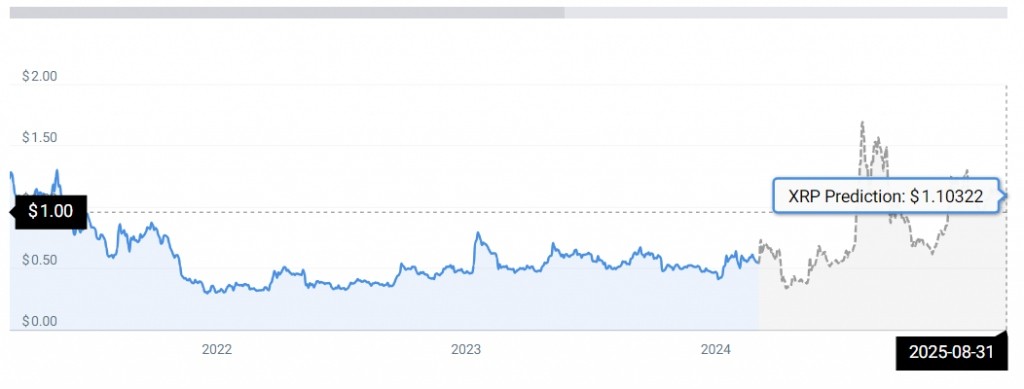
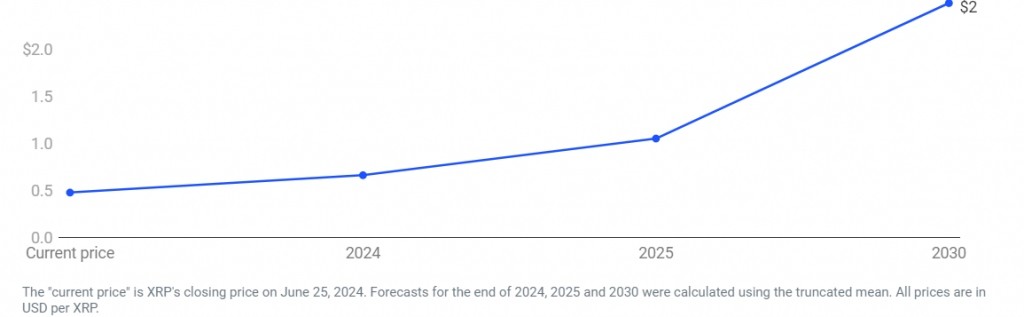
Группа аналитиков Finders не сомневается, что в будущем XRP достигнет отметки в $2. Аналогичное видение сформировала команда платформы технического анализа CoinCodex. По их расчётам, XRP может закончить 2024 год по цене $1,10.

xrp-1024x389.png

Источник: CoinCodex

В целом компания Ripple действительно предпринимает попытки утвердиться на мировом финансовом рынке посредством расширения сотрудничества, и благодаря этому XRP может получить восходящий импульс.

Trending Cryptos

Related Reads

In the AI Era, What's Left for Bitcoin?

As Bitcoin falls below $60,000, the author reflects on the relationship between AI and Bitcoin, seeing them as two sides of the same coin. In the AI era, the cost of generating content has plummeted, making fake text, images, and videos increasingly easy and cheap to produce. This has led to a fundamental shift: while AI dramatically lowers the cost of information production, it also undermines trust and authenticity online. What becomes truly valuable is not more content, but the ability to verify what is real—"verifiability." This perspective offers a new lens for Bitcoin. Its massive energy consumption, often criticized as wasteful, is reinterpreted. While AI burns energy to enhance "capability" and efficiency, Bitcoin burns energy to produce "verifiability." Its purpose is not to be trusted but to enable a system where no trust in intermediaries—banks, platforms, or developers—is needed. Every transaction and the entire ledger's history is secured by cryptography and a decentralized network of nodes, making it independently verifiable. AI cannot forge a transaction on the Bitcoin network because the system is designed for proof, not generation. The author draws a historical parallel to the Renaissance: the printing press drastically reduced the cost of copying knowledge, while double-entry bookkeeping reduced the cost of trust in commerce. Today, AI is the new printing press, reducing content creation costs to near zero. Blockchain, and Bitcoin as its pioneer, may be the modern equivalent of double-entry bookkeeping—a foundational technology for verifying digital asset ownership and historical records without centralized authorities. Thus, AI and blockchain are not competitors. AI lowers the cost of creation; blockchain lowers the cost of verification. In an age where AI can generate anything, true scarcity may lie not in more content, but in independently verifiable facts. Whether the market will reprice Bitcoin accordingly remains uncertain, but its core value proposition as a "machine for producing verifiability" becomes strikingly relevant.

marsbit1h ago

In the AI Era, What's Left for Bitcoin?

marsbit1h ago

In the Age of AI, What's Left for Bitcoin?

Author: Sevclub, Seven Research Amid Bitcoin's recent drop below $60k, the author reflects on a growing sense that AI and Bitcoin are two sides of the same coin. Today, encountering any content triggers a new default question: "Was this made by AI?" The cost of generating convincing text, images, and video is now negligible. While the internet lowered information *distribution* costs, AI is crashing information *production* costs to near zero. The consequence is a flood of content where truth and falsehood are increasingly indistinguishable. In this environment, what becomes truly valuable is not more information, but the ability to verify what is real—"verifiability." This reframes the common criticism that Bitcoin "wastes electricity." AI consumes power to produce "capability" (e.g., more powerful models). Bitcoin consumes power to produce something else: "verifiability." Bitcoin's core purpose isn't about belief or trust in any institution, developer, or even its creator. It's about enabling independent verification. Every bitcoin's origin, every transaction, and the integrity of the entire ledger are secured by mathematics, cryptography, and a global network of nodes. AI can fabricate convincing media, but it cannot falsify a transaction on the Bitcoin network. The expended energy makes篡改历史 (tampering with history) prohibitively expensive, purchasing a globally verifiable ledger. The author draws a historical parallel to the Renaissance. The printing press drastically reduced the cost of copying knowledge, while double-entry bookkeeping reduced the cost of trust in commerce—one enabled creation, the other verification. Today, AI is the new printing press, driving content production costs toward zero. The question becomes: what is this era's "double-entry bookkeeping"? Blockchain appears to be the leading candidate. It doesn't verify which news is true or which image is real, but it provides a foundational layer for independently verifying asset ownership and historical records in the digital realm without centralized authorities. Therefore, AI and blockchain are not in competition. AI lowers the cost of *generation*. Blockchain (and Bitcoin as a prime example) lowers the cost of *verification*. One creates, the other proves. Whether Bitcoin ultimately succeeds remains uncertain, facing potential challenges from quantum computing, regulation, and technical evolution. However, the author now sees it less as a "machine for making bitcoin" and more as a "machine for making verifiability." In an age where AI can generate anything, true scarcity may no longer be "more content," but "more independently verifiable facts." Whether the market will price this accordingly is a separate question.

链捕手1h ago

In the Age of AI, What's Left for Bitcoin?

链捕手1h ago

Trading

Spot

Hot Articles

What is XRP 2.0

XRP 2.0: A New Frontier in the Cryptocurrency Landscape Introduction to XRP 2.0 In the ever-evolving realm of cryptocurrency, new projects continuously emerge, vying for attention and adoption. One such promising initiative is XRP 2.0, a novel cryptocurrency project designed to leverage advanced blockchain technology and robust encryption methodologies. While the name draws parallels with Ripple’s XRP, it’s crucial to note that XRP 2.0 operates independently, focusing on enhancing transaction security, privacy, and scalability. As the digital financial landscape increasingly embraces decentralized solutions, XRP 2.0 aims to contribute meaningfully to web3 and the overall expansion of crypto projects. What is XRP 2.0? At its core, XRP 2.0 is a cryptocurrency project that aims to create a secure and decentralized digital currency ecosystem. Its foundational technology integrates sophisticated blockchain principles with cutting-edge encryption techniques. The overarching goal of XRP 2.0 is to establish itself as a reliable and efficient platform enabling swift transaction execution while prioritizing enhanced privacy protections for its users. The project is promoted as a solution to many limitations faced by existing cryptocurrencies, proposing a system that can handle a higher volume of transactions with improved speed and privacy. This versatility positions XRP 2.0 as a significant contender in a marketplace riddled with various digital currencies. Who is the Creator of XRP 2.0? The identity of the creator behind XRP 2.0 has been flagged as ‘Wilbur.’ However, comprehensive details regarding Wilbur or their associated entity remain elusive. The anonymity of many cryptocurrency creators is not an uncommon phenomenon in the industry, often designed to maintain a degree of privacy and security. Who are the Investors of XRP 2.0? As of now, specific information related to the investment foundations or organizations supporting XRP 2.0 is not publicly available. In the cryptocurrency sector, the backing by reputed investors can significantly influence a project's credibility and success, yet the transparency regarding the financial supporters of XRP 2.0 has not been established. How Does XRP 2.0 Work? XRP 2.0 stands out by employing a combination of blockchain technology and advanced encryption algorithms that ensures secure and decentralized transactions. Its innovative structure includes unique features designed to foster user engagement and broaden functionalities beyond conventional cryptocurrency transactions. Among these features, XRP 2.0 incorporates AI-powered capabilities, such as text-to-image and text-to-speech functionalities. These additions are designed to enhance the interactive experience for users, promoting broader applicability across various sectors. By bridging technological advancements with user-centered design, XRP 2.0 aims to capture the attention of a diverse range of individuals and enterprises looking to integrate cryptocurrency solutions into their operational frameworks. Timeline of XRP 2.0 Understanding XRP 2.0 requires examining the milestones that have defined its journey thus far: July 23, 2023: XRP 2.0 is introduced as a novel cryptocurrency project, aiming to revolutionize secure and decentralized transaction capabilities in the blockchain domain. September 8, 2023: The launching of another project, XRP20, occurs, marking the emergence of an ERC-20 token on the Ethereum blockchain that remains unrelated to XRP 2.0. November 13, 2023: The XRP Ledger undergoes a significant update with the release of rippled server software version 2.0.0. It is essential to note that this development is disconnected from the XRP 2.0 cryptocurrency project. Key Points About XRP 2.0 To distill the essence of XRP 2.0, several critical factors emerge: Unique Features: The inclusion of features like AI-powered text-to-image and text-to-speech further diversifies the potential applications of XRP 2.0. Blockchain Technology: The framework utilizes advanced blockchain mechanisms and encryption protocols, ensuring a secure and decentralized environment for transactions. Scalability and Privacy: XRP 2.0 prioritizes enhanced privacy protections in transaction processes and the scalability necessary to accommodate a growing user base. No Affiliation with Ripple: Importantly, despite its name, XRP 2.0 does not have any allegiance or collaboration with Ripple’s XRP, distinguishing its operational framework and objectives within the cryptocurrency ecosystem. Conclusion XRP 2.0 represents an ambitious venture into the cryptocurrency sphere, aiming to offer a combination of security, privacy, and efficiency in digital transactions. By integrating sophisticated technologies and user-friendly features, the project sets out to broaden the horizons of what cryptocurrency can achieve in today's digital economy. While the anonymity of its creator and lack of disclosed investors might raise questions for some, XRP 2.0's focus on advanced functionalities and decentralisation enhances its appeal amidst an increasingly crowded crypto market. As the cryptocurrency landscape continues to evolve, XRP 2.0 may yet emerge as a pivotal player in the expansion of secure and scalable blockchain solutions.

1.0k Total ViewsPublished 2024.04.01Updated 2024.12.03
What is XRP 2.0

Discussions

Welcome to the HTX Community. Here, you can stay informed about the latest platform developments and gain access to professional market insights. Users' opinions on the price of XRP (XRP) are presented below.

活动图片