В Великобритании мужчине предъявили уголовные обвинения за управление криптоматом

cryptonews.ruPublished on 2023-11-29Last updated on 2024-08-29

  • В Великобритании зарегистрирован первый случай уголовного процесса по делу об управлении нелегальным криптоматом.
  • Подозреваемый был задержан еще в апреле 2023 года, но обвинения ему выдвинули только в августе.
  • FCA запретило криптоматы в стране в 2022 году.

Полиция Великобритании впервые предъявила уголовные обвинения в связи с эксплуатацией нелегального криптомата. Подозреваемым является 37-летний владелец магазина электроники Хабибур Рахман.

Согласно материалам дела, мужчину задержали еще в апреле 2023 года. Полиция провела обыск в его магазине, обнаружив несколько криптоматов. Один из них был доступен широкой публике.

Рахману вменяют управление таким оборудованием без регистрации, а также соучастие в отмывании £300 000 ($395 000). Его отпустили под залог, сумма которого не разглашается.

Он должен самостоятельно явиться в суд 10 октября 2024 года. В прессе отметили, что мужчине грозит реальный тюремный срок.

Напомним, Управление по финансовому надзору (FCA) ввело запрет на криптоматы в Великобритании в 2022 году. На тот момент в стране было более 80 точек с обменом криптоактивов на фиат.

С этого момента власти периодически проводят рейды на предмет наличия подобного оборудования. В мае 2023 года, например, операция проходила сразу в трех городах Великобритании.

В 2024 году, согласно CoinATMRadar, в стране не осталось ни одного криптомата. Для сравнения, в США, возглавляющих рейтинг, таких устройств 32 177.


Related Reads

In the AI Era, What's Left for Bitcoin?

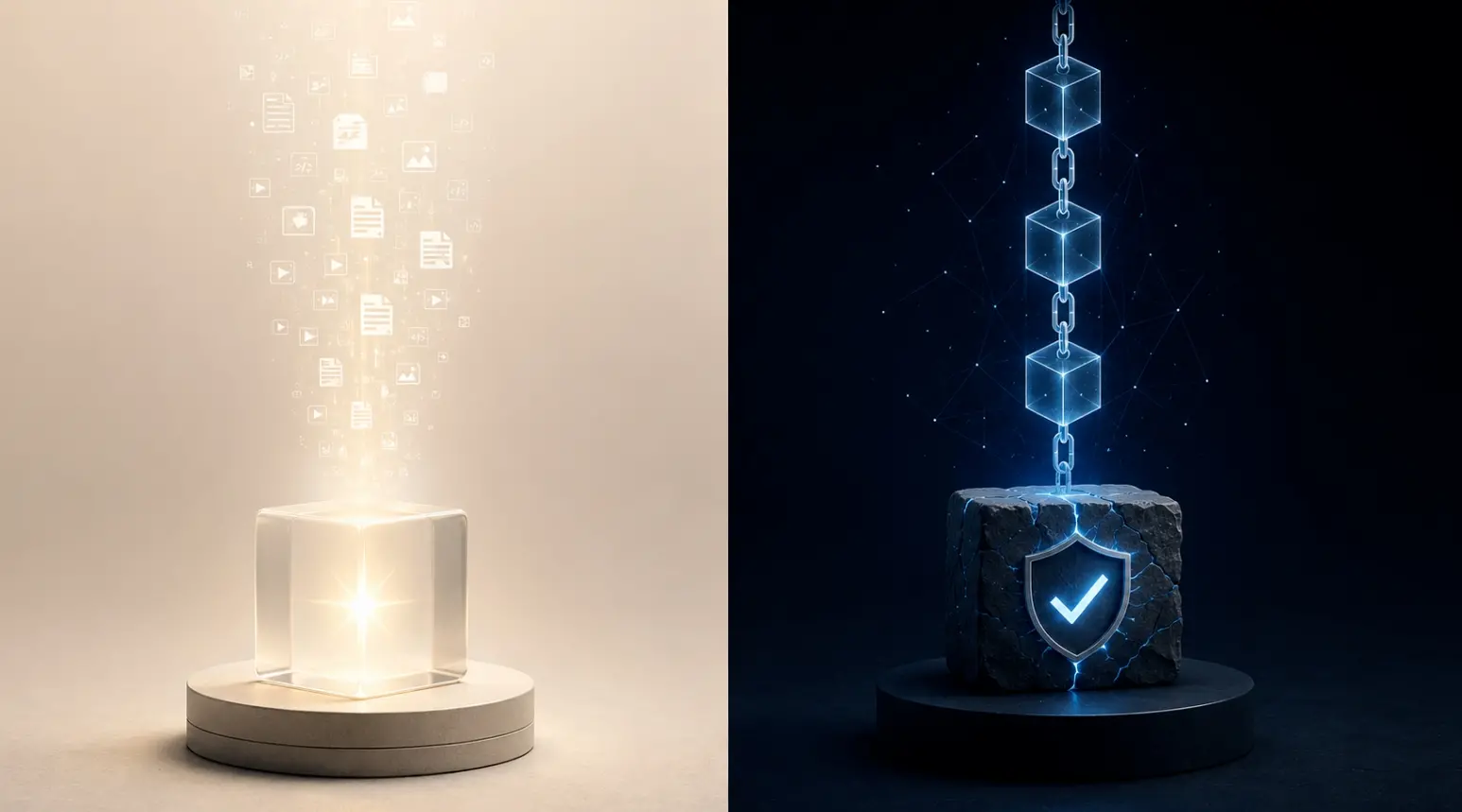
As Bitcoin falls below $60,000, the author reflects on the relationship between AI and Bitcoin, seeing them as two sides of the same coin. In the AI era, the cost of generating content has plummeted, making fake text, images, and videos increasingly easy and cheap to produce. This has led to a fundamental shift: while AI dramatically lowers the cost of information production, it also undermines trust and authenticity online. What becomes truly valuable is not more content, but the ability to verify what is real—"verifiability." This perspective offers a new lens for Bitcoin. Its massive energy consumption, often criticized as wasteful, is reinterpreted. While AI burns energy to enhance "capability" and efficiency, Bitcoin burns energy to produce "verifiability." Its purpose is not to be trusted but to enable a system where no trust in intermediaries—banks, platforms, or developers—is needed. Every transaction and the entire ledger's history is secured by cryptography and a decentralized network of nodes, making it independently verifiable. AI cannot forge a transaction on the Bitcoin network because the system is designed for proof, not generation. The author draws a historical parallel to the Renaissance: the printing press drastically reduced the cost of copying knowledge, while double-entry bookkeeping reduced the cost of trust in commerce. Today, AI is the new printing press, reducing content creation costs to near zero. Blockchain, and Bitcoin as its pioneer, may be the modern equivalent of double-entry bookkeeping—a foundational technology for verifying digital asset ownership and historical records without centralized authorities. Thus, AI and blockchain are not competitors. AI lowers the cost of creation; blockchain lowers the cost of verification. In an age where AI can generate anything, true scarcity may lie not in more content, but in independently verifiable facts. Whether the market will reprice Bitcoin accordingly remains uncertain, but its core value proposition as a "machine for producing verifiability" becomes strikingly relevant.

marsbit17m ago

In the AI Era, What's Left for Bitcoin?

marsbit17m ago

In the Age of AI, What's Left for Bitcoin?

Author: Sevclub, Seven Research Amid Bitcoin's recent drop below $60k, the author reflects on a growing sense that AI and Bitcoin are two sides of the same coin. Today, encountering any content triggers a new default question: "Was this made by AI?" The cost of generating convincing text, images, and video is now negligible. While the internet lowered information *distribution* costs, AI is crashing information *production* costs to near zero. The consequence is a flood of content where truth and falsehood are increasingly indistinguishable. In this environment, what becomes truly valuable is not more information, but the ability to verify what is real—"verifiability." This reframes the common criticism that Bitcoin "wastes electricity." AI consumes power to produce "capability" (e.g., more powerful models). Bitcoin consumes power to produce something else: "verifiability." Bitcoin's core purpose isn't about belief or trust in any institution, developer, or even its creator. It's about enabling independent verification. Every bitcoin's origin, every transaction, and the integrity of the entire ledger are secured by mathematics, cryptography, and a global network of nodes. AI can fabricate convincing media, but it cannot falsify a transaction on the Bitcoin network. The expended energy makes篡改历史 (tampering with history) prohibitively expensive, purchasing a globally verifiable ledger. The author draws a historical parallel to the Renaissance. The printing press drastically reduced the cost of copying knowledge, while double-entry bookkeeping reduced the cost of trust in commerce—one enabled creation, the other verification. Today, AI is the new printing press, driving content production costs toward zero. The question becomes: what is this era's "double-entry bookkeeping"? Blockchain appears to be the leading candidate. It doesn't verify which news is true or which image is real, but it provides a foundational layer for independently verifying asset ownership and historical records in the digital realm without centralized authorities. Therefore, AI and blockchain are not in competition. AI lowers the cost of *generation*. Blockchain (and Bitcoin as a prime example) lowers the cost of *verification*. One creates, the other proves. Whether Bitcoin ultimately succeeds remains uncertain, facing potential challenges from quantum computing, regulation, and technical evolution. However, the author now sees it less as a "machine for making bitcoin" and more as a "machine for making verifiability." In an age where AI can generate anything, true scarcity may no longer be "more content," but "more independently verifiable facts." Whether the market will price this accordingly is a separate question.

链捕手25m ago

In the Age of AI, What's Left for Bitcoin?

链捕手25m ago

Trading

Spot
活动图片