区块链 未来网络数据链时代的潮流 你准备好了吗

币界网Published on 2024-08-11Last updated on 2024-08-11

币界网报道:

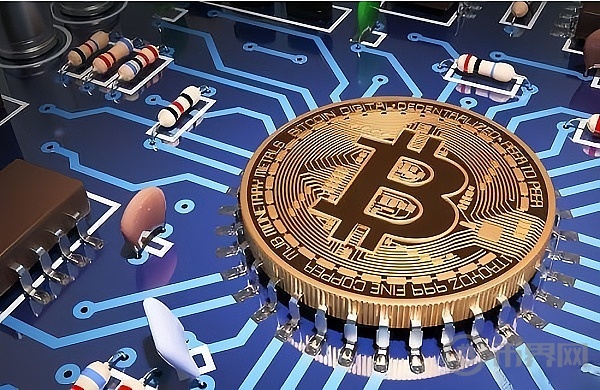
区块链目前在网络中仍然受到很多质疑,因为区块链技术目前大多是应用于以比特币为首的数字货币。但是,比特币只是区块链的一种应用,比特币可能是泡沫,但是区块链不是泡沫。

数字经济之父Don Tapscott 对于区块链的未来应用很看好,他认为区块链技术抓住了未来网络数据时代的节拍,往后几十年影响最大的科技已经出现,它的出现甚至比社交媒体或大数据,甚至人工智能,更能开启我们生活的新时代。

区块链的本质 是分布式数据存储、点对点传输、共识机制、加密算法等计算机技术的新型应用模式。所谓共识机制是区块链系统中实现不同节点之间建立信任、获取权益的数学算法。它不是世界上最华丽的词汇。但是我坚信它是下一次互联网,并且给每一次贸易,每一个社会,每一个人,带来光明前景。区块链,便是作为一个构造信任的机器,它可能会改变整个人类社会价值传递的方式。

在过去的互联网时代,我们在进行信息传递的时候,比如发送一份电子邮件或者PPT 文件,发送过去的只是一份拷贝的副本。但是涉及到资产,比如说金钱。股票以及债券等金融资产,股份,知识产权,音乐,艺术,一张选票,信用额等其他资产,就不是发送一份副本那么简单了。

B89EUHG4sVrjVcvYHUjzJamojHGE5G3oWsbVDH0X.png

区块链有什么作用?

举个例子,在以前的时候,我们每个人都只能够单独在自己的电脑上进行文档的编辑撰写,当有人进行采购或者转账时,对其他人报账,只有这两个直接参与者才能知道转过去的是多少,当两个所记录的数值不一致的时候,便会产生矛盾,造成损失。

而区块链是怎么解决的呢?

还是记录同样的数据,当A 先生向 C 女士转账的时候,只需要在这个熟人圈子里大喊一声, A 先生转了多少大家记录一下,那么所有人的账本上都会自动写上 A 先生向 C 女士在某天转账了多少,这就解决了那个矛盾。

曾经有一条让我们觉得搞笑而又无语的新闻,就是要怎么证明我是我,当户口本或者身份证都无法证明的时候,我们还能依靠什么证明?

而区块链技术不可篡改的特性,通过数学原理而非中心化信用机构来低成本的建立信用。这样我们的出生证、户口本、房产证等信息直接可以保存在区块链技术上,能随时获取到个人生活与状态信息,方便彼此的信任,这也就证明了我是我的世纪难题。

区块链技术,实现不同行业、不同地域的人们可以彼此信任,并进行点对点的交易。这技术建立起信任并不是基于一些大型机构,而是基于合作,基于密码技术和一些精巧的代码。因为信任正是起源于这一技术,我把它叫做“信任协议”。

Gd4pYDVjEDp5cmfwuutokiB9GkidQBRmRmrkIl0R.png

你可能会想它的工作原理是什么?区块链技术其实是将我们从个人信任、制度信任进入到机器信任当中。而机器信任便是一种不需要信任的信任,它放在那里,永远都不会改变,我们不需要相信语言和故事,也不需要有钢筋水泥、中央机构为基础,不需要靠个人领袖背书,只需要知道那些区块链上的代码会执行,也不需要担心制度会被腐败掉,就可以做到互相协作,低成本构建大型合作网络。所有传输数据信息并不储存在中央区域,而是分散在全球的账本中,使用最高级的密码技术。当一次交易处理完成后,它会通过数亿台计算机发布全球通告。

互联网安全一直是人们长盛不衰的话题,在区块链技术出现之前,都是通过一个机构,第三方或是政府维护的相对安全。但这一技术的诞生,改变了传统互联网的应用模式,使得互联网从信息技术交换迈入了价值交换的时代,开辟了信息传输到价值传输的互联网的二次变革,区块链技术也成了未来网络数据链时代的潮流,所以你准备好了吗?

Trending Cryptos

Related Reads

U.S. Stock Market Trend (August 11): Oil Prices Surge, Treasury Yields Rise, Tech Stocks Under Pressure, Optical Communication Plummets

U.S. Stock Market Trends (August 11): Oil Surge and Rising Bond Yields Pressure Tech; Optical Communication Stocks Plunge. U.S. stock indices closed slightly lower on Monday, with the S&P 500 and Dow Jones retreating from recent record highs. The primary market pressures were a significant oil price jump of over 5% amid unresolved negotiations to reopen the Strait of Hormuz and a consequent rise in U.S. Treasury yields, which weighed on growth stock valuations. The technology sector faced pressure, with Nvidia falling nearly 3% despite news of its pursuit of a $500 billion AI infrastructure financing consortium with major Wall Street firms. The optical communication sector saw a sharp sell-off, with Coherent dropping over 14%. In contrast, Chinese stocks listed in the U.S. were a notable bright spot, as the Nasdaq Golden Dragon China Index rose nearly 2%. Gold prices advanced for a second consecutive session on inflation hedging demand, while Bitcoin fell below $64,000. Key market movers included surging oil prices (WTI and Brent up ~5%) due to stalled Strait of Hormuz talks and heightened supply concerns, pushing the 10-year Treasury yield near 4.71%. Major tech stocks were mixed. Beyond Nvidia's decline, Intel fell over 4% on a new share offering plan. The Philadelphia Semiconductor Index dropped approximately 1.2%. Market attention remains on oil price dynamics, the impact of rising yields, and the forthcoming U.S. CPI data.

marsbit40m ago

U.S. Stock Market Trend (August 11): Oil Prices Surge, Treasury Yields Rise, Tech Stocks Under Pressure, Optical Communication Plummets

marsbit40m ago

JP Morgan Research Report Analysis: SK Hynix Fell 15% Last Week, Concerns Over HBM Pricing Overblown and Shareholder Returns to Land Ahead of Schedule

JPMorgan Research Report Interpretation: Addressing Concerns on SK Hynix's Recent Share Price Decline SK Hynix's stock fell 15% last week, underperforming the KOSPI (-5%) and Samsung (-9%). Key investor concerns centered on HBM pricing uncertainty, unclear shareholder return timelines, and a recently disclosed ₩54 trillion capital expenditure plan. JPMorgan's August 9 report addresses each point. Regarding HBM, JPMorgan refutes inaccurate media reports suggesting potential 50% price discounts for HBM4 in 2027. The firm's conservative model assumes <40% average HBM price growth by 2027, based on factors including memory suppliers prioritizing high-margin DDR5/LPDDR5/NAND in LTA allocations and the long-term partnership with key customer NVIDIA. The most significant near-term catalyst is shareholder returns. SK Hynix has committed to announcing additional shareholder return measures before the end of Q3 (September), earlier than its prior "year-end" guidance. JPMorgan anticipates a progressive policy, supported by an estimated cumulative free cash flow exceeding ₩800 trillion over three years and proceeds from the Kioxia stake sale. The substantial ₩54 trillion capex plan is for two new memory fabs to support its 2030 roadmap, not short-term aggressive expansion. The Yongin Y2 DRAM fab (₩35.2tn) and Cheongju M17 NAND fab (₩19.1tn) have construction starts scheduled for 2027, with clean room completion and investments stretching to 2028-2031. JPMorgan sees limited strategic value in a potential IPO for subsidiary Solidigm, noting SK Hynix's strong internal cash flow can fund capex without dilution, and an IPO might trigger dual-listing rule constraints in Korea. The report concludes last week's sell-off was an overreaction. JPMorgan maintains its Overweight rating and ₩2.75 million price target (~7x avg. 2026-2027 EPS), asserting the memory super-cycle thesis and SK Hynix's fundamentals remain intact.

marsbit43m ago

JP Morgan Research Report Analysis: SK Hynix Fell 15% Last Week, Concerns Over HBM Pricing Overblown and Shareholder Returns to Land Ahead of Schedule

marsbit43m ago

The Post-Crypto Era Outlook: Asset Valuation Returns to Fundamentals, What to Watch for the Next Decade?

Cryptoeconomy at a Turning Point: Valuations Reset, Focus Shifts to Real Value The cryptoeconomy is undergoing its most significant transformation yet, moving from speculative excess to a focus on sustainable, value-generating applications. After the 2021 hype cycle, which saw unsustainable valuations, the market has experienced a prolonged "reversion to the mean." Structural issues like cyclical revenues, regulatory uncertainty, and misaligned incentives between equity and token holders led to widespread fatigue. However, these problems are now widely recognized and are being addressed. A key shift is the emergence of applications demonstrating real, compounding growth independent of token prices. These include peer-to-peer internet platforms, global digital dollars, permissionless exchanges, novel derivatives, global collateral markets, and open financing platforms. Leading blockchains like Ethereum and Solana are solidifying their positions as foundational monetary and financial layers for the internet. Simultaneously, traditional financial and tech institutions are accelerating their blockchain integration with production-grade products, moving beyond mere experiments. Clearer regulations are enabling a shift from compliance concerns to exploring new business models. While the broader cryptoeconomy's emergence appears inevitable—driven by declining institutional trust, monetary devaluation, and a desire for fairer systems—intense competition means only a few native projects will become the dominant winners. The current phase offers a unique opportunity for investors, as leading projects are potentially undervalued after years of consolidation. The task is no longer to debate the technology's viability but to identify and capitalize on the real value being built for the next decade.

marsbit44m ago

The Post-Crypto Era Outlook: Asset Valuation Returns to Fundamentals, What to Watch for the Next Decade?

marsbit44m ago

Trading

Spot

Hot Articles

What is $BITCOIN

DIGITAL GOLD ($BITCOIN): A Comprehensive Analysis Introduction to DIGITAL GOLD ($BITCOIN) DIGITAL GOLD ($BITCOIN) is a blockchain-based project operating on the Solana network, which aims to combine the characteristics of traditional precious metals with the innovation of decentralized technologies. While it shares a name with Bitcoin, often referred to as “digital gold” due to its perception as a store of value, DIGITAL GOLD is a separate token designed to create a unique ecosystem within the Web3 landscape. Its goal is to position itself as a viable alternative digital asset, although specifics regarding its applications and functionalities are still developing. What is DIGITAL GOLD ($BITCOIN)? DIGITAL GOLD ($BITCOIN) is a cryptocurrency token explicitly designed for use on the Solana blockchain. In contrast to Bitcoin, which provides a widely recognized value storage role, this token appears to focus on broader applications and characteristics. Notable aspects include: Blockchain Infrastructure: The token is built on the Solana blockchain, known for its capacity to handle high-speed and low-cost transactions. Supply Dynamics: DIGITAL GOLD has a maximum supply capped at 100 quadrillion tokens (100P $BITCOIN), although details regarding its circulating supply are currently undisclosed. Utility: While precise functionalities are not explicitly outlined, there are indications that the token could be utilized for various applications, potentially involving decentralized applications (dApps) or asset tokenization strategies. Who is the Creator of DIGITAL GOLD ($BITCOIN)? At present, the identity of the creators and development team behind DIGITAL GOLD ($BITCOIN) remains unknown. This situation is typical among many innovative projects within the blockchain space, particularly those aligning with decentralized finance and meme coin phenomena. While such anonymity may foster a community-driven culture, it intensifies concerns about governance and accountability. Who are the Investors of DIGITAL GOLD ($BITCOIN)? The available information indicates that DIGITAL GOLD ($BITCOIN) does not have any known institutional backers or prominent venture capital investments. The project seems to operate on a peer-to-peer model focused on community support and adoption rather than traditional funding routes. Its activity and liquidity are primarily situated on decentralized exchanges (DEXs), such as PumpSwap, rather than established centralized trading platforms, further highlighting its grassroots approach. How DIGITAL GOLD ($BITCOIN) Works The operational mechanics of DIGITAL GOLD ($BITCOIN) can be elaborated on based on its blockchain design and network attributes: Consensus Mechanism: By leveraging Solana’s unique proof-of-history (PoH) combined with a proof-of-stake (PoS) model, the project ensures efficient transaction validation contributing to the network's high performance. Tokenomics: While specific deflationary mechanisms have not been extensively detailed, the vast maximum token supply implies that it may cater to microtransactions or niche use cases that are still to be defined. Interoperability: There exists the potential for integration with Solana’s broader ecosystem, including various decentralized finance (DeFi) platforms. However, the details regarding specific integrations remain unspecified. Timeline of Key Events Here is a timeline that highlights significant milestones concerning DIGITAL GOLD ($BITCOIN): 2023: The initial deployment of the token occurs on the Solana blockchain, marked by its contract address. 2024: DIGITAL GOLD gains visibility as it becomes available for trading on decentralized exchanges like PumpSwap, allowing users to trade it against SOL. 2025: The project witnesses sporadic trading activity and potential interest in community-led engagements, although no noteworthy partnerships or technical advancements have been documented as of yet. Critical Analysis Strengths Scalability: The underlying Solana infrastructure supports high transaction volumes, which could enhance the utility of $BITCOIN in various transaction scenarios. Accessibility: The potential low trading price per token could attract retail investors, facilitating wider participation due to fractional ownership opportunities. Risks Lack of Transparency: The absence of publicly known backers, developers, or an audit process may yield skepticism regarding the project's sustainability and trustworthiness. Market Volatility: The trading activity is heavily reliant on speculative behavior, which can result in significant price volatility and uncertainty for investors. Conclusion DIGITAL GOLD ($BITCOIN) emerges as an intriguing yet ambiguous project within the rapidly evolving Solana ecosystem. While it attempts to leverage the “digital gold” narrative, its departure from Bitcoin's established role as a store of value underscores the need for a clearer differentiation of its intended utility and governance structure. Future acceptance and adoption will likely depend on addressing the current opacity and defining its operational and economic strategies more explicitly. Note: This report encompasses synthesised information available as of October 2023, and developments may have transpired beyond the research period.

1.7k Total ViewsPublished 2025.05.13Updated 2025.05.13
What is $BITCOIN

Discussions

Welcome to the HTX Community. Here, you can stay informed about the latest platform developments and gain access to professional market insights. Users' opinions on the price of BTC (BTC) are presented below.

活动图片