面对比特币市场恐慌:是选择投降还是加大筹码?

币界网Published on 2024-08-10Last updated on 2024-08-10

币界网报道:

作者:Bitcoin Magazine Pro;编译:白话区块链

Bitcoin最近的急剧下跌引发了市场的普遍恐慌。随着价格跌破了50000美元的关口,市场情绪已经大幅向恐惧倾斜,对许多投资者来说,处于投降状态。然而,现在真的是恐慌的时候吗?抑或这可能是一个以折扣价购买更多比特币的黄金机会?

1、市场情绪和恐惧贪婪指数

比特币的恐惧与贪婪指数是一种衡量推动比特币市场情绪和情感的工具,它已经跌至自2022年7月以来未曾见过的水平。最近它跌至17的低点,标志着“极度恐惧”。这表明投资者非常焦虑,许多人想知道市场是否会继续下跌。历史上,这种极度恐惧往往是一种逆向指标,暗示现在可能是考虑累积而不是分销的好时机。

最近的下跌动作让许多交易者措手不及,特别是因为比特币之前一直经历着积极的价格行动,仅在下跌几天前接近了70000美元。这种突然的逆转让投资者不知所措,纷纷调整自己的仓位。
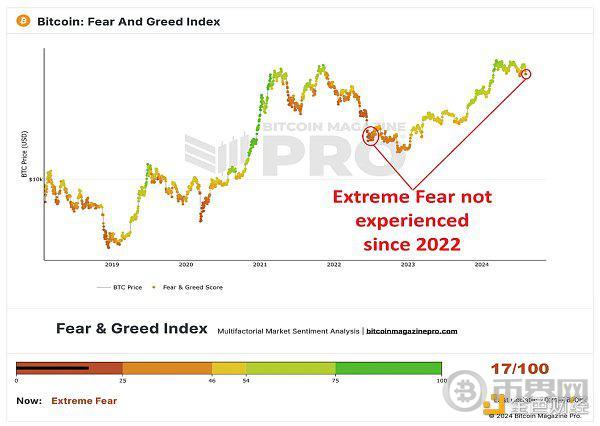
图1:比特币市场出现极度恐惧,情绪达到两年来的最低水平。

2、日元套利交易及其影响

导致最近市场下滑的一个关键因素是日元套利交易的解除。这一策略涉及以低利率借入日元,投资于国外收益更高的资产,特别是美国股票。然而,随着日本利率意外上升,许多投资者被迫解除头寸,引发全球市场的连锁反应。

日本利率的急剧上升导致日经225指数(日本股市指数)大幅下跌,美元对日元急剧贬值。这对其他全球市场产生了连锁效应,包括比特币,在投资者争相偿还借款和弥补损失的情况下大幅下跌。
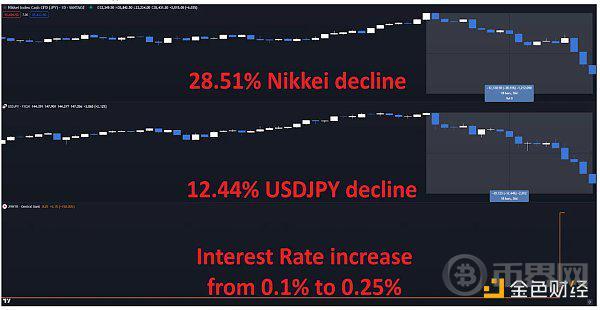
图2:由于最近利率上涨导致日元走强,导致日经指数大幅下跌。

3、衍生品和去杠杆化的影响

比特币市场还经历了一场大规模的去杠杆化,尤其是在衍生品市场上。比特币期货的未平仓合约总数,代表了未平仓的衍生品合约总数,在短短几天内从将近180亿美元急剧下降至110亿美元以下。这种剧烈减少表明了大规模去杠杆头寸,这可能加剧了市场的抛售。

虽然这种去杠杆化可能看起来令人担忧,但重要的是要将其放在更广泛的背景下考虑。这样的事件,虽然在短期内令人痛苦,但实际上可以通过清除过度杠杆和投机行为,有助于长期建立一个更健康的市场。
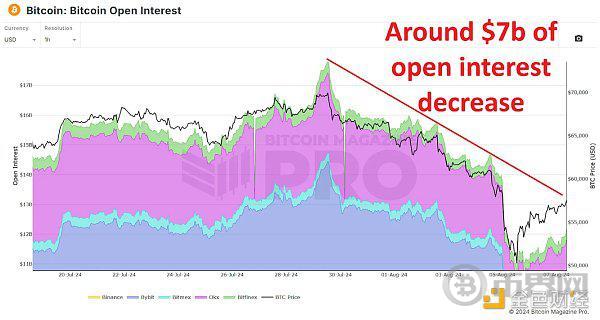
图3:随着比特币多头头寸被清算,未平仓合约被清空。

4、资金费率

在急剧下跌后,比特币期货合约的资金费率变为负值,表明交易者现在预期进一步价格下跌。然而,历史表明,当市场大多数处于一个方向的定位,特别是当这个方向受到极端情绪驱动时,往往会出现反转。上次资金费率达到这么负面的时候,比特币的交易价格为29000美元,随后迅速上涨至创下历史新高。
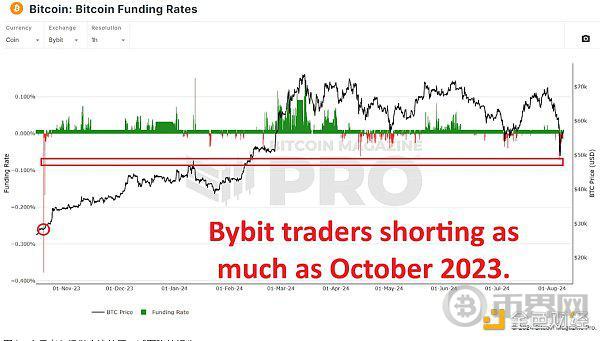
图4:交易者积极做空比特币,试图弥补损失。

5、是暂时的挫折还是长期的担忧?

尽管最近出现了下滑,但仍有几个理由让人对比特币的长期前景保持乐观态度。最近的价格波动可以被视为更广泛的牛市周期内的自然修正。当我们拉远视角看比特币的历史表现时,这样的修正并不罕见。在先前的周期中,比特币经常在恢复向上轨迹之前下跌至其周期主导公平市值以下。
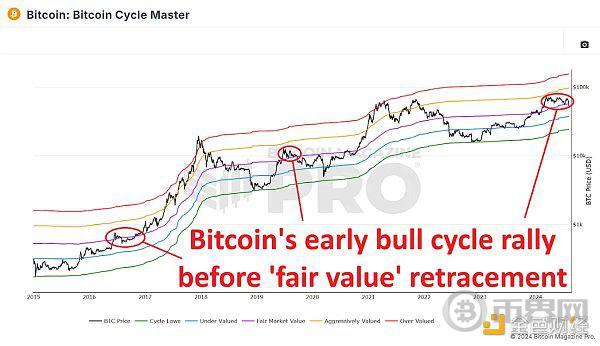
图5:比特币在牛市周期中此阶段回撤至典型点位。

6、结论

最近的回撤可能是市场波动性的一个迅速而令人痛苦的提醒,但并不一定意味着长期趋势的逆转。相反,这可能只是一个暂时的回落,一个黑天鹅事件,虽然出乎意料,但并不会从根本上改变比特币的长期前景。

对于那些持有长期视角的人来说,这可能是一个累积更多比特币的时机,而价格更低。虽然市场不太可能立即反弹到创下历史新高,但比特币价值背后的基本驱动因素仍然强劲。随着市场消化最近的事件,复苏可能在即。


Trending Cryptos

Related Reads

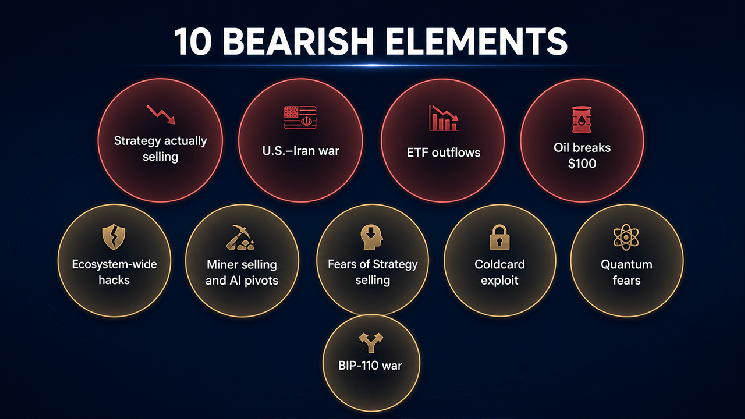
Bitcoin Withstood 10 Bearish Blows in 2026, Yet Experienced Its Mildest Bear Market

Bitcoin, the leading cryptocurrency by market cap, peaked above $126,000 in early October before entering a prolonged decline. By August, it was mainly trading between $63,000 and $65,400, inflicting losses on late buyers but resulting in what is, historically for Bitcoin, an unusually shallow bear market—down about 49% from its peak, compared to typical 75-80% plunges. Throughout 2026, Bitcoin faced multiple headwinds yet demonstrated notable resilience. Geopolitical tensions in the Middle East and volatile oil prices revived inflation concerns but failed to trigger the panic-driven sell-offs seen in prior cycles. A significant psychological blow came from corporate seller MicroStrategy, a longtime accumulator, which began strategic sales to bolster its cash position, reducing its holdings. U.S. spot Bitcoin ETFs also faced sustained outflows, though a late-week inflow hinted at potential relief. Pressure also came from within the ecosystem. A contentious blockchain proposal, BIP-110, failed after a minority chain stalled. Miners, facing tighter economics, sold reserves and pivoted infrastructure toward AI. A major security breach involving Coldcard hardware wallets saw an estimated 2,000 BTC stolen, shaking confidence in self-custody. Long-term threats like quantum computing resurfaced in discussions. Despite this confluence of corporate selling, ETF outflows, miner capitulation, geopolitical shocks, internal conflict, and security issues—any one of which could historically cause sharp declines—Bitcoin stubbornly held above a key $60,000 support level. Deeper market liquidity, regulated products, and long-term holders appear to be absorbing selling pressure that once would have caused deeper crashes. This resilience suggests a maturing market structure, though risks remain. Another shock could still push Bitcoin toward $50,000. For now, its 49% decline, severe for most assets, is relatively moderate by Bitcoin's own volatile standards. The remaining months of 2026 will test whether $60,000 is a durable floor or merely the next major line of defense.

cryptonews.ru44m ago

Bitcoin Withstood 10 Bearish Blows in 2026, Yet Experienced Its Mildest Bear Market

cryptonews.ru44m ago

Korean Financial Supervisory Service to Revise Compensation System for Phishing Losses Involving Crypto Transfer

The South Korean Financial Supervisory Service (FSS) is overhauling its system for reimbursing victims of voice phishing scams. Starting in October, the new system will be able to calculate and compensate losses held in cryptocurrency, not just in Korean won. Previously, the reimbursement system assumed stolen funds were in won, failing to fully compensate victims whose money was converted into digital assets. The upgraded software will apply a recovery ratio to determine the specific type and quantity of tokens owed to each victim, based on the token's value at the time the payment was frozen. It will also better track cases where fraud proceeds are split across multiple accounts and later consolidated. These changes follow March 31st amendments to the Act on Reimbursement of Losses from Telecommunications Fraud, which now classify virtual assets as both damaged and recoverable property. Major Korean crypto exchanges like Upbit and Bithumb must now comply with the same anti-phishing obligations as banks, including verifying transaction purposes and tracking suspicious funds. The revised law takes effect October 1st, with the FSS allocating a three-month period and a budget of 118.53 million won for system implementation and troubleshooting. The update addresses schemes where stolen money is intentionally laundered through cryptocurrency for overseas transfer. Notably, telecom fraud losses in South Korea rose 14.1% to 433.8 billion won in 2025, a five-year high.

cryptonews.ru55m ago

Korean Financial Supervisory Service to Revise Compensation System for Phishing Losses Involving Crypto Transfer

cryptonews.ru55m ago

Trading

Spot

Hot Articles

What is $BITCOIN

DIGITAL GOLD ($BITCOIN): A Comprehensive Analysis Introduction to DIGITAL GOLD ($BITCOIN) DIGITAL GOLD ($BITCOIN) is a blockchain-based project operating on the Solana network, which aims to combine the characteristics of traditional precious metals with the innovation of decentralized technologies. While it shares a name with Bitcoin, often referred to as “digital gold” due to its perception as a store of value, DIGITAL GOLD is a separate token designed to create a unique ecosystem within the Web3 landscape. Its goal is to position itself as a viable alternative digital asset, although specifics regarding its applications and functionalities are still developing. What is DIGITAL GOLD ($BITCOIN)? DIGITAL GOLD ($BITCOIN) is a cryptocurrency token explicitly designed for use on the Solana blockchain. In contrast to Bitcoin, which provides a widely recognized value storage role, this token appears to focus on broader applications and characteristics. Notable aspects include: Blockchain Infrastructure: The token is built on the Solana blockchain, known for its capacity to handle high-speed and low-cost transactions. Supply Dynamics: DIGITAL GOLD has a maximum supply capped at 100 quadrillion tokens (100P $BITCOIN), although details regarding its circulating supply are currently undisclosed. Utility: While precise functionalities are not explicitly outlined, there are indications that the token could be utilized for various applications, potentially involving decentralized applications (dApps) or asset tokenization strategies. Who is the Creator of DIGITAL GOLD ($BITCOIN)? At present, the identity of the creators and development team behind DIGITAL GOLD ($BITCOIN) remains unknown. This situation is typical among many innovative projects within the blockchain space, particularly those aligning with decentralized finance and meme coin phenomena. While such anonymity may foster a community-driven culture, it intensifies concerns about governance and accountability. Who are the Investors of DIGITAL GOLD ($BITCOIN)? The available information indicates that DIGITAL GOLD ($BITCOIN) does not have any known institutional backers or prominent venture capital investments. The project seems to operate on a peer-to-peer model focused on community support and adoption rather than traditional funding routes. Its activity and liquidity are primarily situated on decentralized exchanges (DEXs), such as PumpSwap, rather than established centralized trading platforms, further highlighting its grassroots approach. How DIGITAL GOLD ($BITCOIN) Works The operational mechanics of DIGITAL GOLD ($BITCOIN) can be elaborated on based on its blockchain design and network attributes: Consensus Mechanism: By leveraging Solana’s unique proof-of-history (PoH) combined with a proof-of-stake (PoS) model, the project ensures efficient transaction validation contributing to the network's high performance. Tokenomics: While specific deflationary mechanisms have not been extensively detailed, the vast maximum token supply implies that it may cater to microtransactions or niche use cases that are still to be defined. Interoperability: There exists the potential for integration with Solana’s broader ecosystem, including various decentralized finance (DeFi) platforms. However, the details regarding specific integrations remain unspecified. Timeline of Key Events Here is a timeline that highlights significant milestones concerning DIGITAL GOLD ($BITCOIN): 2023: The initial deployment of the token occurs on the Solana blockchain, marked by its contract address. 2024: DIGITAL GOLD gains visibility as it becomes available for trading on decentralized exchanges like PumpSwap, allowing users to trade it against SOL. 2025: The project witnesses sporadic trading activity and potential interest in community-led engagements, although no noteworthy partnerships or technical advancements have been documented as of yet. Critical Analysis Strengths Scalability: The underlying Solana infrastructure supports high transaction volumes, which could enhance the utility of $BITCOIN in various transaction scenarios. Accessibility: The potential low trading price per token could attract retail investors, facilitating wider participation due to fractional ownership opportunities. Risks Lack of Transparency: The absence of publicly known backers, developers, or an audit process may yield skepticism regarding the project's sustainability and trustworthiness. Market Volatility: The trading activity is heavily reliant on speculative behavior, which can result in significant price volatility and uncertainty for investors. Conclusion DIGITAL GOLD ($BITCOIN) emerges as an intriguing yet ambiguous project within the rapidly evolving Solana ecosystem. While it attempts to leverage the “digital gold” narrative, its departure from Bitcoin's established role as a store of value underscores the need for a clearer differentiation of its intended utility and governance structure. Future acceptance and adoption will likely depend on addressing the current opacity and defining its operational and economic strategies more explicitly. Note: This report encompasses synthesised information available as of October 2023, and developments may have transpired beyond the research period.

1.7k Total ViewsPublished 2025.05.13Updated 2025.05.13

What is $BITCOIN

Discussions

Welcome to the HTX Community. Here, you can stay informed about the latest platform developments and gain access to professional market insights. Users' opinions on the price of BTC (BTC) are presented below.

活动图片