德国政府「卖不动」币了?BTC或已到达局部底部

Odaily星球日报Published on 2024-07-09Last updated on 2024-07-09

Abstract

德国政府抛压的影响被夸大?

原文作者:Mary Liu,比推 BitpushNews

周一,加密市场在连续数日的大规模抛售之后趋于稳定。

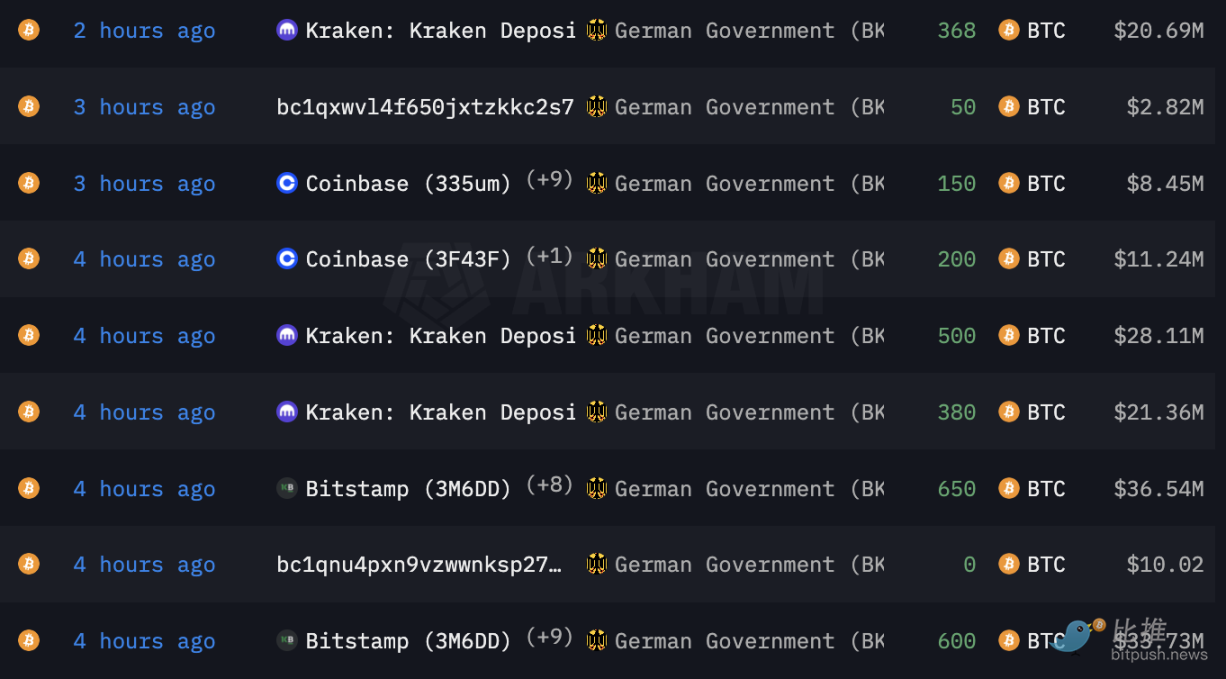
当天早盘时段,德国政府地址分几批将其持有的超过 1 万枚比特币转移至加密交易所和做市商,比特币价格一度跌至 55, 000 美元以下,然而 Arkham Intelligence 数据显示,美股收盘时段(对应北京时间周二凌晨 01: 56AM 左右),德国政府地址收到了交易所退回的 2, 898 枚比特币,约合 1.63 亿美元,主要来自 Coinbase、Kraken 和 Bitstamp。
德国政府「卖不动」币了?BTC或已到达局部底部

The Block 研究主管 Steven Zheng 分析称,交易所很可能是因为无法在目标价格范围内出售比特币而将其退回。

Steven Zheng 表示:「考虑到一些比特币已从 Coinbase 返回德国政府地址,可以假设它们是未售出的比特币,是加密货币交易所和该国之间销售协议的一部分。」

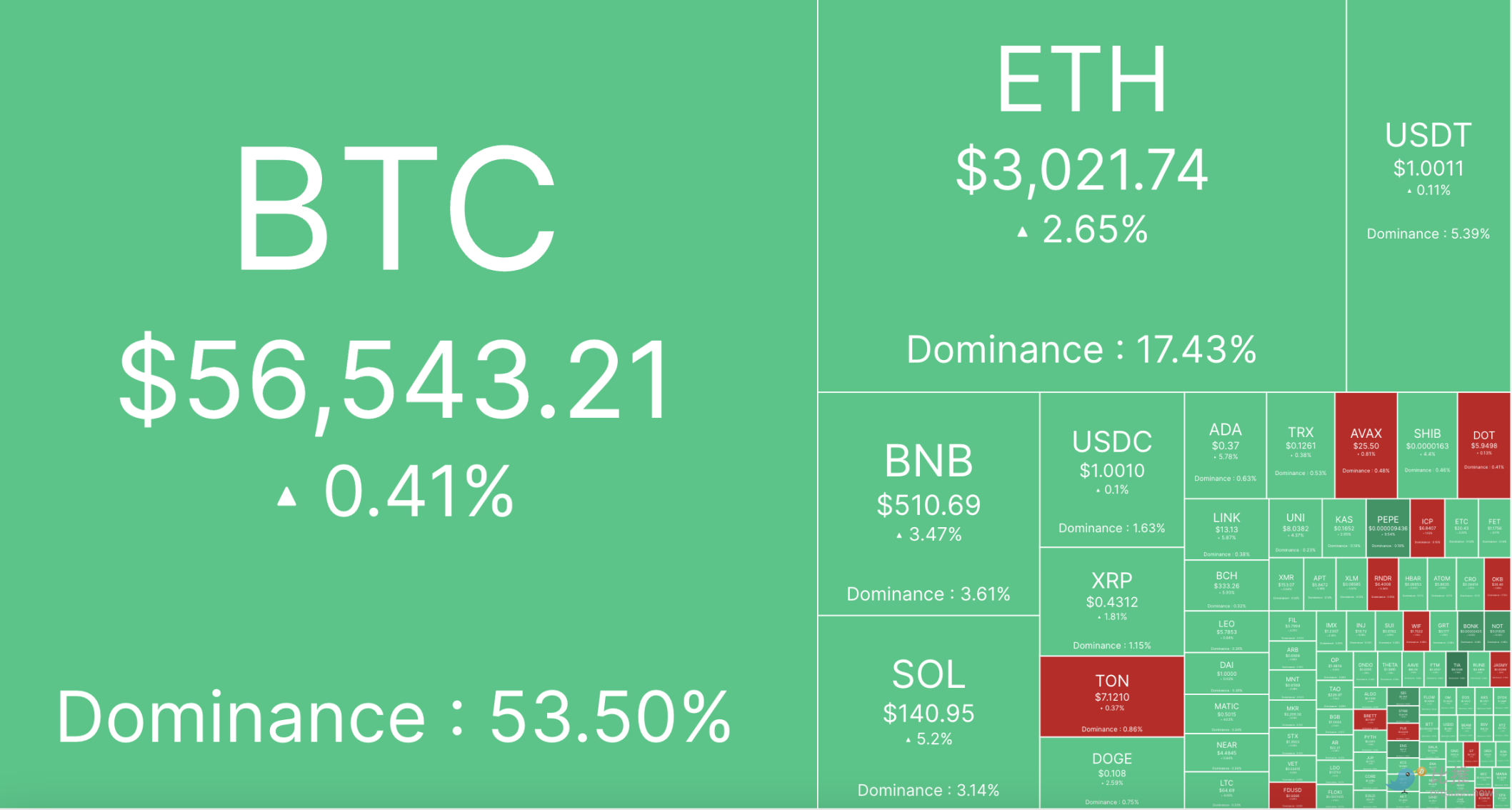
比推数据显示,BTC 在周一下午早些时候触及约 55, 200 美元,随后于美股收盘后反弹至 56, 662.40 美元, 24 小时涨幅 0.58% 。

山寨币涨跌互现,市值排名前 200 位的代币中跌多涨少。 其中 aelf (ELF) 领涨,上涨 21.5% ,交易价为 0.421 美元,Celestia (TIA) 和 Curve DAO Token (CRV) 分别上涨 14.5% 和 10.1% 。
德国政府「卖不动」币了?BTC或已到达局部底部

目前加密货币整体市值为 2.07 万亿美元,比特币的市场占有率为 53.5% 。

美股方面,截至收盘时,标普 500 指数和纳斯达克 500 指数分别上涨 0.10% 和 0.28% ,道琼斯指数则下跌 0.08% 。

德国政府抛压的影响被夸大?

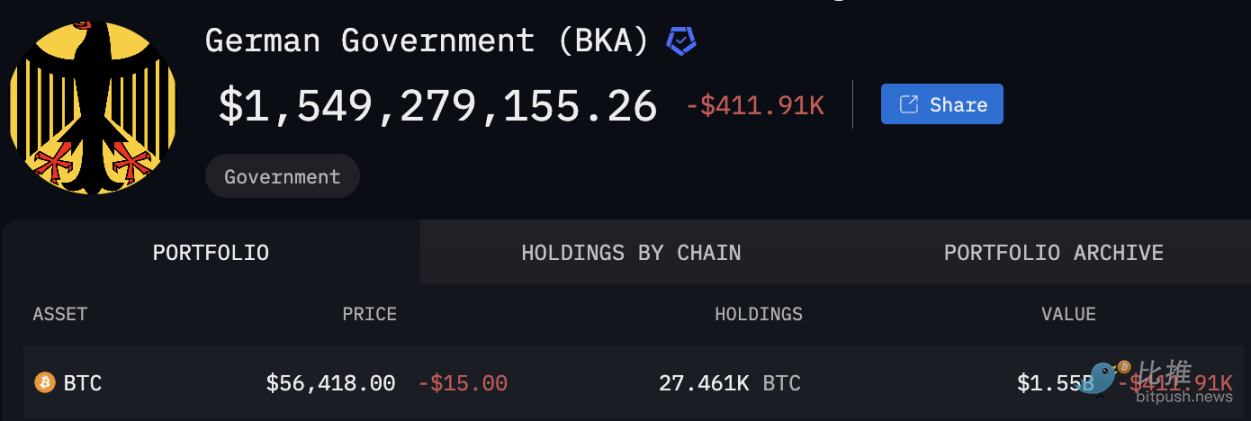
根据 Arkham 的数据,德国政府的抛售进度已完成近一半,自上个月开始抛售以来,其 BTC 持有量从近 50, 000 枚减少至 27, 461 枚,当前持仓价值 15 亿美元。
德国政府「卖不动」币了?BTC或已到达局部底部

最近行业的头条新闻都集中在德国政府抛售和 Mt.Gox 退款等事件,很多分析师认为这是导致近期比特币大跌的主要原因,但 Bitfinex 分析师则将下跌归咎于正常的季节性疲软。

Bitfinex 分析师表示:「值得注意的是,自 2023 年以来流入市场的比特币的实际市值(即比特币买卖的价值)高达 2240 亿美元。相比之下,包括美国和德国在内的政府扣押并随后出售的比特币仅为大概 90 亿美元。这仅占 2023 年初以来市场累计实际增值总额的 4% 。」

分析师补充道:「尽管名义价值巨大,但实际转移到交易所的比特币数量只有数亿美元,这表明政府扣押的比特币对市场的实际影响和供应过剩相对较小。这表明,虽然扣押资产的销售在单笔交易中很重要,但它们对市场动态和比特币价格稳定性的总体影响并不似最初看起来那么大。」

机构投资者视为买入机会

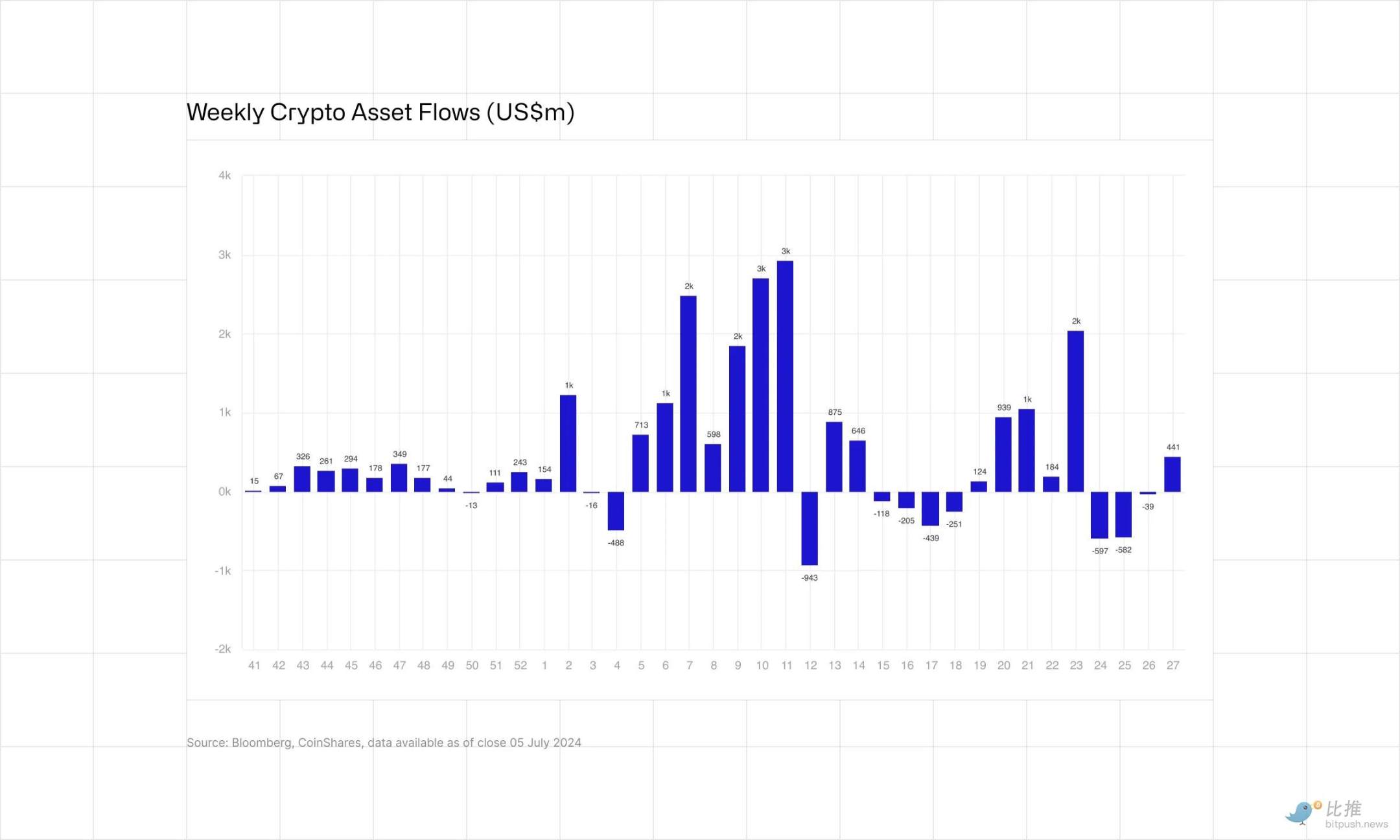
尽管市场下跌,CoinShares 发布的数据显示,上周数字资产投资产品的流入金额达到 4.41 亿美元。

其中,比特币投资产品占据了加密产品总流入量(3.98 亿美元)的最大份额– 90% 。从地区来看,流入资金主要来自美国,流入金额为 3.84 亿美元,其他较高的买盘分别来自中国香港、瑞士和加拿大,流入金额分别为 3200 万美元、 2400 万美元和 1200 万美元,德国的流出量为 2300 万美元。
德国政府「卖不动」币了?BTC或已到达局部底部

分析师:BTC 或已到达局部底部

Bitfinex 分析师表示,BTC 或已到达潜在的局部底部。

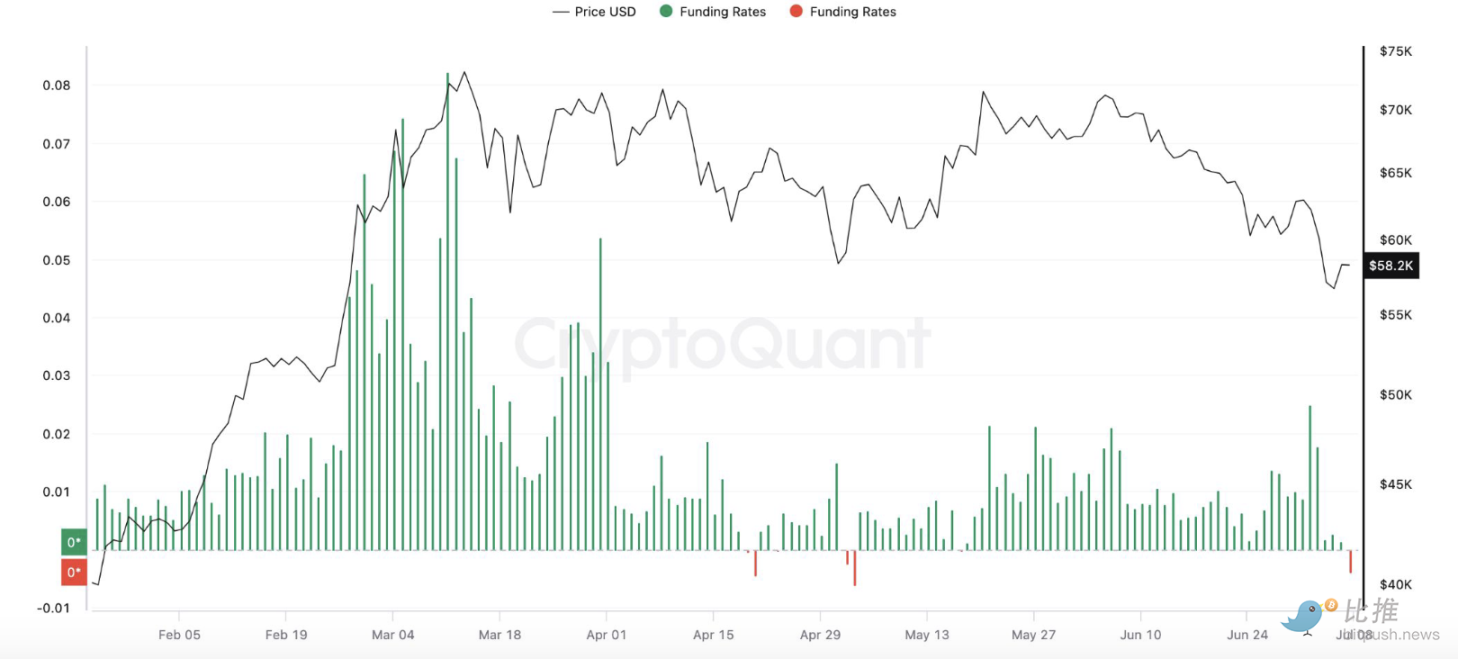
Bitfinex 提供的数据显示,自 5 月 1 日触底以来,BTC 永续合约的资金费率首次变为负值。

从历史上看,负资金费率时期加上短期 SOPR 值较低(一种财务指标,用于衡量特定投资者群体的钱包在某一天实现的利润或损失)通常标志着价格调整的底部。

分析师称:「这可能被视为看跌情绪的增强,但也强化了这样一种观点:随着买卖压力的平衡演变,BTC 可能正在稳定或接近潜在底部。负指标表明抛售压力很大或卖家主导市场,但也可能表明市场超卖。当这种超卖状况与 SOPR 回升相吻合时,通常表明市场正在触底。」
德国政府「卖不动」币了?BTC或已到达局部底部

Secure Digital Markets 分析师在其报告中表示:「RSI 指标显示,自 8 月以来,比特币首次出现超卖状态,就在上行挤压之前。比特币要想获得进一步的动力,价格需要突破 58, 500 美元,突破 60, 500 美元则标志着重返看涨区域。」

Tyr Capital 首席投资官 Ed Hindi 认为,当前的回调只是暂时的,并坚持认为到今年年底 BTC 的价格将达到六位数。Ed Hindi 在 CNBC 采访中表示:「由于矿工和政府抛售比特币库存,比特币目前处于回调区间,但我们相信长期投资者和投机者将继续逢低买入。我们认为没有理由改变 2024 年末比特币 10 万美元的目标。」


Trending Cryptos

Related Reads

Base Halts for Two Hours: A Single Invalid Block Reveals the Centralized Reality of L2s

Base, an Ethereum Layer-2 Rollup, experienced a two-hour network outage starting around 00:03 UTC on June 26. The halt was caused by a consensus issue that led to an invalid block being sequenced, which prevented the generation of new blocks after block 47806542. The team identified the problem, restored block sequencing by 01:51 UTC, and confirmed full recovery of ecosystem infrastructure synchronization shortly after. This incident highlights the operational reality for many L2s: while they leverage Ethereum for security and data availability, their day-to-day usability heavily depends on their sequencer and internal systems. Base employs a high-availability sequencer system with one active leader, but this setup did not prevent the outage when a consensus-level problem arose. This follows a previous 33-minute outage in August 2025 related to a faulty sequencer handover process. The downtime occurred near the scheduled activation window for the "Beryl" network upgrade, which has since been postponed. Beryl introduces the native B20 token standard, among other improvements. The incident has sparked renewed discussion about Base potentially launching its own network token in the future, shifting the conversation from mere speculation to questions about how a token might relate to sequencer decentralization, governance, and accountability in such failure scenarios.

Foresight News6m ago

Base Halts for Two Hours: A Single Invalid Block Reveals the Centralized Reality of L2s

Foresight News6m ago

STRC Must Re-Anchor for a BTC Bull Market to Happen

Title: STRC's Depegging Threatens MicroStrategy's Bitcoin-Buying Machine, and Thus the BTC Bull Run Summary: The sustained depegging of MicroStrategy's priority share STRC (trading ~25% below its $100 target) is severely disrupting the company's core business model and poses a major risk to Bitcoin (BTC) price support. STRC was MicroStrategy's most efficient and low-cost funding tool, designed to allow continuous capital raises near its $100 par value to fuel relentless BTC accumulation. Its depegging has effectively blocked this primary funding channel. The situation creates a severe cash flow crisis. STRC and other priority shares now obligate MicroStrategy to pay approximately $1.7 billion in annual cash dividends, while the company's cash reserves are only about $1.4 billion — insufficient to cover one year of payments. To raise cash, MicroStrategy is increasingly resorting to issuing common stock (MSTR) through ATM offerings. However, recent raises show most proceeds (around 90% in one week) are now used to bolster cash reserves rather than buy Bitcoin. This dilutes the key metric of Bitcoin per MSTR share, eroding the fundamental value proposition for equity investors. The company faces grim alternatives: issuing high-cost debt or selling its massive Bitcoin holdings. The latter, though hinted at, would likely trigger significant negative market reactions. Conclusion: As BTC's largest corporate holder and a major marginal buyer, MicroStrategy's funding woes mean reduced, and potentially reversing, institutional buy-side pressure. The company has shifted from being a guaranteed source of BTC demand to a significant overhang on the market. The article argues that without STRC re-anchoring to restore its funding engine, a sustained BTC bull market is in jeopardy.

marsbit27m ago

STRC Must Re-Anchor for a BTC Bull Market to Happen

marsbit27m ago

No Bull Market for BTC Without STRC Re-pegging

Summary: The sustained de-pegging of MicroStrategy's (MSTR) Strategy Preferred Shares (STRC) poses a severe threat to Bitcoin (BTC) and could prevent a bull market. STRC, designed to trade near a $100 target, has plunged to around $75, effectively shutting down MicroStrategy's cheapest and most efficient funding channel. This channel was critical for its "raise funds, buy BTC" business model. More critically, MicroStrategy now faces a massive cash outflow from these preferred shares. With approximately $10.49 billion of STRC outstanding at an 11.5% dividend yield, the annual cash obligation exceeds $1.2 billion. Combined with other preferred shares, the total annual payout nears $1.7 billion, depleting its current ~$1.4 billion cash reserve within a year. To address this, MicroStrategy is increasingly relying on common stock (MSTR) offerings via its ATM program. However, recent sales show most raised capital is now used to bolster cash reserves rather than buy more Bitcoin. This dilutes the key metric of BTC per share for common stockholders, eroding the foundation of its premium valuation. If STRC cannot re-peg, this costly dilution may continue. Worse, if cash pressure intensifies, selling Bitcoin becomes a real risk. As the largest corporate BTC holder (~847,363 BTC), any significant sales could crash the market. Thus, MicroStrategy is transforming from BTC's most reliable institutional buyer into a major potential seller, casting a significant shadow over Bitcoin's price prospects.

Odaily星球日报27m ago

No Bull Market for BTC Without STRC Re-pegging

Odaily星球日报27m ago

Tornado Cash Suffers Another Governance Attack: A Fake Proposal Targets $23 Million Community Treasury

On June 25, 2026, a deceptive governance proposal (#67) appeared in the Tornado Cash DAO, masquerading as an upgrade to implement fee adjustments and token burns. Security researchers, including Sergey Shemyakov and Pascal Caversaccio, quickly identified it as malicious. The proposal's unverified code contained a hidden function designed to stealthily replace the protocol's legitimate governance address (0x5efda50f22d34F262c29268506C5Fa42cB56A1Ce) with an attacker-controlled address (0x5efda50f22d34f272c7077689d6abc42f15e285f). If passed, this would have granted the attacker control over the DAO's treasury, containing approximately $23 million in TORN tokens, and the ability to drain all relayers. The attacker's wallet (0xd4eca8c9242b9f9faa3cf19a78defc21dc97a925) was funded via the privacy protocol Railgun four days prior, obscuring the source. The community response was swift, with the proposal receiving 27,163 TORN votes against (100%) and 0 for, far below the 100,000 TORN quorum required for validity. It is set to expire on June 30. This incident marks the second major governance attack on Tornado Cash, following a May 2023 exploit that stole $2.17 million. It highlights persistent vulnerabilities in DAO structures where power derives from token ownership. The article advises users to follow security researchers, vote against unverified proposals, and delegate voting power. For developers, implementing timelocks—a delay between proposal approval and execution—is presented as a critical security measure to allow for community review and intervention.

Foresight News47m ago

Tornado Cash Suffers Another Governance Attack: A Fake Proposal Targets $23 Million Community Treasury

Foresight News47m ago

Trading

Spot
Futures

Hot Articles

What is $BITCOIN

DIGITAL GOLD ($BITCOIN): A Comprehensive Analysis Introduction to DIGITAL GOLD ($BITCOIN) DIGITAL GOLD ($BITCOIN) is a blockchain-based project operating on the Solana network, which aims to combine the characteristics of traditional precious metals with the innovation of decentralized technologies. While it shares a name with Bitcoin, often referred to as “digital gold” due to its perception as a store of value, DIGITAL GOLD is a separate token designed to create a unique ecosystem within the Web3 landscape. Its goal is to position itself as a viable alternative digital asset, although specifics regarding its applications and functionalities are still developing. What is DIGITAL GOLD ($BITCOIN)? DIGITAL GOLD ($BITCOIN) is a cryptocurrency token explicitly designed for use on the Solana blockchain. In contrast to Bitcoin, which provides a widely recognized value storage role, this token appears to focus on broader applications and characteristics. Notable aspects include: Blockchain Infrastructure: The token is built on the Solana blockchain, known for its capacity to handle high-speed and low-cost transactions. Supply Dynamics: DIGITAL GOLD has a maximum supply capped at 100 quadrillion tokens (100P $BITCOIN), although details regarding its circulating supply are currently undisclosed. Utility: While precise functionalities are not explicitly outlined, there are indications that the token could be utilized for various applications, potentially involving decentralized applications (dApps) or asset tokenization strategies. Who is the Creator of DIGITAL GOLD ($BITCOIN)? At present, the identity of the creators and development team behind DIGITAL GOLD ($BITCOIN) remains unknown. This situation is typical among many innovative projects within the blockchain space, particularly those aligning with decentralized finance and meme coin phenomena. While such anonymity may foster a community-driven culture, it intensifies concerns about governance and accountability. Who are the Investors of DIGITAL GOLD ($BITCOIN)? The available information indicates that DIGITAL GOLD ($BITCOIN) does not have any known institutional backers or prominent venture capital investments. The project seems to operate on a peer-to-peer model focused on community support and adoption rather than traditional funding routes. Its activity and liquidity are primarily situated on decentralized exchanges (DEXs), such as PumpSwap, rather than established centralized trading platforms, further highlighting its grassroots approach. How DIGITAL GOLD ($BITCOIN) Works The operational mechanics of DIGITAL GOLD ($BITCOIN) can be elaborated on based on its blockchain design and network attributes: Consensus Mechanism: By leveraging Solana’s unique proof-of-history (PoH) combined with a proof-of-stake (PoS) model, the project ensures efficient transaction validation contributing to the network's high performance. Tokenomics: While specific deflationary mechanisms have not been extensively detailed, the vast maximum token supply implies that it may cater to microtransactions or niche use cases that are still to be defined. Interoperability: There exists the potential for integration with Solana’s broader ecosystem, including various decentralized finance (DeFi) platforms. However, the details regarding specific integrations remain unspecified. Timeline of Key Events Here is a timeline that highlights significant milestones concerning DIGITAL GOLD ($BITCOIN): 2023: The initial deployment of the token occurs on the Solana blockchain, marked by its contract address. 2024: DIGITAL GOLD gains visibility as it becomes available for trading on decentralized exchanges like PumpSwap, allowing users to trade it against SOL. 2025: The project witnesses sporadic trading activity and potential interest in community-led engagements, although no noteworthy partnerships or technical advancements have been documented as of yet. Critical Analysis Strengths Scalability: The underlying Solana infrastructure supports high transaction volumes, which could enhance the utility of $BITCOIN in various transaction scenarios. Accessibility: The potential low trading price per token could attract retail investors, facilitating wider participation due to fractional ownership opportunities. Risks Lack of Transparency: The absence of publicly known backers, developers, or an audit process may yield skepticism regarding the project's sustainability and trustworthiness. Market Volatility: The trading activity is heavily reliant on speculative behavior, which can result in significant price volatility and uncertainty for investors. Conclusion DIGITAL GOLD ($BITCOIN) emerges as an intriguing yet ambiguous project within the rapidly evolving Solana ecosystem. While it attempts to leverage the “digital gold” narrative, its departure from Bitcoin's established role as a store of value underscores the need for a clearer differentiation of its intended utility and governance structure. Future acceptance and adoption will likely depend on addressing the current opacity and defining its operational and economic strategies more explicitly. Note: This report encompasses synthesised information available as of October 2023, and developments may have transpired beyond the research period.

459 Total ViewsPublished 2025.05.13Updated 2025.05.13

What is $BITCOIN

Discussions

Welcome to the HTX Community. Here, you can stay informed about the latest platform developments and gain access to professional market insights. Users' opinions on the price of BTC (BTC) are presented below.

活动图片