OpenBounty兔子洞时间解析

Odaily星球日报Published on 2024-07-08Last updated on 2024-07-08

Abstract

总的来说,就像OpenZepplin和HackenProof所表示的那样,漏洞赏金的管理必须得到发布者的许可,这是一个法律与职业道德并行的问题,也是很多独立开发者成就的基础。

本文 Hash(SHA 1):4f5b9f376aa53c6cccca03a2ddd065a59550d73c

编号:链源 Security No.003 
OpenBounty兔子洞时间解析

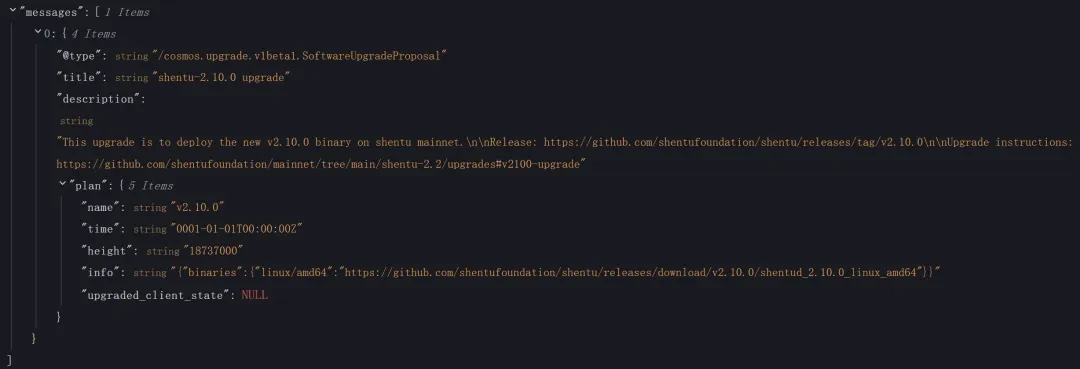
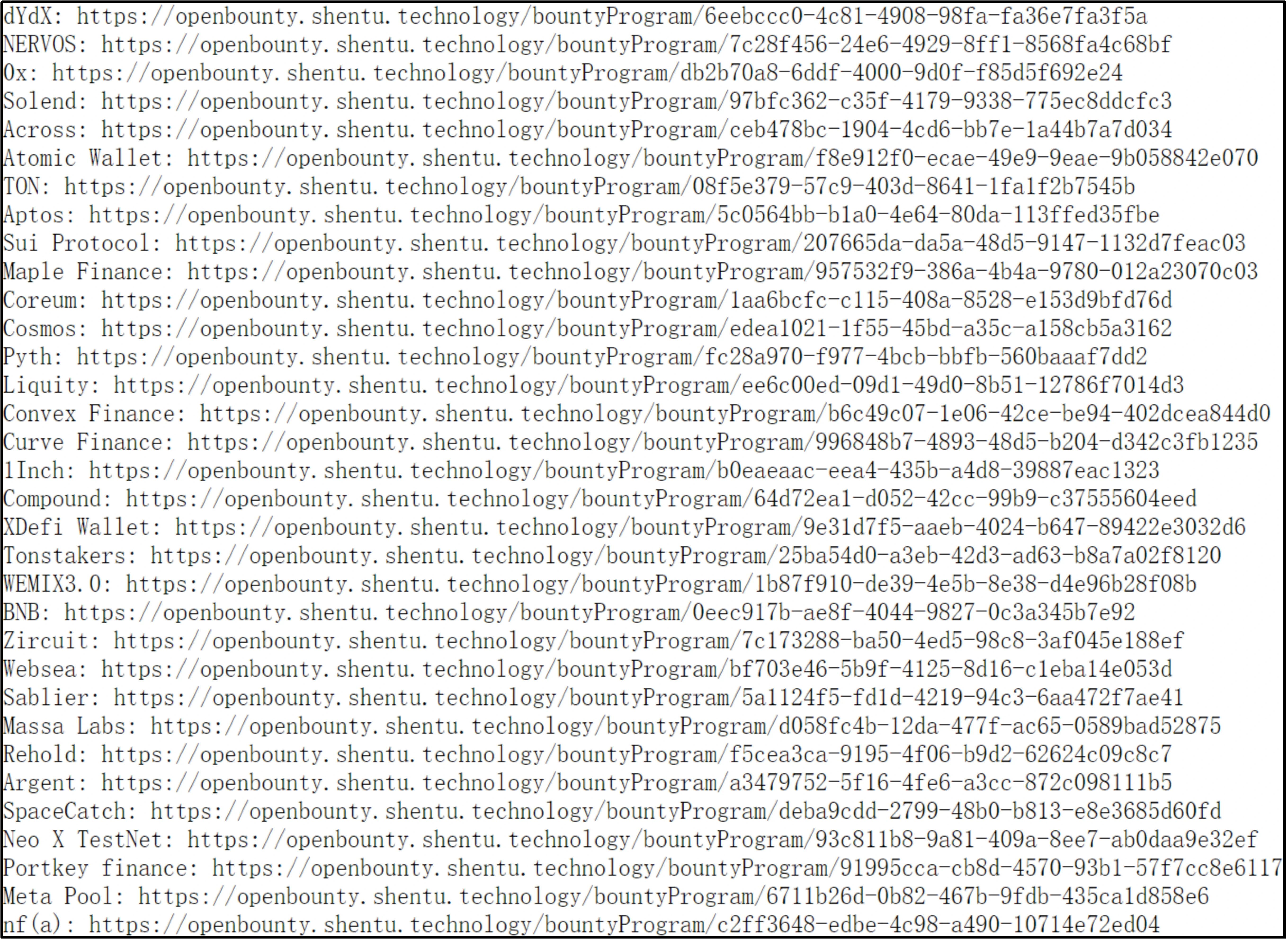
2024 年 7 月 3 日漏洞赏金平台 OpenBounty 被披露出将未经授权的漏洞报告公开发表在公链上,这种行为对于名单中涉及到的每一个基础设施和安全研究员来说都是极不负责和极不尊重的行为,同时也因这次所有漏洞的总赏金价值超过了 110 亿美元,也在整个公众群体中引发了一定的讨论,使得漏洞赏金平台在大众眼里所熟知,链源安全团队对于这次的泄露事件进行了安全分析和部分公示,希望能够帮助读者解读其中的细节,同时也更加了解漏洞赏金平台这样的存在。

相关信息

OpenBounty 在 SEHNTU 公链上私自披露的漏洞报告信息(现已删除了关于 Ethereum 的相关提案):    

https://www.mintscan.io/shentu/proposals

https://explorer.shentu.technology/more/proposal

漏洞赏金/挖洞

链上世界的漏洞赏金平台和传统网络安全中的“挖洞”平台非常相似,两者的主要目的都是通过奖励机制,吸引安全研究员和白帽黑客来寻找和报告系统中的漏洞,从而提高整体安全性。

他们的运作模式从时间线上来说是下面这样的流程:

(1)项目发起挑战:无论是区块链项目还是传统网络应用,都会在平台上发布漏洞赏金计划。

(2)漏洞报告:安全研究员和黑客们检测项目代码或系统,发现漏洞后提交详细报告。

(3)验证和修复:项目团队验证报告中的漏洞并进行修复。

(4)奖励发放:修复完成后,根据漏洞的严重程度和影响范围,给予发现者相应的奖励。

传统的网络安全主要关注 Web 应用、服务器、网络设备等传统 IT 的漏洞,如 XXS[ 1 ]、SQL 注入[ 2 ]、CSRF[ 3 ]等;

区块链安全更关注智能合约、协议、加密钱包,如 Sybil 攻击[ 4 ]、跨链攻击[ 5 ]、异常外部调用等。

重点漏洞报告
OpenBounty兔子洞时间解析

OpenBounty兔子洞时间解析

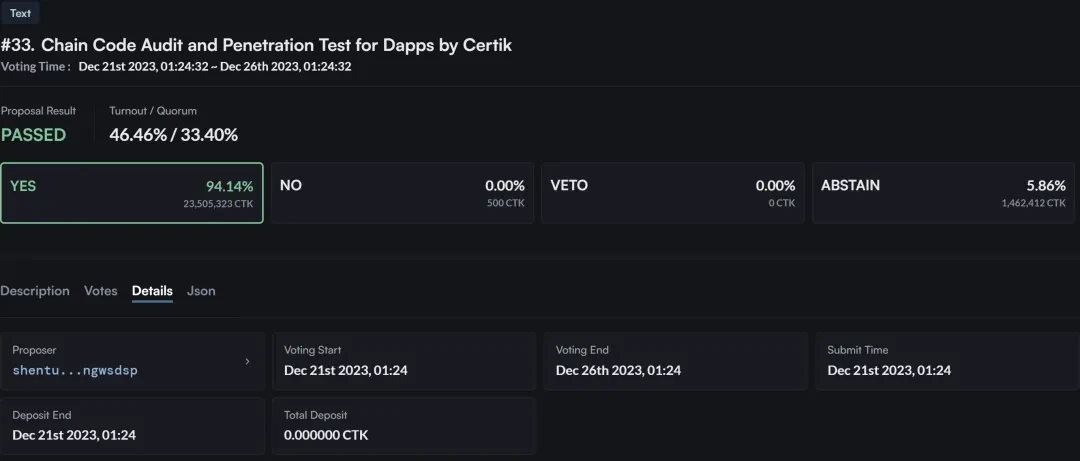
在 OpenBounty 违规发布的漏洞报告 33 号中是 CertiK 对于 SHENTU 链的审计和渗透测试,从提案中可以看到这次安全测试要解决的主要是 SHENTU 内部的安全漏洞和授权限制问题,

但阅读过 SHENTU 的源码后发现了一段替换前缀的代码,将 CertiK 的前缀替换为了 SHENTU 的前缀,虽然在开发上是可以理解的,只是为了方便调整而进行域名替换,但的确会给人一种 CertiK 既当裁判又当运动员的感觉。    

OpenBounty兔子洞时间解析

在其他 32 份 SEHNTU 还未删除的漏洞报告中,都能够看到关于问题描述、投票方、奖励描述甚至各个系统在漏洞更新后的代码,这些未经授权而披露出的信息,很容易造成这些系统的二次破坏,因为每个系统在开发过程中都会多少有一些历史遗留问题或者特有的编码习惯,对于黑客来说,这些信息的利用空间的确很大。

名词解读

[ 1 ]XXS:攻击者通过在网页中注入恶意脚本,使脚本在用户浏览该网页时执行,主要包括反射型 XSS、存储型 XSS、DOM 型 XSS。    

[ 2 ]SQL 注入:将恶意 SQL 代码插入输入字段(如表单、URL 参数)中,然后传递给数据库进行执行的攻击方法。此类攻击可导致数据库数据泄露、修改或删除,甚至获取数据库服务器的控制权。

[ 3 ]CSRF:利用用户已认证的会话,向受信任的站点发送未经授权请求的攻击方式。攻击者通过诱使用户访问特制的网页或点击链接,从而在用户不知情的情况下执行操作,如转账、修改个人信息等。

[ 4 ]Sybil 攻击:在分布式网络中,攻击者创建多个伪造身份(节点),试图操纵网络中的决策过程。攻击者通过创建大量虚假节点来影响共识算法,进而控制交易确认或阻止合法交易。

[ 5 ]跨链攻击:攻击者能够通过操纵跨链交易请求,绕过合约中的安全检查,窃取或篡改跨链交易数据,例如 Poly Network 跨链桥攻击。

结语

总的来说,就像 OpenZepplin 和 HackenProof 所表示的那样,漏洞赏金的管理必须得到发布者的许可,这是一个法律与职业道德并行的问题,也是很多独立开发者成就的基础。

链源科技是一家专注于区块链安全的公司。我们的核心工作包括区块链安全研究、链上数据分析,以及资产和合约漏洞救援,已成功为个人和机构追回多起被盗数字资产。同时,我们致力于为行业机构提供项目安全分析报告、链上溯源和技术咨询/支撑服务。

感谢各位的阅读,我们会持续专注和分享区块链安全内容。    

Related Reads

Podcast Notes: Hyperliquid Has Become the Top Interest Point for Traditional Hedge Funds

Empire Podcast hosts Jason Yanowitz and Santiago Santos discuss the surging institutional interest in Hyperliquid, a decentralized perpetual exchange, marking the highest level of engagement from traditional hedge fund managers since Paul Tudor Jones endorsed Bitcoin in 2020. The primary driver is the demand for weekend trading of commodities like oil, especially during geopolitical tensions such as the Iran conflict, as Hyperliquid provides the only active price discovery venue when traditional markets are closed. Trade XYZ, a front-end on Hyperliquid, has seen significant growth, with weekend oil price predictions having a median error of only 50 basis points. Santos predicts commodity trading volume on Hyperliquid will surpass Bitcoin within the year and that its market cap could rise from $25 billion to $100 billion. Other key points include Kraken raising $200 million at a reduced valuation of $13.3 billion, and the SEC clarifying that self-custodied DeFi frontends like MetaMask are not subject to broker-dealer rules, resolving a major regulatory uncertainty. The hosts also note the strong correlation between crypto and macro markets, with the S&P 500 posting one of its best 10-day rallies since 1950. They highlight MicroStrategy's continued Bitcoin acquisitions and the potential of real-world asset (RWA) tokenization as a key trend. The discussion concludes with skepticism towards many L2 projects, predicting a wave of protocols truly going to zero as capital concentrates in proven assets like Bitcoin and Hyperliquid.

marsbit2h ago

Podcast Notes: Hyperliquid Has Become the Top Interest Point for Traditional Hedge Funds

marsbit2h ago

a16z: The Next Frontier of AI, The Triple Flywheel of Robotics, Autonomous Science, and Brain-Computer Interfaces

a16z presents a comprehensive investment thesis for the next frontier of AI: Physical AI, centered on a synergistic flywheel of robotics, autonomous science, and novel human-computer interfaces (HCIs) like brain-computers. While the current AI paradigm scales on language and code, the most disruptive future capabilities will emerge from three adjacent fields leveraging five core technical primitives: 1) learned representations of physical dynamics (via models like VLA, WAM, and native embodied models), 2) embodied action architectures (e.g., dual-system designs, diffusion-based motion generation, and RL fine-tuning like RECAP), 3) simulation and synthetic data as scaling infrastructure, 4) expanded sensory channels (touch, neural signals, silent speech, olfaction), and 5) closed-loop agent systems for long-horizon tasks. These primitives converge to power three key domains: * **Robotics:** The literal embodiment of AI, requiring all primitives for real-world physical interaction and manipulation. * **Autonomous Science:** Self-driving labs that conduct hypothesis-experiment-analysis loops, generating structured, causally-grounded data to improve physical AI models. * **Novel HCIs:** Devices (AR glasses, EMG wearables, BCIs) that expand human-AI bandwidth and act as massive data-collection networks for real-world human experience. These domains form a mutually reinforcing flywheel: Robotics enable autonomous labs, which in turn generate valuable data for robotics and materials science. New interfaces provide rich human-physical interaction data to train better robots and scientists. Together, they represent a new scaling axis for AI, moving beyond the digital realm to interact with and learn from physical reality, promising significant emergent capabilities and value.

marsbit2h ago

a16z: The Next Frontier of AI, The Triple Flywheel of Robotics, Autonomous Science, and Brain-Computer Interfaces

marsbit2h ago

Conversation with Bitwise Advisor: From K-Shaped Economy to AI Taking Jobs, How Can Bitcoin Save the Younger Generation?

Jeff Park, a macro strategist and advisor at Bitwise, argues that the traditional financial system is broken, particularly for young generations. He describes a "K-shaped economy" where asset inflation enriches the wealthy while leaving others behind, with unaffordable housing as a key symptom. Park explains that real estate is often a depreciating asset due to maintenance costs and taxes, yet it remains unattainable for many young people due to distorted demand from global capital flows. He proposes Bitcoin as a superior store of value—scarce, portable, and free from maintenance costs or excessive taxation. By diverting capital away from real estate, Bitcoin could help lower housing prices and increase accessibility. Park also discusses the decline of traditional "smart investing" (e.g., value stocks) and the rise of "ideological investing" in non-correlated assets like crypto, luxury goods, and collectibles. On AI, Park warns it could trigger extreme social inequality by eliminating jobs while boosting corporate profits. He believes this will push younger generations toward Bitcoin, not only as a hedge but also as a symbol of decentralization and data sovereignty—offering an alternative to centralized AI systems that use personal data without fair compensation. He advises a diversified portfolio with Bitcoin as a core holding to hedge against currency devaluation and systemic risk.

marsbit4h ago

Conversation with Bitwise Advisor: From K-Shaped Economy to AI Taking Jobs, How Can Bitcoin Save the Younger Generation?

marsbit4h ago

Trading

Spot
Futures
活动图片