2013 Bitcoin Whale Awakens, Moves 500 BTC Amid Escalating Coldcard Concerns

cryptonews.ruPublished on 2026-08-03Last updated on 2026-08-03

Abstract

A "Bitcoin whale" wallet dormant since 2013 has awakened, moving 500 BTC (worth ~$31.32 million). This transaction, first reported by btcparser.com and Whale Alert, originates from an address created on December 6, 2013, when Bitcoin first surpassed $1,000. The original 500 BTC were valued at approximately $521,000 at that time. This movement is seen as part of a wider trend prompted by growing security concerns surrounding a vulnerability in the Coldcard hardware wallet's firmware and random number generator. Reports indicate roughly 1,431.97 BTC have already been stolen via this exploit. Since July 30th, hundreds of BTC have been proactively transferred from other long-dormant wallets, likely due to these fears. Blockchain data shows the 500 BTC were sent to a Pay-to-Witness-Public-Key-Hash (P2WPKH) address not linked to any known exchange, custodian, or entity. For early adopters who embraced self-custody, the Coldcard flaw directly challenges their core philosophy of exclusive private key control. Analysts suggest this transfer represents a security precaution—an effort to protect capital by moving funds from a potentially vulnerable, outdated wallet—rather than a market-timing decision. The action underscores a shift in priority for some long-term holders from speculation to capital preservation amid heightened security risks.

Two days ago, on August 1, Bitcoin.com News reported that the Coldcard vulnerability appears to be pushing bitcoin holders toward centralized exchanges and custodial services, while long-dormant $BTC have also begun to return to life. To date, approximately 1,431.97 $BTC have been stolen due to vulnerabilities in Coldcard's firmware and random number generator.

500 $BTC Transfer from 2013

The latest report stated that between July 30 and August 1, 306 $BTC were transferred from long-dormant wallets, likely prompted by vulnerability concerns. This trend has not abated since the publication of that report, and on Monday, a staggering volume of 500 $BTC worth $31.32 million was moved from a long-dormant 2013 address. This transfer was first reported by btcparser.com and Whale Alert.

Blockchain explorer data shows the original Pay-to-Public-Key-Hash (P2PKH) address was created on December 6, 2013. In late 2013, bitcoin first surpassed the $1,000 mark, and on that day, 1 $BTC was selling for $1,042 per coin. Thus, the 500 $BTC held in this wallet were valued at approximately $521,000 at the time of their initial acquisition.

The Security Dilemma

Arkham Intelligence data shows that the Pay-to-Witness-Public-Key-Hash (P2WPKH) address that received the funds is not linked to any known exchanges, custodians, institutions, or other identifiable entities. For early bitcoin users, a wallet untouched for over a decade represents far more than just a balance. It reflects a decision made in 2013, when bitcoin had only recently broken above $1,000 and most of the world had never heard of it.

Many holders from that era adopted self-custody as a core tenet, relying on hardware wallets instead of entrusting centralized exchanges. The Coldcard firmware vulnerability directly contradicts this philosophy, as it jeopardizes the very thing these users sought to protect: exclusive control over their private keys. The movement of 500 $BTC is less about market timing and more about the realization that a wallet created many years ago may no longer meet modern security standards.

Safeguarding Capital Before It's Too Late

The blockchain activity also fits a pattern that is becoming increasingly difficult to ignore. Over 1,400 $BTC have already been stolen via the Coldcard vulnerability, and since July 30, hundreds more coins have been voluntarily moved from long-dormant wallets. For many long-term holders, the choice has become stark: either believe that an outdated generation of wallets has never been compromised, or move the funds before someone else makes that decision for them.

The decision to move such a significant balance, despite revealing an address that has lain dormant for years, speaks to security measures rather than a trading decision. The blockchain indicates that for some of bitcoin's oldest holders, the priority may have shifted to capital preservation over speculation.

Header/Featured Image Credit: mempool.space.

end-content

Trending Cryptos

Related Questions

QWhat vulnerability is causing concern for Bitcoin holders, and how much BTC has reportedly been stolen due to it?

AThe vulnerability is related to the Coldcard hardware wallet's firmware and random number generator. Approximately 1,431.97 BTC has reportedly been stolen due to these vulnerabilities.

QHow many BTC were moved from a dormant 2013 address, and what was its approximate USD value at the time of the transfer?

A500 BTC were moved from the dormant address. At the time of the transfer, the amount was valued at approximately $31.32 million USD.

QWhat type of address received the 500 BTC transfer, and what does its lack of association with known entities suggest?

AThe funds were sent to a Pay-to-Witness-Public-Key-Hash (P2WPKH) address. Data shows it is not linked to any known exchanges, custodians, or identifiable entities, suggesting a private transfer likely related to security concerns.

QAccording to the article, what fundamental principle of early Bitcoin adopters does the Coldcard vulnerability contradict?

AThe vulnerability contradicts the fundamental principle of self-custody that many early adopters embraced. It threatens the exclusive control over private keys that these users sought to protect by using hardware wallets instead of centralized exchanges.

QWhat does the article suggest is the primary motivation for long-term holders moving funds from old wallets, rather than market timing?

AThe article suggests the primary motivation is security and capital preservation. The movement of funds indicates a realization that wallets created years ago may no longer meet modern security standards, prompting action before someone else potentially compromises them.

Related Reads

Trump's Mining Company Reports $57 Million Loss

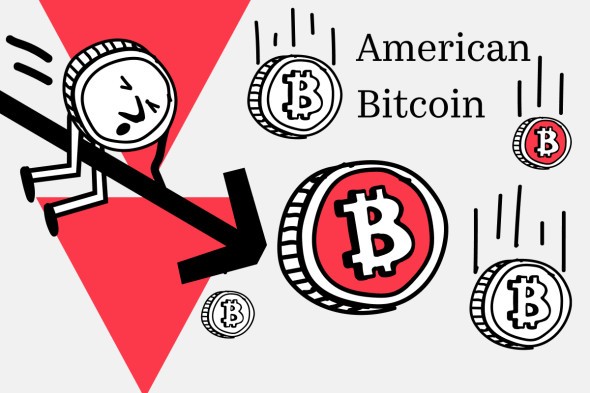
American Bitcoin, a cryptocurrency mining company co-founded by Eric Trump, son of Donald Trump, reported a net loss of $57.2 million for the second quarter of 2026. This loss was primarily driven by a decline in the value of Bitcoin held on its balance sheet. The company mined 932 BTC in the quarter, increasing its total reserves to 8,002 BTC, making it the 16th largest corporate Bitcoin holder. While mining revenue rose 8% to $67 million, the company's cost to mine one Bitcoin was approximately $36,500 against a market price around $63,000 in early August. Approximately 3,090 of its Bitcoins are pledged as collateral to equipment maker Bitmain. The company operates using the data centers and hardware of Hut 8, which received an 80% stake in American Bitcoin at its launch. American Bitcoin went public in September 2025, but its stock (ABTC) has since fallen over 90%. The company has faced controversy, with a Forbes investigation alleging it uses the Trump name to attract investors while primarily buying Bitcoin with raised funds rather than mining efficiently—a claim Eric Trump vehemently denied. For comparison, Michael Saylor's MicroStrategy, the world's largest corporate Bitcoin holder, reported a Q2 2026 net loss of $8.2 billion, also due to Bitcoin depreciation. Eric Trump has positioned the company as a way to give investors stock-market exposure to Bitcoin, similar to MicroStrategy, and has called himself a "Bitcoin maximalist."

cryptonews.ru1h ago

Trump's Mining Company Reports $57 Million Loss

cryptonews.ru1h ago

Forecast for August 2026 for the Crypto Market: Macroeconomics Will Determine Everything

Happy Coin News, with AI assistance from Gemini, presents a cryptocurrency market forecast for August 2026. The month is expected to solidify the market's structural transformation, where speculative narratives give way to pragmatic institutional integration. The key determinant of market dynamics will be the macroeconomic environment, with high U.S. interest rates and persistent inflation likely limiting retail capital inflow into high-risk digital assets. In this climate of limited liquidity, institutional players are predicted to gain near-total market control. Regulatory shifts will also be impactful. The EU's MiCA framework transition period officially ended on July 1, 2026, requiring full authorization for service providers. Meanwhile, the U.S. FIT21 bill will gain momentum, clarifying SEC and CFTC roles. These macro and regulatory pressures are reflected in the market structure: total capitalization is around $2.221 trillion, with Bitcoin's dominance high at 56.35%. A broad "altcoin season" is not imminent, as the Altcoin Season Index remains low. Growth in altcoins will be selective, with smart capital concentrating on AI infrastructure, next-gen DeFi, and tokenization projects. The main trend dominating August will be the tokenization of real-world assets (RWA), accelerated by the new regulatory clarity. This institutional integration will further tighten security and custodial requirements, moving the market definitively away from unregulated platforms toward hybrid models combining traditional finance tools with transparent blockchain infrastructure.

cryptonews.ru1h ago

Forecast for August 2026 for the Crypto Market: Macroeconomics Will Determine Everything

cryptonews.ru1h ago

Trading

Spot

Hot Articles

What is $BITCOIN

DIGITAL GOLD ($BITCOIN): A Comprehensive Analysis Introduction to DIGITAL GOLD ($BITCOIN) DIGITAL GOLD ($BITCOIN) is a blockchain-based project operating on the Solana network, which aims to combine the characteristics of traditional precious metals with the innovation of decentralized technologies. While it shares a name with Bitcoin, often referred to as “digital gold” due to its perception as a store of value, DIGITAL GOLD is a separate token designed to create a unique ecosystem within the Web3 landscape. Its goal is to position itself as a viable alternative digital asset, although specifics regarding its applications and functionalities are still developing. What is DIGITAL GOLD ($BITCOIN)? DIGITAL GOLD ($BITCOIN) is a cryptocurrency token explicitly designed for use on the Solana blockchain. In contrast to Bitcoin, which provides a widely recognized value storage role, this token appears to focus on broader applications and characteristics. Notable aspects include: Blockchain Infrastructure: The token is built on the Solana blockchain, known for its capacity to handle high-speed and low-cost transactions. Supply Dynamics: DIGITAL GOLD has a maximum supply capped at 100 quadrillion tokens (100P $BITCOIN), although details regarding its circulating supply are currently undisclosed. Utility: While precise functionalities are not explicitly outlined, there are indications that the token could be utilized for various applications, potentially involving decentralized applications (dApps) or asset tokenization strategies. Who is the Creator of DIGITAL GOLD ($BITCOIN)? At present, the identity of the creators and development team behind DIGITAL GOLD ($BITCOIN) remains unknown. This situation is typical among many innovative projects within the blockchain space, particularly those aligning with decentralized finance and meme coin phenomena. While such anonymity may foster a community-driven culture, it intensifies concerns about governance and accountability. Who are the Investors of DIGITAL GOLD ($BITCOIN)? The available information indicates that DIGITAL GOLD ($BITCOIN) does not have any known institutional backers or prominent venture capital investments. The project seems to operate on a peer-to-peer model focused on community support and adoption rather than traditional funding routes. Its activity and liquidity are primarily situated on decentralized exchanges (DEXs), such as PumpSwap, rather than established centralized trading platforms, further highlighting its grassroots approach. How DIGITAL GOLD ($BITCOIN) Works The operational mechanics of DIGITAL GOLD ($BITCOIN) can be elaborated on based on its blockchain design and network attributes: Consensus Mechanism: By leveraging Solana’s unique proof-of-history (PoH) combined with a proof-of-stake (PoS) model, the project ensures efficient transaction validation contributing to the network's high performance. Tokenomics: While specific deflationary mechanisms have not been extensively detailed, the vast maximum token supply implies that it may cater to microtransactions or niche use cases that are still to be defined. Interoperability: There exists the potential for integration with Solana’s broader ecosystem, including various decentralized finance (DeFi) platforms. However, the details regarding specific integrations remain unspecified. Timeline of Key Events Here is a timeline that highlights significant milestones concerning DIGITAL GOLD ($BITCOIN): 2023: The initial deployment of the token occurs on the Solana blockchain, marked by its contract address. 2024: DIGITAL GOLD gains visibility as it becomes available for trading on decentralized exchanges like PumpSwap, allowing users to trade it against SOL. 2025: The project witnesses sporadic trading activity and potential interest in community-led engagements, although no noteworthy partnerships or technical advancements have been documented as of yet. Critical Analysis Strengths Scalability: The underlying Solana infrastructure supports high transaction volumes, which could enhance the utility of $BITCOIN in various transaction scenarios. Accessibility: The potential low trading price per token could attract retail investors, facilitating wider participation due to fractional ownership opportunities. Risks Lack of Transparency: The absence of publicly known backers, developers, or an audit process may yield skepticism regarding the project's sustainability and trustworthiness. Market Volatility: The trading activity is heavily reliant on speculative behavior, which can result in significant price volatility and uncertainty for investors. Conclusion DIGITAL GOLD ($BITCOIN) emerges as an intriguing yet ambiguous project within the rapidly evolving Solana ecosystem. While it attempts to leverage the “digital gold” narrative, its departure from Bitcoin's established role as a store of value underscores the need for a clearer differentiation of its intended utility and governance structure. Future acceptance and adoption will likely depend on addressing the current opacity and defining its operational and economic strategies more explicitly. Note: This report encompasses synthesised information available as of October 2023, and developments may have transpired beyond the research period.

1.4k Total ViewsPublished 2025.05.13Updated 2025.05.13

What is $BITCOIN

Discussions

Welcome to the HTX Community. Here, you can stay informed about the latest platform developments and gain access to professional market insights. Users' opinions on the price of BTC (BTC) are presented below.

活动图片