As rare as Luoyang paper in ancient times, the explosive usage of AI Agents has become a nightmare for tech companies. These companies have unfortunately discovered: Compared to AI, the biggest advantage of humans is that you can delay paying their wages (x).

AI doesn't understand sentiment; Silicon Valley has no faith in tears.
Recently, even Amazon, with its annual revenue of over $700 billion and vast resources, was severely beaten down by Claude.
According to Amazon employees, the company recently wanted to use Claude Sonnet to fill in detailed author information on its own website.
But this seemingly simple task ended up costing Amazon $1.8 million.
That's 860% over budget.
And it took 5 months to be discovered.
And in the end, it wasn't even successfully deployed. (Though this already sounds like a management issue.)

An Agent might fail, but it will also persist tirelessly, retrying again and again day and night. It was a calm day, and no one warned it to "Please wait before trying again."
Currently, the public price for Claude Sonnet is about $3 per million input tokens and $15 per million output tokens. $1.8 million could have burned through up to 600 billion tokens—in terms of data volume alone, that's equivalent to twice the entire training corpus of GPT-3.
Numerous cases like this have already occurred within Amazon, and such bugs often go unnoticed for a long time.
It's very difficult for us to figure out exactly how much anything related to AI costs. Minor issues that are insignificant in traditional systems can lead to unimaginably high costs when using AI.
The Everything Store's Automation Dream
Nevertheless, these incidents have not stopped Amazon's march towards automation. Today, it is betting on AI on an unprecedented scale.
CEO Andy Jassy announced that Amazon's capital expenditure for 2026 is expected to be around $220 billion, with the vast majority directed towards AWS (Amazon Web Services), in-house AI chips, and power infrastructure. This represents an increase of nearly 60% compared to 2025, making it the single highest annual capital expenditure among global mega-cap companies.

This massive investment has also yielded returns exceeding expectations. Just this morning, Amazon announced its second-quarter earnings for the period ending June 30, 2026. The data shows that AWS achieved net sales of $42.2 billion in Q2, a year-on-year increase of 37%. Furthermore, of Amazon's total operating profit of $27.5 billion, AWS contributed approximately 60%, while its revenue accounted for only 21% of the company's total revenue.
At the same time, Amazon has conducted two large-scale rounds of layoffs since October 2025, cutting a total of about 30,000 positions.
As early as last year, Jassy himself painted a rosy picture, writing in a memo to all employees:
We currently have over 1,000 generative AI services, but given our scale, this is just the tip of the iceberg. In the future, there will be billions of Agents operating within Amazon.
Not only that, this wave of automation has already moved out of the office and into Amazon's warehousing and logistics systems.
According to reports, the goal of Amazon's robotics division is to achieve approximately 75% automation in warehouse operations by around 2033. This means Amazon would hire about 160,000 fewer people in the US by 2027, and over 600,000 fewer by 2033.
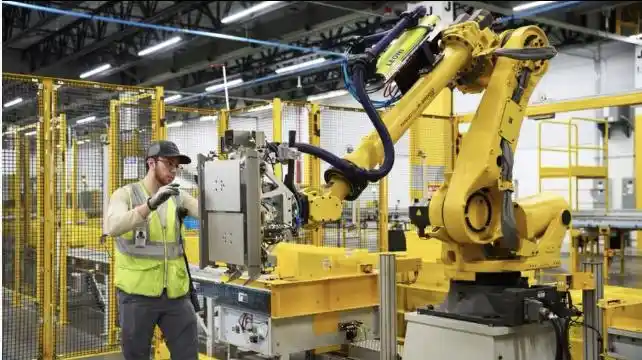
Amazon's factory
However, external observers have offered harsher judgments. Nobel Prize-winning economist in 2024 and MIT professor Daron Acemoglu warned when evaluating this plan: "If Amazon's automation dream materializes, then the largest employer in the US will transform from a net job creator into a 'net job destroyer.'"
End of the Token Hero Era? Big Tech Companies Start Locking Down
Amazon's cost overrun is not an isolated case. As early as the beginning of this year, similar token usage spirals were happening simultaneously at several major companies.
Typically, these farces begin with a phrase like this:
Team, we must use AI "as much as possible," create "as much profound value as possible" with "as small a team as possible"!
Subsequently, employees spontaneously set up usage leaderboards. Titles like "Token Burn Legend," "Cache King," "Idle-to-Immortal" briefly became coveted monikers in the competitive landscape.
Finally, the bosses, shocked by their employees' diligence, hastily concluded the competition with urgent declarations.

Image is AI-generated
Goodhart's law, proposed by economist Charles Goodhart in 1975: When a measure becomes a target, it ceases to be a good measure.
Amazon also once had an informal leaderboard called "KiroRank," which led some employees to intentionally inflate their personal data. Afterwards, KiroRank was shut down, and Amazon, the master of metrics, created something called "normalized deployments" to measure employee AI output.
In April of this year, a Meta employee built a leaderboard called Claudeonomics, aggregating AI usage data from over 85,000 employees and listing the top 250 token consumers. During this period, Meta employees' total token consumption climbed to 73.7 trillion tokens over 30 days.
If converted at the public price, this number corresponds to a bill of approximately $221 million per month.
In June, Meta sent a formal memo to about 6,000 employees, announcing it would set limits on token usage and build a central platform called "AI Gateway" to monitor each team's AI usage and spending in real-time, setting budgets and caps.
This spiral was not limited to companies with leaderboards. Uber burned through its entire annual AI programming budget in the first four months of 2026, subsequently setting a monthly spending cap of $1,500 per employee per tool. Its COO admitted that the link between token spending and measurable output is not yet established.
And this overly smooth sense of "loss of control" is something model providers themselves feel acutely.
On June 3rd, Sam Altman stated that the AI cost issue was completely ignored at the beginning of this year but has now become a major problem.
He revealed that the highest individual user within OpenAI consumes about 100 billion tokens per month. One employee even burned through approximately 210 billion tokens in a single week.

Image is AI-generated
In less than a year, Silicon Valley has started meticulously calculating AI usage. Replacing the primal excitement of early humans discovering fire is now budgets, caps, approvals, dashboards.
A survey shows that only 26% of companies have full visibility into their AI costs.
In other words, most companies, before starting to cut costs, didn't even know how much they were spending in the first place.
Does Higher Automation Mean Higher Efficiency?
On August 1, 2012, Knight Capital Group, one of the largest stock market makers in the US, was updating its automated trading system to participate in the New York Stock Exchange's Retail Liquidity Program.
During deployment, engineers inadvertently activated an old piece of code. Subsequently, this code began automatically executing a series of economically nonsensical trade orders at an extremely high frequency.
"Buying high, selling low," with no preset stop-loss mechanisms or monetary caps. From market open until it was manually shut down, the process lasted about 45 minutes.
During this time, the system executed over 4 million trades across 154 stocks, accumulating about $7 billion in stock positions the company never intended to hold.

After engineers finally identified the issue and shut down the system, Knight Capital was forced to sell off these positions at low prices. After closing out the positions, the total loss amounted to approximately $440 million, equivalent to three times the company's annual profit.
Within two trading days after the news broke, Knight Capital's stock price plummeted by 75%. Months later, Knight Capital was acquired by its then-competitor GETCO, bringing its 17-year legendary run to an end.
Typically, automation promises people greater speed, cheaper prices, and fewer human errors.
However, when automated systems fail, losses are magnified with the same speed, scale, and efficiency.
For Amazon, it's safe to believe this tuition fee won't be a total loss.
Reference Links:
[1]https://www.ft.com/content/77baac40-d803-4084-94f3-a133653072cf?syn-25a6b1a6=1
[2]https://www.aboutamazon.com/news/company-news/amazon-ceo-andy-jassy-on-generative-ai
[3]https://agidaily.cc/articles/tokenmaxxing-end-ai-usage-caps-2026
[4]https://www.cnbc.com/2026/07/30/amazon-amzn-q2-earnings-report-2026.html
[5]https://www.thestreet.com/technology/amazon-joins-microsoft-in-sending-shocking-message-to-employees
This article is from the WeChat public account "Quantum Bit," author: Cheng Qian