Reported by CoreThings on August 6th, last night, Jiangsu-listed A-share company and power semiconductor firm Suzhou Kaiweite Semiconductor Co., Ltd. (hereinafter referred to as "Kaiweite") issued an announcement, stating its intention to acquire 100% equity of Chengdu power semiconductor company Jingyi Semiconductor Co., Ltd. (hereinafter referred to as "Jingyi Semiconductor") for 1.65 billion yuan, and to issue shares to no more than 35 specific investors to raise supporting funds.
Upon completion of this transaction, Jingyi Semiconductor will become a wholly-owned subsidiary of Kaiweite.
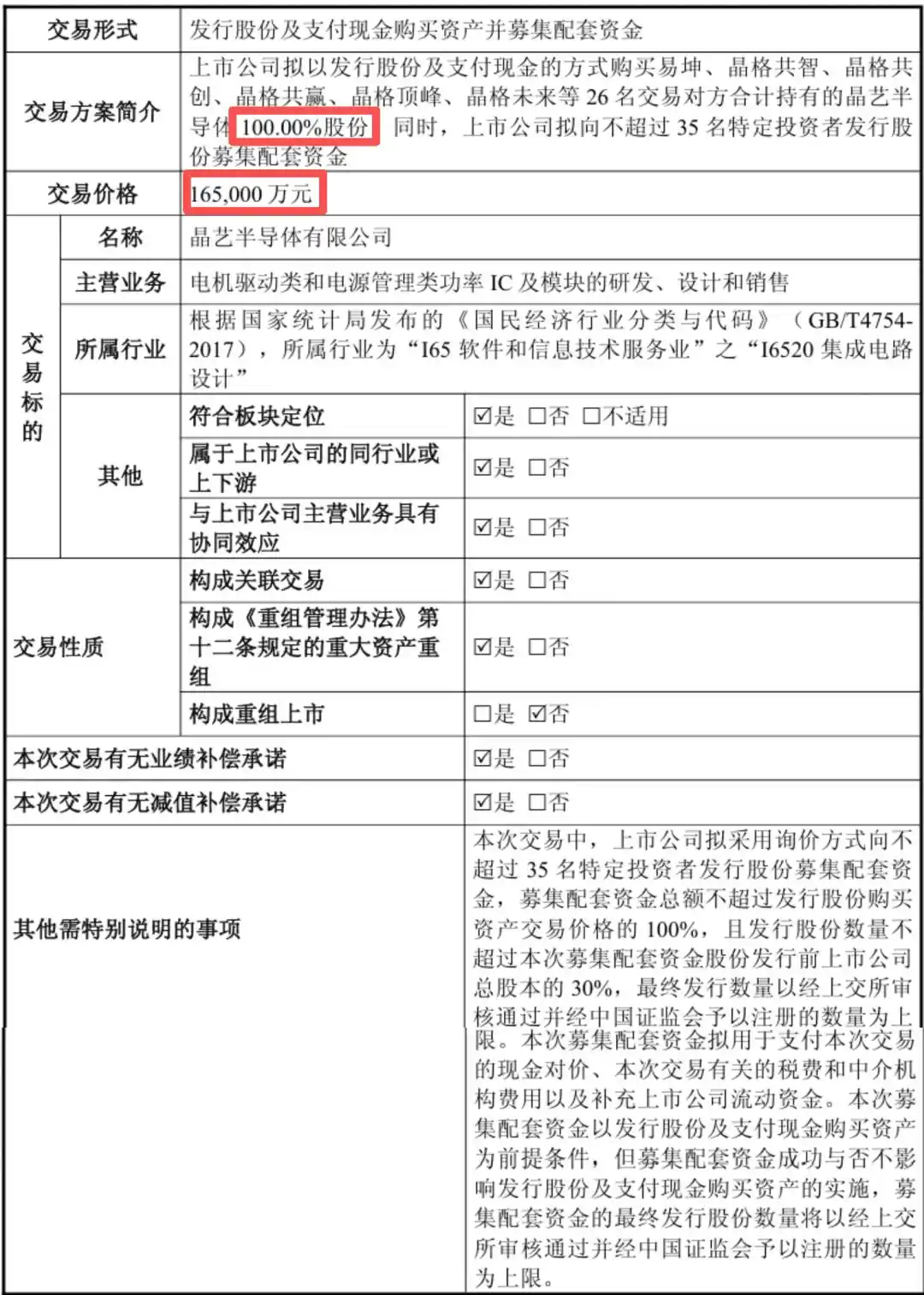
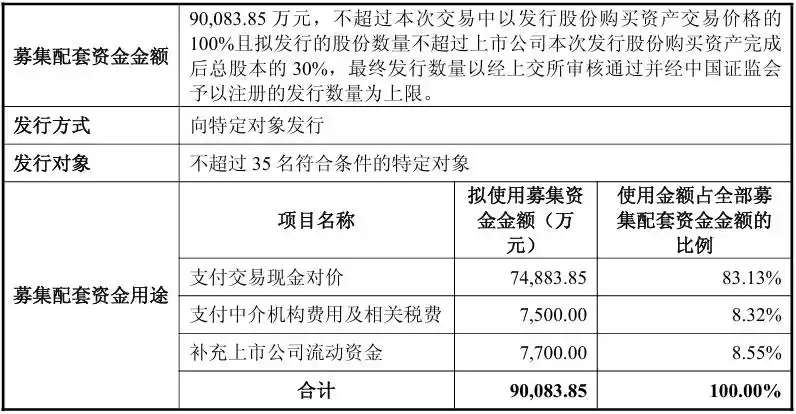
Kaiweite expects to raise supporting funds amounting to approximately 901 million yuan, not exceeding 100% of the transaction price of the share issuance for asset purchase in this deal, and the number of shares to be issued will not exceed 30% of Kaiweite's total share capital after the completion of this share issuance for asset purchase.
Jingyi Semiconductor is one of the major customers of Kaiweite. This acquisition of Jingyi Semiconductor by Kaiweite, described as a "snake swallowing an elephant," constitutes a significant asset restructuring.
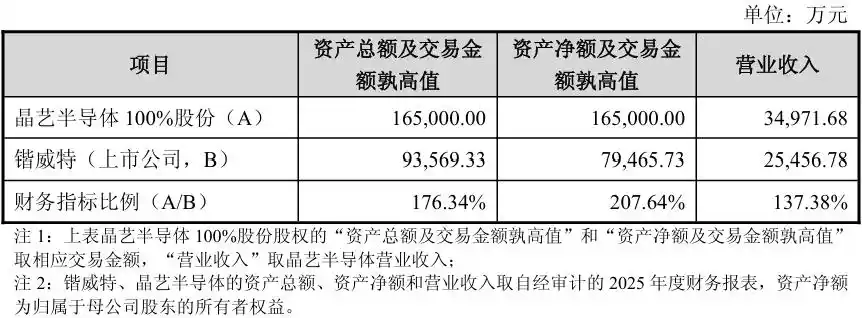
According to the performance data of both parties in the transaction for the year 2025, the higher value between Kaiweite's total assets and the transaction amount is approximately 936 million yuan, with operating revenue around 255 million yuan; the higher value between Jingyi Semiconductor's total assets and the transaction amount is 1.65 billion yuan, with operating revenue around 350 million yuan, which are 176.34% and 137.38% of Kaiweite's respective figures, both higher than Kaiweite's.
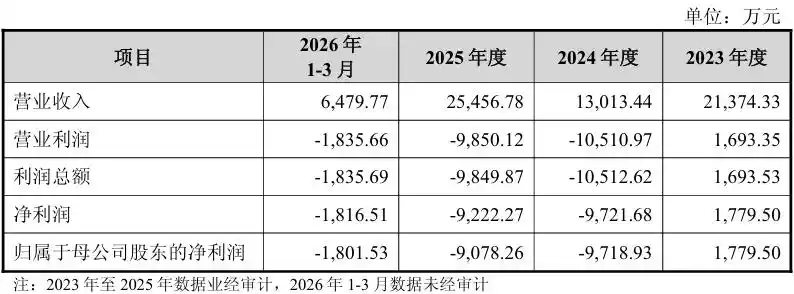
According to Kaiweite's published plan, Kaiweite achieved profitability in 2023, with net profit attributable to the parent company's shareholders being 17.795 million yuan; the company recorded losses in both 2024 and 2025, with net profit attributable to the parent company's shareholders being -97.1893 million yuan and -90.7826 million yuan respectively; in the first quarter of 2026, this figure was -18.0153 million yuan, still in a loss-making state.
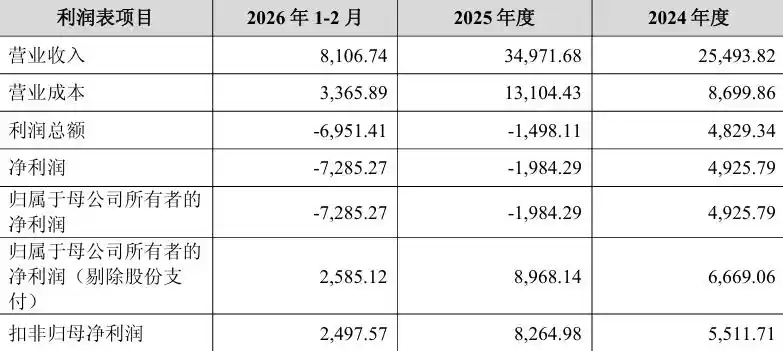
For 2024, 2025, and January-February 2026, Jingyi Semiconductor's net profit attributable to the owners of the parent company (excluding share-based payments) was 66.6906 million yuan, 89.6814 million yuan, and 25.8512 million yuan respectively, demonstrating stronger profitability than Kaiweite.
Assuming the acquisition is completed, Kaiweite's net profit attributable to the owners of the parent company for 2025 and January-February 2026 would be 20.9468 million yuan and 18.8593 million yuan respectively, indicating a significant improvement in profitability.
The performance commitments for both parties in this acquisition are: Jingyi Semiconductor's chip customization and mass production business shall achieve cumulative net profit for 2026 and 2027 of no less than 255 million yuan; its self-developed chip business shall achieve revenue for 2026, 2027, and 2028 of no less than 335 million yuan, 452 million yuan, and 566 million yuan respectively, with cumulative revenue over three years no less than 1.353 billion yuan.
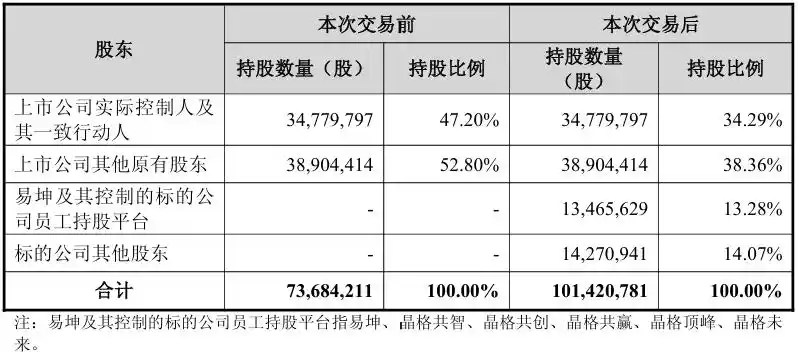
As of February 28, 2026, Kaiweite's total share capital was 73,684,211 shares. In this transaction, Kaiweite will issue 27,736,570 new shares as share consideration to Jingyi Semiconductor.
The share consideration payment in this Kaiweite transaction is approximately 901 million yuan, and the cash payment consideration is approximately 749 million yuan. Among this, the actual controller and chairman of Jingyi Semiconductor, Yi Kun, and entities like Jingge Gongzhi, Jingge Gongchuang, as performance commitment parties, will receive total consideration of approximately 998 million yuan in this transaction, including share consideration of approximately 659 million yuan and cash consideration of approximately 339 million yuan.
Among the share consideration received by the performance commitment parties, the portion corresponding to the chip customization and mass production business (i.e., 296 million yuan) is planned to be issued in two tranches; the remaining share consideration of approximately 363 million yuan is planned to be paid in a lump sum after the completion of this transaction.
After the completion of this transaction (excluding the supporting funds raised), Yi Kun and Jingyi Semiconductor's employee持股平台 (referring to Yi Kun, Jingge Gongzhi, Jingge Gongchuang, Jingge Gongying, Jingge Dingfeng, Jingge Weilai) will hold 13.28% of Kaiweite's shares; after the completion of this issuance of shares and payment of cash for asset purchase, the proportion of Kaiweite's shares controlled by Yi Kun will exceed 5%.
Kaiweite was founded in 2015 by its founders, Chairman Ding Guohua, an alumnus of Xi'an Jiaotong University, and General Manager Luo Yin, an alumnus of Southeast University, both holding master's degrees from Southeast University.
The company is primarily engaged in the R&D, production, and sales of smart power semiconductor devices and power integrated chips. It was listed on the Shanghai Stock Exchange's STAR Market on August 18, 2023, and is recognized as a National-level "Little Giant" Enterprise specializing in niche sectors. Its products include Power Device, power management, power driver, amplifier, power switch, isolation device, and logic device products.
Kaiweite's products are applied in consumer electronics, industrial control, and high-reliability fields, and it now has nearly 800 product types including smart power ICs, Si-based and SiC power devices.
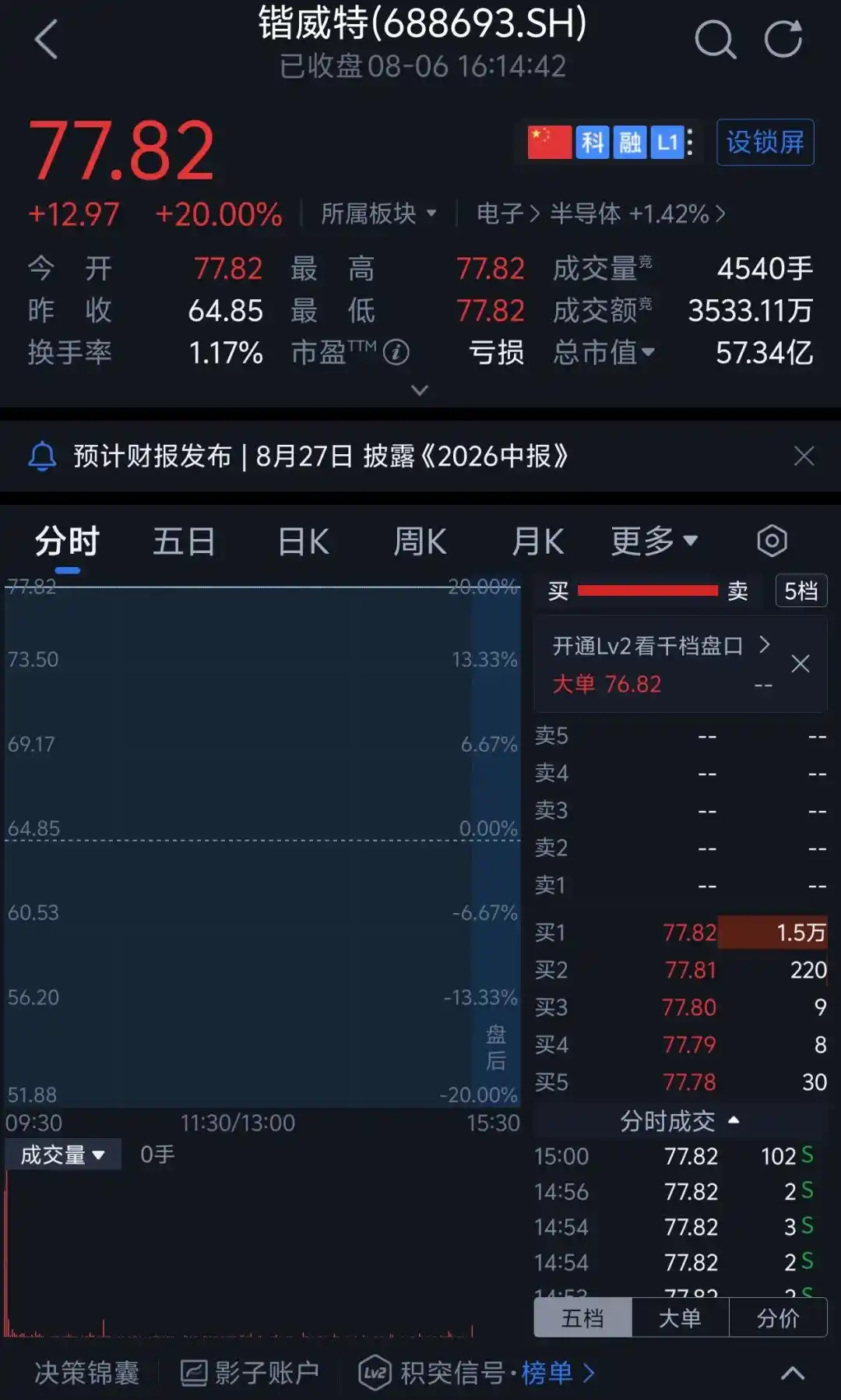
The day after Kaiweite announced the acquisition of Jingyi Semiconductor, its A-share stock price opened with a limit-up (涨停). As of the close of A-shares today, Kaiweite's stock price rose by 20% to 77.82 yuan per share, with a total market capitalization of 5.734 billion yuan.
Kaiweite A-share Stock Price (Source: Tencent Self-selected Stocks)
Jingyi Semiconductor was founded in January 2019 and is a fabless power semiconductor enterprise, also recognized as a National-level Key "Little Giant" Enterprise specializing in niche sectors.
The company is mainly engaged in the R&D design and sales of single-chip power ICs, multi-chip hybrid packaging power modules, and system-level power conversion modules. It possesses two major categories of power products: motor drive and power management, specifically covering four product lines: Intelligent Power Module (IPM), micro motor drive IC, high-performance computing power management, and industrial and consumer power management. Its products are applied in markets such as white goods, industrial, smart meters, optical modules, solid-state drives (SSD), security, communications, and high-performance computing.
Simultaneously, Jingyi Semiconductor procures power devices from Kaiweite and packages them with its self-developed power control ICs to form Intelligent Power Module (IPM) products. Related products have been supplied to leading domestic home appliance industry companies such as Midea, Xiaomi, Gree, TCL, Hitachi-Haier, and have successfully achieved batch production, with cumulative mass production cooperation clients exceeding 500.
Jingyi Semiconductor has continuously focused on the layout of half-bridge IPM for air conditioner fans, being the earliest to achieve product introduction and规模化出货 in the white goods half-bridge IPM field. Frost & Sullivan测算 data shows that in 2025, Jingyi Semiconductor's products held a market share of 53.5% in the domestic IPM half-bridge module market.
Furthermore, according to Frost & Sullivan测算, in 2025, Jingyi Semiconductor ranked among the top five local manufacturers in terms of shipment volume in the domestic DC-DC market. Among these, in the smart meter field, Jingyi Semiconductor's DC-DC chips with ultra-low ripple, high抗干扰, and high efficiency降压 hold a leading position in the industry market share, serving core终端 clients such as State Grid and China Southern Power Grid.
In the security field, Jingyi Semiconductor provides customers with solutions featuring极简化 peripheral devices and optimal costs, having successfully supplied leading security industry companies like Hikvision and Dahua Technology; in the optical module field, the company is one of the few domestic chip suppliers capable of mass-producing multiple product categories and providing relatively comprehensive power management solutions, already having头部 clients such as Huagong Tech, Accelink, and Lantech.
Conclusion: M&A Repairs Profitability Level, Expands Power Semiconductor Product Layout
Kaiweite has incurred losses for two consecutive years. This acquisition and merger with Jingyi Semiconductor can further improve Kaiweite's current profit situation of阶段性亏损.
The business fit between these two companies is relatively high. Upon completion of this transaction, Kaiweite and Jingyi Semiconductor can carry out integration in areas such as product layout, technology R&D, client channels, and internal management. Kaiweite can supplement its power semiconductor and other product matrices, while simultaneously enhancing its technological R&D水平, broadening a larger market space for domestic power semiconductors.
This article is from the WeChat public account "CoreThings", author: Liu Yu, editor: Chen Junda