The SEC Is Taking Aim at Paxos and (Annoyingly) It’s Good For Bitcoin

CoinDeskPublished on 2023-02-15Last updated on 2023-02-15

Abstract

While the largest cryptocurrency has not been a direct focus for regulators, bitcoiners should not become cheerleaders.

Chalk up another point for the regulators as the crypto onslaught continues. I hate to make this about Bitcoin, but I will. Because in a way, this is about Bitcoin.

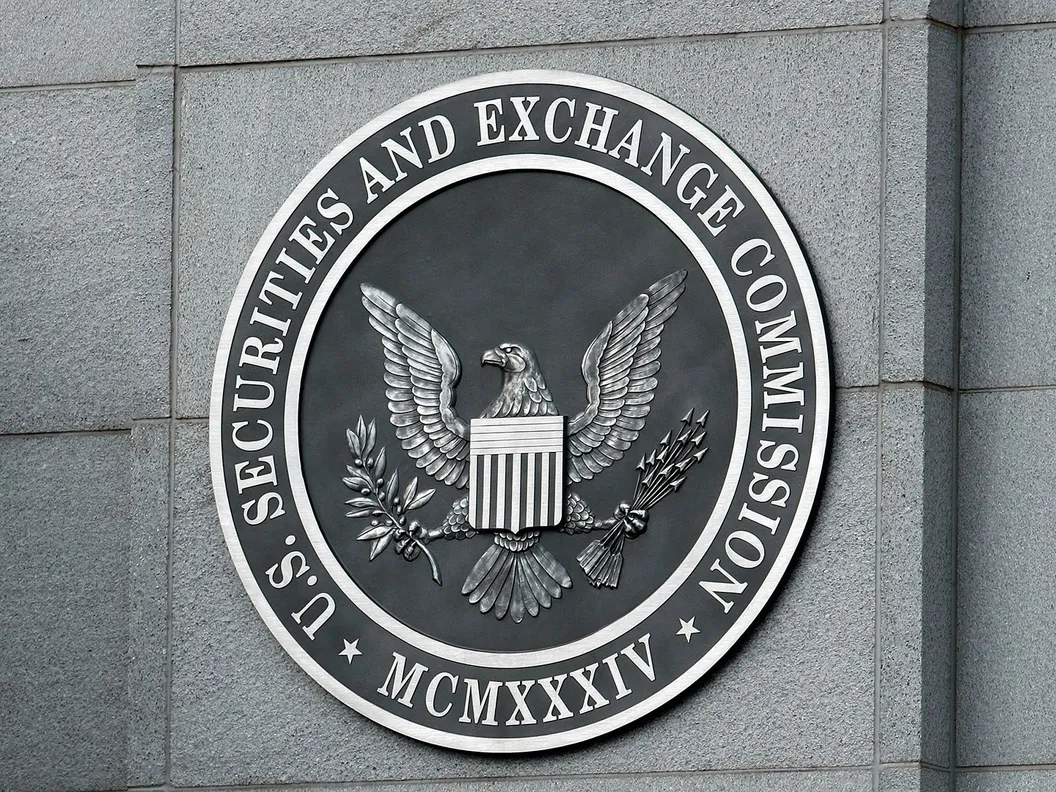
The U.S. Securities and Exchange Commission (SEC) reportedly plans to sue crypto firm Paxos for violating investor protection laws because the firm issues, maintains and white labels Binance USD (BUSD). The SEC alleges that BUSD, a U.S. dollar stablecoin with Binance branding, is an unregistered security.

And while it seems bad for BUSD and Paxos, it’s good for Bitcoin. Leave it to the Bitcoin maximalist, I guess.

Nevermind if it makes a shred of sense that something with no expectation of profit can be deemed a security (U.S. dollar stablecoins are not interest-bearing and they are pegged at $1), Paxos still decided to stop minting the stablecoin starting Feb. 21 at the direction of the New York Department of Financial Services (NYDFS). Paxos has since said it “categorically disagrees” with the SEC on the point that BUSD is a security and is “prepared to vigorously litigate if necessary.”

Points were also recently awarded to the regulators following crypto exchange Kraken’s settlement with the SEC last week on charges it was offering unregistered securities through a staking-as-a-service platform, and after Wyoming-based Custodia Bank was denied membership to the Federal Reserve System in late January for being a risk to the banking system since it aims to serve crypto clients.

Again, nevermind if the regulation makes a shred of sense. It is regulation nonetheless.

No regulation for you, Bitcoin

What’s missing from the regulators’ recent push is anything that represents a direct attack on Bitcoin. Sure, there are warnings of market volatility, and a lot of Bitcoin’s most-used trading pairs feature the stablecoins regulators are focused on. But putting Bitcoin in a chokehold isn’t a priority. That’s mostly because it would be quite difficult to do so.

For all the issues Bitcoin’s decentralized design presents, there isn’t a central company or individual that a government can pinpoint for a targeted regulatory push as it can for stablecoins (e.g., Paxos, Circle) or staking providers (e.g., Kraken, Coinbase). And for the Bitcoin-related companies or individuals it could pick out and somehow buffet, the network is decentralized enough that it would take the battering in stride. It would take a widespread, highly coordinated and expensive attack to meaningfully slow down the Bitcoin network.

As such, Bitcoin as a network will be largely uninhibited by this regulatory push.

Tick tock, next block.

No one should be surprised that regulators are regulating

That said, maybe Bitcoin regulation isn’t completely off the table after the Biden administration published a call to action to regulate the industry thoroughly, titled “The Administration’s Roadmap to Mitigate Cryptocurrencies’ Risks” on Jan. 27. Looking back at this, no one should have really been surprised with new crypto regulatory action.

The White House’s relatively short online post notes stablecoins twice: In the first instance it is enclosed in what must be scare quotes in reference to terraUSD, which collapsed; and in the second instance it linked to a (very long) Financial Stability Oversight Council (FSOC) October 2022 report on digital asset financial stability risks and regulation. The FSOC report specifically makes the case for robust regulation of stablecoin issuers’ reserve assets and banks’, credit unions’ and trust companies’ interactions with crypto – using the term “stablecoin” over 170 times in its 124 pages.

Now the regulators are taking direct action against the providers of stablecoins they deem to have opaque reserve practices – the custodial staking service providers like Kraken and the banks looking to service crypto companies like Custodia before they get too big and intertwined with the noncrypto financial system.

Yet, even though the keen observer shouldn’t be surprised by the recent regulatory moves they need not be happy with or satisfied with the regulation.

No one should be satisfied, even if you’re a Bitcoiner

From the same White House blog post:

“Safeguards will ensure that new technologies are secure and beneficial to all – and that the new digital economy works for the many, not just the few.”

I want to put aside the staking provider conversation to focus on the consequences of policies aimed at Paxos and stablecoins instead. With stablecoins as the focus, the White House’s sentiment encapsulated in the above quote is perfect, and you’d be hard-pressed to find anyone who could argue against it in good faith. Expanding access to sound financial services empowers people, which raises the quality of life across the board. But sentiment needs to be met with action to mean anything.

Forcing stablecoin issuers like Paxos to operate with almost unsettling transparency would be a good thing as long as it doesn’t become onerous for the issuer.

Right now, we generally have to trust that stablecoin issuers like Paxos (USDP, BUSD), iFinex Inc. (tether) and Circle (USDC) maintain adequate U.S. dollars or dollar equivalents in reserve to survive a spike in withdrawals by looking at “Trust and Transparency” blog posts or one-page .pdf uploads when we should have some other means in which we could verify their claims. If it’s not clear, this is where a blockchain is supposed to have value.

So policy which edges the stablecoin ecosystem away from where it is now with its “Don’t Verify. Trust.” dogma toward the exact opposite would be a net improvement for the aforementioned “many.” Especially because it is those “many” who can most benefit from stablecoins.

Just ask the Lebanese citizens who are opting to use U.S. dollar stablecoin tether to pay for groceries as their country’s sovereign currency tanks and the economic crisis continues to unfold. Regulation that decreases the likelihood of yet another bank run experience for people is a good thing. And don’t think for a second the plight of the Lebanese person doesn’t at least loosely resemble that of some Americans.

If the U.S. government instead intends to regulate stablecoins harshly in an attempt to introduce its own central bank digital currency (CBDC) with the same or worse transparency and strong-arm people into choosing it from a menu with only one option, then what have we actually achieved here? The attitude that “Uncle Sam knows best” is exactly why our institutions are the way they are now. U.S. stablecoins wouldn’t exist if the current banking infrastructure expanded access to financial services like permissionless stablecoin protocols rather than excluding half the world's population.

Don’t get me wrong, I maintain that stablecoin regulation is good for Bitcoin. Bitcoin is the escape hatch. In a world where the regulators continue to pile on stablecoins and other crypto-related things to the point where they’re rendered toothless, Bitcoin will be there.

Borderless, censorship-resistant, peer-to-peer money will be open for you then as it is now. Even if payments aren’t your thing and you live in the world of crypto trading, Bitcoin can fill in admirably as the base of trading pairs as it did in the early days of crypto if U.S. dollar stablecoins are regulated out of existence.

Still, although this can be good for Bitcoin, cheering for it by urging on regulation is unsavory and in exceedingly poor form. Freedom of choice is central to the Bitcoin ethos. Even though Bitcoin is the best choice, regulation shouldn’t force anyone to have to make that best choice.


Trending Cryptos

Related Reads

The Full Story of How Crypto Unicorn Blockstream Is Mired in Serious Fraud Allegations

This article details serious allegations of fraud against Bitcoin infrastructure company Blockstream, founded by Bitcoin pioneer Adam Back. In June 2024, investigative account NatInfoSec published a report accusing Blockstream's mining note (BMN) program of potentially operating a multi-billion dollar scheme with Ponzi-like characteristics. The core allegations focus on Blockstream Mining Notes (BMNs), which offer investors fixed annual yields up to approximately 20% from Bitcoin mining. NatInfoSec's investigation raises several key issues: 1. **Suspicious Hashrate & Payout Capacity**: The analysis suggests Blockstream would need 20-45 EH/s of mining power to cover its BMN obligations, but its public dashboard shows only around 15 EH/s. Furthermore, no verifiable public evidence (e.g., grid connection records, import data) was found to support the massive mining operation required. 2. **Questionable Payout Source**: The BMN contract allows Blockstream to use Bitcoin from *any source* (Substitute Performance BTC) to fulfill investor payouts, raising concerns that payouts may not come from actual mining revenue. 3. **High-Risk, Fixed Returns**: Offering ~20% fixed yields in the volatile, cyclical Bitcoin mining industry is viewed as highly unusual and requires clear explanation. 4. **Undisclosed Criminal Record of Key Figure**: Christopher William Cook, a key figure in Blockstream's mining operations and CEO of spin-off Exacore, was found to have a federal felony conviction for mail fraud in 2008, a fact not disclosed in BMN offering documents. His background was also allegedly embellished. 5. **Potential Contagion to BSTR SPAC**: Questions were raised about whether these liabilities and Cook's record should have been disclosed in the SEC filings for Bitcoin Standard Treasury Company (BSTR), a separate Adam Back-associated firm planning a SPAC merger. The crypto community is divided. BitMEX Research validated Cook's criminal record and expressed concern over the high yields but found other evidence lacking or misleading, noting the legal separation between BMN, Blockstream, and BSTR. Blockstream defenders, like Samson Mow, argue the mining is real. Critics, however, emphasize the lack of independent, verifiable proof of the mining operation's scale and the true source of investor payouts. The article concludes that BMN remains shrouded in key unanswered questions regarding its actual size, the verifiability of its underlying mining assets and payouts, the source of its high yields, and the full role and disclosure concerning Chris Cook. Blockstream had not issued a comprehensive response at the time of writing.

marsbit8h ago

The Full Story of How Crypto Unicorn Blockstream Is Mired in Serious Fraud Allegations

marsbit8h ago

Trading

Spot
Futures

Hot Articles

What is $BITCOIN

DIGITAL GOLD ($BITCOIN): A Comprehensive Analysis Introduction to DIGITAL GOLD ($BITCOIN) DIGITAL GOLD ($BITCOIN) is a blockchain-based project operating on the Solana network, which aims to combine the characteristics of traditional precious metals with the innovation of decentralized technologies. While it shares a name with Bitcoin, often referred to as “digital gold” due to its perception as a store of value, DIGITAL GOLD is a separate token designed to create a unique ecosystem within the Web3 landscape. Its goal is to position itself as a viable alternative digital asset, although specifics regarding its applications and functionalities are still developing. What is DIGITAL GOLD ($BITCOIN)? DIGITAL GOLD ($BITCOIN) is a cryptocurrency token explicitly designed for use on the Solana blockchain. In contrast to Bitcoin, which provides a widely recognized value storage role, this token appears to focus on broader applications and characteristics. Notable aspects include: Blockchain Infrastructure: The token is built on the Solana blockchain, known for its capacity to handle high-speed and low-cost transactions. Supply Dynamics: DIGITAL GOLD has a maximum supply capped at 100 quadrillion tokens (100P $BITCOIN), although details regarding its circulating supply are currently undisclosed. Utility: While precise functionalities are not explicitly outlined, there are indications that the token could be utilized for various applications, potentially involving decentralized applications (dApps) or asset tokenization strategies. Who is the Creator of DIGITAL GOLD ($BITCOIN)? At present, the identity of the creators and development team behind DIGITAL GOLD ($BITCOIN) remains unknown. This situation is typical among many innovative projects within the blockchain space, particularly those aligning with decentralized finance and meme coin phenomena. While such anonymity may foster a community-driven culture, it intensifies concerns about governance and accountability. Who are the Investors of DIGITAL GOLD ($BITCOIN)? The available information indicates that DIGITAL GOLD ($BITCOIN) does not have any known institutional backers or prominent venture capital investments. The project seems to operate on a peer-to-peer model focused on community support and adoption rather than traditional funding routes. Its activity and liquidity are primarily situated on decentralized exchanges (DEXs), such as PumpSwap, rather than established centralized trading platforms, further highlighting its grassroots approach. How DIGITAL GOLD ($BITCOIN) Works The operational mechanics of DIGITAL GOLD ($BITCOIN) can be elaborated on based on its blockchain design and network attributes: Consensus Mechanism: By leveraging Solana’s unique proof-of-history (PoH) combined with a proof-of-stake (PoS) model, the project ensures efficient transaction validation contributing to the network's high performance. Tokenomics: While specific deflationary mechanisms have not been extensively detailed, the vast maximum token supply implies that it may cater to microtransactions or niche use cases that are still to be defined. Interoperability: There exists the potential for integration with Solana’s broader ecosystem, including various decentralized finance (DeFi) platforms. However, the details regarding specific integrations remain unspecified. Timeline of Key Events Here is a timeline that highlights significant milestones concerning DIGITAL GOLD ($BITCOIN): 2023: The initial deployment of the token occurs on the Solana blockchain, marked by its contract address. 2024: DIGITAL GOLD gains visibility as it becomes available for trading on decentralized exchanges like PumpSwap, allowing users to trade it against SOL. 2025: The project witnesses sporadic trading activity and potential interest in community-led engagements, although no noteworthy partnerships or technical advancements have been documented as of yet. Critical Analysis Strengths Scalability: The underlying Solana infrastructure supports high transaction volumes, which could enhance the utility of $BITCOIN in various transaction scenarios. Accessibility: The potential low trading price per token could attract retail investors, facilitating wider participation due to fractional ownership opportunities. Risks Lack of Transparency: The absence of publicly known backers, developers, or an audit process may yield skepticism regarding the project's sustainability and trustworthiness. Market Volatility: The trading activity is heavily reliant on speculative behavior, which can result in significant price volatility and uncertainty for investors. Conclusion DIGITAL GOLD ($BITCOIN) emerges as an intriguing yet ambiguous project within the rapidly evolving Solana ecosystem. While it attempts to leverage the “digital gold” narrative, its departure from Bitcoin's established role as a store of value underscores the need for a clearer differentiation of its intended utility and governance structure. Future acceptance and adoption will likely depend on addressing the current opacity and defining its operational and economic strategies more explicitly. Note: This report encompasses synthesised information available as of October 2023, and developments may have transpired beyond the research period.

444 Total ViewsPublished 2025.05.13Updated 2025.05.13

What is $BITCOIN

Discussions

Welcome to the HTX Community. Here, you can stay informed about the latest platform developments and gain access to professional market insights. Users' opinions on the price of BTC (BTC) are presented below.

活动图片