$100M in crypto shifted by BlackRock – Panic move or just some rebalancing?

ambcryptoPublished on 2026-03-20Last updated on 2026-03-20

Abstract

BlackRock's transfer of $100M in Bitcoin and Ethereum to Coinbase is not a panic-driven sell-off but part of routine ETF operations to manage inflows, outflows, and rebalancing. While such large moves can cause short-term price pressure and market fear, they reflect standard institutional practices. The market remains cautious, with volatility driven by emotional trading and ETF flow patterns. If sustained outflows continue, selling pressure may persist, but isolated transfers alone are not a major concern. The focus should be on ETF withdrawal trends rather than interpreting single moves as bearish signals.

When BlackRock moved nearly $100M in Bitcoin [BTC] and Ethereum [ETH] to Coinbase, the immediate reaction was fear of a sell-off. However, it’s not that straightforward.

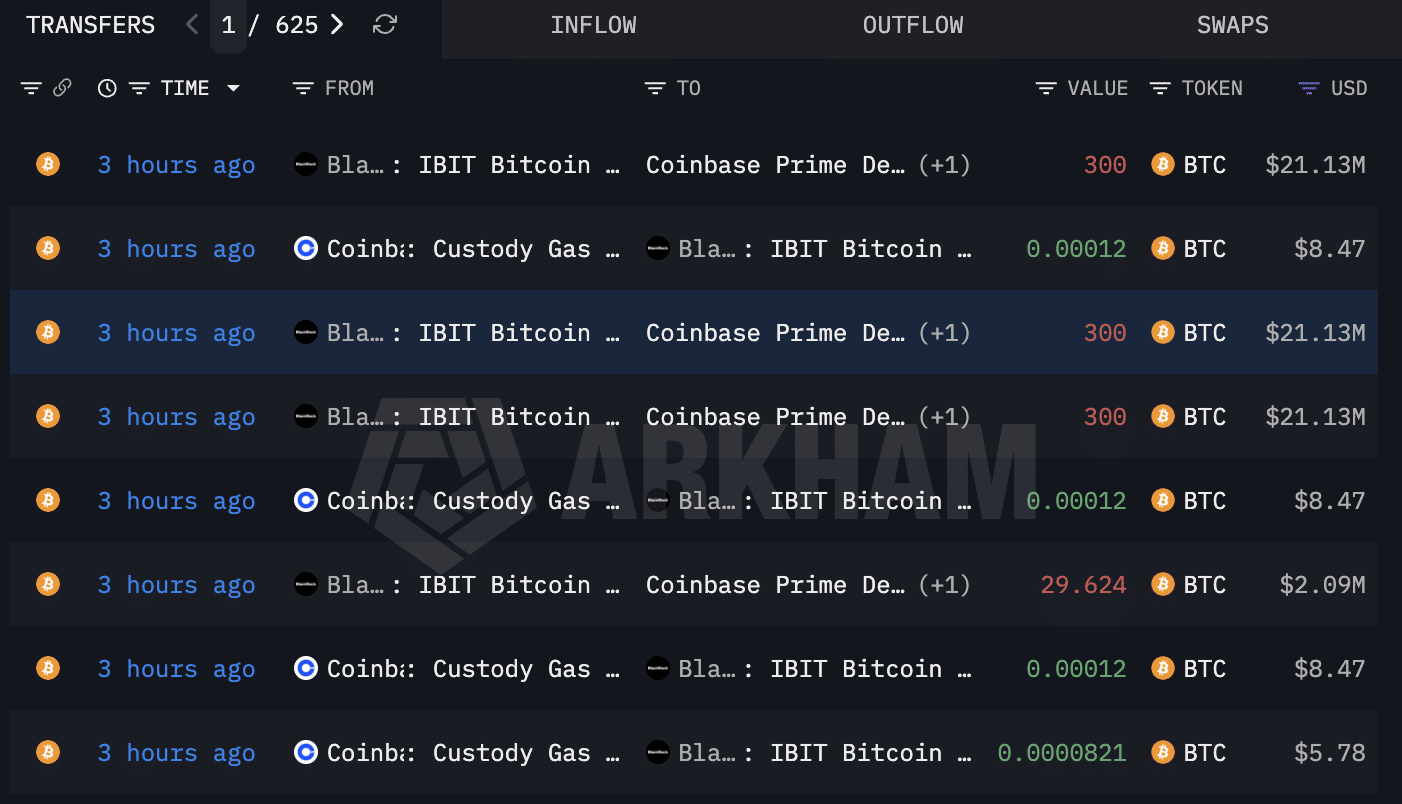
The firm deposited 930 BTC worth $65.48M and 12,687 ETH worth $27.75M into Coinbase, with more deposits likely.
Source: Onchain Lens/X

However, these transfers are most likely part of ETF operations, where assets are routinely shifted between cold storage and exchanges to manage inflows, outflows, and rebalancing.

Rather than signaling a dump, this reflects how large institutions operate in crypto today.

However, even if the intention isn’t bearish, the effect can still be negative in the short term. When large amounts of crypto are moved to exchanges like Coinbase Prime, it increases the chances of selling.

This adds pressure on prices and can trigger panic or quick drops, especially if the market is already in the “Extreme Fear” zone.
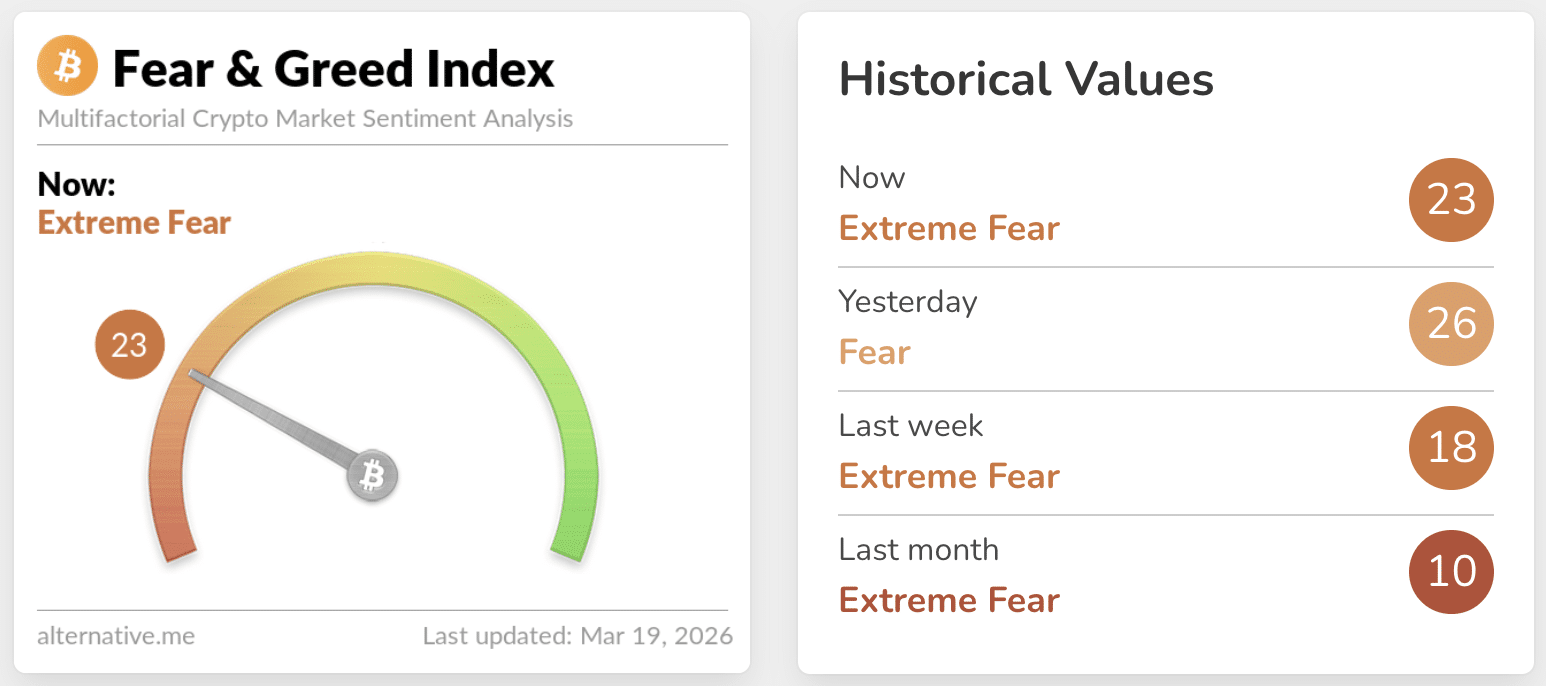
Source: Alternative

When should you actually worry?

Needless to say, one transfer alone isn’t a major red flag, but it becomes concerning if a pattern forms. This pattern includes repeated large deposits, consistent ETF outflows, and prices falling on high volume.

If these signals appear together, it could point to real institutional selling pressure. Simply put, for now, the market might just be cautious, not panicked.

Institutions like BlackRock are adjusting their positions, while retail traders are reacting quickly to price moves, creating an unstable market.

Market trends are difficult and all over the place

Even though BlackRock’s stock is strong, crypto prices have been falling. At the time of writing, Bitcoin was down about 4%, with Ethereum down even more.

In fact, prices are moving quickly up and down, evidence of emotional, short-term trading rather than long-term confidence.

Ethereum, in particular, has been seeing sharp swings due to leveraged trades. Indicators like RSI show that small rallies don’t last long either.
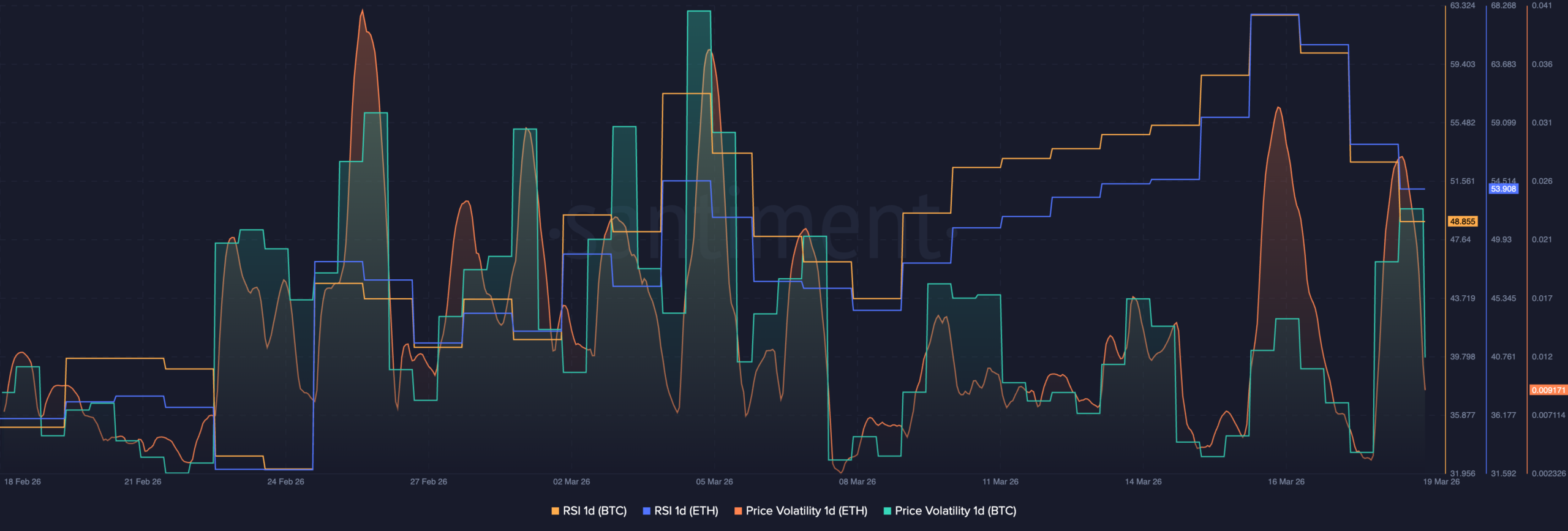
Source: Santiment

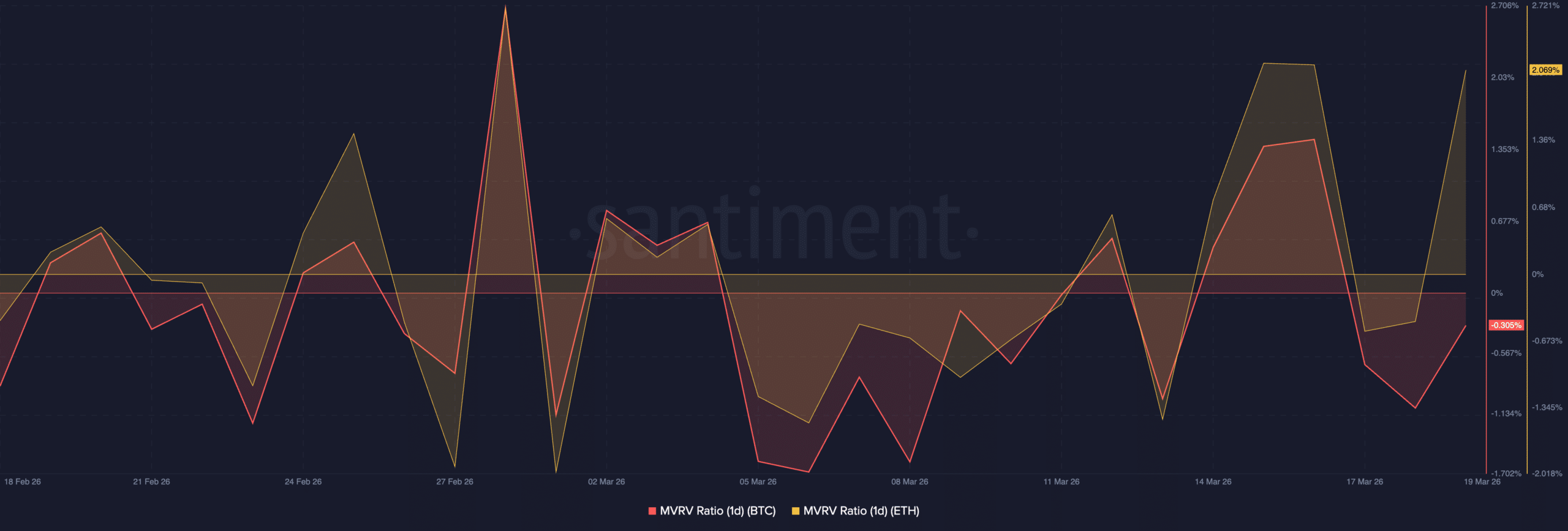
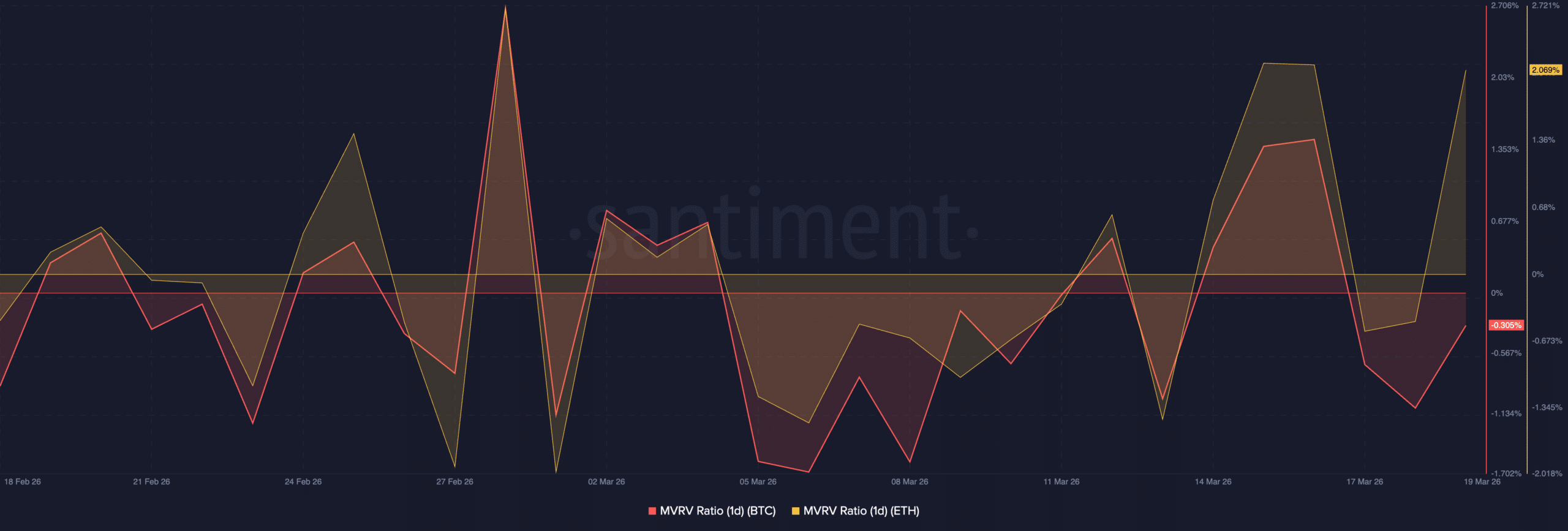
Additionally, the MVRV ratio revealed the market was stuck in a cycle, with prices rising briefly, traders taking profits, and prices falling again. In fact, neither buyers nor sellers seemed to be in control.
Source: Santiment

Moreover, on 18 March, BlackRock’s Bitcoin ETF (IBIT) saw $33.9 million in outflows, ending a 7-day inflow streak, while its Ethereum ETF (ETHA) recorded a smaller $1.3 million outflow.

These amounts may seem small, but they likely explain why BlackRock moved assets to Coinbase to sell and meet investor withdrawals.

Not the first time...

This isn’t new. A similar move happened in December 2025 when over $125 million in Bitcoin was sent to Coinbase under the same conditions. So, this isn’t panic selling, it’s simply a response to investors pulling money out.

Instead of guessing whether BlackRock is bullish or bearish, the key thing to watch is ETF outflows. If withdrawals continue, selling pressure in the market is likely to persist.


Final Summary

  • BlackRock’s $100M transfer isn’t panic selling, but a market move driven by ETF inflows and outflows.
  • Until demand returns, ETF-driven selling pressure is likely to keep markets under stress.

Trending Cryptos

Related Questions

QWhat was the immediate market reaction to BlackRock moving $100M in crypto to Coinbase, and why is the situation more complex?

AThe immediate reaction was fear of a sell-off. However, it's more complex because these transfers are likely part of standard ETF operations for managing inflows, outflows, and rebalancing, not necessarily a sign of panic selling.

QAccording to the article, what combination of factors would signal real institutional selling pressure rather than routine operations?

AA pattern of repeated large deposits to exchanges, consistent ETF outflows, and prices falling on high volume appearing together would point to real institutional selling pressure.

QHow did the article characterize the current state of the crypto market in terms of price action and trader behavior?

AThe market was characterized by quick price swings up and down, evidence of emotional, short-term trading rather than long-term confidence, with neither buyers nor sellers in full control.

QWhat specific event on March 18th related to BlackRock's ETFs likely explains why the assets were moved to Coinbase?

ABlackRock's Bitcoin ETF (IBIT) saw $33.9 million in outflows, ending a 7-day inflow streak, which likely required the firm to move assets to Coinbase to sell and meet these investor withdrawals.

QWhat historical precedent does the article cite to argue that this is not a new or panic-driven event?

AThe article cites a similar move in December 2025 when over $125 million in Bitcoin was sent to Coinbase under the same conditions, concluding it is a response to investor withdrawals rather than panic selling.

Related Reads

Coldcard Hardware Wallet Hacked: 594 Bitcoin Withdrawn in 25 Minutes

The Coldcard hardware wallet has been compromised, with hackers stealing approximately 594.5 Bitcoin (~$40 million) from 500 addresses in just 25 minutes. The root cause was a critical software bug, undetected for five years, which disabled the device's secure chip for generating true random numbers. This led to the creation of private keys based on predictable data like the processor's serial number, drastically reducing cryptographic security. The attackers exploited this offline by brute-forcing possible seed phrases, finding active addresses on the public ledger, and signing transactions. Initially, Coinkite (Coldcard's maker) claimed only older models were at risk but later admitted all devices running the compromised firmware were vulnerable. CEO Rodolphe Novak (NVK) apologized but ruled out financial compensation for affected users. To secure funds, owners must urgently update their firmware to specific safe versions, generate a completely new seed phrase on the updated device, and transfer all assets to new addresses created with that new seed. While a BIP-39 passphrase can help, it does not replace this migration process. Other Coinkite products like TAPSIGNER were not affected. This incident underscores that even specialized hardware requires rigorous, independent code audits, especially for cryptographic functions. It parallels past failures, like a 2006 OpenSSL bug in Debian, and raises questions about whether automated code analysis can ever fully replace human scrutiny in critical security areas.

cryptonews.ru4m ago

Coldcard Hardware Wallet Hacked: 594 Bitcoin Withdrawn in 25 Minutes

cryptonews.ru4m ago

Trading

Spot

Hot Articles

How to Buy MOVE

Welcome to HTX.com! We've made purchasing Movement (MOVE) simple and convenient. Follow our step-by-step guide to embark on your crypto journey.Step 1: Create Your HTX AccountUse your email or phone number to sign up for a free account on HTX. Experience a hassle-free registration journey and unlock all features.Get My AccountStep 2: Go to Buy Crypto and Choose Your Payment MethodCredit/Debit Card: Use your Visa or Mastercard to buy Movement (MOVE) instantly.Balance: Use funds from your HTX account balance to trade seamlessly.Third Parties: We've added popular payment methods such as Google Pay and Apple Pay to enhance convenience.P2P: Trade directly with other users on HTX.Over-the-Counter (OTC): We offer tailor-made services and competitive exchange rates for traders.Step 3: Store Your Movement (MOVE)After purchasing your Movement (MOVE), store it in your HTX account. Alternatively, you can send it elsewhere via blockchain transfer or use it to trade other cryptocurrencies.Step 4: Trade Movement (MOVE)Easily trade Movement (MOVE) on HTX's spot market. Simply access your account, select your trading pair, execute your trades, and monitor in real-time. We offer a user-friendly experience for both beginners and seasoned traders.

5.3k Total ViewsPublished 2024.12.10Updated 2026.06.02

How to Buy MOVE

Discussions

Welcome to the HTX Community. Here, you can stay informed about the latest platform developments and gain access to professional market insights. Users' opinions on the price of MOVE (MOVE) are presented below.

活动图片