Web3的钱,耐克要站着挣?

蜂巢TechPublished on 2023-01-31Last updated on 2023-01-31

Abstract

以NFT入局Web3,耐克赚到超1.85亿美元的收入,加密圈为此做出巨大贡献。但今年,它有意变换思路,注意力不再仅仅聚焦于NFT的消费群体了。

测试筹备三个半月的耐克Web3平台.SWOOSH终于有了新动静,1月26日开启了为期4天的AIR FORCE 1虚拟创作评审赛。意外的是,这个活动与加密圈期待的NFT无关,纯为了讲好一个故事而设计。

参赛用户需要在 Instagram 上以视觉故事板的方式展示鞋类设计理念,4名胜出者将分别获得5000美元的奖励,还会被邀请与耐克设计师合力打造数字运动鞋,共享售卖版税。

值得注意是,.SWOOSH的赛事启动得仓促又低调,活动官宣即启动,但耐克的官推只字未提。要知道,.SWOOSH一直是耐克积极布局Web3的强信号,且耐克已经发售了多个运动鞋NFT系列。但这一次,这个知名运动服饰品牌的Web3抓手,并没有在2023年开年就伸向正在复苏的NFT市场,转而以视频这种传统的方式寻找创意。

以NFT入局Web3,耐克赚到超1.85亿美元的收入,加密圈为此做出巨大贡献。但今年,它有意变换思路,注意力不再仅仅聚焦于NFT的消费群体了。

虚拟创作赛无关NFT

耐克.Swoosh这次举办的创作评审赛名叫YourForce1,要求以Air Force 1球鞋为创作核心,以个人故事的方式展现用户对球鞋的理解并融入设计理念。不似加密圈期待,这场活动与NFT分发无关,参赛作品最终要在Instagram上以视觉故事的方式提交。

AirForce 1即为AF1,作为一款运动鞋诞生于1982年,最初由当时的6位篮球运动员代言,2007年后代言人逐渐变更为科比、勒布朗、卡特等NBA球星。此次耐克虚拟创作赛针对的人群是长久积淀下来的老用户群,他们一般是那些集购鞋、穿鞋、以鞋社交的经历于一身的 “死忠”粉,而非运动鞋NFT系列的消费者。

.Swoosh举办YourForce1创作评审赛

早在1月19日,.Swoosh官方就宣布将成立虚拟共创之家 .SWOOSH Studio,暗示接下来会有相关活动,细节并未公布。YourForce1 活动一上线,加密圈的跃跃欲试者傻眼了,奖金名额有限但条条框框不少。

先是奖金设置,每位获奖用户可获得5000美元的奖金,但名额只有4位;其次,赛事仅对美国、英国、丹麦、德国、法国、意大利、荷兰、挪威、西班牙和瑞典的用户开放,每人仅限提交一份作品。

“仅限一份”的参赛作品提交要有包含8 张原始图像的 Ins 帖子,以形成视觉情绪板(通常指一系列图像、文字、样品拼贴);想成功提交,要遵循标题的规定格式,比如,参赛作品标识符“neon95.swoosh”、概念名称、简短说明以及按顺序标记幻灯片等等;参赛者要严格遵守活动时间(UTC时间 1月25日中午到1月29日上午9点),过期不候。当然,用户参赛的所有照片、视频、声音、艺术品必须是个人独创,且从未出现在其它鞋类以及鞋子组件上。

.Swoosh办赛显示了“严要求”的态度,但官方Blog和Ins下的跟帖和评论显示,关注者对这个活动既没有展现出过高的热情,甚至有点不买账的意思。

在Ins上,.Swoosh 发布活动消息后仅有279条评论,除了追问活动参与方式的留言外,不少网友抱怨因地域限制而无法参与活动。有网友质疑,为什么.Swoosh不向全球用户开放而仅限平台的社区成员参与,还有网友则直接指责活动为“鱼饵”,想从参赛选手中“白嫖”免费作品。有意思的是,一些加密圈的玩家对没有NFT分发而表达了不满。

耐克的Web3“耐心”

由于比赛刚刚结束、结果尚未公布,什么样的创意作品能获得耐克高看还不得而知。仅就活动效果看,.Swoosh的活动本身没有产生太大水花,甚至负面评价较多,哪怕有“耐克”这个IP光环加身,也没有展现出以往推出NFT时的火爆。

创作赛的主办方.Swoosh在创立之初就被定位为耐克的虚拟创意大本营,未来要建设成用户购买、展示和交易虚拟资产的平台,线路图陆续会解锁用户对活动和产品的访问权限。因此,外界将.Swoosh视作耐克的Web3 UGC 电商平台,未来很可能要集共创、卖货甚至NFT交易于一体。

有趣的是,对.Swoosh这次的创作者活动,耐克官方对未做任何宣传,最近一条推文还停留在去年的11月。看上去,耐克官方对这个Web3平台的开年亮相没有过多投入,倒是官网商城上,Air Force 1系列的展示位放到了前排,可惜,没有结合.Swoosh的活动共同营销。
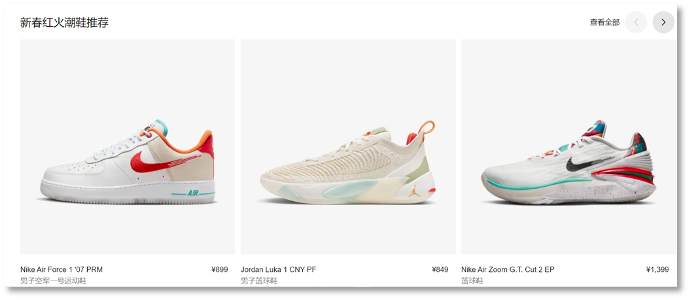
AF1运动鞋最近被推到电商页前排

作为知名运动品牌,耐克在新老品牌的竞争下,在运动服饰市场呈现了疲软之态。2022年全年财报显示,耐克在大中华区的销售收入已经连续三个季度出现下滑。而股价自2021年11月起一直处于下行阶段,一路从118美元下滑至2022年10月的82美元附近。

迈入新10年,这家老字号运动品牌开始在数字世界和加密Web3领域探索新的出路。2020年,耐克开始测试与区块链技术相关的RFID,以追踪供应链流程。2021年底,耐克收购元宇宙时装公司RTFKT,这家公司曾因为特斯拉CEO埃隆·马斯克设计了一款NFT鞋子而声名大噪,耐克很快与RTFKT联合推出了NFT运动鞋。去年11月,耐克推出Web3虚拟共创平台.SWOOSH,近日,该平台申请了3个加密行业的相关商标。

从最近两年的举动看,耐克频频向Web3的加密资产用户示好,也收获了不错的回报。数据共享平台Dune的用户 @kingjames23 统计显示,耐克的 NFT 相关项目自推出以来,已为公司创造了超过 1.85 亿美元的收入,使耐克成为 NFT 收入最高的传统品牌。特别是 RTFKT 与 Nike CryptoKicks 发布的首个耐克运动鞋NFT系列,上架交易平台 OpenSea 后,24小时交易额就突破了2000万美元。

加密行业的吸金效应明显,耐克自然不会轻易错过。但此次.SWOOSH的活动一点也没有倾向于币圈,这着实让加密世界的用户群体有点意外,有发烧友直接给官推留言,要给加密世界的创意设计者一个解释。

相比其他“涉币”Web3项目匆忙上马“收割”消费者的态度不同,耐克对Web3的探索反而耐心起来,没有将.SWOOSH专设为NFT平台,以一场创意赛事明志。

耐克的Web3试点为何不再只取悦加密用户了?官方新闻稿给出了部分答案, “在 .SWOOSH,我们希望扩展创作者的定义,这就是为什么本次 .SWOOSH Studio 竞赛将创造性地讲故事置于创造性的技能之上的原因”。

布局Web3,耐克另展图谋,销售NFT或将不再是唯一主角,“与用户共创”反而显示出战略心。2023年,传统品牌对Web3的理解要变了。

Related Reads

Anthropic Cries Wolf: Is the AGI Threat Real, or Just an IPO Story?

Anthropic has published an article titled "When AI builds itself," discussing the emerging concept of "recursive self-improvement," where AI begins to actively participate in designing, training, testing, and optimizing its own subsequent versions. The company presents internal data showing that by May 2026, over 80% of code merged into its codebase was written by Claude, its AI model. Claude's capabilities have expanded to handling complex, open-ended engineering tasks, achieving a 76% success rate in such areas, and even contributing to research processes, such as optimizing code performance and conducting AI safety experiments. Anthropic outlines an evolution from human-driven development to AI-assisted workflows, culminating in the current stage where AI agents can autonomously write, run, and delegate code. The company cautions that the path toward a "closed loop," where AI continuously improves itself, is becoming visible. It calls for coordinated global mechanisms to potentially slow or pause frontier AI development to allow safety research and societal structures to catch up. However, the timing of this warning coincides with Anthropic's preparations for an IPO, framing the narrative not just as a safety concern but also as a demonstration of Claude's advanced capabilities and its integral role in accelerating Anthropic's own R&D—creating a potential "flywheel" effect for competitive advantage. This contrasts with OpenAI's recent, more policy-oriented discussion of the same risks, highlighting the competitive dynamics in the AI industry as companies position themselves in both the technological and regulatory landscape.

marsbit28m ago

Anthropic Cries Wolf: Is the AGI Threat Real, or Just an IPO Story?

marsbit28m ago

BIT Research: ETF Purchases Have Slowed, Strategy (MicroStrategy) Has Slowed, What Else Can Drive Bitcoin's Rise?

Market Refocus on Inflation and Rate Expectations Weighs on Bitcoin Currently, the market is in a phase of macro-repricing dominated by inflation and interest rate expectations. Bitcoin, which previously benefited from easy liquidity and low inflation, is seeing its core bullish drivers weaken. These drivers were market expectations for interest rate cuts and strong inflows from Bitcoin ETFs and institutions like MicroStrategy (referred to as "Strategy" in the text). The logic has shifted. Recent high inflation data (e.g., CPI hitting 3.8% in a May 2026 report) has caused the market to sharply reduce its rate cut expectations for 2025 and even price in potential hikes. This is a key constraint for Bitcoin, as it lacks cash flows and is highly sensitive to rate expectations. Concurrently, institutional capital flows have slowed significantly. Following the hot CPI data, Bitcoin ETFs saw accelerated outflows, with around $4.3 billion leaving over a period. MicroStrategy's ability to keep adding substantial Bitcoin to its balance sheet is also diminishing. Together, ETF and MicroStrategy holdings total roughly $110 billion, but their momentum as growth engines is cooling. In summary, Bitcoin's current pressure stems not from its own fundamentals but from a changing macro environment. As long as inflation stays elevated, Bitcoin is likely to remain in a consolidating phase. However, historically, inflation eventually peaks. Once it recedes and rate cut expectations rebuild, institutional capital could return, potentially fueling a new and more robust recovery phase for Bitcoin.

marsbit35m ago

BIT Research: ETF Purchases Have Slowed, Strategy (MicroStrategy) Has Slowed, What Else Can Drive Bitcoin's Rise?

marsbit35m ago

Earning 1000 Trillion in Half a Year, 'Pocketing' 20 Million per Capita: This Round of Wealth Creation in the Korean Stock Market is Unprecedented in Scale

The South Korean stock market is experiencing an unprecedented wealth surge in 2026, with household equity and fund asset values soaring by over 1,000 trillion KRW (~$730bn) year-to-date. This translates to an average per capita wealth increase of roughly 20 million KRW, fueled by a historic 109% rally in the KOSPI index. The boom is driven by three converging forces: an AI-driven semiconductor supercycle boosting giants like Samsung and SK Hynix; the government's "Value-Up" market reforms addressing long-standing corporate governance issues; and aggressive real estate regulations that have locked capital within financial markets, preventing profits from flowing back into property. This has triggered a wealth effect, boosting high-end consumption significantly. However, the gains are highly concentrated. The two semiconductor behemoths account for over half the index's value, but retail investors own relatively low stakes in them, systematically missing the biggest rallies. Wealth and consumption benefits are skewed towards luxury goods and imported cars, bypassing mainstream retail. Further risks stem from excessive leverage, with high trading volume in leveraged ETFs, and a market sentiment heavily reliant on the AI sector's fortunes and speculative rumors. While this cycle marks a potential shift from real estate to equities as a primary wealth generator for Koreans, its sustainability, amid structural imbalances and leverage, remains a critical test.

marsbit40m ago

Earning 1000 Trillion in Half a Year, 'Pocketing' 20 Million per Capita: This Round of Wealth Creation in the Korean Stock Market is Unprecedented in Scale

marsbit40m ago

Trading

Spot
Futures

Hot Articles

What is $BITCOIN

DIGITAL GOLD ($BITCOIN): A Comprehensive Analysis Introduction to DIGITAL GOLD ($BITCOIN) DIGITAL GOLD ($BITCOIN) is a blockchain-based project operating on the Solana network, which aims to combine the characteristics of traditional precious metals with the innovation of decentralized technologies. While it shares a name with Bitcoin, often referred to as “digital gold” due to its perception as a store of value, DIGITAL GOLD is a separate token designed to create a unique ecosystem within the Web3 landscape. Its goal is to position itself as a viable alternative digital asset, although specifics regarding its applications and functionalities are still developing. What is DIGITAL GOLD ($BITCOIN)? DIGITAL GOLD ($BITCOIN) is a cryptocurrency token explicitly designed for use on the Solana blockchain. In contrast to Bitcoin, which provides a widely recognized value storage role, this token appears to focus on broader applications and characteristics. Notable aspects include: Blockchain Infrastructure: The token is built on the Solana blockchain, known for its capacity to handle high-speed and low-cost transactions. Supply Dynamics: DIGITAL GOLD has a maximum supply capped at 100 quadrillion tokens (100P $BITCOIN), although details regarding its circulating supply are currently undisclosed. Utility: While precise functionalities are not explicitly outlined, there are indications that the token could be utilized for various applications, potentially involving decentralized applications (dApps) or asset tokenization strategies. Who is the Creator of DIGITAL GOLD ($BITCOIN)? At present, the identity of the creators and development team behind DIGITAL GOLD ($BITCOIN) remains unknown. This situation is typical among many innovative projects within the blockchain space, particularly those aligning with decentralized finance and meme coin phenomena. While such anonymity may foster a community-driven culture, it intensifies concerns about governance and accountability. Who are the Investors of DIGITAL GOLD ($BITCOIN)? The available information indicates that DIGITAL GOLD ($BITCOIN) does not have any known institutional backers or prominent venture capital investments. The project seems to operate on a peer-to-peer model focused on community support and adoption rather than traditional funding routes. Its activity and liquidity are primarily situated on decentralized exchanges (DEXs), such as PumpSwap, rather than established centralized trading platforms, further highlighting its grassroots approach. How DIGITAL GOLD ($BITCOIN) Works The operational mechanics of DIGITAL GOLD ($BITCOIN) can be elaborated on based on its blockchain design and network attributes: Consensus Mechanism: By leveraging Solana’s unique proof-of-history (PoH) combined with a proof-of-stake (PoS) model, the project ensures efficient transaction validation contributing to the network's high performance. Tokenomics: While specific deflationary mechanisms have not been extensively detailed, the vast maximum token supply implies that it may cater to microtransactions or niche use cases that are still to be defined. Interoperability: There exists the potential for integration with Solana’s broader ecosystem, including various decentralized finance (DeFi) platforms. However, the details regarding specific integrations remain unspecified. Timeline of Key Events Here is a timeline that highlights significant milestones concerning DIGITAL GOLD ($BITCOIN): 2023: The initial deployment of the token occurs on the Solana blockchain, marked by its contract address. 2024: DIGITAL GOLD gains visibility as it becomes available for trading on decentralized exchanges like PumpSwap, allowing users to trade it against SOL. 2025: The project witnesses sporadic trading activity and potential interest in community-led engagements, although no noteworthy partnerships or technical advancements have been documented as of yet. Critical Analysis Strengths Scalability: The underlying Solana infrastructure supports high transaction volumes, which could enhance the utility of $BITCOIN in various transaction scenarios. Accessibility: The potential low trading price per token could attract retail investors, facilitating wider participation due to fractional ownership opportunities. Risks Lack of Transparency: The absence of publicly known backers, developers, or an audit process may yield skepticism regarding the project's sustainability and trustworthiness. Market Volatility: The trading activity is heavily reliant on speculative behavior, which can result in significant price volatility and uncertainty for investors. Conclusion DIGITAL GOLD ($BITCOIN) emerges as an intriguing yet ambiguous project within the rapidly evolving Solana ecosystem. While it attempts to leverage the “digital gold” narrative, its departure from Bitcoin's established role as a store of value underscores the need for a clearer differentiation of its intended utility and governance structure. Future acceptance and adoption will likely depend on addressing the current opacity and defining its operational and economic strategies more explicitly. Note: This report encompasses synthesised information available as of October 2023, and developments may have transpired beyond the research period.

363 Total ViewsPublished 2025.05.13Updated 2025.05.13

What is $BITCOIN

Discussions

Welcome to the HTX Community. Here, you can stay informed about the latest platform developments and gain access to professional market insights. Users' opinions on the price of BTC (BTC) are presented below.

活动图片















