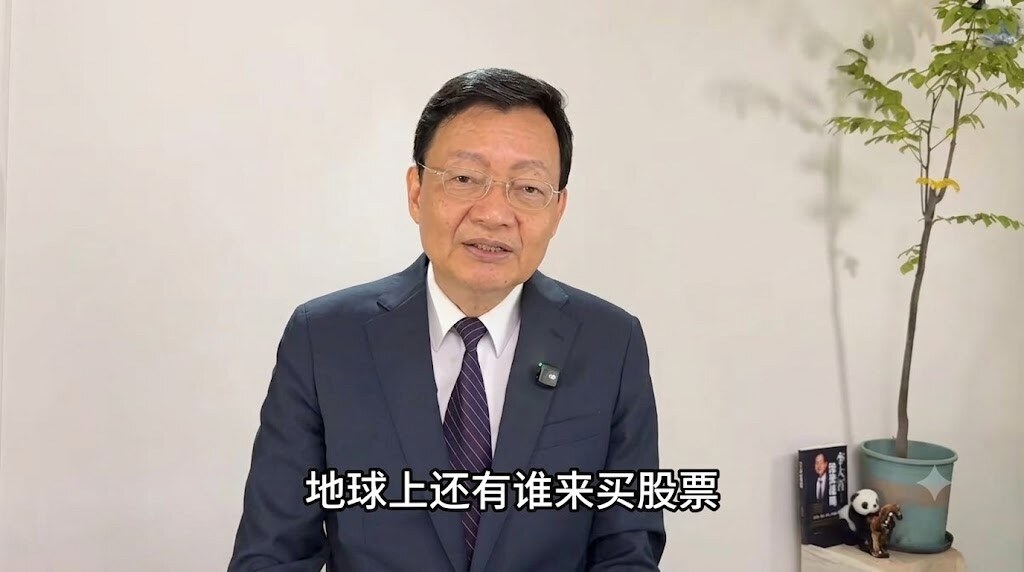
Li Shanyou: The World Is Getting More Competitive, But We Can Choose to Be Slower, Go Deeper, and Turn Inward

marsbitPublished on 2026-07-17Last updated on 2026-07-17

Abstract

**Title:** Li Shanyou: The World Is Moving Faster and More Chaotically; We Can Choose to Be Slower, Deeper, and More Inward **Summary:** In an era where AI evolves weekly and past experiences often fail, the article argues for returning to First Principles. It shifts focus from "cognition" (knowledge/content), which AI has disrupted, to "consciousness" or "the capacity to know"—the foundational ability that enables cognition and determines its scope and depth. The piece uses Zhang Yiming (founder of ByteDance) as a case study for the "second-order consciousness" of the mobile internet era: success through rational logic, modeling, and deduction, which allowed him to surpass earlier "first-order" entrepreneurs reliant on copying experiences. However, the author suggests that the AI era demands a further leap to "third-order consciousness"—operating from a place of inner inspiration, vision, or "ideas," beyond pure rationality. Figures like Elon Musk and Steve Jobs are cited as examples, with DeepSeek's Liang Wenfeng presented as a potential representative of this new, AI-native wave of entrepreneurs driven by curiosity and innovation rather than just commercial logic. For the majority who may not become such visionary leaders, the author proposes an alternative path: the "Path of Quality" or "Work as Art." This involves turning inward, focusing on the immediate task at hand, and imbuing one's work with care and dedication—creating a "quality" product not as a means to an e...

The "one" behind civilization is not a cognitive revolution, but a leap in 'capacity to know'.

As AI updates weekly and past experience frequently fails, we must emphasize: return to first principles.

At Hundun, we pursue inquiries with first-principles thinking.

In the past, when we talked about cognition, we referred to the known—knowledge, content. We believed knowledge is power. But now cognition has been pierced by AI. We must lower the foundation of first principles to 'capacity to know'.

In the 2026 Shan You Grand Lecture, the professor said: For the first decade of Hundun, our core keyword was always "cognition"; starting from this lecture, I quietly upgrade this term to "capacity to know".

Knowledge itself has no power; the capacity to know has power. Capacity to know is not the content of cognition, but the capability that makes cognition possible. It is "what you can perceive and to what degree"—an a priori stipulation, this is called capacity to know.

Applying this framework to entrepreneurship makes the issue acute.

Mentioning entrepreneurship, the representative entrepreneurs a decade ago were Ma Yun and Ma Huateng; today it's Zhang Yiming.

"Zhang Yiming" has become synonymous with entrepreneurship today, especially in the internet field. Thus, we can't help but ask:

How will entrepreneurs evolve in the AI era?

Will this era produce a new "Zhang Yiming"?

Or will it continue to be led by today's already dominant entrepreneurs?

Zhang Yiming's Cognitive Leap: From Experience to Logical Modeling

To clarify the future, let's trace the past.

There are three keywords associated with Zhang Yiming:

In 2017, Wang Xing said he thought Yiming's characteristic was rationality.

In 2016, Zhang Yiming himself mentioned a keyword: cognition.

He said, "Actually, cognition about things is most critical. Theoretically, all other production factors can be built—how much money to raise, whose money to take, what kind of people to recruit, where these people are, how the right people should collaborate. Ultimately, the more profound your cognition about the matter, the more competitive you are."

Furthermore, Zhang Yiming's way of doing things is modeling.

I asked a founder of a company he acquired, "Why did you sell your company to Zhang Yiming?" He said, "I talked with him for two hours and realized I wasn't on his level. Beyond his existing world, he could see two layers further. Zhang Yiming insists that anything can be modeled. If you can't model it, it's actually because your computational power is insufficient."

So, why could Zhang Yiming emerge in the mobile internet era? Toutiao changed content distribution, Douyin e-commerce strongly impacted traditional e-commerce, TikTok became a globally influential short-video platform, and in the AI large model arena, ByteDance has produced Doubao...... My guess, or hypothesis, is: behind this lies a difference in the level of capacity to know.
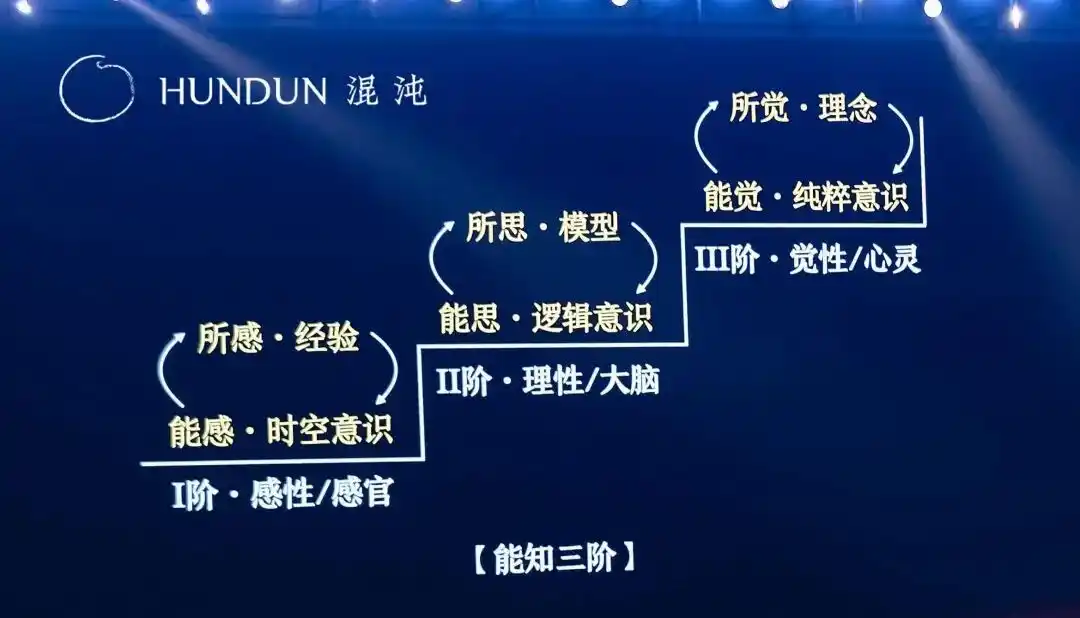
China's PC internet generation of entrepreneurs were heroes, but essentially most of them operated at the first-order capacity to know.

Because the keyword for this generation was "Copy to China," replicating successful experiences from one time and space to another. This is inductive reasoning, innovation living in experience—action innovation, execution innovation, not essential model innovation.

In contrast, the generation of entrepreneurs born in the 1980s, especially Huang Zheng and Zhang Yiming. You'll find this is a generation that completely believes in logic. Their success rests on the second-order capacity to know.

This can also explain why ByteDance and Pinduoduo could internationalize, achieving genuine overseas success. Because the mainstream of today's world is industrial civilization, at the second order. And ByteDance stands at the second order, so it can look the world in the eye and flow over.

Of course, you might say entrepreneurial success has many factors—resources, technology, opportunity, investment... But if we look for the core "one" factor, it's capacity to know. Ten years ago, Zhang Yiming made a leap in capacity to know, triumphing over the PC internet.

So Zhang Yiming's power is not just diligence, focus, correct strategy, nor merely seizing the mobile internet dividend. What he truly represents is the victory of second-order capacity to know: viewing the world with models, compressing information with logic, using modeling ability to form a dimensional reduction attack on experience-based entrepreneurs.

Zhang Yiming once said: "Anything that is logically possible will eventually happen." I think this aptly illustrates that he belongs to the second-order capacity to know.

But, what one succeeds by, one is also constrained by. ByteDance's boundary is rationality. If your capacity to know is built on rationality, you might not ascend further. For ByteDance as a whole, the concrete word embodying rationality is algorithm.

Zhang Yiming's belief in algorithms reached the point of training himself like an algorithm. But do you think this algorithm is pure and sincere?

So back to the initial question, will there be a new "Zhang Yiming" in the AI era? I think there definitely will be. Each era's discontinuity is not a single entrepreneur defeating a giant, but new entrepreneurs gathering within a new era's value network. The new value network grows, becoming the new giant.

DeepSeek's Liang Wenfeng: The Absolute Confidence of an Ideal-Driven Entrepreneur

If our footing remains on thinking capacity, on logic, we cannot surpass AI, nor can we surpass Zhang Yiming. Because AI lives directly in the rational world of logic, almost infinitely close to the peak of rationality.

Therefore, the very few who wish to become the new era's "Zhang Yiming" must leap, just as Zhang Yiming and Ma Yun did a decade ago, to the third-order capacity to know. Your way of viewing the world is no longer rational models, but a deep-seated idea within the heart. It is neither inductive nor deductive reasoning; it might be flow state, inspiration, the feeling of resonating with the great Way.

If I must give an example, I think it's DeepSeek's Liang Wenfeng. You'll find he is different from Zhang Yiming. I'm not saying he will definitely be the new era's "Zhang Yiming," but I think he carries some shadow, representing a certain zeitgeist we're discussing.

Liang Wenfeng said in a previous interview: "In the past 30 years, we've been more focused on making money than on innovation. But innovation isn't solely driven by business; it requires curiosity and creative ambition. We've been constrained by past habits, but this is just a phase." You can sense a kind of noble spirit, expressed in a humble yet powerful way. I believe he's not speaking just for himself, but representing a tide of the era. We truly need to sense a certain change.

He also said something I think is remarkable. "All established patterns are products of the previous generation; they may not hold in the future. Using the commercial logic of the internet era to discuss AI's future profit models is likely like marking the boat to find the sword."

Today we think OpenAI's ChatGPT is correct, but it might just be AI-enhanced innovation from the internet era. Perhaps DeepSeek's technical large model is a native innovation! How likely is that possibility? I think slightly more than zero, and that's the difference between innovation and entrepreneurship.

Entrepreneurship requires a high probability of success before you act, but innovation is doing something originally unlikely to succeed. I think this is the underlying color of Hundun; we are not cheering for entrepreneurial success, but for the courage to innovate.

Today's native AI-era entrepreneurs, if they can undergo a new leap in consciousness, might become the new figure of the AI era. This is also why the word "consciousness" isn't just philosophy; it has very concrete entrepreneurial significance. Musk and Jobs are references on this path.

Musk's business success is a byproduct of his pursuit of ideals. Many of SpaceX's decisions aren't based on commerce, but are inspired by the scene of "one day reaching Mars" to motivate all current decisions.

Jobs set enlightenment as his Y-axis, with tools, especially tools of thought, as the X-axis to achieve that enlightenment. He said he spent his life seeking self-enlightenment and hoped to enlighten more people through tools.

But this path is extremely difficult. I call it the path of ideals. It is glorious, but indeed it is a path only a few can walk, standing precisely on the point of the era's tide.

But what about the majority?

Crafting Your Work: The Ordinary Person's Path is to Do the Work at Hand Wholeheartedly

Not everyone has the chance to stand on the peak of the era's tide; many don't have such grand ideals or great vows. Now I want to talk about a second path, which is also the path I've chosen—the path of Quality, or the path of the Work.

I believe many students here feel this way: wanting to compete fiercely but unable to; wanting to give up but unable to rest easy, unwilling to settle. Does life lose meaning if you can't enter the tide? Many don't hold grand ideals; are personal small sentiments, small tastes, meaningless?

Not everyone can become a "Zhang Yiming." However, I can become a better version of myself.

I suspect that raising the frequency of consciousness doesn't necessarily require great endeavors; even in small matters, doing them with full attention can achieve incremental evolution of consciousness.

We often reify the things we do—for money, for a high salary. When you reify what you do, you are actually reifying your own heart. This reflects back; how you treat your work is how the world treats you. When you unify with what you do, the doing itself becomes the purpose; it is not a result or a means. At that point, what you do becomes a Work.

So the second path is not about comparison, not about competition, not about proving oneself, but turning inward. From the perspective of first principles, from the foundational color of consciousness, create a beautiful Work that belongs to me, express my heart through a Work. When person and work are unified, it's less about me polishing the work and more about me polishing my own heart.

This path originates from "Zen and the Art of Motorcycle Maintenance," which mentions a word called "Quality." I'll share my favorite passage: "One must listen to the guidance of Quality, follow it quietly, single-mindedly, so that the work in hand becomes an art."

I suspect Quality is also a word about essence. While it doesn't possess the extremely high consciousness frequency of "Ideas," it refers to finding the feeling of quality in whatever you do. The work in your hands having Quality gives those who use it a different feeling. Those who feel it might find it good and continue to spread it to others. Quality, like frequency, can ripple outward. I feel this is how the world becomes beautiful.

This path is backed by the faint light of ordinary people. You do the work at hand well, do it with heart, that's all. This era's frequency holders aren't necessarily the wealthy or famous. No matter how small your task, if your frequency is high enough, it will ripple outward, becoming a frequency holder of this era. So when the world gets more competitive and faster, perhaps we can make the opposite choice: be a little slower, go a little deeper, turn a little more inward.

Frankly, entrepreneurship is already difficult today. When the era lacks a great tide, we return to ourselves. People don't serve tasks; tasks serve people. People are the subject. Whether big or small, tasks are techniques, tools, carriers—all to cultivate my heart. This is returning to first principles.

This article is from WeChat public account "Hundun University" (ID: hundun-university), author: Hundun Academy


Trending Cryptos

Related Questions

QWhat is the fundamental shift in perspective proposed by the author regarding knowledge and power?

AThe author proposes a shift from 'cognition' (suo zhi, or acquired knowledge) to 'capability of knowing' (neng zhi, or the innate capacity to perceive and understand). The key argument is that knowledge itself is not power; the true power lies in the underlying ability and framework that allows one to acquire and process knowledge.

QAccording to the article, what was Zhang Yiming's key advantage over previous generations of entrepreneurs?

AZhang Yiming's key advantage was operating from a 'second-order neng zhi' (capability of knowing). Unlike the experience-based, 'copy to China' approach of the PC internet generation, he viewed the world through logical models, enabling a more abstract and fundamental understanding that allowed for modeling, predicting, and executing complex projects, giving him a dimensional advantage over experience-driven entrepreneurs.

QWhy does the author suggest that some entrepreneurs must leap to a 'third-order neng zhi' in the AI era?

AThe author argues that because AI excels in and even dominates the realm of logic and rational modeling (second-order neng zhi), human entrepreneurs seeking to lead in the AI era must transcend it. They must leap to a 'third-order neng zhi' based on ideas, insights, vision, and a deeper connection to fundamental principles, which is less about pure logic and more about inspiration, consciousness, and alignment with a greater purpose.

QWhat path does the article suggest for most people who are not at the forefront of major innovation?

AThe article suggests the path of 'Quality' or 'Work as Art.' This involves turning inward and focusing on infusing the tasks at hand—no matter how small—with care, integrity, and a sense of craftsmanship. It emphasizes creating 'works' that are expressions of one's heart, aiming for personal growth and consciousness elevation through the dedication to quality in daily endeavors, rather than competition or proving oneself on a grand scale.

QWhat is the ultimate message of the article regarding how individuals should respond to a rapidly accelerating and competitive world?

AThe ultimate message is to adopt a counter-intuitive approach: to go slower, deeper, and more inward. Instead of succumbing to external pressure ('juan'), individuals should focus on refining their inner being through their work, treating tasks as vehicles for personal cultivation. The goal is to become a 'frequency holder' by elevating one's own consciousness and the quality of one's actions, thereby contributing to a better world in a more sustainable and meaningful way.

Related Reads

The Semiconductor Industry's Most Obscure Chokepoint Material: It Has Multiplied in Price Unnoticed, and China Just Banned Its Export

"Helium: The Silent Choke Point in Semiconductors" Helium, despite being the universe's second most abundant element, is critically scarce on Earth. It cannot be synthesized artificially and escapes Earth's gravity once released, making it a non-renewable resource. Yet, it is indispensable for advanced semiconductor manufacturing, requiring ultra-high purity (99.9999%) for processes like wafer etching, leak detection, and thermal management in lithography tools, with no viable substitutes. This low-profile resource, whose price has doubled unnoticed, suddenly gained attention when China imposed an export ban on July 10th. The ban is a response to a severe global shortage triggered months earlier. In March, missile attacks damaged the world's largest helium production hub in Qatar's Ras Laffan, halting a third of global supply with repairs expected to take 3-5 years. Concurrently, Russia tightened export controls, and the US sold off its federal helium reserve. Approximately 200 specialized transport containers, each worth ~$1 million, were stranded with perishable cargo. Global spot prices skyrocketed, and chipmakers like TSMC warned of potential impacts. China, which imports over 84% of its helium (primarily from Qatar and Russia), faces a severe squeeze. Despite being helium-poor, China has developed domestic extraction technology over five years, processing byproduct gases from LNG plants to produce ultra-pure helium. Domestic output, while still only covering less than 20% of demand, enabled the recent export ban aimed at securing domestic supply for its own expanding chip industry. The industry now faces "Helium Shortage 5.0." With key global sources constrained for years, this invisible gas—once wasted on party balloons—has become a critical, geopolitically charged bottleneck for chips, healthcare (MRI machines), and beyond, forcing the world to finally treat it as the finite strategic resource it is.

marsbit31m ago

The Semiconductor Industry's Most Obscure Chokepoint Material: It Has Multiplied in Price Unnoticed, and China Just Banned Its Export

marsbit31m ago

Early Investor of Unitree Bets on a Brain-Computer Interface Company

"Wabo Technologies, a brain-computer interface (BCI) startup, has secured new funding from Vertex Ventures (under Temasek), Hongtai Fund, Chengdu Future Industry Fund, and Huifengda Capital. Vertex Ventures is known for its early bet on Unitree Robotics. Inspired by the sci-fi film "Avatar," founder Zhang Xingzhi has pursued human-machine interaction for over a decade. He established Wabo in late 2025, coinciding with China's push for BCI as a future industry. Unlike companies focused solely on medical hardware, Wabo positions itself as a model company. Its core mission is to develop a "Human Neural Intent Model" that decodes EEG, EMG, and behavioral signals to understand a user's goals, confirmations, corrections, and stop intentions before physical action, translating them into standardized control signals for machines, robots, or smart devices. The young, full-stack team, backed by academic collaborators from Tianjin University and Fudan University, quickly attracted investors. The company had previously raised a seed round from Ceyuan Capital. Investors were impressed by Wabo's systematic capabilities in data collection, signal processing, and engineering, seeing potential beyond a single hardware product toward a reusable layer of human intent interpretation. Applications span medical rehabilitation, smart homes, embodied AI, and even space exploration, with Wabo partnering with Tianjin University on pioneering "space BCI" research. Wabo plans a dual-headquarters strategy, with Shanghai focusing on high-end R&D and model development, and Chengdu handling hardware, product development, and supply chain. The BCI sector in China is heating up, with over 30 financing deals in early 2026. Zhang believes future competition will center on who can build a sustainable data-model-scenario loop. He predicts industry consolidation within three years, with only companies that master this闭环 surviving. The vision from "Avatar" is inching closer to reality."

marsbit46m ago

Early Investor of Unitree Bets on a Brain-Computer Interface Company

marsbit46m ago

ChangXin Technology: A Cyclical Stock Standing Atop the Cycle Peak

Changxin Technology: A Cyclical Stock at the Peak On July 27, 2026, Changxin Technology topped the A-share market with a market capitalization of 3.28 trillion yuan, surging 465% on its first trading day. The company, which lost 16.3 billion yuan in 2023, reported an estimated net profit of 50-57 billion yuan for the first half of 2026. Its dramatic reversal mirrors the volatile DRAM (Dynamic Random Access Memory) cycle. The DRAM industry is inherently cyclical, with booms and busts every 3-4 years. This is due to product standardization and a significant time lag in supply adjustment. When prices rise, manufacturers expand capacity, but new production takes 2-3 years to come online, often leading to oversupply and price crashes when demand cools. Changxin's performance perfectly tracks this cycle. It recorded deep losses in 2023-2024 during the industry downturn, turned its first annual profit in 2025, and saw profits skyrocket in Q1 2026. This surge is primarily price-driven. The AI boom has led major players like Samsung and SK Hynix to shift 70-80% of new capacity to high-margin HBM (High Bandwidth Memory), creating a severe shortage and price explosion in general-purpose DRAM markets where Changxin competes. However, a massive global capacity expansion is underway. The top three manufacturers have announced nearly $70 billion in capital expenditure for 2026. Changxin itself plans to expand from three to seven 12-inch wafer fabs. This investment will translate into significant new supply in 2-3 years. While DRAM prices are expected to remain high through 2026-2027, price growth is already slowing, and a potential downturn is forecast for around 2028 as new capacity ramps up. A key challenge for Changxin is catching up in the critical HBM segment. While it has delivered HBM3 samples, leaders are already mass-producing more advanced HBM3E. Success in HBM is crucial for gaining true cyclical resilience. In conclusion, Changxin is a commendable company that has broken foreign monopolies in DRAM. Its long-term growth narrative—driven by import substitution and AI—is valid. Yet, its current valuation of 5-6x forward P/E, typical for a cyclical stock at its peak, suggests much future growth is already priced in. AI may extend the current cycle but cannot eliminate the industry's inherent volatility. For investors, the critical question is preparedness for the inevitable downturn when the cycle turns.

marsbit51m ago

ChangXin Technology: A Cyclical Stock Standing Atop the Cycle Peak

marsbit51m ago

Trading

Spot

Hot Articles

How to Buy CAP

Welcome to HTX.com! We've made purchasing Cap (CAP) simple and convenient. Follow our step-by-step guide to embark on your crypto journey.Step 1: Create Your HTX AccountUse your email or phone number to sign up for a free account on HTX. Experience a hassle-free registration journey and unlock all features.Get My AccountStep 2: Go to Buy Crypto and Choose Your Payment MethodCredit/Debit Card: Use your Visa or Mastercard to buy Cap (CAP) instantly.Balance: Use funds from your HTX account balance to trade seamlessly.Third Parties: We've added popular payment methods such as Google Pay and Apple Pay to enhance convenience.P2P: Trade directly with other users on HTX.Over-the-Counter (OTC): We offer tailor-made services and competitive exchange rates for traders.Step 3: Store Your Cap (CAP)After purchasing your Cap (CAP), store it in your HTX account. Alternatively, you can send it elsewhere via blockchain transfer or use it to trade other cryptocurrencies.Step 4: Trade Cap (CAP)Easily trade Cap (CAP) on HTX's spot market. Simply access your account, select your trading pair, execute your trades, and monitor in real-time. We offer a user-friendly experience for both beginners and seasoned traders.

884 Total ViewsPublished 2026.06.26Updated 2026.06.26

How to Buy CAP

Discussions

Welcome to the HTX Community. Here, you can stay informed about the latest platform developments and gain access to professional market insights. Users' opinions on the price of CAP (CAP) are presented below.

活动图片