Today, 99% of the global human population is actually outperformed by an AI in terms of IQ.
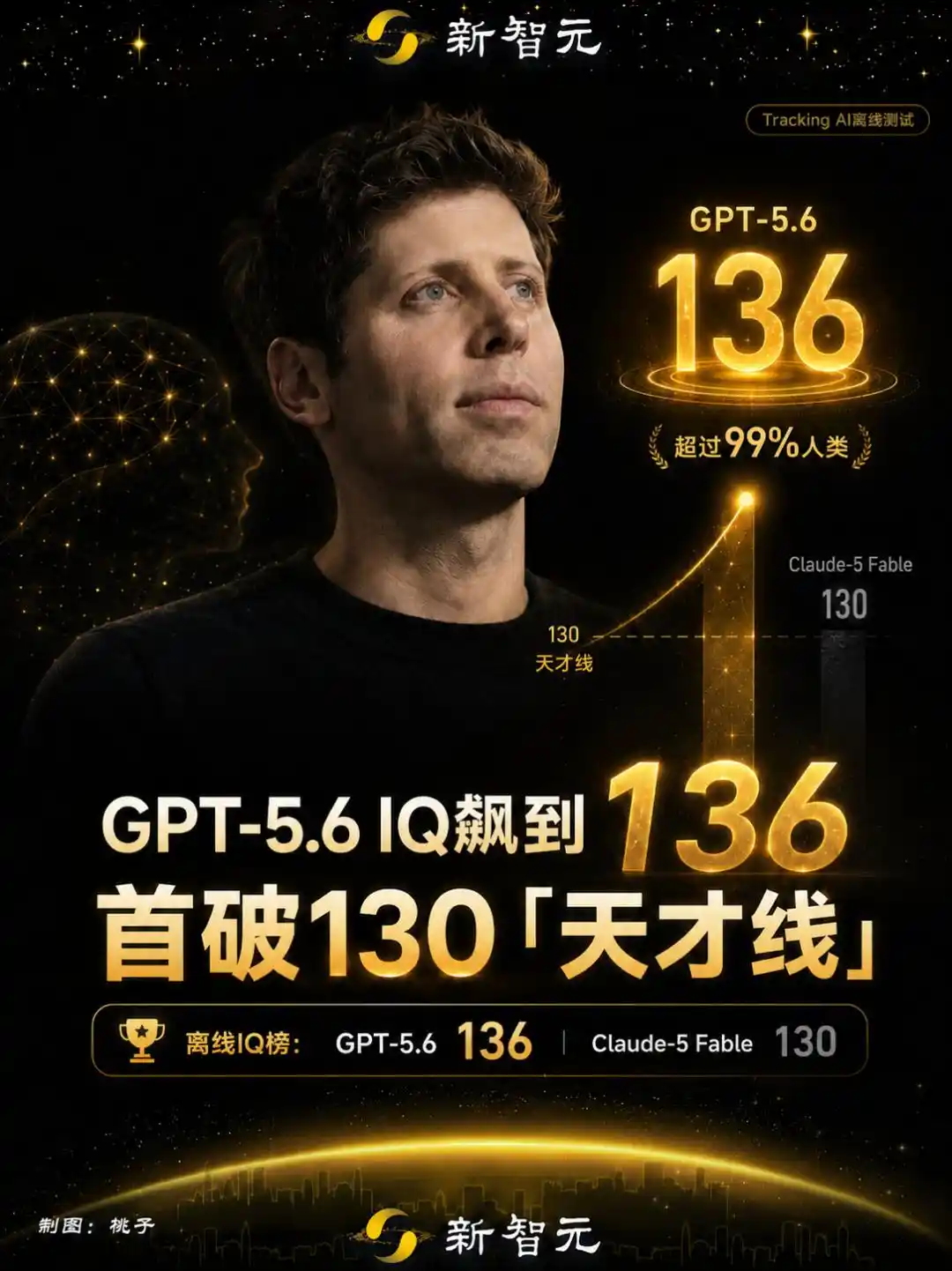
In Tracking AI's latest offline IQ test, multiple versions of the GPT-5.6 "full suite" soared to a score of 136.
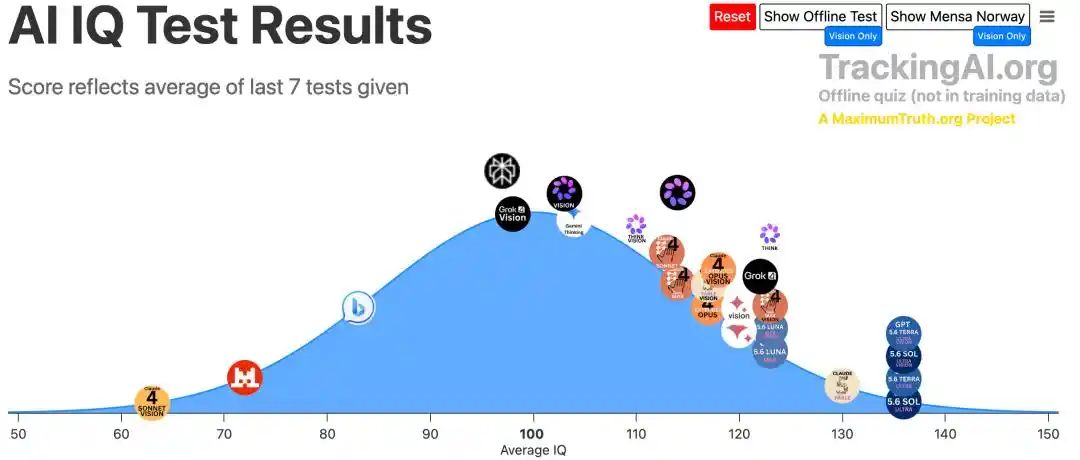
This is the first time an LLM has pushed its IQ beyond the 130 mark.
In the distribution of human intelligence, 130 is the starting line for "genius," a level only about 1% of the global population can reach.
In other words, GPT-5.6 is smarter than 99% of humans.
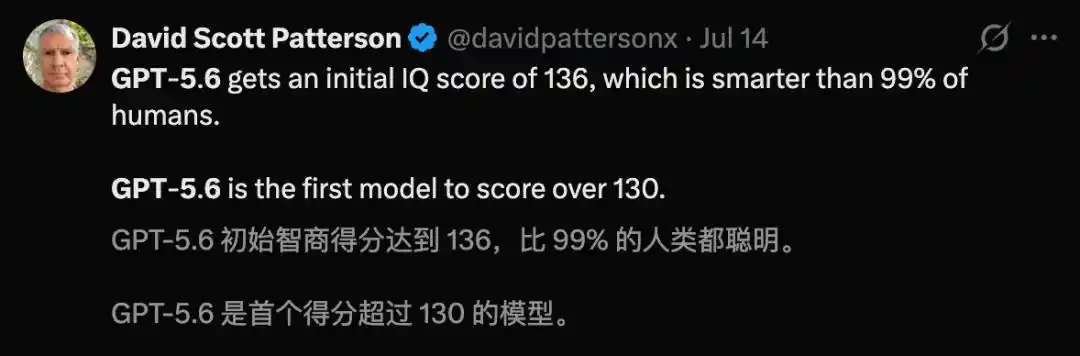
GPT-5.6 Racks Up 136 Points, IQ Breaks "Genius Line" for the First Time
How credible is this "IQ"?
In fact, Tracking AI uses two sets of questions.
One is a public Mensa Norway-style test, available online for anyone to take, which models have already scored over 140 on.
The other is its own curated "offline question bank." It's not public, prevents leaks, and is specifically designed to block the loophole of "models memorizing answers in advance."
The 136 points GPT-5.6 achieved this time was on this most difficult, anti-cheating offline test.
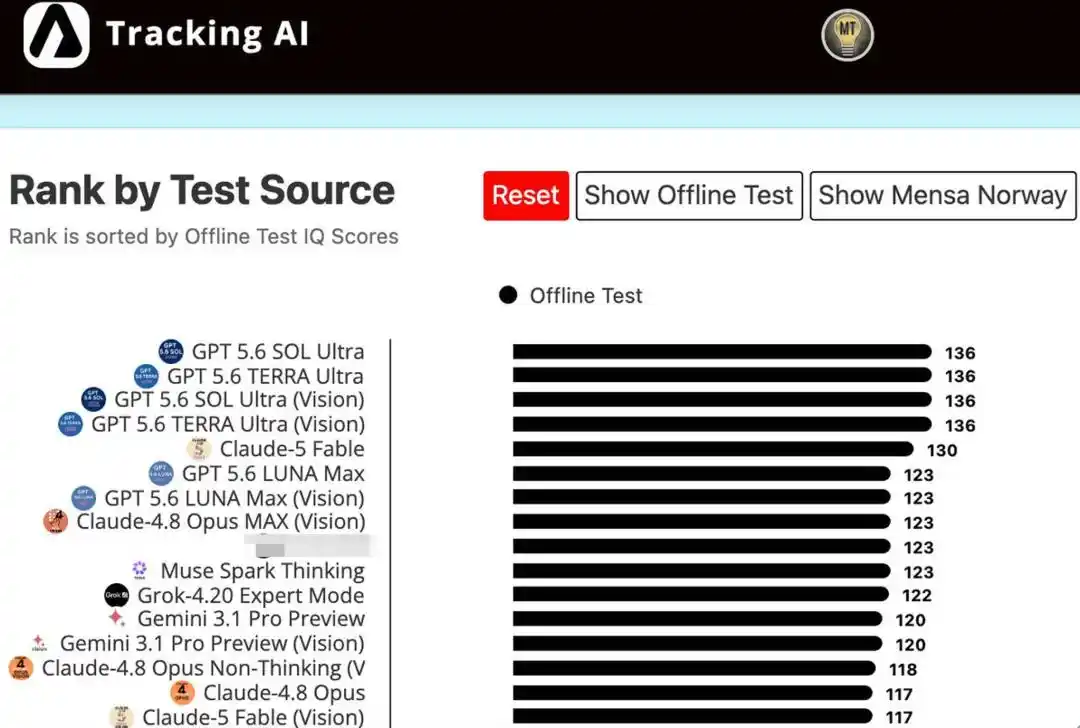
On this offline leaderboard, the various variants of GPT-5.6 (including the vision version) collectively surged to 136 points, leaving all competitors far behind.
Close behind is Claude-5 Fable, with 130 points.
Further down, names like GPT-5.6 LUNA Max and Claude-4.8 Opus are still hovering between 117 and 123 points.
It's important to note that this 130-point threshold had never been crossed before.
Over the past year, wave after wave of models, from o3 to various flagship models, surged forward, all getting stuck at the 130-point door, with none truly stepping into the "genius range."
GPT-5.6 is the first to kick that door open.
And it didn't achieve this score alone; the entire SOL, TERRA family collectively soared to 136, with even the vision version keeping pace.
On Reddit, a developer conducted a hands-on test and concluded that GPT-5.6's intelligence feels significantly higher than GPT-5.5's.
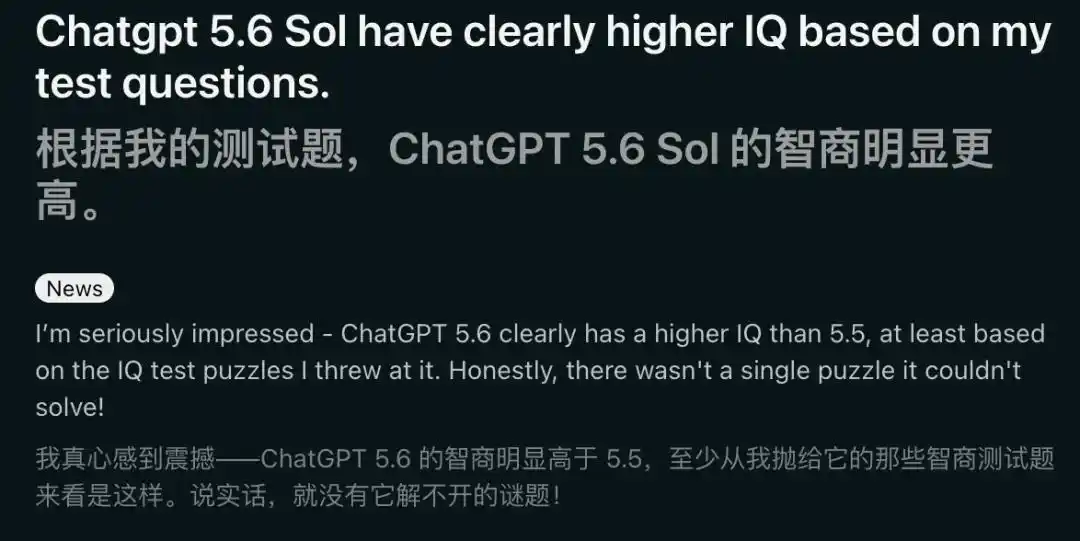
In the following test questions, GPT-5.6 achieved outstanding results in the shortest possible time.
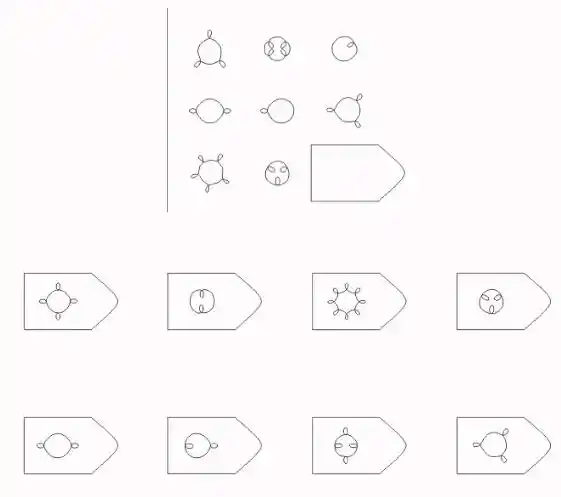
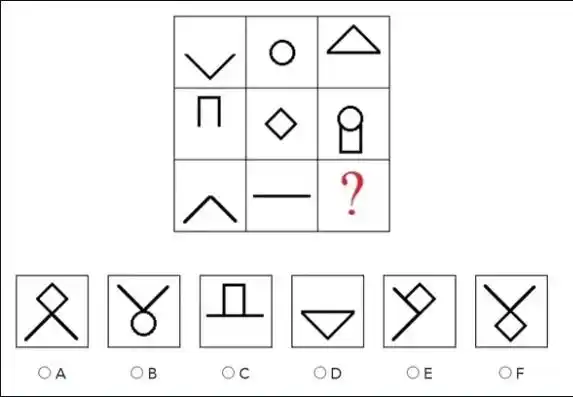
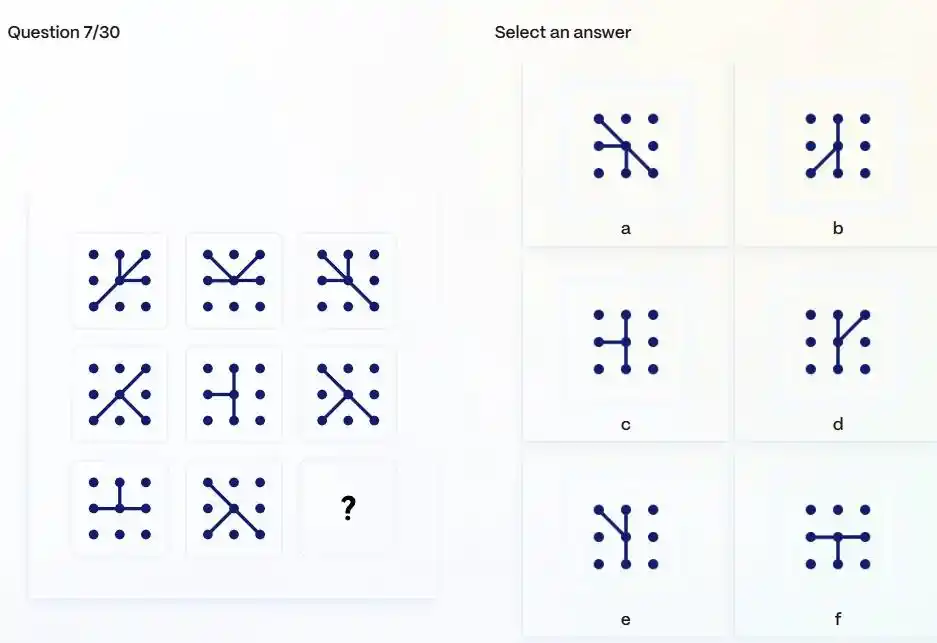
One test score might not be convincing enough, so what does GPT-5.6 look like when taken out of the exam room and put to real work?
More Than Just a Score: Putting GPT-5.6 to Work
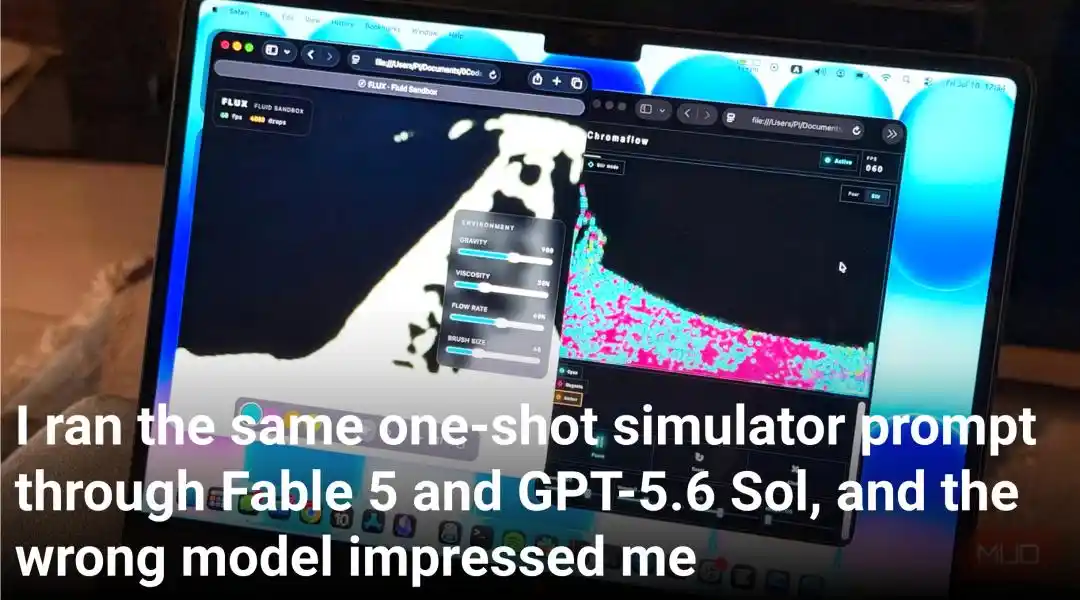
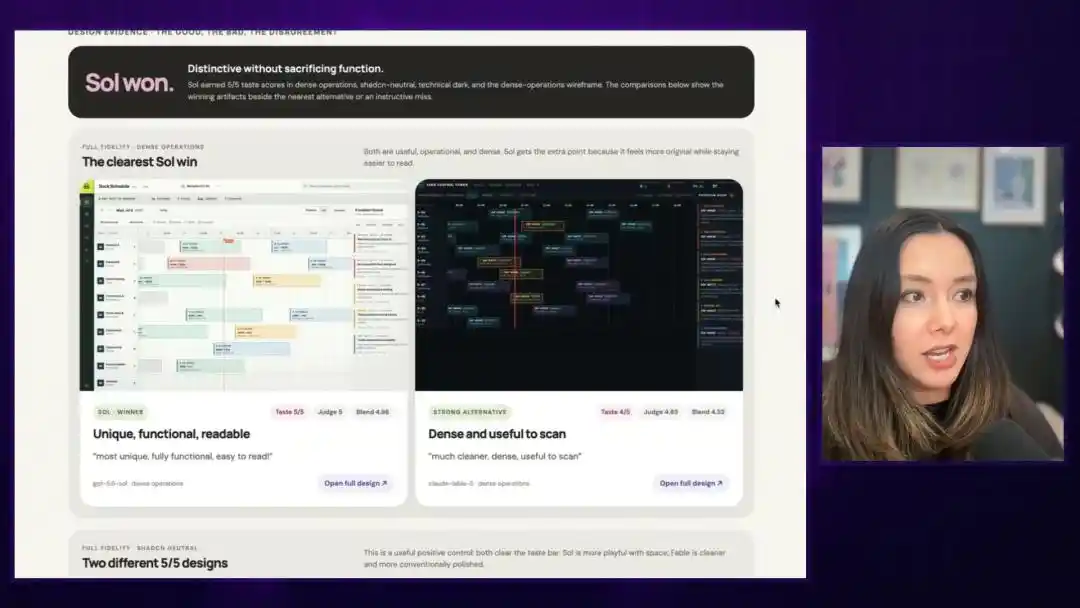
Developer Amir Bohlooli fed the same physics simulation prompt to both Fable 5 and GPT-5.6 Sol, expecting to be crushed by Fable, but ended up being amazed by GPT.
It chose particle fluid simulation, with physics progressing in real-time rather than blindly running fixed calculations per frame, cramming CSS, interface, and rendering all into a single HTML file, and automatically hosting it as a shareable webpage. In short, a finished product.
Similarly, Ramanpal Singh used a single prompt to create a RAG-based customer service ticketing system.
Four roles, an admin backend, embeddable components, and it can automatically categorize complaints, recognize sentiment, and draft replies.
It built 5 such apps in one go, at a cost that was only a fraction of what Fable 5 would require.
The most vivid story is from Claire Vo.
A few days ago, she was stuck on a bug, thinking her own code was broken. After switching to GPT-5.6 Sol, she just threw out the line, "I just don't believe I can't fix this."
Sol fixed it in one attempt and even managed to get it running on other models.
Her assessment hit the nail on the head: Fable gets bogged down in technical absolute precision, becoming its own trap, while Sol's pragmatic approach gets the job done.
It has to be said, there's an entire real-world project between an AI that can solve test problems and an AI that can save the day.
Does This Count as AGI?
Some netizens have said, "For 99% of people, this is already AGI."
Looking at it calmly, this 136 score was achieved on a specific offline / Mensa Norway-style test by Tracking AI.
What it measures is mainly "standardized cognition" like abstract pattern recognition and logical reasoning.
The problem is: IQ tests were never designed for large models.
A Mensa exam paper can't measure a model's factual reliability, its tool-calling ability, or how dependable it is in real professional scenarios.
It only slices off one thin layer of "intelligence" and tells you how bright that slice is.
However, hands-on testing by users provides the other half of the answer: GPT-5.6 seems to be slowly merging the two capabilities of "solving test problems" and "getting things done."
The questions in standardized tests are ones models have likely seen thousands of times in their training data; the real test of skill is with those new problems they've never encountered and have no answers to copy from.
Whoever can hold steady there truly deserves the word "intelligence."
References:
https://x.com/davidpattersonx/status/2077049232490672458
https://trackingai.org/
This article is from the WeChat public account "新智元" (New AI Era), author: ASI Revelation