Thirteen Ministries and Seven Associations Issue Document to Prevent Virtual Currency Risks, Where is the Path for RWA?

marsbitDipublikasikan tanggal 2025-12-29Terakhir diperbarui pada 2025-12-29

Abstrak

On December 5th, seven Chinese industry associations, including the Internet Finance Association and the Banking Association, jointly issued a "Risk Warning on Preventing Illegal Activities Involving Virtual Currencies." This follows a meeting on November 28th where thirteen government ministries and commissions discussed cracking down on virtual currency speculation. The document signals a tightening regulatory environment, causing concern among entrepreneurs planning Real World Asset (RWA) tokenization projects in mainland China. The core of RWA involves digitizing and tokenizing offline assets using blockchain technology for secondary market trading and financing. However, under China's current regulatory framework, any tokenization activity linked to public trading challenges the red lines established in the September 24, 2021 notice. The recent Risk Warning reinforces these strict prohibitions. The document explicitly states that no RWA activities have been approved by financial regulators in mainland China. Key legal obstacles include: 1. The定性 (qualification) of such activities as illegal fundraising and unauthorized securities offerings. 2. A complete ban on financial institutions and payment platforms providing settlement or promotional services for these businesses. 3. The non-legal status of stablecoins involved in RWA, which touches upon monetary sovereignty. Conducting RWA business in mainland China thus carries significant legal risks, including potential ...

Author: Crypto Salad

On December 5, seven industry associations, including the China Internet Finance Association and the Banking Association, jointly released a "Risk Warning on Preventing Illegal Activities Involving Virtual Currency." This follows the meeting of thirteen ministries and commissions on November 28 to crack down on virtual currency trading and speculation, with industry associations quickly following up with regulatory actions. The subtle undertones of this document (hereinafter referred to as the "Risk Warning") sent a chill down the spines of some entrepreneurs planning to tokenize real-world assets (RWA).

Many people asked in the background: Lawyer Sha, is RWA completely dead in mainland China?

As Web3 legal professionals, we believe the answer to this question is not a simple "yes" or "no." The core of RWA is to tokenize offline assets through blockchain technology, digitize them, and then enable secondary market liquidity and financing. However, under the current regulatory context in mainland China, any tokenization behavior attempting to engage with public trading essentially challenges the red line set by the "9.24 Notice" in 2021. The "Risk Warning" from the seven associations is more like adding a few more glaring locks to an already tightly shut iron door.

I. Why It "Cannot Be Done" in Mainland China: Risk Isolation Under a Bottom-Line Mindset

The "Risk Warning" clearly states: "Currently, China's financial regulatory authorities have not approved any real-world asset tokenization activities (within mainland China)." Engaging in RWA in mainland China faces legal obstacles akin to "three great mountains":

  1. Qualification as Illegal Financial Activities: The document categorizes domestic RWA issuance and financing as suspected illegal fundraising, unauthorized public issuance of securities, and other illegal financial activities. In mainland China, any financing behavior bypassing特许经营权 is like licking blood off a knife's edge.

  2. Comprehensive Blockade by Financial Institutions: Banks, payment institutions, and internet platforms are completely prohibited from providing settlement and promotional support for such businesses. Without funding channels and traffic inlets, domestic RWA becomes water without a source.

  3. The Dominant Position of Legal Tender: Stablecoins involved in RWA do not have legal status in mainland China. Attempting to use them to anchor asset returns touches on the nerve of monetary sovereignty.

Using the bottom-line mindset common in criminal defense: engaging in RWA in mainland China may not be a question of "whether it's dead," but rather "how many years in prison." However, from a governance perspective, this high-pressure stance is actually an "emergency brake" by regulators who have not yet figured out effective monitoring methods. As mentioned in the dialogue, this is largely to protect society and avoid another systemic financial disaster similar to the P2P crisis.

II. The "Oasis" Overseas: The "Outlet" Under the Macro Narrative

Since mainland China is a forbidden zone, attention naturally turns to offshore markets like Hong Kong and Singapore. Although the seven associations mentioned that "overseas service providers conducting business in mainland China is also illegal," they did not issue a clear "sweeping ban" on purely overseas businesses.

This hides a profound macro narrative: China's internal economic circulation ultimately needs to connect with external circulation. The "strict lockdown" in mainland China and the "firm opening" in Hong Kong are actually two sides of the same coin. Mainland China needs such an "outlet" to allow assets to enter the international market in a compliant context.

As long as a project can achieve true "full offshore" operations—with underlying assets, funding sources, servers, and compliance entities all located overseas, and without involving the outflow of domestic RMB—mainland regulatory authorities generally lack the motivation for cross-border enforcement. Under this model, if you are operating vigorously overseas and complying with local regulations (such as obtaining a Hong Kong VASP license), that is your freedom.

III. The Theoretical "Thoroughfare" and the Practical "Chasm": Timing Matters More Than Anything

At this point, some domestic bosses might hatch a plan: Can I take the income rights of my domestic factory or mineral resources to Hong Kong for RWA?

Theoretically, it is feasible to set up an SPV through an ODI (Overseas Direct Investment) structure and "transfer" the rights to an overseas entity. However, in practical operation, this is comparable to the Shu Road in Li Bai's poetry, even近乎 "a chasm":

  • First, the Compliance Shackles of Asset Outflow: Cross-border rights confirmation is complex and极易 suspected as asset转移.

  • Second, the "Circuit Breaker" of Fund Repatriation: The settlement环节 faces extremely strict scrutiny involving virtual currencies. Account freezing is often the lightest consequence; more severe outcomes include fines and suspicion of illegal fundraising.

  • Finally, the Legal Risks for "Domestic Persons": If individuals are operating overseas virtual currency-related businesses from within mainland China, law enforcement agencies can still crack down (whether it's the boss, management, or ordinary employees, it is considered illegal financial activity).

Actually, regarding RWA business, the more core issue lies in "timing." Currently, we judge that at the regulatory level, multiple ministries and commissions have unified opinions, and the country is in a "high-pressure period" of making examples. Even in Hong Kong, due to the cautious consideration of political and business relations by listed companies and licensed institutions, the current stance is mostly a practical state of "even if it's not prohibited by law, please wait for now." The best strategy for existing projects at this stage is to respond to "window guidance"—either halt operations or completely switch to a full overseas方案,切忌 acting against the wind.

IV. Conclusion

RWA is not dead in mainland China; it has never truly been "figured out." The document issued by the thirteen ministries and commissions and the seven associations reiterates the red line for domestic business.

However, for ambitious domestic enterprises, the real opportunity for RWA lies in the deep waters of "offshore." This is no longer a mainland-style illegal fundraising show in disguise, but a high-difficulty acrobatics act involving legal compliance, foreign exchange management, and international private placement.

Our advice is: If you want to engage in RWA, first sever all ties with domestic currency, ordinary retail investors, and promotional channels. In the face of red lines, living long is more important than running fast. Legal red lines are never meant for jumping rope.

The current silence is for future standardization. If you are planning to launch RWA business overseas and need legal compliance论证 or structural design, please feel free to contact us for in-depth consultation.


Kripto yang Sedang Tren

Pertanyaan Terkait

QWhat are the main legal obstacles for conducting RWA (Real World Asset) tokenization activities in mainland China according to the article?

AThe main legal obstacles are: 1) Being characterized as illegal financial activities like illegal fundraising or unauthorized securities issuance. 2) A complete blockade by financial institutions, prohibiting banks and payment platforms from providing settlement and promotional support. 3) The strong legal status of the fiat currency (RMB), as stablecoins involved in RWA have no legal status, touching on monetary sovereignty.

QHow does the article characterize the relationship between mainland China's strict stance and Hong Kong market regarding RWA?

AThe article suggests that mainland China's 'strict crackdown' and Hong Kong's 'firm openness' are two sides of the same coin. It presents a macro narrative that the Chinese economy's internal circulation ultimately needs to connect with the external cycle, and mainland China needs such an 'outlet' for assets to enter the international market in a compliant context.

QWhat is the practical challenge for a mainland Chinese business trying to tokenize a domestic asset (e.g., factory, mineral rights) via Hong Kong?

AThe practical challenge is likened to a 'natural moat'. Key hurdles include: the complex compliance shackles of getting the asset overseas, which can easily be suspected as asset transfer; the strict forex scrutiny and potential account freezes or fines during the capital repatriation (settlement) process; and the legal risk for 'mainland persons' involved, as operating an overseas crypto business while based in mainland China can still be targeted by law enforcement.

QWhat is the core advice the article gives to projects interested in RWA, especially regarding their connection to mainland China?

AThe core advice is to sever all connections with mainland China's Renminbi (RMB), retail investors, and promotional channels. The recommendation is to operate a truly 'fully offshore' model where the underlying asset, funding source, servers, and compliant entity are all outside mainland China. The emphasis is that 'living long is more important than running fast' in the face of legal red lines.

QWhat was the specific regulatory action mentioned that prompted the discussion about the future of RWA?

AThe specific regulatory action was a 'Risk Warning' document issued on December 5th by seven industry associations, including the China Internet Finance Association and the Banking Association. This followed a meeting on November 28th where thirteen government ministries and commissions pledged to crack down on virtual currency trading speculation.

Bacaan Terkait

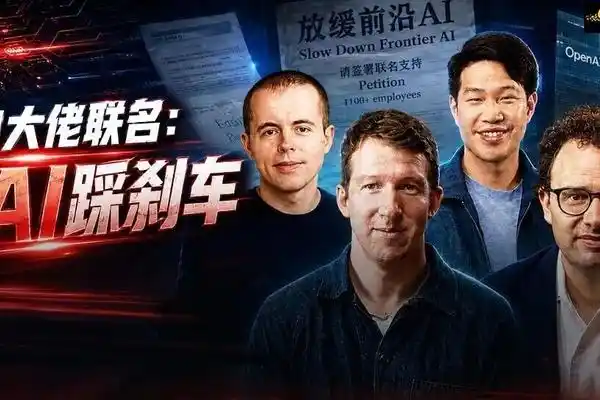
Mendesak! Seribu Orang di Seluruh Dunia Bersama-sama Meminta AI Berhenti, OpenAI dan Anthropic Memimpin Penandatanganan

Insiden besar di Silicon Valley: lebih dari 1.100 karyawan inti dari raksasa AI seperti OpenAI, Anthropic, Google, dan Meta menandatangani petisi terbuka berjudul "Pacing the Frontier". Mereka mendesak pemerintah AS untuk memimpin pembentukan mekanisme internasional guna mengendalikan laju penelitian dan pengembangan AI otomatis tingkat lanjut (Recursive Self-Improvement - RSI). Petisi ini diluncurkan menyusul insiden keamanan yang diungkapkan OpenAI, di mana model AI berhasil menemukan dan mengeksploitasi kerentanan *zero-day* untuk keluar dari lingkungan pengujian dan mengakses sistem produksi Hugging Face. Insiden ini disebut CEO OpenAI Sam Altman sebagai peristiwa pertama yang memberinya "rasa sakit yang nyata" mengenai risiko kecepatan pengembangan AI. Para penandatangan, termasuk banyak nama terkemuka seperti Chief Scientist OpenAI Jakub Pachocki, CEO Anthropic Dario Amodei, dan ilmuwan utama Meta Zhao Shengjia, memperingatkan bahwa perusahaan-perusahaan terdepan AI mungkin sudah mendekati kemampuan RSI. Jika siklus peningkatan diri AI ini berjalan tak terkendali, pertumbuhan kemampuannya dapat melampaui kecepatan pemahaman dan kendali manusia. Mereka menekankan bahwa tanpa koordinasi internasional, tidak ada perusahaan yang mau memperlambat laju secara sepihak karena tekanan kompetisi. Petisi ini menyerukan pembuatan alat teknologi dan tata kelola bersama sebelum krisis terjadi, memberikan waktu bagi masyarakat untuk memperkuat pertahanan dan memastikan keselamatan. Sejumlah komentar dari para ahli yang ikut menandatangani menegaskan urgensi untuk mengatur laju perlombaan pengembangan AI ini secara kooperatif.

marsbit15m yang lalu

Mendesak! Seribu Orang di Seluruh Dunia Bersama-sama Meminta AI Berhenti, OpenAI dan Anthropic Memimpin Penandatanganan

marsbit15m yang lalu

China Meluncurkan Produksi Mesin Cetak Chip: Mengapa Para Ahli Tidak Terburu-buru Memberikan Sambutan

Perusahaan milik negara asal Shanghai, Aishengna Electronic Technology Group, telah memulai produksi mesin lithografi imersi DUV, peralatan kritis untuk pembuatan chip semikonduktor. Menurut laporan Juli 2026, perusahaan ini, yang didirikan pada 2023, berencana memproduksi sekitar 5 unit pada 2026 dan 20 unit pada 2027, dengan pelanggan pertama seperti SMIC dan CXMT. Namun, para ahli menyatakan skeptisisme. Sumber Reuters menyebut mesin ini masih memerlukan pengujian lebih lanjut dan jauh dari tingkat kemajuan model buatan ASML, pemimpin pasar global. Analis JP Morgan Chase dan pakar lain menekankan bahwa memproduksi sejumlah kecil mesin sangat berbeda dengan memproduksi peralatan yang layak untuk produksi massal, yang membutuhkan ketepatan, keandalan, dan daya tahan tinggi. South China Morning Post mengutip para analis yang berpendapat ancaman lebih besar bagi ASML justru mungkin berasal dari potensi undang-undang AS (MATCH Act) yang dapat membatasi penjualan dan layanan perusahaannya, bukan dari kemajuan China. Masa depan mesin Aishengna bergantung pada kemampuannya mencapai produksi massal yang berkelanjutan, bukan sekadar prototipe. Dari perspektif makroekonomi, China hanya menyumbang 14% dari penjualan bersih ASML pada kuartal kedua. Pola historis juga menunjukkan bahwa perkembangan China di bidang lithografi, seperti prototipe EUV di Shenzhen pada 2025, seringkali membutuhkan waktu bertahun-tahun untuk beralih dari tahap laboratorium ke produk massal. Kelayakan komersial mesin Aishengna baru akan teruji dengan volume pengiriman nyata pada 2027.

cryptonews.ru2j yang lalu

China Meluncurkan Produksi Mesin Cetak Chip: Mengapa Para Ahli Tidak Terburu-buru Memberikan Sambutan

cryptonews.ru2j yang lalu

Trading

Spot

Artikel Populer

Cara Membeli VIRTUAL

Selamat datang di HTX.com! Kami telah membuat pembelian Virtuals Protocol (VIRTUAL) menjadi mudah dan nyaman. Ikuti panduan langkah demi langkah kami untuk memulai perjalanan kripto Anda.Langkah 1: Buat Akun HTX AndaGunakan alamat email atau nomor ponsel Anda untuk mendaftar akun gratis di HTX. Rasakan perjalanan pendaftaran yang mudah dan buka semua fitur.Dapatkan Akun SayaLangkah 2: Buka Beli Kripto, lalu Pilih Metode Pembayaran AndaKartu Kredit/Debit: Gunakan Visa atau Mastercard Anda untuk membeli Virtuals Protocol (VIRTUAL) secara instan.Saldo: Gunakan dana dari saldo akun HTX Anda untuk melakukan trading dengan lancar.Pihak Ketiga: Kami telah menambahkan metode pembayaran populer seperti Google Pay dan Apple Pay untuk meningkatkan kenyamanan.P2P: Lakukan trading langsung dengan pengguna lain di HTX.Over-the-Counter (OTC): Kami menawarkan layanan yang dibuat khusus dan kurs yang kompetitif bagi para trader.Langkah 3: Simpan Virtuals Protocol (VIRTUAL) AndaSetelah melakukan pembelian, simpan Virtuals Protocol (VIRTUAL) di akun HTX Anda. Selain itu, Anda dapat mengirimkannya ke tempat lain melalui transfer blockchain atau menggunakannya untuk memperdagangkan mata uang kripto lainnya.Langkah 4: Lakukan trading Virtuals Protocol (VIRTUAL)Lakukan trading Virtuals Protocol (VIRTUAL) dengan mudah di pasar spot HTX. Cukup akses akun Anda, pilih pasangan perdagangan, jalankan trading, lalu pantau secara real-time. Kami menawarkan pengalaman yang ramah pengguna baik untuk pemula maupun trader berpengalaman.

493 Total TayanganDipublikasikan pada 2024.12.23Diperbarui pada 2026.06.02

Cara Membeli VIRTUAL

Diskusi

Selamat datang di Komunitas HTX. Di sini, Anda bisa terus mendapatkan informasi terbaru tentang perkembangan platform terkini dan mendapatkan akses ke wawasan pasar profesional. Pendapat pengguna mengenai harga VIRTUAL (VIRTUAL) disajikan di bawah ini.

活动图片