2026 Mid-Year Report On-Chain RWA: Tokenized Stock Market Cap Doubles in a Year, But 90% of Rights Are Hollow Shells

marsbitXuất bản vào 2026-08-01Cập nhật gần nhất vào 2026-08-01

Tóm tắt

The 2026 Mid-Year Report on On-Chain RWA highlights a significant growth in tokenized stock market capitalization, which nearly doubled from $951 million in March to $1.89 billion by July. However, the report reveals a fundamental contradiction in this "layer 2.5" ecosystem: products with the strongest legal foundation (like regulated U.S. infrastructure) lack liquidity and distribution, while freely tradable offshored wrapper products often lack substantive ownership rights. The increase is driven largely by a few products (SECZ, FGRS, STRCx) and platforms (Ondo, xStocks, Securitize collectively hold over 85% share). While distributed value across networks like Ethereum, Solana, and BNB Chain has grown, the market remains fragmented. Products referencing the same underlying asset (e.g., Apple stock) are distinct legal liabilities with different intermediaries and jurisdictional rules, offering varying degrees of legal claim. The report cautions that headline numbers are misleading, as they reflect changes in distributed token value—driven by issuance, conversions, and price movements—not pure investor inflows. True "canonical shares" with legal ownership, wide wallet distribution, institutional liquidity, and independent on-chain price discovery do not yet exist at scale. Tokenized treasuries show stronger product-market fit, and ETFs may be easier to scale than single stocks. The core takeaway is a trade-off: legal certainty versus liquidity and composability.

Author: insights4vc

Translation: Deep Chao TechFlow

Deep Chao Introduction: The headline figure for the scale of on-chain tokenized assets looks good, but behind it lies a fundamental contradiction—products that can be freely circulated often lack real ownership rights, while products with genuine legal effect lack liquidity. This report uses specific data to dissect just how much of this "$1.89 billion market" is real money, serving as a necessary dose of sobriety for any investor considering deploying capital in on-chain securities.

The stock market hasn't moved on-chain. What has truly emerged is a set of more credible infrastructure layers—for distributing securities, recording ownership claims, and settling trades through blockchain-based systems.

Data from RWA.xyz shows that the value of distributed tokenized stocks grew from $951 million in March 2026 to $1.89 billion in July, almost doubling. However, this growth primarily came from a handful of products and platforms.

The most significant progress has come from regulated market infrastructure, notably Nasdaq's Same CUSIP Settlement model and the planned commercial rollout by DTC. Liquidity, investor distribution, and independent on-chain price discovery remain very limited. Tokenized treasuries continue to demonstrate stronger product-market fit, and equity ETFs may be easier to scale than single stocks.

Therefore, this market is best understood as a fragmented "Layer 2.5" system: products with the most robust legal foundations often have the weakest liquidity and distribution capabilities; while the most actively traded wrapped products typically have the thinnest ownership rights.

This report is an update to insights4vc's March 2026 analysis "The State of On-Chain Real Assets," focusing on what has substantively changed since its release.

The State of On-Chain Real Assets

What Has Substantively Changed Since March

The March report distinguished between two types of assets: those recorded on a blockchain, and those transferable to external wallets. This distinction remains important today. Under RWA.xyz's framework, a "represented asset" stays within the issuer's or platform's own environment; a "distributed asset" can be transferred externally, though transfers may still be limited to approved or whitelisted wallets.

But transferability alone is no longer sufficient to gauge a product's maturity.

Since March, offshore products have become more accessible for cross-chain movement and use in decentralized markets. Ondo expanded to Ethereum, BNB Chain, and Solana, introduced decentralized routing, and added continuous minting and redemption features for some products. xStocks also broadened its distribution channels and collateral integrations.

Meanwhile, regulated US infrastructure has taken a different path: the focus is not on unrestricted portability, but on legal certainty, controlled wallets, compliant custody, transfer agent records, and integration with DTC.
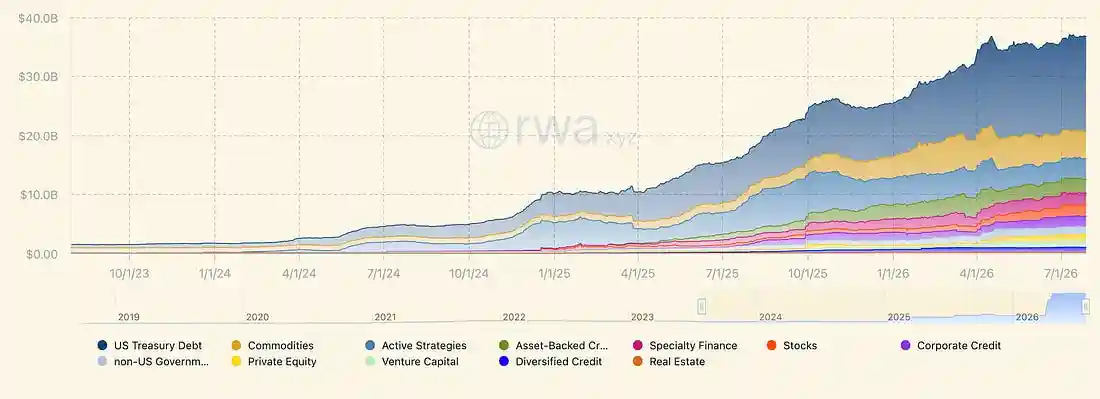
Chart: Market Cap Evolution of Various RWA Asset Types (2019–2026) (Including Tokenized Stocks, Treasuries, etc.)

These two paths solve different problems: offshore wrapped products improve accessibility and composability; regulated infrastructure strengthens the link between the token and the legal ownership claim.

A "canonical share" is the authorized form of the underlying security issued, whose transfer is recognized in the official ownership system. It is fundamentally different from third-party instruments that merely track a stock's price or performance.

Currently, no product achieves all four elements at scale: canonical ownership, broad wallet distribution, institutional liquidity, and independent on-chain price discovery.
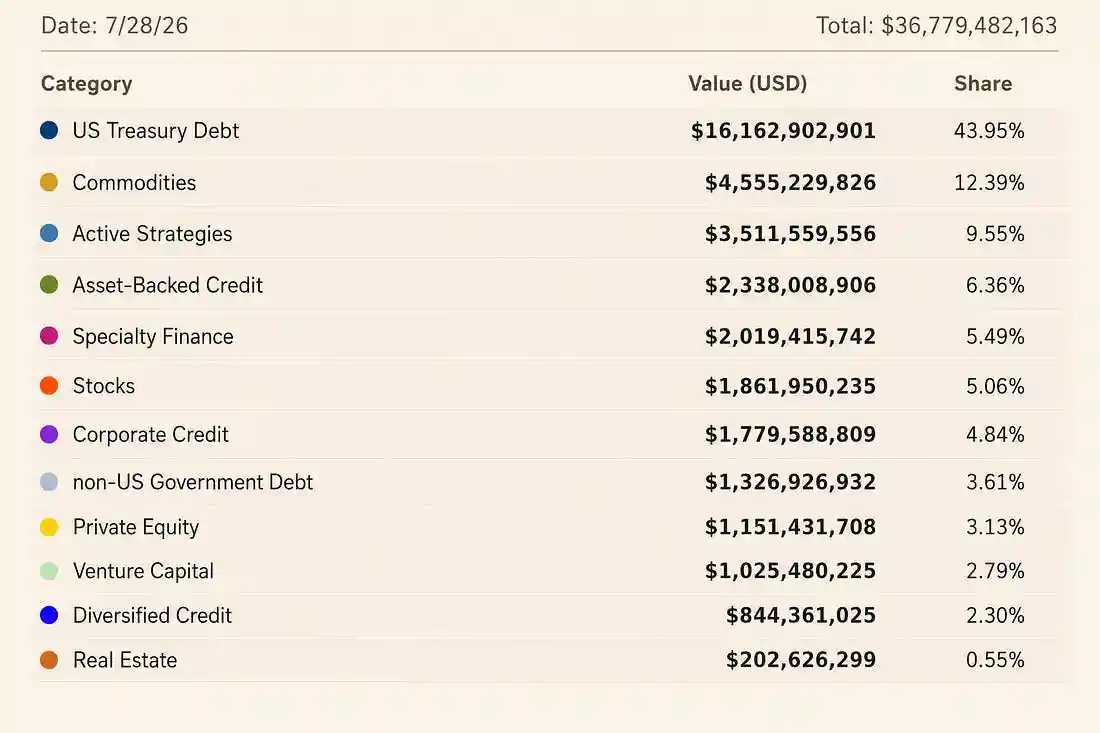
Chart: On-Chain Real Assets Summary Statistics (As of July 28, Total ~$36.78 Billion, US Treasuries Account for 43.95%)

Broader RWA total figures also require careful interpretation. Data reported by RWA.xyz on July 29: distributed value $36.81 billion, represented value $218.27 billion. The apparent $124.33 billion decrease in represented value should not be interpreted as capital outflow or a redemption wave. Between the two observation dates, numerous datasets were added, removed, reclassified, or revalued.

These numbers describe the value of interests covered by the platform's methodology at a specific point in time, not a measure of investor fund flows.

The tokenized stock series is more instructive, as the same "bridged token value" methodology can be applied across both periods. Even so, the reported 98.5% increase cannot be clearly decomposed into new issuance, price appreciation, and classification changes.

FGRS provides a useful example. Figure completed a fundraising offering 4.375 million blockchain shares at $32 per share, but subsequently reported value fluctuates with market prices. Without daily mint, burn, and net asset value data for each product, it's impossible to reliably reconstruct the net market-wide issuance.

Why the $1.888 Billion Headline Number Is Misleading

RWA.xyz uses "Bridged Token Value" to measure tokenized stocks, calculated as: Bridged circulating supply multiplied by Net Asset Value.

Circulating supply excludes balances identified as treasury holdings or pre-minted inventory. The bridged figure also removes tokens locked in known bridge contracts to avoid double-counting when an asset is locked on one network and issued on another.

This is a valid measure of distributed value, but it differs from free float. Free float refers to the portion of securities genuinely available for public trading after excluding restricted, strategic, and concentrated holdings.

The timing of the data also matters. The provided asset-level export shows a distributed total value of $1.8879 billion on July 27, consistent with the ~$1.888 billion shown on the dashboard. A snapshot across platforms and networks on July 29 sums to approximately $1.872 billion.

The difference is $15.8 million, or 0.84%, consistent with price and token supply changes between the two observation dates. Therefore, this report's growth calculations for specific instruments use July 27 data, while platform and network market share uses the July 29 snapshot, and the two datasets are not mixed in the same calculation.
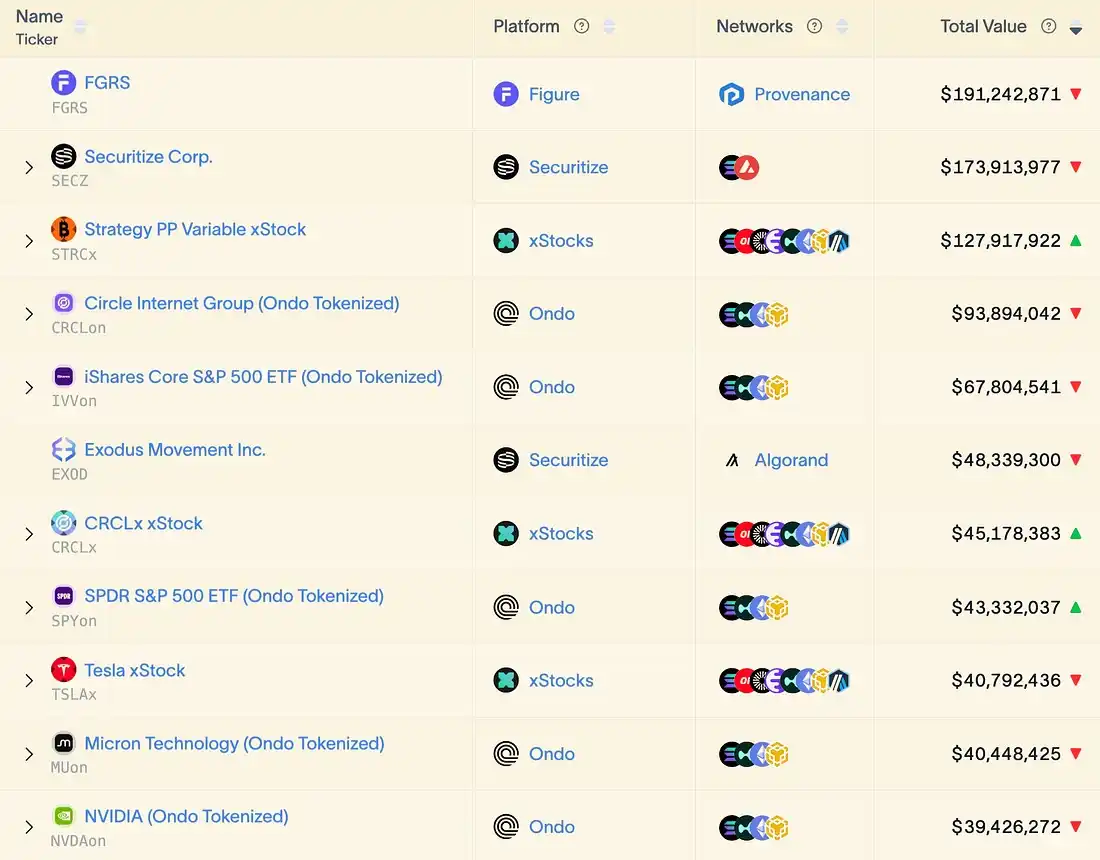
Chart: Tokenized Stock Details (10 Underlyings, Classified by Issuing Platform & Network, FGRS highest at ~$191 million)

Three named instruments contributed roughly half the increment: SECZ added $169 million post-listing, FGRS added $162.9 million, STRCx added $126.6 million. Together they contributed $458.6 million, 49% of the total $936.8 million increase. Long-tail products collectively contributed another $150.5 million, 16.1% of the increment.

These figures reflect changes in distributed value, not investor subscriptions.

SECZ is affected by both the number of represented shares and Securitize's NYSE stock price. FGRS reflects a combination of issuance, conversion activity, and market price changes. STRCx depends on the circulating supply and value of receipts tied to Strategy Floating Rate Preferred Stock.

Calling the above three increases "tokenized stock capital inflows" would merge several economically distinct events into a single, potentially misleading number.

Concentration is more evident at the platform level. In the July 29 snapshot, Ondo and xStocks together accounted for 72.7% of distributed value. Adding Securitize raises the top three platforms' share to 85.1%.
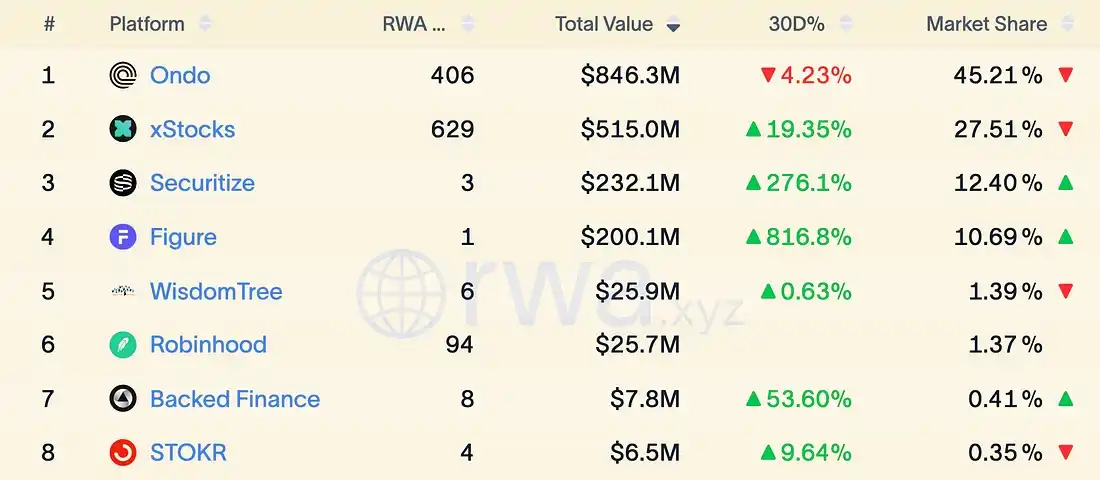
Chart: RWA.xyz Platform Rankings — Ondo (45.21%), xStocks (27.51%), Securitize (12.40%) are Top Three

Distribution across blockchain networks is more decentralized, but this doesn't eliminate underlying common dependencies. Ethereum leads with a 36.2% value share, followed by Solana (19.6%) and BNB Chain (15.8%). Provenance and Avalanche are primarily driven by Figure and Securitize, respectively.

Products issued on different networks may still rely on the same wrapping issuer, broker, custodian, transfer agent, or reference price provider.
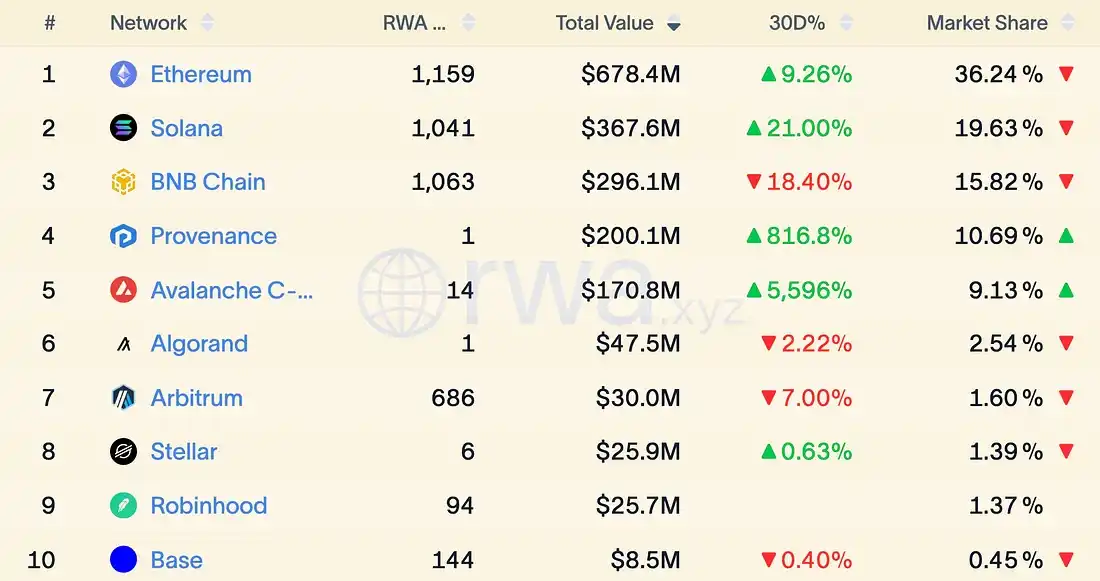
Chart: RWA.xyz Network Rankings — Ethereum (36.24%), Solana (19.63%), BNB Chain (15.82%) are Top Three

This market has broadened in scope but remains legally fragmented. Multiple tokens can simultaneously reference Apple stock or the S&P 500 ETF, but each is a separate legal liability, subject to different jurisdictions, and reliant on different intermediaries.

Bridge adjustments prevent double-counting the same token on different networks, but they cannot—and should not—consolidate products that reference similar assets but offer substantively different legal rights.


Tiền kỹ thuật số thịnh hành

Câu hỏi Liên quan

QAccording to the article, what is the core contradiction within the current tokenized stock market?

AThe core contradiction is that products with free tradability often lack genuine legal ownership rights, while products with solid legal ownership rights suffer from poor liquidity.

QWhat were the two main categories of assets defined in the March 2026 report, and why does the article say transferability alone is no longer sufficient to judge a product's maturity?

AThe two categories were 'represented assets' (recorded but kept within the issuer's environment) and 'distributed assets' (transferable to external wallets). The article states transferability alone is insufficient because the market has evolved into two distinct paths: offshore products focus on accessibility/composability, while regulated US infrastructure focuses on legal certainty, controlled wallets, and integration with traditional systems like the DTC.

QWhich three specific tokenized stock instruments contributed nearly half of the reported growth in distributed value from March to July 2026?

AThe three instruments were SECZ (which added ~$169M), FGRS (~$162.9M), and STRCx (~$126.6M). Together, they contributed about 49% of the total $936.8M increase in distributed value.

QHow concentrated is the tokenized stock market at the platform level as of late July 2026, based on the data presented?

AThe market is highly concentrated. The top three platforms—Ondo, xStocks, and Securitize—collectively accounted for 85.1% of the total distributed value as of July 29th.

QWhat are the four key elements that, according to the article, no tokenized stock product has managed to achieve at scale simultaneously?

AThe four elements are: 1) Canonical ownership (legal recognition), 2) Broad wallet distribution, 3) Institutional liquidity, and 4) Independent on-chain price discovery.

Nội dung Liên quan

Can thiệp Mỹ-Nhật: Khởi đầu của 'Hiệp định Plaza' mới, hệ thống Bretton Woods 2.0 và cái kết của kỷ nguyên Carry Trade Yên Nhật

Tác giả: Diệp Trân, Phố Wall Kiến Văn Mỹ và Nhật Bản đã có hành động phối hợp hiếm có trong nhiều thập kỷ để hỗ trợ đồng yên, khiến thị trường đánh giá lại mô hình dòng vốn toàn cầu vốn phụ thuộc lâu dài vào việc vay vốn với lãi suất thấp bằng đồng yên. Các nhà chiến lược cho rằng nếu xu hướng chính sách này tiếp tục, nó có thể đánh dấu bước ngoặt cho các giao dịch carry trade bằng yên và thúc đẩy những điều chỉnh sâu hơn trong việc phân bổ vốn toàn cầu. Bộ trưởng Tài chính Mỹ Bessent và Tổng thống Trump đã xác nhận sự tham gia tích cực của Mỹ trong việc hỗ trợ đồng yên. Bessent tuyên bố Mỹ sẽ không ngần ngại tham gia các hành động can thiệp chung tiếp theo để điều chỉnh tình trạng định giá thấp nghiêm trọng của đồng yên. Trump nhấn mạnh can thiệp này thể hiện mối quan hệ đồng minh và kỳ vọng Washington sẽ thu được lợi ích tài chính thực chất. Sự phối hợp chính sách hiếm có này ngay lập tức gây ra phản ứng mạnh trên thị trường tài chính. Đồng yên tăng mạnh lên mức 157,40 yên/USD, mức mạnh nhất kể từ đầu tháng 5, nhờ can thiệp trực tiếp, hướng dẫn bằng lời nói của giới chức và hướng dẫn cho các ngân hàng giao dịch. Phân tích thị trường chỉ ra rằng động thái của liên minh Mỹ-Nhật đã vượt ra ngoài phạm vi quản lý tỷ giá thông thường. Việc Nhật Bản có thể bán dự trữ ngoại hối để bảo vệ đồng tiền của mình, cùng với việc định giá lại phần dài hạn của đường cong lợi suất trái phiếu Mỹ liên quan, đang đẩy thị trường vốn toàn cầu vào một trạng thái bình thường mới được định hình bởi việc tái cơ cấu thanh khoản. Sự phục hồi mạnh mẽ của đồng yên không chỉ là kết quả của hoạt động can thiệp mà còn chạm đến logic cơ bản của hệ thống tài chính toàn cầu. Phân tích cho thấy trật tự cũ dựa trên carry trade bằng yên và nới lỏng định lượng của ngân hàng trung ương đang tan rã. Lãi suất thị trường trong tương lai sẽ ngày càng được quyết định bởi chính thị trường vốn. Các nhà phân tích lưu ý rằng nếu Tokyo phải bảo vệ đồng yên, Bộ Tài chính Nhật Bản có thể cần bán trái phiếu Mỹ. Khi chủ nợ nước ngoài lớn nhất của Mỹ trở thành người bán, lợi suất dài hạn của trái phiếu Mỹ chắc chắn phải được định giá lại. Việc tăng lợi suất trái phiếu dài hạn được cho là do quá trình thanh lý dự trữ ngoại hối của Nhật Bản và sự chuyển đổi vai trò vốn của các công ty công nghệ lớn, vốn đang phát hành trái phiếu quy mô lớn để đầu tư vào cơ sở hạ tầng AI, chứ không chỉ đơn thuần là rủi ro lạm phát. Phân tích cho rằng những biến động trên thị trường hối đoái hiện tại không chỉ là một cuộc can thiệp kỹ thuật mà còn mang ý nghĩa của một "Thỏa thuận Plaza" mới và khởi đầu cho Hệ thống Bretton Woods 2.0. Hoa Kỳ đang tìm cách thoát khỏi tình trạng trì trệ lâu dài thông qua kinh tế học phía cung, trong khi Nhật Bản cũng có thể tái cấu trúc vai trò kinh tế và địa chính trị của mình. Dù cuộc can thiệp chung này cuối cùng chỉ là một hành động ổn định tỷ giá ngắn hạn hay là sự khởi đầu của sự phối hợp chính sách quốc tế dài hạn hơn, nó đã buộc thị trường phải xem xét lại mô hình carry trade bằng yên kéo dài hàng thập kỷ và những thay đổi mới có thể xảy ra trong dòng vốn toàn cầu.

marsbit38 phút trước

Can thiệp Mỹ-Nhật: Khởi đầu của 'Hiệp định Plaza' mới, hệ thống Bretton Woods 2.0 và cái kết của kỷ nguyên Carry Trade Yên Nhật

marsbit38 phút trước

Robot 'Teletubbies' Đến Nhà Làm Vệ Sinh, 200 Nghìn Đồng/Giờ, Trí Tuệ Nhân Tạo 'Thuần Khiết'

Ở San Francisco, một công ty khởi nghiệp robot có tên Tau Robotics đã ra mắt dịch vụ dọn dẹp nhà cửa bằng robot hình người với giá 30 USD/giờ. Tuy nhiên, điểm đáng chú ý là các robot này hiện hoạt động dựa trên điều khiển từ xa (teleoperation) hơn là trí tuệ nhân tạo tự chủ hoàn toàn. Công ty, thành lập năm 2024 với khoảng 10 nhân viên, giới thiệu ba robot "nhân viên": Chelsea chuyên dọn dẹp nhà bếp và phòng tắm, Elon phụ trách dọn dẹp định kỳ và ghi nhớ vị trí đồ đạc, và Tony tập trung vào việc vệ sinh chuyên sâu. Lý do chọn thiết kế hình người, theo bài viết, là để tạo điều kiện thuận lợi cho việc điều khiển từ xa, vì người vận hành có thể ánh xạ trực quan các cử động của mình lên robot. Cách tiếp cận "gian lận thông minh" này nhằm mục đích thu thập dữ liệu từ môi trường thực tế để huấn luyện AI trong tương lai, tương tự mô hình "chế độ bóng" trong xe tự lái. Bài viết so sánh với thị trường Trung Quốc, nơi trọng tâm chính của robot hình người vẫn là trong môi trường công nghiệp có kiểm soát, và đề cập đến một công ty Mỹ khác là 1X Neo cũng theo đuổi hướng đi tương tự. Mặc dù hiệu quả về mặt kỹ thuật, nhưng việc người tiêu dùng có sẵn sàng trả tiền cho một robot được điều khiển từ xa với camera trong nhà mình hay không vẫn là một câu hỏi mở. Dịch vụ của Tau Robotics hiện đang trong chế độ mời thử nghiệm tại San Francisco.

marsbit1 giờ trước

Robot 'Teletubbies' Đến Nhà Làm Vệ Sinh, 200 Nghìn Đồng/Giờ, Trí Tuệ Nhân Tạo 'Thuần Khiết'

marsbit1 giờ trước

Từ Hàn Quốc đến Mỹ: Nhờ AI, Lao Động Chân Tay Ngày Càng 'Lên Ngôi'

Trí tuệ nhân tạo (AI) đang định hình lại thị trường lao động. Bằng đại học 4 năm không còn là "tấm vé an toàn", trong khi các nghề kỹ thuật như thợ điện, thợ hàn, thợ sửa ống nước đang có nhu cầu cao và mức lương hấp dẫn chưa từng thấy. Thanh niên từ Mỹ đến Hàn Quốc đang thay đổi quan điểm về giáo dục và nghề nghiệp. Số liệu cho thấy sự chuyển dịch rõ rệt: doanh thu trường dạy nghề ở Mỹ tăng mạnh 11.4%, trong khi các đợt sa thải nhân viên văn phòng do AI cũng lên mức cao kỷ lục. Áp lực AI thay thế lao động trí thức, cộng với nhu cầu mở rộng cơ sở hạ tầng và trung tâm dữ liệu, đang đẩy cung-cầu nghiêng về lao động kỹ thuật. Khảo sát cho thấy 60% thế hệ Z có kế hoạch làm nghề lao động kỹ thuật vào năm 2026, vì tin rằng những nghề này có tính an toàn nghề nghiệp cao hơn trước AI. Nhiều nghề kỹ thuật hiện có mức lương trung bình ngang bằng hoặc vượt các nghề yêu cầu bằng đại học. Mô hình học việc "vừa học vừa làm" hấp dẫn, và công việc này khó bị AI thay thế hoặc gia công ra nước ngoài. Tại Hàn Quốc, học sinh tốt nghiệp trung học bán dẫn có tỷ lệ có việc làm ngay lên tới 96.4%. Tuy nhiên, ngành này đang đối mặt với khoảng trống kép: làn sóng nghỉ hưu ồ ạt và nhu cầu mở rộng cơ sở hạ tầng. Dự báo Mỹ sẽ thiếu hụt hàng triệu lao động có kỹ năng. Nhiều tập đoàn lớn như Meta, Lowe's đã đầu tư hàng trăm triệu USD vào các chương trình đào tạo. Dù nhu cầu thị trường rõ ràng, định kiến xã hội coi trọng bằng đại học hơn học nghề vẫn tồn tại. Các chuyên gia nhấn mạnh cần có những nỗ lực chủ động từ ngành công nghiệp để thu hẹp khoảng cách nhận thức này, thông qua các chương trình trải nghiệm thực tế cho giới trẻ, nhằm giải quyết tận gốc tình trạng thiếu hụt lao động kỹ thuật.

marsbit1 giờ trước

Từ Hàn Quốc đến Mỹ: Nhờ AI, Lao Động Chân Tay Ngày Càng 'Lên Ngôi'

marsbit1 giờ trước

Từ TPU đến Agent Tự Tiến Hóa: Jeff Dean Nhìn Nhận Bước Tiếp Theo của AI Như Thế Nào?

Trong buổi phỏng vấn tại YC Startup School 2026, Jeff Dean chia sẻ tầm nhìn về tương lai của AI. Ông nhấn mạnh rằng cuộc cạnh tranh AI không còn là ai có mô hình lớn hơn, mà là ai có thể tổ chức trí thông minh hiệu quả hơn. Điểm then chốt là sự chuyển dịch từ việc huấn luyện các mô hình đơn thuần sang xây dựng các hệ thống "Agent" có khả năng làm việc lâu dài, tự động thử nghiệm, xác minh và tích lũy kinh nghiệm. Các Agent này cần được trang bị công cụ, bộ nhớ, môi trường thực thi và cơ chế phản hồi rõ ràng. Jeff Dean cho rằng cơ hội cho các startup nằm ở những lĩnh vực chuyên biệt nơi các mô hình phổ thông hiện có tỷ lệ thành công rất thấp (gần 0-1%), nhờ vào dữ liệu độc quyền, công cụ đánh giá chuyên môn hoặc mô hình chuyên sâu. Ông cũng dự đoán phần cứng chuyên dụng cho suy luận (inference) với độ trễ thấp và tiêu thụ năng lượng thấp sẽ là chìa khóa. Khi chi phí tạo mã trở nên rẻ hơn, giá trị thực sự sẽ nằm ở khả năng xác định vấn đề đáng giải quyết, thiết kế thông số kỹ thuật rõ ràng và có "khiếu" thẩm định. Tương lai của AI là xây dựng các hệ thống có thể tự động hóa phương pháp khoa học, chạy các vòng lặp thử nghiệm với tốc độ cao để khám phá và cải tiến không ngừng.

marsbit1 giờ trước

Từ TPU đến Agent Tự Tiến Hóa: Jeff Dean Nhìn Nhận Bước Tiếp Theo của AI Như Thế Nào?

marsbit1 giờ trước

Giao dịch

Giao ngay

Bài viết Nổi bật

Làm thế nào để Mua CAP

Chào mừng bạn đến với HTX.com! Chúng tôi đã làm cho mua Cap (CAP) trở nên đơn giản và thuận tiện. Làm theo hướng dẫn từng bước của chúng tôi để bắt đầu hành trình tiền kỹ thuật số của bạn.Bước 1: Tạo Tài khoản HTX của BạnSử dụng email hoặc số điện thoại của bạn để đăng ký tài khoản miễn phí trên HTX. Trải nghiệm hành trình đăng ký không rắc rối và mở khóa tất cả tính năng. Nhận Tài khoản của tôiBước 2: Truy cập Mua Crypto và Chọn Phương thức Thanh toán của BạnThẻ Tín dụng/Ghi nợ: Sử dụng Visa hoặc Mastercard của bạn để mua Cap (CAP) ngay lập tức.Số dư: Sử dụng tiền từ số dư tài khoản HTX của bạn để giao dịch liền mạch.Bên thứ ba: Chúng tôi đã thêm những phương thức thanh toán phổ biến như Google Pay và Apple Pay để nâng cao sự tiện lợi.P2P: Giao dịch trực tiếp với người dùng khác trên HTX.Thị trường mua bán phi tập trung (OTC): Chúng tôi cung cấp những dịch vụ được thiết kế riêng và tỷ giá hối đoái cạnh tranh cho nhà giao dịch.Bước 3: Lưu trữ Cap (CAP) của BạnSau khi mua Cap (CAP), lưu trữ trong tài khoản HTX của bạn. Ngoài ra, bạn có thể gửi đi nơi khác qua chuyển khoản blockchain hoặc sử dụng để giao dịch những tiền kỹ thuật số khác.Bước 4: Giao dịch Cap (CAP)Giao dịch Cap (CAP) dễ dàng trên thị trường giao ngay của HTX. Chỉ cần truy cập vào tài khoản của bạn, chọn cặp giao dịch, thực hiện giao dịch và theo dõi trong thời gian thực. Chúng tôi cung cấp trải nghiệm thân thiện với người dùng cho cả người mới bắt đầu và người giao dịch dày dạn kinh nghiệm.

Tổng lượt xem 472Xuất bản vào 2026.06.26Cập nhật vào 2026.06.26

Làm thế nào để Mua CAP

Thảo luận

Chào mừng đến với Cộng đồng HTX. Tại đây, bạn có thể được thông báo về những phát triển nền tảng mới nhất và có quyền truy cập vào thông tin chuyên sâu về thị trường. Ý kiến ​​của người dùng về giá của CAP (CAP) được trình bày dưới đây.

活动图片