SEC Moves To Bar FTX Execs And Ex-Alameda Research CEO From Public Company Roles

bitcoinistPublished on 2025-12-20Last updated on 2025-12-20

Abstract

The US Securities and Exchange Commission (SEC) has filed proposed final consent orders against former Alameda Research CEO Caroline Ellison and ex-FTX executives Gary Wang and Nishad Singh. The regulator alleges they participated in a multi-year scheme where FTX raised over $1.8 billion by misleading investors about the safety of the platform and the relationship with Alameda. The SEC claims Alameda was given special privileges, including an unlimited line of credit funded by FTX customer deposits, which were misused for trading, investments, and executive loans. Without admitting guilt, the three agreed to permanent antifraud violations bans. Ellison accepted a 10-year officer-director bar, while Wang and Singh agreed to 8-year bans.

The US Securities and Exchange Commission (SEC) has released new sanctions against Caroline Ellison, the former CEO of Alameda Research, along with Gary Wang and Nishad Singh, former executives of the now-defunct cryptocurrency exchange FTX, as part of a larger case surrounding FTX’s misconduct.

SEC Targets Key FTX Figures In Fraud Case

On Friday, the regulator announced that it has filed proposed final consent judgments in the US District Court for the Southern District of New York concerning Ellison, Wang, and Singh.

The complaints against Ellison and Wang were initially filed in December 2022, while the allegations against Singh were issued in February 2023.

The SEC’s filings claim that from May 2019 to November 2022, Sam Bankman-Fried and FTX raised over $1.8 billion from investors by misleading them into believing that the exchange was a secure trading platform for cryptocurrency.

They purportedly claimed to employ sophisticated risk mitigation measures designed to safeguard customer assets and insisted that Alameda Research, a crypto asset hedge fund owned by Bankman-Fried and Wang, was merely another customer without any special advantages.

In stark contrast to these representations, the SEC alleges that Ellison, Wang, and Singh knowingly engaged in actions that exempted Alameda from these risk mitigation protocols.

Ellison Agrees To 10-Year Ban

The regulator also claimed that Alameda was granted a virtually unlimited line of credit funded by FTX customer deposits. Allegations further assert that Wang and Singh developed the software code that facilitated the redirection of customer funds from FTX to Alameda, while Ellison reportedly misused these funds in her trading activities.

Additionally, the complaints detail how Sam Bankman-Fried, with the knowledge and consent of Ellison, Wang, and Singh, directed “hundreds of millions of dollars” of customer funds to Alameda.

The complaint asserts that these funds were used for further venture investments and personal loans to Bankman-Fried and other executives, including Wang and Singh.

In light of these serious allegations, Ellison, Wang, and Singh have agreed to final judgments, pending court approval, without admitting to the SEC’s claims.

They consented to be permanently barred from violating the antifraud provisions outlined in Section 10(b) of the Securities Exchange Act of 1934, as well as Rule 10b-5 and Section 17(a) of the Securities Act of 1933.

Ellison, who had a romantic relationship with FTX’s former CEO, specifically agreed to a 10-year ban from serving as an officer or director of any public company, while Wang and Singh accepted an 8-year ban.

The daily chart shows FTT’s uptick seen on Friday. Source: FTTUSDT on TradingView.com

At the time of writing, FTX’s native token, FTT, is trading at $0.5086, having recorded a notable 6% surge following the SEC’s statement on the matter. However, the cryptocurrency remains far below the highs it reached just before the exchange’s collapse, sitting at 99.3% of its record high.

Featured image from DALL-E, chart from TradingView.com

Related Questions

QWho are the key individuals targeted by the SEC in the latest action regarding FTX?

AThe SEC has targeted Caroline Ellison, the former CEO of Alameda Research, and Gary Wang and Nishad Singh, former executives of FTX.

QWhat was the primary allegation the SEC made against Sam Bankman-Fried and FTX regarding investor funds?

AThe SEC alleged that Sam Bankman-Fried and FTX raised over $1.8 billion from investors by misleading them into believing FTX was a secure crypto trading platform with sophisticated risk mitigation measures to protect customer assets.

QWhat specific role did the SEC allege that Gary Wang and Nishad Singh played in the misconduct?

AThe SEC alleged that Gary Wang and Nishad Singh developed the software code that allowed customer funds to be diverted from FTX to Alameda Research.

QWhat are the consequences of the proposed final judgments for Ellison, Wang, and Singh?

AThey have consented to be permanently barred from violating antifraud provisions of securities laws. Caroline Ellison agreed to a 10-year ban from serving as an officer or director of any public company, while Gary Wang and Nishad Singh accepted an 8-year ban.

QHow did FTX's native token, FTT, react to the SEC's announcement?

AFTT's price surged by 6% following the SEC's statement, trading at $0.5086 at the time of writing, though it remains 99.3% below its all-time high.

Related Reads

Topping GitHub's Trending, the Essential Guide for Claude Code Users

The CLAUDE.md file, trending on GitHub, is a project-level guide for Claude Code designed to dramatically improve its accuracy and efficiency. It addresses key issues like repetitive context explanations, unauthorized code changes, and forgotten decisions across sessions. By placing this plain-text file in a project root, Claude Code reads it automatically at the start of each session. The guide includes rules to eliminate redundant explanations, enforce strict behavioral constraints (e.g., no modifications outside the requested scope without confirmation), and establish a "memory" system using companion files like MEMORY.md and ERRORS.md to log past decisions and failures. It also locks in the project's specific tech stack to prevent inappropriate tool recommendations. Highlighted are four foundational rules from Andrej Karpathy that reportedly increased coding accuracy from 65% to 94%: always ask for clarity first, implement the simplest solution, never touch unrelated code, and explicitly flag uncertainties. The article quantifies significant weekly cost savings for developers and teams by eliminating wasted time on re-explaining context, rolling back unauthorized edits, and re-evaluating previously rejected solutions. The core message is that a small, upfront investment in creating a CLAUDE.md file leads to a more predictable, controlled, and cost-effective AI programming assistant.

marsbit9m ago

Topping GitHub's Trending, the Essential Guide for Claude Code Users

marsbit9m ago

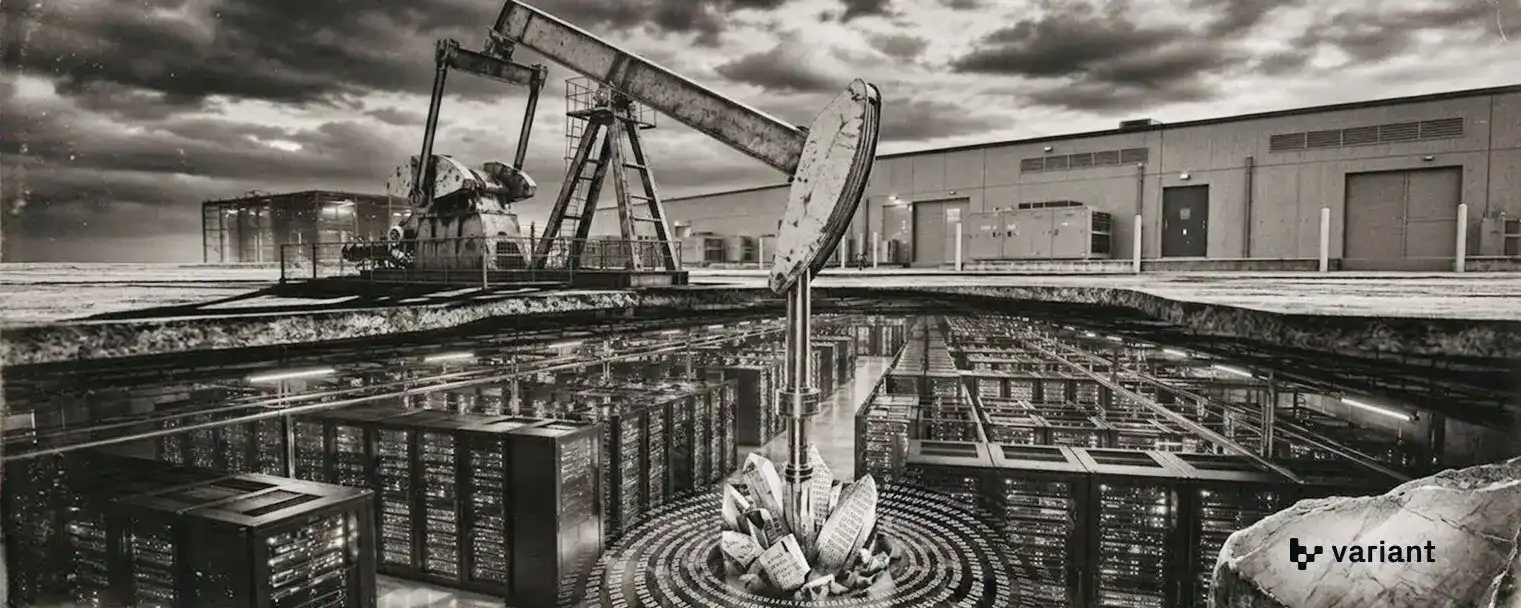
When Computing Power Becomes Commoditized, How Long Until a GPU Futures Market Emerges?

"When Will GPU Futures Arrive? A Framework for Assessing Compute as a Commodity" The article explores the potential for a robust futures market for compute power (GPUs), arguing that such a market is not yet mature but may emerge. It analyzes the landscape using a five-part framework developed for new commodity futures markets. The analysis scores the current state: * **Fragmented Supply (Red)**: Supply is highly concentrated among hyperscale cloud providers (AWS, Azure, GCP, Oracle), limiting the need for price discovery. * **Price Volatility (Green)**: GPU pricing is already highly volatile due to uncertain supply and surging demand. * **Physical Settlement Infrastructure (Green)**: Early infrastructure exists via OTC brokers and price indices (e.g., Ornn, Silicon Data) standardizing contracts. * **Standardized Unit (Red)**: A lack of standardized, tradable units hinders markets; a GPU instance hour varies by region, configuration, and contract terms. * **Lack of Alternatives (Yellow)**: Large players hedge internally via vertical integration, while smaller players bear spot market risk. Overall, the market shows promise (volatility, early infrastructure) but lacks the fragmented supply and standardization needed for large-scale futures trading. Most activity remains OTC. Key open questions and hypotheses: 1. Supply is expected to fragment moderately in 1-2 years, driven by new cloud providers, cheap power locations, and demand from non-frontier labs and AI startups using open-source models. 2. Standardization is most likely to emerge around inference workloads (forecast to be >65% of AI compute demand by 2029), which have simpler, more homogeneous hardware needs than training. Widespread adoption of open-source model weights could accelerate this by democratizing inference and creating demand for optimized, standardized infrastructure. 3. The primary traded unit will likely be the **"chip instance hour"** (akin to electricity, traded regionally), not the physical chip or the downstream AI output (tokens).

marsbit38m ago

When Computing Power Becomes Commoditized, How Long Until a GPU Futures Market Emerges?

marsbit38m ago

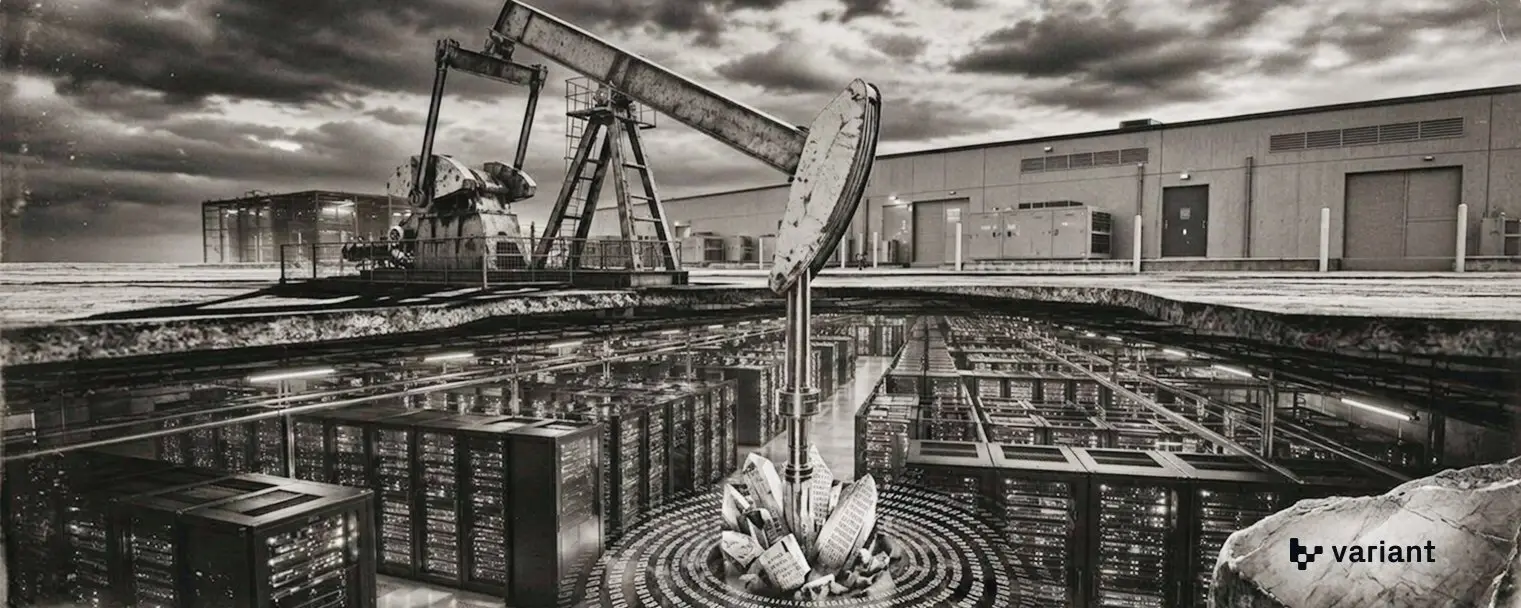
When Computing Power Becomes Commoditized, How Long Until a GPU Futures Market?

When Compute is Commoditized: How Far Away is a GPU Futures Market? The article explores the potential emergence of a futures market for computing power ("compute"), akin to markets for commodities like oil or electricity. It uses a five-dimension framework to assess the market's maturity for sustaining robust futures trading. **Current Market Assessment (Scorecard):** * **Supply Fragmentation:** 🔴 **Red.** Supply is highly concentrated, dominated by a few hyperscale cloud providers. * **Price Volatility:** 🟢 **Green.** GPU pricing is already highly volatile. * **Physical Settlement Infrastructure:** 🟢 **Green.** Early infrastructure exists at the OTC/broker level. * **Standardization:** 🔴 **Red.** Compute lacks a standardized, tradable unit (e.g., an H100 hour is not uniform). * **Lack of Substitutes:** 🟡 **Yellow.** Vertically integrated players can hedge internally, while others are forced to be long. **Conclusion:** The overall scorecard suggests a robust futures market is premature. The market has volatility and early settlement infrastructure but lacks the necessary supply fragmentation and standardization for large-scale price discovery. Most activity remains OTC. **Key Unanswered Questions & Hypotheses:** The article posits that the market could evolve in the next 1-2 years: 1. **Supply:** May become *moderately more fragmented* due to new cloud providers, cheaper power locations, and demand from long-tail users (e.g., startups running open-source model inference). 2. **Standardization:** Could emerge from the growing **inference** workload (expected to be >65% of AI compute demand by 2029), which has more homogeneous hardware requirements than custom training workloads. Widespread adoption of **open-source model weights** is seen as a key catalyst for democratizing inference and driving infrastructure standardization. 3. **Traded Unit:** The most viable layer for trading is likely the **"chip-instance-hour"** (powered, usable compute time), traded similarly to electricity in regional contracts with spot/futures overlays. Trading at the upstream "chip" layer is unlikely due to supply concentration, while the downstream "token" layer faces challenges due to lack of uniformity across AI models.

链捕手43m ago

When Computing Power Becomes Commoditized, How Long Until a GPU Futures Market?

链捕手43m ago

Trading

Spot
Futures
活动图片