MLCC Capacitor Price Increase: A Comprehensive Overview of Beneficiary Companies

marsbitPublished on 2026-05-25Last updated on 2026-05-25

Abstract

Recent teardown reports of Nvidia's next-generation AI chips have reignited investor interest in the MLCC (Multi-Layer Ceramic Capacitor) sector. Analysis of the Rubin architecture VR200 server reveals a 30% increase in MLCC count and a 182% surge in component value per rack compared to the previous generation, with GPU board usage nearly doubling. High-power, high-voltage hardware designs are driving massive adoption of high-end, high-withstand-voltage, and large-capacity MLCCs, exacerbating supply shortages. The global MLCC supply-demand balance remains tight. Leading Japanese and Korean manufacturers have successively raised prices across series, compounded by overseas capacity constraints and long-term customer order locks at major factories. Delivery lead times for high-end products now exceed 20 weeks, with capacity struggling to keep pace with surging orders. Demand drivers include AI servers, automotive electronics, and recovering consumer electronics, leading to both volume and price increases for MLCCs. The industry chain beneficiaries are outlined as follows: **1. MLCC Product Manufacturers:** Direct beneficiaries of price hikes. Key Chinese companies include Fenghua Advanced Technology (leading domestic player), Sanhuan Group (vertical integration from materials to products), and others like Hongyuan Electronics (military focus) and Torch Electron (specialty ceramics). **2. MLCC Raw Materials & Components:** The foundation of the supply chain. * **Release Fi...

Recently, a teardown report on NVIDIA's next-generation computing chips has reignited investment focus on the MLCC sector. The latest teardown of the Rubin architecture VR200 server rack by institutions revealed that compared to the previous generation, the number of MLCCs in the new rack increased significantly by 30%, with component value soaring 182%. The MLCC usage on a single GPU board nearly doubled. Hardware designs featuring high power consumption and high-voltage power supply necessitate the extensive adoption of high-voltage, high-capacity, high-end MLCC products, further widening the gap in essential industry demand.

The global MLCC supply-demand situation remains tight. Leading Japanese and Korean manufacturers have successively raised product prices, with multiple brands across various series experiencing price hikes of varying degrees. Coupled with limited overseas production capacity and major manufacturers' long-term capacity being locked in by customer long-term orders, the delivery lead time for high-end categories has currently extended to over twenty weeks, making it difficult for supply capacity to keep up with the surge in orders.

CITIC Securities research report states that with the continuous growth in AI server power, the quantity and quality requirements for chip inductors and chip capacitors serving GPUs/TPUs have significantly increased. Based on the projected shipments of GPUs/TPUs in 2027 and 2028, the chip inductor and chip capacitor industries are poised for explosive growth.

This article compiles a list of related companies as follows. It is recommended to like and bookmark for future research.

The related content is for logical interpretation and informational reference only, not investment advice. Follow me for daily analysis of core market thematic logic.

I. MLCC Product Side

This is the core segment directly benefiting from the MLCC price increase. Domestic leading manufacturers are the first to benefit, leveraging their production capacity and technological advantages.

Core Logic: Multiple demands such as AI servers, automotive electronics, and consumer electronics recovery are converging, driving simultaneous volume and price increases for MLCCs.

Related Companies:

1. Fenghua Advanced Technology: Domestic MLCC leader with leading production scale and technical level, actively expanding into high-capacitance and automotive-grade products.

2. Sanhuan Group: Masters core MLCC materials and manufacturing technologies, possessing advantages in ceramic powder and dielectric material fields.

3. Yunzhong Technology: Specializes in precision molds and core components for MLCCs, providing critical support for the industry.

4. Hongyuan Electronics: Holds a significant position in the military MLCC sector, benefiting from defense informationization construction.

5. Torch Electronics: Deeply involved in MLCCs for many years, technologically leading in special ceramic capacitors.

6. Zhenhua Technology: Its subsidiary Zhenhua Fu is a major domestic MLCC supplier, with products widely used in military and high-end electronics fields.

7. Dalicap: Specializes in RF microwave MLCCs, possessing competitiveness in the 5G and communications sectors.

II. MLCC Raw Materials Side

Raw materials are the foundation of the MLCC industry chain; their price increases and technological breakthroughs directly impact the industry landscape.

(I) Release Film

Core Logic: Release film is a key consumable in the casting process during MLCC production, used to carry ceramic slurry and be peeled off before sintering. Its flatness and high-temperature resistance directly affect MLCC yield rates. As the MLCC industry expands production and the proportion of high-capacitance products increases, so do the quality and stability requirements for release film.

Related Companies:

1. Jiemei Technology: Domestic leader in release film, deeply integrated with major MLCC manufacturers like Fenghua Advanced Technology and Sanhuan Group, and one of the few domestic companies capable of supplying high-end MLCC release film.

2. Shuangxing New Material: Engaged in optical-grade and electronic-grade film materials, with MLCC release film being one of its important business segments.

3. Sidike: Specializes in functional coating composite materials, with MLCC release film being one of its core products.

(II) Metal Powder

Core Logic: Metal powder (mainly nickel and copper powder) is the core material for MLCC internal electrodes. Its purity, particle size distribution, and sphericity directly determine MLCC electrical performance and reliability. As MLCCs develop towards miniaturization and higher capacitance, the technical requirements for metal powder are also increasing.

Related Companies:

1. Boqian New Materials: Leading domestic supplier of nano metal powders, with products widely used in MLCCs, electronic pastes, etc., and a core supplier to Fenghua Advanced Technology and Sanhuan Group.

2. Yue'an New Material: Specializes in carbonyl iron powder, nickel powder, and other metal powders, possessing strong competitiveness in MLCC internal electrode materials.

3. Gripm Advanced Materials: Leveraging the technical advantages of its parent research institute, it has a deep presence in electronic powder materials like copper and silver powder.

(III) Dielectric Ceramic Powder

Core Logic: Dielectric ceramic powder (mainly barium titanate-based ceramic powder) is the "heart" of an MLCC, determining product capacitance value, temperature stability, and voltage resistance. It is the segment with the highest technical barriers in the MLCC industry chain. High-capacitance and automotive-grade MLCCs impose extremely stringent requirements on the formulation and sintering processes of dielectric ceramic powder.

Related Companies:

1. Sinocera Functional Materials: A globally leading supplier of MLCC dielectric ceramic powder, mastering core formulations and sintering technologies. Its product range covers from standard to high-capacitance series, deeply integrated with international giants like Murata and Samsung Electro-Mechanics.

2. Sanhuan Group: Possesses a full industry chain layout from dielectric ceramic powder to finished MLCC products, producing high-purity barium titanate powder in-house, with significant cost and technological advantages.

3. Fenghua Advanced Technology: Engages in dielectric ceramic powder through its subsidiary Fenghua New Materials, securing its own production while also supplying some products externally.

4. Zhongci Electronic: Specializes in electronic ceramic materials and devices, with technical expertise in ceramic powders for high-frequency and high-voltage MLCCs.

Related Questions

QWhat is the key driver behind the recent surge in demand for high-end MLCCs, according to the article?

AThe key driver is the new generation of AI servers, specifically the increased power consumption and high-voltage power supply design of NVIDIA's Rubin architecture VR200 server, which necessitates the large-scale adoption of high-voltage-resistant, high-capacity, high-end MLCCs. The article states that the MLCC count in the new server rack increased by 30% and the component value soared by 182% compared to the previous generation.

QName at least two Chinese companies identified in the article as leaders in the MLCC manufacturing segment.

AFenghua Advanced Technology (风华高科) and Sanhuan Group (三环集团) are identified as core MLCC product manufacturers and domestic leaders.

QWhich material is described as the "heart" of an MLCC and has the highest technical barriers in the supply chain?

ADielectric ceramic powder, primarily barium titanate-based ceramic powder, is described as the "heart" of an MLCC and has the highest technical barriers. It determines the capacitor's capacitance, temperature stability, and voltage resistance.

QWhat are the two main reasons mentioned for the ongoing global tight supply of MLCCs?

AThe two main reasons are: 1) Leading Japanese and Korean manufacturers have raised prices. 2) Overseas production capacity is limited, and large manufacturers' future capacity has been locked in by long-term customer orders, leading to extended delivery cycles of over twenty weeks for high-end products.

QBesides MLCC product manufacturers, which two upstream raw material/supply chain segments are discussed in the article?

AThe article discusses the upstream segments of: 1) Release films (carrier films), a key consumable in the MLCC production process. 2) Metal powders (nickel, copper), the core material for internal electrodes. 3) Dielectric ceramic powders.

Related Reads

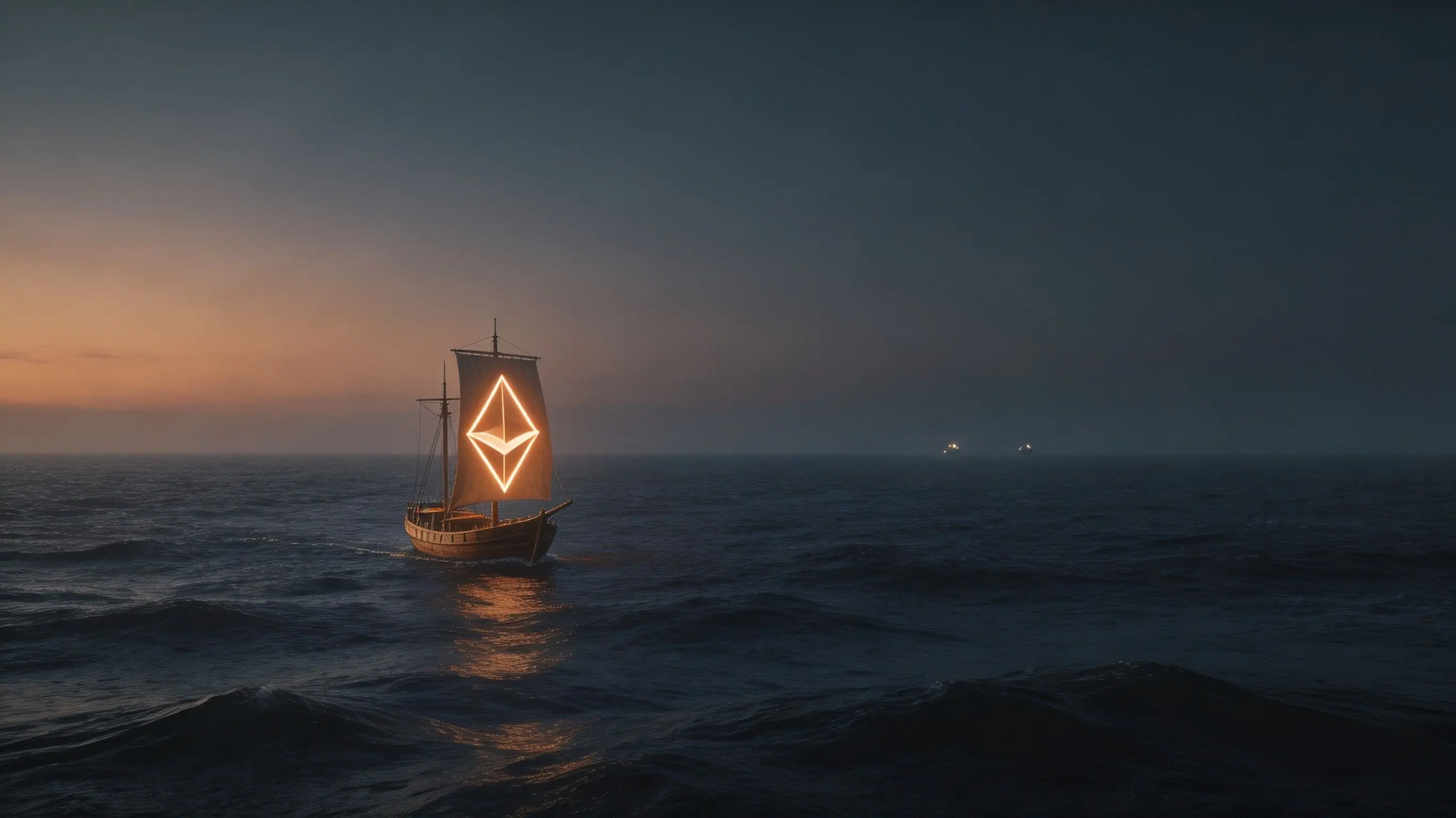
Vitalik on the Future of the Ethereum Foundation: A Smaller, More Distinct, but Longer-Lasting Ship

Vitalik discusses the future direction of the Ethereum Foundation (EF), emphasizing a shift towards a smaller, more focused, and longer-lasting organization. He clarifies this is his personal view and that his own influence within EF is diminishing, which he welcomes. The key driver is aligning EF's actions with its stated values of decentralization, privacy, and being a "sanctuary technology," addressing criticism that its operations haven't fully reflected these ideals. He argues that EF should not be the "center" of Ethereum but one node among many with a specific mandate. With limited resources (holding only ~0.16% of all ETH), EF must focus its remaining efforts on long-term, mission-critical activities that wouldn't happen without its push, particularly those reinforcing Ethereum's core CROPS values (Censorship-Resistance, Resilience, Openness, Privacy, Security). This means making hard choices, potentially spinning out even respected projects to attract external capital, and cultivating a distinct cultural stance. The core technical vision is for Ethereum to be "amazing" not by chasing maximal throughput, but by excelling in the CROPS dimension. Key goals include: a provably bug-free Ethereum via AI-assisted formal verification; high-availability chain consensus combining the best of BFT and Bitcoin-style security; and minimization of intermediaries in transaction sending and user experience. These "unreasonable" ambitions aim to make Ethereum profoundly impressive in its core values, which also support ETH as a robust asset. The future EF will be a smaller, more opinionated ship built for longevity and meaningful impact.

链捕手5m ago

Vitalik on the Future of the Ethereum Foundation: A Smaller, More Distinct, but Longer-Lasting Ship

链捕手5m ago

Leading Players in Large Models Drain the Primary Market

The AI industry is witnessing an unprecedented concentration of capital into a handful of leading players, signaling what insiders call the "eve of a final shakeout." A staggering funding surge exceeding $7 billion hit just three Chinese companies in May alone—Kimi, StepFun (接近完成融资), and DeepSeek—with the latter's valuation reaching $45-$50 billion. Globally, giants like OpenAI, Anthropic, and SpaceX (set to merge with xAI) are preparing for public listings, collectively eyeing valuations over $3 trillion. This capital is no longer fueling a broad "hundred-model war" but is being funneled to "refuel" the final few contenders, following a sector-wide attrition rate exceeding 90%. This frenzy is driven by a fundamental shift in industry logic. The focus has moved from比拼模型智商 (competing on model intelligence) to "token factory economics." The explosion of long-context AI agents has massively increased token consumption per task. With token supply constrained by bottlenecks in HBM memory and power infrastructure—key factors in production costs—dominance now hinges on owning and efficiently operating large-scale compute resources. Major tech firms are investing hundreds of billions annually in this AI "power grid." Consequently, competition pivots to three core areas: 1) **Monetization** as the "AGI premium" cools, forcing a shift from user growth to revenue; 2) **Cost efficiency**, where reducing inference costs becomes the ultimate KPI as model capabilities commoditize; and 3) **Strategic path divergence** between enterprise-focused AI (prioritizing integration and reliability) and consumer-facing applications (betting on scale and user engagement). The message is clear: the final capital injections are determining the endgame lineup. Success will depend not just on technical prowess, but on transforming technology into a sustainable, profitable business model with demonstrable return on massive compute investments.

marsbit14m ago

Leading Players in Large Models Drain the Primary Market

marsbit14m ago

AI Giants Queueing Up for IPOs: Is This the 'Last Dance' for the U.S. Stock Market?

A massive wave of IPOs from AI giants like OpenAI, Anthropic, and SpaceX is taking shape, potentially reshaping the U.S. stock market. OpenAI is reportedly preparing for a historic IPO, targeting a valuation over $1 trillion and raising roughly $60 billion, which would dwarf previous records. Anthropic is also advancing its own IPO plans, projecting significant revenue growth and achieving quarterly operating profit. However, their financial profiles starkly differ. While Anthropic is nearing profitability with a focus on enterprise clients, OpenAI continues to report substantial losses, with a negative operating margin and expectations for positive cash flow only by 2029-2030. Analysts warn these listings could trigger a major "passive fund reshuffle," forcing index funds to sell holdings in established tech giants to make room for the new entrants, potentially pressuring the broader market. Some observers view the IPO rush as a "risk transfer," allowing early private investors to cash out at peak valuations while passing future financial uncertainty to public market investors. The divergent paths of Anthropic's near-term profitability versus OpenAI's long-term, high-cost growth narrative present a critical choice for investors. The outcome of these IPOs is seen as a major swing factor for risk assets in 2026, testing whether this surge marks a new cycle or a potential peak.

marsbit22m ago

AI Giants Queueing Up for IPOs: Is This the 'Last Dance' for the U.S. Stock Market?

marsbit22m ago

The Richest Fed Chair in 112 Years Is Here: Kevin Warsh Is Rewriting the Rules

Kevin Warsh, with a personal fortune exceeding $130 million, became the 112nd and wealthiest Chair of the U.S. Federal Reserve on May 22nd. A former Wall Street investment banker and key figure during the 2008 financial crisis, Warsh lacks a traditional academic background for a central banker but brings deep market experience. He proposes an unconventional policy approach of simultaneously reducing the Fed's balance sheet ("quantitative tightening") while cutting interest rates, arguing that a smaller balance sheet would allow for more effective rate policy. His ascent marks a potential regime change at the Fed. Warsh aims to reform the institution's decision-making processes, tighten communication discipline among officials, and reduce reliance on forward guidance like the "dot plot." This shift responds to the Fed's current dilemma: fiscal policy is expanding the government's balance sheet through deficits, while monetary policy's ability to shrink its own $6.7 trillion balance sheet is severely constrained, creating pressure on long-term interest rates. Analysts expect Warsh's tenure to sustain high volatility in the U.S. Treasury market due to persistent supply pressures. Furthermore, his leadership coincides with a gradual, structural erosion of dollar dominance, evidenced by its declining share in global reserves and cracks in the petrodollar system, with increased use of alternatives like the Chinese yuan in oil trade. For investors, this environment underscores the importance of portfolio diversification, including assets like gold and Chinese sovereign bonds, amid a fluctuating dollar credit anchor.

链捕手37m ago

The Richest Fed Chair in 112 Years Is Here: Kevin Warsh Is Rewriting the Rules

链捕手37m ago

Trading

Spot
Futures

Hot Articles

Discussions

Welcome to the HTX Community. Here, you can stay informed about the latest platform developments and gain access to professional market insights. Users' opinions on the price of S (S) are presented below.

活动图片