# Real-time Articoli collegati

Il Centro Notizie HTX fornisce gli articoli più recenti e le analisi più approfondite su "Real-time", coprendo tendenze di mercato, aggiornamenti sui progetti, sviluppi tecnologici e politiche normative nel settore crypto.

Monitoring Bitcoin Forks: Where to Track the BIP-110 Unfolding in Real-Time

"Monitoring Bitcoin Forks: Where to Watch the BIP-110 Unfolding in Real Time" – This article provides a guide to tracking the potential blockchain split surrounding Bitcoin Improvement Proposal (BIP) 110. BIP-110 proposes to limit non-financial data (like images) in the Bitcoin blockchain to combat "spam." As the mandatory signaling period approaches with block 961632, miner support remains low at just 2.6%. The article lists key websites for real-time monitoring: * **Fork.observer**: Tracks the main chain and any forking side branches. * **BIP110.org/monitor**: The official dashboard showing miner signaling percentages. * **Forkwatch.tv**: Specifically monitors BIP-110, highlighting blocks with transactions it would reject. * **Mempool.kilombino.com**: A modified mempool.space clone highlighting BIP-110 signals and rule violations. * **Forkmonitor.info**: A long-standing site showing chain tips from nodes running different software. * **Miningpool.observer**: Analyzes mining pools' transaction inclusion and filtering behavior. * **Wickedsmartbitcoin.com/bip110_signaling**: Detailed dashboard with signaling charts and chain comparisons. These tools allow anyone to observe the consensus process in real-time. If a split occurs, they will record it; if not, they show how close the network came. The article concludes by noting criticism from figures like Michael Saylor, who states that with only 2.6% miner support, BIP-110 lacks the consensus to succeed, and Bitcoin will continue operating as intended.

cryptonews.ru08/08 22:09

Monitoring Bitcoin Forks: Where to Track the BIP-110 Unfolding in Real-Time

cryptonews.ru08/08 22:09

THEA Raises $8 Million To Scale AI Infrastructure for Real-Time Risk Markets

Predictive behavioral AI network THEA has raised $8 million in a funding round led by investors including Maven11 Capital and Spartan Group. Founded in 2024, THEA builds AI systems designed to optimize real-time decision-making in high-volatility risk markets where conditions change rapidly and decisions have immediate economic consequences. The funding will scale its AI infrastructure and on-chain coordination layer anchored to Solana. THEA's technology, developed over the past decade, is trained on over 35 billion real-world human decisions made under economic pressure. Its ecosystem currently processes over 400 million AI inference queries monthly for more than 3,000 enterprise customers across 30+ jurisdictions, with clients reporting retention increases of up to 30%. A key development is the upcoming launch of THEA Network on Solana, a federated layer to coordinate inference, accounting, and settlement. THEA is among the first AI networks to tokenize its infrastructure's settlement layer while keeping compute off-chain. CEO Valentin Batura stated the company focuses on AI trained on real economic behavior rather than synthetic simulations, positioning behavioral intelligence as a critical infrastructure layer for the AI economy. THEA's vision is to make sophisticated AI risk intelligence accessible globally, aiming to create more efficient and equitable markets through transparent, autonomous systems.

TheNewsCrypto07/02 12:15

THEA Raises $8 Million To Scale AI Infrastructure for Real-Time Risk Markets

TheNewsCrypto07/02 12:15

Utexo Partners with x402 to Provide Near-Instant USDT Settlement for the Agent Economy

Utexo, a Bitcoin-native stablecoin payment execution and settlement layer, has partnered with x402 to integrate USDT compatibility into the x402 payment protocol. This collaboration enables near-instant settlement for agent-to-agent transactions, with speeds as fast as 50 milliseconds. x402 is an open protocol that uses the HTTP 402 "Payment Required" status code to embed payment functionality directly into HTTP requests. This allows applications, APIs, and autonomous systems to pay for services in real-time without requiring pre-funded accounts. The integration expands x402’s initial USDC support to include USDT, one of the most widely used stablecoins globally. Utexo’s infrastructure is designed for high-frequency, low-latency transactions, making it well-suited for machine-driven payments. According to Utexo CEO Viktor Ihnatiuk, supporting USDT within the x402 framework significantly broadens access and provides developers the performance needed for real-time agent-based systems. Kevin Leffew of x402 at Coinbase added that expanding stablecoin access improves performance and accelerates developer adoption. This partnership supports growing use cases where software systems autonomously conduct transactions—such as paying for API calls, accessing data on-demand, and coordinating services across platforms without human intervention. By combining x402’s protocol with Utexo’s settlement infrastructure, the collaboration enables a payment model where transactions are as fast and efficient as the requests that trigger them.

marsbit04/16 11:59

Utexo Partners with x402 to Provide Near-Instant USDT Settlement for the Agent Economy

marsbit04/16 11:59

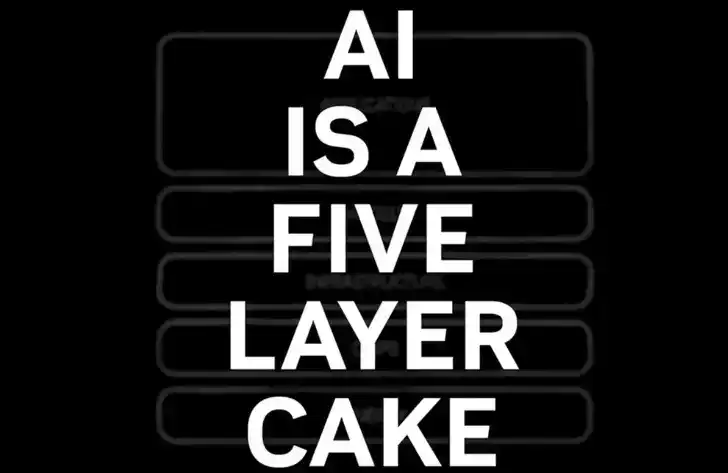
NVIDIA's Jensen Huang Latest Article: The 'Five-Layer Cake' of AI

NVIDIA's Jensen Huang articulates AI not merely as a software application but as a fundamental infrastructure, comparable to electricity or the internet, in a layered "five-layer cake" structure. This stack begins with **Energy** as the foundational constraint, powering real-time intelligence generation. Above it, **Chips** convert energy into computational power efficiently. The **Infrastructure** layer comprises data centers and systems that function as "AI factories." **Models** form the next layer, processing diverse data types like language, biology, and physics. At the top, **Applications**—such as drug discovery, autonomous vehicles, and robotics—create economic value. Huang emphasizes that AI is an industrial-scale transformation, driving massive global infrastructure expansion requiring trillions in investment and a skilled workforce—from electricians to network technicians—beyond just computer scientists. He notes that AI has recently crossed a threshold: models are now reliable enough for widespread use, reducing hallucinations and improving reasoning, which accelerates real-world applications. Open-source models, like DeepSeek-R1, further propel growth across the entire stack. This infrastructure revolution will reshape energy consumption, manufacturing, labor, and economic growth. Every company and country will participate, though the field remains early-stage, with vast opportunities and responsibilities ahead.

marsbit03/10 14:18

NVIDIA's Jensen Huang Latest Article: The 'Five-Layer Cake' of AI

marsbit03/10 14:18

活动图片