# Humanoid Articoli collegati

Il Centro Notizie HTX fornisce gli articoli più recenti e le analisi più approfondite su "Humanoid", coprendo tendenze di mercato, aggiornamenti sui progetti, sviluppi tecnologici e politiche normative nel settore crypto.

From Somersaults to Working 24/7: We Saw the ‘Working-Class’ Aura in Robots at WAIC

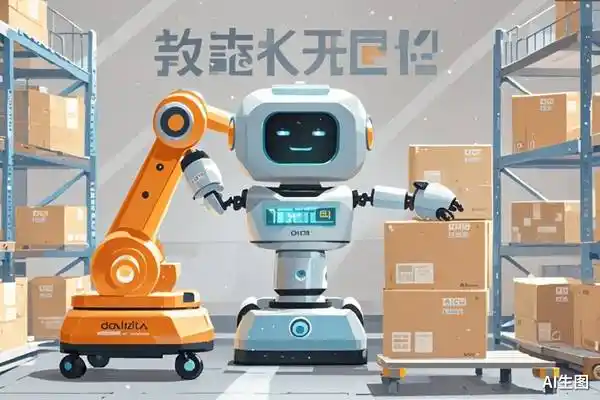
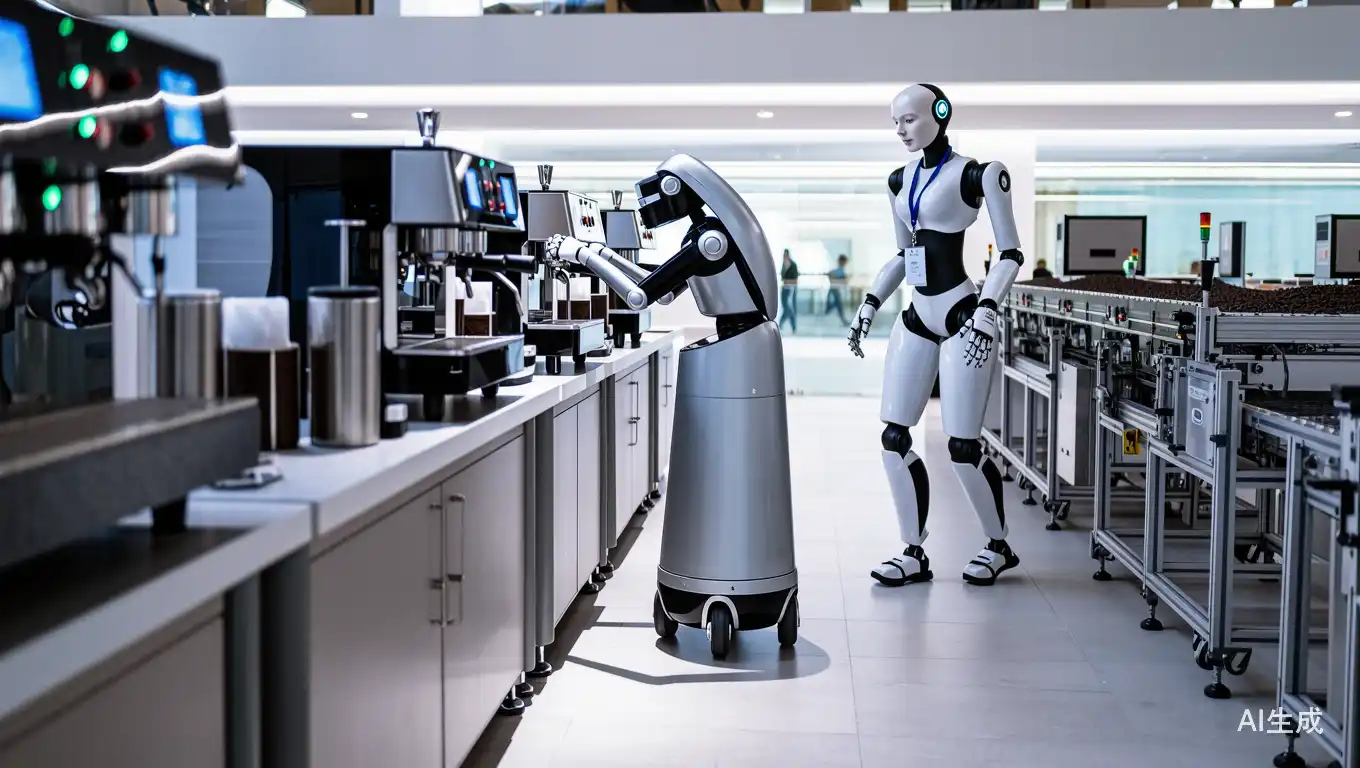
From performing acrobatics to working 24/7: Robots at WAIC are getting down to business. This year's World Artificial Intelligence Conference (WAIC) in Shanghai showcased a significant shift in the robotics industry. While "show-off" robots that dance, play music, or compete in sports are still present, the dominant trend is now practical, task-oriented machines. Hundreds of wheeled and humanoid robots were deployed as guides, baristas, factory workers, and even traffic controllers, moving beyond mere demonstrations to highlight real-world "work capabilities." The focus has pivoted from showcasing technical parameters to pursuing mass production and industrial落地 (landing/implementation). This transition presents major challenges. First, deploying powerful AI models onto robots requires overcoming hardware limitations in computing power and latency. Second, robots demand complex, integrated systems for real-time perception and control. Third, achieving reliable mass production necessitates unprecedented industry-wide collaboration on standards and supply chains. A key bottleneck identified by industry leaders is the robot's "brain"—its AI and cognitive capabilities. While hardware and basic movement ("little brain") have advanced rapidly, the higher-level intelligence for understanding complex instructions and adapting to unstructured environments is progressing more slowly. Companies are investing heavily in developing more advanced "brain" systems, but fully autonomous operation in dynamic settings remains a work in progress. Cost is another critical hurdle. While some consumer-oriented humanoid robots are now priced under $15,000, capable industrial models often cost $50,000 or more. The industry consensus is that bringing robots into unstructured home environments for tasks like comprehensive cleaning is still at least five years away due to technical, safety, and cost barriers. Therefore, 2026 is being called the "first year of mass production," but primarily for industrial and specific commercial applications. WAIC 2026 served less as a stage for spectacular tricks and more as a serious examination of robots' commercial viability, marking their transition from laboratory prototypes to real-world products that must prove their value through stable, repetitive work.

marsbit07/17 14:11

From Somersaults to Working 24/7: We Saw the ‘Working-Class’ Aura in Robots at WAIC

marsbit07/17 14:11

Raising $400 Million in Funding, Shenzhen's Embodied AI Unicorn is Heading for an IPO

LimX Dynamics, a leading Chinese humanoid robotics company based in Shenzhen, has raised nearly $4 billion in total funding following a $2 billion Pre-IPO round. This latest round, backed by prominent global investors including IDG Capital, Lens Technology, GGG Group, and Redstone VC, values the company at approximately 150 billion yuan. Founded in 2022 by Southern University of Science and Technology professor Zhang Wei, the company has developed a full-stack, self-developed "brain system" for humanoid robots. Its three-layer technical architecture (System 0 for locomotion, System 1 for specific skills, and System 2 for cognitive reasoning) powers a diverse product matrix, including the LimX Luna for commercial service and the LimX Oli R&D platform. Often compared to its American counterpart Figure, LimX Dynamics differentiates itself by focusing on "serving people, not processes" and prioritizing commercial service scenarios over factory applications first. The company has secured thousands of pre-orders, with over half coming from overseas markets, and has begun initial deliveries. With a distinctly global investor base and strategy, LimX Dynamics aims to leverage China's manufacturing advantages for worldwide competition. Having completed its shareholding reform in March 2026, the company is now steadily advancing its IPO plans, positioning itself as a key contender in the intensifying race to go public within the humanoid robotics sector.

marsbit07/14 01:44

Raising $400 Million in Funding, Shenzhen's Embodied AI Unicorn is Heading for an IPO

marsbit07/14 01:44

StarDynamics Secures 2.5 Billion in Two Months, State-Owned Capital Consortium Joins In

Star Era Raises 25 Billion Yuan in Two Months with State Capital Leading the Charge. Chinese humanoid robotics leader Star Era has secured a new 10-billion-yuan funding round led by state-owned capital, including funds like Chengtong Fund under the SASAC, marking 25 billion yuan raised within two months. The company, a spin-off from Tsinghua University, has built a comprehensive capital matrix combining state guidance, top-tier financial backers, and industrial partners. Founded in 2023 by Dr. Chen Jianyu, one of Tsinghua's youngest doctoral supervisors, Star Era stands out for its early and pioneering work on "world models" for embodied AI, notably releasing its PAD world action model ahead of major global players. The company follows an AI-native, full-stack R&D strategy from data and AI brain to control, dexterous hands (XHAND series), and robot bodies (bipedal L7, wheeled Q5). A core innovation is its fully direct-drive dexterous hands, which act as high-fidelity data collectors for training its AI models like the ERA-42 and VLAW, creating a virtuous cycle of data and intelligence. Star Era claims to possess one of the world's largest real-world dexterous hand datasets. Commercially, Star Era has achieved product-market fit, most notably in logistics, with robots operating 24/7 in distribution centers for partners like SF Express and China Post, handling over 1,200 parcels per hour. It is also expanding into high-end manufacturing (Samsung, Geely) and commercial services. Its hardware components are used by nine of the global top ten tech firms and leading research institutions. The article positions 2026 as an inflection point where success shifts from model capabilities to proven, scalable commercial deployment. Star Era's rapid funding and industrial traction highlight its position in this competitive race.

marsbit07/06 01:35
StarDynamics Secures 2.5 Billion in Two Months, State-Owned Capital Consortium Joins In

marsbit07/06 01:35

$9.4 Billion: The Largest Robotics Funding This Year Has Emerged

Munich-based humanoid robotics company Neura has completed a $1.4 billion (approximately RMB 94.9 billion) Series C funding round, valuing the company at around $7 billion and positioning it among the global leaders in the sector. The investment round is notable not just for its size—reportedly the largest in robotics this year—but also for its strategic backers, which include tech giants like NVIDIA and Amazon, alongside established industrial players such as German engineering firms Bosch and Schaeffler. This mix of investors signals a significant shift in the industry's focus from technological demonstrations and general-purpose narratives toward practical, industrial deployment and commercialization. Neura's approach centers on developing humanoid robots for defined, high-value industrial tasks rather than pursuing a general-purpose model. Its early validation comes from a partnership with BMW, where its robots are being tested on actual production lines. The involvement of Bosch and Schaeffler, companies deeply embedded in global manufacturing, underscores a growing belief that humanoid robots are transitioning from labs to viable factory-floor solutions. The article highlights two converging trends driving investment: advancements in AI and large language models, which enhance robots' perception and decision-making in unstructured environments, and mounting pressure from labor shortages and rising costs in major manufacturing regions. The funding landscape is now bifurcating between companies like Figure AI, focusing on versatile general-purpose robots, and firms like Neura, targeting specific vertical industrial applications with clearer, shorter paths to ROI. While technical hurdles remain, the core challenges for widespread adoption are increasingly seen as engineering and commercial in nature: managing the high integration and customization costs for different factory environments and establishing robust, localized maintenance and service networks. The record investment in Neura, particularly from industrial capital, indicates the industry's growing confidence in moving from proving feasibility to solving the practical problems of scalability, reliability, and building sustainable business models around humanoid robots in real-world settings like automotive manufacturing and hazardous labor environments.

marsbit06/14 02:54

$9.4 Billion: The Largest Robotics Funding This Year Has Emerged

marsbit06/14 02:54

Robots Begin to 'Consume Data': The Hidden Production Chain from Indian Data Factories to Billion-Dollar Humanoid Robots

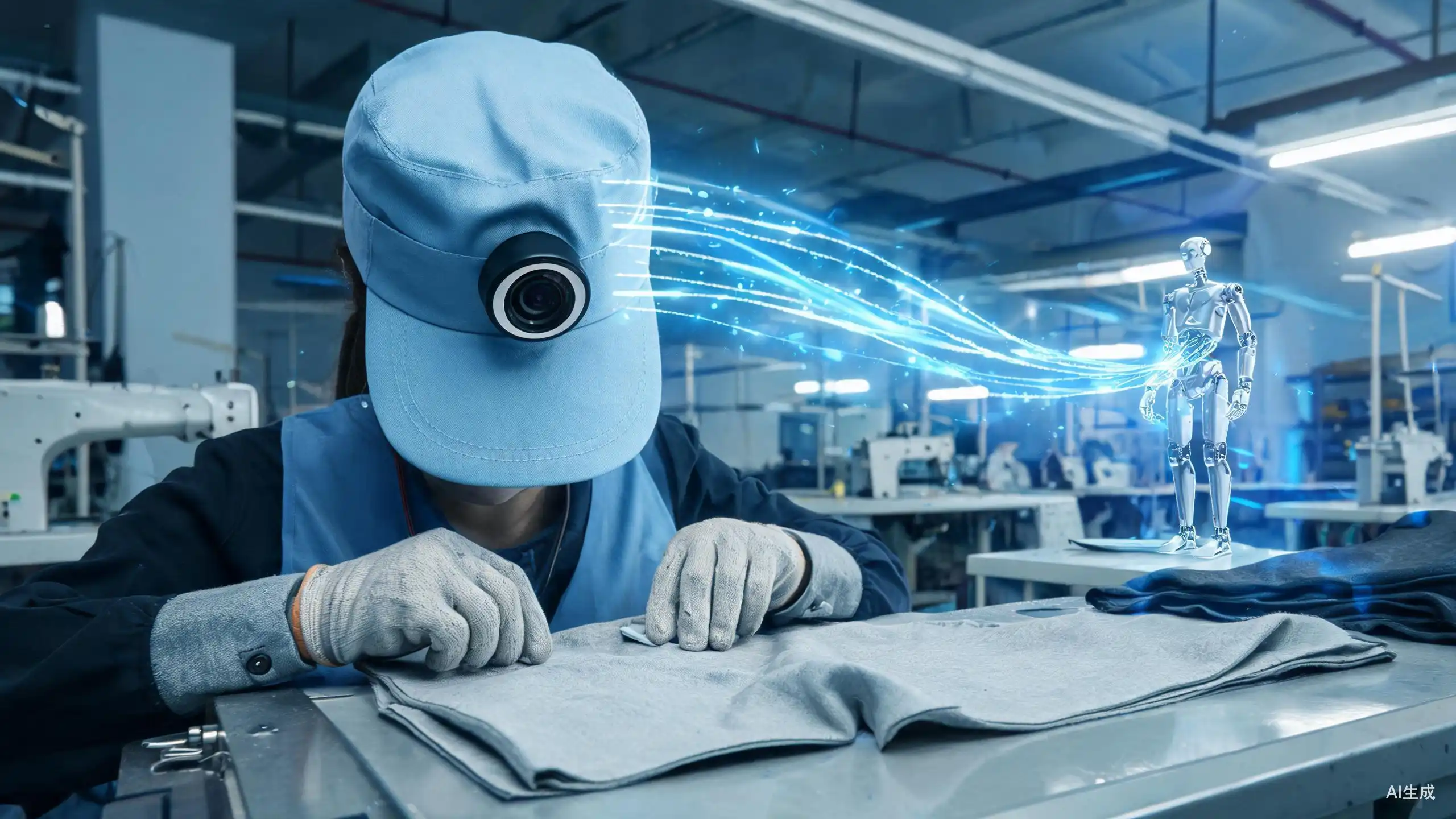
Robots have started to 'consume data,' driving the formation of a new industrial supply chain focused on producing training data for embodied AI. Unlike large language models, which are trained on vast internet text corpora, embodied AI models face a 'data desert' in the physical world. This has created a massive demand for first-person perspective video data (Ego Data), captured by workers wearing cameras in places like Indian garment factories. Companies like Neocambrian AI are establishing 'data factories' where workers perform standardized tasks (e.g., sorting clothes, kitchen organization) to generate thousands of hours of video. Research, such as NVIDIA's EgoScale, demonstrates that scaling this human demonstration data predictably improves robot performance, particularly for dexterous manipulation. This has validated a training path combining large-scale human data for pre-training with smaller amounts of robot-specific data for fine-tuning. The value of different data types varies significantly, forming a 'data pyramid.' The base consists of low-cost, large-scale internet and Ego Data. Higher layers include more expensive motion-capture data (e.g., from data gloves), simulation/synthetic data, and the most costly and scarce layer: real robot teleoperation data. This demand has spawned a layered ecosystem of data suppliers: low-cost data factories, motion capture and alignment specialists, robot-native teleoperation service providers, simulation data companies, and platforms aiming for data standardization. Robot companies themselves are adopting a 'layered procurement' strategy: outsourcing generic Ego Data while building in-house capabilities for robot-specific adaptation data and the critical deployment/failure data generated in real-world applications. The industry is shifting focus from hardware and basic mobility to the data pipelines required for general-purpose capability. While parallels exist to data labeling companies like Scale AI in the LLM boom, the physical complexity of robot data—involving action success ambiguity and sim-to-real gaps—requires more integrated solutions for data collection, annotation, and a continuous feedback loop. The race is on to build the data engines that will teach robots to operate reliably in the unstructured real world.

marsbit06/13 03:32

Robots Begin to 'Consume Data': The Hidden Production Chain from Indian Data Factories to Billion-Dollar Humanoid Robots

marsbit06/13 03:32

The More Lifelike the Robot, the More Terrifying? Unveiling the 'Uncanny Valley Effect' in the Era of Humanoid Robots

As humanoid robots become increasingly lifelike, they confront a significant psychological barrier known as the "Uncanny Valley Effect," a concept proposed by Japanese roboticist Masahiro Mori in 1970. This phenomenon describes a dip in human comfort and acceptance when robots appear almost, but not perfectly, human. Minor imperfections in facial expressions, eye movements, or skin texture trigger a subconscious sense of unease, as the brain detects something trying, yet failing, to mimic a person. Examples range from the controversial human-like robot Sophia to animated characters in films like *The Polar Express*. The effect poses a key design challenge for robotics companies. Some, like Boston Dynamics, avoid it entirely by creating highly capable but visibly mechanical robots. Others, like Hanson Robotics, push for greater human likeness despite the risk. For consumer robots, especially in homes, most manufacturers opt for stylized or clearly mechanical designs to ensure broader acceptance. While the Uncanny Valley remains a powerful force, its impact may diminish over time through technological advancements that achieve near-perfect realism or through generational familiarity as people grow accustomed to interacting with humanoid machines. Ultimately, navigating this psychological frontier requires as much understanding of human perception as of robotics technology itself.

marsbit06/09 06:07

The More Lifelike the Robot, the More Terrifying? Unveiling the 'Uncanny Valley Effect' in the Era of Humanoid Robots

marsbit06/09 06:07

Issued Two Work Badges to Unitree

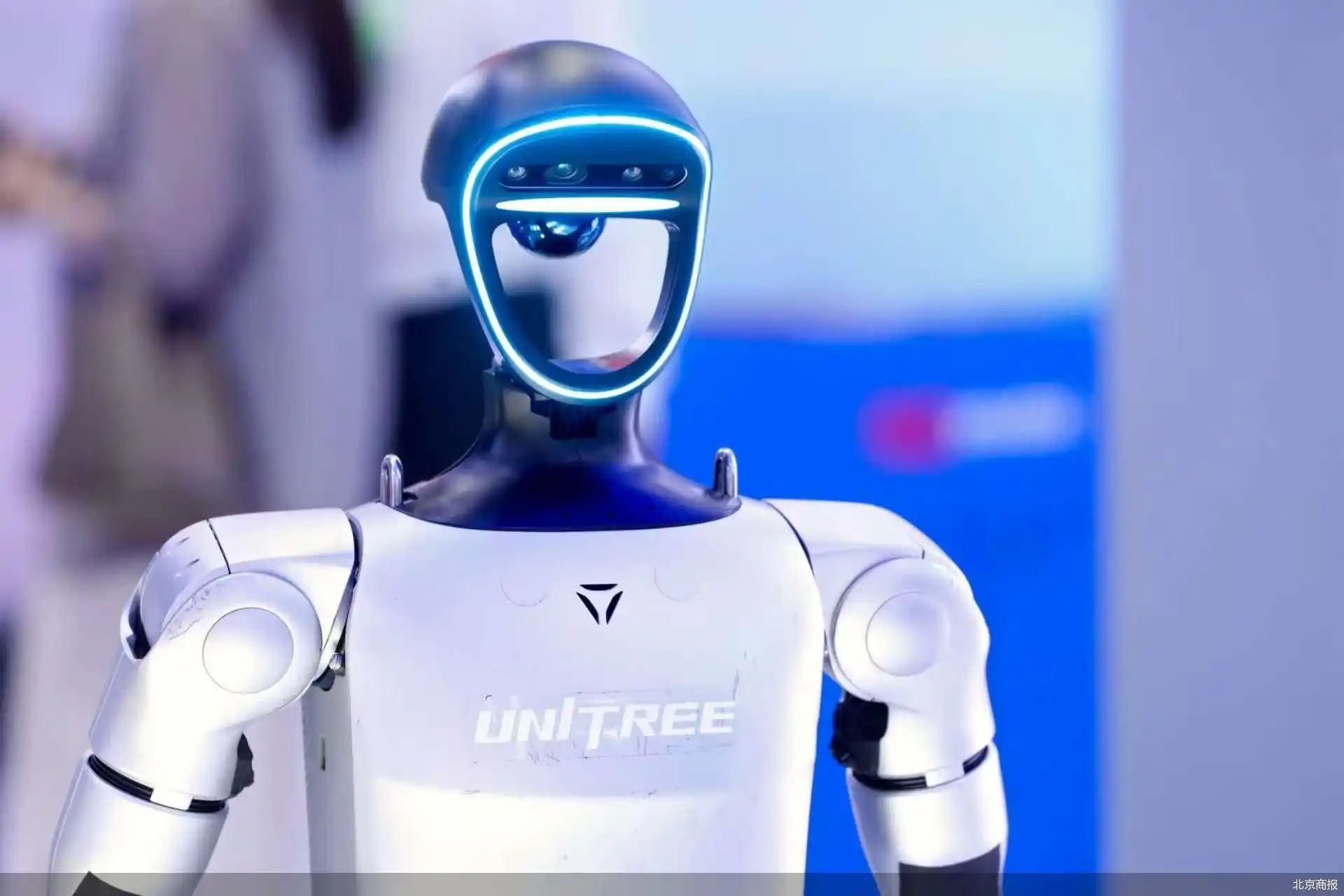
At the keynote of his speech at the Taipei Music Center, Jensen Huang introduced a humanoid robot named Isaac GR00T. This robot, described as a 'reference design,' is a collaboration: its body comes from Unitree Robotics' H2 Plus, its hands from Singapore's Sharpa, and its 'brain'—the chip and full software stack—is from Nvidia, powered by the Jetson Thor. Huang positioned it as a turnkey solution for universities and researchers, aimed at drastically reducing setup time for experiments. On the same day as this reveal, Unitree Robotics passed its IPO review in Shanghai, seeking to raise 4.2 billion yuan, with a significant portion earmarked for developing its own embodied AI model—its own 'brain.' The article draws a parallel to the smartphone industry, where Qualcomm's 'reference design' led to homogenized hardware and concentrated profits in chips and software. It suggests Nvidia's GR00T initiative follows a similar playbook: by open-sourcing the model and framework, it aims to establish the industry standard, potentially relegating hardware makers to low-margin roles. While currently a body supplier for Nvidia's project, Unitree is actively pursuing its own AI brain, having open-sourced initial models and tested a more advanced one. The company faces a critical window to develop a competitive proprietary system before GR00T becomes the default. The article contrasts this with Tesla's vertically integrated approach for its Optimus robot, which uses in-house chips and benefits from its automotive data and manufacturing scale. It concludes that while the robot body still holds technical value and differentiation, the race for the 'brain' will ultimately define the industry's profit centers and power dynamics.

marsbit06/02 06:03

Issued Two Work Badges to Unitree

marsbit06/02 06:03

活动图片