# Gas Articoli collegati

Il Centro Notizie HTX fornisce gli articoli più recenti e le analisi più approfondite su "Gas", coprendo tendenze di mercato, aggiornamenti sui progetti, sviluppi tecnologici e politiche normative nel settore crypto.

The Largest Upgrade Since The Merge? How Glamsterdam Will Affect Ethereum?

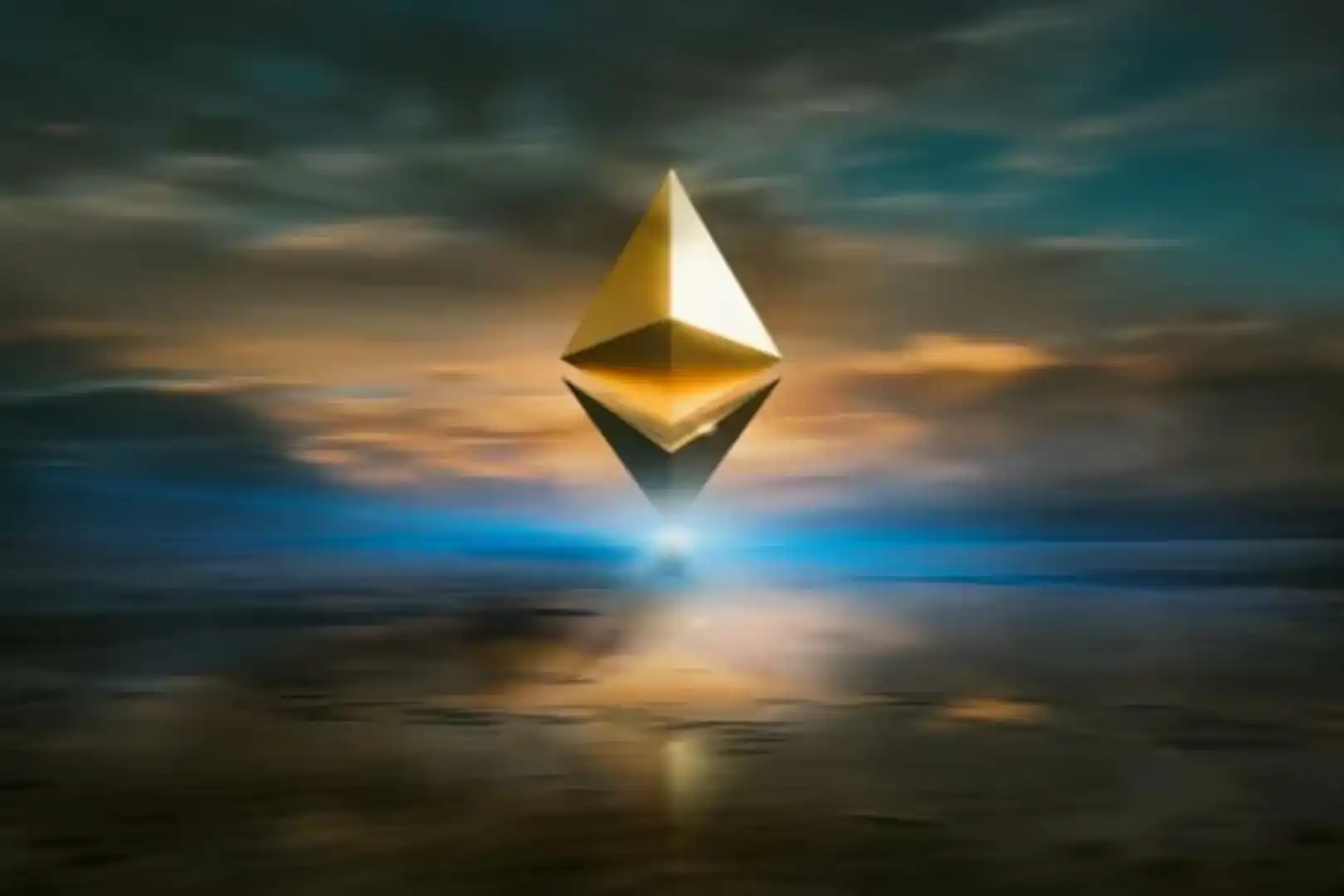
Ethereum's next major upgrade, Glamsterdam (combining consensus layer "Gloas" and execution layer "Amsterdam"), is scheduled for late 2026 and considered the most significant overhaul since The Merge. It aims to fundamentally enhance L1 performance and architecture to prepare for substantial capacity increases. The upgrade centers on three core changes: 1. **Enshrined PBS (ePBS - EIP-7732):** Integrates the Proposer-Builder Separation directly into the protocol, eliminating reliance on external relays. This extends the window for processing execution payloads, allowing nodes more time to handle larger blocks and more data, paving the way for a higher Gas Limit. 2. **Block-Level Access Lists (BALs - EIP-7928):** Provides a pre-declared "map" in the block header of all state data (accounts, storage) that transactions will access and modify. This enables potential parallel transaction processing and faster state synchronization for nodes. 3. **Gas Repricing (EIP-8037):** Overhauls the gas model to more accurately reflect the real resource costs for nodes. It separates computation costs from state storage costs, making operations that create permanent state data (like new accounts) more expensive, while computation-heavy operations become relatively cheaper. These changes work together to solve the trilemma of scaling: giving nodes more time to process larger blocks (ePBS), reducing execution bottlenecks (BALs), and controlling unsustainable state growth (Gas Repricing). The goal is a credible path to a higher Gas Limit (e.g., 200M gas) without compromising decentralization by overburdening node hardware. For users: * Transaction fees for simple transfers may decrease and become more stable due to increased block space, but state-intensive operations (contract deployment) may cost more. * Gas estimation by wallets will improve in accuracy. * L2 data posting costs could become more stable long-term due to increased Blob capacity. * EIP-7708 will standardize logs for ETH transfers, improving tracking for wallets and exchanges. Node operators must upgrade clients, but ETH holders need take no action. In essence, Glamsterdam doesn't just raise the block size limit; it re-engineers Ethereum's core block production, execution, and economic models to enable sustainable, decentralized scaling.

marsbit07/02 05:17

The Largest Upgrade Since The Merge? How Glamsterdam Will Affect Ethereum?

marsbit07/02 05:17

One Article to Understand $UORE: The V4 Hook Project That Packs Mining, Lottery, and NFT Into a Single Transaction

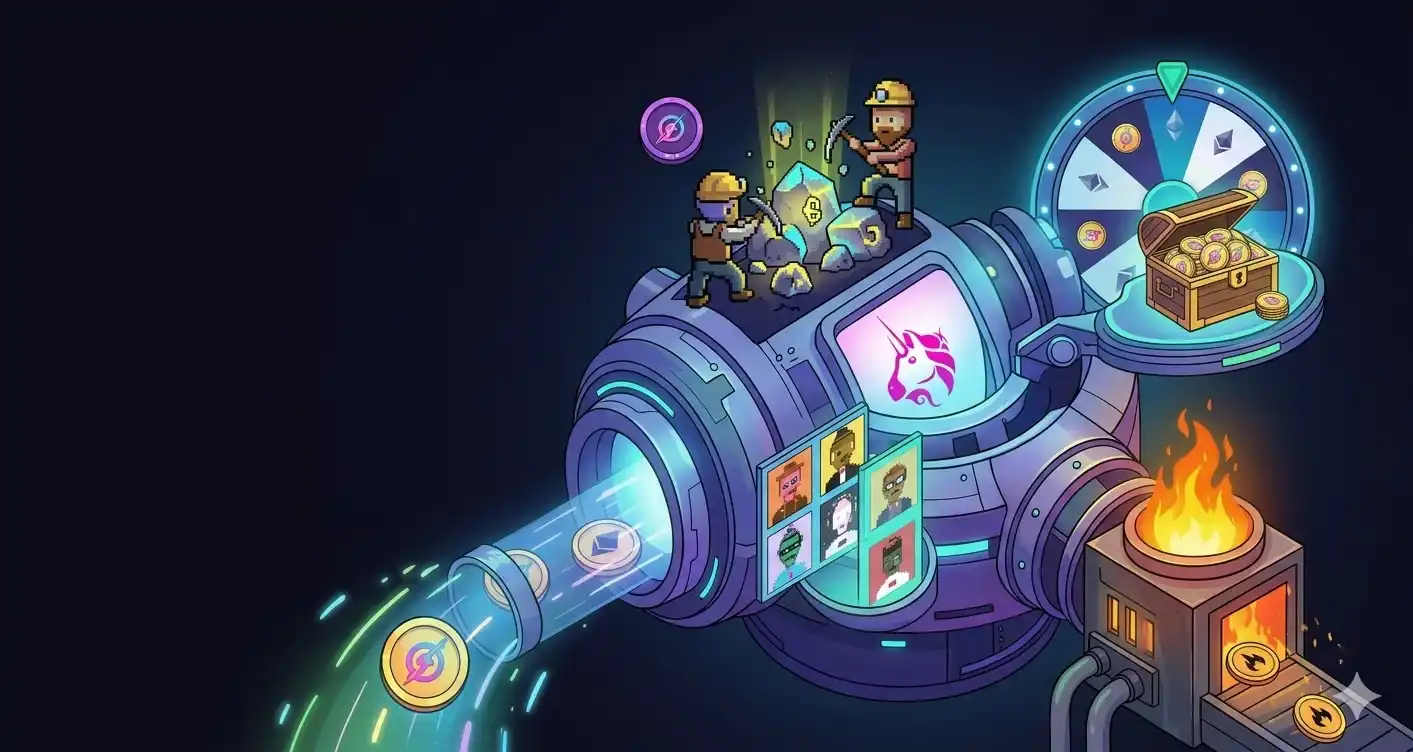
An In-Depth Look at $UORE: The V4 Hook Project Packing Mining, Lotteries, and NFTs into a Single Transaction $UORE is the latest project leveraging the Uniswap V4 Hook mechanism, following in the footsteps of projects like SATO, uPEG, and Slonks. It distinguishes itself by integrating multiple functions—on-chain mining, a buy-to-enter lottery, auto-generated pixel NFTs (Orelings), and a deflationary burn mechanism—all within a single Uniswap V4 liquidity pool transaction. This complexity results in transaction gas fees that are 2-3 times higher than a standard swap. The project's tokenomics are intricate. Each whole $UORE token held automatically mints a corresponding Oreling NFT, a 32x32 pixel miner character with random traits determined by the next block's hash. Each Oreling has a Class (rarity) and Hash value, which combine to form its Mining Power for staking rewards. Rewards are distributed daily from an emission that decays by 1% daily, with an 80/20 split between stakers and a Motherlode lottery pool. A "refined-ore boost" mechanism taxes early reward claims, redistributing 10% to remaining stakers. The Motherlode lottery awards tickets for buys of ≥0.1 ETH, with winning chances scaling up to 1% for 1 ETH purchases. Wins split the pool 50% to the buyer and 50% to a random staker. A 1% buy tax is burned, and a 1% sell tax funds an automatic buyback-and-burn mechanism triggered at 0.1 ETH. The project's code is a fork of uPEG, with claimed fixes for NFT duplication and flash loan attacks. Its creator, Noah, describes it as a fusion of Solana's ORE mining concept with uPEG's V4 Hook framework. Key challenges noted include high gas costs, the narrowing attention window for V4 Hook narratives as it's the fourth such project, and significant complexity that creates a high barrier to understanding for users. The project's whitepaper notably advises users to "Read the contracts and understand the mechanics before deploying capital," underscoring its complex and fast-moving nature within a trend where the "alpha" lifespan for new projects appears to be shrinking rapidly.

marsbit05/09 02:23
One Article to Understand $UORE: The V4 Hook Project That Packs Mining, Lottery, and NFT Into a Single Transaction

marsbit05/09 02:23

Wall Street Shorts ETH: Vitalik Knows and Is Front-Running, Tom Lee Remains Deluded

Wall Street short-selling firm Culper Research has disclosed a significant short position against ETH and related securities, including Bitmine (BMNR). The firm argues that Ethereum’s token economic model was broken following the Fusaka upgrade in December 2025. According to the report, Vitalik Buterin is aware of the issue and has been selling ETH, while prominent bull Tom Lee continues to invest despite what the report describes as clear signs of decline. Culper claims that the surge in on-chain activity post-Fusaka—cited by Lee as evidence of adoption—is largely driven by address poisoning and dust attacks, not genuine usage. Their analysis indicates that 95% of new wallet growth comes from dust addresses, poisoning attacks have tripled, and such transactions now account for 22.5% of all Ethereum activity. The upgrade increased the gas limit from 45M to 60M, aiming to expand capacity, but gas fees fell by ~90% instead of the projected 10–30%. Culper attributes this to a miscalculation in Layer-1 demand elasticity by Vitalik and developers, using outdated models. The report also notes declining validator earnings and a shift of developers and institutional activity to Solana, which it says is outperforming Ethereum in key metrics. The firm draws a parallel to past tech giants like Netscape and Nokia, suggesting Ethereum may face a similar decline absent structural changes.

marsbit03/06 04:45

Wall Street Shorts ETH: Vitalik Knows and Is Front-Running, Tom Lee Remains Deluded

marsbit03/06 04:45

活动图片