# A-Shares Articoli collegati

Il Centro Notizie HTX fornisce gli articoli più recenti e le analisi più approfondite su "A-Shares", coprendo tendenze di mercato, aggiornamenti sui progetti, sviluppi tecnologici e politiche normative nel settore crypto.


Misjudged A-Shares: Resilience, Expectations, and Confidence

China's A-share market recently faced selling pressure, especially in tech sectors, initially triggered by a global tech sell-off that began in South Korea. However, the article argues this is a case of "mistaken injury" and highlights the market's underlying resilience. This resilience stems from three main pillars: **1) Tech Sector Fundamentals:** Unlike Korea's market dominated by a few memory chip stocks, China's tech sector is diversified across computing, communications, electronics, and semiconductors, supported by dual narratives of global AI supply chains and domestic substitution. Core areas like optical modules and fiber optics continue to show strong earnings growth. **2) "National Team" Support:** State-backed institutions and large corporations have made significant market purchases and announced buybacks, providing liquidity and signaling confidence. This is seen as a stabilizing policy signal, often associated with market bottoms. **3) Broader Market Pillars:** Other major sectors are showing endogenous recovery momentum. Consumer stocks benefit from stabilizing CPI and signs of sector recovery (e.g., liquor price hikes). Cyclical sectors like aluminum have high earnings, potential price increases due to tight supply, and low valuations. The financial sector offers stable dividends and low valuations. The conclusion is that the sell-off was driven by external contagion, not a collapse in fundamentals. With strong policy support and recovering momentum across key sectors, the A-share market possesses the toughness to regain stability.

marsbit07/22 02:26

Misjudged A-Shares: Resilience, Expectations, and Confidence

marsbit07/22 02:26

STAR 50 Soars 10.73%, Why Did A-Shares Stage a "V-Shaped Reversal"?

After a prolonged decline, the Chinese A-share market staged a strong rally on July 21. The STAR 50 index surged 10.73%, its largest single-day gain in nearly a year, leading a broad-based "V-shaped" reversal. The Shanghai Composite Index rose 1.79%, the Shenzhen Component Index gained 4.81%, and the ChiNext Index jumped 7.05%. Total market turnover reached 2.97 trillion yuan, an increase of 256.1 billion yuan from the previous session, with over 3,100 stocks advancing. The semiconductor sector spearheaded the rebound, with related ETFs posting significant gains. Analysts attribute the surge to three converging factors. First, coordinated capital inflows from "national team" institutions, insurance funds, listed company buybacks, and fund house self-purchases have bolstered market liquidity and confidence. Second, supportive policy signals, including commitments from regulators to ensure stable market operations, provided a favorable backdrop. Third, a stabilization and recovery in overseas markets, notably South Korea, created a positive external environment. Institutions suggest the most severe panic selling phase for the tech sector has likely passed, following a significant digestion of crowded positions and leveraged funds. While short-term volatility may persist, the medium to long-term outlook remains underpinned by enduring trends like AI computing demand expansion and semiconductor localization. The market's focus now shifts to the sustainability of supportive fund flows, earnings reports, and upcoming catalysts from the global AI industry chain.

marsbit07/22 01:15

STAR 50 Soars 10.73%, Why Did A-Shares Stage a "V-Shaped Reversal"?

marsbit07/22 01:15

Hyperliquid Pre-IPO Contract Priced CXMT at $7.2, Foreign Capital Engaging with China's Storage Narrative via DeFi

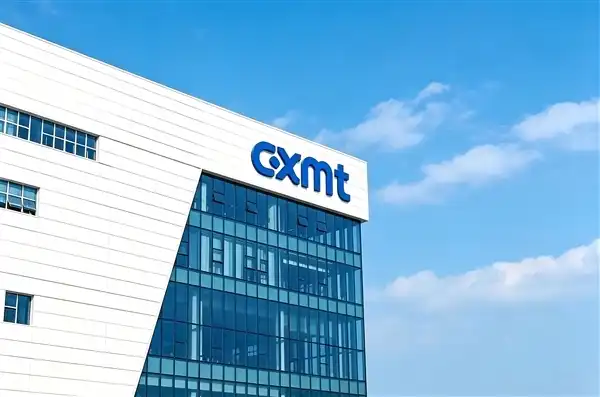
Hyperliquid, a blockchain-based perpetual contracts platform, has launched a pre-IPO contract for Chinese memory chipmaker Changxin Technology (CXMT) ahead of its STAR Market debut. Priced at 7.2 USDC (approx. $7.2) per share, the contract implies a market cap of about $500 billion, exceeding the official IPO valuation of roughly $80 billion and sitting at the upper end of analyst estimates. This marks the first time such a crypto derivative has targeted a STAR Market listing. It provides global investors, particularly those unable to meet China's 500,000 yuan ($69,000) investment threshold for the STAR Market, a direct avenue to gain exposure to the "China storage substitution" narrative. The 24/7 tradable, leveraged contract also fills a gap for those seeking to hedge or speculate around the A-share listing, which operates under T+1 settlement and restricts short-selling. Changxin Technology, the world's fourth-largest DRAM supplier, is raising nearly $8 billion in one of Asia's largest IPOs this year, buoyed by a DRAM super-cycle and strategic shifts by major competitors. While the Hyperliquid contract offers a novel parallel pricing mechanism, the lack of direct arbitrage with the underlying A-shares may lead to persistent price divergence. Nevertheless, its emergence underscores significant international interest in China's key semiconductor players.

marsbit07/15 04:27

Hyperliquid Pre-IPO Contract Priced CXMT at $7.2, Foreign Capital Engaging with China's Storage Narrative via DeFi

marsbit07/15 04:27

Commerce Ministry's Latest Export Controls Target 10 US Companies: Three Market-Moving Threads Explained

China's Ministry of Commerce placed 10 U.S. entities, including MP Materials, USA Rare Earth, Red Cat Holdings, and Teal Drones, on an export control list, banning the export of dual-use items. This move is seen as part of an ongoing countermeasure in the rare earth sector. The analysis suggests the primary impact is on U.S. companies within the **military, drone, and rare earth** sectors, aiming to restrict their access to critical Chinese materials and technology. For the Chinese market, the event is interpreted as reinforcing the **strategic value and pricing power** of domestic rare earth suppliers. However, the potential stock market reactions are nuanced: 1. **Chinese Rare Earth Upstream:** Companies like Northern Rare Earth are near yearly highs, indicating this event's "beneficiary" logic is largely priced in. It may confirm the trend but is unlikely to be a new major catalyst. 2. **Chinese Rare Earth Mid/Downstream & Drones:** Sectors like magnetic materials (e.g., Da Di Bear, Zhenghai Magnetic) and military drones (e.g., China Aerospace) are relatively undervalued. While the drone listing highlights sectoral competition, it doesn't directly translate to new orders for Chinese firms. 3. **Impact on Listed U.S. Companies:** The effect on stocks like MP Materials is ambiguous. While Chinese restrictions pose a challenge, these companies are also core to U.S. supply chain security efforts and may receive increased government support, potentially offsetting negative impacts. Their pre-announcement stock prices did not indicate panic selling. In summary, the export controls strengthen China's position in the global rare earth supply chain but have uneven effects across related stock market segments, with upstream Chinese gains likely priced in and downstream/drone sectors receiving more indirect, sentiment-driven attention. The outcome for the targeted U.S. stocks depends on the balance between restriction impacts and potential compensatory U.S. policy support.

marsbit06/22 08:57

Commerce Ministry's Latest Export Controls Target 10 US Companies: Three Market-Moving Threads Explained

marsbit06/22 08:57

Unveiling the 'White-haired Stock God' Serenity: A Spiritual Remedy for Anxious Retail Investors

The article details the rise of Serenity, dubbed the "White-Haired Stock God," whose social media posts have recently caused significant volatility in China's A-share market. Previously gaining fame in international retail investor communities, Serenity is known for his "Chokepoint Investment" strategy targeting small monopolies in the AI supply chain, reportedly achieving returns over 3612% this year. His influence stems from his background as a former AI research scientist, detailed analysis, and a massive following on X, where his subscriber count has surpassed Elon Musk's. In early June, Serenity's Chinese-language posts mentioning A-shares like LeaderDrive (Lide Xiebo), Easun, and Innolight triggered immediate 20% surges in their stock prices. He later clarified that some recommendations were crowdsourced from followers and claimed he did not hold positions in these stocks, stating his actions were "just for fun" to offer a foreign perspective on Chinese markets. This activity drew scrutiny from Chinese financial media, which warned of potential "pump-and-dump" schemes and legal risks. While anonymous, clues suggest Serenity is likely a Chinese-speaking individual living in Japan. He maintains his anonymity due to past harassment but enjoys substantial monthly income from his paid subscriptions. The article posits that Serenity embodies the market's current appetite for a charismatic, successful figure during the AI bull run, serving as an "outward projection" of bullish sentiment. It concludes by noting the cyclical nature of such market icons, warning that the same crowds that elevate them often seek scapegoats when trends reverse.

Odaily星球日报06/11 07:06

Unveiling the 'White-haired Stock God' Serenity: A Spiritual Remedy for Anxious Retail Investors

Odaily星球日报06/11 07:06

UBS: The Crowdedness of A-Share Tech Stocks Is Far From Reaching Historical Peaks

UBS: A-share tech stocks still far from peak crowding levels A-shares' technology sector has seen a strong rebound, with trading activity hitting record highs, raising concerns about market crowding. However, UBS Securities argues that a key indicator of institutional positioning suggests the current crowding level remains well below historical peaks. While the large-cap tech sector's share of total A-share trading volume and market capitalization have reached historical highs, the overweight ratio of domestic mutual funds in this sector stood at 9.9% in Q1 2026. This is down from 11.6% in Q3 2025 and significantly lower than the historical peak of 14.1% in Q4 2015. It also pales in comparison to the historical peak overweight of 18.7% for the consumer sector. UBS notes that typical cycles from a low to a peak in fund overweighting last about three years, and the current outperformance of the tech/growth style has lasted less than two years since the policy pivot in September 2024. UBS expects A-share earnings recovery to accelerate, providing fundamental support. It forecasts 2026 A-share profit growth to rise to 11% from 3.9% in 2025. Non-financial A-share profits grew 11.8% YoY in Q1 2026, with gross and net profit margins at their highest since 2023. Persistent fund inflows, the expansion of thematic ETFs, and a recovery in private fund issuance are supporting market liquidity. In tactical allocation, UBS favors growth and cyclical styles under its "slow bull" base case, with overweight ratings on six sectors: Electronics (benefiting from semiconductor inventory recovery and AI innovation), Communications (driven by AI computing demand), Machinery (aided by domestic capex recovery), Non-ferrous Metals (due to rising copper/aluminum prices), Chemicals (supported by anti-involution policies), and Electrical Equipment (driven by policy support and AI data center power demand).

marsbit06/05 02:48

UBS: The Crowdedness of A-Share Tech Stocks Is Far From Reaching Historical Peaks

marsbit06/05 02:48

活动图片