The Stock Tokenization Revolution: A Panoramic Report on Market Dynamics, Product Architecture, and Regulatory Moats

marsbitDipublikasikan tanggal 2026-03-10Terakhir diperbarui pada 2026-03-10

Abstrak

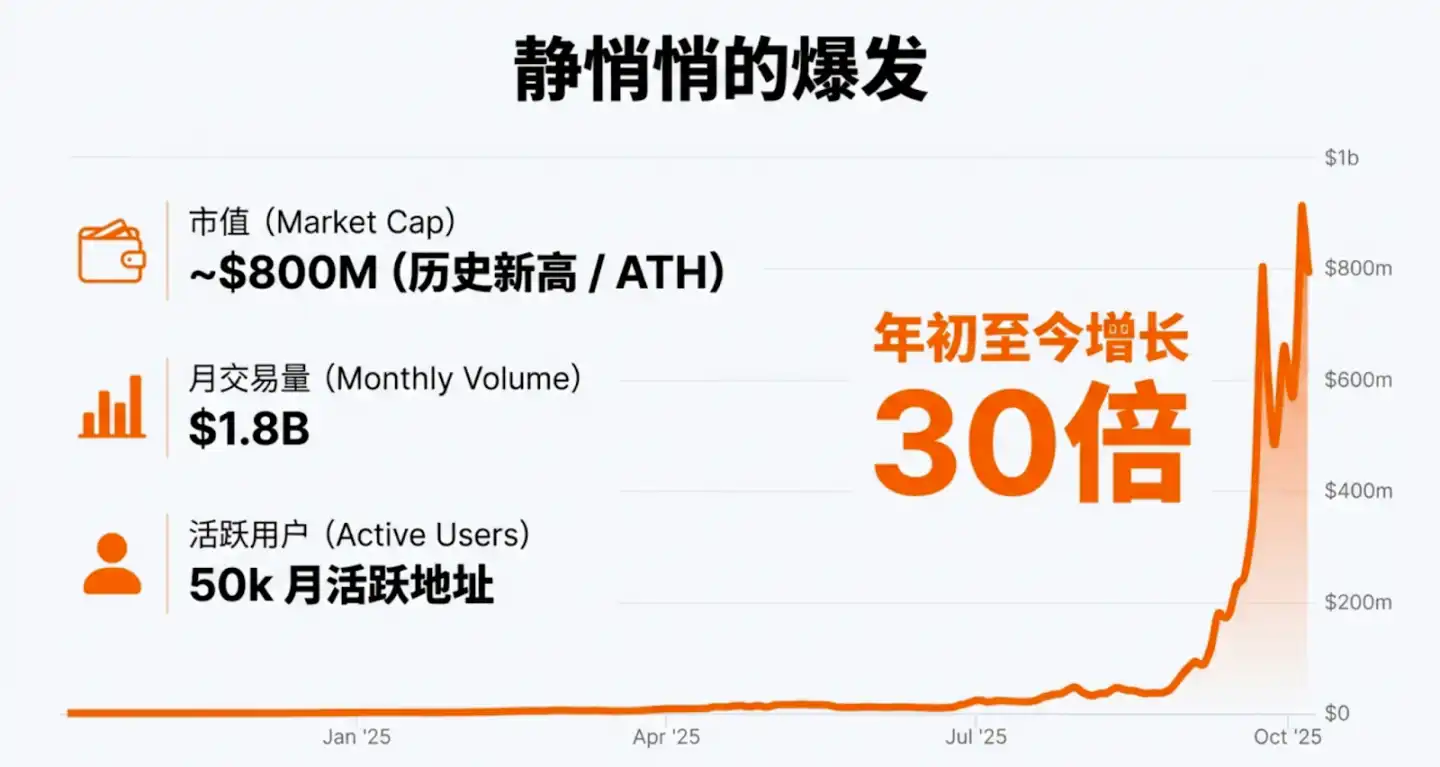
Tokenized stocks are emerging as a breakthrough sector in the real-world asset (RWA) market, with a total value exceeding $800 million—a 30x increase since the start of the year—and monthly trading volume reaching $1.8 billion. The core value proposition is enabling global, 24/7 access to U.S. equities with near-instant settlement, bypassing geographic restrictions and delays inherent in traditional finance. Three primary architectures are competing for dominance: 1. Instant execution (e.g., Ondo, CyberAlpha): maximizes capital efficiency. 2. Inventory model (e.g., xStocks, Backed): uses Swiss debt structures for superior DeFi composability. 3. Direct ownership (e.g., Securitize): offers full legal rights but limited on-chain flexibility. The market is dominated by two players: Ondo (53% share) leverages liquidity engineering, while Backed/xStocks (23%) uses regulatory arbitrage via Swiss law. Regulatory licensing—not technology—is the key moat, with complex cross-jurisdictional compliance (U.S., EU, offshore) forming the highest barrier to entry. The sector faces a trilemma between liquidity/speed, regulatory safety, and DeFi composability, and is diverging into two paths: incremental integration with traditional systems (e.g., DTCC) and revolutionary on-chain issuance for full disintermediation. The convergence of the $150 trillion global equity market with blockchain infrastructure is already underway.

Authored by: Foresight Ventures

TL;DR

  • Tokenized stocks are the breakthrough sector in the current Real World Asset (RWA) cycle—the market has hit a new all-time high of $800 million, growing 30x year-to-date, with a monthly trading volume of $1.8 billion.
  • Core value proposition: Bypass geographical restrictions and settlement delays of traditional brokers, enabling 24/7 global access to US stocks with near-instant settlement.
  • Three architectures are vying for dominance:
  1. Instant Execution Model (Ondo, CyberAlpha)—leads in capital efficiency.
  2. Inventory Model (xStocks, Backed)—excels in DeFi composability through debt structures under Swiss law.
  3. Direct Ownership Model (Securitize)—offers the most complete legal rights but is constrained by transfer restrictions and has limited on-chain composability.
  • The market has effectively formed a duopoly: Ondo leads with a 53% share, driven by liquidity engineering; Backed/xStocks hold a 23% share, leveraging regulatory arbitrage.
  • Technology is no longer the moat—regulation is. Building a cross-border licensing system across the US, EU, and offshore jurisdictions is currently the most difficult-to-replicate competitive barrier.
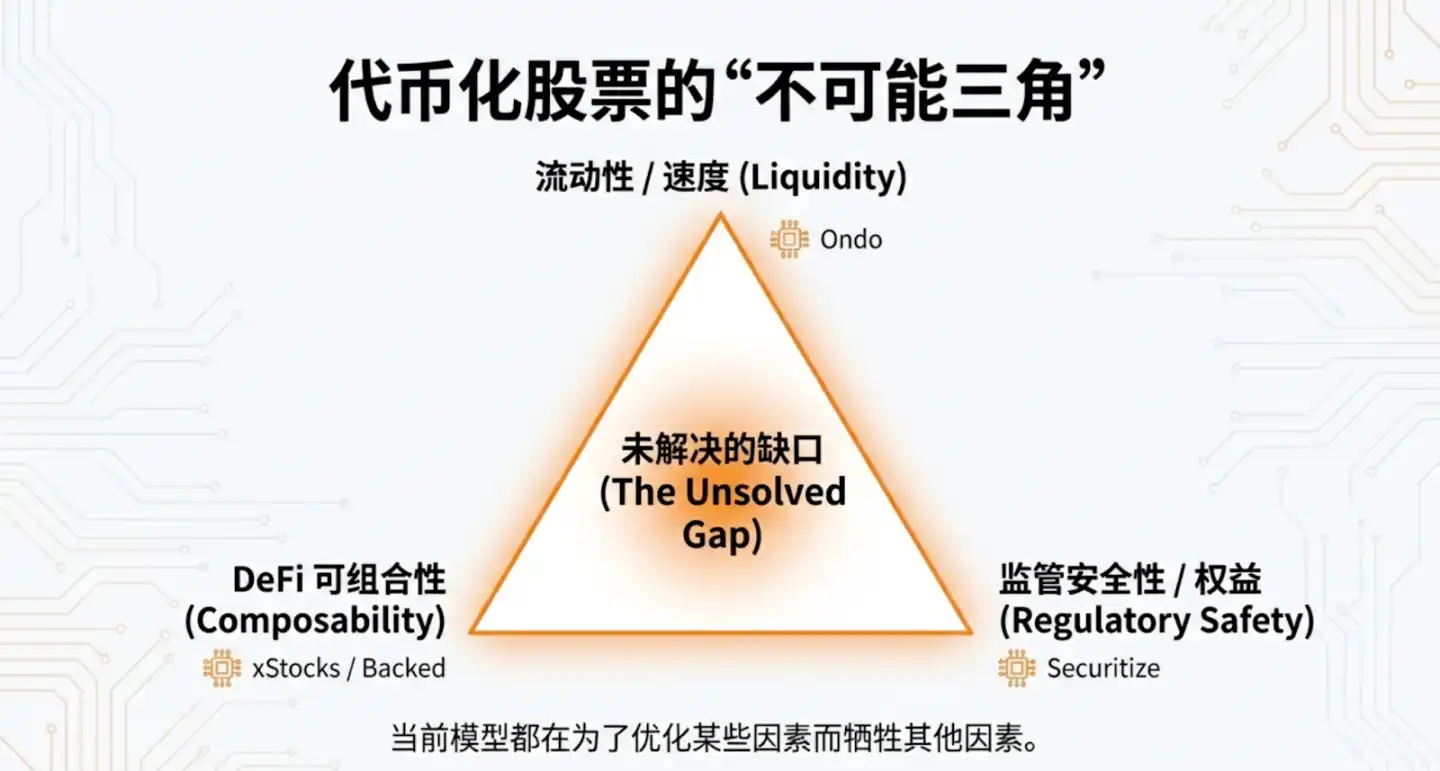
  • Platforms face a fundamental trilemma: they can only optimize two of the following three aspects simultaneously—Liquidity/Speed, Regulatory Security/Shareholder Rights, DeFi Composability.
  • The industry is bifurcating into two paths: Incremental (DTCC integration, increasing efficiency) and Revolutionary (direct on-chain issuance, full disintermediation).
  • Conclusion: The fusion of the $150 trillion global stock market with blockchain infrastructure is no longer just a thesis—it is happening.

1. Market Status Analysis: Deciphering the 'Silent Boom'

The Real World Asset (RWA) sector is undergoing structural transformation, with tokenized stocks emerging as the breakthrough sector of this cycle. The overall RWA ecosystem market cap has surpassed $800 million, growing 30x year-to-date. The integration of traditional equity assets with blockchain infrastructure signifies a fundamental shift in capital market design. This 'silent boom' is not merely an asset migration but a modernization of global liquidity—replacing fragmented traditional systems with a unified, programmable financial layer.

The following core data confirms this leap from experimental to institutional grade:

  • Market Cap Achievement: As of December 2025, the sector's market cap has reached a historic high of approximately $800 million.
  • Liquidity Velocity: Monthly trading volume has surged to $1.8 billion, indicating an active secondary market.
  • Adoption Density: The network currently supports 50,000 monthly active addresses and 130,000 total holding addresses.

This growth trajectory is fundamentally supported by blockchain eliminating the settlement friction and access barriers that have long plagued traditional finance (TradFi).
As the capital market's need for settlement efficiency becomes increasingly urgent, how tokenization addresses the chronic problems of TradFi through technological means has become the core of strategic competition in the industry.

2. Strategic Value Drivers: Solving TradFi's Friction Points

Traditional equity markets have long been constrained by the physical boundaries of legacy systems: geographical silos, restricted trading hours, and lengthy settlement cycles. The failure of the T+2 settlement system during the 2021 Robinhood/GME event, which forced brokers to restrict trading due to margin shortfalls, is a classic case study of TradFi's 'efficiency短板' (efficiency shortcoming).

Tokenization offers strategic premium through an 'Efficiency Triple-Threat':

  • 24/7 Trading: Traditional markets operate only 6.5 hours a day. Tokenization eliminates 'opening gap' risk, allowing investors to react in real-time to global macro events.
  • Global Accessibility: Completely breaks down geographical and broker barriers, providing non-US retail investors seamless access to high-demand US stock exposure, achieving 'borderless capital'.
  • Capital Efficiency: Enables T+0 settlement through digital infrastructure, reducing collateral tie-up and operational costs caused by settlement delays.
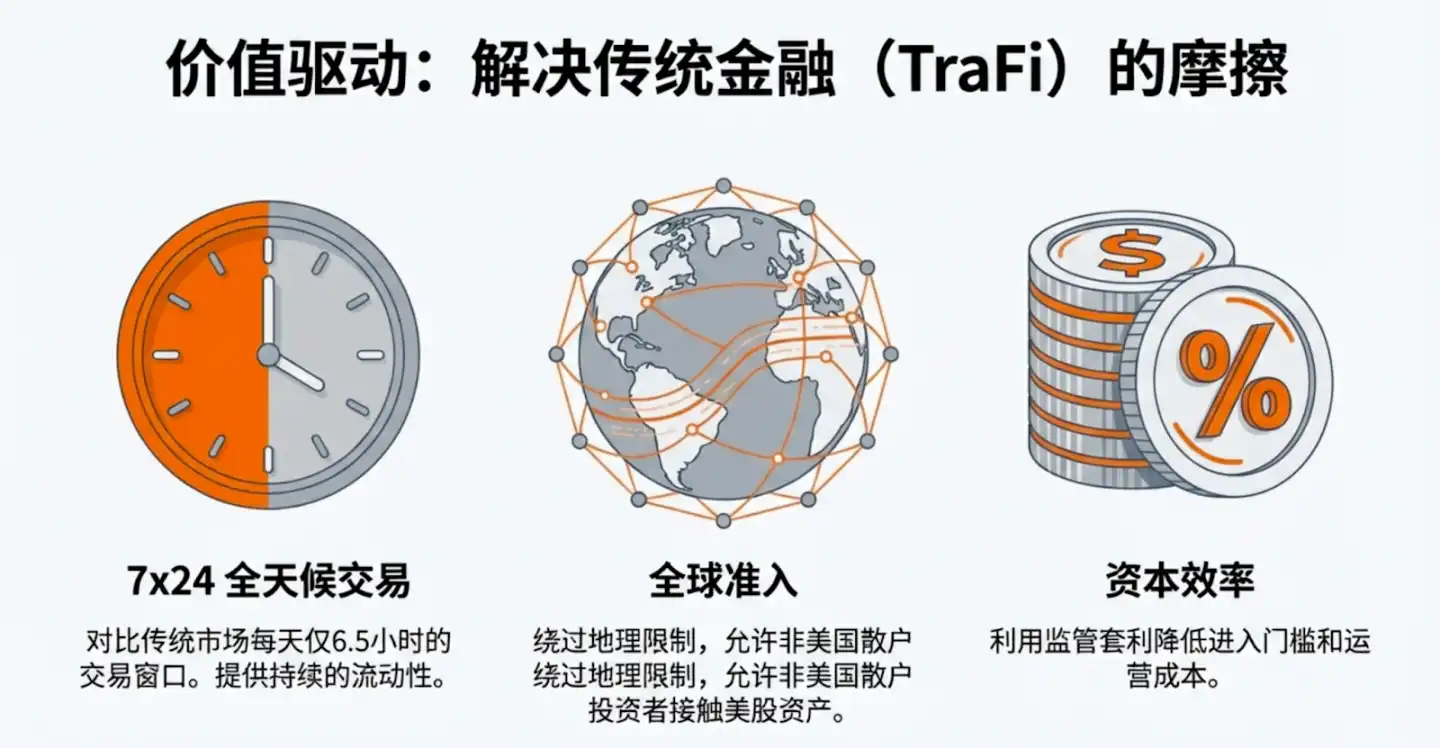
Tokenization is not just an optimization; it bypasses the administrative bottlenecks of traditional securities businesses by providing a global, 24/7 liquidity layer. In an era of 'capital efficiency scarcity', platforms that enable instant settlement and cross-border distribution will hold pricing power.

However, the path to realizing this value driver is not singular; different product architectures determine a platform's long-term moat and risk exposure.

3. Tokenization Architecture Comparative Analysis: Three Core Models

The choice of product architecture is a strategic pivot determining scalability, DeFi composability, and systemic risk characteristics.

Three-Model Framework

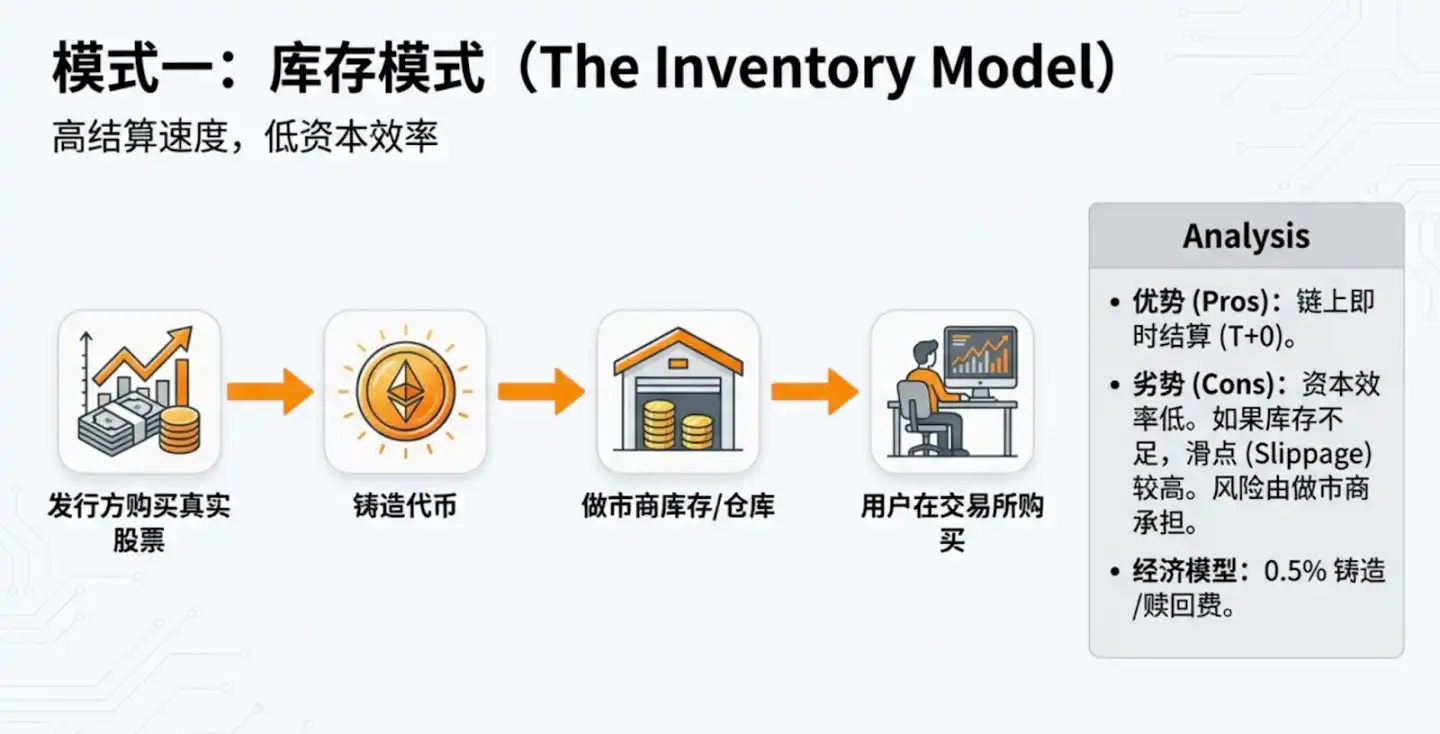
  • Inventory Model (e.g., xStocks, Backed): A 'pre-funded liquidity' solution. The issuer or market maker buys stocks in advance and mints tokens, depositing them in a warehouse ready for sale.
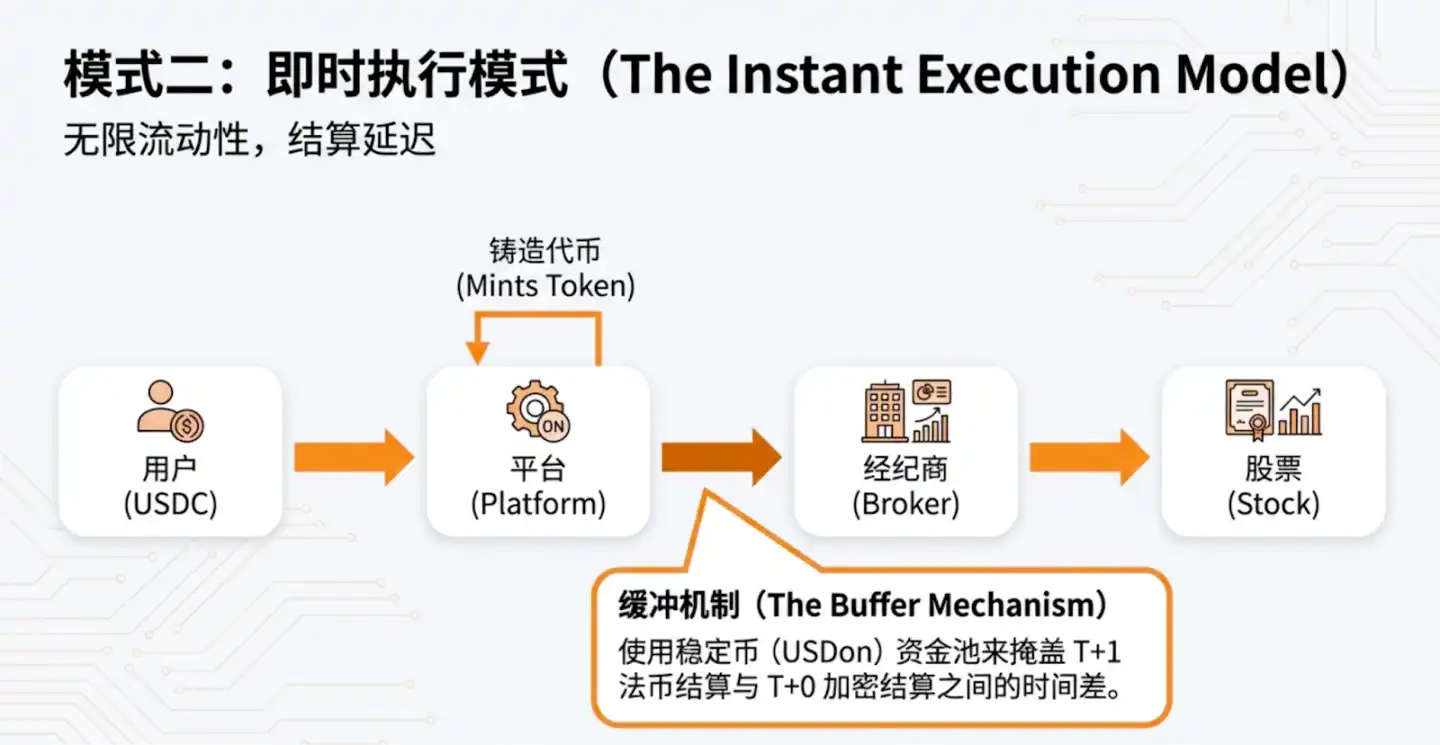
  • Instant Execution Model (e.g., Ondo, CyberAlpha): An 'on-demand liquidity' solution. Stock purchase and token minting are only triggered when a user confirms an order.
  • Direct Ownership Model (e.g., Securitize, Galaxy Digital): A 'purist' solution where the token *is* the legal share. Ownership is recorded directly on the company's cap table by a transfer agent, granting investors full shareholder rights including voting and dividends, but involves strict transfer restrictions.
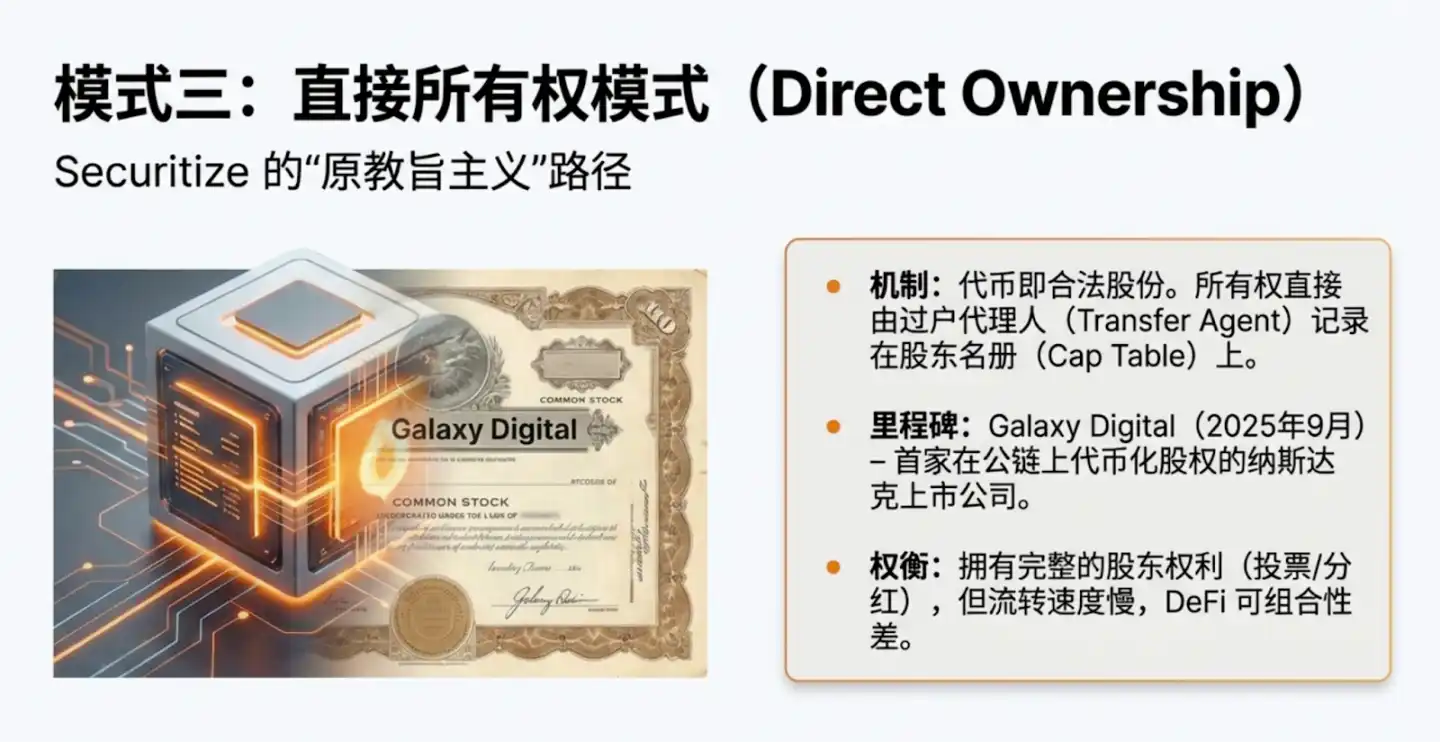
Architectural Trade-off Comparison
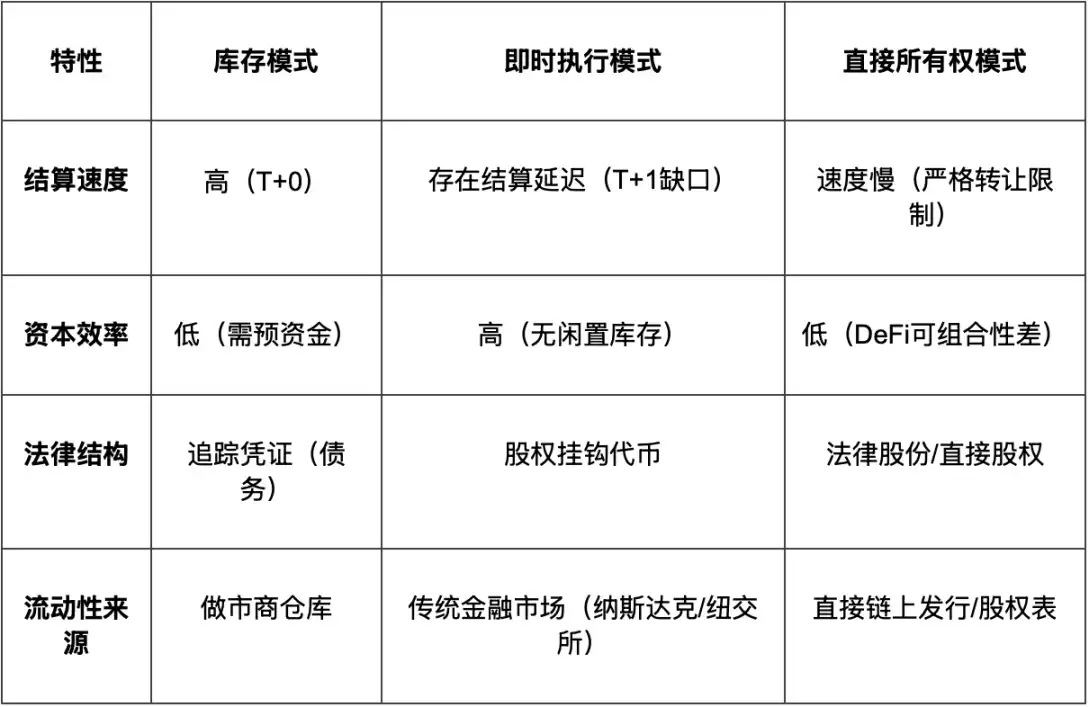
As trading volumes advance to higher levels, the technical challenge shifts to effectively bridging the gap between traditional and digital settlement cycles.

4. Competitive Landscape: Market Leaders and Challengers

The current competitive landscape shows a clear 'duopoly' and 'strategic differentiation'.
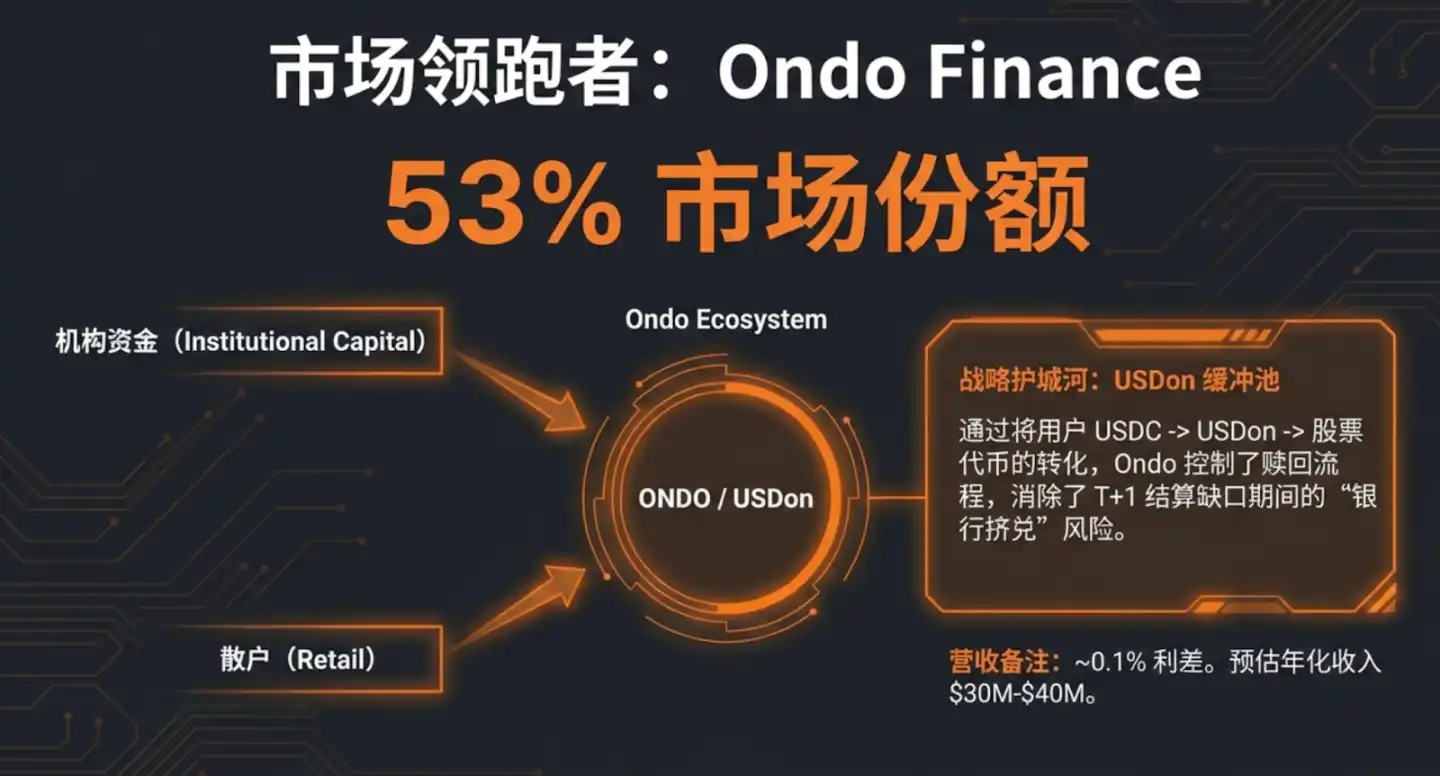
  • Ondo Finance (53% share): The absolute dominator. Its revenue engine relies on a ~0.1% trading fee spread, with estimated annualized revenue of $30M-$40M. Its core moat is a highly sophisticated USDon buffer pool and an extensive network of licensed institutional partners.
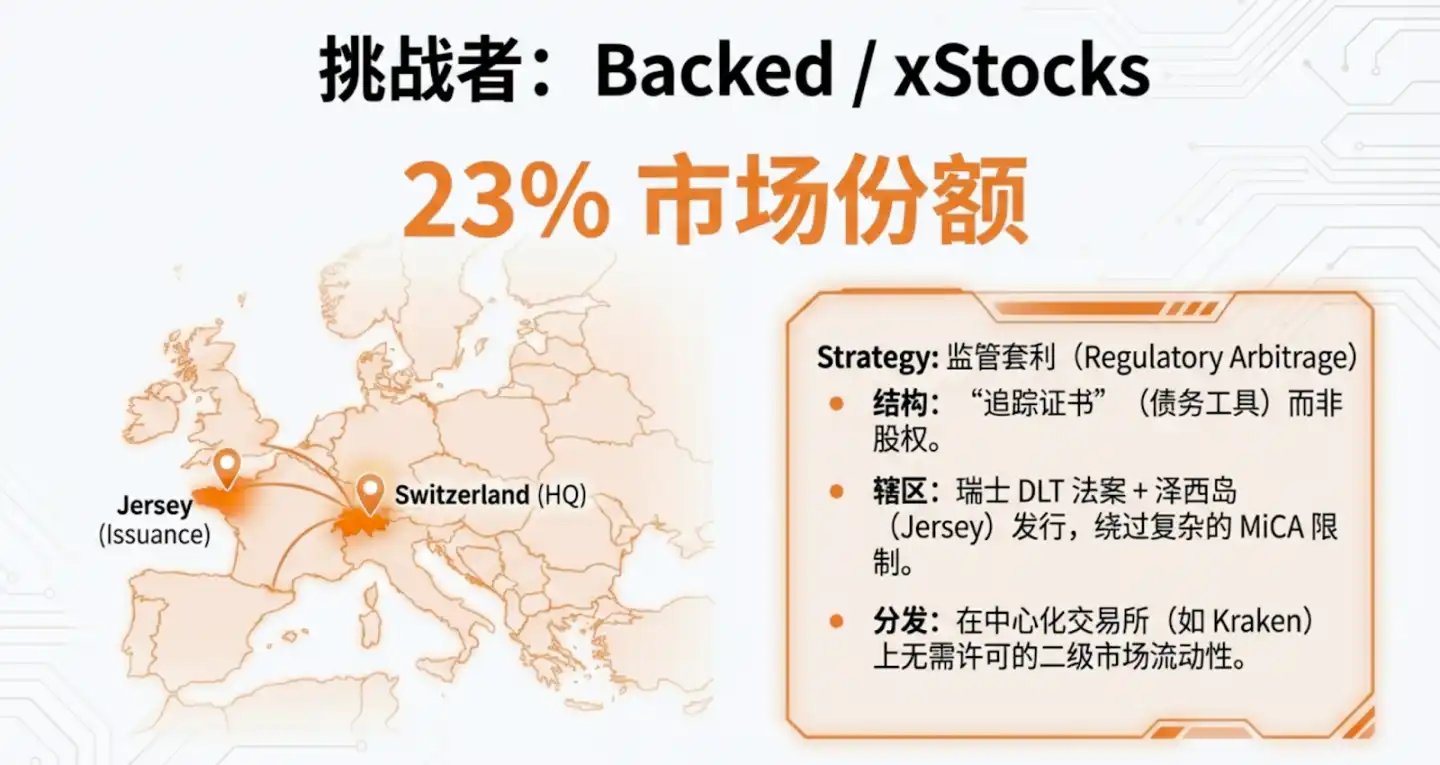
  • Backed / xStocks (23% share): Broke through using 'Legal Alpha'. By structuring products as tracker certificates (debt) under the Swiss DLT Act, they cleverly circumvented MiCA's restrictions on the transfer of direct equity tokens, enabling free flow and composition within the DeFi ecosystem.
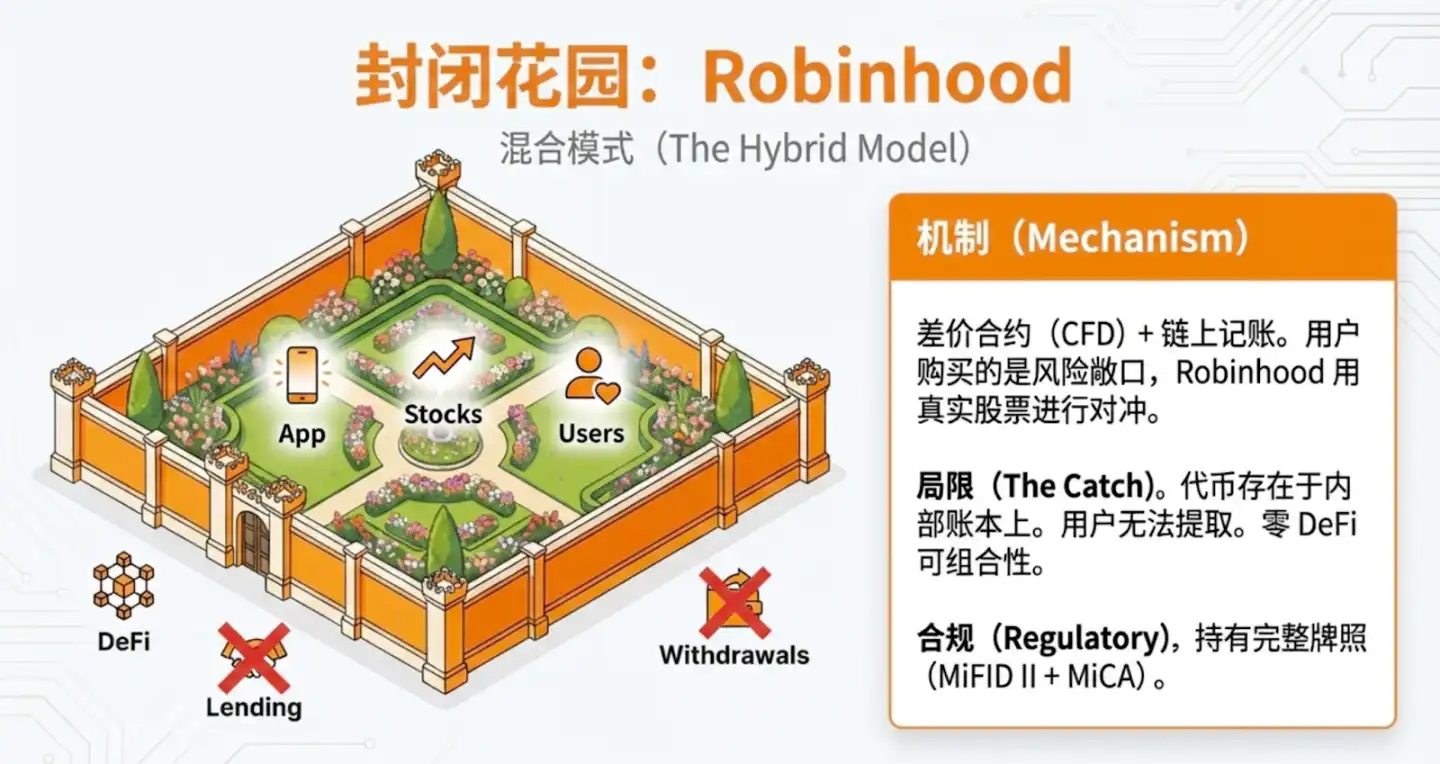
  • Robinhood (Walled Garden): Although it possesses the strongest combination of MiFID II and MiCA licenses, the lack of token extractability creates an isolated ecosystem, missing out on the open premium of DeFi.

'So What?' Level: Competition has shifted from 'user count' to a game of 'regulatory arbitrage' and 'capital efficiency'. Backed sacrificed direct equity rights through its debt structure in exchange for unlimited DeFi interoperability—a precise strategic trade-off.

5. Global Compliance Matrix: Building the Regulatory Moat

In the RWA space, 'license aggregation' is a more formidable moat than technology itself.
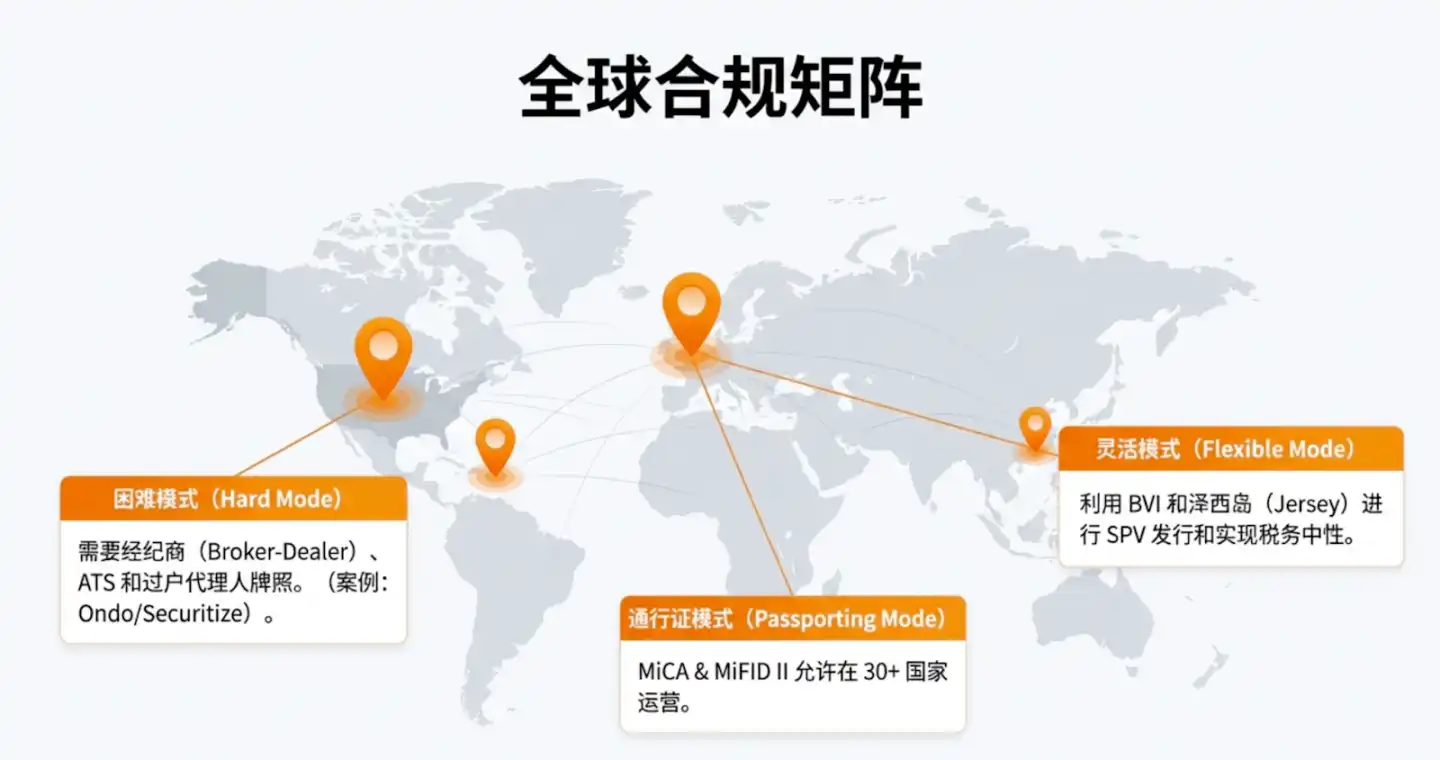
  • US Model (Hard Mode): The cornerstone of success is the 'trident' combination of Broker-Dealer, ATS, and Transfer Agent licenses. Ondo acquired this full suite of capabilities through its acquisition of Oasis Pro, mastering the complete closed loop from onboarding to secondary market matching.
  • EU Model (Passporting Mode): Leveraging the 'passporting' system of MiCA and MiFID II, companies obtaining licenses in Liechtenstein (e.g., Ondo approved by FMA) or Cyprus (e.g., xStocks approved by CySEC) can operate in 30 countries.
  • Specialized Pilots: Securitize, through a DLT pilot license from Spain's CNMV, gained permission to operate as a trading and清算 system, directly challenging the role of traditional CSDs (Central Securities Depositories).

'So What?' Level: Ondo's compliance architecture is a 'masterclass in financial engineering': ensuring tax neutrality through a BVI-based issuing entity, accessing underlying assets through US-licensed entities, achieving bankruptcy remoteness through daily proof of reserves from Ankura Trust, and finally enabling global compliant distribution through **BX Digital (Switzerland)**.

6. Strategic Outlook: Solving the Tokenized Stock 'Impossible Trinity'

The industry must balance the following three elements as it scales:

  • Liquidity / Speed: Exemplified by Ondo, optimized through buffer mechanisms.
  • Regulatory Security / Direct Rights: Exemplified by Securitize, pursuing SEC-compliant underlying direct ownership.
  • DeFi Composability: Exemplified by Backed, achieving on-chain asset flow through debt structures.
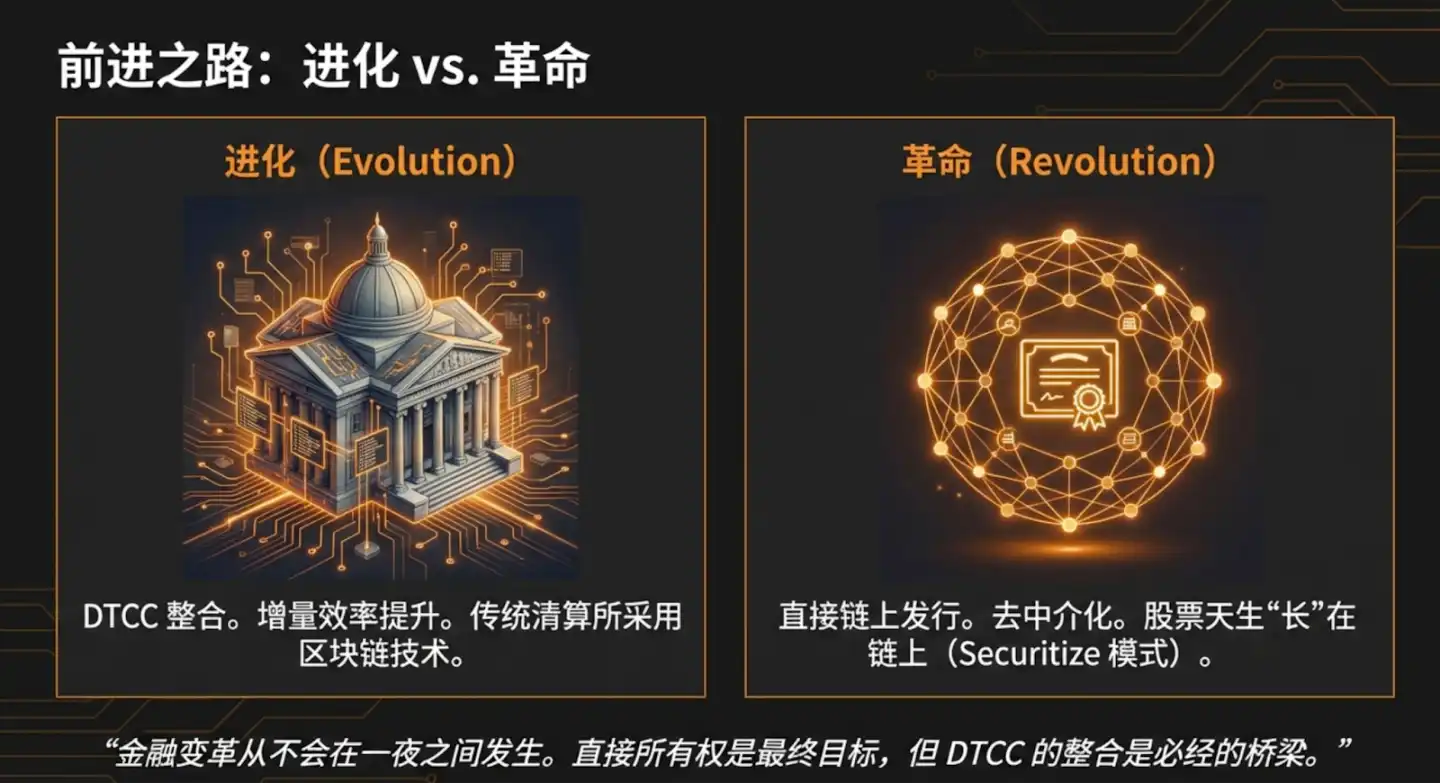
The market is currently bifurcating into two paths:

  • Evolutionary Path: Centered on DTCC integration, providing T+0 efficiency increments for incumbent financial institutions.
  • Revolutionary Path: Native on-chain issuance, exemplified by Securitize/Galaxy Digital, aiming for complete disintermediation.
7. Summary and Core Insights

The migration of the global $150 trillion equity market onto the blockchain is now irreversible.

  • Institutional Maturity: The 30x growth and milestones like Galaxy Digital mark the industry's transition from the conceptual phase into the deep waters of licensed competition.
  • Model Superiority: The Instant Execution model, with its极高的 capital efficiency, has gained an early advantage in the current liquidity war.
  • Licenses as Barriers: Platforms capable of navigating both US underlying asset access (ATS/BD licenses) and global (EU MiCA/Offshore BVI) compliant distribution will build an insurmountable long-term moat.

'Financial transformation is never overnight. Direct ownership is the ultimate goal, but integration and optimization with the DTCC is the necessary bridge to the future.'


Pertanyaan Terkait

QWhat are the three main product architectures in the tokenized stock market, and which one currently leads in capital efficiency?

AThe three main product architectures are: 1) Inventory Model (e.g., xStocks, Backed), 2) Instant Execution Model (e.g., Ondo, CyberAlpha), and 3) Direct Ownership Model (e.g., Securitize). The Instant Execution Model currently leads in capital efficiency.

QWhat is the core value proposition of tokenized stocks that addresses the pain points of traditional finance (TradFi)?

AThe core value proposition is the 'Efficiency Triple-Threat': enabling 24/7 trading, providing global accessibility to bypass geographical and broker restrictions, and achieving near-instant T+0 settlement to improve capital efficiency and eliminate delays.

QAccording to the report, what has become the most difficult competitive barrier to replicate in the tokenized stock sector, and why?

ARegulatory compliance, specifically building a cross-border licensing system across the US, EU, and offshore jurisdictions, has become the most difficult barrier to replicate. It is harder to obtain the necessary licenses (e.g., US broker-dealer, ATS, transfer agent; EU MiCA/MiFID II passports) than to develop the underlying tech.

QWhat fundamental 'trilemma' do tokenized stock platforms face, and what are the three competing elements?

APlatforms face a trilemma where they can only optimize for two of the following three elements at the same time: 1) Liquidity/Speed, 2) Regulatory Security/Direct Shareholder Rights, and 3) DeFi Composability.

QWhich two platforms currently dominate the market share of tokenized stocks, and what are their respective strategies for maintaining leadership?

AOndo Finance dominates with 53% market share, relying on its sophisticated liquidity engineering (USDon buffer pool) and extensive licensed partner network. Backed/xStocks holds 23% market share, leveraging a 'legal alpha' strategy by structuring products as debt under Swiss law to enable superior DeFi composability and regulatory arbitrage.

Bacaan Terkait

"Gergaji Musim Panas" Berlanjut: Breakout $67.000 Akan Menjadi Awal Kenaikan Bitcoin

Harga Bitcoin terus terkonsolidasi dalam kisaran $58.000–$67.000 sejak awal Juni, dengan harga terkini di sekitar $62.217 pada 1 Agustus. Para analis pasar mempertimbangkan beberapa skenario kunci. Secara teknis, pergerakan di atas $66.000 dianggap penting untuk mengubah momentum. Beberapa trader seperti Crypto Candy memprediksi kemungkinan penurunan menuju $60.000 jika level $66.000 tidak tertembus. Trader lain, Jelle, menggambarkan situasi ini sebagai "gergaji musim panas" yang berkepanjangan dan mempertahankan strategi rata-rata biaya dengan pembelian berkala. Di sisi lain, skenario breakout ke atas tetap ada. Daan Crypto Trades menekankan bahwa keberhasilan menembus $67.000 sangat penting untuk menghindari fase konsolidasi yang berlarut-larut. Roman bahkan memperkirakan bahwa breakout dengan volume yang kuat dapat mendorong harga dengan cepat ke zona $70.000–$80.000. Dari perspektif jangka panjang, analis Gert van Lagen melihat fase ini sebagai periode akumulasi, dengan Bitcoin menguji pola grafik besar "cangkir dengan pegangan". Dia mencatat bahwa pemegang jangka panjang masih enggan menjual, yang ditunjukkan oleh metrik NUPL mereka yang masih jauh dari zona kapitulasi. Kesimpulannya, pasar Bitcoin saat ini berada dalam fase akumulasi yang menentukan. Level $60.000 dan $67.000 menjadi kunci, dan breakout dari level mana pun kemungkinan akan menentukan arah tren berikutnya. Skenario AI dalam artikel juga mempertanyakan apakah konsolidasi saat ini dapat membentuk fondasi yang lebih kuat, atau apakah setiap ujian di level $67.000 akan terus menghadapi hambatan psikologis yang sama dari pemegang aset jangka pendek.

cryptonews.ru17m yang lalu

"Gergaji Musim Panas" Berlanjut: Breakout $67.000 Akan Menjadi Awal Kenaikan Bitcoin

cryptonews.ru17m yang lalu

Perhatian Wajib Pekan Depan|Undang-Undang CLARITY Diperkirakan Akan Masuk ke Pemungutan Suara Senat; SpaceX dan Circle Umumkan Laporan Keuangan (3-9 Agustus)

**Ringkasan Acara Penting Pekan Depan (3-9 Agustus)** Pekan depan diwarnai sejumlah pengumuman keuangan penting dan perkembangan regulasi kripto di AS. **Laporan Keuangan & Acara Perusahaan:** * **SpaceX** akan merilis laporan keuangan Q2 2026 pada 4 Agustus, diikuti gelombang pencairan saham internal pertama (hingga 12%) pada 6 Agustus. * **Circle** (penerbit USDC) dan **Hut 8** (penambang Bitcoin) masing-masing akan mengumumkan laporan kuartalan pada 5 Agustus dan 4 Agustus. * **American Bitcoin (ABTC)**, perusahaan tambang kripto yang dikaitkan dengan keluarga Trump, merilis laporan Q2 pada 3 Agustus. * Perusahaan robotika **宇树科技 (Unitree Robotics)** akan melakukan penawaran saham perdana (IPO) di pasar STAR China, dengan hari penentuan harga awal pada 5 Agustus. **Regulasi Kripto AS:** * **CLARITY Act**, undang-undang kerangka kerja federal untuk aset kripto, berpeluang dilakukan pemungutan suara penuh di Senat AS minggu ini. Para negosiator harus merampungkan aturan tentang konflik kepentingan sebelum masa reses 7 Agustus. RUU ini memerlukan 60 suara untuk disetujui. **Pengumuman Data & Teknologi:** * **Laporan Non-Farm AS** untuk Juli akan dirilis pada 7 Agustus, menjadi fokus pasar. * **Grok AI** versi 4.6 (dengan 1,5 triliun parameter) diperkirakan diluncurkan sekitar 7 Agustus, diikuti versi 4.7 yang lebih kuat beberapa minggu setelahnya. * **XRP Ledger** versi 3.3.0 dengan lima fitur baru, termasuk transaksi batch, dijadwalkan rilis minggu depan. **Penutupan & Perubahan Layanan:** * Beberapa layanan kripto akan berhenti beroperasi: **Zapper** (pelacak portofolio DeFi) dan **Ctrl Wallet** pada 3 Agustus, serta **LayerZero** akan menghentikan relayernya untuk v1 pada tanggal yang sama. Bursa Korea **Upbit** akan menghapus perdagangan pasangan **AQT** dan **AERGO** pada 3 Agustus. **Acara Lainnya:** * **BIP-110**, sebuah proposal peningkatan jaringan Bitcoin, akan memulai fase pengiriman sinyal wajib sekitar 8 Agustus.

marsbit56m yang lalu

Perhatian Wajib Pekan Depan|Undang-Undang CLARITY Diperkirakan Akan Masuk ke Pemungutan Suara Senat; SpaceX dan Circle Umumkan Laporan Keuangan (3-9 Agustus)

marsbit56m yang lalu

Saham Jatuh Lebih Parah daripada Kripto, Ke Mana Uangnya Pergi?

Penulis: Cathy,白话区块链 Pada 28 dan 29 Juli di Seoul, indeks Kospi memicu *circuit breaker* dua hari berturut-turut, suatu peristiwa yang belum pernah terjadi dalam sejarah pasar saham Korea. Saham-saham semikonduktor global, termasuk SK Hynix yang turun sekitar 23% dalam dua hari, mengalami penurunan drastis. Penarikan dana (pullback) Kospi pada Juli mencapai 40% dari titik tertinggi Juni, menjadikannya bulan terburuk yang tercatat. Produk leverage seperti ETF 2x Long SK Hynix bahkan anjlok hingga 83%, menghapus lebih dari 1 triliun HKD dalam nilai pasar. Ironisnya, Bitcoin justru naik hampir 15% dari titik terendah Juli, menunjukkan perilaku yang tidak biasa: **saham yang jatuh seperti aset kripto, sementara Bitcoin relatif stabil.** Penurunan ini bukan kepanikan pasar luas, melainkan "peledakan tertarget" terhadap perdagangan yang paling ramai (*crowded trades*), dipicu oleh laporan keuangan SK Hynix yang meski mencetak rekor laba tetapi di bawah perkiraan, serta IPO besar-besaran ChangXin Memory (CXMT) dari China. Ditambah dengan potensi likuidasi posisi *carry trade* Yen Jepang yang masif, pasar mengalami de-leverage paksa. Lalu, apakah uang yang keluar dari saham mengalir ke Bitcoin? Jawabannya tidak. Bitcoin tampak "tahan jatuh" karena sudah mengalami koreksi lebih dulu—jatuh sekitar 21% selama periode arus keluar ETF berkelanjutan pada Mei-Juni. Uang yang mencari perlindungan justru mengalir ke emas, yang harganya naik lebih dari 20% secara tahunan. Koefisien korelasi Bitcoin dengan emas mencapai -0.88, mengindikasikan bahwa institusi kini memandangnya sebagai aset yang berbeda: **emas untuk perlindungan, Bitcoin untuk potensi pertumbuhan.** Agar aliran dana besar-besaran benar-benar masuk ke Bitcoin, diperlukan tiga kondisi: tekanan likuidasi global mereda, The Fed menurunkan suku bunga tanpa memicu resesi, dan disahkannya RUU CLARITY di AS untuk memberikan kejelasan regulasi. Meski RUU tersebut tertunda di Senat, arahnya sudah jelas. **Harga saham teknologi ditentukan oleh pengeluaran modal AI dan laba perusahaan, sedangkan harga Bitcoin ditentukan oleh likuiditas global.** Ketidakselarasan ini justru menciptakan daya tarik bagi institusi yang ingin mendiversifikasi portofolio mereka. Kesimpulannya, Bitcoin saat ini bukan tempat perlindungan (*safe haven*), melainkan aset yang sudah terkoreksi lebih dulu dan sudah berada di posisi yang siap. **Dana belum datang, tetapi posisinya sudah dipersiapkan.** Ketika badai berlalu dan modal global mencari tempat baru untuk dialokasikan, Bitcoin berada di urutan terdepan dalam antrian.

marsbit56m yang lalu

Saham Jatuh Lebih Parah daripada Kripto, Ke Mana Uangnya Pergi?

marsbit56m yang lalu

Dialog dengan Ray Dalio: Saat Ini Berada dalam Gelembung AI, 1% Portofolio Investasi Adalah Bitcoin

Sumber: The Diary Of A CEO Ray Dalio, pendiri Bridgewater Associates yang meramalkan krisis keuangan 2008, memperingatkan bahwa ledakan AI saat ini menunjukkan tanda-tanda klasik gelembung ekonomi yang dapat pecah dan memicu resesi. Dalam wawancara podcast, dia menjelaskan dinamika "siklus besar" yang didorong oleh ketimpangan kekayaan, defisit pemerintah, dan perubahan geopolitik. Dalio mengidentifikasi pola di mana antusiasme berlebihan terhadap teknologi revolusioner baru, seperti AI, menyebabkan harga aset melambung dan pinjaman berlebihan. Ketika kondisi berubah (seperti kenaikan suku bunga atau kebutuhan tunai), gelembung ini dapat pecah, menyebabkan penurunan harga aset, kerugian luas, dan kontraksi ekonomi. Untuk melindungi kekayaan di masa ketidakpastian, Dalio sangat menekankan pentingnya **diversifikasi portofolio**—termasuk saham, obligasi, emas, dan real estat—daripada mengandalkan uang tunai saja. Dia mengungkapkan bahwa sekitar **1% portofolionya adalah Bitcoin**, yang diakuinya sebagai aset keras, tetapi dia lebih menyukai **emas fisik** karena sejarahnya sebagai penyimpan nilai dan aset bebas liabilitas. Mengenai dampak AI, Dalio percaya bahwa teknologi ini akan menggantikan tidak hanya tenaga fisik tetapi juga kemampuan kognitif manusia, berpotensi memperlebar kesenjangan antara pemilik modal dan pekerja. Masa depan akan menguntungkan mereka yang dapat memadukan kecerdasan manusia (seperti emosi dan intuisi) dengan kemitraan AI. Secara geopolitik, Dalio menggambarkan dunia yang memasuki fase "penurunan" dalam tatanan global, dengan Amerika Serikat menghadapi tantangan internal dan eksternal, termasuk konflik seperti di Iran yang mengungkap kelemahannya. Dia memprediksi dunia mungkin menjadi lebih terregionalisasi di masa depan. Secara keseluruhan, kunci untuk navigasi melalui periode kompleks ini adalah pemahaman akan pola sejarah, adaptasi, dan diversifikasi yang cermat.

marsbit4j yang lalu

Dialog dengan Ray Dalio: Saat Ini Berada dalam Gelembung AI, 1% Portofolio Investasi Adalah Bitcoin

marsbit4j yang lalu

Trading

Spot
活动图片




