# Artikel Terkait Models

Pusat Berita HTX menyediakan artikel terbaru dan analisis mendalam mengenai "Models", mencakup tren pasar, pembaruan proyek, perkembangan teknologi, dan kebijakan regulasi di industri kripto.

Who Will Define the Rules of the AI Era? Anthropic Discusses the 2028 US-China AI Landscape

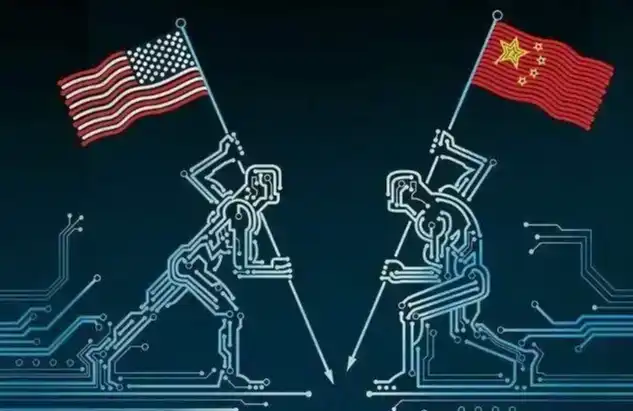
This article, based on Anthropic's analysis, outlines the intensifying systemic competition between the U.S./allies and China for AI leadership by 2028. It argues that access to advanced computing power ("compute") is the critical bottleneck, where the U.S. currently holds a significant advantage through chip export controls and allied innovation. However, China's AI labs remain competitive by exploiting policy loopholes—via chip smuggling, overseas data center access, and "model distillation" attacks to copy U.S. model capabilities—keeping them close to the frontier. The piece presents two contrasting scenarios for 2028. In the first, decisive U.S. action to tighten compute controls and curb distillation locks in a 12-24 month AI capability lead, cementing democratic influence over global AI norms, security, and economic infrastructure. In the second, policy inaction allows China to achieve near-parity through continued access to U.S. technology, enabling Beijing to promote its AI stack globally and integrate advanced AI into its military and governance systems, altering the strategic balance. Anthropic contends that maintaining a decisive U.S. lead is essential for shaping safe AI development and governance. The core recommendation is for U.S. policymakers to urgently close compute and model access loopholes while promoting global adoption of the U.S. AI technology stack to secure a lasting strategic advantage.

marsbit05/16 05:08

Who Will Define the Rules of the AI Era? Anthropic Discusses the 2028 US-China AI Landscape

marsbit05/16 05:08

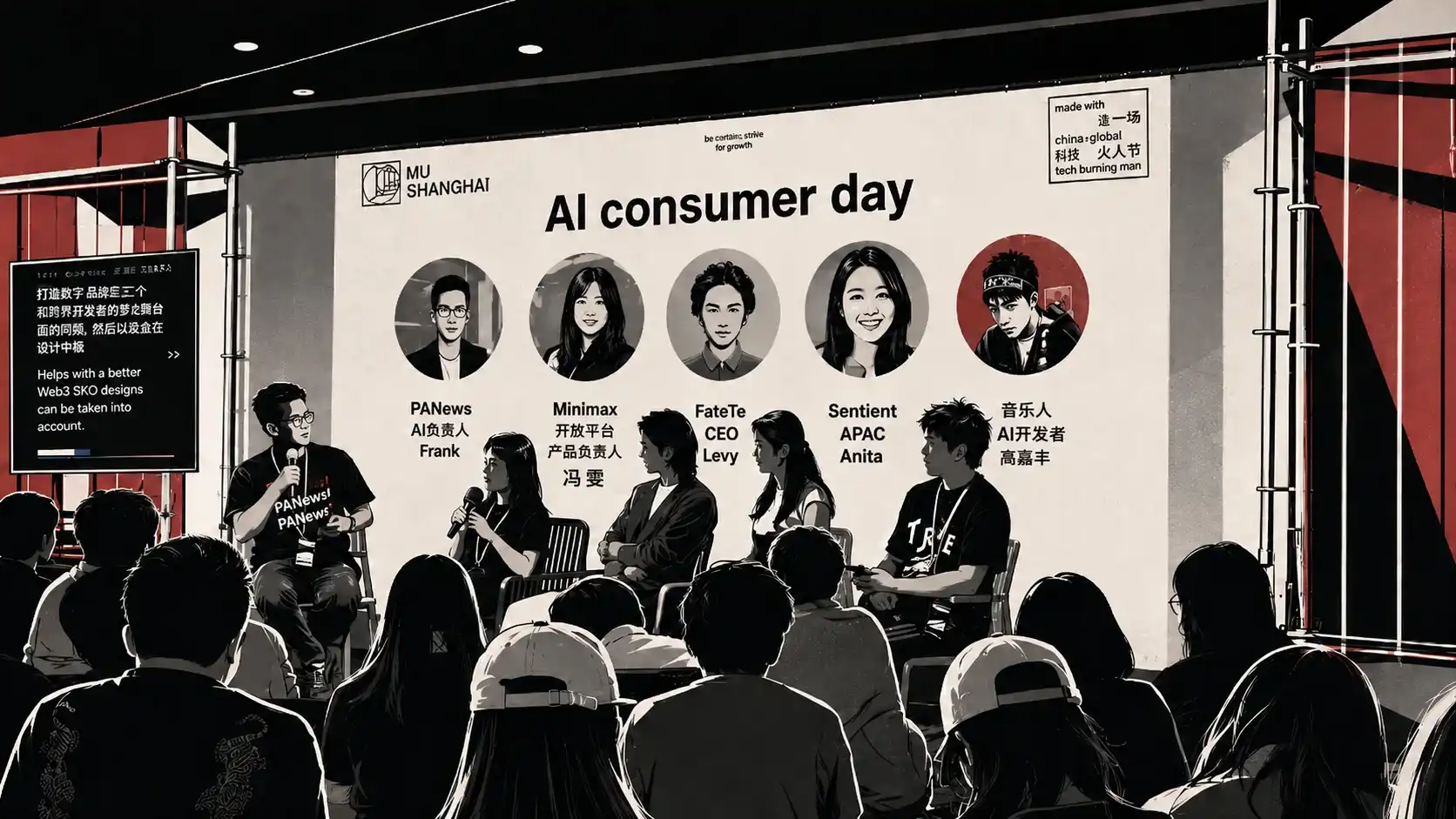
muShanghai Discusses Consumer AI: After Continuous Iteration of Large Models, Product Competition Moves Towards Scenarios and Experience

The roundtable discussion "Innovative Practices and Path Exploration of the AI Consumption Ecosystem" at muShanghai AI Week, featuring experts from model platforms, cultural apps, the open-source ecosystem, and music creation, delved into the practical paths for consumer AI products. A key consensus emerged: while AI model advancements lower prototyping barriers, the real challenge for enduring products lies beyond raw technology. True differentiation comes from deep scene understanding, data organization, user education, delivering emotional value, and building open ecosystems. The competition is shifting from "who has the stronger model" to "who best understands the specific user and scenario." Participants highlighted that application-layer barriers, such as accumulated contextual data and cultural localization (e.g., FateTell's translation of Eastern metaphysics for global users), are not easily erased by model updates. They cautioned that AI simplifies prototyping but not the core entrepreneurial hurdles: user acquisition, community building, and commercialization. The discussion emphasized that value must return to human needs—like emotional comfort (FateTell) or preserving the creative *process* in music-making, as highlighted by musician-developer Gao Jiafeng, rather than just outputting a final product. With the rise of AI Agents, user education is evolving from manual documentation reading to more guided, interactive learning within the product experience itself. Looking ahead 3-5 years, panelists foresee AI moving into the physical world via hardware and robotics, enabling more personalized services and addressing growing needs for companionship amidst technological anxiety. The future points towards "technology democratization," where AI assists diverse lifestyles, and cultural forms may be recombined, with emotional connection becoming paramount. Ultimately, as models continue to evolve, the products that endure will be those that meet genuine human needs, foster understanding, and build meaningful connections.

marsbit05/16 03:06

muShanghai Discusses Consumer AI: After Continuous Iteration of Large Models, Product Competition Moves Towards Scenarios and Experience

marsbit05/16 03:06

AI Giants Enter the Dark Forest

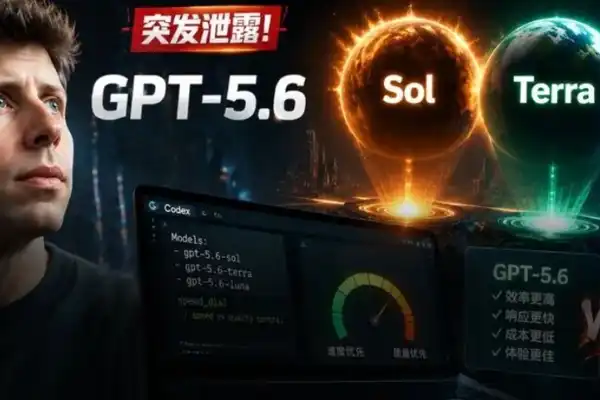
In the AI industry's "dark forest," major players like Anthropic, OpenAI, and DeepSeek are strategically withholding their most advanced models to avoid becoming targets in a high-stakes competitive landscape. Anthropic released Claude Opus 4.7 but admitted it underperforms compared to their unreleased model Mythos, citing safety concerns. They delayed addressing user complaints about performance regression until OpenAI’s GPT-5.5 launch, highlighting a tactic of controlled disclosure aligned with competitors’ moves. OpenAI’s GPT-5.5, though a full retrain since GPT-4.5, was seen as incremental rather than revolutionary. Leaks revealed internal models like Glacier and Heisenberg, indicating significant unreleased capabilities. OpenAI acknowledges a "capability overhang," where real model power exceeds what users experience, often due to infrastructure-driven throttling. DeepSeek launched V4 Preview, a cost-efficient model, but its full potential (V4 Pro Max) awaits Huawei’s Ascend 950 super-nodes量产 in late 2026. Their strategy focuses on affordability and scalability, aiming to democratize AI access globally, a move noted even by NVIDIA’s CEO as a disruptive threat. Together, these actions reflect a broader trend: leading AI labs are deliberately pacing releases, hiding strengths, and aligning disclosures with competitive dynamics—each avoiding the risk of exposure in a forest where first movers become targets.

marsbit04/25 12:47

AI Giants Enter the Dark Forest

marsbit04/25 12:47

The More Frequently They Are Updated, the More Similar Claude Code and Codex Become

OpenAI's recent release of GPT-5.4-Cyber demonstrates a striking convergence with Anthropic's Claude Mythos, reflecting a broader trend of product and strategic alignment between the two AI giants. This is particularly evident in their flagship coding assistants, Codex and Claude Code, which have evolved from distinct philosophies into increasingly similar tools. Initially, Codex emphasized speed and real-time interaction, acting like a fast, junior developer, while Claude Code focused on handling extreme complexity with methodical, large-context analysis. However, both have adopted near-identical solutions to core challenges, such as using isolated sub-tasks or agent teams to prevent context pollution during large-scale code modifications. Benchmark results show a tight race: Codex leads in terminal tasks, while Claude Code excels in complex software engineering benchmarks. Community feedback highlights nuanced differences; Claude Code is faster but can accumulate technical debt, whereas Codex is slower but more deliberate and autonomous. The open-source framework OpenClaw has accelerated this homogenization by standardizing workflows, eroding proprietary advantages. Ultimately, the competition has shifted from pure capability to ecosystem strategy, pricing, and user experience. As these tools become ubiquitous, the developer's role evolves toward higher-level problem definition and architectural thinking, beyond automated code generation.

marsbit04/19 23:55

The More Frequently They Are Updated, the More Similar Claude Code and Codex Become

marsbit04/19 23:55

Zhejiang University Research Team Proposes New Approach: Teaching AI How the Human Brain Understands the World

A research team from Zhejiang University published a paper in *Nature Communications* challenging the prevailing notion that larger AI models inherently think more like humans. They found that while model performance on recognizing concrete concepts improved as parameters increased (from 74.94% to 85.87%), performance on abstract concept tasks slightly declined (from 54.37% to 52.82%) in models like SimCLR, CLIP, and DINOv2. The key difference lies in how concepts are organized. Humans naturally form hierarchical categories (e.g., grouping a swan and an owl into "birds"), enabling them to apply past knowledge to new situations. Models, however, rely heavily on statistical patterns in data and struggle to form stable, abstract categories. The team proposed a novel solution: using human brain signals (recorded when viewing images) to supervise and guide the model's internal organization of concepts. This method, termed transferring "human conceptual structures," helped the model learn a brain-like categorical system. In experiments, the model showed improved few-shot learning and generalization, with a 20.5% average improvement on a task requiring abstract categorization like distinguishing living vs. non-living things, even outperforming much larger models. This research shifts the focus from simply scaling model size ("bigger is better") to designing smarter internal structures ("structured is smarter"). It highlights a new pathway for developing AI that possesses more human-like abstract reasoning and adaptive learning capabilities.

marsbit04/05 04:41

Zhejiang University Research Team Proposes New Approach: Teaching AI How the Human Brain Understands the World

marsbit04/05 04:41

Cursor vs. Anthropic and OpenAI: Thanks for Raising Me, Now I'm Here to Take the Market

Cursor, a VS Code plugin initially built on OpenAI's API, has transitioned from a dependent customer to a formidable competitor by launching its proprietary coding model, Composer 2. This model reportedly outperforms Claude Opus 4.6 on key benchmarks at one-tenth the cost. The case exemplifies a critical strategic dilemma in tech—when to open or close an API. The authors propose a framework: opening an API risks eroding a company’s moat if competitors can use it to bootstrap their own products and aggregate demand, eventually enabling vertical integration. This is especially risky in AI, where API outputs can directly improve a rival’s model training and product refinement—exactly what Cursor achieved by leveraging OpenAI and Anthropic models to gather user data and refine its own offering. Companies then face two choices: restrict API access (like Twitter, which closed its API to protect its social graph) or keep it open but find alternative moat, such as network effects or Lindy effects (like crypto protocols, e.g., Morpho). The authors predict that leading AI companies (like OpenAI and Anthropic) will likely restrict access to their most advanced models over time, as switching costs remain low, network effects are weak, and distillation techniques reduce training costs. This could stifle consumer AI innovation but create opportunities for open alternatives.

marsbit03/31 07:35

Cursor vs. Anthropic and OpenAI: Thanks for Raising Me, Now I'm Here to Take the Market

marsbit03/31 07:35

From Power to Chips: How Ordinary People Can Participate in the Wealth Opportunities of the AI Era

From Power to Chips: How Ordinary People Can Participate in the Wealth Opportunities of the AI Era This article analyzes the AI industry through a five-layer "AI stack" framework: energy, chips, cloud infrastructure, models, and applications. It argues that while public attention focuses on the top application layer (e.g., ChatGPT), the vast majority of capital investment and profits are currently concentrated in the underlying infrastructure layers. Key points include: - An estimated $700 billion in annual capital expenditure is flowing into AI infrastructure (energy, chips, data centers), not applications. - Infrastructure companies (Nvidia, TSMC, ASML) show massive profits and near-monopolies, while model companies (OpenAI, Anthropic) experience rapid revenue growth but burn enormous cash due to compute costs. - Historical parallels are drawn to the electricity revolution and internet infrastructure boom, where infrastructure builders captured most early value. - The article advises investors to focus on infrastructure layers currently generating concentrated profits, while acknowledging future value may shift to applications as the market matures. - Risks include capital misallocation, supply chain concentration, and efficiency breakthroughs (like DeepSeek's lower-cost models) that could disrupt current assumptions. The conclusion emphasizes understanding this layered structure, tracking capital flow, and participating at appropriate levels based on risk tolerance and expertise.

marsbit03/16 08:17

From Power to Chips: How Ordinary People Can Participate in the Wealth Opportunities of the AI Era

marsbit03/16 08:17

NVIDIA's Jensen Huang Latest Article: The 'Five-Layer Cake' of AI

NVIDIA's Jensen Huang articulates AI not merely as a software application but as a fundamental infrastructure, comparable to electricity or the internet, in a layered "five-layer cake" structure. This stack begins with **Energy** as the foundational constraint, powering real-time intelligence generation. Above it, **Chips** convert energy into computational power efficiently. The **Infrastructure** layer comprises data centers and systems that function as "AI factories." **Models** form the next layer, processing diverse data types like language, biology, and physics. At the top, **Applications**—such as drug discovery, autonomous vehicles, and robotics—create economic value. Huang emphasizes that AI is an industrial-scale transformation, driving massive global infrastructure expansion requiring trillions in investment and a skilled workforce—from electricians to network technicians—beyond just computer scientists. He notes that AI has recently crossed a threshold: models are now reliable enough for widespread use, reducing hallucinations and improving reasoning, which accelerates real-world applications. Open-source models, like DeepSeek-R1, further propel growth across the entire stack. This infrastructure revolution will reshape energy consumption, manufacturing, labor, and economic growth. Every company and country will participate, though the field remains early-stage, with vast opportunities and responsibilities ahead.

marsbit03/10 14:18

NVIDIA's Jensen Huang Latest Article: The 'Five-Layer Cake' of AI

marsbit03/10 14:18

活动图片