# Artikel Terkait Grid

Pusat Berita HTX menyediakan artikel terbaru dan analisis mendalam mengenai "Grid", mencakup tren pasar, pembaruan proyek, perkembangan teknologi, dan kebijakan regulasi di industri kripto.

Nasdaq Stalls, But Power Stocks Keep Hitting New Highs? AI's Second Half: A Deep Dive into the 2026 U.S. Grid Modernization Investment Map

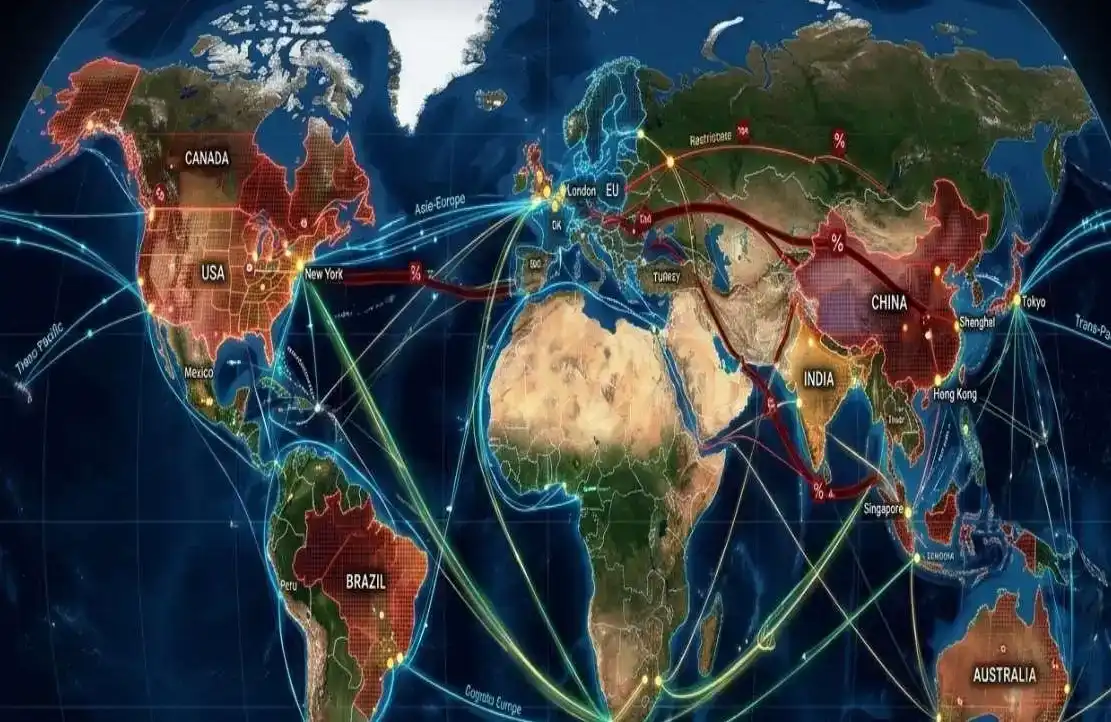
The U.S. stock market in 2026 shows a clear divergence: while the Nasdaq stagnates, industrial, energy, and utility stocks surge. This signals a shift in AI competition from algorithms to physical resources—specifically, power and grid infrastructure. The AI-driven explosion in data center energy consumption, alongside manufacturing reshoring and broader electrification (EVs, heat pumps), is straining an aging U.S. grid. Much of the infrastructure is decades old and ill-equipped for modern demands, leading to bottlenecks, extended delays for critical components like transformers, and rising costs. Grid modernization is not just about expansion but about creating a digital, bidirectional, and self-healing network. Key layers include: - Smart metering (AMI) for real-time data exchange, - Automation and self-healing systems (e.g., FLISR by GE Vernova), - Virtual power plants (VPPs) enabling decentralized energy distribution. Investment opportunities are stratified: - High-margin software/automation firms (e.g., GEV, Siemens, Itron), - Critical equipment manufacturers (e.g., Eaton, ABB, Schneider Electric), - Engineering and construction leaders (e.g., Quanta Services, MasTec) directly capturing infrastructure spending, - Regulated utilities (e.g., NextEra Energy, Duke Energy) managing upgraded networks. The value reassessment of power assets is underway, positioning the grid as a national strategic asset essential to AI and economic resilience.

marsbit02/27 13:31
Nasdaq Stalls, But Power Stocks Keep Hitting New Highs? AI's Second Half: A Deep Dive into the 2026 U.S. Grid Modernization Investment Map

marsbit02/27 13:31

From Libya to Iran: Nations in Blackout, Bitcoin Miners Uninterrupted

From Libya to Iran: Nations in Darkness, Bitcoin Miners That Never Stop In the summer of 2025, Tehran and other parts of Iran faced extreme heat and severe power outages, forcing government offices and schools to shut down. Hospitals relied on diesel generators to keep life-saving equipment running. Yet, behind city walls, rows of Bitcoin mining machines continued operating at full capacity, almost never losing power. Similarly, in Libya, residents endure daily blackouts of 6 to 8 hours, while unauthorized mining farms in abandoned industrial sites run non-stop, using some of the world’s cheapest electricity—subsidized as low as $0.004 per kWh—to mine Bitcoin, often with outdated equipment smuggled into the country. This reflects one of the 21st century’s starkest energy paradoxes: in nations crippled by sanctions and civil conflict, electricity is no longer just a public service but a form of “exportable” hard currency. In Iran, mining was legalized in 2019 as a state strategy to bypass international financial sanctions. Miners were required to sell mined Bitcoin to the central bank. However, an estimated 85% of mining occurred illegally or semi-legally, often with ties to powerful entities. Despite temporary bans and crackdowns, mining rebounded quickly, draining the national grid and worsening public power shortages. Libya, fragmented since the fall of Gaddafi, lacks coherent regulation. Although cryptocurrency transactions and mining imports are officially banned, enforcement is weak. Low subsidized electricity prices create irresistible incentive for mining operators—including foreign groups—to run energy-intensive operations with obsolete machines, while ordinary citizens face daily blackouts. In both countries, Bitcoin mining functions less as a legitimate industry and more as a form of resource extraction: it creates few jobs, contributes little in taxes, and often channels profits overseas. The real cost is borne by society—frequent blackouts, overloaded grids, and compromised public services like healthcare and education. Ultimately, the issue is not Bitcoin itself, but who controls the allocation of public resources. When energy subsidies meant for public welfare are diverted for private gain, it deepens inequality and institutional distrust. As citizens sit in darkness, the miners’ machines continue to hum—a symbol of energy injustice in a fractured world.

marsbit02/02 02:38

From Libya to Iran: Nations in Blackout, Bitcoin Miners Uninterrupted

marsbit02/02 02:38

Sentient Announces Token Economics, How Will the Market Price It?

Sentient, an open-source AI platform focused on building an open, monetized, and verifiable Artificial General Intelligence (AGI) economy, has released the tokenomics for its native token SENT. The total supply is set at approximately 34.36 billion tokens (2³⁵), distributed across five categories: Community Initiatives & Airdrops (44%), Ecosystem & R&D (19.55%), Team (22%), Investors (12.45%), and Public Sale (2%). The SENT will be used for staking, model services, data-related functions, and payments within the platform's ecosystem, particularly for services powered by Artifacts. Unlock schedules vary: 30% of community and ecosystem allocations are unlocked at TGE, with the remainder linearly released over four years. Team and investor tokens are locked for one year post-TGE, then linearly vested over four and six years, respectively. The public sale portion is fully unlocked at TGE. Market expectations are high, with Polymarket prediction data indicating a 99% probability that Sentient’s fully diluted valuation (FDV) will exceed $200 million upon launch. Sentient aims to create a decentralized AGI economy where developers can monetize models, data, and innovations. Its core infrastructure, GRID (Global Research and Intelligence Directory), is a composable network of AI agents, models, and tools. The project has raised $85 million in seed funding from investors including Founders Fund, Pantera Capital, and Framework Ventures. Key advisors include Sandeep Nailwal (Polygon) and Sreeram Kannan (EigenLayer). The team is research-heavy, with core contributors coming from academic and engineering fields. The platform emphasizes transparency and collaboration through its Open, Monetized, Loyal (OML) model and has open-sourced its ROMA (Recursive Open Meta-Agent) framework to support multi-agent task coordination. Over 60 ecosystem partners have been onboarded, covering model collaboration, agents, data providers, and validators.

marsbit01/16 10:12

Sentient Announces Token Economics, How Will the Market Price It?

marsbit01/16 10:12

a16z Bets on Energy Tokenization Experiment: How Will DayFi Use DeFi to Restructure the Power Grid? Jae 2025/12/13 12:00

a16z Backs Energy Tokenization Experiment: How DayFi Aims to Restructure the Grid with DeFi As global tech giants compete for computing power, electricity has become a critical resource. DayFi, a decentralized energy capital markets protocol under the Daylight ecosystem, is launching a $50 million pre-deposit event on December 16. Backed by a16z Crypto and Framework Ventures, DayFi tokenizes future electricity revenue into tradable crypto assets. The protocol allows users to deposit stablecoins to mint GRID—a fully collateralized stablecoin—and then stake it to receive sGRID, a yield-bearing token representing a share in energy asset revenue. This creates a flywheel effect: liquidity funds distributed energy projects, which generate tokenized returns for holders. However, DayFi faces significant regulatory challenges. sGRID may be classified as a security by the SEC, requiring strict disclosures. Additionally, FERC’s restrictions on disclosing critical energy infrastructure data conflict with DeFi’s transparency requirements. Technical solutions like zero-knowledge proofs may be needed to verify收益 without exposing sensitive data. Valuation of the underlying energy assets—solar panels, batteries—also remains uncertain, with risks of depreciation and potential manipulation. Despite these hurdles, DayFi represents an ambitious attempt to bridge DeFi with physical energy grids, transforming electricity into a dynamic, tradable asset amid growing AI-driven power demand.

marsbit12/13 05:42

a16z Bets on Energy Tokenization Experiment: How Will DayFi Use DeFi to Restructure the Power Grid? Jae 2025/12/13 12:00

marsbit12/13 05:42

活动图片