On-Chain Whales' New Battleground: Hyperliquid Confronts Wall Street and Compliance Challenges

比推Dipublikasikan tanggal 2026-03-17Terakhir diperbarui pada 2026-03-17

Abstrak

Hyperliquid, a leading decentralized exchange (Perp DEX) for perpetual futures, is rapidly expanding beyond crypto into traditional finance, particularly through its HIP-3 market for real-world assets (RWAs) like commodities and indices. With a monthly trading volume of $173.4 billion and over 172.9 million users, it has become a hub for institutional and large-scale traders, with the top 100 addresses accounting for over 81% of total trading activity. Recent geopolitical events, such as the U.S.-Iran conflict, have highlighted Hyperliquid’s role in providing 24/7 price discovery for assets like WTI crude oil, attracting attention from mainstream financial media like Bloomberg. This positions Hyperliquid as a emerging competitor to traditional markets like CME. However, its growth brings regulatory challenges. As U.S. regulators, including the CFTC, move toward approving crypto perpetual futures, Hyperliquid faces pressure to comply with financial regulations while preserving its permissionless, non-custodial nature. To address this, it has established a policy center in Washington, D.C., led by Jake Chervinsky, to engage with regulators and shape a legal framework for DeFi. The platform’s future depends on balancing innovation with compliance as it seeks to become a sustainable part of the global financial infrastructure.

Author: Nancy, PANews

Original Title: Hyperliquid "Invades" Wall Street: A Playground for On-Chain Whales, Facing Compliance Pressure


The narrative of on-chain finance is rapidly expanding into global markets.

Within less than a week, multiple mainstream media outlets have turned their attention to Hyperliquid. This Perp DEX, which previously focused on crypto derivatives, is experiencing a "breakout moment," with decentralized pricing power becoming a focal point of discussion on Wall Street. However, as the volume of on-chain transactions continues to grow, the balance between decentralized innovation and compliance regulation is becoming an unavoidable challenge.

HIP-3 Invades Mainstream Finance, Hyperliquid is a Whale Playground

As a leading Perp DEX, Hyperliquid is continuously widening the gap with its competitors and gradually becoming an emerging infrastructure force in mainstream financial markets.

According to DeFiLlama data, as of March 16, Hyperliquid's monthly trading volume reached $173.42 billion, far surpassing similar platforms.

RWA (Real World Asset) trading is a significant growth driver for Hyperliquid recently. Platform data shows that in the past 24 hours alone, its perpetual futures trading volume reached $5.4 billion, with the HIP-3 sector contributing approximately 21.3% (about $1.15 billion).
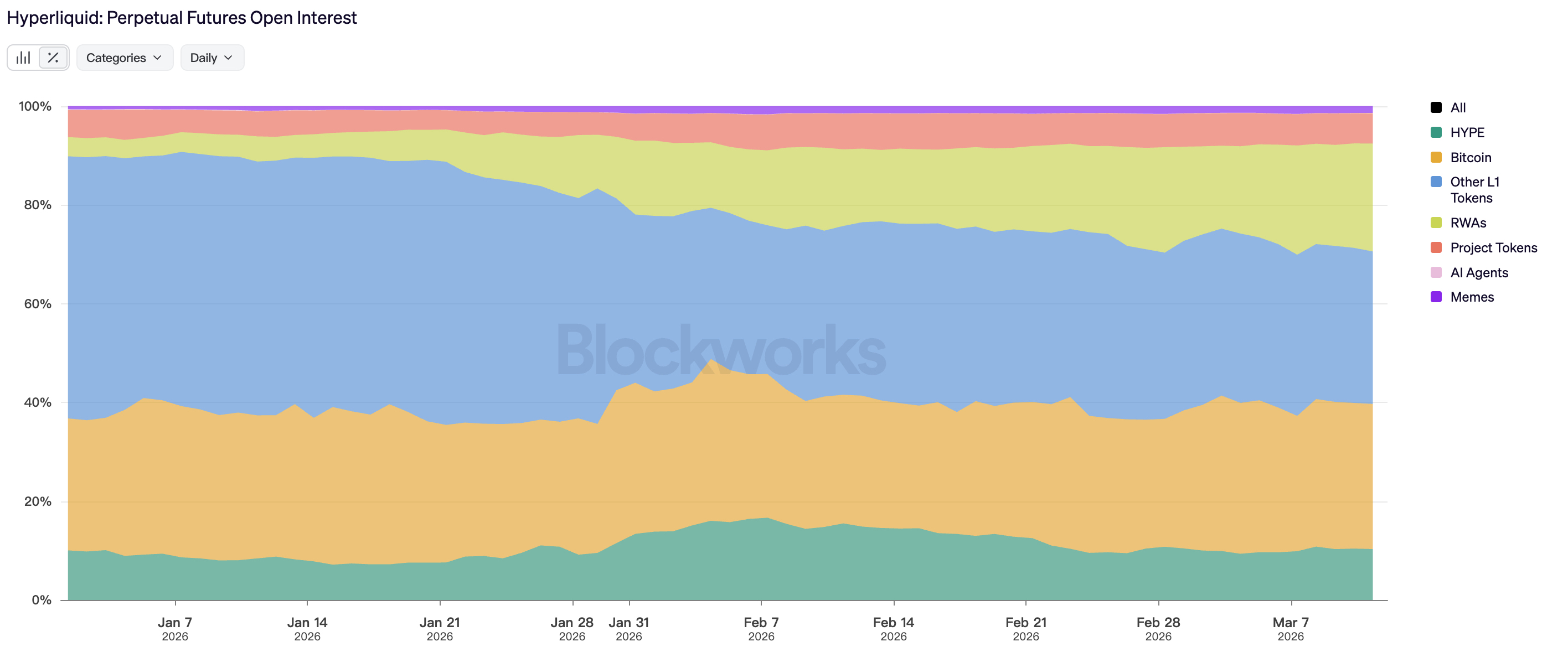
HIP-3 deploys perpetual futures markets for various assets such as commodities and stock indices. Among these traditional assets on HIP-3, WTI crude oil, silver, Brent crude oil, and XYZ100 currently show the most significant demand and activity, with WTI crude oil's daily trading volume accounting for over 35% of the total.

Behind the rapid expansion of trading scale is the influx of a large number of whale players into Hyperliquid, whose global user base has exceeded 1.729 million. Further analysis by Hyperliquid Hub, an ecosystem data analysis service, points out that Hyperliquid's total trading volume has reached a staggering $411 trillion, with the top 100 addresses contributing over $334 trillion, accounting for 81.3% of all trading volume. The top 200 addresses account for almost 98.81%, leaving only about 1.19% of the trading volume for the remaining addresses.
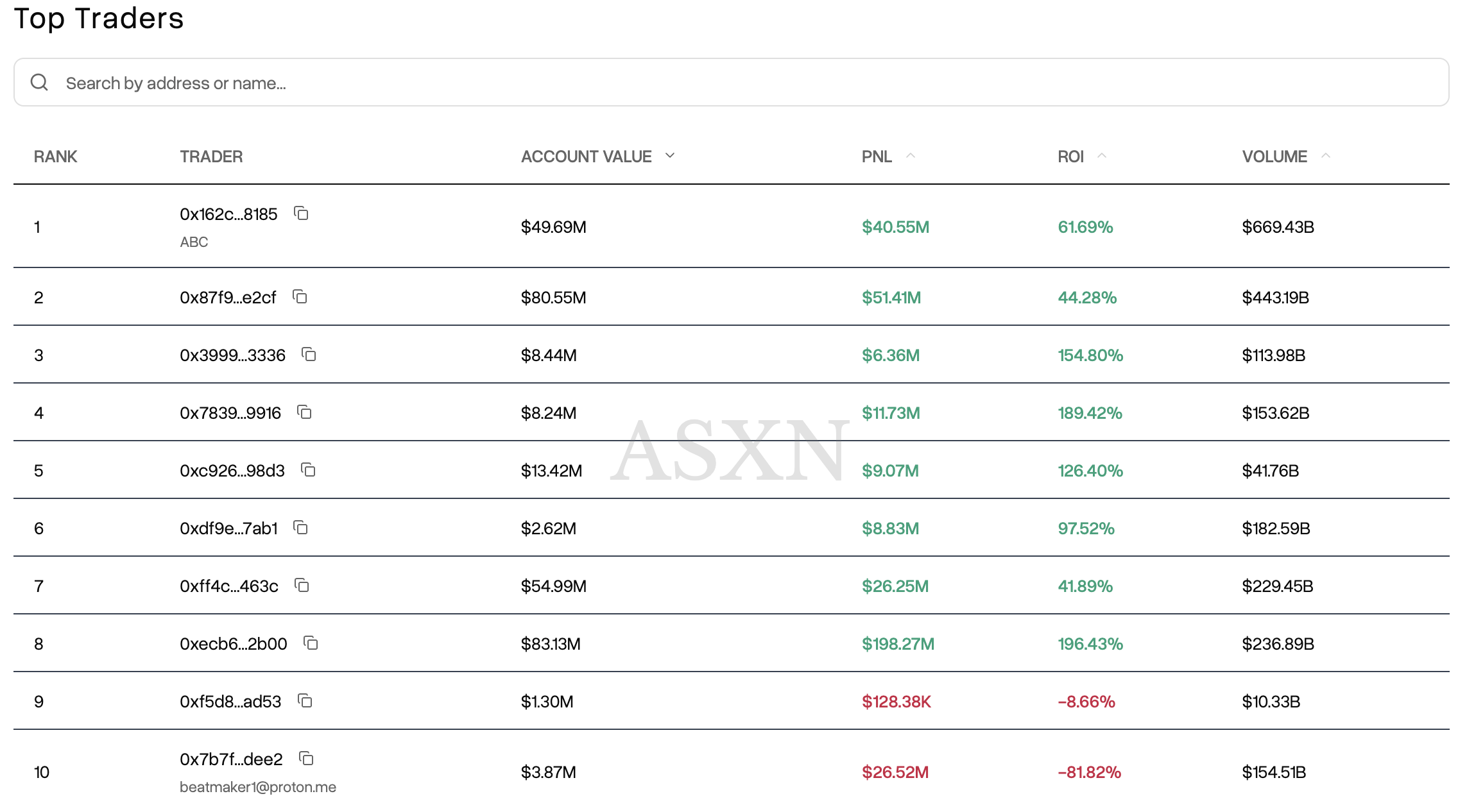
Clearly, Hyperliquid is not a playground for retail investors but is dominated by a small number of well-funded, highly active traders, such as institutions, whales, high-frequency traders, and professional market makers.

Looking further, the number of unique traders on HIP-3 has accumulated to over 1.85 million (Note: the same wallet connecting on different days is counted as two separate wallets), with over 810,000 new traders added in the past month alone, further confirming the demand for tokenized asset trading.
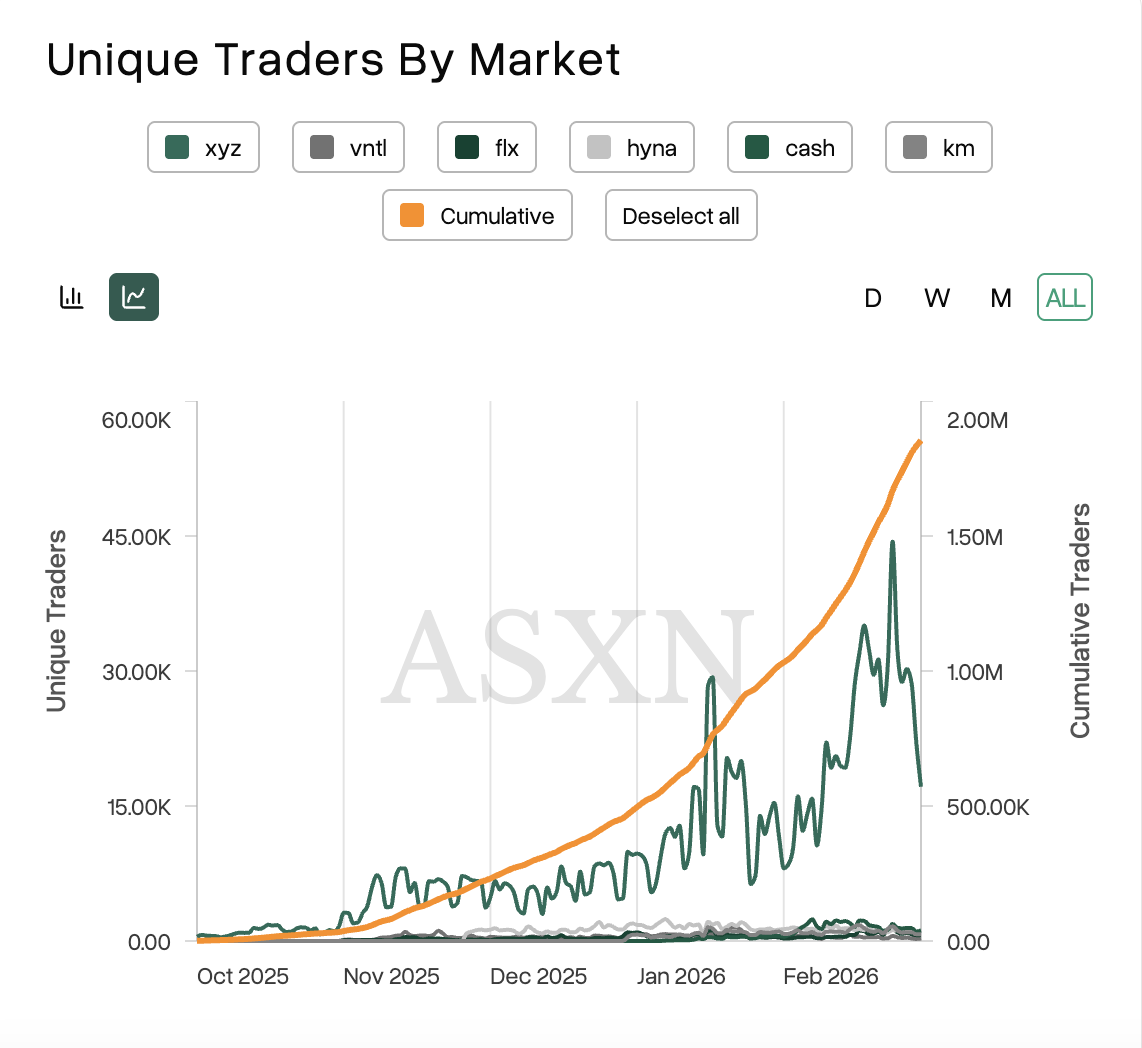
The recent significant growth in HIP-3 business is directly linked to the US-Iran conflict event, making Hyperliquid a new hub for global macro trading. Mainstream media outlets like Bloomberg, Wall Street News, and Fortune, in recent reports, directly referenced Hyperliquid's crude oil contracts as a price reference and pointed out that before the CME (Chicago Mercantile Exchange) opened on Monday, Hyperliquid had already completed price discovery over the weekend, becoming a real-time window for global macro assets.

It is by seizing TradFi pricing power, liquidity vacuums, and macro hedging demand that Hyperliquid has begun to truly "invade" mainstream financial markets.

Matt Hougan, Chief Investment Officer of Bitwise, also stated that the US-Iran event has put the non-stop crypto market in the spotlight. In the past, if a major geopolitical shock occurred on a Sunday morning, investors typically had to wait for the US futures market to open on Sunday at 6 PM (Eastern Time) to understand its impact. Now, they can directly turn to 24/7 on-chain trading platforms to execute trades in real-time. The shift of the financial industry to on-chain is an irreversible trend, like a ball rolling down a hill, unstoppable and far faster than imagined. However, there are still barriers to participating in on-chain markets, including familiarity with wallets, stablecoins, and platforms like Hyperliquid and Uniswap. (Related reading: Beyond Wall Street Time, Traditional Asset Pricing Power Shifts On-Chain)

Faced with this rapidly developing trend of on-chain finance, traditional financial players like Nasdaq and CME have also begun to lay out tokenized trading businesses to seize future market opportunities for themselves.

Crypto Perpetual Futures May Land in the US Next Month, Hyperliquid Faces Compliance Challenges Head-On

Since last year, the Perp DEX market has witnessed a significant explosion in liquidity.

A recent CoinGecko report pointed out that DEX perpetual futures surged to $6.7 trillion in 2025, an increase of about 346% compared to the previous year, while CEX open interest fell by 20.8% during the same period. Behind this trend is the rise of perpetual DEXs like Hyperliquid and Lighter, also reflecting the large-scale migration of funds from CEXs to DEXs.
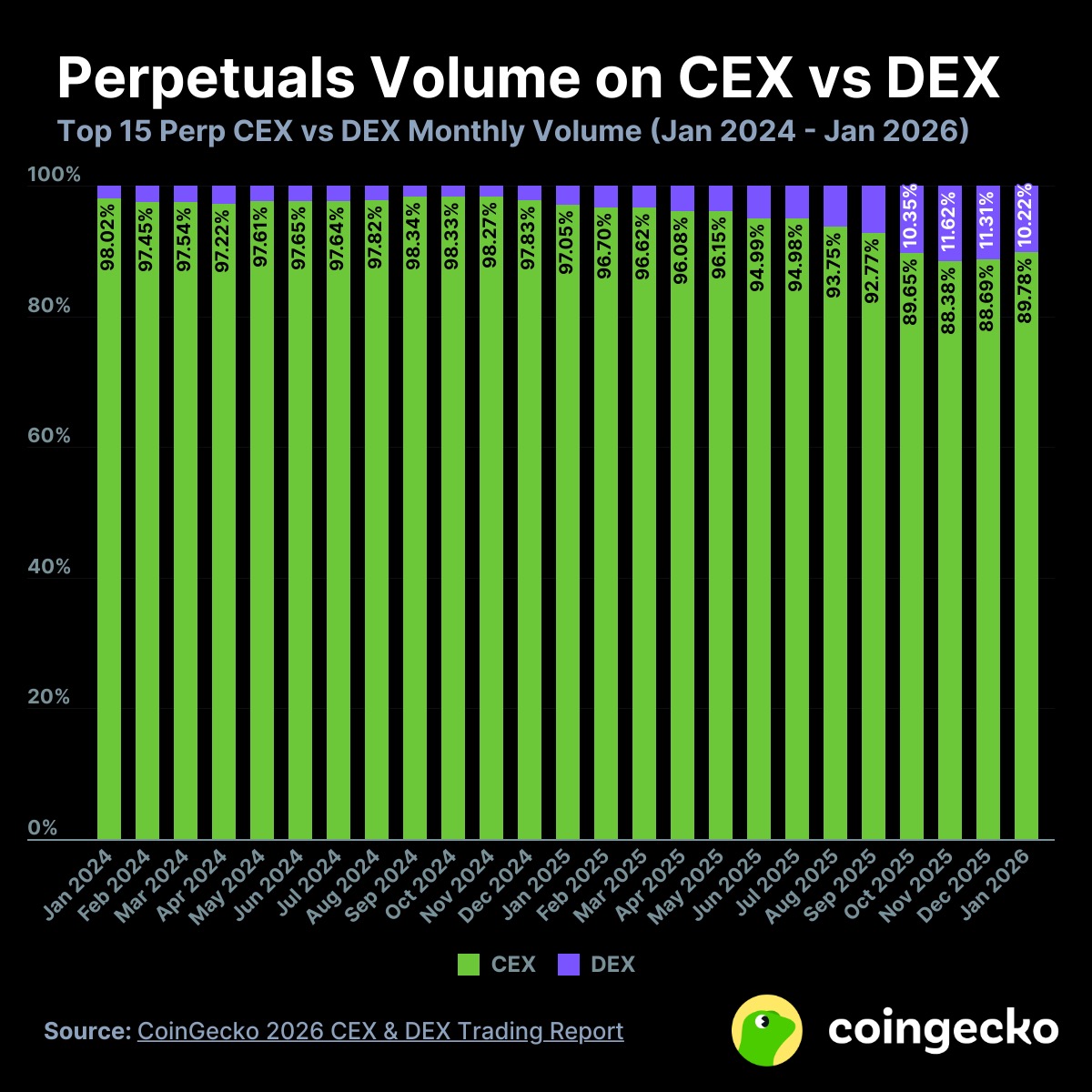
The gradual clarification of the regulatory environment is further amplifying the development space of the perpetual futures market, making more mainstream capital willing to enter this field. Recently, Mike Selig, Chairman of the U.S. Commodity Futures Trading Commission (CFTC), also discussed the regulatory progress of crypto perpetual futures and prediction markets in a public speech. He stated that the CFTC is working to launch true perpetual futures in the US and expects to announce relevant policies in about a month to attract liquidity back to the US while providing investors with more comprehensive protection. Selig also pointed out that in the past, due to regulatory uncertainty, a large amount of liquidity flowed overseas, and the CFTC is cooperating with US SEC Chairman Paul Atkins to advance Project Crypto to coordinate and promote digital asset regulatory reform.

However, regulatory clarity could also lead to another outcome. Once the permissionless, intermediary-free on-chain trading path is broken due to compliance requirements, the core appeal of Perp DEXs may be significantly diminished, and they will directly face competition from compliant crypto platforms and traditional financial institutions.

In fact, for many users, besides factors such as incentive mechanisms, self-custody needs, capital efficiency, and hedging demand, the lack of KYC is also an important reason attracting funds to on-chain trading.

For example, on-chain analyst Eye previously posted that some institutional trading parties active on Hyperliquid showed obvious discomfort after their on-chain trading wallets were identified, even actively contacting the analyst to pressure them to stop disclosing information, often related to the possibility of losing trades being known to the outside world.

If Hyperliquid hopes to be seen as a legitimate participant in the new financial system, it may have to accept and comply with corresponding regulatory rules. Especially in the context of previous controversial cases involving token manipulation and insider trading on the platform, its compliance pressure may further increase.

To address regulatory challenges, Hyperliquid formally established the Hyperliquid Policy Center in Washington, D.C., in February, with veteran crypto lawyer Jake Chervinsky as its first CEO. The center aims to create a legal path for the widespread adoption of DeFi in the US, help Congress and federal agencies understand the underlying technology of DeFi, and provide professional support for regulatory rule-making.

Chervinsky stated that the current regulatory framework was formed in the "analog era" and struggles to encompass new trading forms like decentralized protocols. One of the policy center's primary tasks is to develop a legal framework for perpetual contracts. To support its operation, the affiliated Hyperliquid Foundation has donated 1 million platform native tokens HYPE (currently worth approximately $28 million).

Hyperliquid co-founder Jeff Yan emphasized in a recent interview that he wants the platform to "be used forever," not to fade away quickly with market hype. He also stressed distinguishing Hyperliquid Labs from the Hyperliquid platform and ecosystem, and is committed to building Hyperliquid into a financially neutral platform, providing sustainable infrastructure for the development of on-chain perpetual contracts and decentralized finance.

When DeFi attempts to challenge traditional finance, compliance has become a prerequisite for opening up larger markets. This is not only a test for Hyperliquid but also a reality that other DEXs and even the entire DeFi track must face head-on.


Twitter:https://twitter.com/BitpushNewsCN

Bitpush TG Discussion Group:https://t.me/BitPushCommunity

Bitpush TG Subscription: https://t.me/bitpush

Original link:https://www.bitpush.news/articles/7620373

Pertanyaan Terkait

QWhat is Hyperliquid and what role is it playing in the global financial markets according to the article?

AHyperliquid is a decentralized exchange (Perp DEX) that started with crypto derivatives but has expanded to include real-world assets (RWA) like commodities and indices. It is becoming a new infrastructure force in mainstream finance, acting as a global macro trading hub and challenging traditional financial pricing power, especially during events like the US-Iran conflict when it provided real-time price discovery before traditional markets opened.

QHow significant is the trading volume and user concentration on Hyperliquid, and what does it indicate about its user base?

AHyperliquid's monthly trading volume reached $1734.2 billion as of March 16. The platform is dominated by a small number of large players; the top 100 addresses contributed over 81.3% of the total $4.34 trillion in historical trading volume, and the top 200 addresses accounted for nearly 98.81%. This indicates that the platform is primarily used by institutions, whales, high-frequency traders, and professional market makers, not retail散户 investors.

QWhat is HIP-3 on Hyperliquid and which assets are most actively traded within it?

AHIP-3 is a sector on Hyperliquid that deploys perpetual futures markets for various traditional assets like commodities and stock indices. The most active and in-demand assets are WTI crude oil, silver, Brent crude oil, and XYZ100. WTI crude oil alone accounted for over 35% of the daily trading volume in this sector.

QWhat regulatory challenges does Hyperliquid face as it grows, and how is it addressing them?

AHyperliquid faces compliance challenges as decentralized finance (DeFi) innovation clashes with regulatory frameworks. The need for KYC and adherence to rules could diminish its permissionless appeal. To address this, Hyperliquid established the Hyperliquid Policy Center in Washington D.C., led by lawyer Jake Chervinsky, to help create a legal path for DeFi adoption in the U.S. and donated $28 million worth of HYPE tokens to support its operation.

QAccording to the CFTC Chairman, what is the expected timeline for crypto perpetual futures to be officially launched in the U.S., and why is this significant?

ACFTC Chairman Mike Selig stated that he expects policies for 'true crypto perpetual futures' to be unveiled in the U.S. within about a month. This is significant because clearer regulations are expected to attract liquidity back to the U.S. and provide better investor protection, potentially increasing mainstream capital inflow into the perpetual合约 market.

Bacaan Terkait

imToken Rilis Arah Strategis Sepuluh Tahun ke Depan di Ulang Tahun ke-10: Evolusi dari Dompet Utama Terpercaya ke Hub Digital Pribadi

Dompet terdesentralisasi imToken merayakan ulang tahun ke-10 dengan mengumumkan strategi untuk dekade mendatang: berevolusi dari "dompet utama terpercaya" menjadi "pusat digital pribadi" (personal control interface). Tujuannya adalah membantu pengguna mengendalikan aset, identitas, izin, dan tindakan cerdas mereka di internet yang terbuka dan pintar. Sepanjang sepuluh tahun terakhir, imToken berfokus pada penyimpanan, pengiriman, dan partisipasi (staking, DeFi) aset digital. Menghadapi era AI di mana agen cerdas memiliki kemampuan bertindak mandiri, pengguna perlu mengelola lebih dari sekadar aset. Oleh karena itu, imToken memperkenalkan proposisi produk inti keempat: "Sign". Tanda tangan di masa depan tidak hanya untuk transaksi, tetapi juga menjadi antarmuka dasar untuk menyatakan maksud, memberikan otorisasi, menetapkan aturan, mendelegasikan tindakan, dan mencabut izin. Pendiri & CEO imToken Ben He menekankan, di era AI, kemampuan bertindak mandiri akan melimpah, tetapi kendali akhir tetaplah langka. Misi imToken adalah memastikan pengguna tetap memegang kendali atas dunia digital mereka. Prinsip merek pun ditingkatkan dari "Digital Assets, Under Your Control" menjadi "Your Digital World, Under Your Control". Ke depan, imToken akan berfokus pada tiga area: (1) Mempertahankan prinsip dasar self-custody, (2) Memperluas keamanan dari transaksi ke keamanan otorisasi dan tindakan, (3) Membangun kemampuan produk untuk mengelola izin, delegasi, strategi, dan pencabutan. Peran dompet berevolusi menjadi antarmuka kendali tepercaya dalam kolaborasi manusia-AI, membantu pengguna memahami, menyetujui, membatasi, dan mengaudit tindakan yang dilakukan oleh sistem cerdas atas nama mereka.

marsbit1m yang lalu

imToken Rilis Arah Strategis Sepuluh Tahun ke Depan di Ulang Tahun ke-10: Evolusi dari Dompet Utama Terpercaya ke Hub Digital Pribadi

marsbit1m yang lalu

Satu Tahun Pengamatan Pembayaran Agent: Realitas Dingin di Balik Narasi Panas

**Ringkasan: Satu Tahun Observasi Pembayaran Agen: Realitas Dingin di Balik Narasi Panas** Selama setahun terakhir, pembayaran pintar (agent payment) telah menjadi narasi panas di persimpangan AI, pembayaran, dan kripto. Namun, dari perspektif praktisi yang membangun produk dan berinteraksi dengan pedagang serta pengembang, permintaan skala besar yang sesungguhnya belum muncul. **1. Agent ke Pedagang (Perdagangan Perwakilan):** - Untuk banyak kategori produk (pakaian, elektronik), pengalaman belanja via AI masih kalah dari e-commerce tradisional karena konsumen membutuhkan gambar dan perbandingan visual. - Permintaan dari pedagang saat ini lebih bersifat defensif (mempersiapkan diri untuk masa depan) daripada kebutuhan mendesak. - Peluang nyata ada pada pembelian rutin dan berbiaya keputusan rendah (seperti pesan makanan) atau pengalaman belanja online yang sangat rumit, namun hal ini membutuhkan kemampuan distribusi B2C yang masif. **2. Agent ke Web/API (Perdagangan Mesin):** - Pengembang saat ini sudah menyelesaikan pembayaran untuk penggunaan API (inferensi, data) melalui model langganan, isi ulang saldo, atau penagihan yang ada. - Argumen pembayaran mikro dengan stablecoin untuk transaksi di bawah $1 kurang relevan karena volume masih rendah. - Pasar ini bersifat ceruk (long-tail) untuk layanan kecil dan pengembang independen, namun skalanya lebih kecil dari yang digembar-gemborkan. **3. Pembayaran Agent ke Agent:** - Ini adalah visi jangka panjang namun masih sangat teoretis, hampir tidak ada volume transaksi nyata. - Tantangan sesungguhnya adalah penemuan agen, pembangunan kepercayaan, negosiasi, dan penyelesaian sengketa. - Infrastruktur baru akan dibutuhkan jika transaksi antar mesin tanpa identitas manusia benar-benar terwujud. **4. Keuangan Agen (Agent Finance):** - Ini adalah satu-satunya kategori dengan permintaan nyata yang sudah ada saat ini. - Manajer dana, tim treasury, dan pengguna DeFi sudah membayar untuk alat keuangan. AI dapat meningkatkan kemampuan dengan pemantauan real-time dan penyeimbangan portofolio otomatis. - Namun, pasar ini cenderung menguntungkan lembaga keuangan tradisional yang sudah memiliki lisensi, kepatuhan, dan hubungan pelanggan. **Kesimpulan:** Narasi pembayaran agen saat ini lebih didorong oleh insentif perusahaan besar (bertaruh defensif untuk masa depan) dan bias kognitif (melihat semua masalah sebagai masalah pembayaran). Tantangan inti ekonomi agen sebenarnya bukan sekadar lapisan pembayaran, tetapi **koordinasi** yang lebih kompleks: bagaimana mengoordinasikan kerja antara agen dan manusia, memverifikasi penyelesaian tugas, dan menyelesaikan hasil. Pembayaran hanyalah salah satu bagian dari penyelesaian (settlement), yang sendiri merupakan bagian dari koordinasi. Perusahaan yang memecahkan masalah koordinasi akan mengintegrasikan pembayaran, bukan sebaliknya. Bagi startup, kuncinya adalah menemukan pasar yang benar-benar ada saat ini, bukan hanya menunggu gelombang masa depan yang belum pasti.

marsbit4m yang lalu

Satu Tahun Pengamatan Pembayaran Agent: Realitas Dingin di Balik Narasi Panas

marsbit4m yang lalu

Peluncuran Data Fisik Pertama di China yang Mematuhi Peraturan: Bagaimana Paxini Menjadi Pemecah Kebuntuan dalam Pengembangan Industri?

"Kompatibilitas Data Kecerdasan Embodied dalam Ekspor Global" mencapai momen penting dalam perkembangannya. Pada World Intelligent Industry Expo 2026, proyek "Penyeberangan Data Kecerdasan Embodied Pertama Nasional" yang dipimpin oleh Paxini Perception Technology resmi diluncurkan di Tianjin. **Sebagai satu-satunya perusahaan di China yang saat ini disetujui untuk menjalankan bisnis penyeberangan data embodied, Paxini berhasil membuka jalur internasional yang mematuhi regulasi.** Kecerdasan embodied sebagai arah evolusi utama AI sangat bergantung pada data interaksi dunia fisik multimodal yang masif dan multidimensi. Di tengah kebutuhan global yang meledak dan hambatan regulasi yang ketat, Paxini memimpin dengan menyelesaikan proses persetujuan resmi, **menjadi satu-satunya perusahaan dengan kualifikasi penyeberangan data yang mematuhi hukum**, sehingga menetapkan standar perkembangan industri yang terstandardisasi. Keunggulan inti Paxini terletak pada infrastruktur data yang unggul dan arsitektur keamanan kepatuhan. Perusahaan telah membangun pabrik pengumpulan data dengan kapasitas miliaran data multimodal berkualitas tinggi, **memberikan dukungan efektif untuk pelatihan model dan penerapan skenario kecerdasan embodied**. Didukung oleh kolaborasi pemerintah, Paxini juga merintis jalur kepatuhan lengkap dari "pengumpulan-pemrosesan-sertifikasi-ekspor". Proyek perintis ini tidak hanya menunjukkan kekuatan teknologi dan kepatuhan Paxini, tetapi juga potensi jangka panjangnya: **Pengakuan nilai pasar internasional** dari lembaga keuangan global seperti Morgan Stanley dan Goldman Sachs, serta **pembangunan ekosistem berkelanjutan** dengan "pabrik pengumpulan data terbesar global" dan "satu-satunya jalur ekspor yang mematuhi regulasi" sebagai parit pertahanan. Dengan posisi strategis sebagai "satu-satunya ekspor data embodied yang mematuhi regulasi di China", Paxini tidak hanya berkontribusi pada "contoh China" bagi industri global, tetapi juga menunjukkan visi besar perusahaan China dalam membangun infrastruktur dasar kecerdasan embodied. Data embodied berkualitas China kini dapat mengalir dengan aman dan efisien ke dunia, terus melepaskan pengaruh global manufaktur cerdas China dalam perlombaan industri jangka panjang.

marsbit7m yang lalu

Peluncuran Data Fisik Pertama di China yang Mematuhi Peraturan: Bagaimana Paxini Menjadi Pemecah Kebuntuan dalam Pengembangan Industri?

marsbit7m yang lalu

Trading

Spot
Futures
活动图片