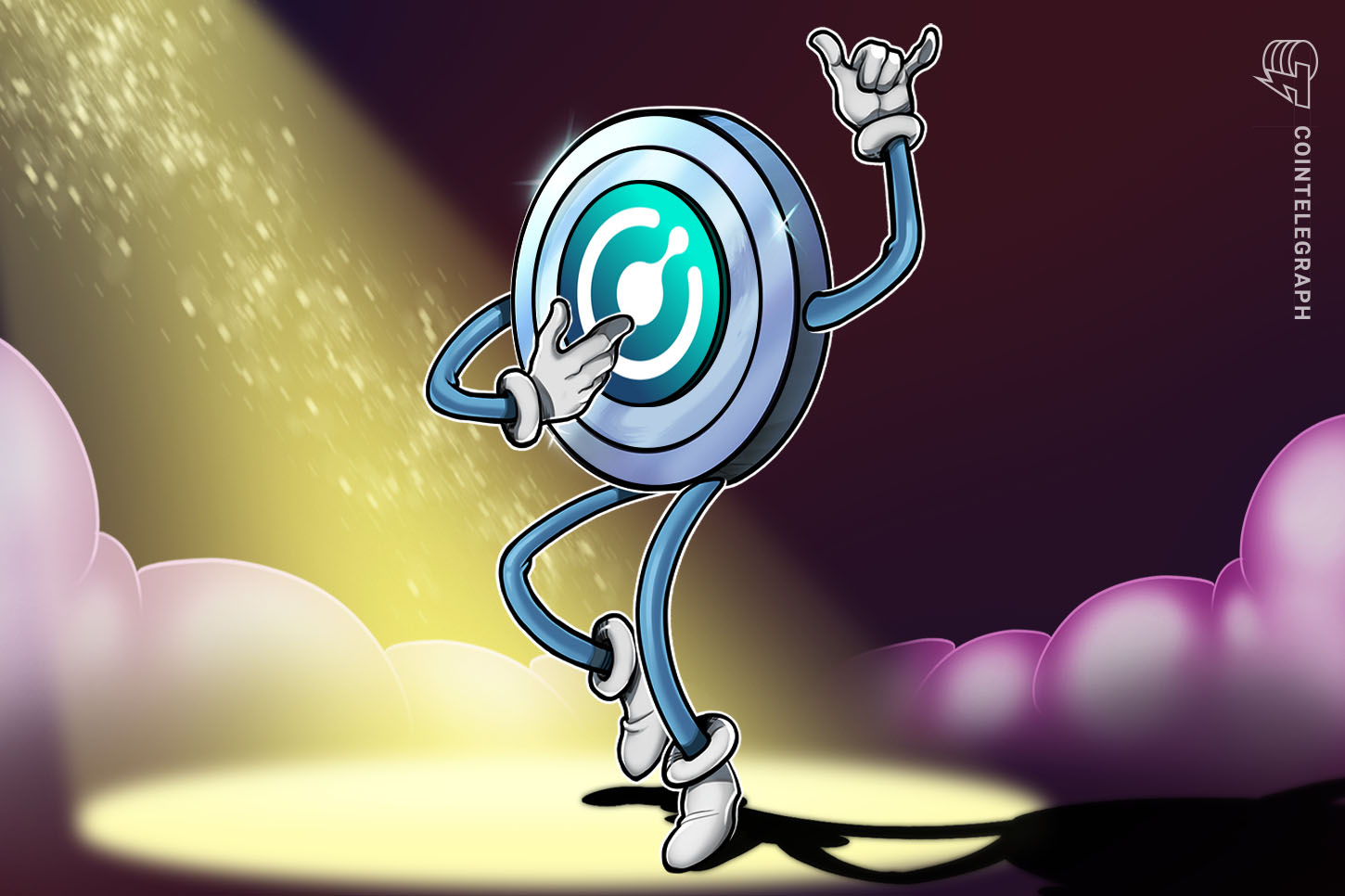
IOSG: TAO is Elon Musk who invested in OpenAI, Subnet is Sam Altman

marsbitDipublikasikan tanggal 2026-04-14Terakhir diperbarui pada 2026-04-14

Abstrak

The article presents a critical analysis of Bittensor (TAO), a decentralized AI marketplace, comparing its economic model to Elon Musk's early investment in OpenAI, where funders have no guaranteed return. TAO acts as a funding layer, distributing tokens to subnet operators (akin to labs or researchers) based on their subnet token performance. However, subnets are under no obligation to return any value—such as AI models, data, or services—back to the TAO ecosystem. This creates a risk of value extraction, where developers may use TAO incentives for research and then commercialize成果 independently. The bear case highlights the lack of binding mechanisms, potential capital drain through token inflation, and competition from well-funded centralized AI giants. The optimistic view argues that continuous resource needs may naturally retain subnets within Bittensor, leveraging crypto’s ability to aggregate resources at scale, similar to Bitcoin’s success with computation. Ultimately, investing in TAO is a speculative bet on a coordination miracle—where incentives align to keep valuable AI projects within the ecosystem—rather than a traditional equity-like claim on output. The outcome distribution is highly skewed: most scenarios lead to niche use or value leakage, while a few could result in TAO becoming a foundational decentralized AI asset.

The bullish case for TAO requires you to believe that a game theory miracle can happen. But such miracles have occurred before in the cryptocurrency industry.

Bittensor has one of the most elegant narratives in the cryptocurrency space: a decentralized marketplace for AI intelligence, where market mechanisms allocate capital to the most impactful research. TAO is the coordination layer, subnets are the labs, and the market is the funding committee.

Strip away the narrative, and you'll find something more unsettling.

Bittensor is a funding program where cryptocurrency speculators provide capital for AI R&D—and the funded parties have no obligation to return any value to TAO.

Think of TAO as Elon Musk—he was the first investor in OpenAI, a "non-profit" enterprise. Subnets are like Sam Altman—they are the builders who receive the funding, deliver the product, but have no contractual obligation to share the proceeds. They may ultimately choose to privatize the gains without returning any value to the original funding source.

Bittensor distributes TAO tokens to subnet operators and miners based on the price of the subnet's token. Once a subnet receives a TAO allocation, there is no enforcement mechanism requiring that the AI models, datasets, or services it generates must remain within the Bittensor ecosystem. Subnet operators can farm the TAO incentives from Bittensor and then take the real product elsewhere—deploy it on centralized cloud servers, package it as an independent API, or simply put a SaaS wrapper on it and sell it.

TAO holds no equity and has no licensing contracts. The only binding element is the subnet token—its price must be maintained to sustain access to resources. But this only works *before* the subnet "flies the coop": once the product is robust enough to stand on its own outside the Bittensor system, that tether is cut. The relationship between Bittensor and its subnets is less like venture capital and more like research grant funding—you get seed money, but they don't get your equity.

To put it bluntly, Bittensor is essentially a wealth transfer: from the pockets of token speculators to the accounts of AI researchers—or more plainly, from the retail investors to the technically savvy "miners".

The mechanism is simple: TAO investors are underwriting the entire ecosystem. They buy and hold TAO, propping up the price, and that price itself is the pipeline for capital flowing into the subnet incentive system. Subnet operators earn TAO inflation rewards by "demonstrating performance"—but in reality, "demonstrating performance" largely means keeping the price of their own subnet token looking good. The AI products built with this funding can walk away at any time—the only constraint is their continued need to access network resources.

This is a VC's worst nightmare: you provide the capital, they build the product, but they owe you nothing. What remains is a token emission schedule and a prayer.

The Optimist's Interpretation

Now, look at it from another angle. The optimistic view rests on two pillars:

Persistent resource needs mean AI companies are perpetually capital-constrained. Compute, data, and talent are expensive. If Bittensor can reliably provide these resources at scale, subnets have a rational incentive to stay—not because they are locked in, but because leaving means losing the supply channel.

There is a soft, logical underpinning: AI's hunger for resources is insatiable, and the scale TAO can provide is unattainable through independent financing. Following this logic, subnet teams will actively maintain their token's valuation; no enforcement mechanism is needed, and the TAO economy spontaneously forms a positive flywheel. Cryptocurrency excels at resource aggregation. Bitcoin aggregated a massive amount of computing power solely through token incentives. Ethereum's proof-of-work was also a tremendous success, a powerful magnet for computational resources.

Bittensor is applying the same playbook to AI. The "enforcement mechanism" is the token game itself—as long as TAO has value, the incentive to participate keeps growing.

If you ran 1000 simulations of Bittensor's future, the distribution of outcomes would be extremely skewed.

In most simulated scenarios, Bittensor remains a niche funding program. The AI outputs generated by subnets are insignificant. The best-performing subnets gain significant attention, capture the rewards, and then pivot to closed-source models, leaving no value for TAO. As token emissions outpace value creation, the TAO token depreciates.

In a minority of simulation paths, something actually takes off. A subnet creates a truly competitive AI service, and network effects begin to snowball. TAO becomes the de facto coordination layer for decentralized AI infrastructure—not by enforcing value capture, but through the gravitational pull of being the reserve asset of a functioning AI economy.

In a very few cases, TAO becomes the defining asset of a new category.

What Could Go Wrong

The bear case is simple: no stickiness. Once a subnet no longer needs the TAO token incentives, it leaves. Bittensor is a transitional phase, not a final destination. Centralized AI holds overwhelming advantage. Companies like OpenAI, Google, and Anthropic have orders of magnitude more compute and talent. TAO cannot compete with the firepower of venture capital and private equity markets. Therefore, the best talent will choose the traditional path. Emissions are a tax.

TAO's emission schedule subsidizes subnets by diluting holders. If the value created by subnets doesn't justify this dilution, it's a slow bleed disguised as a "growth mechanism".

The optimistic scenario, frankly, feels more like wishful thinking than a viable path to success.

Conclusion

The majority of capital deployed into TAO will ultimately subsidize development activities that return no value to token holders. But Crypto has repeatedly proven that coordination games driven by token incentives can produce results that all rational models fail to forecast.

Bitcoin shouldn't have worked, but it did—though this argument alone is not sufficient, and the industry has used it to back numerous projects that couldn't withstand first-principles scrutiny.

The core question for TAO isn't whether an enforcement mechanism exists—it doesn't, and efforts like dTAO haven't changed that. The core question is: are the game-theoretic incentives strong enough to keep the highest-quality subnets on the rails? Buying TAO is a bet that a "soft lock-in" will hold in the harsh face of reality.

This is either naivety or foresight.

Pertanyaan Terkait

QWhat is the core concern raised about Bittensor's economic model in the article?

AThe core concern is that Bittensor functions as a wealth transfer from TAO token speculators to AI researchers (miners), with no mandatory mechanism forcing subnet operators to return any value (like AI models or profits) back to the TAO ecosystem. Subnets can take the TAO incentives and then take their successful products elsewhere.

QAccording to the optimistic view, what are the two main reasons subnets might choose to stay within the Bittensor ecosystem?

AThe two main reasons are: 1) A continuous, insatiable demand for AI resources (compute, data, talent), which Bittensor can provide at a scale that is hard to achieve alone. 2) The success of crypto token incentives in aggregating massive resources, as seen with Bitcoin and Ethereum, creating a powerful flywheel effect where the value of TAO itself becomes the enforcement mechanism.

QHow does the article use Elon Musk's investment in OpenAI as an analogy for the relationship between TAO and its subnets?

AThe article compares TAO to Elon Musk, the first investor in the 'non-profit' OpenAI. The subnets are compared to Sam Altman, the builders who receive the funding and deliver a product but have no contractual obligation to share the profits or returns with the original source of capital (TAO/Musk).

QWhat is the primary risk identified for TAO token holders regarding the token's emission schedule?

AThe primary risk is that the TAO emission schedule acts as a tax or dilution on token holders. If the value created by the subnets being subsidized does not justify the level of dilution, it becomes a form of slow bleeding of value under the guise of a 'growth mechanism'.

QWhat does the article conclude is the fundamental bet someone makes when buying TAO?

ABuying TAO is a bet that a 'soft guarantee' based on game theory incentives will hold up in reality. It is a gamble that the incentives will be powerful enough to keep the highest-quality subnets within the Bittensor ecosystem, creating a positive feedback loop, despite the lack of any hard, mandatory mechanism to force them to stay.

Bacaan Terkait

Lagi-Lagi Main "Decoupling"? Modul Optik Domestik Menghadapi Uji Tekanan

**Ringkasan:** Amerika Serikat dilaporkan sedang mempertimbangkan larangan impor modul optik generasi baru dari China, dengan target implementasi pada tahun 2026. Rencana ini muncul di tengah dominasi produsen China di pasar global modul optik, yang menguasai lebih dari 60% pangsa pasar, terutama di segmen berkecepatan tinggi seperti 800G dan 1.6T yang vital untuk pusat data AI. Larangan tersebut menghadapi tantangan besar karena ketergantungan pasar AS yang tinggi. Produsen utama AS seperti Coherent dan AAOI memiliki kapasitas produksi yang jauh lebih rendah dibandingkan raksasa China seperti Zhongji Innolight (InnoLight) dan Eoptolink. Kebutuhan tahunan modul kecepatan tinggi dari raksasa teknologi AS seperti Meta dan Google diperkirakan mencapai puluhan juta unit, kapasitas yang tidak dapat dipenuhi hanya oleh produsen domestik AS saat ini. Data keuangan menunjukkan ketergantungan kuat pelanggan AS pada pemasok China. Sebagai langkah antisipasi, banyak produsen modul optik China telah mendirikan pabrik perakitan di luar negeri, seperti di Thailand dan Malaysia. Namun, efektivitas strategi ini bergantung pada cakupan akhir aturan yang mungkin dikeluarkan AS—apakah membatasi produk berdasarkan negara asal atau membatasi entitas perusahaan secara keseluruhan. Analis berpendapat bahwa meskipun tekanan geopolitik dapat membatasi akses ke pasar AS dalam jangka pendek, hal itu justru dapat mendorong inovasi lebih lanjut, substitusi impor, dan diversifikasi pasar bagi industri modul optik China, mirip dengan pola yang terlihat di sektor seperti drone dan panel surya. Reaksi pasar saham terhadap berita tersebut relatif terkendali, menunjukkan penilaian yang hati-hati dari investor.

marsbit26m yang lalu

Lagi-Lagi Main "Decoupling"? Modul Optik Domestik Menghadapi Uji Tekanan

marsbit26m yang lalu

Ketika Persaingan Perangkat Chip, Tidak Lagi Hanya Soal Siapa yang Lebih Maju

Persaingan peralatan chip kini tak hanya soal teknologi paling canggih, tetapi juga keandalan pasokan jangka panjang. Kabar Samsung dan SK H力士 mengevaluasi alat etsa dari perusahaan China AMEC (中微公司) untuk pabrik-pabrik mereka di China, meski belum ada keputusan pembelian besar, menandai pergeseran penting. Insentifnya bukan hanya karena alat domestik China membaik, tetapi terutama karena kekhawatiran atas ketidakpastian pasokan alat AS di masa depan akibat peraturan ekspor Amerika. Untuk pabrik chip dengan investasi miliaran dolar dan siklus produksi panjang, jaminan perawatan, suku cadang, dan pembaruan perangkat lunak selama bertahun-tahun sama kritisnya dengan performa awal. Amerika Serikat, melalui pembatasan, secara tidak sengaja menciptakan kebutuhan bagi perusahaan global untuk menguji pemasok alternatif sebagai cadangan untuk memitigasi risiko politik. Ini mengubah logika dari "pengganti" darurat menjadi "pemasok cadangan" yang divalidasi lebih dulu. Alat domestik China, terutama di bidang etsa, telah mencapai titik di mana mereka dapat diuji dalam lingkungan produksi nyata, didorong oleh ekspansi produsen chip China. Namun, peluang ini masih terbatas pada pabrik-pabrik perusahaan Korea di China. Perjalanan menuju menjadi pemasok global sejati masih panjang, mengandalkan peningkatan teknologi, stabilitas, dan rekam jejak. Intinya: Era globalisasi yang mengutamakan efisiensi dengan satu pemasok terbaik kini bergeser ke era ketahanan yang memerlukan opsi cadangan. Daya saing peralatan chip tak lagi hanya diukur dari kecanggihan, tetapi juga dari kepastian bahwa pemasok tersebut "dapat tetap ada" dalam jangka panjang.

marsbit26m yang lalu

Ketika Persaingan Perangkat Chip, Tidak Lagi Hanya Soal Siapa yang Lebih Maju

marsbit26m yang lalu

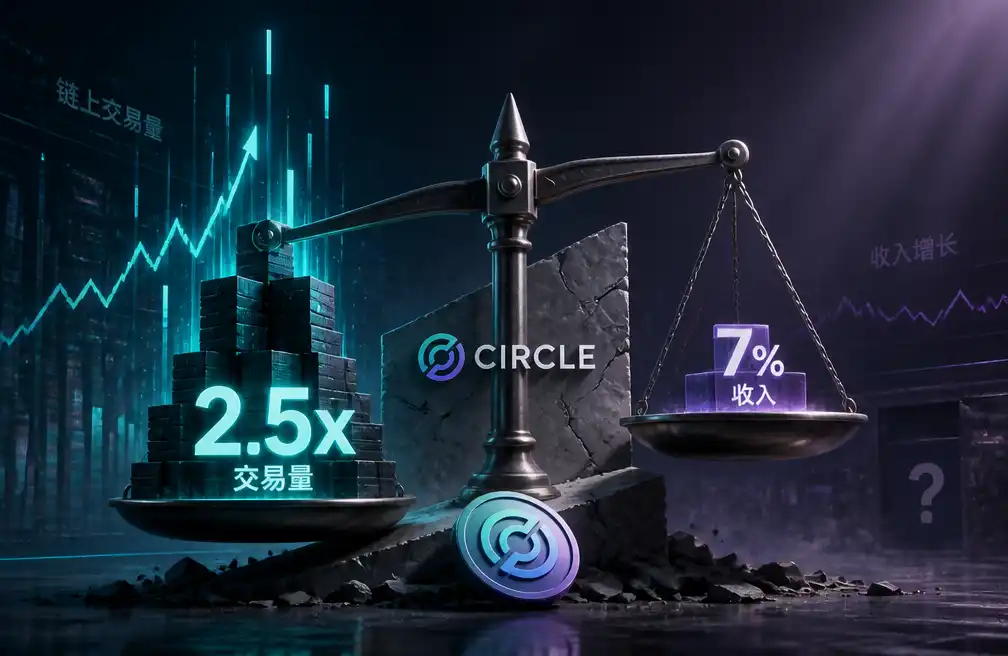
Volume Transaksi Naik 2.5x, Kenapa Pendapatan Circle Hanya Bertambah 7%?

Perusahaan penerbit stablecoin, Circle, melaporkan kinerja kuartal II yang menunjukkan perbedaan signifikan antara volume transaksi dan pendapatan. Volume transaksi on-chain USDC meroket 151% secara tahunan menjadi USD 14,8 triliun. Namun, "Total Pendapatan dan Pendapatan Cadangan" hanya tumbuh 7% menjadi USD 701 juta. Artikel ini menjelaskan bahwa pendapatan Circle terutama (lebih dari 90%) berasal dari pendapatan cadangan atas aset yang mendukung USDC. Pendapatan ini ditentukan oleh dua faktor: **rata-rata jumlah USDC yang beredar** (volume) dan **tingkat pengembalian cadangan** (harga). Meskipun rata-rata peredaran USDC tumbuh 25%, tingkat pengembalian cadangan turun 66 basis points karena lingkungan suku bunga. Hasilnya, pertumbuhan pendapatan cadangan hanya sekitar 5%. Dengan kata lain, volume transaksi yang tinggi tidak langsung diterjemahkan ke dalam pendapatan; transaksi harus dikonversi menjadi USDC yang tetap beredar terlebih dahulu. Setelah dikurangi "Total Distribusi, Perdagangan, dan Biaya Lainnya", metrik RLDC (Revenue Less Distribution Cost) Circle meningkat lebih cepat daripada pendapatan total, menunjukkan efisiensi biaya distribusi yang lebih baik. Namun, biaya operasi yang disesuaikan juga naik 23%. Artikel juga menyoroti perkembangan jaringan seperti Circle Payments Network dan rencana peluncuran Arc, namun menekankan bahwa metrik terkait (seperti volume transaksi 30 hari) belum secara langsung berkontribusi pada garis pendapatan yang dapat diukur dalam laporan kuartalan ini. Intinya, laporan ini mencerminkan bagaimana penggunaan USDC melewati struktur pendapatan berbasis cadangan dan biaya.

marsbit45m yang lalu

Volume Transaksi Naik 2.5x, Kenapa Pendapatan Circle Hanya Bertambah 7%?

marsbit45m yang lalu

Helium, Nafta, Fotoresist: Tiga Titik Kritis Pabrik Semikonduktor

Pada Maret 2026, serangan Iran terhadap fasilitas LNG di Qatar memicu kekhawatiran akan dampak besar pada pasokan helium (He). Bersamaan dengan blokade Selat Hormuz oleh Iran, yang menyebabkan kekacauan logistik, ratusan kapal tanker yang mengangkut helium dan nafta tertahan. Hal ini menimbulkan ancaman tiga serangkai kekurangan helium, nafta, dan fotoresis terhadap produksi pabrik semikonduktor global. Helium sangat penting dalam proses semikonduktor, terutama untuk pengendalian suhu wafer dalam *dry etching*. Tanpa helium, proses ini akan "gagal instan". Sementara itu, nafta digunakan dalam komponen habis pakai untuk semua peralatan manufaktur dan sebagai bahan baku fotoresis. Namun, hanya kurang dari 0.1% produksi nafta global yang digunakan untuk bahan semikonduktor, sehingga pasokannya relatif lebih mudah dijamin. Krisis helium jauh lebih mengkhawatirkan. Qatar menyumbang 33.2% dari produksi helium dunia, dan industri semikonduktor mengonsumsi 21-24% dari total pasokan global. Meskipun ada cadangan, prioritas pasokan, dan sistem daur ulang, helium tidak dapat disimpan lama karena penguapan. Cadangan hanya dapat mempertahankan operasi pabrik selama beberapa bulan jika pasokan dari Qatar terhenti. Dampaknya akan signifikan pada semua node semikonduktor. Chip logika mutakhir (seperti A14 dan N2) akan terpengaruh paling parah, dengan pabrik berhenti beroperasi dalam waktu 3 bulan. Chip N3 dalam 3 bulan, N5/N7 dalam 6 bulan. Bahkan chip *mature node* (10-28nm) untuk otomotif dan semikonduktor daya bisa berhenti dalam 6-12 bulan, berpotensi melumpuhkan industri otomotif. Jika kekurangan helium berlanjut, dalam 0-3 bulan pertama, pabrik utama masih beroperasi dengan harga melonjak. Dalam 3-6 bulan, kuota akan dikurangi. Dalam 6-12 bulan, pembatasan operasi parsial akan terjadi, terutama di negara-negara Asia seperti Korea, Tiongkok, dan Jepang. Setelah lebih dari setahun, industri akan dipaksa memprioritaskan produk tertentu kecuali negara lain meningkatkan produksi untuk menutupi kekurangan 33% dari Qatar. Krisis ini tidak akan menyebabkan semua pabrik berhenti sekaligus, tetapi terjadi secara bertahap melalui alokasi, kenaikan harga drastis, pengurangan produksi produk lama, dan akhirnya penghentian parsial berdasarkan wilayah dan perusahaan.

marsbit49m yang lalu

Helium, Nafta, Fotoresist: Tiga Titik Kritis Pabrik Semikonduktor

marsbit49m yang lalu

Trading

Spot
活动图片