How to Systematically Track High-Win-Rate Addresses on Polymarket?

marsbitDipublikasikan tanggal 2026-03-02Terakhir diperbarui pada 2026-03-02

Abstrak

This article explores methods to systematically identify and track high-success-rate addresses on Polymarket, a blockchain-based prediction market where all transactions are publicly recorded on-chain. It highlights that while data is transparent, the key challenge lies in extracting meaningful signals from vast datasets to detect addresses with potential informational advantages. The piece outlines common characteristics of such addresses: new wallets making large, concentrated bets; specialization in specific verticals; abnormal changes in position size; and exceptionally precise timing, repeatedly entering positions hours before major news breaks. A three-step systematic approach is recommended: First, filter addresses based on sustained profitability (e.g., 30-day positive returns, >55% win rate) using leaderboards like Polymarket Analytics. Second, analyze their holdings in specific event markets, focusing on addresses that are consistently among the top holders before full market pricing. Third, scrutinize their on-chain behavior: entry timing relative to news, position-building patterns (e.g., rapid, concentrated entries), holding periods, and trading focus. Advanced strategies include monitoring exit behavior (e.g., large, unexplained sell-offs), conducting wallet clustering analysis to find linked addresses, tracking unusual volume spikes in low-liquidity markets, and cross-referencing on-chain activity with external real-world data for validation. The goal is to ...

An address on Polymarket turned $35,000 into $442,000, achieving a 12.6x return. Notably, the position was established hours before a major market movement, and the trades were largely settled before the news spread to mainstream channels. This is not an isolated incident. Before the news of the "Venezuela Raid" political event became public, three addresses made moves in advance and collectively profited $630,000 from the same event.

If such trading occurred in traditional financial markets, one might easily think of information asymmetry. However, in prediction markets, all fund flows and position changes are recorded on the public blockchain; there are no hidden accounts or private transactions.

Being public does not mean there is no gap. The key is not whether you can see the trades, but whether you can discern the truly informative signals from the massive amount of data.
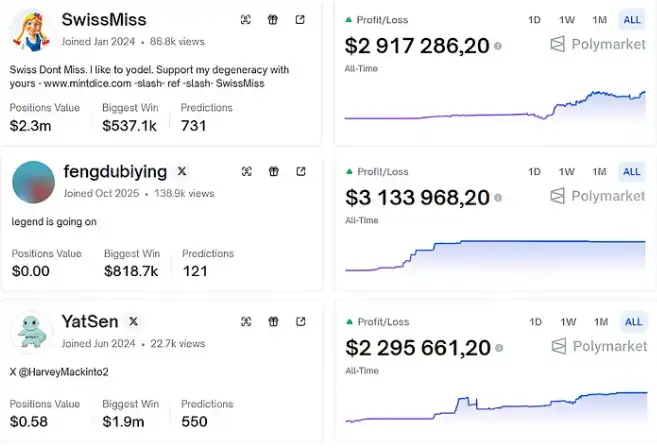
Every Trade on Polymarket is Public Data

Many prediction market participants still view Polymarket as a traditional betting platform: watch the odds, pick a direction, and bet on the outcome. But Polymarket's underlying structure is completely different from DraftKings or ordinary sports betting. All transactions occur on-chain; fund flows, position sizes, and entry/exit timings are all publicly viewable. The operational paths of the most accurate and timely addresses are not post-hoc speculation but real-time on-chain records.
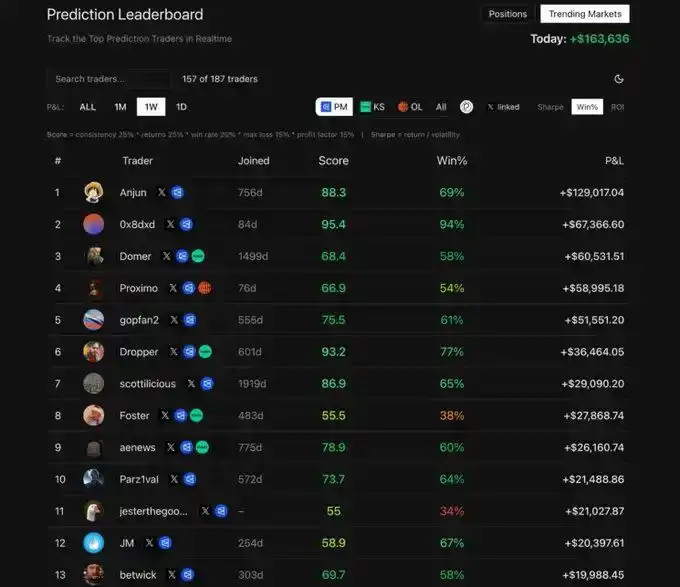
Polymarket's API is also open. Transaction records, market data, and historical trades can be directly called by anyone; there is no permission barrier.

Therefore, the gap is not about who can see the data, but about who can extract meaning from it. On-chain information is public, but what is truly valuable is the ability to identify wallets worth tracking continuously and to recognize behavioral changes before prices fully reflect them.

What Characteristics Do True "Informed Addresses" Typically Have?

It is important to emphasize that not all profitable wallets imply insider information. Some traders have solid research capabilities, while others rely on quantitative models and algorithmic advantages. However, when profitability is repeatedly coupled with specific behavioral patterns, one can observe structural features that distinguish them from mere "luck."

· Type 1: New Addresses Combined with Unusually Large Bets

A wallet created just days ago, with very few transactions, suddenly invests a large amount of capital in a low-liquidity niche market. This behavior is uncommon. Especially in the absence of public catalysts, large, concentrated positions often carry stronger informational significance.

· Type 2: Highly Vertical Trading Focus

Some addresses do not operate across markets but focus long-term on a specific niche, maintaining a stable and significant win rate in that area. They do not diversify across crypto prices, elections, sports, etc., but concentrate their firepower on a single theme, with more decisive position decisions.

· Type 3: Abnormal Changes in Position Size

When an address that has been betting with medium size for a long time suddenly significantly increases its position size in a particular market, this behavior often indicates a change in the strength of conviction. Position size itself is an attitude; a sudden change in scale usually reflects an upgrade in information or belief.

· Type 4: Overly Precise Timing

Occasional early positioning can be attributed to coincidence, but if an address repeatedly completes its positions hours before major news announcements, with highly consistent direction, this temporal lead is difficult to explain simply as luck. Once is random; repeated occurrences are more likely to reflect an information advantage.

How to Systematically Screen for Potential "Information-Advantaged Addresses"

· Step 1: Analyze Performance on Polymarket Leaderboards

Start with the leaderboard on Polymarket Analytics (link: https://polymarketanalytics.com/traders), sorted by 30-day P&L, using recent stable profitability as the first filter. Focus on wallet addresses with an overall positive return over 30 consecutive days, a win rate above 55%, and total profit significantly higher than total loss. Also, confirm that their trading is concentrated in markets with real liquidity, not low-volume prediction events with little participation.
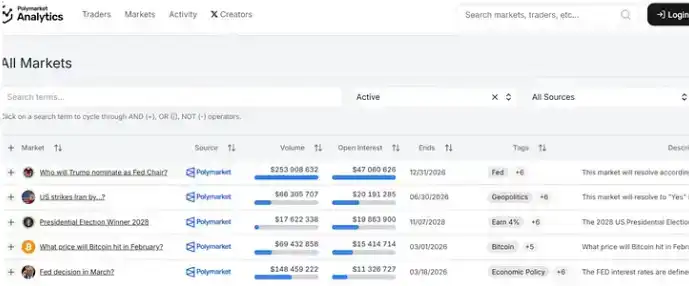
The goal at this stage is not to directly judge whether they have an information advantage, but to build a watchlist of addresses with sustained profitability. A consistent profit record is the foundation for subsequent behavioral analysis.

· Step 2: Analyze Position Structure in Specific Events

After the initial screening, drill down into specific trading events. Enter active prediction markets and check the Top Holders list for that event. Polymarket publicly displays the addresses with the largest current positions; these large positions often represent stronger conviction.
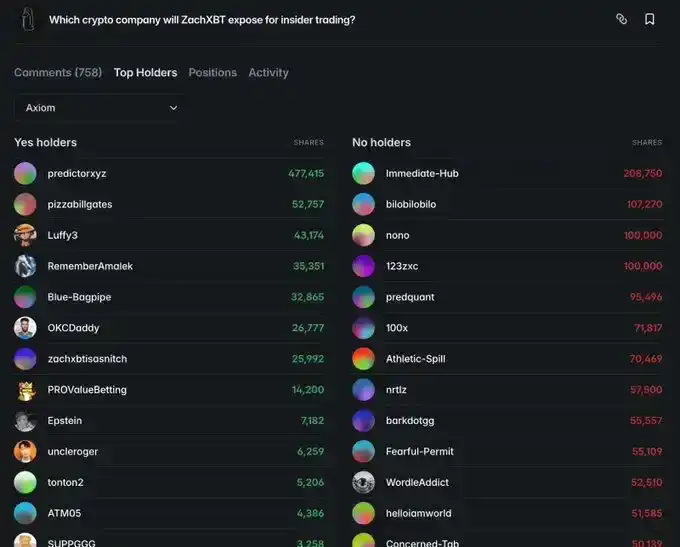
The key is not whether an address hits a single large bet, but whether its behavior is persistent. If a wallet repeatedly appears in the top holder lists for multiple significant events, and these positions were established before the market was fully priced, this repetition itself constitutes a signal.

Hitting once might be chance, but repeatedly making large, early-stage positions with consistent direction and validated outcomes often indicates a judgment system with a stable advantage.

· Step 3: Analyze Trading Behavior and Position Timing

After identifying candidate addresses, further analyze their on-chain transaction history, focusing on entry timing, position structure, and holding rhythm.
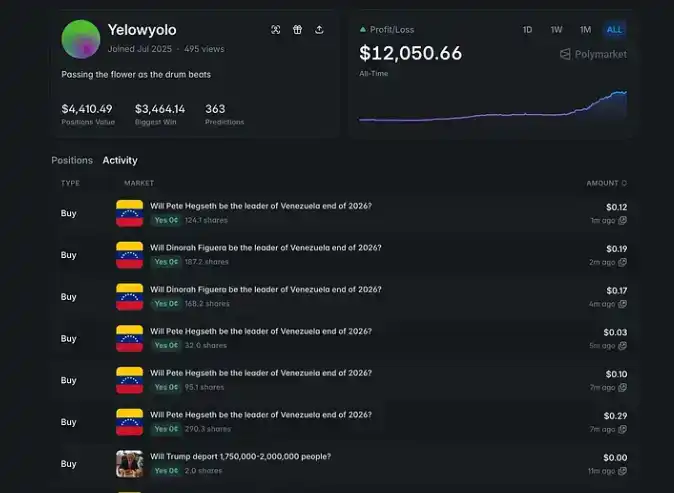
First, observe the entry time. If the purchase occurs hours before the official news release and repeats multiple times, the timing advantage itself becomes an important variable; entering after media reports is more likely to be just information following.

Second, analyze the method of position building. Mature traders typically build positions in batches and add gradually, while wallets with strong information judgment often complete concentrated layouts quickly within a short time window because their opportunity is limited.

Furthermore, pay attention to the holding period. Some high-quality addresses choose to exit during the middle of the trend发酵, rather than waiting for the tail end of extreme volatility, indicating their goal is to capture the main trend rather than marginal profits.

Finally, observe their trading scope. Addresses that are highly vertical and long-term focused on a single niche are more likely to form stable information advantages; addresses that frequently operate across sectors are more likely to rely on market sentiment rather than specific domain judgment.

Advanced Address Tracking Strategies

After mastering the basic screening methods, what truly makes the difference is the further dissection of the details of fund behavior.

First, focus on exit behavior, not just entry timing. Addresses with information advantages often not only position early but also actively reduce positions before potential negative news emerges. When a large address with a long, stable holding history suddenly significantly reduces its position without obvious catalysts, the informational content of this action is often higher than the initial buy. Especially when the reduction reaches a significant proportion, this change itself is a signal.

Second, perform wallet clustering analysis using on-chain data. Connections between addresses are not completely untraceable. Identical funding sources, similar Gas usage patterns, and transactions occurring consecutively within a very short time may reveal relationships between addresses. Many seemingly "new" accounts can often be traced back to a long-active old address through 2 or 3 fund transfers. Tracking along the fund flow path helps identify new potential high-quality accounts before the market notices.

Additionally, pay attention to abnormal volume changes in niche markets. If a market with usually small daily trading volume suddenly experiences a large influx of funds without public news, this structural increase in volume often means some participants have acted early. Analyzing the specific addresses driving the volume change can help build a new watchlist.

Finally, cross-validate on-chain behavior with external public information. The so-called "Pizza Index" once inferred potential military action from abnormal order volumes at pizzerias near the Pentagon. Similarly, flight tracking data, social media activity of key figures, adjustments to public calendars, and other information can provide corroboration or counter-verification for on-chain position behavior. The linkage between on-chain capital flows and real-world signals can often strengthen the reliability of judgment.


Pertanyaan Terkait

QWhat are the key characteristics of potentially high-performing addresses on Polymarket?

AKey characteristics include: 1) New addresses making unusually large bets, 2) High specialization in a narrow trading domain, 3) Abnormal changes in position size indicating conviction shifts, and 4) Exceptionally precise timing of trades before major news breaks.

QHow can one systematically identify addresses with potential information advantages on Polymarket?

AA systematic approach involves: 1) Analyzing the Polymarket Analytics leaderboard for consistently profitable addresses, 2) Examining specific event holders lists for large, early positions, and 3) Conducting deep analysis of transaction timing, position structure, and holding patterns.

QWhy is transaction timing particularly important when analyzing Polymarket addresses?

ATransaction timing is crucial because addresses that consistently establish positions hours before major news becomes public, rather than after media coverage begins, demonstrate a potential information advantage that cannot be easily explained by luck alone.

QWhat advanced strategies can be used for tracking high-performance addresses beyond basic screening?

AAdvanced strategies include: analyzing exit behaviors and sudden position reductions, conducting wallet clustering through on-chain data analysis, monitoring unusual volume spikes in niche markets, and cross-referencing on-chain activity with external real-world signals.

QHow does Polymarket's structure differ from traditional betting platforms in terms of data transparency?

AUnlike traditional platforms, all Polymarket transactions occur on-chain, making fund flows, position sizes, and entry/exit timestamps publicly visible and accessible through open APIs, creating a transparent environment where performance is verifiable through public blockchain data.

Bacaan Terkait

SEC AS Ingin Hapus Aturan Lama Tahun 2005, Apa yang Dilihat oleh Tokenisasi Saham

**Ringkasan:** Pada 11 Juni, Komisi Sekuritas dan Bursa AS (SEC) mengusulkan penghapusan dua aturan inti dalam Peraturan Sistem Pasar Nasional (Regulation NMS): Aturan 611 dan Aturan 610(e). Aturan ini, yang dibuat pada 2005, dirancang untuk melindungi harga terbaik di pasar saham AS. Aturan 611 mencegah pesanan "dilaksanakan melalui" harga yang lebih baik di tempat lain (trade-through rule), sedangkan Aturan 610(e) membatasi kutipan terkunci dan silang. SEC berargumen bahwa pasar saat ini jauh lebih otomatis, terhubung, dan kompetitif dibandingkan 2005. Aturan-aturan ini dianggap telah meningkatkan kompleksitas, biaya kepatuhan, dan fragmentasi perdagangan, sementara mungkin tidak lagi diperlukan karena kewajiban pelaksanaan terbaik yang sudah dimiliki pialang. Proposal ini menarik perhatian komunitas Web3 dan aset tokenisasi karena dalam latar belakangnya, SEC secara eksplisit menyebutkan teknologi buku besar terdistribusi (DLT), aset kripto, kontrak pintar, dan Automated Market Makers (AMM) sebagai pendorong bentuk dan metode perdagangan sekuritas baru. Dengan menghapus aturan yang sangat terpusat dan kaku ini, SEC membuka pintu bagi lebih banyak eksperimen dalam mekanisme perdagangan, keselarasan yang lebih baik dengan perdagangan 24/7, dan potensi integrasi yang lebih mulus untuk model seperti saham ter-tokenisasi. Namun, ini baru tahap usulan dengan periode masukan publik 60 hari. Perubahan ini tidak mengatasi tantangan mendasar tokenisasi saham seperti penjagaan aset, penyelesaian, hak pemegang saham, atau persyaratan KYC/AML. Bahkan jika aturan federal ini dicabut, aturan terkait dari bursa dan FINRA mungkin masih berlaku. Intinya, ini adalah langkah awal potensial untuk mengurangi kompleksitas yang digerakkan oleh aturan dan memungkinkan inovasi dalam struktur pasar ekuitas AS.

Foresight News35m yang lalu

SEC AS Ingin Hapus Aturan Lama Tahun 2005, Apa yang Dilihat oleh Tokenisasi Saham

Foresight News35m yang lalu

Transformasi Ethena dan Kecemasan Wall Street

**Ringkasan:** Pada Juni 2026, protokol stablecoin Ethena mengumumkan kemitraan strategis dengan raksasa manajer aset tradisional, Janus Henderson. Kolaborasi ini menandai transformasi Ethena dari protokol DeFi asli menjadi entitas yang tertanam di dalam inti keuangan tradisional, sekaligus mencerminkan kecemasan institusi Wall Street terhadap masa depan. Awalnya, stablecoin USDe Ethena dikenal dengan strategi delta-netral yang bergantung pada pendanaan *perpetual futures*. Namun, kelemahan model ini terbukti saat pasar berubah, memaksa Ethena melakukan transformasi. USDe berevolusi dari produk sintetis kripto murni menjadi stablecoin dengan cadangan hybrid yang mencakup aset keuangan dunia nyata (RWA) seperti surat utang negara, obligasi korporasi, dan instrumen kredit. Kemitraan dengan Janus Henderson memiliki empat lapisan: (1) diversifikasi cadangan USDe dengan aset kredit korporasi (CLO) terealisasi token Janus Henderson, (2) investasi strategis Janus Henderson dalam token ENA, (3) penggunaan sUSDe sebagai alat manajemen kas treasury Janus Henderson, dan (4) rencana pengembangan produk ETF untuk mendistribusikan USDe dan ENA kepada klien institusional. Kecemasan Wall Street yang mendorong langkah seperti ini berasal dari tekanan struktural yang lebih besar. Setelah pengesahan undang-undang stablecoin AS yang jelas (GENIUS Act), persaingan beralih ke pembangunan jaringan distribusi. Institusi tradisional seperti Janus Henderson khawatir akan kehilangan kendali atas saluran distribusi aset di era tokenisasi, tekanan terhadap hasil (*yield*) yang lebih menarik dari produk seperti sUSDe, dan yang terpenting, kehilangan akses ke lapisan penyelesaian ekonomi digital baru yang didominasi stablecoin. Kemitraan ini adalah strategi "mundur untuk maju" – menerima kekurangan dalam inovasi protokol tetapi memanfaatkan lisensi, jaringan klien, dan reputasi untuk mengamankan posisi dalam infrastruktur keuangan masa depan. Kolaborasi ini mengilustrasikan peleburan batas antara keuangan tradisional dan DeFi, dengan stablecoin sebagai medan pertempuran utamanya.

Foresight News1j yang lalu

Transformasi Ethena dan Kecemasan Wall Street

Foresight News1j yang lalu

Tidak Semua Rantai Bisa Menjembatani Institusi, Mengapa Canton Bisa?

Tidak semua blockchain dapat menangani kebutuhan institusi keuangan. Canton, dikembangkan oleh Digital Asset, dirancang khusus sebagai lapisan koordinasi infrastruktur yang memungkinkan alur kerja keuangan institusional (seperti obligasi, repo, dan penyelesaian transaksi) beroperasi di ekosistem terdistribusi. Pendekatannya yang berfokus pada privasi data, kontrol izin granular melalui kontrak pintar Daml, serta kemampuan penyelesaian transaksional atomik (atomic settlement) dan sinkronisasi global (Global Synchronizer), menjawab kekhawatiran utama institusi tentang kedaulatan data, kepatuhan, dan pengurangan risiko penyelesaian. Dukungan strategis dari konsorsium institusi keuangan terkemuka—termasuk bank global, perusahaan infrastruktur pasar, dan investor seperti a16z crypto, yang telah mengumpulkan pendanaan sekitar $8.05 miliar—menunjukkan keseriusan adopsi Canton. Token asli jaringan, Canton Coin (CC), berfungsi sebagai mekanisme insentif dan pembayaran biaya untuk menjaga keberlanjutan infrastruktur sinkronisasi publik ini. Jaringan ini telah menunjukkan pertumbuhan nyata, dengan ratusan mitra, ribuan validator aktif, dan volume transaksi besar (termasuk triliunan dolar aset tokenisasi dan ratusan miliar dolar transaksi repo harian). Dengan demikian, Canton tidak mengejar lalu lintas aplikasi retail, tetapi membangun fondasi teratur yang diperlukan untuk menghubungkan dan menyinkronkan aktivitas inti keuangan institusional secara aman dan efisien, yang pada akhirnya dapat memperluas kumpulan aset institusional yang siap dijalankan di chain dan mendorong peningkatan likuiditas di pasar on-chain di masa depan.

Foresight News1j yang lalu

Tidak Semua Rantai Bisa Menjembatani Institusi, Mengapa Canton Bisa?

Foresight News1j yang lalu

MoneyGram: Mengapa Kami Meluncurkan Stablecoin Milik Sendiri?

MoneyGram, perusahaan raksasa pengiriman uang lintas batas, secara resmi meluncurkan stablecoin-nya sendiri bernama MGUSD. Stablecoin ini bukan hanya produk biasa, melainkan bagian dari strategi besar untuk memperkuat peran MoneyGram dalam kehidupan finansial jutaan penggunanya, terutama mereka yang kurang terlayani oleh sistem perbankan tradisional. Dengan MGUSD yang dibangun di blockchain Stellar dan menggunakan arsitektur dompet *self-custody*, pengguna dapat memiliki saldo dolar AS yang stabil di aplikasi MoneyGram. Ini mengatasi masalah fluktuasi mata uang lokal dan memberikan kontrol penuh kepada pengguna atas dananya. Saldo ini tidak hanya untuk transfer internasional, tetapi juga dapat digunakan untuk pembayaran sehari-hari, penarikan tunai di jaringan luas MoneyGram, penukaran mata uang, dan layanan keuangan lainnya di masa depan. MoneyGram menekankan bahwa MGUSD dirancang untuk memecahkan masalah nyata pelanggannya yang sudah ada, bukan bersaing dengan stablecoin utama di pasar. Keunggulan utama adalah integrasi dengan infrastruktur dan jaringan fisik global mereka yang sudah mapan. Produk ini juga dibangun dengan memprioritaskan kepatuhan regulasi dari awal. Selain untuk konsumen, MGUSD juga memodernisasi infrastruktur internal MoneyGram. Perusahaan telah mengintegrasikan stablecoin ke dalam platform manajemen perbendaharaan perusahaan, meningkatkan efisiensi likuiditas global, penyelesaian transaksi, dan pembiayaan untuk mitra agen. Mereka telah memproses transaksi valuta asing bernilai miliaran dolar menggunakan stablecoin. Proyek ini diluncurkan dalam waktu sekitar satu tahun berkat transformasi operasional di dalam perusahaan. MoneyGram mereorganisasi tim produk dan teknologinya ke dalam unit bisnis yang lincah dan lintas fungsi, menggabungkan kecepatan startup dengan pengetahuan dan kepatuhan perusahaan keuangan global yang telah berpengalaman puluhan tahun. MoneyGram tetap berkomitmen pada ekosistem kemitraan yang terbuka, bekerja sama dengan agen, bank, dan platform digital untuk menjangkau lebih banyak pengguna. Misi inti mereka adalah memanfaatkan teknologi stablecoin untuk memberikan alat penyimpanan nilai yang stabil, layanan keuangan yang lebih baik, dan kontrol penuh atas uang kepada pengguna di seluruh dunia melalui jaringan tepercaya yang sudah dikenal.

Foresight News2j yang lalu

MoneyGram: Mengapa Kami Meluncurkan Stablecoin Milik Sendiri?

Foresight News2j yang lalu

Trading

Spot
Futures

Artikel Populer

Cara Membeli WIN

Selamat datang di HTX.com! Kami telah membuat pembelian WINkLink (WIN) menjadi mudah dan nyaman. Ikuti panduan langkah demi langkah kami untuk memulai perjalanan kripto Anda.Langkah 1: Buat Akun HTX AndaGunakan alamat email atau nomor ponsel Anda untuk mendaftar akun gratis di HTX. Rasakan perjalanan pendaftaran yang mudah dan buka semua fitur.Dapatkan Akun SayaLangkah 2: Buka Beli Kripto, lalu Pilih Metode Pembayaran AndaKartu Kredit/Debit: Gunakan Visa atau Mastercard Anda untuk membeli WINkLink (WIN) secara instan.Saldo: Gunakan dana dari saldo akun HTX Anda untuk melakukan trading dengan lancar.Pihak Ketiga: Kami telah menambahkan metode pembayaran populer seperti Google Pay dan Apple Pay untuk meningkatkan kenyamanan.P2P: Lakukan trading langsung dengan pengguna lain di HTX.Over-the-Counter (OTC): Kami menawarkan layanan yang dibuat khusus dan kurs yang kompetitif bagi para trader.Langkah 3: Simpan WINkLink (WIN) AndaSetelah melakukan pembelian, simpan WINkLink (WIN) di akun HTX Anda. Selain itu, Anda dapat mengirimkannya ke tempat lain melalui transfer blockchain atau menggunakannya untuk memperdagangkan mata uang kripto lainnya.Langkah 4: Lakukan trading WINkLink (WIN)Lakukan trading WINkLink (WIN) dengan mudah di pasar spot HTX. Cukup akses akun Anda, pilih pasangan perdagangan, jalankan trading, lalu pantau secara real-time. Kami menawarkan pengalaman yang ramah pengguna baik untuk pemula maupun trader berpengalaman.

422 Total TayanganDipublikasikan pada 2024.12.11Diperbarui pada 2025.03.21

Cara Membeli WIN

Diskusi

Selamat datang di Komunitas HTX. Di sini, Anda bisa terus mendapatkan informasi terbaru tentang perkembangan platform terkini dan mendapatkan akses ke wawasan pasar profesional. Pendapat pengguna mengenai harga WIN (WIN) disajikan di bawah ini.

活动图片