Exclusive Interview with Suji: Taking Over the Hot Potato Lens, Whose Ideal Is Mask Paying For?

Odaily星球日报Dipublikasikan tanggal 2026-01-23Terakhir diperbarui pada 2026-01-23

Abstrak

Interview with Suji Yan: Taking Over the "Hot Potato" Lens—Whose Ideal is Mask Network Betting On? On January 20, the decentralized social protocol Lens announced the transfer of its project management to Mask Network, with the original team stepping back as technical advisors. This move sparked significant discussion in the crypto community. While many were not surprised by Stani Kulechov’s decision to hand off Lens—given the declining interest in decentralized social platforms—it raised questions about why Mask would take on what some consider a “mess.” Lens was once a star in the SocialFi space, backed by Aave’s founder, solid technology, and a compelling narrative of user-controlled social networking. However, by 2025, its growth stalled, especially after the launch of Lens Chain without an accompanying token. Mask Network, founded in 2017, aims to bridge Web2 and Web3. Its browser extension allows users to access Web3 services on platforms like X and Facebook. According to Suji Yan, Mask’s founder, the decision to take over Lens was driven by shared vision and trust. Both he and Stani believe that decentralized social platforms should avoid over-monetization and token-centric models, which they see as a core reason for the failure of projects like Friend.tech. Suji criticizes Farcaster for lacking neutrality and being too aligned with Coinbase, while praising Lens for its independence. He emphasizes that “non-neutral social platforms are doomed to fail,” citing Truth...

Original | Odaily Planet Daily (@OdailyChina)

Author | Golem (@web3_golem)
On January 20th, the team behind the decentralized social protocol Lens announced the transfer of project management authority to the Mask Network team, with the original team stepping back into an advisory role. This news garnered significant attention in the crypto space. Many were not particularly surprised by Stani Kulechov's decision to "offload" Lens, as withdrawing promptly is a wise move in the context of the decentralized social sector losing capital and user interest.

Lens was the center of attention in the SocialFi赛道 (SocialFi track/space) during 2023-2024—boasting the founder's光环 (halo/aura) from Aave, solid technology, and the compelling narrative of users自主掌握社交 (autonomously controlling their social experience)... Even after Lens removed registration restrictions in February 2024, its user count continued to grow. But by 2025, all of this turned to dust, especially after the launch of Lens Chain in May, when the team did not顺势推出发币 (seize the opportunity to launch a token).

This, instead, made me wonder: why was the Mask team willing to take on this "烂摊子" (mess/hot potato)?

In the official statements from both sides, Lens stated that the reason for handing the project over to the Mask team was that Lens had completed the construction of decentralized social infrastructure, and now it was time for Lens to transition from infrastructure to large-scale applications, with the Mask team being the right choice to help Lens achieve this goal.

But I don't think it's too harsh to compare Lens to a mess. According to web3.bio, the total number of Lens accounts created reached 808,000, with 680,000 unique users. Even compared not to Web2 social platforms but just to its counterpart in the same space, Farcaster, the performance is slightly worse. Farcaster's total accounts created reached 1.867 million, with 1.858 million unique users, both more than double Lens's numbers. There is also a gap in new user growth; Farcaster added 373,000 new registered users in January 2026, while Lens added only 1,492.
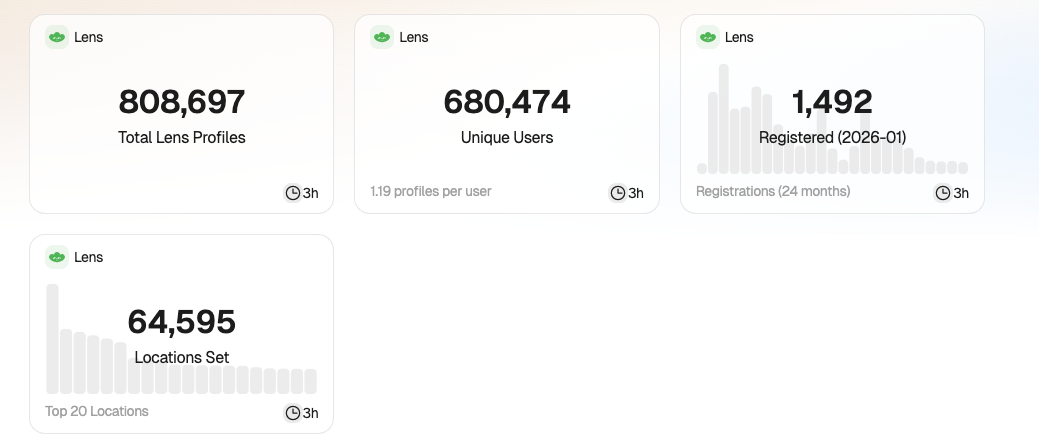
Lens User Metrics

Therefore, in this context where the decentralized social track is widely considered disproven and Lens is left with only a technical shell, what does the Mask team think? What magic do they plan to work after taking over Lens? With these doubts, Odaily Planet Daily spoke with Mask Network founder Suji Yan.

Token Launches Harmed Decentralized Social

Mask Network was founded in 2017. The project's vision is to build a bridge connecting Web2 and Web3 users. At the product level, Mask is a browser extension that allows users to seamlessly access various Web3 services on mainstream Web2 social platforms (like X, Facebook, etc.). After 2022, Mask became more deeply involved in the decentralized social ecosystem through investments and acquisitions; currently, Orb and Firefly are still key projects Mask is actively operating.

When discussing the reasons for taking over Lens, Suji Yan stated that Mask had actually been a shareholder of Lens very early on, and that Suji himself had even encouraged Stani to create Lens, so there is a deep trust relationship between the two parties. Besides this reason, Suji believes another more important reason is that Stani and he share similar philosophies.

"We are not people who lack money; we更多的是想 (more want) to do decentralized social well," Suji said, stating this is a consensus between him and Stani. Therefore, Suji believes thata core reason for the failure of past generations of decentralized social products was the attempt to give every user a token. Friend.tech failed because it made this mistake; Suji even called it a耻辱 (disgrace) for decentralized social, as it eroded market confidence in truly decentralized social.

Friend.tech was a decentralized social product born in 2023. Its core model was the tokenization of personal social influence; fans or other users could buy shares of a KOL and gain the opportunity to chat with them privately. Meanwhile, the share price would increase as more people joined, creating profit opportunities for holders. The simple model and the rapid fluctuation of token values in wallets caused immense FOMO in a short time; Friend.tech's daily fee income once surpassed that of TRON.

What brings success also causes failure. Once players understood this was just a game of "hot potato" under the banner of decentralized social, where KOLs could almost costlessly harvest retail investors, Friend.tech quickly collapsed. But to this day, whenever SocialFi is discussed, it remains the craziest case that pushed "Fi" to the extreme.
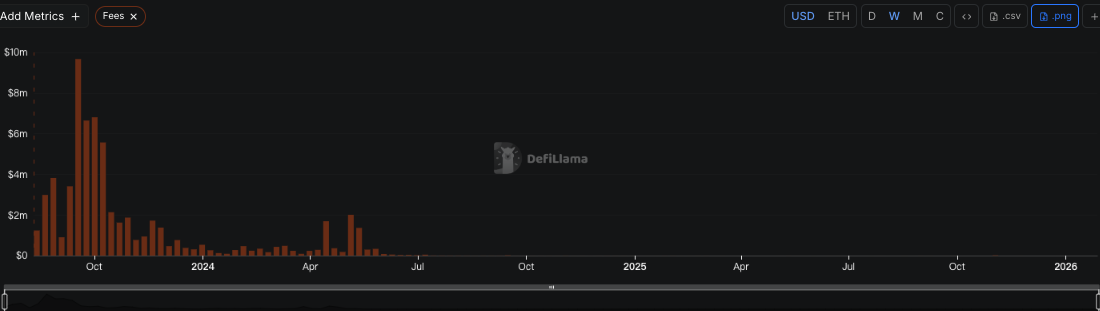
From mid-2024, Friend.tech's fee income dropped to 0

Although Farcaster's current metrics are better than Lens's, Suji believes Lens still has advantages. "The best thing about Lens is its neutrality and its lack of attachment to any exchange ecosystem," which is also one of the reasons Suji was willing to take over Lens.

In Suji's eyes, Farcaster completely lacks neutrality. "It is close to Coinbase and deliberately caters to the ideas of Coinbase's founder and Base protocol founder Jesse." Besides airdrop expectations, a large part of Farcaster's user growth came from Creator Coins, from Degen to the later AI token issuance trend, all following the same pattern. But Suji told Odaily that these are all "有毒的增长方案" (toxic growth strategies). (Odaily note: This interview took place before Neynar announced the acquisition of Farcaster;Suji is a shareholder of Neynar)

In this regard, Ethereum founder Vitalik Buterin also believes that decentralized social should not overemphasize "token issuance" as innovation, attempting to incentivize creators by creating price bubbles around individuals, because practice has shown that such models often reward existing social capital rather than content quality, and tokens have short lifecycles.

However, Suji also stated that after taking over Lens, a new entity will be spun off, which will not encourage airdrop farming behavior but also will not deliberately refuse to issue a token, waiting for the right opportunity.

Non-Neutrality Leads to Death

"Non-neutrality leads to death" is Suji's prophecy for decentralized social products. A product that is not neutral cannot be a qualified social product. Suji used Truth Social as an example. Truth Social is a social platform under Trump, existing specifically for Trump to "have a voice." It is the ceiling for non-neutral social platforms in the world; no other person has used their personal influence to create a social platform with traffic surpassing Truth Social.

But Suji stated that Truth Social's underlying code uses the code from the open-source project Mastodon (most of the code was donated by Mask). If the world's largest non-neutral social product is such a "草台班子" (makeshift/rudimentary operation), then what特殊性 (specialness) do other similar social products have?

Therefore, Suji believes that today's rapidly growing Binance Square is just a "small version" of Truth Social, and Farcaster is just a North American version of Truth Social. Lens, with its neutrality,注定 (is destined to have) a higher ceiling than them.

To better leverage Lens's advantages, Suji also revealed to Odaily that after taking over Lens, it will bedeeply integrated with Mask's products like web3.bio, Orb, and Firefly to form互补 (complementarity). Firefly has deeply integrated X functions (posting, liking, etc.), and Lens's social graph can help enhance user stickiness. Meanwhile, Lens will alsointegrate with prediction markets in the future to achieve personalized recommendations based on friends' dynamics (like NBA game betting information streams), improving prediction efficiency.

Web3 Social Must Be Built on Top of Web2 Social

Early Web3 social narratives, to be captivating, often criticized and accused Web2 social of exploiting users in terms of data ownership, privacy, and freedom of speech, highlighting Web3's advantages in these areas. Over time, this created an "either-or" competitive relationship between Web2 and Web3 social.

"We should respect Web2 as the data source because most people weren't born after decentralization became widespread," Suji believes that since most of us were born in the internet era, building Web3 social must be based on Web2 social foundations, meaning it must support Web2 databases.

Suji said they are correcting this obvious mistake. Firefly is one of the best products on the market for deeply integrating X functions, including synchronized posting, liking, bookmarking, history, and more. To achieve this leap of Web2 social data to Web3, Firefly also spends a significant amount of money each year purchasing X's API.

Vitalik Buterin stated in a post on January 21st that since the beginning of this year, all his content has been synchronized across platforms like X, Lens, Farcaster, and Bluesky through Firefly. Users don't have to abandon their original Web2 social platforms while simultaneously enjoying the advantages of Web3 social functions—this is perhaps Firefly's biggest selling point and, essentially, perfectly承接 (fulfills/continues) Mask's vision of connecting Web2 and Web3 users.
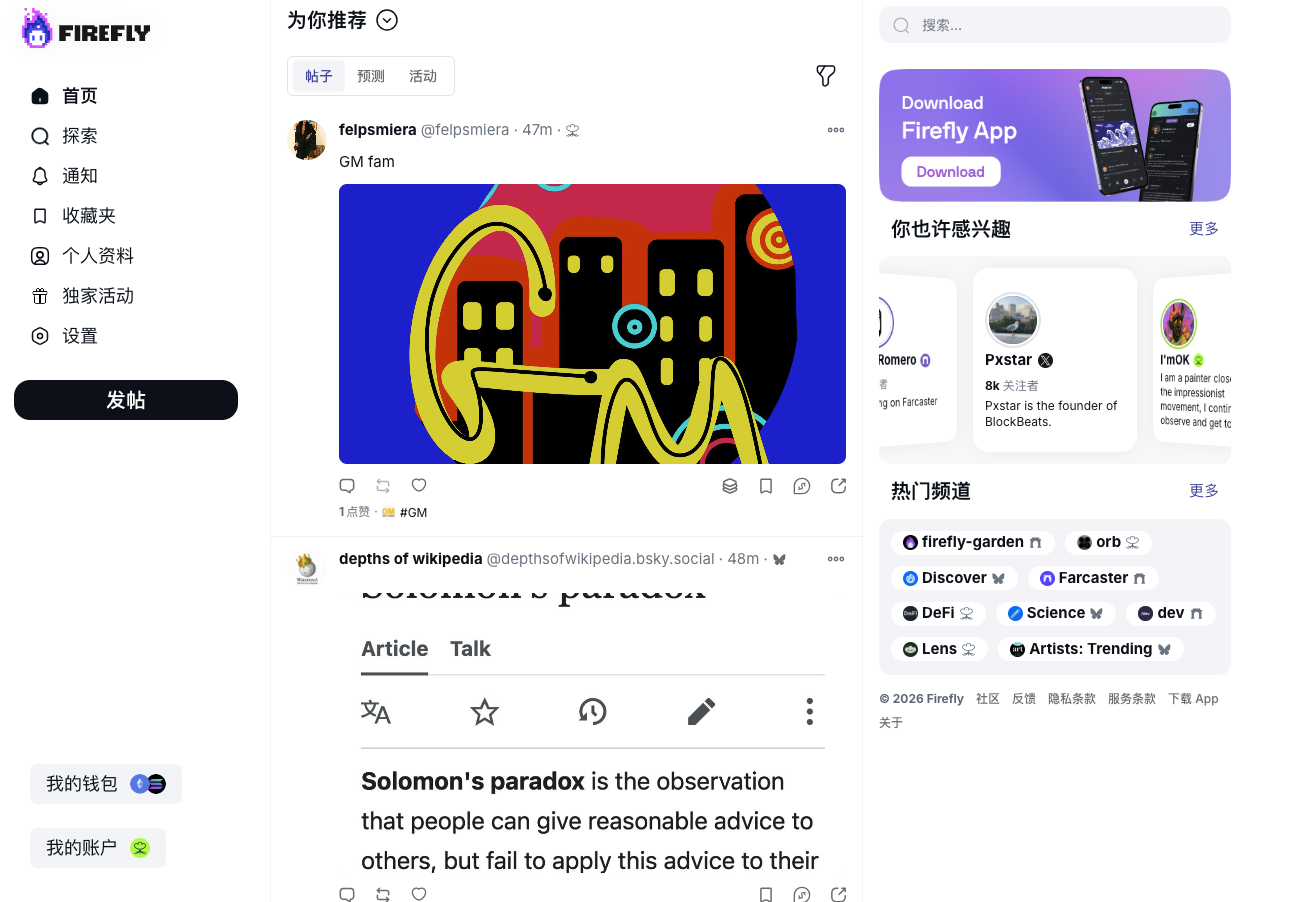
Firefly's UI is similar to X's

There is a contradiction in social applications: people don't want to be constrained by KYC, but they want a semi-anonymous environment with high-quality content and freedom of speech. To solve this contradiction, Suji revealed to Odaily that in the future they will integrate various Web2 social graphs to determine that a person is not a bot and can simultaneously be responsible for their speech. Suji believes this is also a key breakthrough point for Web3 social in the future.

A Founder Living in Their Own World?

But people with a geek mindset are always a minority in this world; not all users are Vitalik.

Firefly and all Web3 social applications have to answer a practical question: Your理念很正 (principles are very correct), but why should I use you?

Lens currently does have the infrastructure capability to support decentralized social operations, but as a user, without airdrop or token incentives, there is no motivation to create a unified account just to "move freely" among various decentralized applications. Similarly, since one can post directly on platform X, why actively put on an additional "shell" and use Firefly to do it?

Many believe the reason Web3 social has been disproven is that whether it is decentralized or has data autonomy is not the core competitiveness of social interaction. Differences on the product side and operational side—like content quality, creative incentives, and emotional identification—are the key factors that make a social product stand out today. Lens, immersed in technology for 5 years, has now realized this problem. "The ecosystem needs not more protocols, but卓越的用户体验 (excellent user experience)," which is why they handed over project management authority to Mask.

But what if Mask is also living in its own small world?
Suji大佬 (big shot) appearing at an industry event

When Odaily asked this question, Suji used Manus as an example. "Manus, simply put (简单来讲), supports AI like ChatGPT, Gemini, and DeepSeek to help users get work done. If users use AI themselves, they can also complete these tasks. Manus is essentially just an added layer, but it ultimately succeeded." Suji attributes this to the product's "品味" (taste). Therefore, he believes that in the future, more users will actively use Firefly, and what needs to be done now is to稳步推进 (steadily advance) the project and wait for the flower to bloom.

"After success, the market will ignore the painful waiting period before," Suji maintained an attitude of strong信念感 (conviction/belief) throughout the entire interview. He始终坚定认为 (firmly believes) that his cause will succeed in the future, and the vision of seamlessly connecting Web2 and Web3 users will ultimately be realized.

Ten years of drinking ice, hardly cooling hot blood (十年饮冰,难凉热血 - Idiom meaning enduring long hardship without losing passion). A more practical question is: will this hot potato, Lens, drag Mask down?

Facing uncertainty,开源节流 (increasing revenue and reducing expenditure - i.e., being frugal) has become Mask's survival strategy for the current stage. "Most projects actually don't need to hold big conferences; saving cash flow is key," Suji said, adding that while he won't refuse capitalization, he will definitely not rush to monetize. "The easy but wrong path will definitely not go far."


Pertanyaan Terkait

QWhy did Mask Network take over the management of Lens Protocol, according to Suji Yan?

ASuji Yan stated that Mask Network took over Lens due to their long-standing shareholder relationship and deep trust with the Lens team. Additionally, he and Stani Kulechov share a common vision of building a genuine decentralized social ecosystem, rather than pursuing financial gains. Suji also believes Lens's neutrality and independence from exchange ecosystems give it an advantage.

QWhat does Suji Yan identify as a core reason for the failure of previous decentralized social products like Friend.tech?

ASuji Yan believes that a core reason for the failure of products like Friend.tech is their attempt to issue tokens to every user, creating a toxic growth model focused on financial speculation rather than genuine social interaction. He referred to Friend.tech as a disgrace to decentralized social that eroded market confidence.

QHow does Suji Yan view the concept of 'neutrality' in decentralized social platforms, and why is it important?

ASuji Yan argues that neutrality is critical for a successful social platform, stating that 'non-neutral platforms are doomed to fail.' He uses Truth Social as an example of a non-neutral platform with limited ceiling, and believes that Lens's neutrality gives it a higher potential for growth compared to platforms like Farcaster, which he views as favoring specific ecosystems like Coinbase.

QWhat is Mask Network's strategy for integrating Web2 and Web3 social features, as mentioned in the article?

AMask Network's strategy is to build Web3 social on top of Web2 social infrastructure, rather than treating them as opposing forces. Their application Firefly deeply integrates with platforms like X (Twitter), allowing users to synchronize posts, likes, bookmarks, and history. This approach aims to leverage existing Web2 social graphs while providing Web3 benefits, creating a seamless experience for users born in the internet era.

QWhat future plans does Suji Yan reveal for Lens after the takeover, regarding product integration and features?

ASuji Yan revealed plans to deeply integrate Lens with Mask's existing products like web3.bio, Orb, and Firefly to create complementary functionalities. He also mentioned that Lens will be combined with prediction markets to enable personalized recommendations based on friends' activities (e.g., NBA betting feeds), improving prediction efficiency and user engagement.

Bacaan Terkait

Dialog dengan Ray Dalio: Saat Ini Berada dalam Gelembung AI, 1% Portofolio Investasi Adalah Bitcoin

Sumber: The Diary Of A CEO Ray Dalio, pendiri Bridgewater Associates yang meramalkan krisis keuangan 2008, memperingatkan bahwa ledakan AI saat ini menunjukkan tanda-tanda klasik gelembung ekonomi yang dapat pecah dan memicu resesi. Dalam wawancara podcast, dia menjelaskan dinamika "siklus besar" yang didorong oleh ketimpangan kekayaan, defisit pemerintah, dan perubahan geopolitik. Dalio mengidentifikasi pola di mana antusiasme berlebihan terhadap teknologi revolusioner baru, seperti AI, menyebabkan harga aset melambung dan pinjaman berlebihan. Ketika kondisi berubah (seperti kenaikan suku bunga atau kebutuhan tunai), gelembung ini dapat pecah, menyebabkan penurunan harga aset, kerugian luas, dan kontraksi ekonomi. Untuk melindungi kekayaan di masa ketidakpastian, Dalio sangat menekankan pentingnya **diversifikasi portofolio**—termasuk saham, obligasi, emas, dan real estat—daripada mengandalkan uang tunai saja. Dia mengungkapkan bahwa sekitar **1% portofolionya adalah Bitcoin**, yang diakuinya sebagai aset keras, tetapi dia lebih menyukai **emas fisik** karena sejarahnya sebagai penyimpan nilai dan aset bebas liabilitas. Mengenai dampak AI, Dalio percaya bahwa teknologi ini akan menggantikan tidak hanya tenaga fisik tetapi juga kemampuan kognitif manusia, berpotensi memperlebar kesenjangan antara pemilik modal dan pekerja. Masa depan akan menguntungkan mereka yang dapat memadukan kecerdasan manusia (seperti emosi dan intuisi) dengan kemitraan AI. Secara geopolitik, Dalio menggambarkan dunia yang memasuki fase "penurunan" dalam tatanan global, dengan Amerika Serikat menghadapi tantangan internal dan eksternal, termasuk konflik seperti di Iran yang mengungkap kelemahannya. Dia memprediksi dunia mungkin menjadi lebih terregionalisasi di masa depan. Secara keseluruhan, kunci untuk navigasi melalui periode kompleks ini adalah pemahaman akan pola sejarah, adaptasi, dan diversifikasi yang cermat.

marsbit3j yang lalu

Dialog dengan Ray Dalio: Saat Ini Berada dalam Gelembung AI, 1% Portofolio Investasi Adalah Bitcoin

marsbit3j yang lalu

Rekor! Beli Bersih Asing 7,2 Triliun Won dalam Sehari, Wall Street: Tekanan Likuiditas di Pasar Saham Korea Telah Mereda

**Ringkasan: Rekor Pembelian Asing dan Peningkatan Likuiditas di Pasar Saham Korea** Aliran modal asing menunjukkan perubahan signifikan di pasar saham Korea (KOSPI). Pada 31 Juli, investor asing melakukan pembelian bersih rekor sebesar 7,2 triliun Won Korea dalam sehari, menandai pembalikan dari tren penjualan bersih besar-besaran dalam beberapa bulan terakhir. Secara bulanan, penjualan bersih asing menyusut drastis menjadi 9,8 triliun Won di Juli, turun dari 48,4 triliun dan 44,5 triliun Won pada Juni dan Mei. Tekanan penjualan dari lembaga domestik juga mereda. Dana pensiun dan reksa dana domestik justru menjadi pembeli bersih 1,0 triliun Won di Juli, setelah dua bulan sebelumnya menjadi penjual bersih. Faktor pendukung lainnya adalah peraturan baru dari Komisi Jasa Keuangan (FSC) yang memberlakukan syarat lebih ketat bagi investor ritel untuk masuk ke ETF leverage saham tunggal, yang langsung mengurangi volume perdagangan instrumen tersebut hingga sekitar 50%. Kebijakan ini diperkirakan dapat menekan volatilitas pasar. Citigroup mempertahankan target indeks KOSPI di level 10.000 poin, menyoroti memudarnya angin penentu likuiditas. Analis mereka menilai faktor fundamental seperti industri chip memori yang solid, valuasi historis yang rendah, fundamental ekonomi Korea yang kuat, dan dukungan kebijakan berpotensi menjadi pendorong bagi pasar.

marsbit3j yang lalu

Rekor! Beli Bersih Asing 7,2 Triliun Won dalam Sehari, Wall Street: Tekanan Likuiditas di Pasar Saham Korea Telah Mereda

marsbit3j yang lalu

Pembaruan! AI Generasi Berikut OpenAI Pecahkan 10 Masalah Kelas Medali Fields

**OpenAI Model Astra Pecahkan 10 Masalah Matematika Kelas Fields Medal!** OpenAI mengumumkan terobosan besar dari model internal terbarunya, Astra. Model ini dilaporkan telah membuat kemajuan signifikan dalam **10 masalah matematika yang belum terpecahkan**, dengan biaya komputasi hanya sekitar **$2000**. Hasilnya dipublikasikan dalam makalah setebal 249 halaman. Beberapa pencapaian utama meliputi: 1. **Menyelesaikan masalah "non-sofic group"** yang diajukan Mikhail Gromov tahun 1999, dengan membangun contoh kelompok yang tak hingga dan finitely presented yang bukan sofic. Ini dianggap sebagai kemajuan bersejarah. 2. **Memecahkan batas lama dalam masalah pengepakan bola berdimensi tinggi** (sphere packing), meningkatkan batas yang telah bertahan sejak 1978 untuk dimensi tak hingga. 3. **Menyangkal dugaan "Connes Rigidity"** dengan membangun keluarga tak terhitung dari kelompok berbeda yang menghasilkan aljabar von Neumann yang sama persis. Semua bukti telah diverifikasi menggunakan asisten pembuktian formal Lean 4, memastikan ketepatannya. Para ahli matematika menyebut temuan ini sebagai **momen bersejarah**, setara dengan prestasi penghargaan Fields Medal, dan menandai kemampuan AI untuk melakukan penalaran matematika mendalam di berbagai bidang. OpenAI juga membagikan proses penalaran model, menunjukkan langkah maju yang besar menuju AGI (Artificial General Intelligence).

marsbit5j yang lalu

Pembaruan! AI Generasi Berikut OpenAI Pecahkan 10 Masalah Kelas Medali Fields

marsbit5j yang lalu

Bagaimana Membuat Diri Sendiri Tak Tergantikan oleh Kecerdasan Buatan

**Ringkasan: Bagaimana Membuat Diri Anda Tak Tergantikan oleh AI** Artikel ini membahas ancaman nyata dalam era AI: bukan kehilangan pekerjaan, tetapi "perbudakan gaji"—ketergantungan pada sistem dan orang lain untuk bertahan hidup. Solusinya adalah menjadi "individu super" yang "tak bisa dipekerjakan" dengan membangun bisnis atau karya sendiri. Kunci untuk bertahan dan berkembang di masa depan bukan sekadar keterampilan teknis, tetapi menguasai lima elemen yang sulit digantikan AI: 1. **Otonomi (Agency):** Kemampuan bertindak tanpa menunggu perintah. 2. **Rasa (Taste):** Pengalaman untuk mengetahui apa yang bernilai untuk ditawarkan. 3. **Kemampuan Persuasi (Persuasion):** Keterampilan menarik perhatian dan pengakuan. 4. **Ketekunan (Persistence):** Memahami bahwa kegagalan adalah bagian dari proses. 5. **Iterasi (Iteration):** Kemampuan memperbaiki kesalahan berdasarkan umpan balik. Lima elemen ini dapat dikembangkan dengan **membuat konten** (media). Dibandingkan pemrograman (code), konten lebih unggul karena nilainya subjektif, membutuhkan penilaian manusia, dan merupakan alat distribusi yang ampuh untuk membangun koneksi dan otoritas. Untuk memulai transformasi: 1. **Ubah lingkungan** Anda secara drastis untuk memicu perubahan identitas. 2. **Gali "bahan mentah"** Anda: Identifikasi pengetahuan mendalam, masalah yang pernah Anda selesaikan, dan minat unik masa kecil Anda. 3. **Temukan "poros pemikiran balik"**: Tentukan pendapat kontra-intuitif atau keyakinan Anda yang bertentangan dengan arus utama dalam bidang Anda. 4. **Luncurkan ide pertama** Anda besok. Gabungkan jawaban dari langkah 2 dan 3, lalu publikasikan. Umpan balik nyata dari dunia adalah guru terbaik. Intinya, bangunlah *karier seumur hidup* yang autentik berdasarkan pengalaman dan sudut pandang unik Anda. Dengan memanfaatkan AI sebagai alat dan fokus pada pengembangan diri yang tak tergantikan, Anda dapat mengambil kendali atas hidup dan masa depan Anda.

marsbit5j yang lalu

Bagaimana Membuat Diri Sendiri Tak Tergantikan oleh Kecerdasan Buatan

marsbit5j yang lalu

Kunci Bitcoin Disimpan Offline Berkat Lemparan Dadu, Tetapi Tidak Semua Orang Akan Melakukannya

Berdasarkan insiden kerentanan generator angka acak pada perangkat hardware wallet Coldcard, artikel ini membahas metode pembuatan kunci Bitcoin menggunakan dadu untuk menghasilkan entropi mandiri. Claude Shannon mengukur ketidakpastian dengan konsep entropi, di mana satu lemparan dadu enam sisi setara dengan sekitar 2,585 bit. Praktik melempar dadu 50 hingga 99 kali dapat menghasilkan frasa pemulihan 12 kata yang aman (128 bit entropi), melampaui ketergantungan pada generator perangkat. Namun, insiden Coldcard mengungkap bahwa meskipun seed utama dibuat dari dadu aman, fungsi lain seperti dompet kertas, kunci kloning, dan password masih berpotensi menggunakan generator cacat. Peneliti keamanan Kevin Loaec menekankan bahwa perlindungan hanya berlaku untuk seed utama, bukan keseluruhan sistem. Proses manual ini membutuhkan ketelitian tinggi, rentan kesalahan, dan tidak praktis bagi kebanyakan pengguna baru. Oleh karena itu, meski kuat secara matematis, metode ini lebih cocok untuk pengguna berpengalaman. Artikel menyarankan pemilik Coldcard untuk memperbarui firmware, memeriksa fungsi yang pernah digunakan, dan mempertimbangkan skema multisignature dengan perangkat dari produsen berbeda untuk mitigasi risiko. Tujuan jangka panjang adalah perangkat yang dapat menghasilkan keacakan kuat secara mandiri, tanpa memerlukan prosedur rumit dari pengguna.

cryptonews.ru9j yang lalu

Kunci Bitcoin Disimpan Offline Berkat Lemparan Dadu, Tetapi Tidak Semua Orang Akan Melakukannya

cryptonews.ru9j yang lalu

Trading

Spot
活动图片




