Crypto leaders join CFTC panel as U.S. pushes ‘pro-innovation’ rules

ambcryptoDipublikasikan tanggal 2026-02-13Terakhir diperbarui pada 2026-02-13

Abstrak

The U.S. Commodity Futures Trading Commission (CFTC) has formed an Innovation Advisory Committee (IAC) under the Trump Administration, comprising leaders from both crypto and traditional finance sectors. Members include executives from Coinbase, Uniswap, Ripple, Chainlink, and Solana, as well as representatives from prediction markets and major financial institutions like Nasdaq and the London Stock Exchange. CFTC Chair Mike Selig stated the committee aims to develop adaptive regulations to keep pace with innovations in blockchain and AI, ensuring the agency’s rules reflect market realities. The move is seen as a shift from the previous administration’s enforcement-heavy approach. Industry leaders, including Uniswap’s Hayden Adams and Chainlink’s Sergey Nazarov, welcomed the initiative as a positive development for DeFi, tokenization, and the broader crypto ecosystem.

The Donald Trump Administration has formed a new advisory team, the Innovation Advisory Committee (IAC), filled with crypto and traditional finance leaders to help drive American innovation.

On the 13th of February, the Commodity Futures Trading Commission (CFTC) unveiled the members of the Innovation Advisory Committee (IAC).

Players from the crypto industry include Coinbase’s Brian Armstrong, Uniswap’s CEO Hayden Adams, Ripple’s Brad Garlinghouse, Chainlink Labs’ Sergey Nazarov, and Solana’s Anatoly Yakovenko, among others.

On the prediction markets segment, Polymarket founder Shayne Coplan and Kalshi’s Tarek Mansour. Additionally, leaders from sport betting platforms FanDuel and DraftKings were tapped.

On the traditional finance side, Depository Trust and Clearing Corporation (DTCC) CEO Frank LaSalla, London Stock Exchange CEO David Schwimmer, Nasdaq CEO Adena Friedman, and others.

CFTC’s end-game

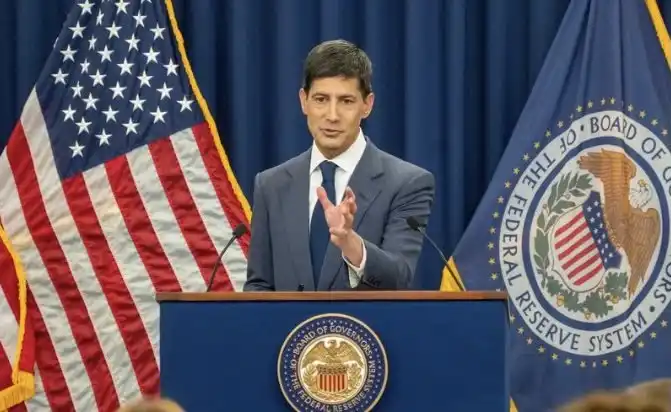
Academic and interest group representatives are also part of the team to provide a balance on tech updates and breakthroughs. According to CFTC chair Mike Selig, this was an ‘energizing moment’ for the regulator, adding that,

“The IAC’s work will help ensure the CFTC’s decisions reflect market realities so the agency can future-proof its markets and develop clear rules of the road for the Golden Age of American financial markets.”

Selig added that the committee will help CFTC formulate adaptive regulations for new breakthroughs in blockchain and AI that are transforming financial markets. He added,

“By bringing together participants from every corner of the marketplace, the IAC will be a major asset for the Commission as we work to modernize our rules and regulations for the innovations of today and tomorrow.”

Great for DeFi and broader crypto?

It’s worth noting that Selig first signaled the move in late January, calling for ‘fit-for-purpose’ regulation of new technologies disrupting financial markets.

Interestingly, the update also comes at a crucial time for prediction markets. The regulator recently withdrew a Biden-era rule that banned event contracts tied to sports and political activities.

Selig said the move was the agency’s ‘commitment to lawful innovation,’ underscoring the pro-crypto and pro-innovation pivot under the Trump Administration.

Reacting to the latest IAC update, Uniswap’s Hayden Adams said,

“Last admin’s CFTC only wanted to talk via subpoenas and enforcement. And lots of builders on this IAC! A great sign for the future of the agency.”

Similarly, Chainlink Labs’ Nazarov echoed Adams’ enthusiasm and expected the move to be bullish for tokenization, DeFi, and crypto overall.


Final Thoughts

  • CFTC chair forms an advisory team to help prepare the agency to form adaptive regulations.
  • Crypto leaders viewed the move as positive for the industry and a U-turn from the previous administration’s enforcement actions.

Pertanyaan Terkait

QWhat is the name of the new advisory committee formed by the CFTC, and what is its purpose?

AThe new advisory committee is called the Innovation Advisory Committee (IAC). Its purpose is to help the CFTC drive American innovation, ensure its decisions reflect market realities, and develop adaptive regulations for new technologies like blockchain and AI.

QName at least three crypto industry leaders who are members of the newly formed CFTC committee.

AThree crypto industry leaders on the committee are Brian Armstrong (Coinbase), Hayden Adams (Uniswap), and Brad Garlinghouse (Ripple).

QAccording to CFTC Chair Mike Selig, what two key technologies is the committee tasked with helping to formulate regulations for?

AThe committee is tasked with helping to formulate regulations for blockchain and artificial intelligence (AI).

QWhat recent action did the CFTC take regarding prediction markets, and how did the chairman describe this move?

AThe CFTC withdrew a Biden-era rule that banned event contracts tied to sports and political activities. Chairman Selig described this move as a demonstration of the agency's 'commitment to lawful innovation'.

QHow did Uniswap CEO Hayden Adams characterize the difference between the current CFTC's approach and that of the previous administration?

AHayden Adams said that the previous administration's CFTC 'only wanted to talk via subpoenas and enforcement,' contrasting it with the new committee which includes many builders, calling it a 'great sign for the future of the agency.'

Bacaan Terkait

The Impossible Triad Is Fundamentally a Pseudo-Problem

**Judul: Segitiga Mustahil Sebenarnya Masalah Palsu** Industri crypto telah membangun sistem kriptografi paling kuat, tetapi ironisnya gagal melindungi privasi keuangan pengguna. Setiap transaksi dan kepemilikan terpapar secara publik. Blokchain pada dasarnya adalah komputer bersama yang lambat dan mahal, yang nilainya terletak pada akses tanpa izin dan konsensus terdesentralisasi. Selama satu dekade, industri terobsesi dengan "trilema" skalabilitas, keamanan, dan desentralisasi. Namun, kendala sebenarnya yang menghalangi masuknya modal triliunan dolar justru adalah **legalitas** dan **privasi**. 1. **Legalitas:** Sifat tanpa izin menciptakan ketidakpastian hukum. Namun, perkembangan regulasi seperti Undang-Undang GENIUS di AS mulai memberikan kejelasan kerangka hukum. 2. **Privasi:** Transparansi rantai publik bukanlah fitur, melainkan **pajak**. Setiap posisi dan transaksi yang terbuka mengundang eksploitasi seperti MEV (Miner Extractable Value), yang telah menyedot miliaran dolar dari pengguna biasa. Modal institusional besar tidak akan pernah menempatkan neracanya di tempat yang bisa dibaca pesaing secara real-time. Solusinya bukan transparansi penuh atau penyembunyian total. Kriptografi modern memungkinkan **privasi yang patuh (compliant privacy)**. Kita dapat membuktikan suatu pernyataan (misalnya, kecukupan cadangan, kepatuhan KYC, transaksi bersih) tanpa membongkar data dasarnya. Audit dan kepatuhan tetap terjaga, tetapi kebocoran informasi dan "pajak transparansi" dihilangkan. Dengan menutup dua cacat ini—melalui kemajuan regulasi dan adopsi privasi yang dapat dibuktikan—blokchain akan mengalami peningkatan murni. Ia akan berubah dari "spreadsheet Google yang mahal dan terbuka" menjadi mesin bersama yang dapat dipercaya yang akhirnya dapat menjaga rahasia. Inilah jembatan yang akan membawa sistem keuangan bernilai triliunan dolar ke dalam dunia yang sebenarnya dirancang untuknya sejak awal.

marsbit7j yang lalu

The Impossible Triad Is Fundamentally a Pseudo-Problem

marsbit7j yang lalu

Chip Optik, Perluasan Kapasitas Produksi Secara Kolektif

Kebutuhan chip optik sedang melonjak, memicu gelombang ekspansi kapasitas global di seluruh rantai pasokan. Di AS, Coherent memperluas pabrik 6 inci InP di Texas dengan pendanaan pemerintah, didukung investasi strategis dari Nvidia. Nokia menambah kapasitas pengujian dan pengemasan chip fotonik. Di Jepang, JX Advanced Metals berinvestasi besar untuk meningkatkan produksi substrat InP hingga 7-10 kali lipat. Di Eropa, IQE dan Tower Semiconductor menyepakati kesepakatan pasokan wafer epitaksial InP jangka panjang, menandakan konvergensi antara platform silicon photonics dan material III-V. Di Cina, perusahaan seperti Suzhou Ray Technology (Soluxe) dan San'an Optoelectronics secara agresif memperluas produksi chip optik dan bahan baku seperti InP. Ekspansi ini didorong oleh permintaan bandwidth yang meledak dari pusat data AI, terlepas dari jalur arsitektur masa depan seperti CPO (Co-Packaged Optics). Laporan Morgan Stanley menekankan bahwa kebutuhan konten optik akan terus tumbuh, baik dengan modul pluggable tradisional, NPO, CPO, atau arsitektur hybrid. Berbagai rute sumber cahaya seperti SiPh + Laser CW, VCSEL, dan MicroLED diperkirakan akan hidup berdampingan untuk aplikasi jarak berbeda dalam pusat data. Pada dasarnya, ini adalah perlombaan kapasitas global di mana AS membangun kembali manufaktur domestik, Jepang menguasai bahan baku, Eropa mendorong integrasi heterogen, dan Cina dengan cepat mengembangkan rantai pasokan terintegrasi secara vertikal. Perlombaan senjata di era fotonik telah memasuki tahap intensif.

marsbit10j yang lalu

Chip Optik, Perluasan Kapasitas Produksi Secara Kolektif

marsbit10j yang lalu

1996 atau 1999? Ujian Pertama Wash adalah 'Bagaimana Melihat AI'

Artikel ini membahas dilema utama yang dihadapi ketua Federal Reserve terbaru, Christopher Warsh, dalam menanggapi ledakan AI. Inti persoalannya adalah apakah kemajuan AI saat ini mirip dengan situasi 1996 — di mana Alan Greenspan membiarkan ekonomi tumbuh tanpa menaikkan suku bunga karena percaya pada pertumbuhan produktivitas — atau lebih mirip 1999, ketika Greenspan akhirnya menaikkan suku bunga secara agresif untuk mencegah overheating ekonomi. Warsh cenderung pada pendekatan 1996, berargumen bahwa manfaat produktivitas AI membutuhkan waktu untuk terlihat dalam data resmi, dan menaikkan suku bunga terlalu dini justru dapat meredam pertumbuhan yang sebenarnya membantu menekan inflasi. Namun, konteks makroekonominya berbeda: tekanan tarif, defisit fiskal yang membesar, dan memudarnya manfaat globalisasi membuat risiko inflasi lebih tinggi daripada era 1990-an. Di sisi lain, kritikus seperti Austan Goolsbee dari Bank Sentral Chicago berpendapat bahwa ledakan AI yang sudah diantisipasi banyak orang justru dapat memicu kenaikan pengeluaran di muka, mendorong overheating ekonomi dan mengharuskan kenaikan suku bunga yang lebih tajam nantinya. Perdebatan ini mencerminkan perpecahan internal di Fed. Paradoks terakhir bagi Warsh adalah keinginannya untuk menghapus "forward guidance" (panduan kebijakan ke depan), suatu praktik yang justru dibuat pada 1999. Jika ekonomi memburuk, ia harus memilih antara menggunakan alat yang ingin dihapusnya atau menghadapi gejolak pasar akibat ketidakpastian. Jawaban atas semua ini bergantung pada penilaiannya: apakah kita berada di tahun 1996 atau 1999?

marsbit12j yang lalu

1996 atau 1999? Ujian Pertama Wash adalah 'Bagaimana Melihat AI'

marsbit12j yang lalu

Trading

Spot
Futures
活动图片