Bitcoin's Pursuit of a Monetary Standard

marsbitDipublikasikan tanggal 2026-02-04Terakhir diperbarui pada 2026-02-04

Abstrak

The article "Bitcoin's Pursuit of a Monetary Standard" by Thejaswini M A, based on a reading of Saifedean Ammous' "The Bitcoin Standard," explores the concept of money as a technology for transferring value across time, space, and scale. It emphasizes "salability" and introduces the critical idea of "hardness"—money whose supply is difficult to increase. The author reviews historical examples of money, such as Yap's Rai Stones, African Aggry beads, and wampum, which all lost value when their supply was easily expanded by new technology or trade. Precious metals, particularly gold, emerged as superior due to their scarcity and high stock-to-flow ratio. The critique then shifts to government-issued fiat currency, arguing it represents an unbacked, easily inflated system that erodes savings and leads to economic instability. While acknowledging the book's persuasive framework and its effective use of historical anecdotes, the author remains unconvinced by its one-sided, Austrian economics-influenced narrative that blames fiat for modern societal ills. The key takeaway is a new perspective on evaluating any asset: to critically ask how easily new units can be created and to be wary of anyone who can print money faster than one can earn it.

Written by: Thejaswini M A

Compiled by: Block unicorn

I've always wanted to slowly study "The Bitcoin Standard"—read it from start to finish and see how it affects my thinking. It often appears in the background of many Bitcoin discussions, revered as a foundational work. People would say, "As Saifedean explained..." and then you realize that everything they're referencing is based on a meme or a cover screenshot.
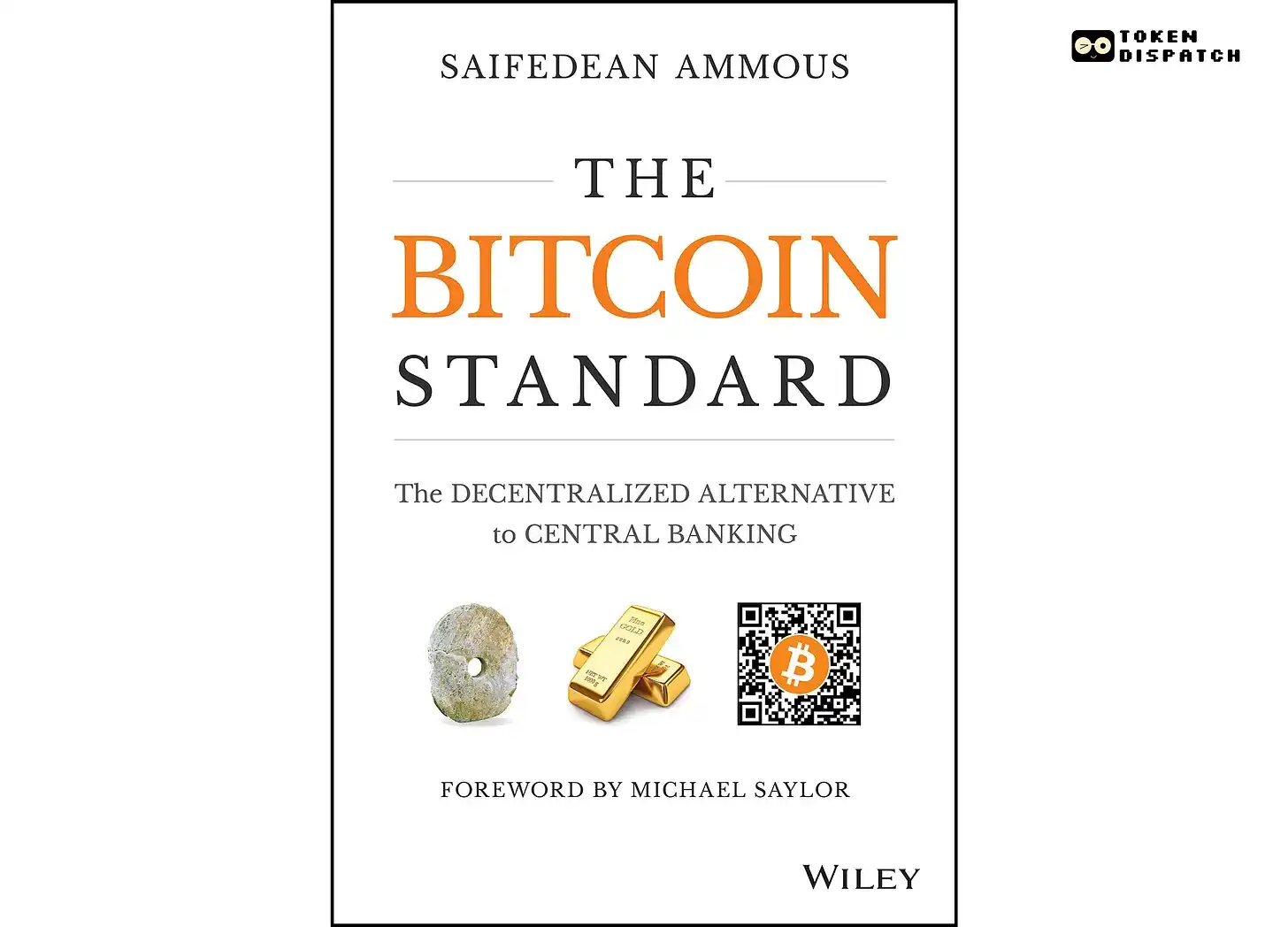
So, I will read this book in its entirety, divided into three parts. This is the first part.

We are still in the early chapters and haven't reached the later sections that fully critique fiat money for ruining everything from architecture to waistlines. For now, Saifedean Ammous is laying the groundwork, trying to convince you that money is a technology, that some forms of money are "harder" than others, and that history is essentially a process of continuous selection, with the harder options ultimately prevailing. If he can make you understand this, Bitcoin will then emerge as the "hardest money to date," and you'll feel it's inevitable.

I'm not entirely convinced yet, but I must admit it's a tricky framework.

The book begins by stripping money of its romanticized veneer, revealing its core essence. It is not a "social contract," nor a "product of the state," but simply a tool for transferring value across time and space, something people don't need to think too much about every day.

Ammous repeatedly emphasizes the concept of "Salability." A good monetary asset should be easily sold anytime, anywhere, without significant loss. To be salable, it must meet three conditions: across space—so you can carry it with you and use it to exchange for what you need; across time—so it doesn't rot or collapse in value; and across scale—so it can be used for any purpose, from a cup of tea to a house, without needing a calculator or a large bag of change.
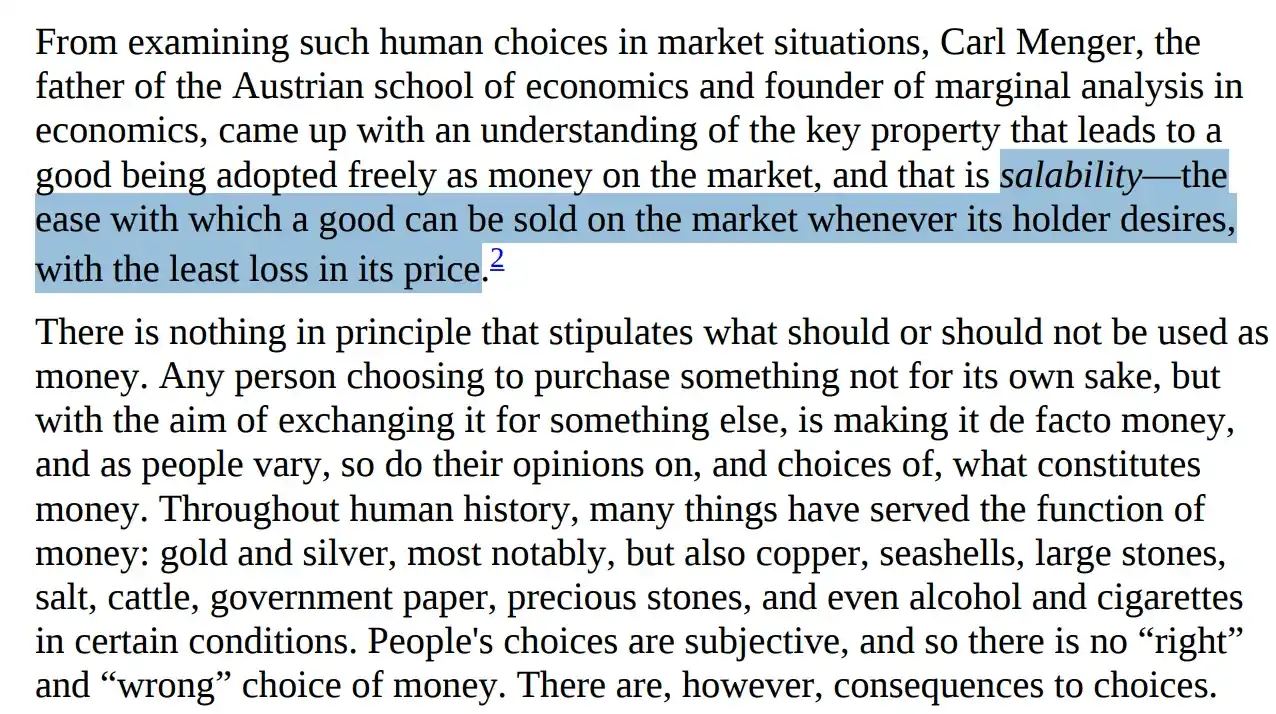
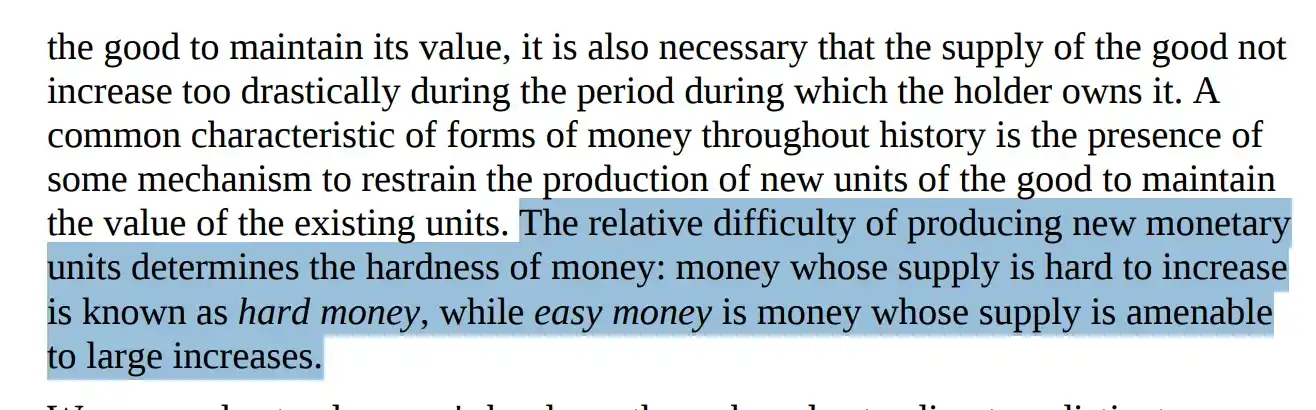
Next, the book's truly decisive word appears: hardness. Hard money is money whose supply is difficult to increase. Soft money is easy to print. This is the essence. The core logic is simple: Why would you store your life's work in something that others can easily create?
You can feel the influence of the Austrian School of Economics in every sentence, but once you strip away the ideology, the book leaves you with a very useful question: If I invest my savings in X, how easy is it for others to earn more X?

Once you view your life through this lens—whether it's rupees, dollars, stablecoins, Bitcoin, or any other monetary combination—it's hard to ignore.

After setting up this framework, the book takes you on a tour of a small "Museum of Broken Money."

The first exhibit is Yap Island and its Rai Stones. These huge circular limestone discs, some weighing up to four tons, were quarried from other islands and arduously transported to Yap. Ammous writes that this worked surprisingly well for centuries. The stones were bulky and difficult to move or steal. Everyone in the village knew which stone belonged to whom. Payment was made by announcing the change of ownership to the community. The stones were "easily salable anywhere on the island" because they were known everywhere on the island; they also stood the test of time because the cost of obtaining new stones was so high that the existing stock was always far greater than the new supply that could be produced in a given period... The stock-to-flow ratio of Rai stones was very high."

Then, technology arrived.

In 1871, an Irish-American captain named David O'Keefe was shipwrecked on Yap Island. After recovering, he left and later returned with a large ship and explosives, realizing he could quarry Rai stones in large quantities using modern tools. The villagers were divided. The chief deemed his stones "too easy" to produce, banned their quarrying, and insisted that only traditional stones counted. Others disagreed and began quarrying the newly discovered stones. Conflict ensued. The stones' use as money gradually faded. Today, they are mostly used for ceremonial purposes.

It's a neat, perhaps overly neat, parable. But it makes a point: once a monetary commodity loses its hardness (once someone can produce it cheaply and in large quantities), those who once held it end up subsidizing later arrivals.

Beads and shells followed the same pattern. West Africa's Aggry Beads were valuable because they were scarce and time-consuming to make. Later, European merchants began importing them in large quantities from glass factories. Ammous describes how this importation "slowly but surely" turned them from "hard money" into "cheap money," "undermining their salability and causing the purchasing power of these beads in the hands of African owners to decline over time, ultimately impoverishing them as their wealth was transferred to the Europeans, who could now easily obtain the beads."
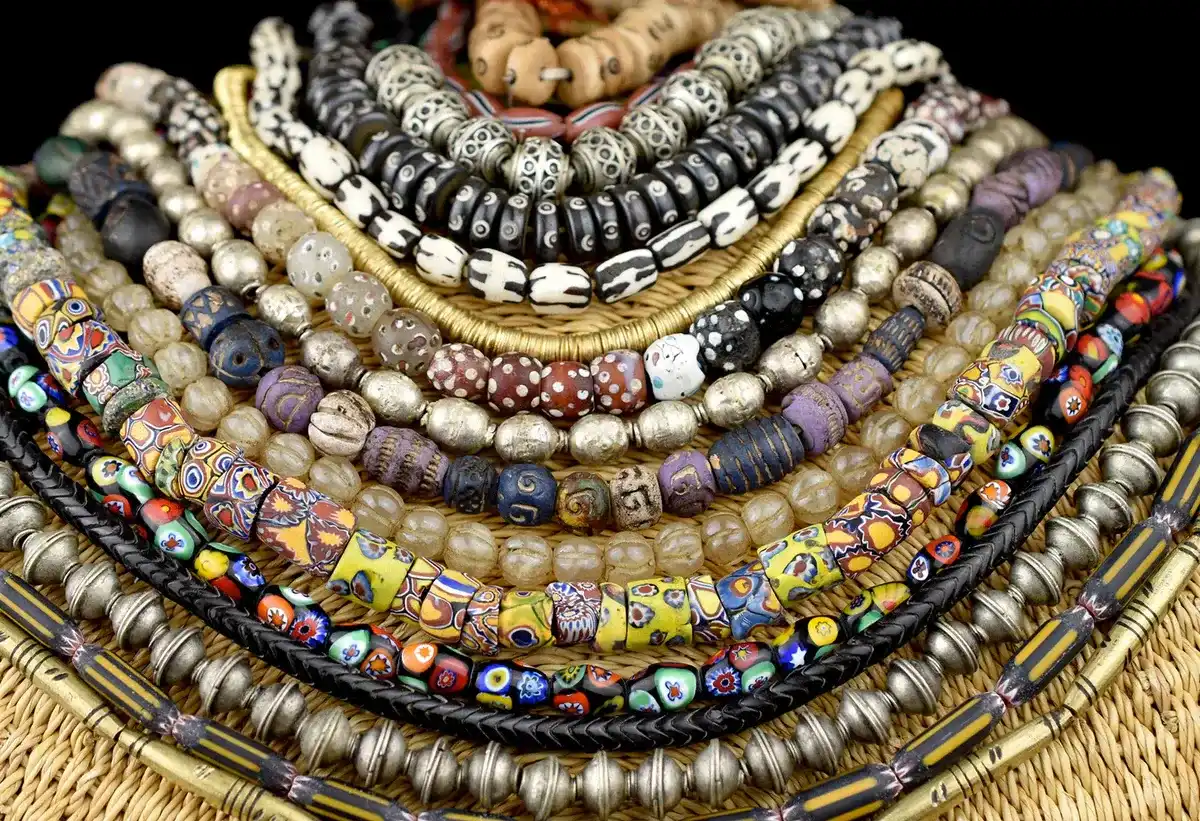
Cowrie shells and wampum experienced similar trajectories. They were initially scarce hard money, difficult to obtain, with high stock-to-flow ratios. Later, with the advent of industrial ships, "their supply expanded dramatically, causing their value to decline and their salability to be lost over time." and by 1661, they had lost their status as legal tender.

You'll find stories of cattle, salt, tally sticks, and cigarettes in prisoner-of-war camps. Each story does the same thing: trains your intuition to feel that if the supply of new units can suddenly be greatly increased at very low cost, then the stock held by savers is essentially making a donation.

You could criticize these historical narratives as being too tidy. There's little mention of violence, politics, or culture in these small stories. Everyone acts like a hyper-rational economic actor with perfect memory. But as a means of making you suspicious of easily printed money, it works.

After you're thoroughly horrified by shells and beads, metals emerge as the mature solution.

Metals solved many salability problems. They didn't spoil like grain. They were more portable than巨石. They could be minted into uniform coins, making pricing and accounting easier. Over time, gold and silver ultimately prevailed because they were the most resistant to inflation. The annual mining output only increased the existing stock by a small fraction, so no single miner could devalue everyone's savings.

Thus began the long era of metallic money, and later, gold-backed paper money. The book doesn't dwell too much on these details. Its purpose is to make you feel that once humans discovered gold, they found a near-perfect money: portable, durable, divisible, and most importantly, expensive to produce.

You'll later see how this sets the stage for Bitcoin's emergence. If you fully accept the notion that "given the physical and metallurgical conditions of the time, gold was the best substance we could make," then "Bitcoin is digital gold with even greater hardness" sounds logical.

What interests me is that in this section, gold is portrayed less as a mystical object and more as a clever workaround to physical limitations. If you imagine ancient societies as constantly trying to answer the question, "How do we preserve the fruits of a harvest or a voyage in a form that can be passed down to future generations?" then gold is a relatively clever, albeit imperfect, yet reasonable answer.

This framework also benefits Bitcoin. It is no longer "magic internet money," but rather "another attempt to solve the same problem with new tools."

The book hasn't reached that point yet, but you can feel the runway being laid.

Then, government money enters the scene as the villain.

So far, monetary collapses have stemmed from external factors. New technology emerged, breaking the rigidity of the monetary system, leaving savers with nothing. Now, the villain comes from within: governments and central banks have the legal authority to print money without any scarce commodity to back it.

In this narrative, fiat money is the product of governments realizing they could completely separate monetary symbols from real assets. The monetary unit was retained, but the constraints were removed. Governments told people their paper money had value because the law said so, because taxes had to be paid with it, not because it was backed by any physical asset.
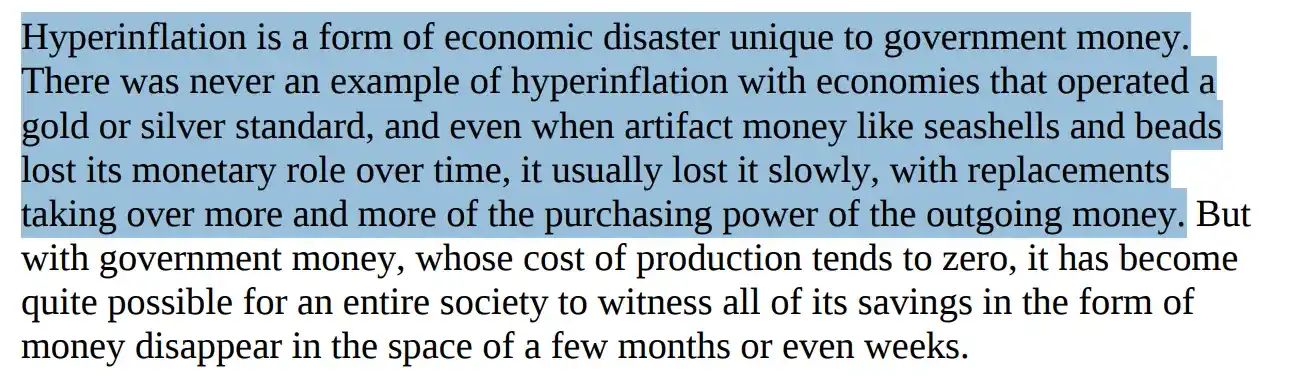
Under a gold or silver standard, money could be devalued or debased, but you didn't get Zimbabwe-style collapses where wages became worthless within months. But under a fiat system, this can happen. And some governments have indeed done it repeatedly.

Ammous spends considerable time explaining the social consequences of this phenomenon. To survive, people are forced to sell capital, and productive activity is eroded. Long-term contracts break down because no one trusts them. Political extremism thrives amidst anger and chaos. Weimar Germany is a prime example. Monetary collapse is just the precursor to worse things.

It's not wrong that most fiat currencies depreciate against physical goods over the long term. This is somewhat by design of the monetary system.

Where my mind starts to push back against the book is not the facts themselves, but its framing. Almost all the ills of modern society are blamed on the fiat monetary system. Central banks are portrayed almost entirely as tools that secretly tax savers to subsidize borrowers. Any benefits of having a flexible lender of last resort are downplayed as "but they will abuse it," which has some truth, but it's not the only question society must answer.

Even if you don't like central banks, the idea that "the entire twentieth century was a mistake from the moment we abandoned the full metal standard" feels a bit extreme.

What impressed me

So, beyond adding more quotable classics to the timeline, what practical impact did Part One actually have on me?

Strangely, it didn't make me more convinced about Bitcoin. It just clarified a question I hadn't asked carefully enough before.

I rarely look at my money the way Ammous does. I consider risk and returns, volatility, how much time I'm willing to put into crypto versus boring things. I don't systematically sit down and scrutinize who can print how much of each crypto I handle and under what rules.

Then I saw a Bloomberg chart showing the S&P 500 not priced in dollars, but in gold. It's so unfair. Priced in gold, the US stock market is back to where it was over a decade ago, in the post-global financial crisis era. All those dollar-denominated all-time highs, all the post-pandemic frenzy, are just noise on a flat line.
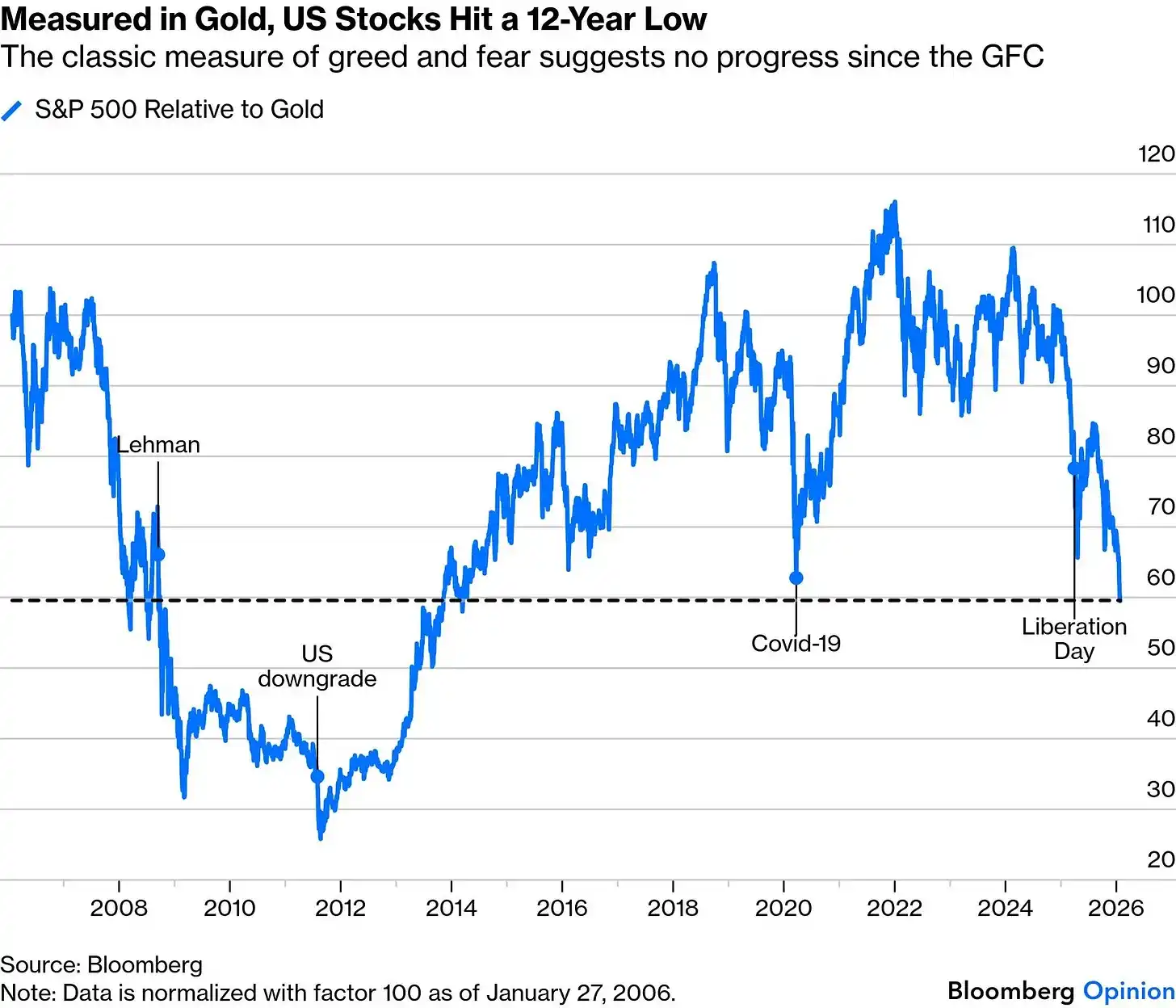
Once you understand this, it's hard to ignore the simple truth Ammous has been hammering home: performance is always "performance relative to what?" If your base unit is slowly depreciating, even if your index hits new highs, your performance in harder units might still be stagnant.

I realize the book leaves out a lot. It barely seriously discusses credit as a social tool, nor does it mention that states don't just destroy money; they also create the legal and military environments that allow markets to flourish. It doesn't delve into the idea that some groups might sacrifice some economic strength for greater resilience to shocks. Everything revolves around one core: are the savers' interests being diluted?

Maybe that's the point. It's a polemic, not a textbook. But I don't want to pretend it's the whole truth.

For now, I'm happy to treat it as a perspective, not a creed. Whenever I see a central bank's balance sheet, a new secondary bond issuance plan, or some "stable yield" product promising 18% returns in dollars, a Saifedean-esque voice echoes in my ear: How hard is this money really? And how many O'Keefes are already in the water with dynamite?

For now, I just want to remember this: money stores our future choices. Choose your monetary unit carefully, and be wary of anyone who can print more than you earn.


Pertanyaan Terkait

QWhat is the core concept of 'hard money' as described in the book 'The Bitcoin Standard'?

AHard money refers to a form of currency that is difficult to increase in supply, making it resistant to inflation and devaluation. It contrasts with 'soft money,' which can be easily created or printed.

QHow did the introduction of modern technology disrupt the Rai Stone monetary system on Yap Island?

AModern technology, such as ships and explosives brought by David O'Keefe, made it easier to mine and transport Rai Stones. This led to an oversupply, devaluing the existing stones and ultimately causing the collapse of their use as money.

QWhat is 'salability' in the context of money, and what are its three dimensions?

ASalability refers to the ease with which a monetary asset can be sold without significant loss. Its three dimensions are: across space (portability), across time (durability and resistance to decay), and across scale (divisibility for transactions of any size).

QWhy does the author argue that fiat money is problematic compared to commodity-based money like gold?

AFiat money is problematic because it can be easily printed by governments and central banks without any backing by scarce commodities. This leads to devaluation, loss of purchasing power, and economic instability, as seen in historical hyperinflation episodes like Weimar Germany.

QWhat historical examples does the book use to illustrate the downfall of previously 'hard' currencies?

AThe book uses examples like Rai Stones on Yap Island, Aggry beads in West Africa, and wampum shells, which were initially scarce and hard to produce but lost their value when technological advances or industrial methods made them easy to mass-produce.

Bacaan Terkait

Keberangkatan Cook dan Pengalihan Kepemimpinan ke Ternus: Diskontinuitas dan Restart Kekaisaran 4 Triliun Apple

Tim Cook secara resmi mengumumkan pengunduran dirinya sebagai CEO Apple, setelah 15 tahun memimpin perusahaan dari nilai pasar $350 miliar menjadi hampir $4 triliun. Penggantinya adalah John Ternus (50), seorang insinyur hardware murni yang telah berkarier di Apple sejak 2001. Transisi kekuasaan ini telah dipersiapkan dengan matang. Ternus, yang memiliki latar belakang teknis kuat di produk inti seperti iPhone dan Mac, dipandang sebagai pemimpin ideal untuk era baru Apple. Pergeseran internal juga mengukuhkan Johny Srouji sebagai kepala hardware, menyatukan kekuatan engineering dan chip design. Tantangan terbesar Ternus adalah mengejar ketertinggalan Apple di bidang AI. Di bawah Cook, strategi AI Apple terfragmentasi dan tertunda, bahkan sampai harus berkolaborasi dengan Google. Struktur organisasi yang terkendali, yang dulunya menjadi kekuatan, kini menjadi penghambat inovasi AI. Di era kecerdasan buatan (ASI), model bisnis "hardware + sistem + ekosistem" Apple menghadapi ujian. Meski memiliki lebih dari 2 miliar perangkat sebagai keunggulan distribusi, Apple harus menemukan keseimbangan antara idealisme privasi (AI di perangkat) dan realitas kompetisi. Waktu untuk membuktikan diri tidak panjang. Tekanan langsung akan datang pada WWDC mendatang, di mana Apple harus menunjukkan strategi AI yang jelas. Transisi ini bukan hanya soal pergantian pemimpin, tetapi tentang apakah Apple dapat menemukan kembali arahnya dan kembali menjadi perusahaan yang mendefinisikan masa depan di dunia yang digerakkan oleh AI.

marsbit17m yang lalu

Keberangkatan Cook dan Pengalihan Kepemimpinan ke Ternus: Diskontinuitas dan Restart Kekaisaran 4 Triliun Apple

marsbit17m yang lalu

Trading

Spot
Futures

Artikel Populer

Apa Itu BITCOIN

Memahami HarryPotterObamaSonic10Inu (ERC-20) dan Posisinya dalam Ruang Crypto Dalam beberapa tahun terakhir, pasar cryptocurrency telah menyaksikan peningkatan popularitas koin meme, menarik minat tidak hanya dari para pedagang, tetapi juga mereka yang mencari keterlibatan komunitas dan nilai hiburan. Di antara token unik ini adalah HarryPotterObamaSonic10Inu (ERC-20), sebuah proyek menarik yang memadukan referensi budaya ke dalam dunia cryptocurrency. Artikel ini membahas aspek-aspek kunci dari HarryPotterObamaSonic10Inu, menjelajahi mekanismenya, etos yang digerakkan oleh komunitas, dan keterlibatannya dengan lanskap crypto yang lebih luas. Apa itu HarryPotterObamaSonic10Inu (ERC-20)? Seperti namanya, HarryPotterObamaSonic10Inu adalah koin meme yang dibangun di atas blockchain Ethereum, diklasifikasikan di bawah standar ERC-20. Berbeda dengan cryptocurrency tradisional yang mungkin menekankan utilitas praktis atau potensi investasi, token ini berkembang berdasarkan nilai hiburan dan kekuatan komunitasnya. Proyek ini bertujuan untuk menciptakan lingkungan di mana pengguna yang terlibat dapat berkumpul, berbagi ide, dan berpartisipasi dalam aktivitas yang terinspirasi oleh berbagai fenomena budaya. Salah satu fitur mencolok dari HarryPotterObamaSonic10Inu adalah nol pajak pada transaksi. Elemen menarik ini bertujuan untuk mendorong perdagangan dan keterlibatan komunitas, tanpa biaya tambahan yang dapat menghalangi pedagang berskala kecil. Total pasokan koin ditetapkan pada satu miliar token, sebuah angka yang menandakan niatnya untuk menjaga sirkulasi yang substansial di dalam komunitas. Pencipta HarryPotterObamaSonic10Inu (ERC-20) Asal usul HarryPotterObamaSonic10Inu agak diselimuti misteri; rincian tentang penciptanya tetap tidak diketahui. Pengembangan token ini tidak memiliki tim yang teridentifikasi atau cetak biru yang jelas, yang bukan hal yang aneh dalam sektor koin meme. Sebaliknya, proyek ini muncul secara organik, dengan kemajuannya sangat bergantung pada antusiasme dan partisipasi komunitasnya. Investor HarryPotterObamaSonic10Inu (ERC-20) Terkait investasi eksternal dan dukungan, HarryPotterObamaSonic10Inu juga tetap ambigu. Token ini tidak mencantumkan yayasan investasi atau dukungan organisasi yang signifikan. Sebaliknya, denyut nadi proyek ini adalah komunitas akar rumputnya, yang menginformasikan pertumbuhannya dan keberlanjutan melalui aksi kolektif dan keterlibatan di ruang crypto. Bagaimana HarryPotterObamaSonic10Inu (ERC-20) Bekerja? Sebagai koin meme, HarryPotterObamaSonic10Inu beroperasi terutama di luar kerangka tradisional yang sering mengatur nilai aset. Ada beberapa aspek khas yang mendefinisikan cara kerja proyek ini: Transaksi Tanpa Pajak: Dengan tidak ada biaya pajak pada transaksi, pengguna dapat membeli dan menjual token tanpa khawatir akan biaya tersembunyi. Keterlibatan Komunitas: Proyek ini berkembang melalui interaksi komunitas, memanfaatkan platform media sosial untuk menciptakan buzz dan memfasilitasi keterlibatan. Diskusi, berbagi konten, dan keterlibatan adalah elemen penting yang membantu memperluas jangkauannya dan membangun loyalitas di antara para pendukung. Tidak Ada Utilitas Praktis: Perlu dicatat bahwa HarryPotterObamaSonic10Inu tidak menawarkan utilitas konkret dalam ekosistem finansial. Sebaliknya, ia diklasifikasikan sebagai token yang terutama untuk hiburan dan aktivitas komunitas. Referensi Budaya: Token ini dengan cerdik menggabungkan elemen dari budaya populer untuk menarik minat, terhubung dengan penggemar meme dan pengikut crypto. HarryPotterObamaSonic10Inu menunjukkan bagaimana koin meme beroperasi berbeda dari proyek cryptocurrency yang lebih tradisional, memasuki pasar sebagai konstruksi sosial yang inovatif daripada aset utilitarian. Garis Waktu HarryPotterObamaSonic10Inu (ERC-20) Sejarah HarryPotterObamaSonic10Inu ditandai oleh beberapa tonggak yang patut dicatat: Penciptaan: Token ini muncul dari meme viral, menangkap imajinasi banyak penggemar crypto. Tanggal penciptaan spesifik tidak tersedia, menekankan kebangkitannya yang organik. Pendaftaran di Bursa: HarryPotterObamaSonic10Inu telah muncul di berbagai bursa, memungkinkan akses dan perdagangan yang lebih mudah oleh komunitas. Inisiatif Keterlibatan Komunitas: Kegiatan yang sedang berlangsung bertujuan untuk meningkatkan interaksi komunitas, termasuk kontes, kampanye media sosial, dan generasi konten dari penggemar dan pendukung. Rencana Ekspansi Masa Depan: Peta jalan proyek ini mencakup peluncuran koleksi NFT, merchandise, dan situs eCommerce yang terkait dengan tema budayanya, lebih lanjut melibatkan komunitas dan berusaha menambahkan lebih banyak dimensi ke ekosistemnya. Poin Kunci Tentang HarryPotterObamaSonic10Inu (ERC-20) Sifat yang Diggerakkan oleh Komunitas: Proyek ini memprioritaskan masukan dan kreativitas kolektif, memastikan bahwa keterlibatan pengguna berada di garis depan pengembangannya. Klasifikasi Koin Meme: Ini mewakili puncak cryptocurrency berbasis hiburan, terpisah dari kendaraan investasi tradisional. Tidak Ada Afiliasi Langsung dengan Bitcoin: Meskipun ada kesamaan dalam nama ticker, HarryPotterObamaSonic10Inu berbeda dan tidak memiliki hubungan dengan Bitcoin atau cryptocurrency lain yang mapan. Fokus pada Kolaborasi: HarryPotterObamaSonic10Inu dirancang untuk menciptakan ruang untuk kolaborasi dan berbagi cerita di antara para pemegangnya, memberikan saluran untuk kreativitas dan ikatan komunitas. Prospek Masa Depan: Ambisi untuk berkembang melampaui premis awalnya ke dalam NFT dan merchandise menggambarkan jalur bagi proyek ini untuk berpotensi memasuki lebih banyak saluran arus utama dalam budaya digital. Seiring dengan terus meningkatnya daya tarik koin meme di komunitas cryptocurrency, HarryPotterObamaSonic10Inu (ERC-20) menonjol karena keterikatan budayanya dan pendekatan yang berorientasi pada komunitas. Meskipun mungkin tidak sesuai dengan pola tipikal token berbasis utilitas, esensinya terletak pada kegembiraan dan persahabatan yang ditegakkan di antara para pendukungnya, menyoroti sifat cryptocurrency yang terus berkembang dalam era digital yang semakin meningkat. Saat proyek ini terus berkembang, akan penting untuk mengamati bagaimana dinamika komunitas mempengaruhi trajektori dalam lanskap teknologi blockchain yang selalu berubah.

1.4k Total TayanganDipublikasikan pada 2024.04.01Diperbarui pada 2024.12.03

Apa Itu BITCOIN

Cara Membeli BTC

Selamat datang di HTX.com! Kami telah membuat pembelian Bitcoin (BTC) menjadi mudah dan nyaman. Ikuti panduan langkah demi langkah kami untuk memulai perjalanan kripto Anda.Langkah 1: Buat Akun HTX AndaGunakan alamat email atau nomor ponsel Anda untuk mendaftar akun gratis di HTX. Rasakan perjalanan pendaftaran yang mudah dan buka semua fitur.Dapatkan Akun SayaLangkah 2: Buka Beli Kripto, lalu Pilih Metode Pembayaran AndaKartu Kredit/Debit: Gunakan Visa atau Mastercard Anda untuk membeli Bitcoin (BTC) secara instan.Saldo: Gunakan dana dari saldo akun HTX Anda untuk melakukan trading dengan lancar.Pihak Ketiga: Kami telah menambahkan metode pembayaran populer seperti Google Pay dan Apple Pay untuk meningkatkan kenyamanan.P2P: Lakukan trading langsung dengan pengguna lain di HTX.Over-the-Counter (OTC): Kami menawarkan layanan yang dibuat khusus dan kurs yang kompetitif bagi para trader.Langkah 3: Simpan Bitcoin (BTC) AndaSetelah melakukan pembelian, simpan Bitcoin (BTC) di akun HTX Anda. Selain itu, Anda dapat mengirimkannya ke tempat lain melalui transfer blockchain atau menggunakannya untuk memperdagangkan mata uang kripto lainnya.Langkah 4: Lakukan trading Bitcoin (BTC)Lakukan trading Bitcoin (BTC) dengan mudah di pasar spot HTX. Cukup akses akun Anda, pilih pasangan perdagangan, jalankan trading, lalu pantau secara real-time. Kami menawarkan pengalaman yang ramah pengguna baik untuk pemula maupun trader berpengalaman.

9.7k Total TayanganDipublikasikan pada 2024.12.12Diperbarui pada 2025.03.21

Cara Membeli BTC

Apa Itu $BITCOIN

EMAS DIGITAL ($BITCOIN): Analisis Komprehensif Pengenalan EMAS DIGITAL ($BITCOIN) EMAS DIGITAL ($BITCOIN) adalah proyek berbasis blockchain yang beroperasi di jaringan Solana, yang bertujuan untuk menggabungkan karakteristik logam mulia tradisional dengan inovasi teknologi terdesentralisasi. Meskipun berbagi nama dengan Bitcoin, yang sering disebut sebagai “emas digital” karena persepsinya sebagai penyimpan nilai, EMAS DIGITAL adalah token terpisah yang dirancang untuk menciptakan ekosistem unik dalam lanskap Web3. Tujuannya adalah untuk memposisikan diri sebagai aset digital alternatif yang layak, meskipun rincian mengenai aplikasi dan fungsionalitasnya masih dalam pengembangan. Apa itu EMAS DIGITAL ($BITCOIN)? EMAS DIGITAL ($BITCOIN) adalah token cryptocurrency yang dirancang secara eksplisit untuk digunakan di blockchain Solana. Berbeda dengan Bitcoin, yang menyediakan peran penyimpanan nilai yang diakui secara luas, token ini tampaknya lebih fokus pada aplikasi dan karakteristik yang lebih luas. Aspek-aspek penting meliputi: Infrastruktur Blockchain: Token ini dibangun di atas blockchain Solana, yang dikenal karena kemampuannya menangani transaksi berkecepatan tinggi dan biaya rendah. Dinamika Pasokan: EMAS DIGITAL memiliki pasokan maksimum yang dibatasi pada 100 kuadriliun token (100P $BITCOIN), meskipun rincian mengenai pasokan yang beredar saat ini belum diungkapkan. Utilitas: Meskipun fungsionalitas yang tepat tidak dijelaskan secara eksplisit, ada indikasi bahwa token ini dapat digunakan untuk berbagai aplikasi, yang mungkin melibatkan aplikasi terdesentralisasi (dApps) atau strategi tokenisasi aset. Siapa Pencipta EMAS DIGITAL ($BITCOIN)? Saat ini, identitas pencipta dan tim pengembang di balik EMAS DIGITAL ($BITCOIN) tetap tidak diketahui. Situasi ini umum terjadi di antara banyak proyek inovatif dalam ruang blockchain, terutama yang sejalan dengan keuangan terdesentralisasi dan fenomena koin meme. Meskipun anonimitas semacam ini dapat mendorong budaya yang dipimpin komunitas, hal ini juga meningkatkan kekhawatiran tentang tata kelola dan akuntabilitas. Siapa Investor EMAS DIGITAL ($BITCOIN)? Informasi yang tersedia menunjukkan bahwa EMAS DIGITAL ($BITCOIN) tidak memiliki pendukung institusional yang dikenal atau investasi modal ventura yang menonjol. Proyek ini tampaknya beroperasi dengan model peer-to-peer yang berfokus pada dukungan dan adopsi komunitas daripada jalur pendanaan tradisional. Aktivitas dan likuiditasnya terutama terletak di bursa terdesentralisasi (DEX), seperti PumpSwap, daripada platform perdagangan terpusat yang mapan, lebih menyoroti pendekatan akar rumputnya. Bagaimana EMAS DIGITAL ($BITCOIN) Bekerja Mekanisme operasional EMAS DIGITAL ($BITCOIN) dapat dijelaskan berdasarkan desain blockchain dan atribut jaringannya: Mekanisme Konsensus: Dengan memanfaatkan bukti sejarah (PoH) unik dari Solana yang dipadukan dengan model bukti kepemilikan (PoS), proyek ini memastikan validasi transaksi yang efisien yang berkontribusi pada kinerja tinggi jaringan. Tokenomik: Meskipun mekanisme deflasi tertentu belum dijelaskan secara mendetail, pasokan token maksimum yang besar menunjukkan bahwa ini mungkin ditujukan untuk mikrotransaksi atau kasus penggunaan niche yang masih perlu didefinisikan. Interoperabilitas: Ada potensi untuk integrasi dengan ekosistem lebih luas Solana, termasuk berbagai platform keuangan terdesentralisasi (DeFi). Namun, rincian mengenai integrasi spesifik tetap tidak ditentukan. Garis Waktu Peristiwa Kunci Berikut adalah garis waktu yang menyoroti tonggak penting terkait EMAS DIGITAL ($BITCOIN): 2023: Penempatan awal token terjadi di blockchain Solana, ditandai dengan alamat kontraknya. 2024: EMAS DIGITAL mendapatkan visibilitas saat tersedia untuk diperdagangkan di bursa terdesentralisasi seperti PumpSwap, memungkinkan pengguna untuk memperdagangkannya melawan SOL. 2025: Proyek ini menyaksikan aktivitas perdagangan sporadis dan potensi minat dalam keterlibatan yang dipimpin komunitas, meskipun belum ada kemitraan atau kemajuan teknis yang signifikan yang didokumentasikan hingga saat ini. Analisis Kritis Kekuatan Skalabilitas: Infrastruktur Solana yang mendasari mendukung volume transaksi yang tinggi, yang dapat meningkatkan utilitas $BITCOIN dalam berbagai skenario transaksi. Aksesibilitas: Potensi harga perdagangan yang rendah per token dapat menarik investor ritel, memfasilitasi partisipasi yang lebih luas karena peluang kepemilikan fraksional. Risiko Kurangnya Transparansi: Ketidakhadiran pendukung, pengembang, atau proses audit yang dikenal publik dapat menimbulkan skeptisisme mengenai keberlanjutan dan keandalan proyek. Volatilitas Pasar: Aktivitas perdagangan sangat bergantung pada perilaku spekulatif, yang dapat mengakibatkan volatilitas harga yang signifikan dan ketidakpastian bagi investor. Kesimpulan EMAS DIGITAL ($BITCOIN) muncul sebagai proyek yang menarik namun ambigu dalam ekosistem Solana yang berkembang pesat. Meskipun berusaha memanfaatkan narasi “emas digital”, perbedaannya dari peran Bitcoin yang sudah mapan sebagai penyimpan nilai menyoroti perlunya diferensiasi yang lebih jelas mengenai utilitas dan struktur tata kelolanya. Penerimaan dan adopsi di masa depan kemungkinan akan bergantung pada penanganan ketidakjelasan saat ini dan mendefinisikan strategi operasional dan ekonominya dengan lebih eksplisit. Catatan: Laporan ini mencakup informasi yang disintesis yang tersedia hingga Oktober 2023, dan perkembangan mungkin telah terjadi di luar periode penelitian.

93 Total TayanganDipublikasikan pada 2025.05.13Diperbarui pada 2025.05.13

Apa Itu $BITCOIN

Diskusi

Selamat datang di Komunitas HTX. Di sini, Anda bisa terus mendapatkan informasi terbaru tentang perkembangan platform terkini dan mendapatkan akses ke wawasan pasar profesional. Pendapat pengguna mengenai harga BTC (BTC) disajikan di bawah ini.

活动图片