After the Crypto Craze, What Is Changpeng Zhao Thinking?

marsbitDipublikasikan tanggal 2026-01-27Terakhir diperbarui pada 2026-01-27

Abstrak

In the post-crypto boom era, Binance founder Changpeng Zhao (CZ) is shifting focus from short-term price speculation to long-term structural cycles, regulation, and government engagement. Speaking at Davos 2026, CZ avoided making specific price predictions but suggested Bitcoin could reach new highs in 2026 due to increasingly favorable regulatory environments, particularly in the U.S. and other countries. He revealed he is now acting as an unofficial coordinator between governments and the crypto industry, engaging with over a dozen countries on topics like regulatory frameworks, asset tokenization, and stablecoin design. CZ explicitly denied having any personal or business ties with Donald Trump, emphasizing that policy benefits are industry-wide, not personal. A key insight from his talk was the ongoing friction between traditional banking and crypto, with stablecoins serving as a temporary bridge. CZ’s evolution from a disruptive exchange CEO to a policy dialogue participant signals a broader industry shift from "price narrative" to "institution narrative." The new cycle is expected to be slower, longer, and more structured, driven by regulatory clarity and institutional maturity rather than mere market speculation.

Author: 137Labs

As the crypto market gradually cools and the narrative shifts toward long-term structures, the recent statements by Binance founder Changpeng Zhao provide a noteworthy perspective. This article does not focus on short-term price predictions but instead analyzes how he has shifted the discussion toward more macro variables such as cycles, governments, regulation, and time, based on his recent remarks at Davos. Through this shift, the article attempts to answer a more critical question: After the crypto craze, what stage has the industry truly entered?

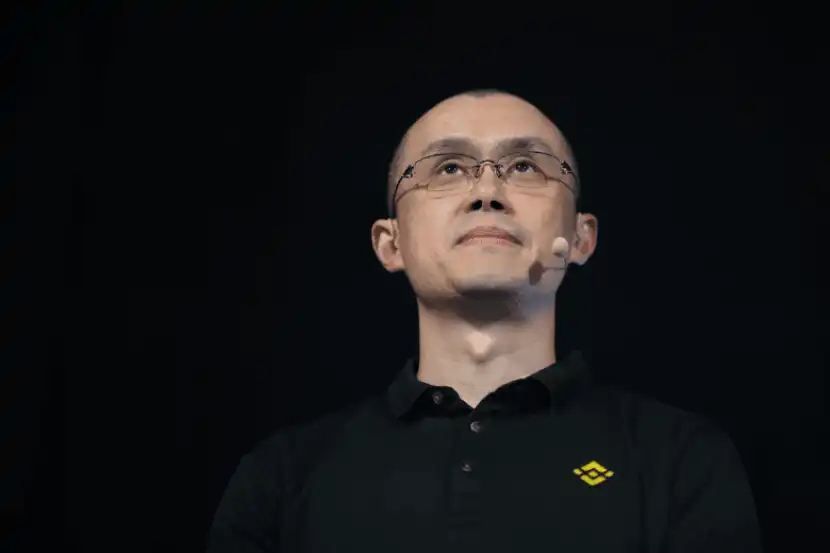
At Davos, Changpeng Zhao (CZ) appeared more cautious than ever before.

The founder and former CEO of Binance no longer leads the world's largest cryptocurrency exchange. Yet, at the 2026 World Economic Forum, he remained a figure of interest for the media and policy circles.

The reason lies not in any radical price predictions he offered—quite the opposite, he almost deliberately avoided short-term judgments.
I. He No Longer Predicts Prices, But Talks About "Time"

In an interview with CNBC, when asked about Bitcoin's price, Changpeng Zhao's response was surprisingly conservative:

Short-term prices are almost impossible to predict.

But immediately after, he offered a more macro judgment—

The cryptocurrency market may be entering a structural cycle that lasts for years.

In his description, this is not a traditional bull-bear switch but more of a change in cycle patterns.

He mentioned that Bitcoin historically fluctuated in four-year cycles, but this pattern is now being influenced by changes in the policy environment.

II. Why Might This Cycle Be Different?

The core reason Zhao gave was not technological upgrades or the halving narrative, but politics and regulatory environment.

He pointed out:

· The U.S. attitude toward cryptocurrency is becoming more friendly

· Other countries are quickly following suit with similar policies

· Crypto assets are gradually being incorporated into a "regulatable, discussable" category

In this context, he believes:

Bitcoin could reach a new all-time high in 2026.

However, it's important to note that this is not a statement of bullishness but more of a judgment on a policy-driven cycle.

III. "I Am in Dialogue with About a Dozen Governments"

More noteworthy than his price predictions is Zhao's main focus now.

He revealed in the interview that he is in communication with about a dozen governments, discussing key topics including:

· Cryptocurrency regulatory frameworks

· Asset tokenization

· The design and issuance of stablecoins

This stands in stark contrast to his earlier image of "innovate first, regulate later."

Today, he更像是一名:

Unofficial coordinator navigating between governments and the crypto industry.

IV. Regarding Trump, He Chose a "Clarification with Distance"

As U.S. politics increasingly influences the crypto industry, speculation about the relationship between Changpeng Zhao and Donald Trump has frequently surfaced.

To this, he gave a very clear response:

· He has never met Trump in person

· There is no close personal or business relationship

· The so-called "relationship" stems more from overlapping policy environments

In his explanation, the logic is very clear:

Policy benefits are at the industry level, not the result of personal relationships.

V. An Easily Overlooked Detail:

Why "Bypass the Banks"?

When discussing a Binance-related investment completed using a $1 stablecoin, Zhao added a thought-provoking detail:

The only requirement for using cryptocurrency was to avoid dealing with the banking system.

This statement highlights a practical issue:

Even as regulation becomes clearer, structural friction still exists between the traditional financial system and the crypto industry.

And stablecoins are becoming a temporary solution to bridge the two.

VI. Why Are Governments Becoming the Decisive Variable in the New Cycle?

In the early crypto narrative, governments were often seen as external disruptions, with cycles driven primarily by technological breakthroughs and market sentiment.

But today, that logic is fading.

As crypto assets are incorporated into formal regulatory frameworks, the market's focus shifts from "can it be done" to "how to do it, and under what system." When rules begin to be systematically designed, cycles are no longer solely determined by risk appetite but start to be influenced by the pace of institutional progress.

Regulatory clarity, compliance paths, and the confirmation of legal status do not immediately drive up prices, but they reshape long-term expectations, attracting institutional capital and national-level projects.

In this context, the new cycle is likely to be slower, longer, and more restrained.

Extreme bubbles decrease, while infrastructure and institutions gradually take shape.

If the early crypto cycles relied on imagination, the next phase seems more driven by policy patience and institutional maturity.

Conclusion:

CZ's Transformation Might Be More Important Than His Predictions

If one only extracts a few sentences, Zhao's remarks can easily be interpreted as price predictions.

But what is truly worth noting is his change.

From exchange CEO to industry advisor;

From resisting regulation to participating in institutional discussions;

From talking about coin prices to talking about time.

This perhaps signifies one thing:

The crypto industry is moving from "price narrative" to "institutional narrative."

And this time, the rhythm of the cycle may no longer be determined solely by the market.

This article represents the author's personal views only and does not constitute any investment, legal, or financial advice. The views are based on public information and are for discussion and reference only.


Pertanyaan Terkait

QWhat is the main shift in Zhao Changpeng's (CZ) focus according to the article?

ACZ has shifted his focus from short-term price predictions and a 'build first, regulate later' approach to engaging in macro-level discussions about cycles, government relations, and regulatory frameworks. He is now acting more as an unofficial coordinator between governments and the crypto industry.

QWhat reason does CZ give for why the current crypto market cycle might be different from previous ones?

ACZ states that the core reason is not technological upgrades or the 'halving' narrative, but the changing political and regulatory environment, particularly more friendly attitudes from the U.S. and other countries, which is integrating crypto into a 'governable and discussable' category.

QWhat detail does CZ provide about his relationship with former U.S. President Donald Trump?

ACZ explicitly clarifies that he has never met Donald Trump in person and that there is no close personal or business relationship. He attributes any perceived connection to an overlap in policy environments, not personal rapport.

QAccording to the article, what role is stablecoin playing in the current crypto landscape?

AStablecoins are serving as a temporary solution to bridge the structural friction that still exists between the traditional banking system and the crypto industry, allowing transactions to be settled without directly dealing with banks.

QWhat does the article suggest is the new primary driver of the crypto market's long-term cycle?

AThe article suggests that government policy, regulatory clarity, and institutional maturity are becoming the key long-term drivers, shifting the cycle from being driven by market speculation and imagination to being shaped by policy patience and the pace of regulatory development.

Bacaan Terkait

STRC Saham Preferen Terlepas dari Patokan 11%, Akankah Mesin Abadi Strategy Tetap Berputar?

Penulis: Azuma, Odaily Planet Daily Saham preferen STRC milik MicroStrategy terus mengalami "de-pegging" (lepas dari patokan). Sejak 15 Mei, harga STRC telah menyimpang dari nilai target US$100, dan diskonnya semakin dalam, bahkan sempat menyentuh US$83,26 dan ditutup di US$88,59, atau terlepas lebih dari 11% dari nilai target. STRC dirancang sebagai sekuritas pendapatan yang beroperasi di sekitar nilai US$100. Pelepasannya dari patokan ini menantang logika produk ini. Sebagai saluran pendanaan utama MicroStrategy untuk menambah cadangan Bitcoin, harga STRC mencerminkan kepercayaan pasar terhadap model operasi modal perusahaan. STRC adalah mesin dari "flywheel" (roda gila) modal MicroStrategy. Ia memungkinkan penerbitan berkelanjutan melalui mekanisme ATM selama harganya stabil di atas US$100, menciptakan daya beli tanpa mengencerkan ekuitas pemegang saham biasa (MSTR). Roda gila ini bergantung pada stabilitas harga STRC di sekitar US$100. Untuk mempertahankannya, MicroStrategy menerapkan mekanisme penyesuaian dividen bulanan. Namun, meskipun dividen dinaikkan menjadi 11,5% dan frekuensinya menjadi dua minggu sekali, de-pegging tetap berlanjut. Penyebab de-pegging terutama adalah masalah kepercayaan. Selain tekanan jual dari pelaku arbitrase yang menggunakan leverage, kekhawatiran utama adalah likuiditas MicroStrategy. Laporan JPMorgan menyebut kewajiban dividen tahunan sekitar US$1,7 miliar, dengan cadangan tunai hanya cukup untuk sekitar 6,3 bulan. MicroStrategy membantah, menyatakan cadangan Bitcoin-nya dapat menutupi dividen selama 32 tahun, namun itu mengasumsikan penjualan Bitcoin jika diperlukan. Baru-baru ini, MicroStrategy untuk pertama kalinya menjual 32 Bitcoin, yang mengguncang pasar karena bertentangan dengan narasi "HODL" (hold/tahan) jangka panjang mereka. STRC yang terus terdiskonto akan melemahkan kemampuan pendanaan MicroStrategy. Jika situasi ini berlanjut sementara cadangan tunai terkuras, kekhawatiran akan penjualan Bitcoin lebih lanjut untuk membayar dividen akan meningkat. Sebagai pembeli besar Bitcoin, pergeseran potensial MicroStrategy dari pembeli menjadi penjual dapat memberikan tekanan signifikan pada harga Bitcoin.

marsbit5m yang lalu

STRC Saham Preferen Terlepas dari Patokan 11%, Akankah Mesin Abadi Strategy Tetap Berputar?

marsbit5m yang lalu

Baru Saja, Pemenang Nobel Bergabung sebagai Karyawan Baru Anthropic

Baru-baru ini, John Jumper, pemenang Hadiah Nobel Kimia dan pemimpin inti AlphaFold, mengumumkan keluar dari Google DeepMind setelah hampir 9 tahun untuk bergabung dengan Anthropic. Langkah ini terjadi hanya dua hari setelah Noam Shazeer, salah satu penulis kunci makalah "Attention Is All You Need", meninggalkan Google untuk OpenAI. Kedua kepindahan ini menjadi pukulan besar bagi Google, dengan para pengamat menilai perusahaan kehilangan dua aset berharga dalam 72 jam. Jumper bergabung dengan DeepMind pada 2017, hanya 6 bulan setelah meraih gelar PhD, dan langsung ditunjuk untuk memimpin tim AlphaFold. Di bawah kepemimpinannya, AlphaFold 2 pada 2020 memecahkan masalah pelipatan protein yang telah berlangsung 50 tahun. Pada 2024, ia dan Demis Hassabis memenangkan Hadiah Nobel Kimia atas karyanya. Prestasinya dikatakan mempercepat penemuan struktur protein hingga 1000 kali lipat. Kepindahan Jumper ke Anthropic memperkuat ambisi perusahaan tersebut di bidang ilmu kehidupan. Sebelumnya, Anthropic telah mengakuisisi Coefficient Bio seharga $400 juta dan meluncurkan produk khusus seperti Claude for Life Sciences. Di sisi lain, OpenAI juga gencar berinvestasi di sektor ini dengan model GPT-Rosalind dan komitmen dana miliaran dolar. Sementara itu, Google DeepMind melalui Isomorphic Labs tetap menjadi pemain kuat berkat teknologi AlphaFold. Perpindahan para peneliti top dari Google memicu pertanyaan tentang daya tarik perusahaan besar versus lab AI yang lebih gesit. Seorang investor berkomentar bahwa lab AI frontier menawarkan sesuatu yang tidak dimiliki Google: perasaan bahwa satu orang dapat mengubah jalur perusahaan. Industri kini menyaksikan persaingan sengit antara Anthropic, OpenAI, dan Google DeepMind untuk mendominasi revolusi AI di bidang ilmu kehidupan.

marsbit10m yang lalu

Baru Saja, Pemenang Nobel Bergabung sebagai Karyawan Baru Anthropic

marsbit10m yang lalu

Trading

Spot
Futures
活动图片