After the Collapse of the Believe Flywheel Myth, the 26-Year-Old Prodigy Founder Stands as Defendant in Federal Court

marsbitDipublikasikan tanggal 2026-04-16Terakhir diperbarui pada 2026-04-16

Abstrak

In March 2026, 26-year-old Australian entrepreneur Ben Pasternak and his entities B24, Inc. and Believe Foundation were sued in a New York federal court. Investors accused Pasternak of deceptive practices and false advertising through three consecutive token offerings and a forced token migration, causing hundreds of millions in losses. The case centers on Believe (formerly Clout.me), a Solana-based social token launch platform Pasternak founded. Users could create tokens via tweets, with the platform token LAUNCHCOIN reaching a peak market cap of $370 million in May 2025. Pasternak initially claimed he had "zero ownership" of his self-named token, PASTERNAK, which crashed over 95% within a week. In October 2025, Believe forced a migration from LAUNCHCOIN to a new token, BELIEVE, increasing total supply by 33.3%. New tokens were allocated to team members, investors, and the foundation, diluting existing holders. Pasternak falsely claimed no tokens were allocated to insiders for a year, while the foundation received 40 million tokens with no lock-up. The platform generated an estimated $54 million in fees from $6 billion in trading volume. Pasternak earned creator fees throughout. After the migration, significant selling occurred from top wallets. BELIEVE’s value plummeted from its peak to around $1.2 million. Pasternak, a former teen prodigy who dropped out of school at 15, had previously founded apps like Monkey and the food-tech startup NUGGS. His personal life also dre...

On March 23, 2026, a lawsuit was filed in the Southern District of New York Federal Court, officially naming 26-year-old Australian entrepreneur Ben Pasternak and his entities B24, Inc. and Believe Foundation as defendants.

This class action lawsuit, initiated by investors Joshua Lee and Pierre Montmeas, accuses Pasternak of engaging in deceptive business practices and false advertising through three consecutive token offerings and one forced migration, resulting in hundreds of millions of dollars in losses for consumers. By this time, nearly half a year had passed since his last original social media post.

The core of this lawsuit points to a Solana ecosystem application named Believe. Believe (formerly Clout.me) was a Solana social token launch platform launched in 2025, founded by Pasternak. Users could create tokens without code simply by posting a tweet on platform X with "@launchcoin + token name". It utilized a bonding curve mechanism, automatically upgrading to a Meteora liquidity pool once the market cap reached $100,000. The platform was positioned as an "idea crowdfunding platform," and its platform token LAUNCHCOIN reached a peak market cap of $370 million in May 2025.

According to the complaint, Pasternak launched a token named after himself, PASTERNAK, in January 2025, publicly stating on the same day that he had "zero ownership" of the token. This statement successfully built a trust narrative of "no insider allocation," and the token's market cap briefly touched $80 million on its first day. However, within a week, the price plummeted over 95%, and by March 2025, its market cap was only about $190,000.

On April 28, 2025, the platform was renamed from Clout to Believe; on May 2, the on-chain metadata for PASTERNAK was changed to LAUNCHCOIN, though the token contract itself was not redeployed. The complaint points out that in mid-May, the LAUNCHCOIN market cap once exceeded $240 million, reaching an all-time high of $0.3647. The price continued to decline afterwards, while Pasternak and the official Believe account publicly promised at least twelve times during this period to initiate a "flywheel" buyback mechanism, using platform fee revenue to purchase tokens on the open market to support the price.

On October 15, 2025, the Believe team announced the forced migration of LAUNCHCOIN to a new token, BELIEVE. Holders had to complete a 1:1 exchange by October 29; tokens not migrated by the deadline would be permanently destroyed.

Simultaneously, the total supply of the new token inflated from 1 billion to approximately 1.333 billion, an increase of 33.3%. The complaint details the allocation of the new tokens: about 17% allocated to current and future contributors, subject to a four-year vesting period and a one-year lockup; about 5% allocated to early investors, locked for one year; and about 3% allocated to the foundation, with no lockup restrictions, immediately available.

Original LAUNCHCOIN holders received no additional compensation and saw their ownership directly diluted.

The complaint further states that Pasternak publicly stated on the day of the migration announcement that "no individual or entity will get tokens for at least a year," a statement clearly contradicted by the fact that the foundation's approximately 40 million tokens were immediately unlocked. Additionally, the Believe team described the supply increase as "25%," while the actual mathematical calculation was approximately 33%, a discrepancy that sparked widespread skepticism and ridicule within the crypto community.

Regarding the platform's economic model, Believe charged approximately a 2% fee on each transaction, initially split equally between the token creator and the platform, but adjusted in June 2025 to 70% for the creator and 30% for the platform. The platform also designed a "scout" mechanism, where the first user to trigger a token launch would receive 0.1% of subsequent transaction fees. The complaint estimates that Believe processed approximately $6 billion in trading volume, with total platform fee revenue around $54 million.

As the creator of PASTERNAK, LAUNCHCOIN, and BELIEVE, Pasternak himself continuously received a share of the creator fees. The complaint also notes that in the week the migration was announced, on-chain data showed significant selling activity from top wallet addresses.

Pasternak's last original tweet was posted on October 16, 2025. In this lengthy post, he admitted for the first time that he had never purchased any Solana token before launching his first one, reiterated that the team received no token allocation in the initial offering, clarified the misstatement regarding the supply increase, promised that the foundation's holdings would not be sold, and committed to initiating the buyback flywheel after the migration was complete.
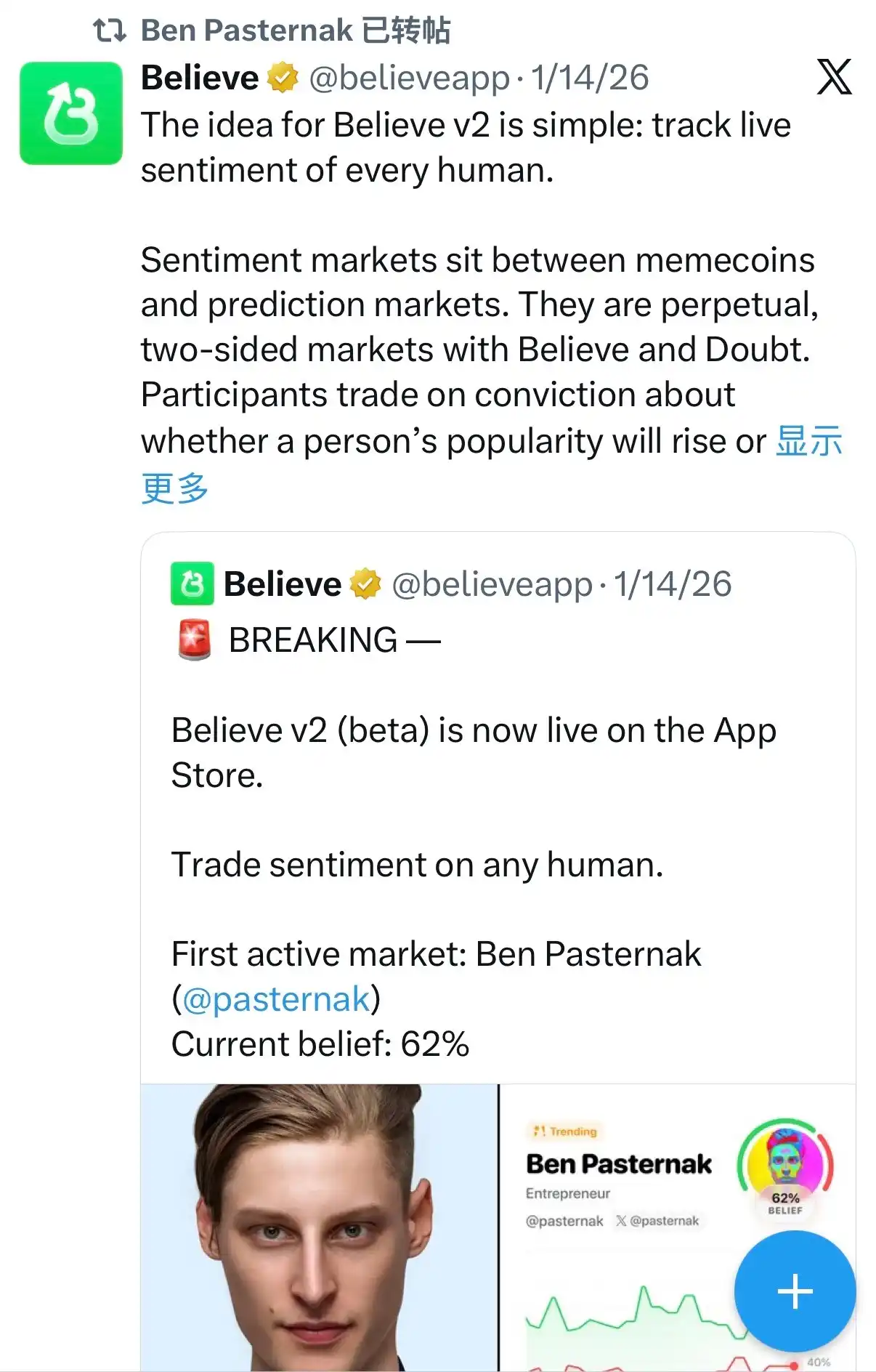
On January 14, 2026, he retweeted a post from the official Believe account, which read: "The idea behind Believe v2 is simple: track everyone's real-time sentiment."
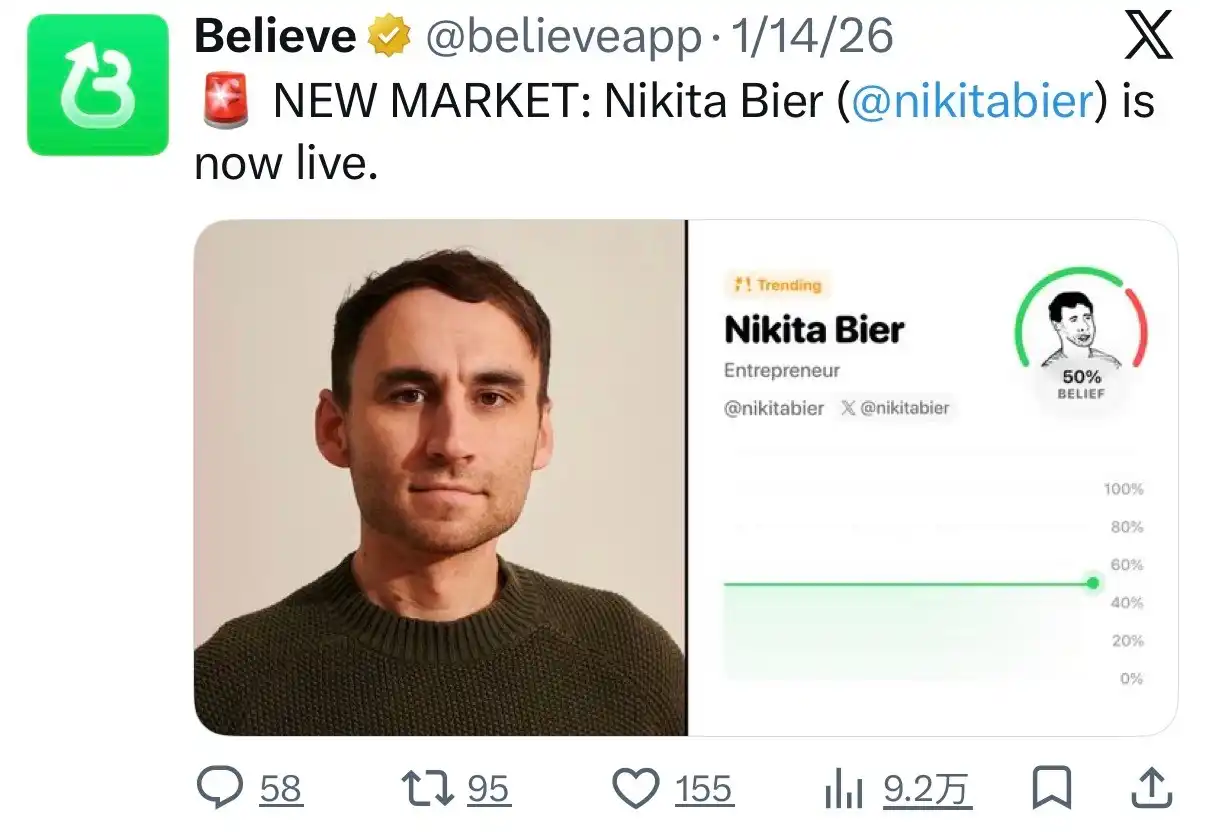
Updates from the official Believe account also stopped on that day, with its last tweet announcing: "New market listing: Nikita Bier (@nikitabier) is now open for trading." Thereafter, both Pasternak's personal and the project's official social media fell completely silent.

Believe v2, launched in January 2026, attempted to pivot to a "sentiment market," allowing users to bet on the real-time popularity of public figures through a perpetual bilateral market, but failed to regain market attention. As of the filing date, the BELIEVE token's market cap was approximately $1.2 million, having evaporated from its historical high.

This lawsuit invokes New York General Business Law Sections 349 and 350, California's Unfair Competition Law and False Advertising Law, alongside common law claims such as negligent misrepresentation and unjust enrichment. The plaintiffs request the court to order the defendants to compensate for actual losses, return platform and creator fees, and, where necessary, impose constructive trusts and injunctive relief on traceable digital assets.

Documents show Pasternak resides in Manhattan, New York, and his controlled entity B24, Inc. is also registered in New York, with platform operations and development pointing to this jurisdiction. As of the time of writing, he has not publicly responded to the lawsuit nor disclosed the specific amount of profit he gained from the Believe project.

A Legendary Teenage Era

Prior to this legal storm, Pasternak's life resume was legendary. Born on September 6, 1999, in Sydney, Australia, into a Jewish family, he grew up in the Vaucluse suburb. He taught himself programming at age 13. In 2014, at 14 years old, he collaborated with an engineer from Chicago during a school science class and completed the iOS game "Impossible Rush" in a few hours, which garnered millions of downloads and briefly reached No. 16 on the US App Store overall chart. Media quickly picked up the story, dubbing him "the next Zuckerberg."

In January 2015, the 15-year-old Pasternak rejected internship offers from Facebook and Google, dropped out of high school, and flew alone to New York to seek venture capital. In April of the same year, he founded Flogg, a social shopping app for teenagers, raising about $2 million from firms like Binary Capital and Greylock Partners.

Flogg's performance fell short of expectations and it shut down by the end of 2016. He promptly redirected resources to a new project, Monkey, a video chat app for teenagers.

Monkey accumulated over 20 million users and was acquired by the Chinese company Holla in 2018, becoming his first successfully sold startup from his teenage years.

Starting in 2018, Pasternak shifted to the food tech sector, co-founding Simulate and launching the plant-based chicken nugget NUGGS. The project attracted support from notable investors like Alexis Ohanian, Jay-Z, and McCain Foods, raising over $50 million in 2021, with the company's valuation once exceeding $250 million. That same year, he was named to the Forbes "30 Under 30" list.

From mobile apps to food tech, and then to Web3, Pasternak's every pivot landed on trending sectors, accompanied by significant controversy and risk. And as he finds himself deep in legal troubles, his personal life has also taken a dramatic turn.
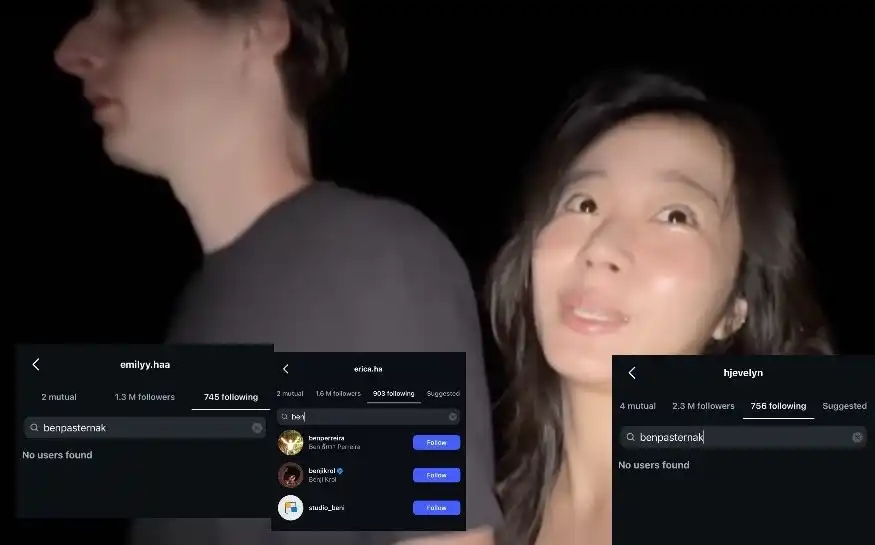
Since the second half of 2024, Pasternak was publicly dating TikTok influencer Evelyn Ha. Evelyn is from the influential Korean-American Ha family of three sisters, and Pasternak frequently shared their luxurious interactions on social platforms.

However, in early April 2026, netizens noticed that the Ha sisters had simultaneously unfollowed him on Instagram, and Evelyn was later revealed to be in a close relationship with a Twitch streamer. The outside world widely interpreted this series of actions as signals of the relationship's end, with some in the crypto community joking that "the Hermès budget can finally be reinvested into the flywheel."

From the teenager writing apps in a Sydney high school classroom to the entrepreneur standing as a defendant in a New York federal court, Ben Pasternak's 26th year has brought both legal and emotional storms. He was once the media's "next Zuckerberg," but now his name is more often associated with "fraud," "collapse," and "unfollow."


Pertanyaan Terkait

QWhat are the main allegations against Ben Pasternak and his entities in the federal lawsuit?

AThe lawsuit alleges that Ben Pasternak, B24, Inc., and Believe Foundation engaged in deceptive business practices and false advertising through three consecutive token offerings and a forced migration, causing consumers to suffer hundreds of millions of dollars in losses.

QWhat was the core mechanism and initial promise of the Believe (formerly Clout.me) platform?

ABelieve was a Solana-based social token launch platform where users could create tokens by posting a specific tweet. It used a bonding curve mechanism and promised an automatic 'flywheel' buyback mechanism, using platform fee revenue to purchase tokens on the open market to support their price.

QWhat controversial action did the Believe team take with the LAUNCHCOIN token in October 2025?

AThe Believe team announced a forced migration from the LAUNCHCOIN token to a new token called BELIEVE. The total supply was inflated by approximately 33.3%, diluting original holders, and the new tokens were allocated to team members, investors, and a foundation, contrary to Pasternak's earlier public statements.

QWhat was the significant contradiction between Pasternak's public statements and the token migration plan?

APasternak publicly stated that 'no individual or entity would receive tokens for at least a year' on the day the migration was announced. However, the foundation's allocation of approximately 40 million BELIEVE tokens was immediately unlocked and usable, directly contradicting his claim.

QWhat was Ben Pasternak's background and public persona before the Believe controversy?

ABefore the Believe controversy, Ben Pasternak was celebrated as a teenage prodigy who created popular apps, sold a company, and founded a successful food-tech startup, NUGGS. He was featured on the Forbes '30 Under 30' list and was often referred to as 'the next Zuckerberg' by the media.

Bacaan Terkait

Perhatian Wajib Pekan Depan|Undang-Undang CLARITY Diperkirakan Akan Masuk ke Pemungutan Suara Senat; SpaceX dan Circle Umumkan Laporan Keuangan (3-9 Agustus)

**Ringkasan Acara Penting Pekan Depan (3-9 Agustus)** Pekan depan diwarnai sejumlah pengumuman keuangan penting dan perkembangan regulasi kripto di AS. **Laporan Keuangan & Acara Perusahaan:** * **SpaceX** akan merilis laporan keuangan Q2 2026 pada 4 Agustus, diikuti gelombang pencairan saham internal pertama (hingga 12%) pada 6 Agustus. * **Circle** (penerbit USDC) dan **Hut 8** (penambang Bitcoin) masing-masing akan mengumumkan laporan kuartalan pada 5 Agustus dan 4 Agustus. * **American Bitcoin (ABTC)**, perusahaan tambang kripto yang dikaitkan dengan keluarga Trump, merilis laporan Q2 pada 3 Agustus. * Perusahaan robotika **宇树科技 (Unitree Robotics)** akan melakukan penawaran saham perdana (IPO) di pasar STAR China, dengan hari penentuan harga awal pada 5 Agustus. **Regulasi Kripto AS:** * **CLARITY Act**, undang-undang kerangka kerja federal untuk aset kripto, berpeluang dilakukan pemungutan suara penuh di Senat AS minggu ini. Para negosiator harus merampungkan aturan tentang konflik kepentingan sebelum masa reses 7 Agustus. RUU ini memerlukan 60 suara untuk disetujui. **Pengumuman Data & Teknologi:** * **Laporan Non-Farm AS** untuk Juli akan dirilis pada 7 Agustus, menjadi fokus pasar. * **Grok AI** versi 4.6 (dengan 1,5 triliun parameter) diperkirakan diluncurkan sekitar 7 Agustus, diikuti versi 4.7 yang lebih kuat beberapa minggu setelahnya. * **XRP Ledger** versi 3.3.0 dengan lima fitur baru, termasuk transaksi batch, dijadwalkan rilis minggu depan. **Penutupan & Perubahan Layanan:** * Beberapa layanan kripto akan berhenti beroperasi: **Zapper** (pelacak portofolio DeFi) dan **Ctrl Wallet** pada 3 Agustus, serta **LayerZero** akan menghentikan relayernya untuk v1 pada tanggal yang sama. Bursa Korea **Upbit** akan menghapus perdagangan pasangan **AQT** dan **AERGO** pada 3 Agustus. **Acara Lainnya:** * **BIP-110**, sebuah proposal peningkatan jaringan Bitcoin, akan memulai fase pengiriman sinyal wajib sekitar 8 Agustus.

marsbit17m yang lalu

Perhatian Wajib Pekan Depan|Undang-Undang CLARITY Diperkirakan Akan Masuk ke Pemungutan Suara Senat; SpaceX dan Circle Umumkan Laporan Keuangan (3-9 Agustus)

marsbit17m yang lalu

Saham Jatuh Lebih Parah daripada Kripto, Ke Mana Uangnya Pergi?

Penulis: Cathy,白话区块链 Pada 28 dan 29 Juli di Seoul, indeks Kospi memicu *circuit breaker* dua hari berturut-turut, suatu peristiwa yang belum pernah terjadi dalam sejarah pasar saham Korea. Saham-saham semikonduktor global, termasuk SK Hynix yang turun sekitar 23% dalam dua hari, mengalami penurunan drastis. Penarikan dana (pullback) Kospi pada Juli mencapai 40% dari titik tertinggi Juni, menjadikannya bulan terburuk yang tercatat. Produk leverage seperti ETF 2x Long SK Hynix bahkan anjlok hingga 83%, menghapus lebih dari 1 triliun HKD dalam nilai pasar. Ironisnya, Bitcoin justru naik hampir 15% dari titik terendah Juli, menunjukkan perilaku yang tidak biasa: **saham yang jatuh seperti aset kripto, sementara Bitcoin relatif stabil.** Penurunan ini bukan kepanikan pasar luas, melainkan "peledakan tertarget" terhadap perdagangan yang paling ramai (*crowded trades*), dipicu oleh laporan keuangan SK Hynix yang meski mencetak rekor laba tetapi di bawah perkiraan, serta IPO besar-besaran ChangXin Memory (CXMT) dari China. Ditambah dengan potensi likuidasi posisi *carry trade* Yen Jepang yang masif, pasar mengalami de-leverage paksa. Lalu, apakah uang yang keluar dari saham mengalir ke Bitcoin? Jawabannya tidak. Bitcoin tampak "tahan jatuh" karena sudah mengalami koreksi lebih dulu—jatuh sekitar 21% selama periode arus keluar ETF berkelanjutan pada Mei-Juni. Uang yang mencari perlindungan justru mengalir ke emas, yang harganya naik lebih dari 20% secara tahunan. Koefisien korelasi Bitcoin dengan emas mencapai -0.88, mengindikasikan bahwa institusi kini memandangnya sebagai aset yang berbeda: **emas untuk perlindungan, Bitcoin untuk potensi pertumbuhan.** Agar aliran dana besar-besaran benar-benar masuk ke Bitcoin, diperlukan tiga kondisi: tekanan likuidasi global mereda, The Fed menurunkan suku bunga tanpa memicu resesi, dan disahkannya RUU CLARITY di AS untuk memberikan kejelasan regulasi. Meski RUU tersebut tertunda di Senat, arahnya sudah jelas. **Harga saham teknologi ditentukan oleh pengeluaran modal AI dan laba perusahaan, sedangkan harga Bitcoin ditentukan oleh likuiditas global.** Ketidakselarasan ini justru menciptakan daya tarik bagi institusi yang ingin mendiversifikasi portofolio mereka. Kesimpulannya, Bitcoin saat ini bukan tempat perlindungan (*safe haven*), melainkan aset yang sudah terkoreksi lebih dulu dan sudah berada di posisi yang siap. **Dana belum datang, tetapi posisinya sudah dipersiapkan.** Ketika badai berlalu dan modal global mencari tempat baru untuk dialokasikan, Bitcoin berada di urutan terdepan dalam antrian.

marsbit18m yang lalu

Saham Jatuh Lebih Parah daripada Kripto, Ke Mana Uangnya Pergi?

marsbit18m yang lalu

Dialog dengan Ray Dalio: Saat Ini Berada dalam Gelembung AI, 1% Portofolio Investasi Adalah Bitcoin

Sumber: The Diary Of A CEO Ray Dalio, pendiri Bridgewater Associates yang meramalkan krisis keuangan 2008, memperingatkan bahwa ledakan AI saat ini menunjukkan tanda-tanda klasik gelembung ekonomi yang dapat pecah dan memicu resesi. Dalam wawancara podcast, dia menjelaskan dinamika "siklus besar" yang didorong oleh ketimpangan kekayaan, defisit pemerintah, dan perubahan geopolitik. Dalio mengidentifikasi pola di mana antusiasme berlebihan terhadap teknologi revolusioner baru, seperti AI, menyebabkan harga aset melambung dan pinjaman berlebihan. Ketika kondisi berubah (seperti kenaikan suku bunga atau kebutuhan tunai), gelembung ini dapat pecah, menyebabkan penurunan harga aset, kerugian luas, dan kontraksi ekonomi. Untuk melindungi kekayaan di masa ketidakpastian, Dalio sangat menekankan pentingnya **diversifikasi portofolio**—termasuk saham, obligasi, emas, dan real estat—daripada mengandalkan uang tunai saja. Dia mengungkapkan bahwa sekitar **1% portofolionya adalah Bitcoin**, yang diakuinya sebagai aset keras, tetapi dia lebih menyukai **emas fisik** karena sejarahnya sebagai penyimpan nilai dan aset bebas liabilitas. Mengenai dampak AI, Dalio percaya bahwa teknologi ini akan menggantikan tidak hanya tenaga fisik tetapi juga kemampuan kognitif manusia, berpotensi memperlebar kesenjangan antara pemilik modal dan pekerja. Masa depan akan menguntungkan mereka yang dapat memadukan kecerdasan manusia (seperti emosi dan intuisi) dengan kemitraan AI. Secara geopolitik, Dalio menggambarkan dunia yang memasuki fase "penurunan" dalam tatanan global, dengan Amerika Serikat menghadapi tantangan internal dan eksternal, termasuk konflik seperti di Iran yang mengungkap kelemahannya. Dia memprediksi dunia mungkin menjadi lebih terregionalisasi di masa depan. Secara keseluruhan, kunci untuk navigasi melalui periode kompleks ini adalah pemahaman akan pola sejarah, adaptasi, dan diversifikasi yang cermat.

marsbit4j yang lalu

Dialog dengan Ray Dalio: Saat Ini Berada dalam Gelembung AI, 1% Portofolio Investasi Adalah Bitcoin

marsbit4j yang lalu

Rekor! Beli Bersih Asing 7,2 Triliun Won dalam Sehari, Wall Street: Tekanan Likuiditas di Pasar Saham Korea Telah Mereda

**Ringkasan: Rekor Pembelian Asing dan Peningkatan Likuiditas di Pasar Saham Korea** Aliran modal asing menunjukkan perubahan signifikan di pasar saham Korea (KOSPI). Pada 31 Juli, investor asing melakukan pembelian bersih rekor sebesar 7,2 triliun Won Korea dalam sehari, menandai pembalikan dari tren penjualan bersih besar-besaran dalam beberapa bulan terakhir. Secara bulanan, penjualan bersih asing menyusut drastis menjadi 9,8 triliun Won di Juli, turun dari 48,4 triliun dan 44,5 triliun Won pada Juni dan Mei. Tekanan penjualan dari lembaga domestik juga mereda. Dana pensiun dan reksa dana domestik justru menjadi pembeli bersih 1,0 triliun Won di Juli, setelah dua bulan sebelumnya menjadi penjual bersih. Faktor pendukung lainnya adalah peraturan baru dari Komisi Jasa Keuangan (FSC) yang memberlakukan syarat lebih ketat bagi investor ritel untuk masuk ke ETF leverage saham tunggal, yang langsung mengurangi volume perdagangan instrumen tersebut hingga sekitar 50%. Kebijakan ini diperkirakan dapat menekan volatilitas pasar. Citigroup mempertahankan target indeks KOSPI di level 10.000 poin, menyoroti memudarnya angin penentu likuiditas. Analis mereka menilai faktor fundamental seperti industri chip memori yang solid, valuasi historis yang rendah, fundamental ekonomi Korea yang kuat, dan dukungan kebijakan berpotensi menjadi pendorong bagi pasar.

marsbit4j yang lalu

Rekor! Beli Bersih Asing 7,2 Triliun Won dalam Sehari, Wall Street: Tekanan Likuiditas di Pasar Saham Korea Telah Mereda

marsbit4j yang lalu

Pembaruan! AI Generasi Berikut OpenAI Pecahkan 10 Masalah Kelas Medali Fields

**OpenAI Model Astra Pecahkan 10 Masalah Matematika Kelas Fields Medal!** OpenAI mengumumkan terobosan besar dari model internal terbarunya, Astra. Model ini dilaporkan telah membuat kemajuan signifikan dalam **10 masalah matematika yang belum terpecahkan**, dengan biaya komputasi hanya sekitar **$2000**. Hasilnya dipublikasikan dalam makalah setebal 249 halaman. Beberapa pencapaian utama meliputi: 1. **Menyelesaikan masalah "non-sofic group"** yang diajukan Mikhail Gromov tahun 1999, dengan membangun contoh kelompok yang tak hingga dan finitely presented yang bukan sofic. Ini dianggap sebagai kemajuan bersejarah. 2. **Memecahkan batas lama dalam masalah pengepakan bola berdimensi tinggi** (sphere packing), meningkatkan batas yang telah bertahan sejak 1978 untuk dimensi tak hingga. 3. **Menyangkal dugaan "Connes Rigidity"** dengan membangun keluarga tak terhitung dari kelompok berbeda yang menghasilkan aljabar von Neumann yang sama persis. Semua bukti telah diverifikasi menggunakan asisten pembuktian formal Lean 4, memastikan ketepatannya. Para ahli matematika menyebut temuan ini sebagai **momen bersejarah**, setara dengan prestasi penghargaan Fields Medal, dan menandai kemampuan AI untuk melakukan penalaran matematika mendalam di berbagai bidang. OpenAI juga membagikan proses penalaran model, menunjukkan langkah maju yang besar menuju AGI (Artificial General Intelligence).

marsbit5j yang lalu

Pembaruan! AI Generasi Berikut OpenAI Pecahkan 10 Masalah Kelas Medali Fields

marsbit5j yang lalu

Trading

Spot
活动图片




