Aave Is Surrendering the Throne of DeFi Lending Due to Its Own Stupidity

marsbitDipublikasikan tanggal 2026-04-24Terakhir diperbarui pada 2026-04-24

Abstrak

An article titled "Aave Is Giving Up Its Throne in DeFi Lending Due to Its Own Foolishness" discusses how Aave mishandled a crisis following a $292 million hack of rsETH from Kelp DAO, leading to significant outflows and reputational damage. After the hack, Aave failed to promptly reassure users or commit to covering potential bad debt—estimated between $123.7 million and $230.1 million—despite having sufficient reserves. This hesitation triggered panic, resulting in $17.2 billion in outflows and liquidity crises across multiple pools. The author argues that Aave’s poor crisis management and reluctance to act quickly exacerbated the situation, damaging its reputation as the "safest DeFi" platform. Meanwhile, competitor Spark, a fork of Aave V3, capitalized on the situation by attracting fleeing funds, growing its TVL by nearly $2 billion. Spark had previously delisted rsETH, avoiding any exposure to the hack. Its proactive communication and strategic positioning contrast sharply with Aave’s delayed response. Although Aave’s founder later announced a relief plan (DeFi United) with multiple partners and a personal donation, the damage to user trust and liquidity may be lasting. The article concludes that Aave’s missteps have allowed competitors like Spark, Morpho, and Jupiter Lend to challenge its dominant position in DeFi lending.

Original | Odaily Planet Daily (@OdailyChina)

Author | Azuma (@azuma_eth)

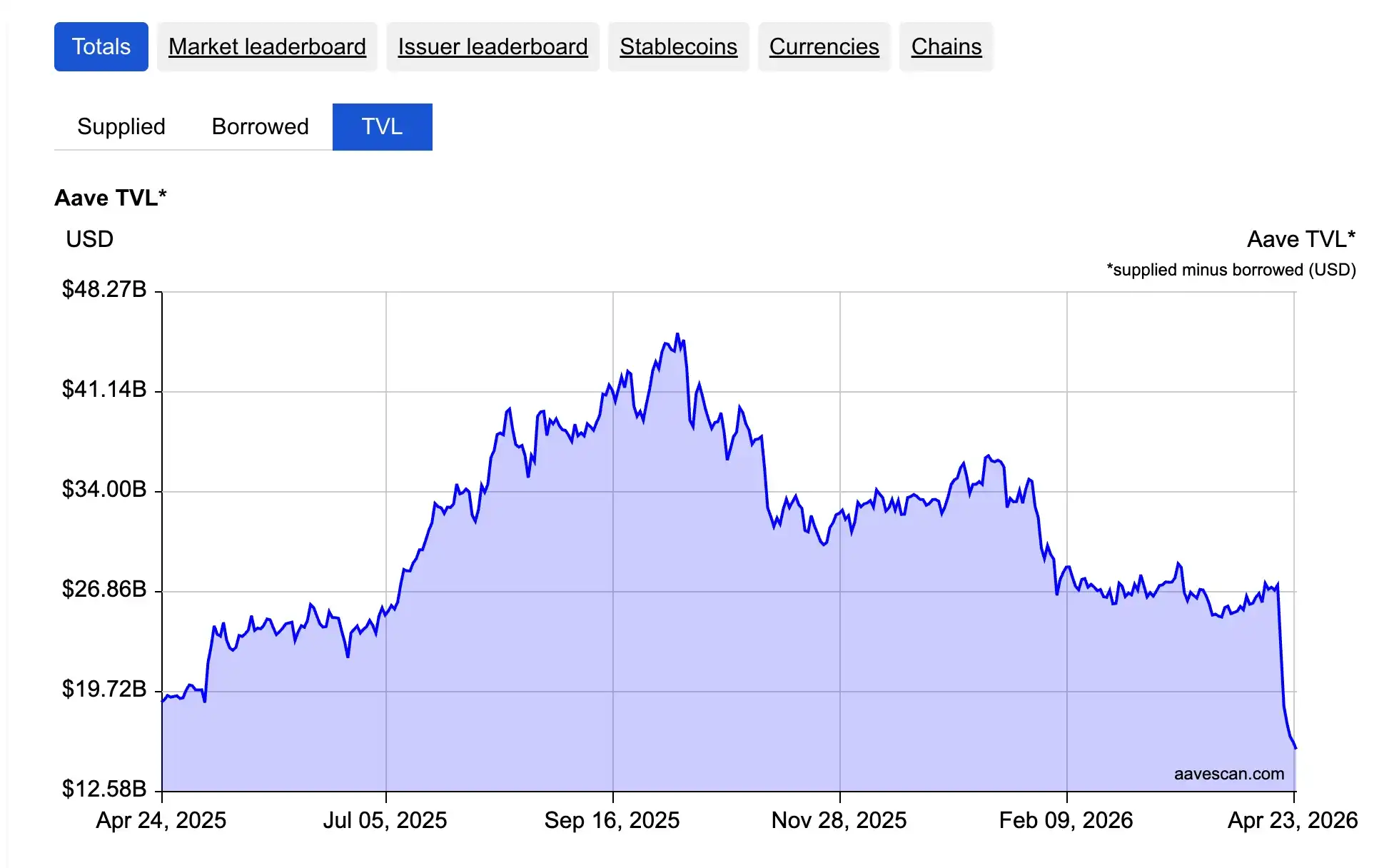
$292 million, this is the total amount of rsETH funds stolen from Kelp DAO; $17.2 billion, this is the scale of funds that have flowed out of Aave since the incident.

Aave is watching the community's panic sentiment ferment for several consecutive days due to its extremely foolish crisis PR strategy, thereby losing its once greatest advantage in the lending track—hundreds of billions of dollars in deposited funds and the user mindset label of "the safest DeFi".
  • Odaily Note: For background, please refer to "DeFi Hacked Again for $292 Million, Is Aave No Longer Safe?" and "The Tripartite Game Under the $290 Million Hole: Who Will Pay the Bill—Aave, L0, or Kelp?".

What Did Aave Do Wrong?

The details of the Kelp DAO hack need not be repeated; blaming Aave for why it granted rsETH such a high LTV is meaningless now. Here, I mainly want to discuss Aave's response strategy after the incident from the perspective of a long-term AAVE user.

First is the bad debt scale issue; Aave itself has done the math. Depending on the different handling of rsETH, there might be two possible bad debt scenarios—if the stolen loss is written off from all rsETH in circulation, it is expected to generate $123.7 million in bad debt; if the value of mainnet rsETH is protected and the loss is fully recorded in the mapped version of rsETH on Layer2, it is expected to generate $230.1 million in bad debt.

In either case, Aave has the capability to cover it with its reserves from Umbrella, the DAO treasury, and the team. I understand that Aave is unwilling to pay this money itself and wants the main responsible party, Kelp DAO, and the secondary responsible party, LayerZero, to contribute as much as possible. But the problem is that the other parties will think the same way—"Aave is so rich, the situation is so awkward, it should bear more." Therefore, in the short term, it is difficult for these three parties to reach a consensus, which implies that a solution that satisfies everyone is temporarily impossible.

But users cannot wait that long—Aave's yield levels have never been very competitive in the industry. Users who choose to deposit with Aave are all attracted by its reputation, security, and liquidity. However, the situation now is that in the most critical days after the incident, Aave consistently failed to give users some kind of bottom-line guarantee promise, but instead kept emphasizing "our code has no problems" and "how rsETH is accounted for is beyond Aave's control" to shift blame.

This is why panic sentiment kept fermenting within the community. Users tried every means to escape and avoid risk: those who could withdraw directly did so, and those who couldn't went to borrow from other pools first, causing the impact to gradually expand. So Aave's current situation is: on one hand, it faces continuous fund outflows; on the other hand, multiple pools are experiencing liquidity drying up due to utilization rates being maxed out.

This awkward situation could have been avoided (or at least not been this bad)... Since Aave can afford the money, why didn't it inject a dose of reassurance into the community from the beginning to prevent a bank run? At most, it's $230 million in bad debt (possibly less), and this money wouldn't necessarily be paid by Aave alone;后续 could continue to dispute with LayerZero and Kelp DAO.

Now, it's done. For the sake of a promised relief of at most $230 million, Aave watched $17.2 billion in deposited funds flow out (the number may continue to grow), and this doesn't even include the decline in AAVE's price these days... No matter how you calculate it, it's a huge loss.

What makes Aave even more uncomfortable is that the worse its situation becomes, the more relaxed opponents like LayerZero and Kelp DAO will be, because they will judge that Aave will be more motivated to solve the problem as soon as possible, which only puts Aave at a disadvantage in the game.

Having reached this point, Aave has brought this upon itself.

Behind Aave, Spark Is Watching Covetously

While Aave is suffering from headaches, the situation of its competitor Spark is booming and extremely positive. What is even more lamentable is that Spark is actually a competitor "personally incubated" by Aave.

Spark was originally a lending protocol forked and developed by Sky (formerly MakerDAO) based on the open-source code of Aave V3; both sides actually use the same underlying code logic. In return, there was once a profit-sharing agreement between Spark and Aave, but later Aave accused Spark of涉嫌 breaching the contract, and coupled with route differences, the two are now purely competitive.

Three months before the Kelp DAO theft, Spark had just removed support for rsETH (for details, please refer to "Same Day, Different Fate: Aave Embraces rsETH and Loses Nearly $200 Million, Spark Exits Unscathed"). You call it strategic conservatism or rigorous risk control, or even attribute it entirely to luck, but the result is that Spark was not affected at all in this incident—on this point alone, Spark can wantonly attack Aave's former "safest DeFi" label.

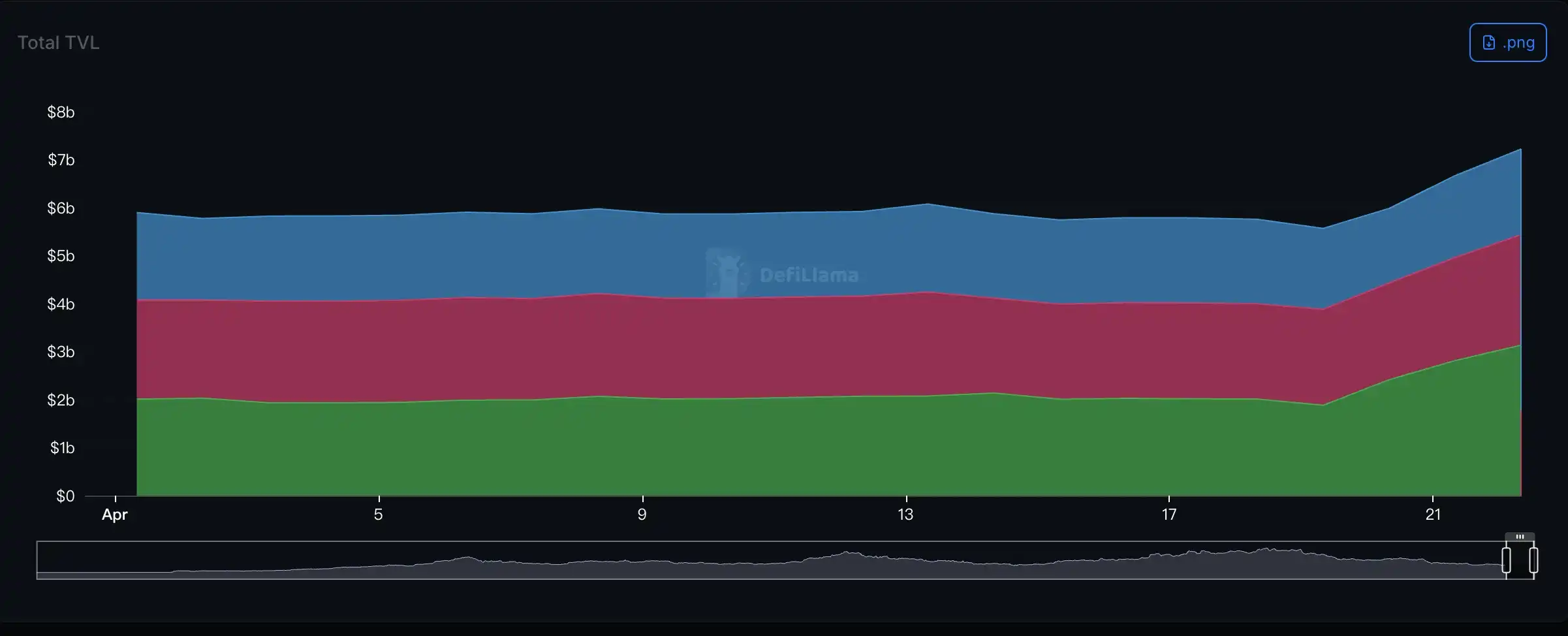
Thus, Spark became one of the safe havens for funds fleeing Aave. Since the incident, Spark's TVL has grown by nearly $2 billion (green part in the chart below). On the day of the incident, Justin Sun withdrew 53,665 ETH (worth $124 million) from Aave and subsequently deposited it into Spark. After continued accumulation in recent days, the total deposit has reached $1.3 billion—in the DeFi world, Brother Sun's operations are really something to learn.
On April 23, Upbit officially announced the launch of the Spark (SPK) Korean Won trading market. SPK, stimulated by this positive news, rose over 80% in a single day, significantly narrowing the market value gap between itself and AAVE.

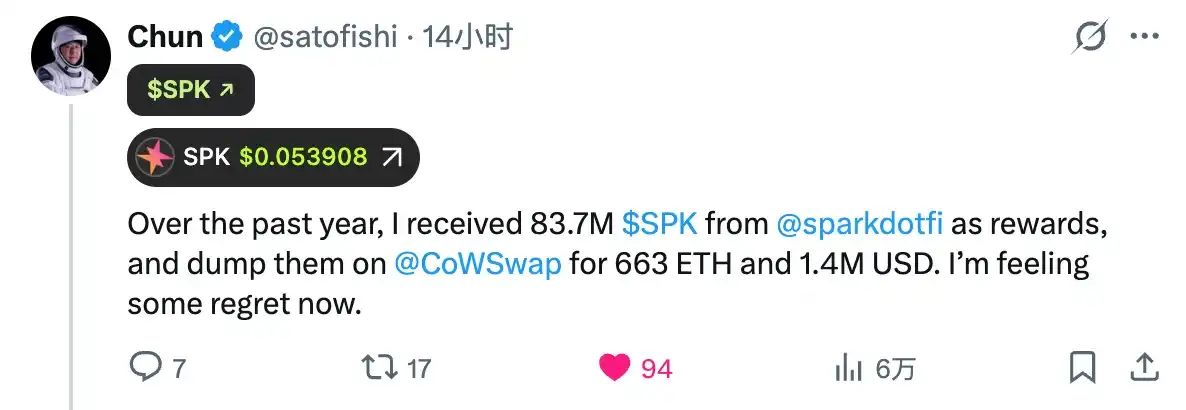
Even Wang Chun, founder of F2Pool, lamented on X: "In the past year, I received 83.7 million SPK rewards from Spark and sold them on CoWSwap for 663 ETH and $1.4 million. Now I kind of regret it."
Spark clearly realizes that this is a perfect opportunity to seize market share from Aave's mouth. Since the incident, Spark's Strategy Lead, MonetSupply, has almost become the most frequent KOL speaking out on this matter, posting dozens of times a day. Although his发言 can indeed help the public understand what happened, it objectively also加剧 the panic sentiment surrounding Aave.

But this is the purest商业 competition; MonetSupply just made the most correct choice.

Aave Is Losing the Throne of DeFi Lending

In the early morning of April 24, perhaps realizing the严峻 situation, Aave founder Stani announced on X the launch of a relief plan called DeFi United. Cooperative participants include LayerZero, Ethena, ether.fi, Ink Foundation, Golem Foundation, Trydo, etc. Stani personally will also donate 5,000 ETH to solve the current problem.

But the funds have already flowed out, and user trust has been severely damaged. Relying solely on this belated statement, Aave will find it difficult to regain deposited funds and user trust in the short term.

The DeFi lending track has long presented a pattern of "one superpower, multiple great powers," with Aave一直以来 having seemingly extremely solid leading advantages. But now, Aave is拱手 surrendering the throne. Behind it, challengers are coming aggressively; besides the booming Spark, other opponents like Morpho and Jupiter Lend also hope to take a bite out of Aave's share.

Last year, Stani bought a five-story luxury house in London for approximately $30 million, one of the most expensive transactions in the UK's sluggish luxury real estate market in the past year. I don't know if there is something like a "jinx," but with precedents like Su Zhu and others, it seems that big shots who consume conspicuously within the circle always run into some倒霉事.

I can't guess what Stani is thinking right now in his five-story luxury house.

Kripto yang Sedang Tren

Pertanyaan Terkait

QWhat was the main reason for the massive outflow of funds from Aave following the Kelp DAO hack?

AAave's extremely poor crisis management strategy, which failed to provide a timely and reassuring commitment to cover the potential bad debt, led to widespread community panic and a user rush to withdraw funds.

QWhat are the two potential bad debt scenarios calculated by Aave after the rsETH exploit?

AIf the stolen loss is written off from all rsETH in circulation, it would result in approximately $123.7 million in bad debt. If the value of mainnet rsETH is protected and the loss is fully attributed to the mapped version of rsETH on Layer 2, it would result in approximately $230.1 million in bad debt.

QWhich competitor protocol directly benefited from the funds flowing out of Aave, and what was a significant factor in its immunity to the hack?

ASpark Protocol directly benefited, with its TVL growing by nearly $2 billion. A significant factor was that Spark had removed support for rsETH three months prior to the hack, avoiding any exposure to the incident.

QWhat was the name of the key initiative announced by Aave founder Stani Kulechov in a belated attempt to address the crisis?

AStani Kulechov announced an initiative called 'DeFi United,' a relief plan involving partners like LayerZero and Ethena, to which he also personally pledged a donation of 5,000 ETH.

QAccording to the author, what is the fundamental reason users traditionally deposited funds into Aave, given its uncompetitive yield rates?

AUsers traditionally deposited into Aave due to its reputation for safety, security, and deep liquidity, not for competitive yield rates.

Bacaan Terkait

Goddess dengan 3 Juta Pengikut Ternyata Rekayasa AI, Panti Asuhan Palsu, Amal Palsu Lintas Negara Runtuh dalam Semalam

[Artikel intisari] Terungkapnya Skandal Amal Palsu dengan AI: Influencer Australia dengan 3 Juta Pengikut Diduga Gunakan AI Buat Panti Asuhan Fiktif. Investigasi oleh ABC NEWS Verify membongkar kecurangan yang diduga dilakukan oleh influencer Australia Lily Jay (nama asli Lily Jay Hinson) dan yayasannya, Lily Jay Foundation. Yayasan ini, yang mengklaim melakukan pekerjaan amal di Nepal, Gaza, Uganda, dan Sudan, dituduh menggunakan gambar dan video yang dihasilkan AI untuk menipu pengikutnya yang hampir 3 juta. Bukti pemalsuan meliputi: - Video pembukaan panti asuhan di Uganda dengan anak-anak memegang permen lolipop. Analisis menunjukkan seluruh adegan, termasuk wanita yang bersorak, anak-anak, dan spanduk di belakang, adalah buatan AI. Terdapat juga kesalahan karakter huruf pada kaos yang khas pada gambar AI. - Panti asuhan "Ada Nur" tersebut tidak terdaftar secara sah di Uganda. - Foto-foto yang mengklaim Lily Jay memenangkan "Austral-Global Humanitarian Excellence Award 2026" mengandung tanda air digital SynthID dari ChatGPT, menandainya sebagai gambar AI. - Klaim tentang "toko roti" yang mengirim bantuan kemanusiaan di Gaza tidak dapat diverifikasi oleh organisasi lokal. Yayasan ini secara halus mengakui di situs webnya bahwa ia bukan organisasi amal terdaftar, yang berarti tidak tunduk pada audit keuangan yang ketat. Setelah investigasi ABC, halaman web menghapus tombol donasi dan video untuk pengunjung dari Australia, tetapi tetap terbuka bagi pengunjung internasional. Pakar seperti mantan CEO World Vision Australia Tim Costello memperingatkan bahwa gambar anak-anak rentan memicu emosi dan donasi. Kasus ini menunjukkan bagaimana AI dapat mengeksploitasi kepercayaan dan kebaikan publik dengan menciptakan narasi yang sangat meyakinkan dan sesuai harapan. Ini adalah peringatan tentang pentingnya skeptisisme dan verifikasi dalam era di mana konten palsu semakin mudah dibuat.

marsbit14m yang lalu

Goddess dengan 3 Juta Pengikut Ternyata Rekayasa AI, Panti Asuhan Palsu, Amal Palsu Lintas Negara Runtuh dalam Semalam

marsbit14m yang lalu

L2 'Recalibration': Ketika L1 Menjadi Rollup Miliknya Sendiri, Apa Akhir dari Ethereum?

"L2 'Rekalibrasi': Ketika L1 Menjadi Rollup-nya Sendiri, Apa Masa Depan Ethereum?" Artikel ini membahas evolusi hubungan antara Ethereum L1 dan L2 (Layer 2). Awalnya, L2 seperti Rollup bertugas utama memperluas kapasitas transaksi dengan biaya rendah, sementara L1 fokus pada keamanan dan desentralisasi. Namun, dengan peningkatan skalabilitas L1 sendiri melalui peningkatan Gas Limit, zkEVM, dan teknologi lainnya, peran L2 perlu dikaji ulang. Kedepannya, nilai L2 tidak lagi hanya pada transaksi murah dan cepat, tetapi lebih pada menyediakan fungsi yang terdiferensiasi seperti optimasi aplikasi spesifik, privasi, dan model tata kelola yang fleksibel. L1 akan menjadi pusat global yang tangguh untuk penyelesaian, status bersama, dan likuiditas. Artikel ini juga membahas tantangan interoperabilitas akibat fragmentasi di banyak L2. Solusi seperti kerangka Open Intents dan Ethereum Interoperability Layer (EIL) bertujuan membuat pengalaman pengguna terasa seperti menggunakan satu rantai tunggal. Selain itu, memperpendek waktu finalitas L1 menjadi hitungan detik sangat penting untuk aplikasi lintas rantai. Yang lebih menarik, dengan masuknya sistem bukti seperti zkEVM ke dalam protokol utama, suatu hari nanti L1 Ethereum mungkin beroperasi mirip dengan "Rollup untuk dirinya sendiri", di mana eksekusi dan verifikasi dapat dipisahkan. Ini mengaburkan batas tradisional antara L1 dan L2. Kesimpulannya, masa depan Ethereum bukanlah tentang L1 menggantikan L2 atau sebaliknya. Alih-alih, ini tentang menciptakan ekosistem di mana berbagai lingkungan eksekusi (L2) dengan fungsi berbeda dapat beroperasi bersama, dengan berbagi keamanan, likuiditas, dan hubungan status di bawah hub L1 yang kuat, memberikan pengalaman yang lebih mulus dan terpadu bagi pengguna.

marsbit16m yang lalu

L2 'Recalibration': Ketika L1 Menjadi Rollup Miliknya Sendiri, Apa Akhir dari Ethereum?

marsbit16m yang lalu

Fragmen Abadi Uang: Pembayaran Pihak Ketiga Tanpa Prinsip Pertama

Penulis: Zuoye Wai Bo Shan Industri pembayaran saat ini diisi oleh berbagai pemain lama dan baru, seperti PayPal yang telah mapan dan Stripe yang lebih muda. Stripe, yang dikenal dengan pendekatan ramah pengembangnya, sedang berusaha mengakuisisi PayPal untuk memperkuat posisinya di pasar pembayaran konsumen (C-end). Upaya ini muncul setelah Stripe melewatkan peluang IPO selama pandemi dan melihat valuasinya turun. Artikel ini membahas tantangan mendasar di industri pembayaran. Pertama, industri ini sangat terfragmentasi. Pemain kecil dapat bertahan dengan melayani ceruk pasar tertentu, negara, atau industri, sehingga sulit untuk dimonopoli. Kedua, pembayaran pada dasarnya masih merupakan turunan dari sistem perbankan tradisional. Inovasi seperti stablecoin dan agen pembayaran (Agentic Payment) akhirnya masih harus berintegrasi dengan infrastruktur bank yang ada. Stripe berusaha membangun narasi baru melalui stablecoin (seperti OUSD) dan jaringan settlement berbasis blockchain (seperti Tempo) untuk masa depan ekonomi agen (Agent economy). Namun, adopsi stablecoin untuk pembayaran sehari-hari masih terbatas, dan ekonomi agen masih dalam tahap awal. Untuk saat ini, merger dan akuisisi menjadi strategi utama Stripe untuk bertumbuh. Masa depan keuntungan dalam pembayaran mungkin tidak lagi bergantung pada biaya transaksi semata, tetapi pada layanan nilai tambah, khususnya jaringan penyelesaian (settlement network) yang efisien. Jaringan berbasis blockchain berpotensi mengurangi ketergantungan pada sistem perbankan tradisional yang berlapis dan mempertahankan lebih banyak nilai dalam ekosistem pembayaran baru. Kesimpulannya, pertarungan di industri pembayaran pihak ketiga mirip dengan pertempuran stagnan. Tidak ada pemain yang dapat sepenuhnya mendominasi karena fragmentasi pasar dan ketergantungan pada sistem perbankan. Inovasi seperti stablecoin dan settlement network menawarkan peluang, tetapi jalan menuju transformasi yang luas masih panjang.

marsbit39m yang lalu

Fragmen Abadi Uang: Pembayaran Pihak Ketiga Tanpa Prinsip Pertama

marsbit39m yang lalu

Perjalanan RUU Kejelasan Kripto di Amerika Serikat: Jalan Kompromi Dua Partai Dipenuhi Duri

Anggota Kongres AS dari kedua partai berusaha untuk melangkah maju dengan RUU struktur pasar kripto, yaitu RUU Clarity. Jalan menuju kompromi politik penuh dengan tantangan. Awal tahun ini, CEO Coinbase Brian Armstrong secara tak terduga menggagalkan kesepakatan bipartisan dan pemungutan suara yang telah dicapai oleh Komite Perbankan Senat, menghentikan sementara kemajuan RUU tersebut. Butuh empat bulan sebelum komite dapat menjadwalkannya kembali, berkat kompromi antara Senator Demokrat Angela Alsobrooks dan Senator Republik Thom Tillis mengenai isu "yield". Namun, klausul etika telah menjadi syarat penting yang tidak dapat ditawar bagi Demokrat. Pada bulan Mei, ketika komite memajukan RUU, hanya dua Senator Demokrat yang mendukungnya, dengan penegasan bahwa dukungan mereka untuk pemungutan suara berikutnya bergantung pada penyelesaian masalah etika. Akibatnya, versi RUU dari Komite Pertanian Senat disahkan dengan pemungutan suara partisan, tanpa dukungan Demokrat. Memasuki Juli, tekanan untuk kompromi semakin meningkat. Isu-isu seperti perlindungan konsumen, risiko keuangan ilegal, dan perlindungan pengembang terus menjadi perhatian utama. Meskipun ada konsensus tentang perlunya undang-undang struktur pasar, jalan menuju kompromi tetap sulit. Upaya terus berlanjut, termasuk pembahasan dengan pejabat Gedung Putih mengenai bahasa etika yang mungkin disepakati. Diharapkan teks rekonsiliasi antara versi Komite Perbankan dan Pertanian Senat akan segera dirilis, meskipun beberapa anggota meragukan kemampuannya untuk mendapatkan dukungan bipartisan yang cukup. Tujuan jangka pendek komunitas kripto di Kongres mungkin termasuk tindakan simbolis di Senat sebelum reses Agustus, atau bekerja menuju kerangka kompromi yang mencakup etika dan ketentuan terkait perbankan. Meskipun tantangannya signifikan, proses politik yang panjang dan melelahkan untuk mendapatkan dukungan suara demi suara tetap menjadi taktik yang harus dimanfaatkan dan disempurnakan oleh industri kripto.

Foresight News1j yang lalu

Perjalanan RUU Kejelasan Kripto di Amerika Serikat: Jalan Kompromi Dua Partai Dipenuhi Duri

Foresight News1j yang lalu

Trading

Spot

Artikel Populer

Cara Membeli AAVE

Selamat datang di HTX.com! Kami telah membuat pembelian Aave Protocol (AAVE) menjadi mudah dan nyaman. Ikuti panduan langkah demi langkah kami untuk memulai perjalanan kripto Anda.Langkah 1: Buat Akun HTX AndaGunakan alamat email atau nomor ponsel Anda untuk mendaftar akun gratis di HTX. Rasakan perjalanan pendaftaran yang mudah dan buka semua fitur.Dapatkan Akun SayaLangkah 2: Buka Beli Kripto, lalu Pilih Metode Pembayaran AndaKartu Kredit/Debit: Gunakan Visa atau Mastercard Anda untuk membeli Aave Protocol (AAVE) secara instan.Saldo: Gunakan dana dari saldo akun HTX Anda untuk melakukan trading dengan lancar.Pihak Ketiga: Kami telah menambahkan metode pembayaran populer seperti Google Pay dan Apple Pay untuk meningkatkan kenyamanan.P2P: Lakukan trading langsung dengan pengguna lain di HTX.Over-the-Counter (OTC): Kami menawarkan layanan yang dibuat khusus dan kurs yang kompetitif bagi para trader.Langkah 3: Simpan Aave Protocol (AAVE) AndaSetelah melakukan pembelian, simpan Aave Protocol (AAVE) di akun HTX Anda. Selain itu, Anda dapat mengirimkannya ke tempat lain melalui transfer blockchain atau menggunakannya untuk memperdagangkan mata uang kripto lainnya.Langkah 4: Lakukan trading Aave Protocol (AAVE)Lakukan trading Aave Protocol (AAVE) dengan mudah di pasar spot HTX. Cukup akses akun Anda, pilih pasangan perdagangan, jalankan trading, lalu pantau secara real-time. Kami menawarkan pengalaman yang ramah pengguna baik untuk pemula maupun trader berpengalaman.

524 Total TayanganDipublikasikan pada 2024.12.11Diperbarui pada 2026.06.02

Cara Membeli AAVE

Diskusi

Selamat datang di Komunitas HTX. Di sini, Anda bisa terus mendapatkan informasi terbaru tentang perkembangan platform terkini dan mendapatkan akses ke wawasan pasar profesional. Pendapat pengguna mengenai harga AAVE (AAVE) disajikan di bawah ini.

活动图片