a16z Crypto Founder on Stablecoins: The 'WhatsApp Moment' in Money Has Arrived

marsbitDipublikasikan tanggal 2026-02-15Terakhir diperbarui pada 2026-02-15

Abstrak

Chris Dixon, general partner at a16z Crypto, argues that stablecoins are bringing about a "WhatsApp moment" for money—dramatically reducing the cost and increasing the speed of global payments, much like messaging apps did for communication. Last year, stablecoin transaction volume reached over $12 trillion, nearing Visa’s $17 trillion, but at a fraction of the cost. Stablecoins, which are pegged to assets like the U.S. dollar, are becoming mainstream for online and international payments. They offer near-instant settlement, high reliability, and programmability, effectively turning money into software. While adoption is still largely within crypto-native and global business contexts, integration with traditional finance is accelerating. U.S. policy developments, such as the proposed Clarity Act, could provide the regulatory framework needed for stablecoins to scale as part of global financial infrastructure. Major companies like Stripe, Fidelity, and SpaceX are already using or issuing stablecoins to cut costs, streamline cross-border payroll, and operate in regions with weak banking systems. A significant secondary effect is the strengthening of the U.S. dollar’s dominance. Stablecoin issuers like Circle and Tether now hold nearly $140 billion in short-term U.S. Treasury bonds, making them top holders. If growth continues, they could rank among the top 10 Treasury holders by next year. Ultimately, stablecoins are reshaping global finance by enabling borderless value tr...

Article Author: Chris Dixon

Article Translation: Block Unicorn
Chris Dixon is a General Partner at a16z, leading its crypto investment division

The internet globalized information, and cryptocurrency is having a similar effect on money. Although recent headlines may focus on Bitcoin's price, a deeper and more lasting transformation is underway in the digital payments space. This year, stablecoins—cryptocurrencies pegged to assets like the US dollar—are gradually becoming a mainstream choice for online and international payments.

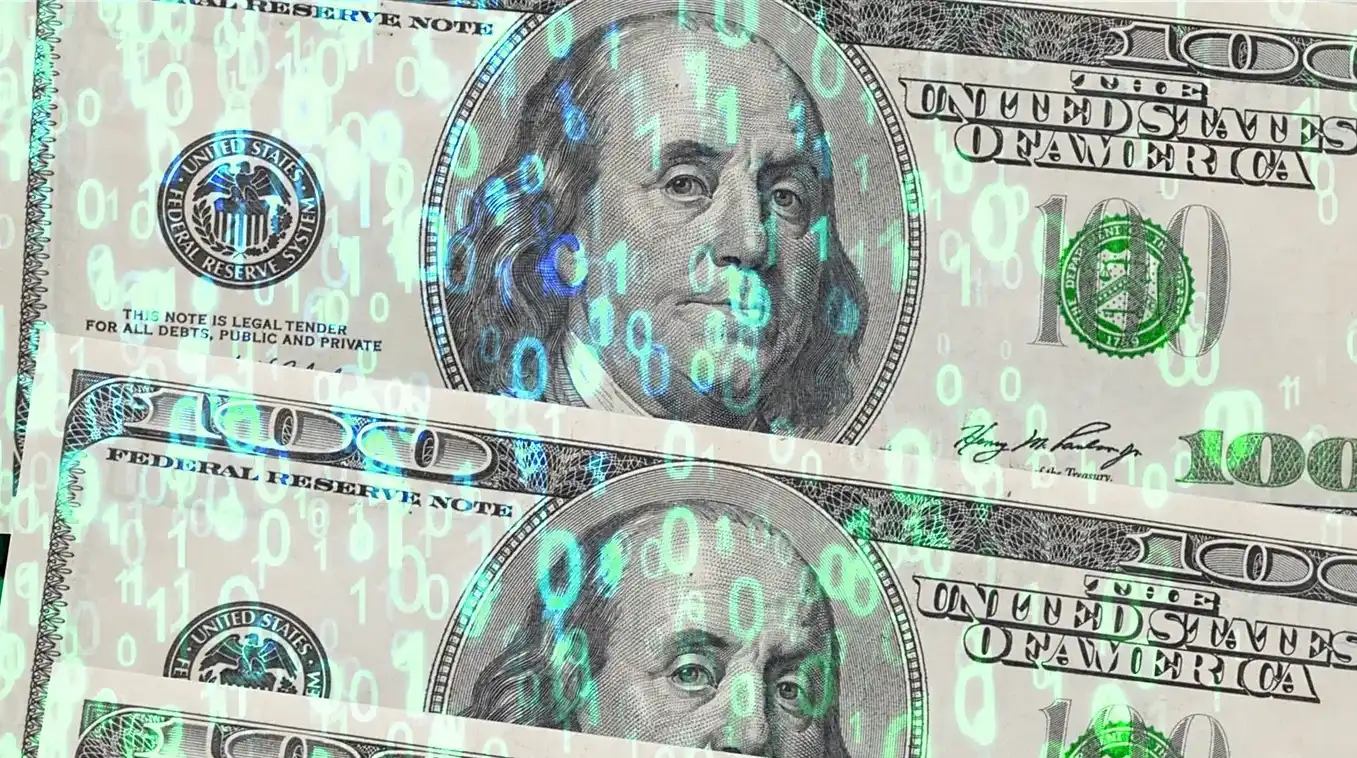
Call it the "WhatsApp moment" for money. Just as messaging apps like WhatsApp reduced the cost of international texting from around 30 cents per message to zero, stablecoins are doing the same for financial transactions. The data confirms this: last year, after excluding bot and other non-rational trading, stablecoin transaction volume exceeded $12 trillion—approaching Visa's $17 trillion in volume for the same period, but at a much lower cost.

In the process, stablecoins are bringing the original open and interoperable vision of the internet to finance. Given that blockchain technology allows stablecoins to be programmed, money is effectively becoming software.

While most stablecoin transactions currently come from "crypto-native" and global commercial activities rather than everyday consumer spending, this is changing. As more improvements are introduced, such as integration with more traditional financial partners to make user transactions easier, mass adoption of stablecoins will follow.

People around the world using stablecoins for transactions will hardly notice they are using stablecoins. Most will think they are simply using US dollars. And that is indeed the case, as the distinction between stablecoins and dollars has become very abstract for end users. Since each token is backed by one dollar or equivalent assets, the name itself doesn't matter. What matters is that the product is more reliable than any previous payment technology, almost free, and settles much faster—almost instantly.

Stablecoins also demonstrate the infinite possibilities when policy and technology align. Last year's "Genius Act" established clear rules for US stablecoins. More importantly, Congress is currently reviewing the "Clarity Act," which aims to regulate the broader blockchain networks and digital asset ecosystems that underpin stablecoins. The Clarity Act will help determine whether these networks can scale to become part of global financial infrastructure or will stagnate. When challengers are given a level playing field and space to innovate, markets work their magic. It was this magic that enabled the internet to triumph over incumbents; it was this magic that allowed the US to dominate the internet; and it is this magic that will enable stablecoins to surpass today's payment systems.

Businesses are already recognizing the advantages of stablecoins. Some of the world's largest tech companies, banks, and retailers are actively promoting the use of stablecoins, or, like Fidelity Investments, have already issued their own. Payment giant Stripe has acquired several cryptocurrency companies over the past year or so and now supports stablecoins at checkout, instantly reducing payment processing fees from about 3% to 1.5%, with plenty of room for further reduction. SpaceX uses stablecoins to move funds from countries like Argentina and Nigeria, where local banking systems are fragile or capital controls are strict. Some companies use stablecoins to pay their global employees faster. Ultimately, the internet could transform into an open marketplace where machine-to-machine transactions thrive, and AI agents conduct trades and settlements on behalf of users in real time.

The adoption of stablecoins also has an often-underestimated second-order effect: these tokens solidify the dollar's dominance in a multipolar world, thereby creating strong new demand for US Treasury bonds. Leading stablecoin issuers like Circle and Tether currently hold nearly $140 billion in short-term US government bonds directly, making them among the top 20 holders of US Treasuries today. If stablecoin adoption continues to grow at its current rate, their holdings could jump into the top 10 by next year. (Citi Research even predicts that by 2030, stablecoin holdings of US Treasuries could surpass those of foreign governments and commercial banks.)

This is not just about payments; it's about reshaping the global financial landscape. The internet gave us borderless communication; stablecoins give us borderless value transfer. With clear rules and a sound market structure, they can become the pipes and pillars of a new financial system.


Pertanyaan Terkait

QWhat does Chris Dixon refer to as the 'WhatsApp moment' for money, and why?

AChris Dixon refers to the rise of stablecoins as the 'WhatsApp moment' for money because, similar to how WhatsApp reduced the cost of international messaging to nearly zero, stablecoins are drastically reducing the cost of financial transactions, making them cheaper, faster, and more accessible for online and international payments.

QHow does the transaction volume of stablecoins compare to Visa, and what is a key advantage of stablecoins mentioned?

ALast year, stablecoins processed over $12 trillion in transactions (excluding non-rational trades like bots), which is approaching Visa's $17 trillion volume. A key advantage is that stablecoin transactions are significantly cheaper and settle almost instantly.

QWhat two U.S. legislative acts are mentioned in relation to stablecoins, and what is their purpose?

AThe two acts are the 'Genius Act' and the 'Clarity Act'. The Genius Act established clear rules for stablecoins in the U.S., while the Clarity Act, currently under consideration, aims to regulate the broader blockchain networks and digital asset ecosystems that underpin stablecoins to determine if they can scale as part of global financial infrastructure.

QHow do stablecoins benefit the U.S. Treasury and its global financial standing, according to the article?

AStablecoins consolidate the dollar's dominance in a multipolar world by creating strong new demand for U.S. Treasury bonds. Leading issuers like Circle and Tether hold nearly $140 billion in short-term U.S. government bonds, making them top-20 holders. This demand is projected to grow, potentially making them a top-10 holder by next year.

QName two specific ways companies are already leveraging stablecoins for business operations.

A1. Companies like SpaceX use stablecoins to move funds from countries with fragile banking systems or strict capital controls (e.g., Argentina, Nigeria). 2. Some companies use stablecoins to pay their global employees more quickly. Additionally, Stripe uses them to lower payment processing fees from ~3% to ~1.5% at checkout.

Bacaan Terkait

Bagaimana Codex Menggunakan Komputer? Tiga Pintu Masuk dan Batasan Izin

Cara Codex Menggunakan Komputer: Tiga Pintu Masuk dan Batas Izin Artikel ini menjelaskan tiga cara Codex berinteraksi dengan lingkungan eksternal: Computer Use, Ekstensi Chrome, dan Browser dalam aplikasi. Ketiganya melayani skenario tugas, batas izin, dan tingkat kepercayaan yang berbeda. 1. **Computer Use (@Computer)**: Cakupan terluas, mengontrol aplikasi desktop asli (macOS/Windows), pengaturan sistem, simulator iOS, dan alur kerja lintas aplikasi melalui antarmuka grafis. Cocok untuk proses yang tidak memiliki dukungan API, plugin, atau alat terstruktur. Namun, lebih lambat dan memiliki batas izin terlebar. Harus digunakan dengan pengawasan untuk tindakan sensitif. 2. **Ekstensi Chrome (@Chrome)**: Mengakses status Chrome yang sudah login, termasuk cookies, tab, dan profil. Ideal untuk tugas di Gmail, LinkedIn, Salesforce, dasbor internal, atau penelitian yang memerlukan status login di beberapa situs. Mendukung kontrol multi-tab dan konteks identitas browser. Batas kepercayaan penting: pisahkan tindakan berisiko tinggi seperti mengirim atau membeli. 3. **Browser dalam Aplikasi (@Browser)**: Browser terisolasi di dalam thread Codex, tidak membawa status login atau ekstensi. Sangat cocok untuk pengembangan web, debugging bug visual, memeriksa tata letak responsif, dan memberikan anotasi desain pada halaman lokal atau pratinjau berbasis file. Menciptakan siklus umpan balik yang ketat antara pengeditan kode dan pratinjau. **Prinsip Inti**: Pilih antarmuka operasi yang paling sempit, aman, dan terstruktur untuk tugas tersebut. Prioritaskan plugin atau MCP jika tersedia. Gunakan Computer Use hanya sebagai "mil terakhir" ketika alat terstruktur tidak mencukupi. **Appshots** berfungsi sebagai alat untuk memberikan konteks visual (dengan menangkap jendela depan), bukan sebagai metode kontrol keempat. Dengan mendorong pemilihan alat yang tepat, pendekatan berlapis ini menunjukkan kunci produk AI Agent: membatasi izin secara proporsional berdasarkan tugas spesifik dan mempertahankan hak pengguna untuk meninjau tindakan kritis.

marsbit1j yang lalu

Bagaimana Codex Menggunakan Komputer? Tiga Pintu Masuk dan Batasan Izin

marsbit1j yang lalu

Hukum Besi" dalam Peralatan Chip, Sedang Dihancurkan

"Aturan besi" industri peralatan semikonduktor, di mana pembeli (fab) mendominasi harga, mulai retak. Contohnya, pemasok peralatan SK Hynix meminta kenaikan harga 3%-4%, fenomena langka yang didorong oleh ledakan permintaan AI. Kebutuhan AI memicu ketidakseimbangan pasokan-permintaan peralatan kunci. Permintaan meledak untuk peralatan TCB (Thermal Compression Bonding) yang penting untuk produksi HBM4 dan pengemasan chip AI (C2S/C2W). Pemain seperti Hanmi Semiconductor, Hanwha Semitech, dan ASMPT kebanjiran pesanan. Teknologi Hybrid Bonding yang lebih maju belum menggantikan TCB dalam waktu dekat, karena TCB tetap lebih matang untuk produksi massal HBM4. Tidak hanya peralatan fab, rantai pasok pembuat peralatan tes semikonduktor juga tersendat. Mereka menghadapi kelangkaan parah komponen kunci seperti FPGA, CPU, dan Driver IC, yang justru banyak diserap oleh pusat data AI, sehingga menunda pengiriman peralatan tes. Siklus ekspansi besar-besaran didorong oleh tiga faktor utama: (1) Fab logika canggih (TSMC, Intel, Samsung) memperluas kapasitas untuk akselerator AI; (2) Produsen memori (SK Hynix, Micron) meningkatkan investasi untuk HBM; (3) Kemasan canggih (CoWoS) menjadi bottleneck dan prioritas ekspansi. Organisasi seperti SEMI memproyeksikan penjualan peralatan semikonduktor global akan mencapai rekor baru pada 2027, didorong terutama oleh investasi terkait AI. Pemain peralatan yang menguasai teknologi kunci di node proses logika canggih, HBM, dan kemasan canggih kini memiliki posisi tawar yang lebih kuat, karena mereka menjual kemampuan yang paling langka: kapasitas untuk mewujudkan produksi chip di era AI.

marsbit1j yang lalu

Hukum Besi" dalam Peralatan Chip, Sedang Dihancurkan

marsbit1j yang lalu

Trading

Spot
Futures
活动图片