A Decade-Old Coin: Zcash Also Faces a Midlife Crisis

marsbitDipublikasikan tanggal 2026-01-09Terakhir diperbarui pada 2026-01-09

Abstrak

Zcash, a nearly decade-old privacy-focused cryptocurrency, faced a major crisis when its entire core development team, the Electric Coin Company (ECC), collectively resigned on January 7. The team, led by CEO Josh Swihart, left due to a governance dispute with the board of the non-profit Bootstrap organization, which oversees ECC. The conflict centered around Zashi, a privacy-first mobile wallet developed by ECC. The team wanted to privatize Zashi to attract external investment and operate as a nimble startup, but the board opposed, citing legal and compliance risks associated with converting a non-profit asset into a for-profit entity. This disagreement escalated into public accusations, with Swihart calling the board’s actions “malicious governance” and accusing them of making working conditions untenable. The board members, referred to as “ZCAM” (Zaki Manian, Christina, Alan, Michelle), were criticized—particularly Zaki, who had prior controversies in the crypto space. Following the resignation, the former ECC team announced a new venture, CashZ, and plans to launch a new wallet based on Zashi’s codebase, allowing seamless migration for existing users. The incident highlights recurring tensions in crypto between non-profit foundations and entrepreneurial development teams, especially as projects mature and face valuation pressures. Zcash’s token ZEC had surged nearly 800% in late 2025, making governance and control over key assets like Zashi increasingly contentious.

Written by: Kuli, Shenchao TechFow

On January 7th, the core development team of Zcash collectively resigned.

Not just one or two people throwing a tantrum, but the entire Electric Coin Company, about 25 people, led by the CEO, all left.

This company has an abbreviation, ECC, and is the main developer behind Zcash. You can understand it as: the people who write the code, quit.

Upon the news, ZEC plummeted by 20%.

A hot piece of knowledge: Zcash is almost ten years old.

Launched on October 28, 2016, it's older than many people's time in the crypto space. Its selling point back then was "private transactions"—sender, receiver, amount, all encrypted, nothing visible on the chain.

But the reality is, after nine years online, less than 1% of ZEC transactions actually used this feature.

The remaining 99% are still running naked.

Nine years. The product isn't used, but the team kept grinding. The price dropped from over $3,000 when it first launched in 2016 to $15 in July 2024.

Then, by the end of 2025, ZEC suddenly surged.

It was hovering around $40 at the start of the year, and by November 7th, it soared to $744, market cap breaking $10 billion, clawing its way back into the top twenty.

The long-dormant narrative of privacy coins suddenly became sexy again.

Okay, the price skyrocketed nearly 800%, and then, "the development team ran away."

This story sounds like a middle-aged man's script. Bought a Porsche, then got divorced. Year-end bonus came in, then it's splitsville.

When there's little money, everyone is comrades; when money increases, they start fighting over who calls the shots.

What are they fighting over? A wallet called Zashi.

Zashi is a mobile wallet released by ECC in early 2024, promoting "privacy features enabled by default." It's the most important user entry point in the Zcash ecosystem.
The ECC team wanted to privatize Zashi, bring in external investment, and turn it into a startup capable of raising funds and iterating quickly.

But ECC is not an independent company. In 2020, ECC was placed into a non-profit organization called Bootstrap, structured as a US 501(c)(3).

Simply put, this structure is specifically for charities and public welfare organizations. The benefit is no taxes, the downside is that money made cannot be distributed to insiders, and how assets are handled must be approved by the board of directors.

Back then, this was done for compliance, to avoid regulatory pressure from the SEC. In a bear market, no one cared about these details, as there was no money to share anyway.

Now, the Bootstrap board says, no.

The board's reasons are:

We are a non-profit organization with a fiduciary duty to protect donor interests. Privatizing Zashi could be illegal, could lead to lawsuits, could be politically attacked. They even gave an example: Look at OpenAI, trying to transition from non-profit to for-profit, how many people sued.

ECC's former CEO, Josh Swihart, sees it differently. He said on Twitter that the board's actions constitute "malicious governance behavior," making it "impossible for the team to perform their duties effectively and with dignity."

He used a legal term: "constructive discharge," meaning although not formally fired, the working conditions were altered to make the job untenable, equivalent to being forced out.

25 people forced out together.

Simultaneously, Swihart named four board members: Zaki, Christina, Alan, Michelle. He connected their initials, calling them "ZCAM."
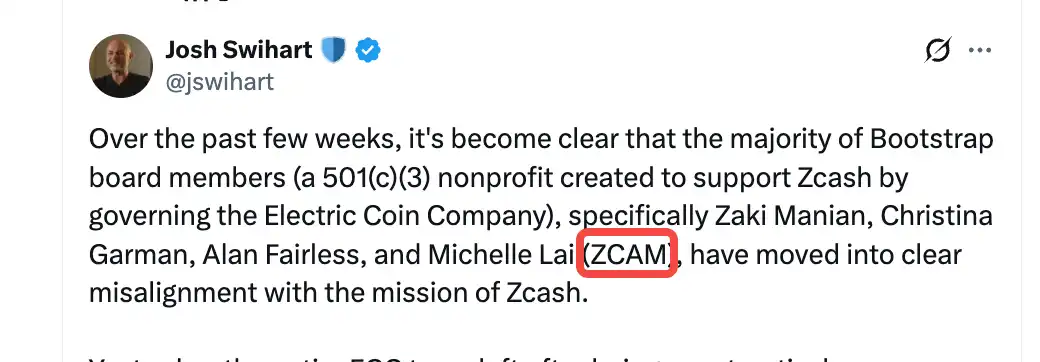
ZCAM. Sounds like SCAM. Not sure if it's intentional.

Among these four, Zaki Manian has the most stories.

He's an old-timer in the Cosmos ecosystem, was a core member of Tendermint. Resigned in 2020 after a public feud with founder Jae Kwon.

In 2023, the FBI informed him that two developers on a project he was responsible for were North Korean agents. After finding out, he concealed this for 16 months before making it public. In October 2024, Jae Kwon publicly accused him of "gross negligence" and "betraying the community's trust."

Now, he is a member of the Zcash board of directors.

The day after resigning, the former ECC team announced the formation of a new company, codenamed CashZ.

They said they would use the Zashi codebase to create a new wallet, to be launched within weeks. Existing Zashi users can migrate seamlessly.
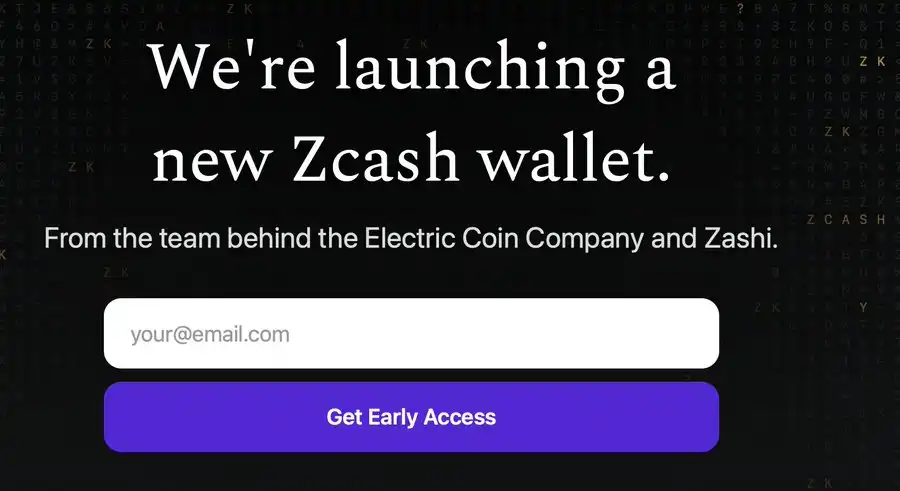
"We are the same team, with the same mission: to build unstoppable private money."

No new token, no starting from scratch, just changing the shell to keep working.

The most ironic part of this, we think, is the timing.

When ZEC was $15, no one cared who managed the wallet. When it hit $500, how much Zashi was worth became a matter of life and death.

When money appears, you find out who's family.

Similarly, the conflict between a non-profit and a startup team: OpenAI ended with the board losing, Zcash ended with the team leaving.

Who won is unclear, but this conflict is indeed common in crypto projects.

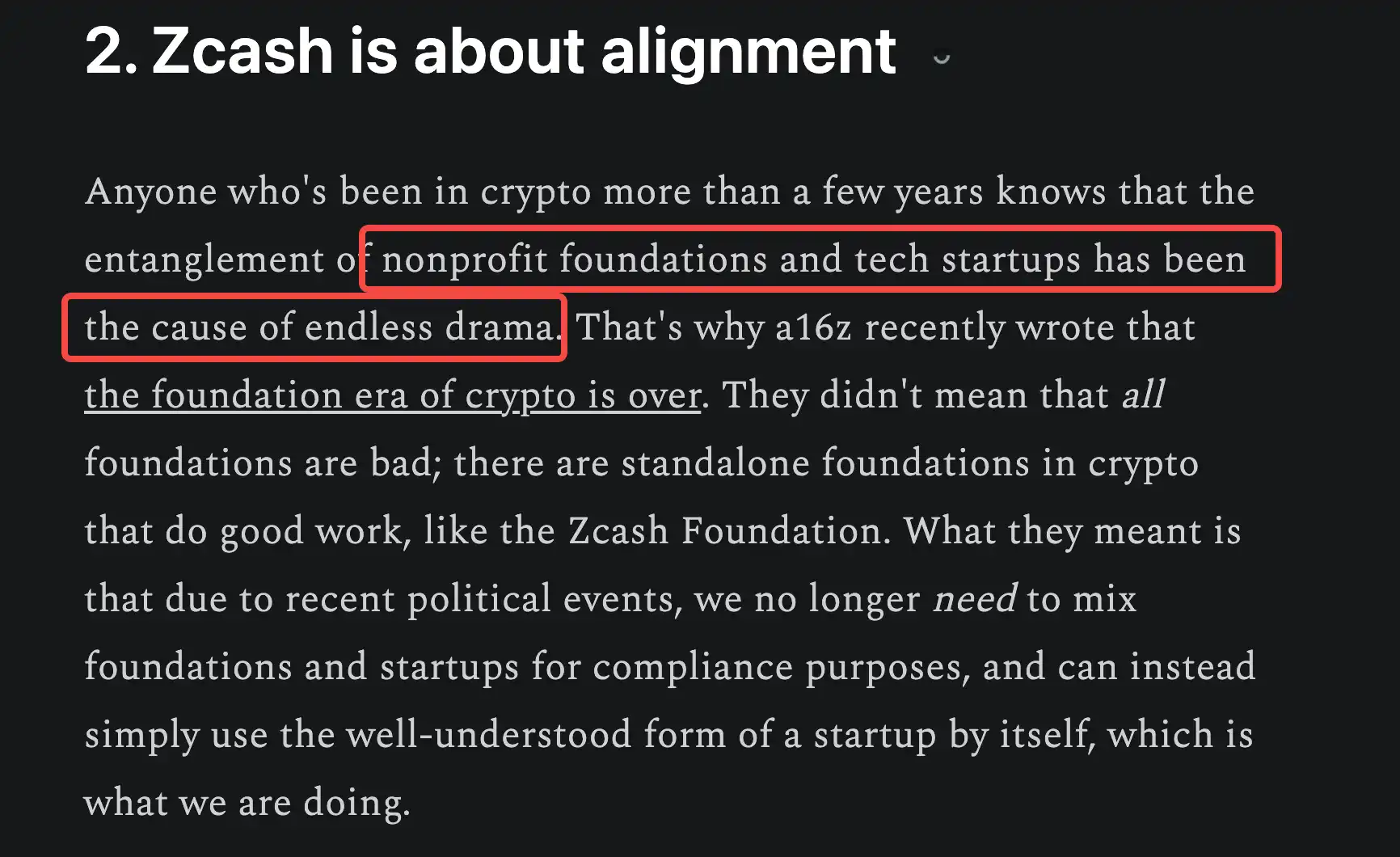
Swihart wrote a passage on the CashZ website explaining why they left:

"The non-profit foundation model is a relic of the compliance era in crypto. An era where projects needed 'compliance buffers' to protect themselves. But these buffers introduced bureaucracy and divergence in roadmap. Startups can scale fast, non-profits cannot."

He also said: "Anyone who's been in crypto for a few years knows that the entanglement of non-profit foundations and tech startups is a source of endless drama."

It truly is endless drama.
In 2023, when Zooko stepped down as CEO, there were rumors of disagreements with Swihart. In January 2025, Zcash Foundation board member Peter Van Valkenburgh also resigned.

A decade-old coin, those who were supposed to leave have pretty much all gone.

Someone asked on Twitter: Will Zcash die?

The chain is still running. The code is still there. It's just that the people writing the code have changed.

But Swihart is right, the conflict between non-profits and startups is a common disease in this industry. Cosmos argued. The Ethereum Foundation argued. The Solana Foundation argued.

The difference is only in the manner and intensity of the arguments.

Zcash chose the most straightforward way.

Break up.

Pertanyaan Terkait

QWhat was the immediate market reaction to the resignation of the Zcash core development team?

AThe price of ZEC (Zcash) dropped by 20%.

QWhat was the primary reason for the conflict between the ECC team and the Bootstrap board of directors?

AThe conflict centered on the ECC team's proposal to privatize the Zashi wallet and bring in external investment, which the non-profit Bootstrap board opposed due to legal and fiduciary concerns.

QWhat is the name of the new company formed by the former ECC team, and what is its first project?

AThe new company is called CashZ, and its first project is to launch a new wallet based on the Zashi codebase, allowing for seamless migration for existing users.

QAccording to the article, what percentage of ZEC transactions actually used the coin's flagship privacy feature?

ALess than 1% of ZEC transactions used the privacy feature.

QWhich controversial figure on the Bootstrap board was previously involved in a scandal concerning North Korean developers?

AZaki Manian, a member of the Bootstrap board (part of the 'ZCAM' group), was previously involved in a scandal where he waited 16 months to disclose that two developers on a project he oversaw were North Korean agents.

Bacaan Terkait

Menurunkan Ekspektasi untuk Bull Market Bitcoin Berikutnya

Artikel ini membahas penurunan ekspektasi penulis terhadap potensi kenaikan harga Bitcoin (BTC) pada siklus bull market berikutnya. Penulis, Alex Xu, yang sebelumnya memegang BTC sebagai aset terbesarnya, telah mengurangi porsi BTC dari full menjadi sekitar 30% pada kisaran harga $100.000-$120.000, dan kembali mengurangi di level $78.000-$79.000. Alasan utama penurunan ekspektasi ini adalah: 1. **Energi Penggerak yang Melemah:** Narasi adopsi BTC yang mendorong kenaikan signifikan di siklus sebelumnya (dari aset niche hingga institusi besar via ETF) sulit terulang. Langkah berikutnya, seperti masuknya BTC ke dalam cadangan bank sentral negara maju, dianggap sangat sulit tercapai dalam 2-3 tahun ke depan. 2. **Biaya Peluang Pribadi:** Penulis menemukan peluang investasi yang lebih menarik di perusahaan-perusahaan lain. 3. **Dampak Resesi Industri Kripto:** Menyusutnya industri kripto secara keseluruhan (banyak model bisnis seperti SocialFi dan GameFi terbukti gagal) dapat memperlambat pertumbuhan basis pemegang BTC. 4. **Biaya Pendanaan Pembeli Utama:** Perusahaan pembeli BTC terbesar, Stratis, menghadapi kenaikan biaya pendanaan yang memberatkan, yang dapat mengurangi kecepatan pembeliannya dan memberi tekanan jual. 5. **Pesaing Baru untuk "Emas Digital":** Hadirnya "tokenized gold" (emas yang ditokenisasi) menawarkan keunggulan yang mirip dengan BTC (seperti dapat dibagi dan dipindahkan) sehingga menjadi pesaing serius. 6. **Masalah Anggaran Keamanan:** Imbalan miner yang terus berkurang pasca halving menimbulkan kekhawatiran tentang keamanan jaringan, sementara upaya mencari sumber fee baru seperti ordinals dan L2 dinilai gagal. Penulis menyatakan tetap memegang BTC sebagai aset besar dan terbuka untuk membeli kembali jika alasannya tidak lagi relevan atau muncul faktor positif baru, meski siap menerima jika harganya sudah terlalu tinggi untuk dibeli kembali.

marsbit04/27 02:47

Menurunkan Ekspektasi untuk Bull Market Bitcoin Berikutnya

marsbit04/27 02:47

Trading

Spot
Futures

Artikel Populer

Cara Membeli CORE

Selamat datang di HTX.com! Kami telah membuat pembelian CORE (CORE) menjadi mudah dan nyaman. Ikuti panduan langkah demi langkah kami untuk memulai perjalanan kripto Anda.Langkah 1: Buat Akun HTX AndaGunakan alamat email atau nomor ponsel Anda untuk mendaftar akun gratis di HTX. Rasakan perjalanan pendaftaran yang mudah dan buka semua fitur.Dapatkan Akun SayaLangkah 2: Buka Beli Kripto, lalu Pilih Metode Pembayaran AndaKartu Kredit/Debit: Gunakan Visa atau Mastercard Anda untuk membeli CORE (CORE) secara instan.Saldo: Gunakan dana dari saldo akun HTX Anda untuk melakukan trading dengan lancar.Pihak Ketiga: Kami telah menambahkan metode pembayaran populer seperti Google Pay dan Apple Pay untuk meningkatkan kenyamanan.P2P: Lakukan trading langsung dengan pengguna lain di HTX.Over-the-Counter (OTC): Kami menawarkan layanan yang dibuat khusus dan kurs yang kompetitif bagi para trader.Langkah 3: Simpan CORE (CORE) AndaSetelah melakukan pembelian, simpan CORE (CORE) di akun HTX Anda. Selain itu, Anda dapat mengirimkannya ke tempat lain melalui transfer blockchain atau menggunakannya untuk memperdagangkan mata uang kripto lainnya.Langkah 4: Lakukan trading CORE (CORE)Lakukan trading CORE (CORE) dengan mudah di pasar spot HTX. Cukup akses akun Anda, pilih pasangan perdagangan, jalankan trading, lalu pantau secara real-time. Kami menawarkan pengalaman yang ramah pengguna baik untuk pemula maupun trader berpengalaman.

366 Total TayanganDipublikasikan pada 2024.12.13Diperbarui pada 2025.03.21

Cara Membeli CORE

Diskusi

Selamat datang di Komunitas HTX. Di sini, Anda bisa terus mendapatkan informasi terbaru tentang perkembangan platform terkini dan mendapatkan akses ke wawasan pasar profesional. Pendapat pengguna mengenai harga CORE (CORE) disajikan di bawah ini.

活动图片













