21Shares Mid-Year Key Report: Bitcoin's Four-Year Cycle Remains Intact, Stablecoins and Tokenization Emerge as New Growth Engines

marsbitDipublikasikan tanggal 2026-06-25Terakhir diperbarui pada 2026-06-25

Abstrak

21Shares Mid-Year Report 2026: Bitcoin Cycle Intact, Stablecoins & Tokenization Emerge as New Engines This mid-year review assesses progress against 21Shares' ten predictions for 2026. While the overarching shift from narrative to fundamentals holds, performance varies. Key findings show Bitcoin's four-year cycle remains evident despite market maturation. Global crypto ETP AUM has declined to ~$140B, lagging the $400B target, though product innovation continues. Stablecoin supply surpassed $320B, demonstrating non-cyclical demand but falling short of the $1T forecast due to slower regulatory clarity. DeFi TVL, stalled at ~$140B, was hindered by major security incidents. Corporate crypto treasuries hold ~1.28M BTC ($100B), with consolidation pressuring weaker players. Prediction markets are on track, with $57.5B volume already surpassing half the $100B annual target. AI agent infrastructure is ready, but adoption is early. Ethereum L2 consolidation is underway, with the top 5 capturing nearly 90% of activity. Compliant token launches have a platform but lack mainstream volume. Tokenized RWAs total ~$31B on public chains, but institutional pipeline growth is strong. In summary, fundamentals like stablecoins, tokenization, and prediction markets are advancing, but targets require faster adoption or price appreciation. The market is maturing, yet cyclical patterns persist.

Author: 21shares Research

Compiled by: Jiahuan, ChainCatcher

Introduction

Welcome to the mid-year update of State of Crypto. In this report, we revisit our predictions for 2026 made at the start of the year to see how they have held up after six months.

At the beginning of the year, we proposed that 2026 would be the year the crypto industry transitions from narrative-driven to fundamentals-driven.

Specifically, we identified four core drivers: structural inflows into regulated exchange-traded funds (ETFs) and exchange-traded products (ETPs), enterprise adoption of stablecoins, tokenization of commodities and pre-IPO companies, and on-chain use cases moving from concept to scale.

Six months later, reality is more complex than we anticipated. Some calls have arrived ahead of schedule: annual trading volume in prediction markets is already close to our full-year target, consolidation in Ethereum scaling solutions is playing out as we expected, tokenized commodities are gaining renewed attention in gold and energy due to geopolitical hedging needs, the pre-IPO market is moving mainstream with a pipeline of marquee projects from SpaceX to Anthropic taking shape.

The overall direction we outlined for 2026 remains largely intact, but some predictions are ahead of schedule, while others are lagging. In this report, we take an objective look at each forecast, presenting where the market actually stands, not where we wish it were.

I. The BTC Cycle: Still Unbroken

Prediction at the start of the year: Bitcoin's four-year cycle is over.

Entering 2026, we thought Bitcoin's four-year cycle might be over. Six months later, we must be candid: the price action looks familiar. After peaking around $126,000 in October 2025, BTC pulled back sharply, a pattern highly consistent with previous post-halving cycles.

But this doesn't mean our call was entirely wrong. The market structure has indeed changed: ETF holdings are increasingly institutionalized, and the current drawdown of around 50% is far less severe than the 80%+ bear market drops of the past.

Bitcoin has also not broken below the global average cost basis of approximately $54,000, avoiding the kind of total capitulation selling seen in previous bear cycles. These are signals of a more mature market with stickier capital.

But stronger fundamentals do not mean BTC has become a "cycle-less" asset. Like most asset classes, cycles persist; only their shape changes. Investors ultimately still look at price and relative opportunity costs. Commodities, US stocks, and AI-themed stocks are all competing for the same pool of capital, and this still influences behavior.

Taken together, the continued expansion in adoption keeps us cautiously optimistic. The number of wallets holding BTC continues to grow. Our year-end base case expectation is for Bitcoin to return near $100,000, not to break to new all-time highs.
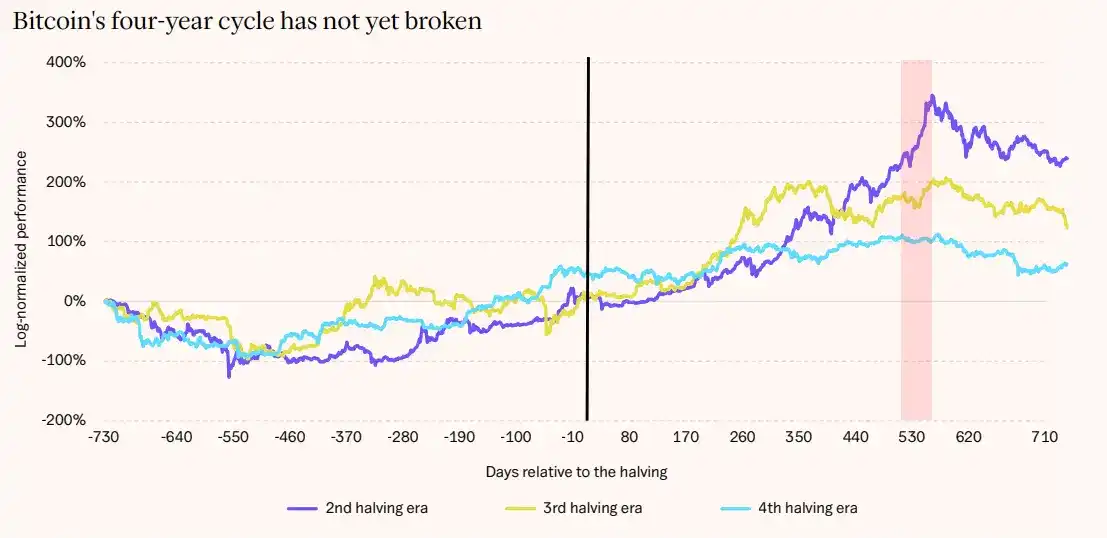
[Chart 1: Bitcoin's Four-Year Cycle Not Yet Broken]

Chart Description: Plots Bitcoin's log-normalized performance in the 2nd, 3rd, and 4th halving cycles, with the halving day as the origin (x-axis: days since halving, y-axis: log returns). The trajectory of the 4th halving cycle closely resembles that of the previous two cycles.

Data Source: Glassnode, 21Shares

II. Crypto ETPs: AUM Declines Instead of Rising

Prediction at the start of the year: Global crypto ETP AUM will surpass $400 billion.

We predicted that global crypto ETP assets under management (AUM) would exceed that of the largest and best-known Nasdaq-100 ETF (QQQ) by year-end. This forecast was built on an expected starting point of $250 billion. The reality is that AUM was around $172 billion at the end of 2025, lower than expected, and has been declining since the start of the year.

As of May 2026, total global crypto ETP AUM is approximately $140 billion, down about 15% year-to-date, with BTC ETPs accounting for roughly $110 billion of that.

The headline numbers look bad, but the underlying support is noteworthy. Despite net outflows of around $3 billion from US spot BTC ETFs year-to-date, BTC-denominated holdings remain near all-time highs, just over 1.25 million BTC, only about 8% below the peak. Investors are navigating the volatility or quietly building strategic positions, even with BTC far from its highs.

The product landscape is also maturing rapidly. The SEC's uniform listing standards have turned last year's backlog of applications into a wave of new products beyond just BTC and ETH.

Hyperliquid stands out in particular: the US spot ETF tracking this asset attracted over $150 million in net inflows in less than a month since launch, demonstrating that traditional capital is still flowing towards digital assets showing fundamental growth, even in a weak broader market.

Meanwhile, Morgan Stanley launched the first bank-sponsored spot BTC ETF in April, bringing one of the largest US advisor networks into the asset class. BlackRock and Goldman Sachs are racing to launch options-based BTC yield strategy ETFs, expanding the crypto product matrix beyond pure Delta One exposure.

The structural drivers remain. Institutional adoption is advancing, and regulatory momentum is real. But global ETP AUM largely follows the BTC price. Reaching our initial target would require a combination of significant price recovery and sustained net inflows simultaneously.

For reference, QQQ, propelled by the strength of AI and tech stocks, now boasts nearly $500 billion in AUM. Closing this gap is not impossible, but the combination of required conditions suggests this story more likely belongs to the next cycle.
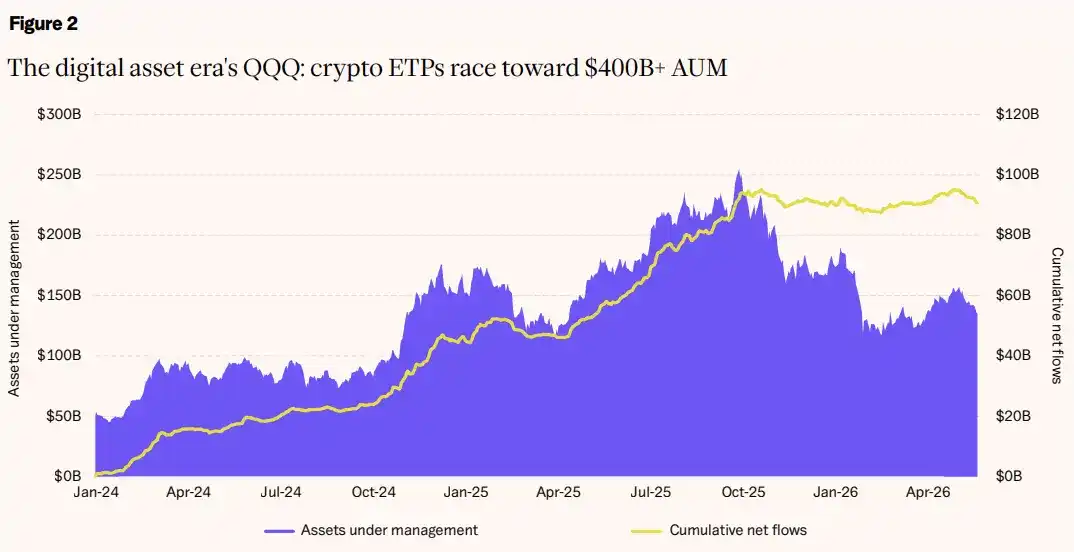
[Chart 2: The QQQ of the Digital Asset Age: Crypto ETPs Compete for Over $400 Billion AUM]

Chart Description: Left axis shows global crypto ETP Assets Under Management (AUM); right axis shows cumulative net inflows. From January 2024 to May 2026, AUM peaked in mid-2025 and subsequently declined, but cumulative net inflows remain elevated.

Data Source: Bloomberg, 21Shares

III. Stablecoins: $1 Trillion Target Arrived at Least a Year Early

Prediction at the start of the year: Stablecoin supply will reach $1 trillion.

Our prediction that stablecoin supply would reach $1 trillion was based on the assumption that regulatory clarity would unlock large-scale institutional and corporate adoption. Clarity has indeed arrived, but only partially.

The GENIUS Act was signed into law in July 2025, establishing the first federal stablecoin framework in the US. The EU's MiCA regulation is fully effective, with 14 licensed issuers and roughly 20 compliant stablecoins in circulation. The infrastructure is in place: total supply is approximately $320 billion, a significant increase from a year ago, but still only a third of the $1 trillion target.

The second step of regulatory clarity has been slower. The CLARITY bill has stalled for months, primarily over how to treat yield-bearing stablecoins, with banking groups warning that deposit-like yields could siphon funds from traditional lenders.

In mid-May, a compromise limiting passive, deposit-like yields passed the Senate Banking Committee, but this delay has dampened the near-term prospects for what could have been the biggest growth engine for the category.

Overshadowed by the headline number is genuine resilience. Stablecoin supply contracted over 30% during the last bear market; this time, supply continues to hit new all-time highs even as the market weakens, and far less new capital has entered the ecosystem than in the last cycle. For us, this is the strongest evidence of stablecoins as a core crypto use case: demand no longer relies on the cycle.

Growth is also expanding beyond the US dollar. The circulating supply of non-USD stablecoins has reached an all-time high of around $2 billion for the first time, growing over 40% year-to-date.

Traditional giants are also moving: Visa, Mastercard, Stripe, and Coinbase are reportedly jointly preparing a US stablecoin platform; Japan's three megabanks — MUFG, SMBC, and Mizuho — announced they will jointly issue trust-based stablecoins by early 2027, targeting $7 billion in issuance by 2028.

When payment and banking giants start building their own rails, whether adoption will arrive is no longer the question.

A more realistic year-end range is $400-$600 billion, reflecting steady growth in trading, cross-chain transfers, and remittances, rather than the explosive surge we originally anticipated. The direction is correct, but the timeline ran ahead of the adoption curve.
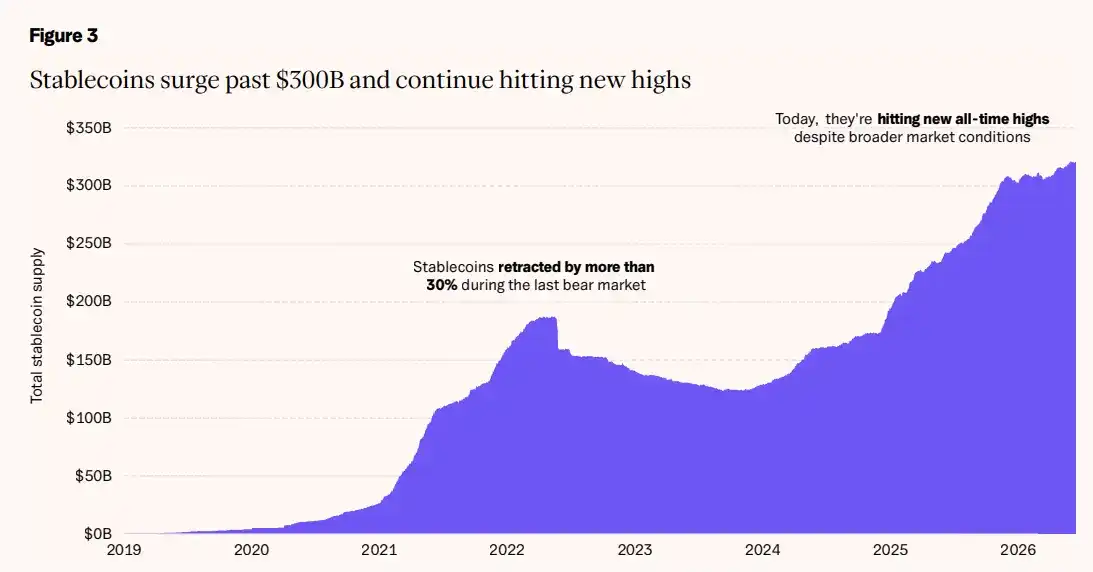
[Chart 3: Stablecoins Break Through $300 Billion and Continue Setting New All-Time Highs]

Chart Description: Change in total stablecoin supply from 2019 to 2026. Supply contracted over 30% during the 2022-2023 bear market, while currently, despite a down market environment, supply continues to reach new all-time highs.

Data Source: DeFiLlama, 21Shares

IV. DeFi: Security Incidents Dent Growth

Prediction at the start of the year: DeFi TVL will exceed $300 billion.

We predicted that DeFi Total Value Locked (TVL) would exceed $300 billion in 2026, more than doubling from the ~$130 billion at the time. This growth has not materialized. TVL sits around $140 billion, with its growth trajectory interrupted by a brutal year for security.

More than 50 security incidents have occurred so far in 2026, with cumulative losses exceeding $840 million, an increase of about 70% year-over-year. April was the single worst month in DeFi history.

A single incident at KelpDAO drained nearly $300 million, triggering over $13 billion in outflows within two days, severely denting institutional confidence in the restaking sector. We view these as growing pains of an emerging industry, not a final verdict, but they have certainly forced a lot of capital to the sidelines.

Beneath the surface weakness, capital is concentrating towards applications with real revenue and user bases.

Hyperliquid, the on-chain, full-financial asset exchange, continues to generate over $1 billion in annualized revenue, returning the majority of it to token holders via buybacks, and is up over 100% year-to-date.

Morpho, the lending engine behind Coinbase's crypto-collateralized loans, has become the highest-valued lending company in the space with a market cap over $1.2 billion, surpassing Aave. Its deposit base has recovered to near its all-time high of around $8 billion, with Apollo committing to acquire up to 9% of its token supply. Select protocols with genuine revenue are attracting outsized capital even in weak conditions.

The massive liquidity surge needed to push TVL to $300 billion hasn't arrived. Significant acceleration is more likely in 2027, before market conditions improve and confidence repairs.
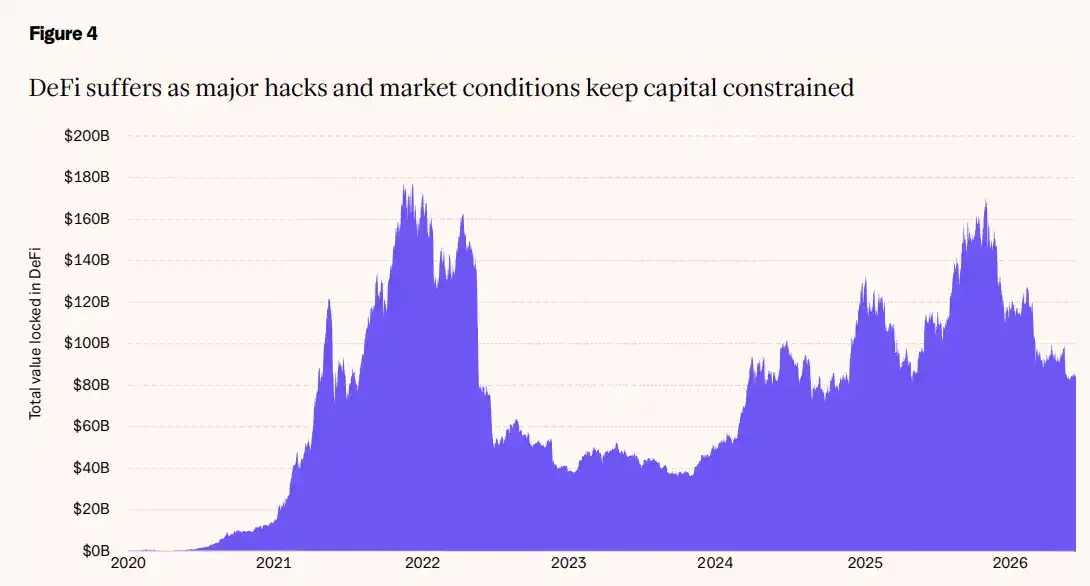
[Chart 4: DeFi Capital Constrained by Major Security Incidents and Market Conditions]

Chart Description: Change in DeFi Total Value Locked (TVL) from 2020 to 2026. TVL peaked in late 2021, declined sharply, partially recovered in 2024-2025, and has remained around $140 billion in 2026.

Data Source: DeFiLlama, 21Shares

V. Digital Asset Treasuries: The Weak Accelerating Their Exit

Prediction at the start of the year: Digital asset treasury companies' crypto holdings will exceed $250 billion, but only a few will survive.

We predicted that the total value of crypto holdings by digital asset treasury companies would exceed $250 billion by year-end, while warning that only a few would survive. On the second point, we've been proven right. On the first, the market is halfway there, but heavily reliant on price appreciation to close the gap.

Approximately 200 publicly traded companies hold BTC as a strategic asset, with combined holdings nearing 1.28 million BTC, already surpassing the 1 million milestone we highlighted last year.

The issue is valuation: at current prices, the total value of corporate crypto treasuries is about $100 billion, far from the $250 billion target. Strategy still dominates overwhelmingly, holding over 845,000 BTC at an average cost of ~$75.7k, representing over 4% of the total BTC supply, but has been in an unrealized loss position as of mid-2026.

The consolidation we pointed to is happening, just not in the form of well-capitalized players acquiring distressed assets, but rather by the weak naturally exiting.

Smaller treasury firms with market caps below the value of their BTC holdings, locked out of fundraising markets, are being forced to sell the very assets they were meant to accumulate.

Nakamoto Holdings sold BTC at an ~40% realized loss to maintain operations, with its stock down ~99% from its 2025 peak.

MARA liquidated over 15,000 BTC to pay off convertible bonds.

Strategy also executed its first BTC sale in four years (32 BTC to pay preferred stock dividends). The amount was negligible (less than 0.004% of holdings), and buying resumed a week later, but it was symbolic: business obligations will compete with BTC accumulation.

Not every company that adopted the treasury model in 2025 has the capital structure or conviction to withstand a sustained pullback.

This stress is precisely the scenario our consolidation call anticipated. Among 18 major treasury firms, 13 have market caps below the value of their BTC holdings. Acquiring one effectively means buying BTC at a discount. Consolidation is starting from the deepest pockets.

Twenty One Capital (the second-largest treasury firm), backed by Tether, is progressing with a merger involving payments company Strike and miner Elektron Energy to create a vertically integrated BTC operating company. Notably, its market cap already exceeds the value of its BTC holdings, while most peers trade at a discount.
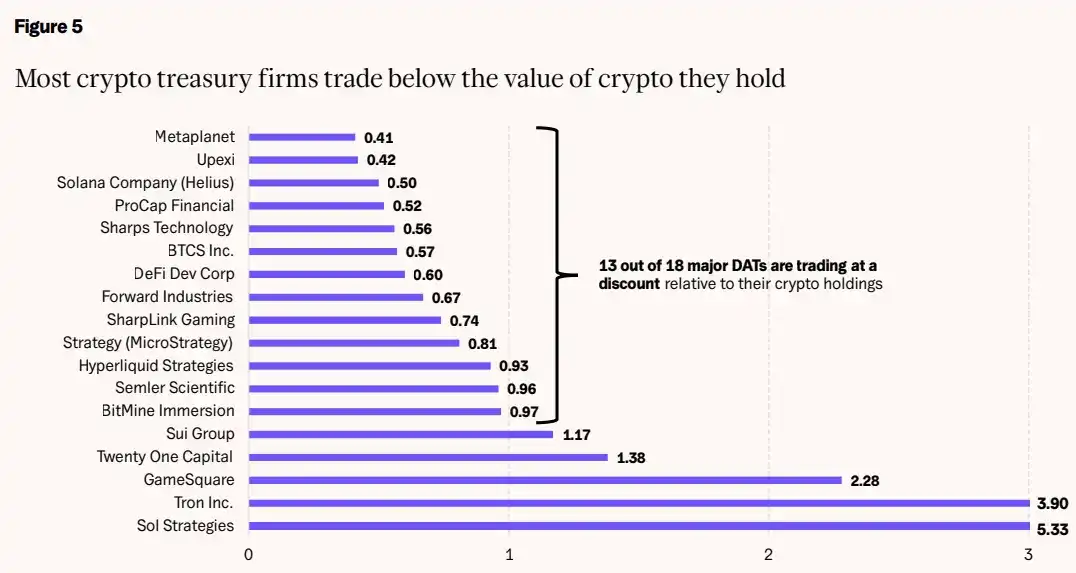
[Chart 5: Most Crypto Treasury Firms Trade at a Discount to Their Crypto Asset Value]

Chart Description: mNAV (Market Cap / Net Asset Value of Crypto Holdings) ratio for 18 major digital asset treasury companies.

Data Source: SEC EDGAR; CoinGecko; Yahoo Finance, 21Shares

VI. Prediction Markets: Half the Annual Target Achieved in Half a Year

Prediction at the start of the year: Prediction markets will bring millions of users on-chain, with annual trading volume reaching $100 billion.

We predicted prediction markets would reach $100 billion in annual trading volume. Progress has even exceeded our own expectations. As of the end of May, $57.5 billion has been traded, over half the annual target and more than ten times the volume from the same period last year. At the current pace, $100 billion would be achieved around early Q4.

We think it will be faster. Catalysts for event-driven trading are concentrated in the second half of the year: the FIFA World Cup is underway, and US House and Senate midterm elections are in November.

Activity has cooled off since the January peak (over $15 billion in a single month), but this is the natural rhythm of an event-driven market between major events. The last time event flow was concentrated (Q4 2025), monthly volume tripled. If a similar surge occurs in H2, the year could head towards $200 billion.

Our expected drivers are materializing one by one. Regulatory clarity arrived: the CFTC closed its investigations into Polymarket and Kalshi; PredictIt won its court case; and Intercontinental Exchange committed up to $2 billion to expand Polymarket.

Platform integration followed: Google and X embedded real-time odds into their own platforms. And 2026 happens to provide the political and macroeconomic volatility these markets were built for.

The competitive landscape is also broadening. Hyperliquid entered the prediction market space via HIP-4 in May. Its volume remains far below Polymarket and Kalshi's for now, but within weeks of launch, it was processing about a fifth of BTC outcome contract trading volume.

Its design points in a unique direction: a trader-focused, composable financial outcome market, a use case beyond the typical audience of Polymarket or Kalshi. The pie is getting bigger, with different segments driven by different forces.

While a US federal framework is settled, regulators elsewhere are drawing the opposite conclusion: Spain blocked both platforms citing a lack of gambling licenses in late May; Brazil, India, Indonesia, and Portugal have also restricted access this year; and some US states are challenging sports event contracts under their own betting-related laws.

These restrictions haven't materially impacted volume yet, as the growth engine remains the US, but the issue is being resolved market by market.

Nevertheless, the biggest events of H2 are yet to come. We expect 2026 to significantly surpass the original forecast, cementing prediction markets alongside stablecoins and tokenization as one of crypto's clearest product-market fits.
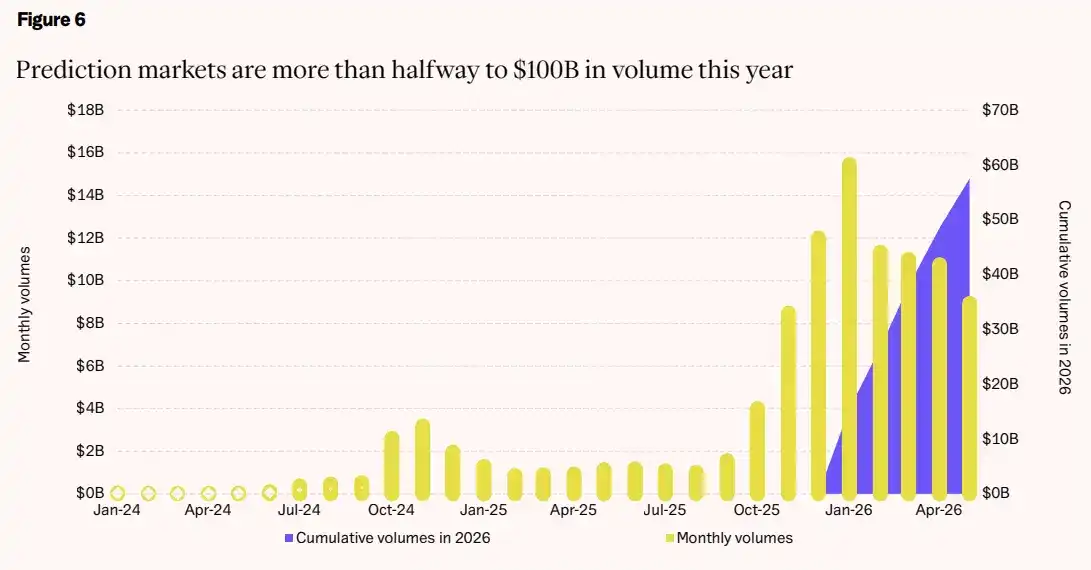
[Chart 6: Prediction Markets Have Already Traded Over Half of Their $100 Billion Annual Target This Year]

Chart Description: Left axis shows monthly trading volume (bars); right axis shows cumulative 2026 trading volume (line). Explosive peaks occurred in Q4 2025 and January 2026, followed by a pullback. Cumulative volume reached ~$57.5 billion by end of May.

Data Source: Dune, 21Shares

VII. The AI Agent Economy: Still in Its Infancy

Prediction at the start of the year: The AI agent economy becomes a reality in 2026.

We predicted that AI agents would become active in 2026, directly interacting with blockchain applications to manage yield, automate payments, optimize liquidity, and minimize human intervention. This prediction is directionally correct: blockchain infrastructure is ready, first products are live, but mass adoption hasn't arrived.

In fact, infrastructure progress has been faster than we expected. ERC-8004 (the identity and reputation layer for autonomous agents on Ethereum) went live on mainnet in January and has begun deploying to other EVM-compatible networks.

The x402 protocol revived the HTTP 402 "Payment Required" status code, designed at the birth of the web but never used, for machine-to-machine payments. It has grown from an internal Coinbase project to a standard co-governed by Coinbase, Cloudflare, and Stripe, with backing from AWS, Google, Mastercard, Microsoft, and Visa.

Traditional finance is also converging in the same direction. Visa, Mastercard, and Stripe are each building their own agent payment protocols. In March 2026, Santander and Mastercard completed Europe's first end-to-end real-time payment executed by an AI agent.

Volumes remain tiny. The x402 protocol's cumulative transaction volume is still in the tens of millions of dollars, more proof-of-concept than mature economy. What's missing is the killer app or integration that makes the agent economy as intuitive as stablecoin transfers or prediction market trading. That breakthrough may still be ahead, but we believe 2026 will be remembered as the "foundation-laying year."
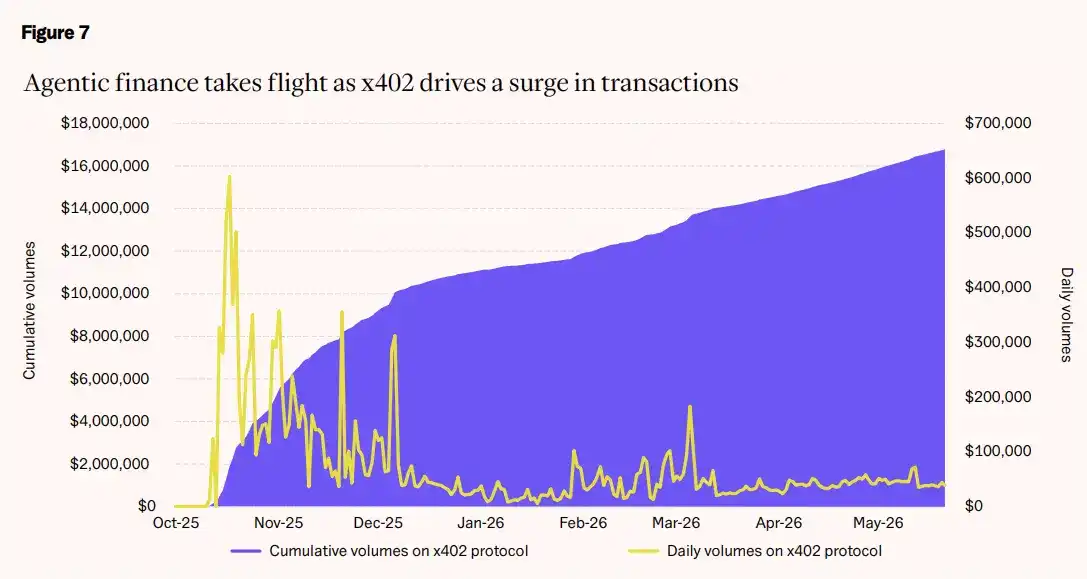
[Chart 7: AI Agent Finance Takes Off, x402 Drives Transaction Surge]

Chart Description: Left axis shows x402 protocol cumulative transaction volume (line); right axis shows daily transaction volume (line). From October 2025 to May 2026, cumulative volume grew from 0 to ~$17 million, with daily volume peaking at ~$600k in January 2026.

Data Source: Dune, 21Shares

VIII. Ethereum L2s: Consolidation Proceeds as Expected

Prediction at the start of the year: Most Ethereum scaling solutions will die out in 2026.

We predicted that most scaling solutions (Layer 2, L2) would not survive 2026, with market share concentrating among a few dominant players. This call has landed.

In February, it received an unexpected endorsement: Ethereum co-founder Vitalik Buterin publicly declared that "the rollup-centric roadmap is no longer tenable."

His reasoning aligned with our analysis: most L2s have stagnated on decentralization and sovereignty, while Ethereum itself is steadily scaling. Scaling solutions without differentiation lose their reason for being. His advice: "differentiate or die."

The data bears this out. The top 5 L2s now command nearly 90% of daily active users in the ecosystem. Asset concentration is similarly stark: Base and Arbitrum control about 70% of total value.

The winners share common traits: built-in distribution channels, credible paths to decentralization, and business models that accumulate value rather than "renting" users with incentives.

The remaining 70+ scaling solutions split the leftovers, with over 50 already irrelevant by any meaningful activity metric. Some once well-known chains have only a few hundred daily active users, running on treasury funds rather than real demand.

However, the elimination tournament isn't over. The final stages (acquisitions, formal shutdowns, migrations to app-chains) are still underway, and we expect acceleration in the second half of the year.
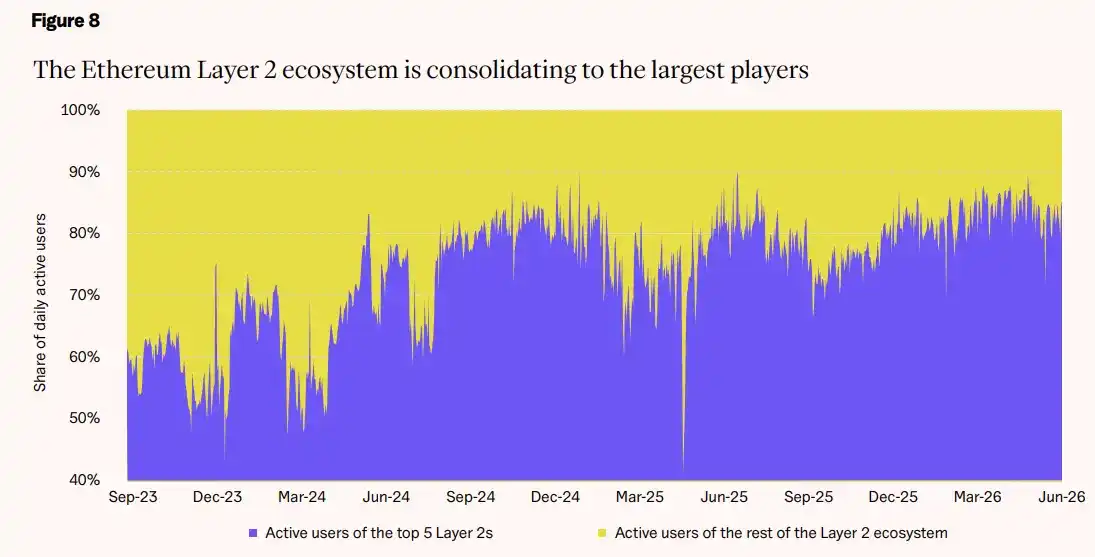
[Chart 8: Ethereum Layer 2 Ecosystem Concentrating Towards the Largest Players]

Chart Description: Comparison of daily active user share between the top 5 L2s and the rest of the L2 ecosystem from September 2023 to June 2026. The share of the top 5 L2s increased from ~70% to nearly 90%.

Data Source: TokenTerminal, 21Shares

IX. Compliant Token Offerings: Platform Ready, Capital Still on the Sidelines

Prediction at the start of the year: Compliant token offerings become a mainstream capital market in 2026.

We predicted that compliant token sales would become a mainstream capital market in 2026, a compliant revival of the 2017-2018 wave, built on transparency and institutional backing. The market exists, but whether it can be called "mainstream" is a harder question.

Infrastructure built out faster than expected. Coinbase acquired Echo for $375 million and began hosting token sales on its own platform, marking the first time US retail investors could legally participate since 2018.

Benchmark cases proved the possibility: high-performance chain Monad raised $216 million from 86,000 buyers on Coinbase. The $50 million round for Ethereum scaling network MegaETH saw $1.39 billion in interest. In Europe, Legion completed multiple compliant offerings across DeFi, DePIN, and infrastructure under the MiCA framework.

Platform quality is vastly improved from 2017: KYC, AML, structured allocations, lockups, and anti-hype rules are now standard. Compliant platforms have captured the majority of fundraising amounts in most months, a complete reversal from the unregulated frenzy of the previous wave.

But sobering limitations exist. Excluding the November peak driven by Monad, monthly fundraising amounts have trended down, hitting the lowest levels for compliant platforms in recent months.

The biggest drag isn't regulation but opportunity cost: AI, robotics, and space stocks have created unprecedented returns in public markets, siphoning off risk capital that might have otherwise flowed into token offerings.

Deal flow has decreased since the November peak, and capital raised through these platforms remains in the hundreds of millions of dollars, a small fraction of the ~$30 billion total raised in the 2017 wave. The investor base, while enthusiastic, remains largely crypto-native.

"Mainstream" status means compliant token sales stand alongside traditional IPOs as an accepted capital formation tool. That will likely require more years of case-building, track records, and broader retail awareness.
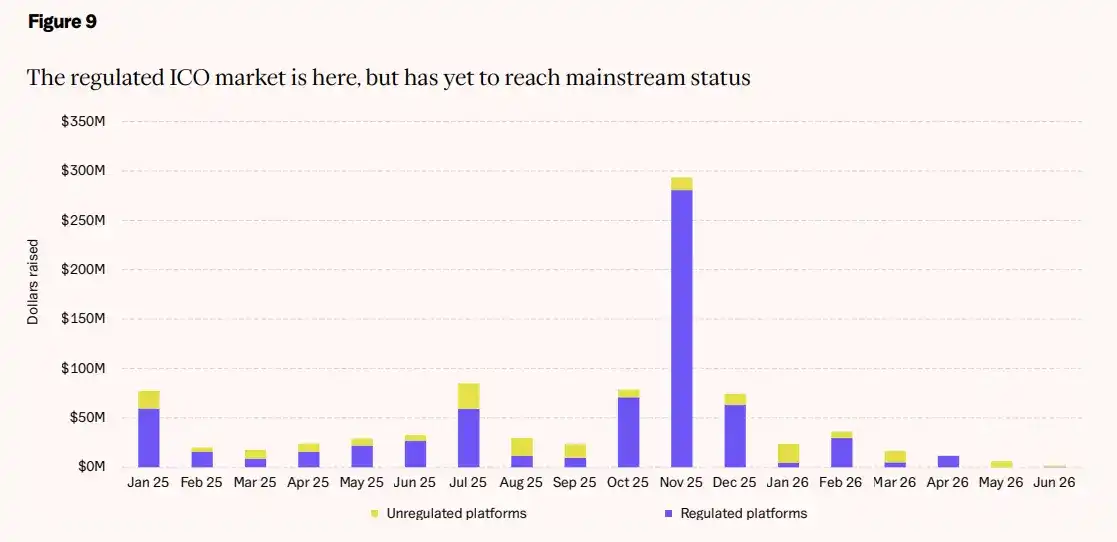
[Chart 9: The Compliant Token Offering Market Exists, But Has Not Yet Reached Mainstream Status]

Chart Description: Monthly fundraising amounts by non-compliant platforms (blue) and compliant platforms (yellow) from January 2025 to June 2026. A peak of ~$300 million occurred in November 2025 (driven by Monad), followed by a consistent decline. Compliant platforms have captured the dominant share in most months.

Data Source: CryptoRank, Messari, The Block, Company Disclosures, 21Shares

X. Tokenized Assets: Rapid Growth, Target Still Distant

Prediction at the start of the year: The total value of tokenized assets will exceed $500 billion.

We predicted that tokenized real-world assets would exceed $500 billion by year-end. Whether that number looks hopeless or within reach depends entirely on the measuring stick.

Measured by public chain distribution, the market was around $31 billion as of early June, with ~$15 billion in tokenized US Treasuries and ~$5 billion in commodities, a mere 6% of the target.

But if assets represented on-chain (like securities already circulating as 24/7 collateral on permissioned institutional networks such as Canton) are included, the figure nears $350 billion. The gap between the two numbers is the core narrative of tokenization in 2026: the speed at which institutional assets are being put on-chain is roughly ten times that of on-chain native distribution. "Representation" is the entry point; "distribution" is the destination.

This entry point will widen noticeably in the second half. Canton has been operational for a while (industry participants were already funding tokenized Treasuries 24/7 on it last year), but the qualitative leap comes from the DTCC (Depository Trust & Clearing Corporation).

This institution, which custodies over $100 trillion in securities, is beginning to tokenize US Treasuries held at the DTC onto a blockchain. Limited production trades are scheduled for July, with the full platform launching in October. Backed by an SEC no-action letter, this marks the first time core US market infrastructure has been cleared to put assets on-chain.

Our sub-predictions are progressing at different speeds. Tokenized stocks have doubled to ~$1.4 billion, still far from the $10 billion path we envisioned, but the pipeline is the strongest: Nasdaq received SEC approval in March to put stocks on-chain, with Kraken as the global distributor; the NYSE is also building its own tokenized settlement platform.

The CLARITY bill (which we expect to unlock bank issuance and custody of tokenized instruments) has passed the Senate Banking Committee, awaiting a full vote.

Reaching $500 billion in distributed value by December would still require a very unconventional acceleration. But the institutions laying the pipes are precisely those that run the existing financial system. That matters.
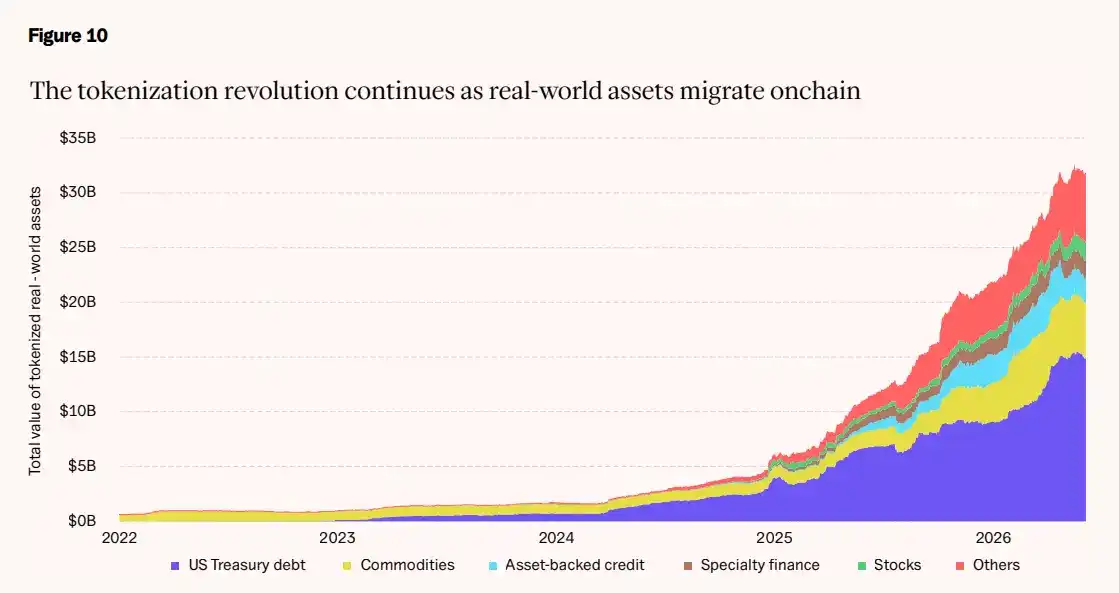
[Chart 10: The Tokenization Revolution Continues, Real-World Assets Accelerate On-Chain]

Chart Description: Composition of the total value of tokenized real-world assets from 2022 to 2026. Includes US Treasuries (largest share), Commodities, Asset-Backed Credit, Special Finance, Stocks, and Other categories. Total value grew from less than $5 billion at the end of 2022 to ~$31 billion in mid-2026.

Data Source: rwa.xyz, 21Shares

Kripto yang Sedang Tren

Pertanyaan Terkait

QAccording to the report, what is the current status of Bitcoin's four-year cycle?

AThe report concludes that Bitcoin's four-year cycle has not been broken. The price action after the 2025 halving, where BTC peaked around $126k and then retraced significantly, closely mirrors patterns seen in previous cycles. While the market structure has changed (e.g., more institutional ETF holdings, shallower 50% drawdowns vs. 80+% historically), the cyclical nature persists, though its form is evolving.

QWhy did the report's prediction for global crypto ETP AUM exceeding $400 billion fail to materialize?

AThe prediction that global crypto ETP AUM would exceed $400 billion (the size of QQQ) failed because the starting AUM at the end of 2025 (~$172B) was lower than the assumed $250B baseline, and AUM has declined by about 15% year-to-date to ~$140B as of May 2026, largely following Bitcoin's price drop. While underlying adoption drivers remain strong, reaching the initial target would require significant price recovery and sustained net inflows simultaneously.

QWhat is the primary reason given for the DeFi TVL falling short of the $300 billion prediction?

AThe primary reason for DeFi TVL (~$140B) falling far short of the $300 billion prediction is a 'brutal year for security,' with over 50 incidents and $840M+ in losses year-to-date. Major exploits, like the ~$300M KelpDAO hack, severely damaged institutional confidence, particularly in the restaking sector, causing significant outflows and forcing capital to the sidelines.

QWhich prediction is significantly ahead of schedule and is expected to be achieved early?

AThe prediction for prediction markets is significantly ahead of schedule. The annual trading volume target of $100 billion is on track to be reached early, with $57.5B already completed by the end of May 2026 (over half the annual goal). Driven by events like the FIFA World Cup and US midterm elections, the report suggests the full-year volume could potentially reach $200 billion.

QWhat key distinction does the report make regarding the measurement of tokenized real-world assets (RWAs)?

AThe report makes a key distinction between 'on-chain representation' and 'on-chain distribution' when measuring tokenized RWAs. Using a public chain distribution lens, the market is only about $31B. However, if including assets 'represented' on-chain (e.g., securities circulating as collateral on permissioned institutional networks like Canton), the figure is closer to $350B. This gap highlights that institutional assets are moving on-chain ('representation') about ten times faster than they are being natively issued and distributed on public chains.

Bacaan Terkait

Meta Ikut Arus Pasar Prediksi, Bisakah Menghindari Jalan Gagal Metaverse?

**TL;DR:** * **Meta Masuki Pasar Prediksi:** Meta (perusahaan induk Facebook, Instagram, WhatsApp) membentuk tim kecil untuk mengembangkan aplikasi pasar prediksi bernama kode "Arena". Pengguna dapat bertaruh menggunakan poin (bukan uang sungguhan) pada hasil acara politik, olahraga, dan isu global. * **Peluang Besar Berbasis Pengguna:** Pasar prediksi (seperti Polymarket dan Kalshi) menunjukkan permintaan nyata dengan volume perdagangan miliaran dolar. Meta memiliki aset utama: 3,56 miliar pengguna aktif harian. Ini berpotensi membawa pasar niche ini ke audiens mainstream. * **Tantangan Besar: Regulasi dan Kepercayaan:** Meta memiliki catatan buruk dalam menangani informasi politik/misinfo dan proyek keuangan (seperti Libra/Diem yang gagal). Arena yang fokus pada konten sensitif (pemilu) bisa menjadi target regulator (seperti CFTC) sejak dini, terutama terkait integritas pasar dan potensi penyalahgunaan informasi. Skala pengguna Meta justru bisa memperbesar kontroversi. * **Perbandingan dengan Metaverse:** Keputusan ini kontras dengan investasi besar dan merugi di Metaverse (Reality Labs rugi ~$900 miliar). Membangun pasar prediksi secara software lebih murah dan menangkap tren yang sudah ada, dibanding menciptakan kebiasaan baru seperti di Metaverse. * **Masa Depan Arena:** Versi awal kemungkinan adalah fitur prediksi sosial non-uang di platform Meta (Instagram, Facebook Groups). Ini bisa memperluas pasar. Namun, untuk berkembang ke perdagangan berbasis uang sungguhan, Meta harus membangun kepercayaan yang saat ini rendah di mata regulator dan publik. Keberhasilan tidak dijamin hanya dengan skala pengguna.

Foresight News17m yang lalu

Meta Ikut Arus Pasar Prediksi, Bisakah Menghindari Jalan Gagal Metaverse?

Foresight News17m yang lalu

Hari Pertama Naik Gila 1200%, Insinyur Penjualan Kelahiran 80-an Berbalik Nasib, dari Jual Fiberglass hingga Kekayaan Rp290 Triliun

N臻bo (perusahaan komponen peralatan semikonduktor, dengan kode "N Zhenbao") meledak 1207% pada hari pertama penawaran umum perdana (IPO) di pasar STAR, menjadi saham "10 kali lipat" kedua tahun ini di ChiNext. Harga penutupan 585 yuan menempatkannya di 20 besar harga saham pasar A. Didukung oleh seluruh rantai industri semikonduktor (termasuk Dana Nasional IC Fase II, SMIC, BOE, YMTC), perusahaan ini disebut "saham pertama bahan habis pakai semikonduktor". Konsep bisnisnya dibandingkan dengan menjual "plester luka" bukan "pisau bedah": komponen kunci seperti cincin silikon dan kuarsa adalah bahan habis pakai yang perlu diganti secara berkala saat pabrik wafer beroperasi, menghasilkan arus kas yang stabil. Pendiri Wang Bing, seorang insinyur penjualan kelahiran 1980-an, melihat masalah ketergantungan pada pemasok luar negeri dan rantai pasokan yang tidak stabil. Ia membangun rantai tertutup "bahan baku + komponen + perawatan permukaan" untuk menawarkan solusi dengan kinerja 80%, harga 50%, namun kecepatan pengiriman dan respons 100%. Kliennya mencakup produsen domestik (BOE, Nexchip, CSMC) dan internasional (SK Hynix, GlobalFoundries, UMC, Texas Instruments). Data 2024 menunjukkan pangsa pasar #1 untuk komponen silikon (4,5%) dan kuarsa (8,8%) di antara pemasok lokal yang melayani pabrik wafer secara langsung. IPO mengumpulkan 1,6 miliar yuan untuk ekspansi kapasitas, namun akan menambah beban penyusutan tahunan ~72,77 juta yuan, berpotensi mempengaruhi laba (laba bersih 2025: 226 juta yuan). Pertumbuhan pendapatan 2022-2025 solid (3,86B ke 8,46B yuan), tetapi tantangan termasuk siklus kuat industri semikonduktor, persaingan dari pemain Jepang, dan risiko operasional. Piutang usaha mencapai 70,83% dari pendapatan pada pertengahan 2025, menunjukkan tekanan likuiditas. Kecukupan atribut inovasi juga dipertanyakan karena fluktuasi signifikan jumlah staf R&D sebelum dan sesudah IPO, serta manajemen pencatatan R&D yang kurang ketat.

marsbit24m yang lalu

Hari Pertama Naik Gila 1200%, Insinyur Penjualan Kelahiran 80-an Berbalik Nasib, dari Jual Fiberglass hingga Kekayaan Rp290 Triliun

marsbit24m yang lalu

Micron Membungkam Para Short Seller, dan Membuat 'Buffett' India Menyesal: Jual Terlalu Dini, Kehilangan Untung Rp 310 Triliun

Mohnish Pabrai, investor yang dijuluki "Warren Buffett India", menyesali keputusan investasinya pada Micron dan SK Hynix. Ia membeli saham Micron pada 2017 dan menjualnya pada September 2023, hanya meraih keuntungan sekitar dua kali lipat. Setelah dijual, saham Micron melonjak lebih dari 15 kali lipat dalam dua tahun, menyebabkan perkiraan kerugian peluang senilai sekitar $20 miliar. Pabrai juga menjual saham SK Hynix terlalu dini. Dalam wawancara, ia mengaku melanggar prinsip investasinya sendiri: "Saya sangat menyesal. Saya melanggar aturan saya sendiri, menjual perusahaan yang seharusnya saya pegang selamanya." Riset awalnya menunjukkan pasar memori global akan didominasi oleh tiga pemain (Samsung, SK Hynix, Micron) dengan struktur oligopoli yang menguntungkan, yang juga dikonfirmasi oleh Buffett dan Charlie Munger. Namun, ia keluar karena khawatir dengan ekspansi kapasitas Samsung, tepat sebelum lonjakan permintaan HBM (High Bandwidth Memory) didorong oleh AI seperti ChatGPT. Pabrai berbagi tiga prinsip inti investasinya: hindari leverage, utamakan daya tahan "parit pertahanan" (competitive moat) perusahaan, dan nilai integritas manajemen. Ia menekankan bagi sebagian besar investor, membeli indeks pasar adalah pilihan terbaik. Di akhir, Pabrai menyatakan tujuan akhirnya adalah menyumbangkan semua kekayaannya sebelum perkiraan tanggal kematiannya. Ia berfilosofi, "Kekayaan hilang, tidak ada yang hilang; kesehatan hilang, sesuatu hilang; karakter hilang, segalanya hilang."

marsbit1j yang lalu

Micron Membungkam Para Short Seller, dan Membuat 'Buffett' India Menyesal: Jual Terlalu Dini, Kehilangan Untung Rp 310 Triliun

marsbit1j yang lalu

Karakter Utama Selanjutnya MiHoYo, Adalah Dia yang Bermain Piano

Kebanyakan orang mengenal miHoYo lewat game _Genshin Impact_, tetapi perusahaan ini memiliki visi yang lebih dalam: menciptakan dunia virtual untuk satu miliar orang pada 2030. Untuk mewujudkannya, miHoYo telah berinvestasi dalam teknologi seperti brain-computer interface, fusi nuklir, dan AI. Mereka percaya bahwa karakter virtual di masa depan harus hidup dan memiliki kesadaran, bukan sekadar mengikuti naskah. Pada 2022, salah satu pendiri, Cai Haoyu (atau "AI Soulcaster"), memisahkan diri untuk fokus pada proyek AI baru bernama Anuttacon. Proyek pertamanya, game _Whisper of the Stars_ (2025), menunjukkan potensi namun juga keterbatasan model bahasa AI saat ini. Belakangan, fokus dialihkan ke pengembangan model bahasa yang memahami emosi. Sementara itu, pendiri lainnya, Liu Wei ("Da Wei Ge"), mengumumkan rencana investasi hingga 100 miliar yuan dalam tiga tahun ke depan untuk mengembangkan model bahasa besar ber-emosi, memanfaatkan keahlian miHoYo dalam menciptakan karakter yang dicintai pengguna. Produk pertama dari ambisi AI ini adalah aplikasi _BSide: Olivia Lin_ (dirilis Juni 2026). Berbeda dengan chatbot AI pada umumnya, aplikasi ini menawarkan interaksi yang lebih santai dan natural dengan seorang gadis virtual bernama Olivia (Lin Li) yang bisa bermain piano, membalas surat, dan menjadi wallpaper dinamis. Pendekatan ini disebut "rasa orang hidup", mengurangi frekuensi interaksi untuk menciptakan kesan keaslian yang lebih kuat sambil menunggu teknologi AI matang. Nama "miHoYo" sendiri berasal dari "mi" dalam Hatsune Miku, idol virtual yang menjadi inspirasi awal pendirinya. Perjalanan panjang miHoYo, dari kamar asrama hingga perusahaan bernilai miliaran, kini berfokus pada satu tujuan akhir: memberikan kehidupan dan kesadaran sejati pada karakter virtual yang dicintai banyak orang.

marsbit2j yang lalu

Karakter Utama Selanjutnya MiHoYo, Adalah Dia yang Bermain Piano

marsbit2j yang lalu

Trading

Spot
Futures

Artikel Populer

Apa Itu $S$

Memahami SPERO: Tinjauan Komprehensif Pengenalan SPERO Seiring dengan perkembangan lanskap inovasi, munculnya teknologi web3 dan proyek cryptocurrency memainkan peran penting dalam membentuk masa depan digital. Salah satu proyek yang telah menarik perhatian di bidang dinamis ini adalah SPERO, yang dilambangkan sebagai SPERO,$$s$. Artikel ini bertujuan untuk mengumpulkan dan menyajikan informasi terperinci tentang SPERO, untuk membantu para penggemar dan investor memahami dasar-dasar, tujuan, dan inovasi dalam domain web3 dan crypto. Apa itu SPERO,$$s$? SPERO,$$s$ adalah proyek unik dalam ruang crypto yang berusaha memanfaatkan prinsip desentralisasi dan teknologi blockchain untuk menciptakan ekosistem yang mendorong keterlibatan, utilitas, dan inklusi finansial. Proyek ini dirancang untuk memfasilitasi interaksi peer-to-peer dengan cara baru, memberikan pengguna solusi dan layanan keuangan yang inovatif. Pada intinya, SPERO,$$s$ bertujuan untuk memberdayakan individu dengan menyediakan alat dan platform yang meningkatkan pengalaman pengguna dalam ruang cryptocurrency. Ini termasuk memungkinkan metode transaksi yang lebih fleksibel, mendorong inisiatif yang dipimpin komunitas, dan menciptakan jalur untuk peluang finansial melalui aplikasi terdesentralisasi (dApps). Visi mendasar dari SPERO,$$s$ berputar di sekitar inklusivitas, bertujuan untuk menjembatani kesenjangan dalam keuangan tradisional sambil memanfaatkan manfaat teknologi blockchain. Siapa Pencipta SPERO,$$s$? Identitas pencipta SPERO,$$s$ tetap agak samar, karena ada sumber daya publik yang terbatas yang memberikan informasi latar belakang terperinci tentang pendiriannya. Kurangnya transparansi ini dapat berasal dari komitmen proyek terhadap desentralisasi—sebuah etos yang banyak proyek web3 bagi, memprioritaskan kontribusi kolektif di atas pengakuan individu. Dengan memusatkan diskusi di sekitar komunitas dan tujuan kolektifnya, SPERO,$$s$ mewujudkan esensi pemberdayaan tanpa menonjolkan individu tertentu. Dengan demikian, memahami etos dan misi SPERO tetap lebih penting daripada mengidentifikasi pencipta tunggal. Siapa Investor SPERO,$$s$? SPERO,$$s$ didukung oleh beragam investor mulai dari modal ventura hingga investor malaikat yang berdedikasi untuk mendorong inovasi di sektor crypto. Fokus investor ini umumnya sejalan dengan misi SPERO—memprioritaskan proyek yang menjanjikan kemajuan teknologi sosial, inklusivitas finansial, dan tata kelola terdesentralisasi. Fondasi investor ini biasanya tertarik pada proyek yang tidak hanya menawarkan produk inovatif tetapi juga memberikan kontribusi positif kepada komunitas blockchain dan ekosistemnya. Dukungan dari investor ini memperkuat SPERO,$$s$ sebagai pesaing yang patut diperhitungkan di domain proyek crypto yang berkembang pesat. Bagaimana SPERO,$$s$ Bekerja? SPERO,$$s$ menerapkan kerangka kerja multi-faceted yang membedakannya dari proyek cryptocurrency konvensional. Berikut adalah beberapa fitur kunci yang menekankan keunikan dan inovasinya: Tata Kelola Terdesentralisasi: SPERO,$$s$ mengintegrasikan model tata kelola terdesentralisasi, memberdayakan pengguna untuk berpartisipasi aktif dalam proses pengambilan keputusan mengenai masa depan proyek. Pendekatan ini mendorong rasa kepemilikan dan akuntabilitas di antara anggota komunitas. Utilitas Token: SPERO,$$s$ memanfaatkan token cryptocurrency-nya sendiri, yang dirancang untuk melayani berbagai fungsi dalam ekosistem. Token ini memungkinkan transaksi, hadiah, dan fasilitasi layanan yang ditawarkan di platform, meningkatkan keterlibatan dan utilitas secara keseluruhan. Arsitektur Berlapis: Arsitektur teknis SPERO,$$s$ mendukung modularitas dan skalabilitas, memungkinkan integrasi fitur dan aplikasi tambahan secara mulus seiring dengan perkembangan proyek. Kemampuan beradaptasi ini sangat penting untuk mempertahankan relevansi di lanskap crypto yang selalu berubah. Keterlibatan Komunitas: Proyek ini menekankan inisiatif yang dipimpin komunitas, menggunakan mekanisme yang memberikan insentif untuk kolaborasi dan umpan balik. Dengan memelihara komunitas yang kuat, SPERO,$$s$ dapat lebih baik memenuhi kebutuhan pengguna dan beradaptasi dengan tren pasar. Fokus pada Inklusi: Dengan menawarkan biaya transaksi yang rendah dan antarmuka yang ramah pengguna, SPERO,$$s$ bertujuan untuk menarik basis pengguna yang beragam, termasuk individu yang mungkin sebelumnya tidak terlibat dalam ruang crypto. Komitmen ini terhadap inklusi sejalan dengan misi utamanya untuk memberdayakan melalui aksesibilitas. Garis Waktu SPERO,$$s$ Memahami sejarah proyek memberikan wawasan penting tentang trajektori dan tonggak perkembangannya. Berikut adalah garis waktu yang disarankan yang memetakan peristiwa signifikan dalam evolusi SPERO,$$s$: Fase Konseptualisasi dan Ideasi: Ide awal yang membentuk dasar SPERO,$$s$ dikembangkan, sangat selaras dengan prinsip desentralisasi dan fokus komunitas dalam industri blockchain. Peluncuran Whitepaper Proyek: Setelah fase konseptual, whitepaper komprehensif yang merinci visi, tujuan, dan infrastruktur teknologi SPERO,$$s$ dirilis untuk menarik minat dan umpan balik komunitas. Pembangunan Komunitas dan Keterlibatan Awal: Upaya jangkauan aktif dilakukan untuk membangun komunitas pengguna awal dan investor potensial, memfasilitasi diskusi seputar tujuan proyek dan mendapatkan dukungan. Acara Generasi Token: SPERO,$$s$ melakukan acara generasi token (TGE) untuk mendistribusikan token asli kepada pendukung awal dan membangun likuiditas awal dalam ekosistem. Peluncuran dApp Awal: Aplikasi terdesentralisasi (dApp) pertama yang terkait dengan SPERO,$$s$ diluncurkan, memungkinkan pengguna untuk terlibat dengan fungsionalitas inti platform. Pengembangan Berkelanjutan dan Kemitraan: Pembaruan dan peningkatan berkelanjutan terhadap penawaran proyek, termasuk kemitraan strategis dengan pemain lain di ruang blockchain, telah membentuk SPERO,$$s$ menjadi pemain yang kompetitif dan berkembang di pasar crypto. Kesimpulan SPERO,$$s$ berdiri sebagai bukti potensi web3 dan cryptocurrency untuk merevolusi sistem keuangan dan memberdayakan individu. Dengan komitmen terhadap tata kelola terdesentralisasi, keterlibatan komunitas, dan fungsionalitas yang dirancang secara inovatif, ia membuka jalan menuju lanskap keuangan yang lebih inklusif. Seperti halnya investasi di ruang crypto yang berkembang pesat, calon investor dan pengguna dianjurkan untuk melakukan riset secara menyeluruh dan terlibat dengan perkembangan yang sedang berlangsung dalam SPERO,$$s$. Proyek ini menunjukkan semangat inovatif industri crypto, mengundang eksplorasi lebih lanjut ke dalam berbagai kemungkinan yang ada. Meskipun perjalanan SPERO,$$s$ masih berlangsung, prinsip-prinsip dasarnya mungkin benar-benar mempengaruhi masa depan cara kita berinteraksi dengan teknologi, keuangan, dan satu sama lain dalam ekosistem digital yang saling terhubung.

89 Total TayanganDipublikasikan pada 2024.12.17Diperbarui pada 2024.12.17

Apa Itu $S$

Apa Itu AGENT S

Agent S: Masa Depan Interaksi Otonom di Web3 Pendahuluan Dalam lanskap Web3 dan cryptocurrency yang terus berkembang, inovasi secara konstan mendefinisikan ulang cara individu berinteraksi dengan platform digital. Salah satu proyek perintis, Agent S, menjanjikan untuk merevolusi interaksi manusia-komputer melalui kerangka agen terbuka. Dengan membuka jalan untuk interaksi otonom, Agent S bertujuan untuk menyederhanakan tugas-tugas kompleks, menawarkan aplikasi transformasional dalam kecerdasan buatan (AI). Eksplorasi mendetail ini akan menyelami seluk-beluk proyek, fitur uniknya, dan implikasinya untuk domain cryptocurrency. Apa itu Agent S? Agent S berdiri sebagai kerangka agen terbuka yang inovatif, dirancang khusus untuk mengatasi tiga tantangan mendasar dalam otomatisasi tugas komputer: Memperoleh Pengetahuan Spesifik Domain: Kerangka ini secara cerdas belajar dari berbagai sumber pengetahuan eksternal dan pengalaman internal. Pendekatan ganda ini memberdayakannya untuk membangun repositori pengetahuan spesifik domain yang kaya, meningkatkan kinerjanya dalam pelaksanaan tugas. Perencanaan Selama Rentang Tugas yang Panjang: Agent S menggunakan perencanaan hierarkis yang ditingkatkan pengalaman, pendekatan strategis yang memfasilitasi pemecahan dan pelaksanaan tugas-tugas rumit dengan efisien. Fitur ini secara signifikan meningkatkan kemampuannya untuk mengelola beberapa subtugas dengan efisien dan efektif. Menangani Antarmuka Dinamis dan Tidak Seragam: Proyek ini memperkenalkan Antarmuka Agen-Komputer (ACI), solusi inovatif yang meningkatkan interaksi antara agen dan pengguna. Dengan memanfaatkan Model Bahasa Besar Multimodal (MLLM), Agent S dapat menavigasi dan memanipulasi berbagai antarmuka pengguna grafis dengan mulus. Melalui fitur-fitur perintis ini, Agent S menyediakan kerangka kerja yang kuat yang mengatasi kompleksitas yang terlibat dalam mengotomatisasi interaksi manusia dengan mesin, membuka jalan untuk berbagai aplikasi dalam AI dan seterusnya. Siapa Pencipta Agent S? Meskipun konsep Agent S secara fundamental inovatif, informasi spesifik tentang penciptanya tetap samar. Pencipta saat ini tidak diketahui, yang menyoroti baik tahap awal proyek atau pilihan strategis untuk menjaga anggota pendiri tetap tersembunyi. Terlepas dari anonimitas, fokus tetap pada kemampuan dan potensi kerangka kerja. Siapa Investor Agent S? Karena Agent S relatif baru dalam ekosistem kriptografi, informasi terperinci mengenai investor dan pendukung keuangannya tidak secara eksplisit didokumentasikan. Kurangnya wawasan yang tersedia untuk umum mengenai fondasi investasi atau organisasi yang mendukung proyek ini menimbulkan pertanyaan tentang struktur pendanaannya dan peta jalan pengembangannya. Memahami dukungan sangat penting untuk mengukur keberlanjutan proyek dan potensi dampak pasar. Bagaimana Cara Kerja Agent S? Di inti Agent S terletak teknologi mutakhir yang memungkinkannya berfungsi secara efektif dalam berbagai pengaturan. Model operasionalnya dibangun di sekitar beberapa fitur kunci: Interaksi Komputer yang Mirip Manusia: Kerangka ini menawarkan perencanaan AI yang canggih, berusaha untuk membuat interaksi dengan komputer lebih intuitif. Dengan meniru perilaku manusia dalam pelaksanaan tugas, ia menjanjikan untuk meningkatkan pengalaman pengguna. Memori Naratif: Digunakan untuk memanfaatkan pengalaman tingkat tinggi, Agent S memanfaatkan memori naratif untuk melacak sejarah tugas, sehingga meningkatkan proses pengambilan keputusannya. Memori Episodik: Fitur ini memberikan panduan langkah demi langkah kepada pengguna, memungkinkan kerangka untuk menawarkan dukungan kontekstual saat tugas berlangsung. Dukungan untuk OpenACI: Dengan kemampuan untuk berjalan secara lokal, Agent S memungkinkan pengguna untuk mempertahankan kontrol atas interaksi dan alur kerja mereka, sejalan dengan etos terdesentralisasi Web3. Integrasi Mudah dengan API Eksternal: Versatilitas dan kompatibilitasnya dengan berbagai platform AI memastikan bahwa Agent S dapat dengan mulus masuk ke dalam ekosistem teknologi yang ada, menjadikannya pilihan menarik bagi pengembang dan organisasi. Fungsionalitas ini secara kolektif berkontribusi pada posisi unik Agent S dalam ruang kripto, saat ia mengotomatisasi tugas-tugas kompleks yang melibatkan banyak langkah dengan intervensi manusia yang minimal. Seiring proyek ini berkembang, aplikasi potensialnya di Web3 dapat mendefinisikan ulang bagaimana interaksi digital berlangsung. Garis Waktu Agent S Pengembangan dan tonggak Agent S dapat dirangkum dalam garis waktu yang menyoroti peristiwa pentingnya: 27 September 2024: Konsep Agent S diluncurkan dalam sebuah makalah penelitian komprehensif berjudul “Sebuah Kerangka Agen Terbuka yang Menggunakan Komputer Seperti Manusia,” yang menunjukkan dasar untuk proyek ini. 10 Oktober 2024: Makalah penelitian tersebut dipublikasikan secara terbuka di arXiv, menawarkan eksplorasi mendalam tentang kerangka kerja dan evaluasi kinerjanya berdasarkan tolok ukur OSWorld. 12 Oktober 2024: Sebuah presentasi video dirilis, memberikan wawasan visual tentang kemampuan dan fitur Agent S, lebih lanjut melibatkan pengguna dan investor potensial. Tanda-tanda dalam garis waktu ini tidak hanya menggambarkan kemajuan Agent S tetapi juga menunjukkan komitmennya terhadap transparansi dan keterlibatan komunitas. Poin Kunci Tentang Agent S Seiring kerangka Agent S terus berkembang, beberapa atribut kunci menonjol, menekankan sifat inovatif dan potensinya: Kerangka Inovatif: Dirancang untuk memberikan penggunaan komputer yang intuitif seperti interaksi manusia, Agent S membawa pendekatan baru untuk otomatisasi tugas. Interaksi Otonom: Kemampuan untuk berinteraksi secara otonom dengan komputer melalui GUI menandakan lompatan menuju solusi komputasi yang lebih cerdas dan efisien. Otomatisasi Tugas Kompleks: Dengan metodologinya yang kuat, ia dapat mengotomatisasi tugas-tugas kompleks yang melibatkan banyak langkah, membuat proses lebih cepat dan kurang rentan terhadap kesalahan. Perbaikan Berkelanjutan: Mekanisme pembelajaran memungkinkan Agent S untuk belajar dari pengalaman masa lalu, terus meningkatkan kinerja dan efektivitasnya. Versatilitas: Adaptabilitasnya di berbagai lingkungan operasi seperti OSWorld dan WindowsAgentArena memastikan bahwa ia dapat melayani berbagai aplikasi. Saat Agent S memposisikan dirinya di lanskap Web3 dan kripto, potensinya untuk meningkatkan kemampuan interaksi dan mengotomatisasi proses menandakan kemajuan signifikan dalam teknologi AI. Melalui kerangka inovatifnya, Agent S mencerminkan masa depan interaksi digital, menjanjikan pengalaman yang lebih mulus dan efisien bagi pengguna di berbagai industri. Kesimpulan Agent S mewakili lompatan berani ke depan dalam pernikahan AI dan Web3, dengan kapasitas untuk mendefinisikan ulang cara kita berinteraksi dengan teknologi. Meskipun masih dalam tahap awal, kemungkinan aplikasinya sangat luas dan menarik. Melalui kerangka komprehensifnya yang mengatasi tantangan kritis, Agent S bertujuan untuk membawa interaksi otonom ke garis depan pengalaman digital. Saat kita melangkah lebih dalam ke dalam ranah cryptocurrency dan desentralisasi, proyek-proyek seperti Agent S pasti akan memainkan peran penting dalam membentuk masa depan teknologi dan kolaborasi manusia-komputer.

939 Total TayanganDipublikasikan pada 2025.01.14Diperbarui pada 2025.01.14

Apa Itu AGENT S

Cara Membeli S

Selamat datang di HTX.com! Kami telah membuat pembelian Sonic (S) menjadi mudah dan nyaman. Ikuti panduan langkah demi langkah kami untuk memulai perjalanan kripto Anda.Langkah 1: Buat Akun HTX AndaGunakan alamat email atau nomor ponsel Anda untuk mendaftar akun gratis di HTX. Rasakan perjalanan pendaftaran yang mudah dan buka semua fitur.Dapatkan Akun SayaLangkah 2: Buka Beli Kripto, lalu Pilih Metode Pembayaran AndaKartu Kredit/Debit: Gunakan Visa atau Mastercard Anda untuk membeli Sonic (S) secara instan.Saldo: Gunakan dana dari saldo akun HTX Anda untuk melakukan trading dengan lancar.Pihak Ketiga: Kami telah menambahkan metode pembayaran populer seperti Google Pay dan Apple Pay untuk meningkatkan kenyamanan.P2P: Lakukan trading langsung dengan pengguna lain di HTX.Over-the-Counter (OTC): Kami menawarkan layanan yang dibuat khusus dan kurs yang kompetitif bagi para trader.Langkah 3: Simpan Sonic (S) AndaSetelah melakukan pembelian, simpan Sonic (S) di akun HTX Anda. Selain itu, Anda dapat mengirimkannya ke tempat lain melalui transfer blockchain atau menggunakannya untuk memperdagangkan mata uang kripto lainnya.Langkah 4: Lakukan trading Sonic (S)Lakukan trading Sonic (S) dengan mudah di pasar spot HTX. Cukup akses akun Anda, pilih pasangan perdagangan, jalankan trading, lalu pantau secara real-time. Kami menawarkan pengalaman yang ramah pengguna baik untuk pemula maupun trader berpengalaman.

1.4k Total TayanganDipublikasikan pada 2025.01.15Diperbarui pada 2026.06.02

Cara Membeli S

Diskusi

Selamat datang di Komunitas HTX. Di sini, Anda bisa terus mendapatkan informasi terbaru tentang perkembangan platform terkini dan mendapatkan akses ke wawasan pasar profesional. Pendapat pengguna mengenai harga S (S) disajikan di bawah ini.

活动图片