Debate: Korean Workers Fear Unemployment, While Musk Envisions a Society 'Without Work'?

marsbitDipublikasikan tanggal 2026-08-03Terakhir diperbarui pada 2026-08-03

Abstrak

While South Korean auto workers fear job losses from robotics, Elon Musk envisions a future where AI and robots render most work optional. This article explores the growing tension between immediate anxieties over automation and long-term visions of a post-work society. The piece begins with recent strikes at Hyundai's Korean plants, where unions, amid standard wage negotiations, also sought job guarantees against advancing robotics—specifically mentioning Boston Dynamics' Atlas. This reflects how anxiety about technological displacement is emerging even before robots are fully capable of replacing skilled labor on assembly lines. The author argues that while current robotics still struggle with the nuanced, experiential knowledge of veteran workers, the *perception* of imminent replacement is fueling social conflict prematurely. This modern "Luddite" sentiment is compared to the 19th-century English textile workers who smashed machines. Historically, Luddites weren't simply anti-technology; they were protesting the rapid devaluation of their skills and the unequal distribution of productivity gains. Similarly, today's workers ask who will bear the cost of transition and share in the new wealth created by machines. In contrast, figures like Elon Musk propose an optimistic endpoint: with AI and robotics driving extreme abundance, the link between work and survival could break. He suggests concepts like "Universal High Income" could allow society to share the technological b...

Over 200 years ago, British textile workers took up hammers to smash machines. More than two centuries later, similar sentiments have emerged in a South Korean automobile factory.

In July of this year, the union at Hyundai Motor's South Korean operations launched a series of partial strikes. On the surface, this appears to be a familiar labor-management negotiation: wage increases, performance bonuses, and retirement age were all among the union's demands. However, this year, an issue with a distinctly contemporary feel was added—job security in the age of AI and robotics. As early as the strike vote stage in June, the Hyundai Motor union proposed seeking employment guarantees concerning advanced robotics technology. Korean media subsequently linked this demand to Hyundai Motor Group's planned introduction of Boston Dynamics' Atlas humanoid robots. Ultimately, over 86% of the approximately 40,000 union members voted in favor of striking.

Therefore, simply summarizing this incident as "Hyundai workers protesting robots taking their jobs" is not entirely accurate. The actual strikes in July were primarily triggered by the breakdown of negotiations over wages and other labor-management issues; robots were not the sole or even the most direct catalyst for this round of strikes. However, another fact is equally noteworthy: robots have officially entered the union's negotiation purview. Even before they have been deployed on a large scale on Hyundai's production lines, they have already prompted tens of thousands of industrial workers to start contemplating a question that once seemed quite distant—what happens to people?

This scene easily evokes the "Luddite movement" during the British Industrial Revolution two centuries ago. But what is truly worth discussing today may no longer be "whether humans are about to start smashing machines again," but rather a more subtle misalignment: robots may still be a long way from truly replacing large numbers of skilled industrial workers, yet social conflicts surrounding robot replacement have already emerged prematurely.

And just as this anxiety appears early, a recent interview with Elon Musk coincidentally presents an almost diametrically opposite vision of the future. In a latest interview published by The Economist, Musk once again discussed the long-term outcome of AI and robotics: digital AI will take on an increasing amount of cognitive labor, while robots become the physical-world execution end for AI. Following this trajectory, eventually, almost all necessary work could potentially be performed by machines.

While Hyundai Motor workers worry about Atlas taking away some jobs on the production line, Musk imagines a day when the vast majority of work no longer requires human completion.

The real point of divergence thus becomes clear: the issue may not only be whether robots will replace labor, but also how humanity understands "losing work." Today's society is still built on a solid chain—work generates income, income supports consumption and life, therefore losing work inherently means losing economic security.

What Musk describes is a different scenario: when AI and robots push the productive capacity for goods and services to a sufficiently high level, society enters a state of "extreme abundance," where the cost of supplying food, housing, transportation, healthcare, and a multitude of services continuously declines. People no longer necessarily have to sell their labor to obtain means of subsistence, and work gradually transforms from a means of survival into a personal choice.

This is also the context for his repeated proposals in recent years for "Universal High Income." AI and robots create immense productivity, with the technological dividend ultimately translating into universal prosperity. Robots "taking jobs" might even become a prerequisite for humanity to break free from the necessity of "having to work to live."
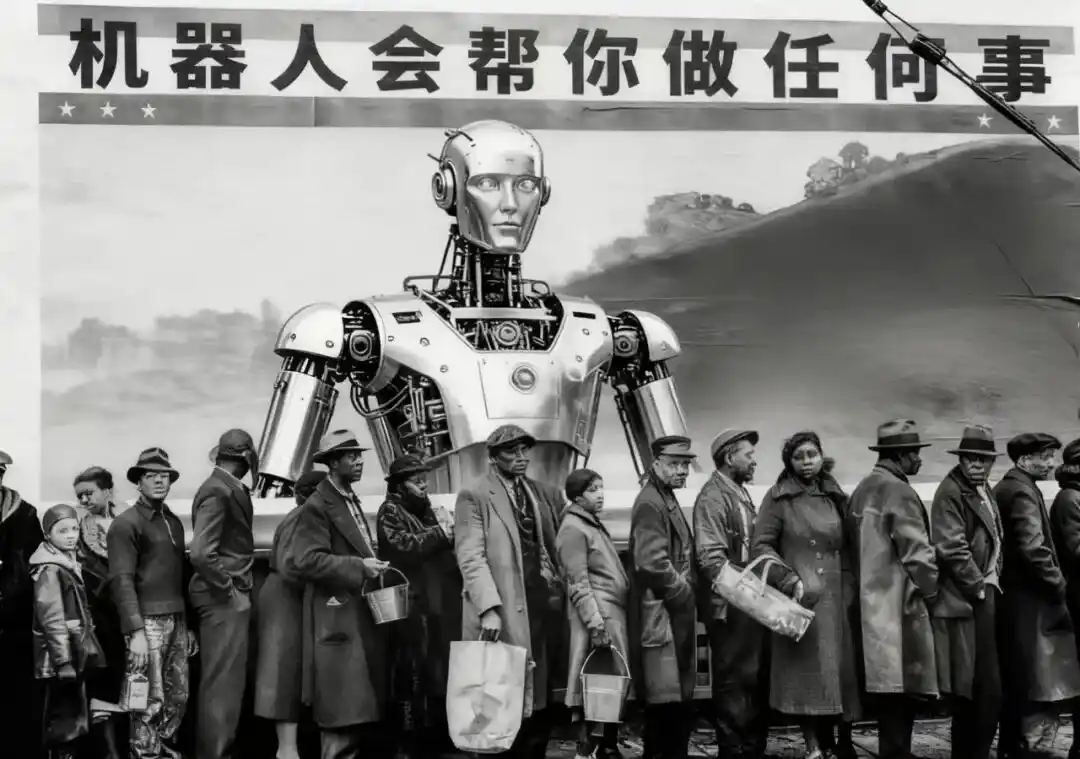
Thus, Luddism sees the unemployment risk behind machines, while Musk sees the potential for freedom behind machines; Hyundai Motor workers hope to protect their jobs before robots enter the factory, while Musk anticipates robots ultimately eliminating the very necessity of "having to work." These two seemingly contradictory logics also sharpen the same question: as machines create increasing wealth, who ultimately shares in this wealth?

Robots Aren't Skilled Workers Yet, But Unemployment Anxiety Has Arrived First

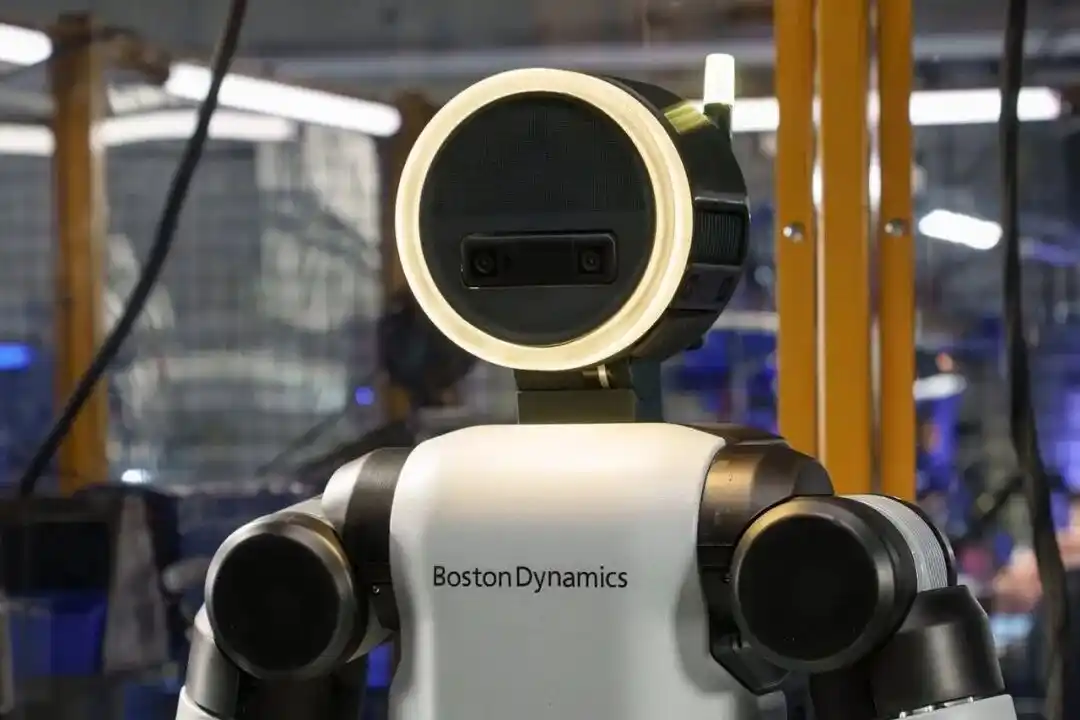
The concerns of Hyundai Motor workers are not hard to understand. The Hyundai Motor Group has publicly displayed an aggressive robotics strategy, and Boston Dynamics' Atlas is also continuously progressing from lab demonstrations towards industrial operations. Against this industrial backdrop, an automobile worker seeing Atlas lifting, walking, and handling components, and then seeing companies continuously emphasize AI, smart manufacturing, and automation, will naturally ask: five years from now, will the person standing next to this production line still be me?

Social media has further compressed this anxiety into a highly transmissible logical chain: companies buy robots, robots enter factories, human workers are laid off. An advance in a robot's capability, a procurement plan, or an experimental video can quickly be combined into a story of "a certain profession's countdown." Long-term technological trends are folded into an imminent reality, so the imagination of robot replacement outpaces the robots themselves.

The problem is, real industrial production is far from that simple. Automobile manufacturing is already one of the most automated industries globally. Highly standardized processes like welding, painting, stamping, and material handling have been covered by industrial robots for decades. What humanoid robots today truly need to conquer are precisely the areas traditional automation has never fully resolved: flexible assembly, harness operation, cross-station mobility, temporary anomaly handling, and the vast array of subtle and complex variations between different parts and working conditions.

The most valuable aspect of a skilled industrial worker is far from merely having two arms. How to install a part when it has slight dimensional variation, what a change in feel during tightening signifies, where to check first when a machine makes a certain sound, how to compensate in the next step after a slight deviation in the previous process—these experiences formed over years constitute the immense tacit knowledge in industrial production. They are rarely fully written into SOPs, yet they determine whether a production line can truly operate stably.

This is precisely one of the hardest barriers for current robots to cross. Being able to pick up a part in a demo environment is a completely different engineering problem from being able to perform the same action stably thousands of times over eight consecutive hours; being able to complete an assembly once does not mean being able to meet the yield rate, cycle time, safety requirements, and costly downtime risks demanded by a real production line. For many robotics companies, the journey from "can do" to "can do stably long-term" remains a lengthy path to industrialization.

Therefore, from the perspective of current technological reality, the notion that "tens of thousands of automobile workers will immediately be replaced by humanoid robots" is clearly an oversimplification. A more realistic situation today might be this: the long-term possibilities of technology are being prematurely realized in public discourse, and people are beginning to feel uneasy about that future even before robots truly possess comprehensive replacement capabilities.

But this does not mean the anxieties of the Hyundai Motor workers in South Korea are meaningless. On the contrary, when a technology has the potential to redefine production relations, the fermentation of social sentiment often precedes the technology's large-scale maturity. This prematurely emerging anxiety may not be accurately predicting tomorrow, but it likely already poses a question that will eventually need to be answered seriously.

Re-understanding Luddism: What They Feared Was Never Just a Machine

"Luddism" is often used as a slightly pejorative term today. People who reject new technology are labeled Luddites; those who express concerns about AI or robots are also easily categorized as conservative or anti-technology. Over time, Luddism has almost become synonymous with "technological backlash."

But the historical Luddite movement was far more complex than this label suggests. During the rapid mechanization of the British textile industry in the early 19th century, many participants in the Luddite movement were themselves skilled artisans with years of training. Machines did not bring only higher production efficiency; they simultaneously disrupted existing skill systems, wage structures, and labor relations. Once-scarce craftsmanship could rapidly depreciate, low-skilled laborers could enter production with the help of machines, the bargaining power of skilled workers declined, and the livelihoods of some were directly impacted. Machines ultimately became the most tangible object of their anger.
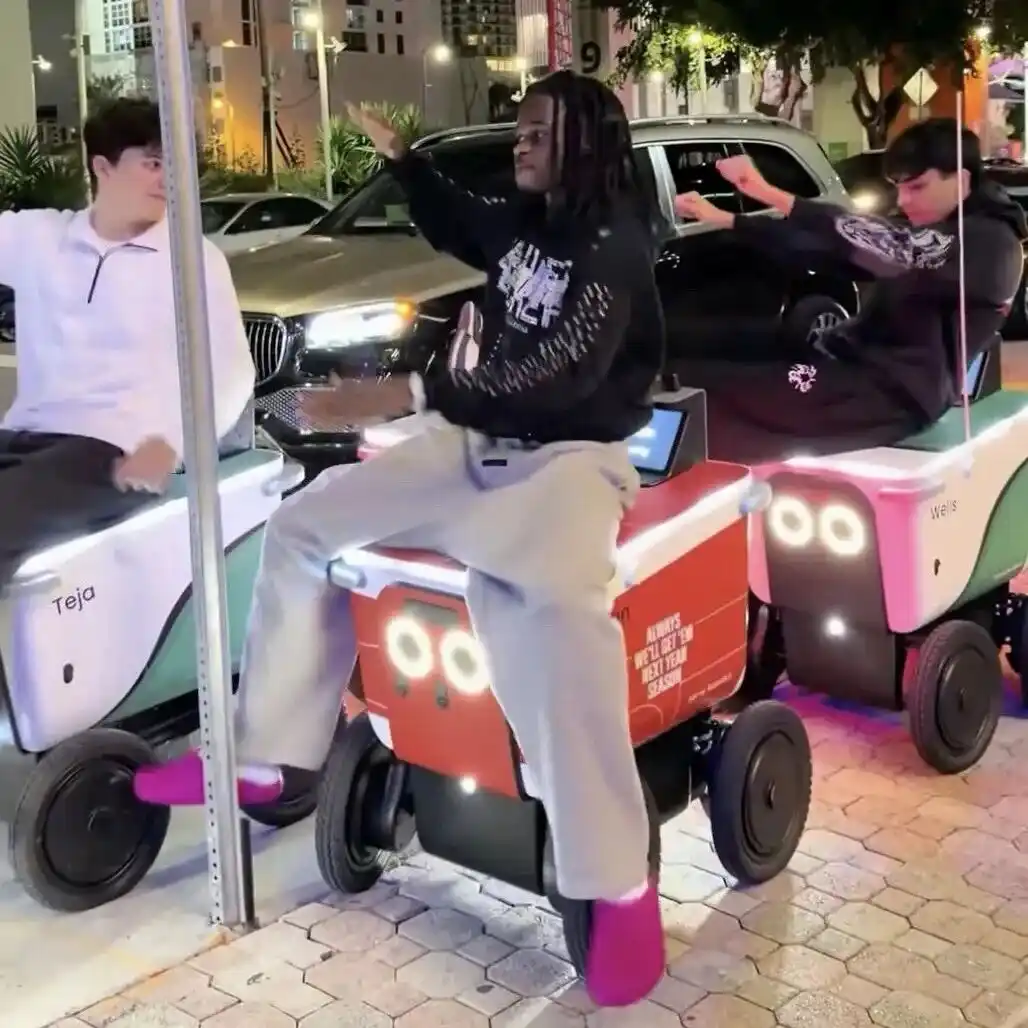
Looking back more than 200 years later, we of course know that machines did not destroy human society. The Industrial Revolution ultimately created an economic scale far larger than the handicraft era and gave rise to many professions that did not exist before. Therefore, judging the Luddites from today's perspective seems easy: they overestimated the threat posed by machines and underestimated the capacity of technological progress to create new opportunities.

Yet this "hindsight correctness" overlooks a very important issue. Standing before a worker in 1811, he did not know how much the global economy would grow in 100 or even 200 years, nor did he know when new occupations would emerge. What he could feel was that his wages were falling, his skills were depreciating, and his next job was uncertain. The overall benefits brought by technological progress typically take a long time to diffuse, but the costs incurred by technological substitution can be concentrated on a specific group of people in a very short time.

Today's Hyundai Motor workers facing Atlas are essentially in a similar position. Robotics companies might tell them automation can improve efficiency, economists might explain that new technologies ultimately create new jobs, tech companies might depict a future where humans are freed from repetitive labor—these assertions may all hold true. But the questions workers truly care about are more concrete: when will my position disappear? How much will the skills I've accumulated over 20 years be worth in five years? Will part of the productivity gains the company achieves through robots become benefits for employees? If industrial transformation indeed incurs costs, why should those costs first fall upon those being replaced?

Therefore, understanding the re-emergence of Luddite sentiment in the robotics era as some people fearing new technology again is an overly simplistic and labeled view. Textile workers 200 years ago and automobile workers today are essentially asking the same question: after machines create greater efficiency, who ultimately shares in that efficiency?

The Hardest Part Is Never the Endgame, But How to Get There

What Musk describes is a society where "work becomes optional." According to his estimation, by around 2036, the productivity brought by AI and robots may already be so high that "money" itself becomes less important than it is today, and people will no longer necessarily have to work for survival; labor will become more of a choice.

Such an endgame is certainly attractive enough, but it carries an extremely important implicit condition: the immense productivity created by robots and the resulting material abundance it brings must ultimately be shareable by the entire society.

Some do not believe in this viewpoint. As the renowned scholar Zhang Xiaoyu states in "Technology and Civilization: Our Era and Future," "If slave laborers benefited from technological progress, it was only because the development of productivity brought about by technological progress turned past luxuries into today's mass consumer goods."

If machines belong to a few companies, computing power is concentrated in a few enterprises, data and capital are likewise concentrated in a few entities, and the goods and services created by robots are still distributed entirely dependent on the existing income system, then continuously increasing production efficiency will not automatically grant each individual more wealth.

After all, during the last wave of the internet boom, the term "techno-elite" had already become a label for Silicon Valley entrepreneurs.

This is also why Musk ultimately had to propose "Universal High Income." In a sense, he appears to stand at the other extreme of Luddism, yet still needs to answer the question posed by the Luddite movement two centuries ago—how should the wealth created by machines be distributed.

What is truly complex may not be the distant endgame Musk depicts. If one day robots can indeed perform the vast majority of necessary labor, society might already have formed new income systems, security frameworks, and social contracts matching that reality. The stage most prone to conflict is actually the intermediate phase leading to that future—the "painful transition period" many foresee—which is happening today.
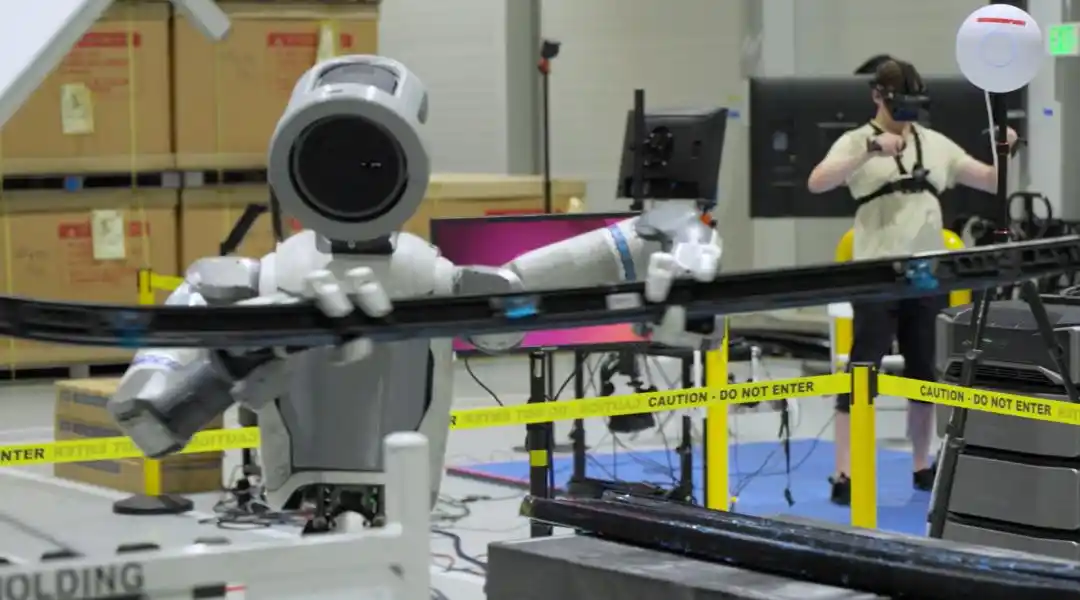
Robots won't suddenly jump from replacing 0% of jobs to replacing 100% in a single day. A more likely scenario is that they first replace 5%, then 10%; some highly standardized positions diminish first, certain skills begin to depreciate, some people become direct beneficiaries of the productivity红利 (dividend) through AI and robots, while others bear the costs of transition first. The worst-case scenario is that companies achieve higher profits, but retraining systems for workers are not yet mature; new jobs are emerging, but not necessarily in the places where people lost their old jobs.

Technological capabilities usually improve along a continuous curve, but social institutions do not automatically upgrade in sync with technology. This is why Michael Burry, the investor原型 (prototype) for "The Big Short," in response to Musk's views on AI, robots, and Universal High Income, left that impactful statement: "Before that happens, there will be a revolution."

Whether this statement is overly pessimistic is certainly debatable, but it at least accurately points out the process most easily glossed over in Musk-style futurism: how exactly do we navigate the several decades from today's society, which relies on labor for income, to that future society where work is optional?

The anxiety of Hyundai Motor workers occurs precisely at the very beginning of this long transitional path.

Wood Straightened by the Ink Line: Technology Also Needs Its Own "Rules and Frameworks"

Therefore, the "Luddism" reappearing in the robotics era need not be simply mocked. Smashing machines certainly cannot halt the industrial revolution; history has long proven that when a technology can continuously improve production efficiency and reduce costs, it is ultimately difficult to exclude from society through resistance. The same holds for today's humanoid robots; as long as costs continue to fall, reliability improves, and return on investment gradually becomes viable, their entry into factories, warehouses, commercial services, and even household life will become a long-term industrial trend.

But acknowledging the irreversibility of the trend does not mean society can only sit back and let technology determine everything. The industrial civilization of the past two centuries has never consisted solely of advancements in engines, electricity, computers, and robots. The eight-hour workday, minimum wage, occupational safety, labor contracts, social insurance, product liability, and various industrial standards are also part of the institutional legacy created by the Industrial Revolution. Many rules were initially seen as restrictions on efficiency but ultimately formed the foundation upon which technology could enter society on a large scale.
The development measures, management measures, and industry guidelines increasingly emerging today around artificial intelligence, robotics, data, security, and ethics are precisely part of the process of rediscovering boundaries in this new round of technological revolution. As robots truly enter production and daily life, these rules will become increasingly concrete: what kind of labor-management consultation should precede robots entering production lines, how should productivity gains from automation be distributed, who bears the retraining costs for those displaced by technological substitution, how is liability determined after a robot causes a safety incident, which high-risk scenarios must retain human-in-the-loop—these questions will ultimately become part of robot industrialization.

They may not seem as exciting as robots running, doing backflips, or completing a complex operation, but they are likely to determine whether robots can truly pass through the final gate between technological demonstration and industrial application.

"Wood is straightened by the ink line; metal is sharpened on the whetstone." The ink line may seem to restrict the direction of the wood, yet it also allows it to ultimately become a pillar. Norms are similar for technology. Genuinely mature technological optimism does not require pretending that technology creates no problems. The more a society believes robots can ultimately create immense productivity, the more it should place discussions about benefit distribution, employment transition, safety liability, and human dignity on the table for early debate, before that productivity is released on a massive scale.

So perhaps the anxiety of the Hyundai Motor workers in South Korea has indeed arrived somewhat early. Today's humanoid robots are still a considerable engineering distance away from becoming a truly reliable automobile worker capable of long-term substitution for a skilled human worker. But discussions about how society should face them once they truly enter factories are not early at all.

They should perhaps start even earlier.

This article is from the WeChat public account "AI Wu Zao," author: Peng Kunfang

Kripto yang Sedang Tren

Pertanyaan Terkait

QWhat is the main conflict highlighted in the article between Korean auto workers and Elon Musk's vision?

AThe article highlights a fundamental conflict between immediate anxiety and long-term optimism regarding technological disruption. Korean auto workers at Hyundai are anxious about robots potentially taking their jobs in the near future, seeking employment guarantees. In contrast, Elon Musk envisions a distant future where AI and robots create such material abundance that work becomes optional, necessitating concepts like 'Universal High Income.'

QWhy does the article argue that comparing the Hyundai workers' concerns to 'Luddism' is an oversimplification?

AThe article argues it's an oversimplification because the original Luddites and modern workers are not merely 'anti-technology.' Their core concern is the same: who benefits from the increased productivity created by machines? They fear that the costs of technological transition (job loss, skill devaluation) will be borne by workers, while the profits and efficiency gains are captured by capital owners, without a fair redistribution mechanism.

QWhat key technical challenge does the article identify for humanoid robots like Boston Dynamics' Atlas to fully replace skilled auto workers?

AThe key challenge is mastering the vast amount of 'tacit knowledge' possessed by skilled workers. This includes handling part tolerances, interpreting sensory feedback (sound, touch) during assembly, compensating for variations, and managing unforeseen anomalies. Moving from a one-time demonstration to performing these complex, judgment-based tasks reliably for thousands of cycles under real production pressure and safety constraints remains a significant engineering hurdle.

QAccording to the article, what is the 'most difficult' part of reaching Elon Musk's vision of a post-work society?

AThe most difficult part is the transitional period or 'growing pains.' The article states that the hardest phase is not the distant endpoint where work is optional, but the decades-long middle stage where robots incrementally replace 5%, then 10% of jobs. Conflict may arise if social institutions (retraining, income support, new labor contracts) fail to evolve synchronously with technological capabilities, leaving displaced workers to bear the costs while benefits are concentrated.

QWhat historical parallel does the article draw to suggest that regulations and social frameworks are necessary for the robotics revolution?

AThe article draws a parallel to the Industrial Revolution, which produced not just engines and machines but also crucial social and institutional frameworks like the eight-hour workday, minimum wage, workplace safety standards, and social insurance. Similarly, for robots to be widely integrated, society needs to proactively establish rules for fair benefit sharing, retraining responsibilities, safety liability, and ethical deployment, forming the necessary 'guardrails' for sustainable technological adoption.

Bacaan Terkait

Grayscale: «Jika Proposal Diterima, Harga Dua Altcoin Ini Bisa Naik»

Kepala Penelitian Grayscale, Zack Pandl, menyatakan bahwa jika perubahan tokenomik yang sedang dibahas dalam komunitas Ethereum ($ETH) dan Solana ($SOL) diimplementasikan, laju pertumbuhan pasokan kedua aset kripto tersebut dapat melambat secara signifikan. Hal ini berpotensi berdampak positif pada harga. Menurut Pandl, perubahan yang diusulkan dalam kode ekosistem Ethereum dan Solana bertujuan untuk mengurangi laju inflasi tahunan token $ETH dan $SOL. Dengan segala kondisi lain tetap sama, melambatnya pertumbuhan pasokan dapat mengurangi jumlah token baru yang masuk ke pasar, sehingga meningkatkan kelangkaan aset yang ada. Perkiraan Grayscale menunjukkan bahwa jika aturan ini diterapkan, inflasi pasokan tahunan Ethereum bisa turun menjadi sekitar 0,4% pada akhir 2031 — mendekati laju pertumbuhan pasokan Bitcoin. Inflasi pasokan tahunan Solana diproyeksikan turun menjadi sekitar 1,1%. Sebagai perbandingan, pasokan emas tumbuh sekitar 1,8% per tahun, sedangkan inflasi indeks harga konsumen AS sekitar 3,3%. Perubahan yang diusulkan untuk Ethereum dan Solana masih dalam diskusi komunitas dan belum disetujui secara final. Pandl mencatat bahwa proposal untuk Solana tampaknya mendapat dukungan lebih luas dan karena itu memiliki kemungkinan lebih besar untuk diimplementasikan. Namun, penurunan inflasi token juga dapat mengurangi imbalan bagi investor yang melakukan staking, karena sebagian besar pendapatan staking $ETH dan $SOL berasal dari penerbitan token baru. Pandl menekankan bahwa melambatnya pertumbuhan pasokan dapat meningkatkan kelangkaan, memberikan tekanan kenaikan pada harga $ETH dan $SOL, dan investor yang memegang token tanpa staking khususnya mungkin mendapat manfaat. *Ini bukan rekomendasi investasi.

cryptonews.ru34m yang lalu

Grayscale: «Jika Proposal Diterima, Harga Dua Altcoin Ini Bisa Naik»

cryptonews.ru34m yang lalu

Trading

Spot

Artikel Populer

Apa Itu DOGE M

Doge Matrix ($doge m): Ras Baru Cryptocurrency yang Didorong oleh Komunitas Pendahuluan Dalam lanskap cryptocurrency yang terus berkembang, proyek-proyek baru terus muncul, masing-masing bertujuan untuk menarik minat investor dan penggemar. Salah satu pendatang terbaru di domain ini adalah Doge Matrix, yang diwakili oleh simbol ticker $doge m. Proyek ini menarik perhatian berkat akarnya dalam budaya meme populer yang mengelilingi Dogecoin, menetapkan tempatnya dalam ruang web3. Artikel ini bertujuan untuk memberikan analisis komprehensif tentang Doge Matrix, mencakup gambaran umum, pencipta, investor, fungsionalitas, garis waktu, dan aspek-aspek penting. Apa itu Doge Matrix ($doge m)? Doge Matrix adalah proyek cryptocurrency yang didorong oleh komunitas yang tampaknya membangun daya tarik luas dari Dogecoin, mata uang digital yang dikenal dengan maskot Shiba Inu dan asal-usul meme-nya. Meskipun tujuan keseluruhan Doge Matrix tidak didefinisikan secara luas, proyek ini ditandai dengan komitmen untuk memanfaatkan keterlibatan dan dukungan komunitas. Berbeda dengan cryptocurrency tradisional yang sering menekankan utilitas atau nilai intrinsik melalui teknologi yang mendasarinya, Doge Matrix memposisikan dirinya dalam ruang yang merangkul fenomena budaya cryptocurrency, terutama menarik bagi mereka yang sejalan dengan etos aset berbasis meme. Mengandalkan kekuatan komunitas Dogecoin, Doge Matrix beroperasi sebagai bagian dari ekosistem yang lebih luas, mengundang partisipasi dan keterlibatan dari pengguna yang berbagi minat dalam cryptocurrency dan lanskap digital. Siapa Pencipta Doge Matrix ($doge m)? Identitas pencipta Doge Matrix tetap tidak diketahui. Kurangnya transparansi ini bukanlah hal yang tidak biasa dalam ruang cryptocurrency, di mana beberapa proyek diluncurkan tanpa mengungkapkan identitas pendirinya. Ketidakadaan informasi mengenai tim pendiri dapat menimbulkan pertanyaan di antara calon investor tentang akuntabilitas dan arah proyek tersebut. Siapa Investor Doge Matrix ($doge m)? Saat ini, tidak ada informasi yang tersedia untuk umum yang merinci investor atau yayasan investasi yang mendukung Doge Matrix. Proyek ini tampaknya mengandalkan dukungan komunitas daripada investasi institusional. Model ini sejalan dengan sifat proyek yang didorong oleh komunitas, menciptakan lingkungan di mana arah proyek dibentuk oleh para pesertanya daripada ditentukan oleh sekelompok kecil pendukung finansial. Bagaimana Cara Kerja Doge Matrix ($doge m)? Spesifikasi mengenai mekanisme operasional Doge Matrix agak samar, mencerminkan tren yang lebih luas dari proyek-proyek di ruang koin meme di mana fungsionalitas inovatif tidak selalu diartikulasikan dengan jelas. Meskipun demikian, Doge Matrix tampaknya dirancang untuk memanfaatkan ekosistem cryptocurrency yang ada dengan mendorong partisipasi pengguna sambil memanfaatkan referensi budaya yang sudah dikenal yang terkait dengan Dogecoin. Karakteristik uniknya mungkin berasal dari interaksi komunitas daripada kemajuan teknologi, menekankan pengalaman bersama dan kolaborasi di antara pemegang token. Meskipun inovasi yang tepat belum diuraikan secara eksplisit, proyek ini tampaknya menciptakan ruang di mana anggota komunitas dapat terlibat, berbagi ide, dan mendorong potensi proyek ke depan. Garis Waktu Doge Matrix ($doge m) Merefleksikan garis waktu proyek ini mengungkapkan peristiwa penting yang telah mendefinisikan perjalanannya hingga saat ini: 25 November 2024: Doge Matrix mencapai nilai tertinggi sepanjang masa, menandai tonggak penting dalam sejarah awalnya. 1 Januari 2025: Sebaliknya, Doge Matrix mencapai nilai terendah sepanjang masa, menggambarkan volatilitas yang sering terkait dengan cryptocurrency, terutama di tahap awal siklus hidup proyek. Sedang Berlangsung: Proyek ini terus diperdagangkan secara aktif dan didukung oleh komunitasnya, meskipun tonggak atau tujuan masa depan yang spesifik belum diungkapkan. Poin Kunci tentang Doge Matrix ($doge m) Fokus Komunitas Di jantung Doge Matrix adalah komitmen terhadap keterlibatan komunitas. Proyek ini berkembang atas dasar kolaborasi dan tujuan bersama di antara anggotanya, menekankan pentingnya upaya kolektif. Berbeda dengan proyek terpusat yang sering memiliki struktur kepemimpinan yang jelas, Doge Matrix saat ini menunjukkan pendekatan yang lebih fleksibel terhadap tata kelola, di mana suara setiap anggota komunitas dihargai. Volatilitas Pasar cryptocurrency terkenal dengan volatilitasnya, dan Doge Matrix tidak terkecuali. Riwayat harganya mencerminkan fluktuasi signifikan antara nilai tinggi dan rendah, yang merupakan hal biasa bagi banyak cryptocurrency baru tetapi menyoroti risiko yang terkait dengan investasi dalam token yang sedang berkembang. Kurangnya Informasi Detail Salah satu fitur paling mencolok tentang Doge Matrix adalah kelangkaan informasi detail mengenai dasar-dasar teknologinya dan mekanisme operasional. Ambiguitas ini mengharuskan calon investor untuk melakukan penelitian menyeluruh sebelum terlibat dengan proyek tersebut. Kesimpulan Singkatnya, Doge Matrix ($doge m) menggambarkan gelombang baru proyek cryptocurrency yang sangat bergantung pada keterlibatan komunitas dan relevansi budaya. Meskipun kurang dalam beberapa spesifikasi—seperti kepemimpinan yang jelas, tujuan yang terdefinisi, dan fungsionalitas yang detail—proyek ini berhasil menarik minat dalam komunitas crypto, memanfaatkan daya tarik yang sudah ada dari budaya meme. Seperti halnya investasi di ruang cryptocurrency, memahami risiko yang melekat dan melakukan penelitian yang komprehensif sangat penting bagi calon peserta. Doge Matrix berdiri sebagai pengingat tentang sifat dinamis, terkadang tidak terduga dari industri crypto, yang ditandai dengan evolusi konstan dan antusiasme untuk inisiatif yang didorong oleh komunitas.

634 Total TayanganDipublikasikan pada 2025.02.03Diperbarui pada 2025.02.03

Apa Itu DOGE M

Apa Itu $M

Memahami Mantis ($M): Era Baru dalam Interoperabilitas Lintas Rantai Dalam lanskap Web3 dan cryptocurrency yang terus berkembang, proyek-proyek baru berusaha menawarkan solusi inovatif yang bertujuan untuk meningkatkan pengalaman pengguna dan memperluas kemungkinan fungsional dalam ekosistem keuangan terdesentralisasi. Salah satu proyek yang menarik perhatian adalah Mantis ($M), sebuah protokol perintis yang didirikan berdasarkan prinsip interoperabilitas lintas rantai dan penyelesaian berbasis niat. Artikel ini membahas aspek-aspek penting dari Mantis, termasuk fungsionalitas inti, pencipta, dukungan investasi, fitur inovatif, dan tonggak sejarah yang kritis. Apa itu Mantis ($M)? Mantis dijelaskan sebagai protokol penyelesaian niat multi-domain yang menyederhanakan interaksi lintas rantai, memungkinkan pengguna untuk melakukan transaksi keuangan kompleks di berbagai platform blockchain dengan mulus. Protokol ini beroperasi melalui tiga lapisan utama: Ekspresi Niat: Pengguna dapat mengungkapkan tujuan transaksi mereka menggunakan bahasa alami yang difasilitasi oleh DISE LLM, model bahasa AI canggih. Misalnya, seorang pengguna mungkin mengungkapkan keinginan untuk menukar Ethereum (ETH) dengan Solana (SOL) dengan toleransi slippage tertentu sebesar 1%. Eksekusi: Lapisan ini menggunakan jaringan penyelesai yang bersaing untuk memenuhi niat pengguna. Transaksi dieksekusi menggunakan mekanisme seperti Coincidence of Wants (CoWs) dan Order Flow Auctions (OFAs), yang memastikan bahwa permintaan pengguna terpenuhi secara optimal. Penyelesaian: Dengan memanfaatkan protokol Inter-Blockchain Communication (IBC), Mantis memungkinkan transaksi lintas rantai atomik, memungkinkan pengguna untuk beroperasi di berbagai rantai yang didukung, termasuk Ethereum, Solana, dan Cosmos. Mantis dirancang untuk memperkenalkan generasi hasil asli untuk aset yang tidak aktif, menggunakan bukti kriptografi untuk menjaga integritas transaksi sepanjang proses. Pencipta & Tim Pengembangan Mantis diciptakan oleh Composable Foundation, sebuah organisasi yang didorong oleh penelitian yang terkenal karena penekanannya pada solusi interoperabilitas blockchain. Yayasan ini bekerja sama dengan institusi akademis terkemuka, termasuk Universitas Harvard dan Universitas Lisbon, berkontribusi pada upaya penelitian dan pengembangan yang luas yang menginformasikan arsitektur dan fungsionalitas Mantis. Komitmen Composable Foundation untuk mendorong inovasi di ruang blockchain menempatkan Mantis sebagai solusi yang kuat untuk permintaan yang terus berkembang akan interoperabilitas di antara berbagai jaringan blockchain. Investor & Dukungan Meskipun rincian spesifik tentang investor individu belum dipublikasikan, Mantis menikmati dukungan substansial dari berbagai entitas, termasuk: Grants ekosistem dari rantai yang mendukung IBC, yang mendukung pertumbuhan dan integrasi protokol dalam ekosistem keuangan terdesentralisasi. Kemitraan strategis dengan penyedia infrastruktur yang meningkatkan kemampuan jaringan Mantis dan strategi penerapannya. Pendanaan melalui kas Composable Foundation, memastikan dukungan keuangan yang berkelanjutan untuk pengembangan dan biaya operasional yang sedang berlangsung. Upaya kolaboratif ini mencerminkan konsensus di antara para pemangku kepentingan tentang pentingnya meningkatkan fungsionalitas lintas rantai dan potensi utilitas inovasi infrastruktur Mantis. Inovasi Kunci Mantis membedakan dirinya melalui beberapa inovasi perintis yang meningkatkan fungsionalitas dan utilitasnya: Niat yang Tidak Bergantung pada Rantai: Pengguna dapat memulai transaksi dari rantai yang didukung mana pun sambil menyelesaikan di rantai lain. Fleksibilitas ini memberdayakan pengguna, mendorong interaksi yang lebih besar di antara berbagai platform. Antarmuka Berbasis AI: Integrasi DISE LLM memungkinkan pengguna untuk melakukan operasi DeFi yang kompleks menggunakan bahasa alami, sehingga menyederhanakan interaksi dan membuat teknologi blockchain lebih dapat diakses oleh audiens yang lebih luas. Penangkapan MEV Lintas Domain: Mantis menciptakan pasar internal untuk nilai ekstraksi maksimal (MEV) melalui kompetisi di antara penyelesai. Pendekatan inovatif ini memungkinkan efisiensi dan ekstraksi nilai yang lebih besar dalam transaksi kompleks. Lapisan Penyelesaian Modular: Protokol ini mendukung berbagai metode verifikasi, termasuk bukti nol-pengetahuan dan optimistic rollups, menyediakan kerangka kerja yang fleksibel yang dapat beradaptasi dengan teknologi blockchain yang muncul. Garis Waktu Sejarah Pengembangan Mantis ditandai oleh beberapa tonggak kritis yang menggambarkan trajektori dan pertumbuhannya: | Tahun | Tonggak | |————|————————————————————————-| | 2022 | Pengembangan konsep awal dalam divisi penelitian Composable Foundation. | | Q3 2024 | Peluncuran testnet dengan kemampuan bridging antara Solana dan Ethereum. | | Q1 2025 | Acara Generasi Token (TGE) yang diantisipasi bersamaan dengan peluncuran mainnet. | | Q2 2025 | Integrasi DISE LLM yang diharapkan dan ekspansi kemampuan lintas rantai. | | H2 2025 | Dukungan yang direncanakan untuk lebih dari 15 rantai melalui peningkatan IBC lebih lanjut. | Garis waktu ini menggambarkan evolusi Mantis, dari diskusi konseptual hingga implementasi aktif dan fase pertumbuhan di masa depan. Strategi Pertumbuhan Ekosistem Strategi Mantis untuk pertumbuhan ekosistem mencakup beberapa inisiatif yang dirancang untuk mendorong partisipasi pengguna dan keterlibatan pengembang: Sistem Kredit: Pengguna dapat memperoleh kredit protokol dengan menyediakan likuiditas dan terlibat dalam program rujukan. Kredit ini dapat ditukarkan untuk insentif di masa depan, mendorong komunitas pengguna yang kuat. Modular Software Development Kit (SDK): Toolkit ini memberdayakan pengembang untuk membuat aplikasi berdasarkan model berbasis niat yang memanfaatkan infrastruktur Mantis, sehingga mendorong inovasi dalam ekosistemnya. Model Tata Kelola: Seiring dengan matangnya protokol, pemegang token $M akan memiliki suara dalam tata kelola protokol, memungkinkan mereka untuk memberikan suara pada peningkatan dan perubahan yang diusulkan, sehingga meningkatkan keterlibatan komunitas dan desentralisasi. Mantis mewakili kemajuan signifikan dalam ranah arsitektur lintas rantai. Dengan mengintegrasikan algoritma AI canggih dengan kerangka penyelesaian yang kuat, Mantis berupaya menangani masalah fragmentasi dalam ekosistem multi-rantai. Pendekatan inovatifnya memprioritaskan peningkatan pengalaman pengguna sambil mematuhi prinsip dasar desentralisasi dan keamanan, menetapkan standar baru untuk interoperabilitas teknologi blockchain di masa depan. Saat Mantis melanjutkan perjalanan pertumbuhan dan implementasinya, proyek ini menjanjikan untuk menjadi perhatian dalam lanskap kompetitif Web3 dan keuangan terdesentralisasi. Dengan fokusnya pada melintasi batas dan meningkatkan keterlibatan pengguna, Mantis siap menjadi bagian integral dari perkembangan masa depan di ruang cryptocurrency.

184 Total TayanganDipublikasikan pada 2025.03.18Diperbarui pada 2025.03.18

Apa Itu $M

Cara Membeli M

Selamat datang di HTX.com! Kami telah membuat pembelian MemeCore (M) menjadi mudah dan nyaman. Ikuti panduan langkah demi langkah kami untuk memulai perjalanan kripto Anda.Langkah 1: Buat Akun HTX AndaGunakan alamat email atau nomor ponsel Anda untuk mendaftar akun gratis di HTX. Rasakan perjalanan pendaftaran yang mudah dan buka semua fitur.Dapatkan Akun SayaLangkah 2: Buka Beli Kripto, lalu Pilih Metode Pembayaran AndaKartu Kredit/Debit: Gunakan Visa atau Mastercard Anda untuk membeli MemeCore (M) secara instan.Saldo: Gunakan dana dari saldo akun HTX Anda untuk melakukan trading dengan lancar.Pihak Ketiga: Kami telah menambahkan metode pembayaran populer seperti Google Pay dan Apple Pay untuk meningkatkan kenyamanan.P2P: Lakukan trading langsung dengan pengguna lain di HTX.Over-the-Counter (OTC): Kami menawarkan layanan yang dibuat khusus dan kurs yang kompetitif bagi para trader.Langkah 3: Simpan MemeCore (M) AndaSetelah melakukan pembelian, simpan MemeCore (M) di akun HTX Anda. Selain itu, Anda dapat mengirimkannya ke tempat lain melalui transfer blockchain atau menggunakannya untuk memperdagangkan mata uang kripto lainnya.Langkah 4: Lakukan trading MemeCore (M)Lakukan trading MemeCore (M) dengan mudah di pasar spot HTX. Cukup akses akun Anda, pilih pasangan perdagangan, jalankan trading, lalu pantau secara real-time. Kami menawarkan pengalaman yang ramah pengguna baik untuk pemula maupun trader berpengalaman.

1.1k Total TayanganDipublikasikan pada 2025.07.02Diperbarui pada 2026.06.02

Cara Membeli M

Diskusi

Selamat datang di Komunitas HTX. Di sini, Anda bisa terus mendapatkan informasi terbaru tentang perkembangan platform terkini dan mendapatkan akses ke wawasan pasar profesional. Pendapat pengguna mengenai harga M (M) disajikan di bawah ini.

活动图片