Misjudged A-Shares: Resilience, Expectations, and Confidence

marsbitDipublikasikan tanggal 2026-07-22Terakhir diperbarui pada 2026-07-22

Abstrak

China's A-share market recently faced selling pressure, especially in tech sectors, initially triggered by a global tech sell-off that began in South Korea. However, the article argues this is a case of "mistaken injury" and highlights the market's underlying resilience. This resilience stems from three main pillars: **1) Tech Sector Fundamentals:** Unlike Korea's market dominated by a few memory chip stocks, China's tech sector is diversified across computing, communications, electronics, and semiconductors, supported by dual narratives of global AI supply chains and domestic substitution. Core areas like optical modules and fiber optics continue to show strong earnings growth. **2) "National Team" Support:** State-backed institutions and large corporations have made significant market purchases and announced buybacks, providing liquidity and signaling confidence. This is seen as a stabilizing policy signal, often associated with market bottoms. **3) Broader Market Pillars:** Other major sectors are showing endogenous recovery momentum. Consumer stocks benefit from stabilizing CPI and signs of sector recovery (e.g., liquor price hikes). Cyclical sectors like aluminum have high earnings, potential price increases due to tight supply, and low valuations. The financial sector offers stable dividends and low valuations. The conclusion is that the sell-off was driven by external contagion, not a collapse in fundamentals. With strong policy support and recovering momentum across k...

By Market Cap Observation

Entering July, global tech stocks suddenly weakened. Korea's leading memory chip manufacturers faced concentrated selling first, which quickly spread to markets like the US and Japan. Subsequently, A-share tech sectors came under pressure, with the STAR 50 and ChiNext indices declining successively.

However, under external shocks, A-shares have not lost their support. The underlying logic of prosperity for the tech industry has not reversed, and long-term funds and market stabilizing forces have begun to step in. Meanwhile, consumption, cyclical, and financial sectors are also accumulating momentum for repair.

This round of adjustment is both a release of risk and a test of the true resilience of A-shares.

01 Tech Adjustment and Resilience

From April to the end of June this year, A-share tech sectors experienced a remarkable rally. This rise was anchored by two major logics. The first was reflecting high earnings growth. In the first half of the year, net profit growth for core tech tracks like optical modules, chip manufacturing, packaging & testing, and optical fiber & cable mostly exceeded 50%.

National Bureau of Statistics data corroborates this in the first five months, profits in the computer, communication, and other electronic equipment manufacturing industry increased by 103.9% year-on-year, contributing 43% to the growth of industrial profits.

The second was the spillover effect from the surge in overseas tech stocks. Particularly, the rise and fall rhythms of A-share tech and Korean tech stocks were highly synchronized.

But the tone changed abruptly since July, with A-share tech stocks adjusting continuously. The core reason was not a deterioration in their own fundamentals, but rather the transmission of external risks such as deleveraging in the Korean stock market.

However, the market resilience of A-share tech and Korean tech is not on the same level. A-shares do not have the foundation for a systemic decline. The most core difference lies in their vastly different tech sector structures.

Samsung Electronics and SK Hynix account for about 50% of the total market capitalization of the KOSPI index. Moreover, about 60% of the total market's leveraged funds are betting on these two stocks. Thus, the entire Korean stock market is deeply tied to the memory chip super cycle narrative. Any withdrawal of leveraged funds or any flaw in earnings growth expectations could trigger violent selling.

In contrast, A-share tech encompasses numerous sectors like computers, communications, electronics, etc. Even narrowed down to the semiconductor sector, the industrial chain covers multiple segments like materials, equipment, design, manufacturing, and packaging & testing.

More importantly, A-share tech follows a dual narrative logic. One anchors to the global tech giants' supply chain — "Yizhongtian" is bound to chain leaders like NVIDIA, trading on the massive global AI capital expenditure. The other anchors to domestic substitution, where leading companies like Hygon Information, SMIC, and Cambricon target domestic computing infrastructure.

One internal, one external — this provides greater risk resistance than Korea's single narrative centered on the memory super cycle.

At the same time, the fundamental earnings logic for core areas of the tech sector has not been disproven.

For example, in the optical module sector, Suzhou Everbright's H1 net profit attributable to shareholders reached 7-8 billion yuan, nearly doubling again on a high base of 235% growth in the same period last year. In the optical fiber & cable sector, Yangtze Optical Fibre and Cable's net profit attributable to shareholders reached 2.4-3 billion yuan, up 711% to 914% year-on-year.

Thus, this round of A-share tech decline is directly related to the transmission of external risks, and the risk has been released to a considerable extent. Notably, Citi issued a report on July 20 downgrading Korean equities and upgrading Chinese equities, also indicating significant differences in the resilience of the two markets.

In fact, after continuous adjustments, A-share tech stocks staged a recovery on July 21 — the STAR 50 surged 10.7%, and the ChiNext Index jumped 7%.

02 The "National Team" Sets the Tone

Facing market volatility, the "National Team" (state-backed institutions) decisively stepped in again to support the market.

Specifically, China Reform Holdings announced that its subsidiary, Guoxin Investment, has invested over 50 billion yuan into the market. China Chengtong and its platforms have cumulatively purchased nearly 10 billion yuan and stated they will continue to use their own funds, stock buybacks, and special relending facilities to increase holdings of state-owned central enterprise and tech company stocks and ETFs.

At the listed company level, central SOEs like Aluminum Corporation of China and CRRC announced buybacks. A new wave of buyback tides also started among securities firms like Huaan Securities and Guolian Minsheng.

On the institutional level, quantitative private equity firms with tens of billions under management like Lingjun Investment and Square Sum announced self-purchases. Insurers like Ping An, China Pacific Insurance, PICC, New China Life Insurance, and China Life successively voiced support for the capital market, stating they will continue to increase their equity allocation ratio.

Among them, China Life Asset Management recently made active allocations, with net purchases of A-share and on/off-exchange fund market equity assets exceeding 10 billion yuan in a single day.

The "National Team" taking the lead, followed by other market participants, can easily form a powerful upward force. Especially, the heavyweight move by the "National Team" holds very positive significance for the market, mainly reflected in three aspects.

First, genuine capital injections through share purchases help alleviate part of the market's liquidity pressure through concrete actions.

Second, guiding market expectations is more crucial. The "National Team" holds strong influence in A-shares. Acting counter-cyclically at this time sends a signal of a potential bottoming phase, providing a strong example for a market dominated by institutions.

Currently, major funds like active equity public funds, passive ETFs, insurance capital, northbound, and QFII hold over 3 trillion yuan each, with a combined scale exceeding 15 trillion yuan, accounting for about 40% of free-float market capitalization. Compared to the 2015 market and earlier periods dominated by retail investors, these institutional investors pay more attention to market pricing factors like macro policies, fundamentals, and monetary liquidity.

Generally speaking, "National Team" intervention is seen as counter-cyclical adjustment for the stock market, often having a quasi-stabilization fund effect. The movements of these large funds tend to have a stronger exemplary effect on institutional investors (with less emotionalism), making it easier to drive long-term funds like social security, insurance capital, and SOE buybacks to resonate.

Third, historical experience shows that the market is often at a stage bottom after the "National Team" enters.

Since 2008, in multiple counter-cyclical interventions by the "National Team", although short-term trends varied, looking at longer cycles, the win rate of following the National Team's rhythm hasn't been poor. Particularly after the interventions on September 24, 2024, and April 7, 2025, the market stabilized quickly and embarked on sustained trending rallies.
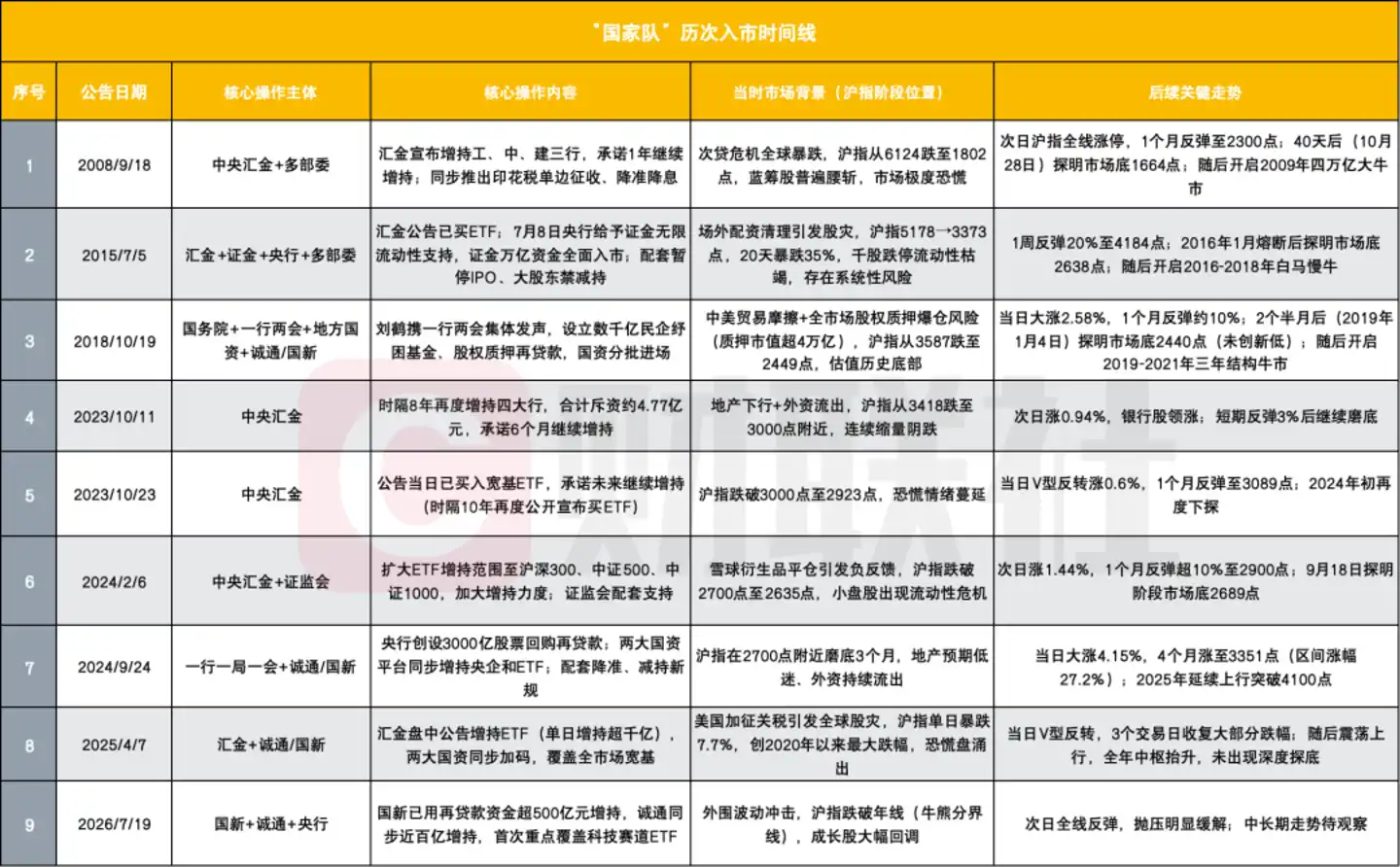
Source: Cailian Press

Notably, another innovative tool has been added to the policy toolkit for stabilizing the capital market — the Special Relending Facility for Stock Buybacks and Shareholding Increases (established in September 2024, first phase 300 billion yuan), integrating capital market stability into the macro-policy regulatory framework.

This facility, combined with the 500 billion yuan swap line quota, brings the total available pool to 800 billion yuan. Currently, the actual utilization rate is not high; collectively, hundreds of billions of yuan in backup funds remain available.

Therefore, this intervention is not simple market-propping, but a clear signal of policy intent.

03 Three Lines Supporting the Market: Where Does the Confidence Come From?

Beyond the capital logic, A-shares have sufficient resilience, and intrinsic upward momentum is not lacking.

Strategically categorized, A-shares can be divided into four core types: finance, consumption, cyclical, and tech. Their combined force determines the market's direction. Not just tech, but consumption, cyclical, and financial lines all possess strong intrinsic recovery momentum.

First, consumption. From a macro perspective, the CPI has stabilized above 1% for five consecutive months, whereas it fluctuated between -0.8% and 0.8% for nearly three years prior. Continuous price increases for consumer goods indicate marginal improvement in the profit predicament of consumer stocks. For consumer stocks that have fallen for five years, with valuations at absolute lows over the past decade, this could be a beam of light illuminating the darkness.
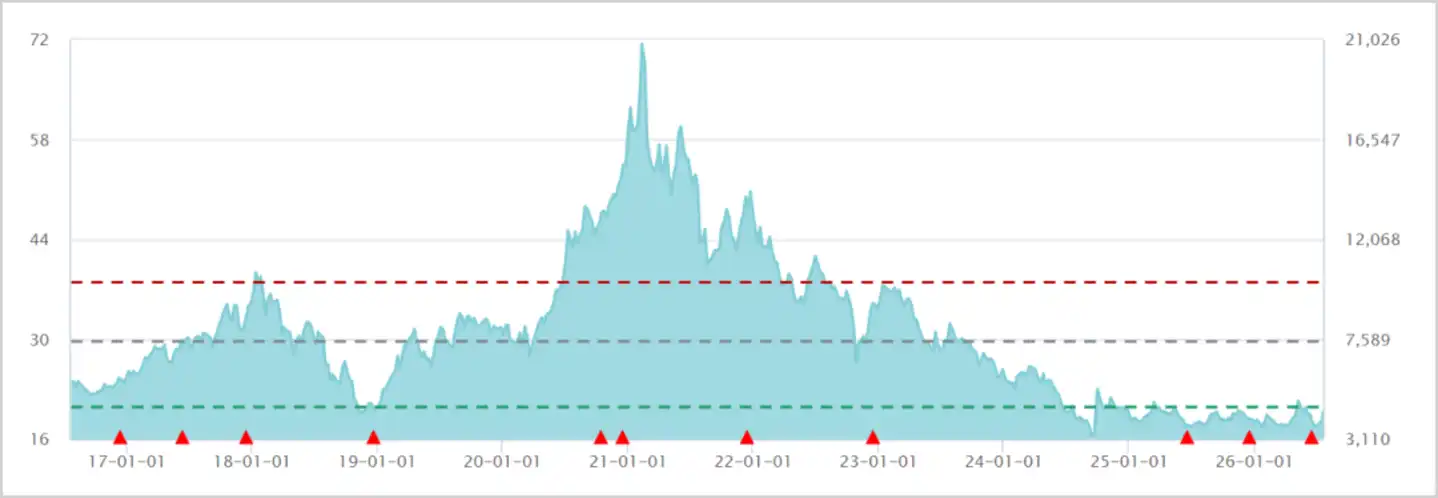
CSI Liquor Index PE Chart, Source: Wind

From a corporate perspective, Kweichow Moutai, as a bellwether for the baijiu and even the entire food & beverage sector, has raised prices twice consecutively this year, with a cumulative increase exceeding 10%. This action indicates that after years of continuous inventory destocking, channel inventories have largely normalized. The deep adjustment in baijiu may be nearing its end, with signs of recovery emerging.

In the first half of this year, retail sales of tobacco and alcohol performed strongly, reaching a cumulative 354.7 billion yuan, up 13.2% year-on-year. This also supports the view that the most difficult period for baijiu consumption may be over.

Next, look at cyclical sectors led by aluminum, which may be facing a triple resonance.

First, high earnings momentum. In the first five months, non-ferrous metal profits grew 117% year-on-year, even faster than tech sectors like computing. Looking at specific companies, Yunnan Aluminium and Tianshan Aluminium saw net profit attributable to shareholders grow 171%–182% and 101.5% year-on-year, respectively.

Second, there may still be price increase expectations in the second half of the year. On one hand, the global aluminum market remains in tight balance — demand continues to grow at 3%-5% overall driven by new energy vehicles, power, and "aluminum for copper" substitution in home appliances. On the supply side, China firmly maintains the 45-million-ton capacity ceiling. Against this backdrop, global aluminum inventories continue to decline, with LME aluminum stocks hitting multi-year lows.
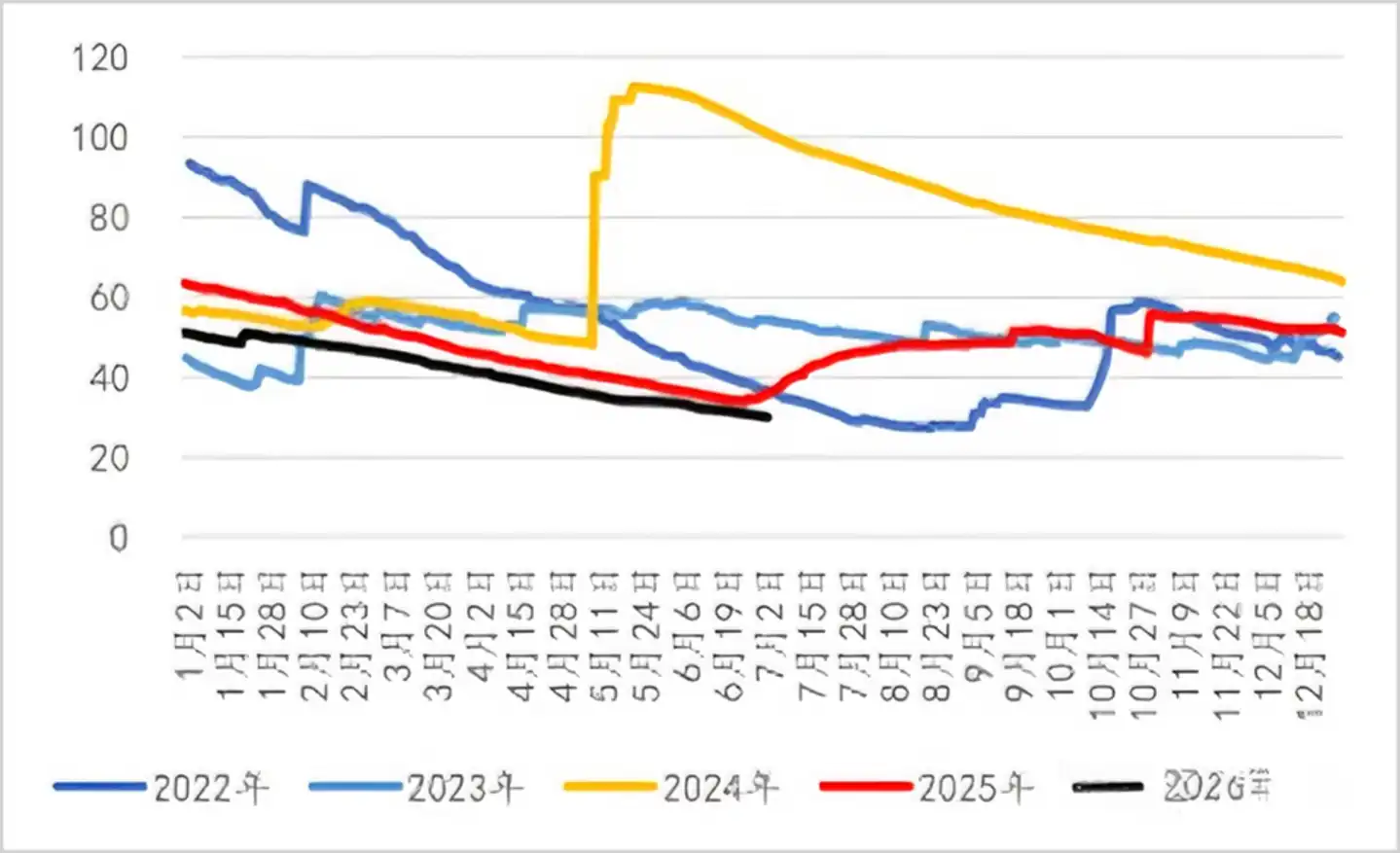
LME Total Aluminum Inventory Chart, Source: Wind

On the other hand, there is significant uncertainty regarding the previously aggressive expectations for Fed rate hikes. For example, June's non-farm payroll and CPI data both came in below expectations, suggesting the pace of hikes may be delayed.

Third, since the end of January, aluminum companies have generally experienced maximum drawdowns of around 40% or more. Currently, the forward PE (2026E) for leading companies like Aluminum Corporation of China, Yunnan Aluminium, and Tianshan Aluminium is only 6-7 times. High earnings momentum, coupled with price increase expectations and low valuations, naturally provides recovery momentum for the future.

In fact, besides aluminum, metals like gold, silver, copper, and lithium share similar underlying logics.

Finally, look at the financial sector. Banks, as typical dividend assets, have stable fundamentals and relatively high dividend yields. Meanwhile, securities firms and insurers, benefiting from capital market activity, generally see high earnings growth, yet their valuations remain at multi-year lows.

Certainly, the rapid development of China's tech industry, especially continuous technological breakthroughs in the semiconductor, AI, and other industrial chains, achieving domestic substitution across multiple fields and expanding exports to capture overseas market share, leads to continuously improving earnings fundamentals and solid long-term value. Coupled with the intrinsic recovery momentum of the three major lines — consumption, cyclical, and financial assets, A-shares possess a fairly strong foundation for resilience.

Overall, this round of tech adjustment stems from external risk transmission, not a collapse in the growth cycle. The "National Team" decisively intervened to stabilize the bottom line of expectations. As the intrinsic momentum of consumption, cyclical, and financial sectors gradually takes over, the market may not be far from regaining stability.


Kripto yang Sedang Tren

Pertanyaan Terkait

QWhat are the two main reasons that support the resilience of A-shares in the face of external shocks, as discussed in the article?

AThe article highlights two key reasons for A-share resilience: 1) Strong fundamentals in key sectors like technology, where industries such as optical modules and chips maintain high profitability and growth (e.g., profit in the computer and electronic equipment manufacturing sector grew over 100% year-on-year in the first five months). 2) The 'national team' (state-backed institutions) actively intervened to stabilize the market by making substantial purchases (e.g., over 500 billion RMB by Guoxin Investment) and providing policy support, which boosted market confidence and liquidity.

QHow does the structure of China's technology sector differ from South Korea's, making it potentially more resilient according to the article?

AThe article explains that South Korea's stock market is heavily concentrated in a few memory chip giants (Samsung and SK Hynix account for about 50% of the market cap), making it vulnerable to sector-specific risks and leverage unwinding. In contrast, China's A-share technology sector is more diversified, spanning computers, communications, electronics, and within semiconductors, covering the entire supply chain from materials to design and manufacturing. It also has dual growth narratives—participating in the global AI supply chain and driving domestic substitution—making it less dependent on a single segment and more resilient to external shocks.

QWhat specific actions did the 'national team' take to support the A-share market during the recent volatility?

AThe 'national team' took several concrete actions: 1) State-owned institutions like Guoxin Investment announced market purchases exceeding 500 billion RMB, and China Chengtong bought nearly 100 billion RMB. 2) Central state-owned enterprises (e.g., China Aluminum, CRRC) announced share buybacks. 3) Major insurers (Ping An, CPIC, etc.) pledged to increase equity allocations, with China Life Asset Management alone making net purchases of over 100 billion RMB in a single day. 4) The policy tool of 'stock repurchase and增持 special relending' (with a total potential scale of 800 billion RMB) was also mentioned as a stabilizing measure.

QBeyond technology, what other major sectors in the A-share market does the article identify as having endogenous recovery momentum?

AThe article identifies three other major sectors with strong endogenous recovery momentum: 1) Consumer: Indicated by a stabilizing CPI (above 1% for five months) and leading companies like Kweichow Moutai raising prices, signaling easing inventory pressure and a potential end to the downturn. 2) Cyclicals (e.g., aluminum): Supported by high profit growth, potential price increases due to tight supply-demand balance, and low valuations after significant corrections. 3) Finance: Banks offer stable fundamentals and high dividends, while brokers and insurers benefit from capital market activity but trade at low valuations.

QWhat is the article's overall conclusion regarding the recent adjustment in A-shares, particularly the technology sector?

AThe article concludes that the recent adjustment in A-shares, especially in technology, was primarily caused by the spillover of external risks (like deleveraging in South Korean stocks) and not by a collapse in fundamental industry prosperity. It argues that with the 'national team' stepping in to stabilize expectations and provide a floor, and with the inherent recovery momentum in consumer, cyclical, and financial sectors, the market possesses strong resilience and is likely to return to a steady state in the near future.

Bacaan Terkait

Setelah Tiga Kuartal Berturut-Turut Turun, Bisakah Pasar Kripto Menyambut Jendela Stabilitas di Kuartal Ketiga?

Pasar kripto mengalami kuartal terburuk sejak 2022, dengan kapitalisasi pasar turun 12.6% menjadi $2.1 triliun, didorong oleh keluarnya modal dan penurunan volume perdagangan. Bitcoin dan Ethereum masing-masing jatuh 14.2% dan 25.4% di kuartal kedua. Aliran keluar bersih dari ETF Bitcoin AS mencapai $4.67 miliar, menandakan tekanan jual yang berkelanjutan. Faktor utama meliputi terputusnya hubungan dengan saham AS, kebijakan moneter Federal Reserve yang ketat, dan pelepasan aset oleh perusahaan seperti Strategy. Proses legislasi UU CLARITY yang akan memberikan kejelasan regulasi terhambat, meningkatkan premi risiko di sektor ini. Namun, ada tanda-tanda potensi stabilisasi. Aliran keluar ETF yang besar secara historis sering terjadi di akhir fase penurunan, dan para pemegang Bitcoin jangka panjang mulai menambah kepemilikan lagi. Sementara sebagian besar sektor menyusut, pasar prediksi dan aset koleksi yang ditokenisasi mencatat pertumbuhan signifikan. Pandangan untuk kuartal ketiga sangat bergantung pada pertemuan Fed akhir Juli. Sinyal kebijakan yang lunak dapat mendukung pemulihan Bitcoin, sementara sikap yang hawkish dapat memicu konsolidasi lebih lanjut. Meskipun tantangan regulasi tetap ada, indikator teknis seperti harga Bitcoin yang mendekati rata-rata bergerak 200-mingguannya menunjukkan dasar jangka panjang belum rusak. Logika pasar telah bergeser dari mengandalkan narasi ke faktor fundamental seperti kebijakan dan ekspektasi suku bunga.

marsbit13j yang lalu

Setelah Tiga Kuartal Berturut-Turut Turun, Bisakah Pasar Kripto Menyambut Jendela Stabilitas di Kuartal Ketiga?

marsbit13j yang lalu

The SpaceX Trade, Terbuka: SPCXON Mulai Diperdagangkan di WEEX

SpaceX meluncurkan IPO terbesar dalam sejarah pada Juni 2026, namun akses bagi banyak pedagang terhambat oleh batasan regional dan prosedur broker. WEEX kini menghadirkan SPCXON/USDT di pasar spotnya, sebuah instrumen tokenisasi yang memungkinkan paparan terhadap pergerakan harga SpaceX melalui akun kripto yang diselesaikan dengan USDT, tanpa memerlukan broker AS atau pembiayaan bank. SPCXON adalah produk tokenisasi yang mencerminkan ekonomi kepemilikan SpaceX bagi pedagang yang memenuhi syarat di luar AS, dengan dividen diinvestasikan kembali. Aset ini diperdagangkan di WEEX sebagai pasangan spot dengan USDT, tersedia selama jam pasar, memberikan akses mudah bagi trader kripto. Kasus investasi untuk SpaceX didasarkan pada pertumbuhan pendapatan Starlink dan pencapaian Starship, meskipun valuasinya yang tinggi (sekitar 90-110 kali pendapatan) telah memperhitungkan eksekusi sempurna selama bertahun-tahun. Faktor seperti jumlah saham publik yang terbatas dan masa buka kunci (unlock) insider pertama menjadi pertimbangan penting. Penting untuk diingat bahwa SPCXON memberikan paparan, bukan kepemilikan langsung atas saham atau hak suara. Harganya dapat diperdagangkan pada premium atau diskon terhadap nilai aset bersih. WEEX menawarkan akses ke berbagai aset TradFi yang ditokenisasi seperti ini dalam satu akun terpadu, bersama dengan pasar futures dan kampanye perdagangan dengan pool hadiah.

TheNewsCrypto13j yang lalu

The SpaceX Trade, Terbuka: SPCXON Mulai Diperdagangkan di WEEX

TheNewsCrypto13j yang lalu

Momen Perdagangan BIT: BTC Masih Tertekan oleh EMA 200 Mingguan, Setelah Ditolak Mungkin Kembali Turun, Saham Penyimpanan dan Semikonduktor yang Melonjak Malam Kemudian Mulai Anjlok di Pasar Malam

**PASAR KRIPTO & SAHAM: BTC Hadapi Resistensi, Saham Semikonduktor Turun di Perdagangan Malam** Pasar kripto melanjutkan pemulihan, dengan harga Bitcoin bertahan di sekitar $66,000 setelah rebound lebih dari 15% dari titik terendah Juli. Namun, BTC menghadapi **tembok resistensi kuat di dekat $68,000**, yang bertepatan dengan biaya rata-rata investor selama lima bulan terakhir dan titik gagalnya rebound pertengahan Juni. Secara teknis, perhatian tertuju pada **200 EMA mingguan (~$68,328) sebagai level kunci**. Jika BTC ditolak di level ini, potensi penurunan menuju support $63,000 terbuka. Analis menyoroti volume rendah dan penurunan open interest futures di CME, menandakan rebound ini lebih dipicu likuiditas rendah musim panas daripada awal bull run penuh. Di pasar saham AS, **indeks futures utama turang** setelah sesi kemarin yang kuat. Sektor semikonduktor dan penyimpanan (storage), yang melonjak pada hari Selasa (contoh: Micron +12%), **mengalami koreksi di perdagangan malam (night trading)**. ETF semikonduktor turun 2,22% dan saham Micron turun 2,29%. Meski begitu, ada sorotan positif seperti **Super Micro Computer (SMCI)** yang naik lebih dari 15% setelah melaporkan pandangan pendapatan yang kuat dan pesanan baru yang sangat besar, mengonfirmasi permintaan server AI tetap solid. Kekhawatiran makro muncul dari **kenaikan harga minyak mentah (di atas $91)** akibat ketegangan geopolitik dan **lonjakan imbal hasil (yield) obligasi pemerintah AS**, dengan imbal hasil 10-tahun mencapai sekitar 4,64%. Faktor-faktor ini dapat menambah tekanan inflasi dan membatasi ruang gerak pasar saham. Saham terkait kripto seperti Coinbase dan Robinhood naik kuat didorong oleh perkembangan regulasi yang lebih jelas di AS. Di Asia, **Korea Selatan** dan **Jepang** menunjukkan kinerja beragam. Indeks KOSPI Korea naik didukung pemulihan saham semikonduktor, sementara pasar Jepang melemah dengan **Yen terus melemah ke level terendah sejak 1986**, meningkatkan kekhawatiran akan intervensi bank sentral. **Yang Perlu Diperhatikan Selanjutnya:** * **22 Juli:** Acara AI AMD, rilis laporan keuangan dari Google (Alphabet), Tesla, IBM. * **23 Juli:** Keputusan suku bunga Bank Sentral Eropa (ECB), data klaim pengangguran AS, laporan keuangan Intel. * Perkembangan lebih lanjut dari **harga minyak, imbal hasil obligasi, dan dinamika Yen Jepang** akan menjadi penentu sentimen pasar risiko secara keseluruhan.

marsbit13j yang lalu

Momen Perdagangan BIT: BTC Masih Tertekan oleh EMA 200 Mingguan, Setelah Ditolak Mungkin Kembali Turun, Saham Penyimpanan dan Semikonduktor yang Melonjak Malam Kemudian Mulai Anjlok di Pasar Malam

marsbit13j yang lalu

Mantan Ketua CFTC dan Presiden Circle, Tarbert: Satu Pihak Menasihati Anda untuk Berpikir Jangka Panjang, di Sisi Lain Menguangkan $30 Juta Sendiri

Penulis: Zen, PANews Heath Tarbert, mantan Ketua CFTC dan Presiden Circle, baru-baru ini menyerukan kepada investor untuk mengadopsi pandangan jangka panjang terhadap saham Circle, meskipun harganya telah turun 70% dari puncaknya. Namun, ia sendiri secara konsisten menjual saham CRCL sejak perusahaan go public, menguangkan sekitar $30 juta tanpa pernah membeli saham tambahan di pasar terbuka. Tarbert, yang bergabung dengan Circle pada Juli 2023 dan menjadi Presiden pada awal 2025, dikenal sebagai pendukung kuat narasi "jangka panjang" perusahaan. Namun, sehari sebelum IPO Circle, ia menetapkan rencana perdagangan 10b5-1 untuk menjual hingga 353.290 saham dalam setahun. Dalam 13 bulan setelah IPO, ia menjual lebih dari 360.000 saham, termasuk penjualan tunggal senilai $11,5 juta pada Maret 2026. Ia bahkan menetapkan rencana 10b5-1 kedua untuk menjual hingga 160.000 saham lagi pada akhir tahun 2026. Langkah Tarbert ini menuai kecaman karena dianggap tidak konsisten dengan pesan "jangka panjang" yang ia sampaikan kepada publik. Perjalanan kariernya sering dikaitkan dengan "revolving door" antara regulator dan dunia keuangan. Setelah mengundurkan diri sebagai Ketua CFTC pada Maret 2021, ia bergabung dengan Citadel Securities hanya 27 hari kemudian sebagai Kepala Penasihat Hukum, tepat saat perusahaan itu menghadapi pengawasan ketat terkait peristiwa GameStop. Di Citadel, ia juga mendukung undang-undang yang memperluas wewenang CFTC atas pasar crypto, sementara Citadel diketahui berencana berekspansi ke aset kripto. Tarbert kemudian pindah ke Circle pada 2023, membantu perusahaan mengatasi tantangan regulasi dan akhirnya go public melalui IPO langsung. Meskipun sangat berharga bagi perusahaan, tindakannya menjual saham dalam jumlah besar sambil mendorong investor untuk bertahan menimbulkan pertanyaan tentang komitmennya yang sebenarnya terhadap masa depan jangka panjang Circle.

marsbit14j yang lalu

Mantan Ketua CFTC dan Presiden Circle, Tarbert: Satu Pihak Menasihati Anda untuk Berpikir Jangka Panjang, di Sisi Lain Menguangkan $30 Juta Sendiri

marsbit14j yang lalu

Gate Research Institute: Produk Keuangan Kripto Menggulirkan Gelombang "Wall Street-ization", Kompetisi atau Integrasi?

**Ringkasan: Gelombang "Wall Street-ization" Produk Keuangan Kripto: Kompetisi atau Integrasi?** Artikel ini membahas fenomena konvergensi antara keuangan tradisional (TradFi) dan keuangan kripto (Crypto). Meskipun Bitcoin awalnya dirancang sebagai sistem peer-to-peer yang terdesentralisasi dan bebas dari perantara seperti bank, pasar kripto kini semakin diintegrasikan ke dalam infrastruktur keuangan tradisional. **Tren "Wall Street-ization":** Dimulai dengan disetujuinya ETF spot Bitcoin pada 2024, aset kripto kini dikemas menjadi produk seperti ETF (oleh BlackRock, Fidelity, dll.), futures, dan sekuritisasi aset riil (RWA) seperti obligasi pemerintah yang ditokenisasi. Ini memberikan akses yang mudah dan teregulasi bagi investor institusional, tetapi juga berarti kekuasaan atas penerbitan, penentuan harga, kustodian, dan distribusi aset kripto semakin bergeser ke lembaga keuangan besar. **Dua Jalur Konvergensi (1+1>2):** Artikel ini menyoroti dua arah integrasi: 1. **Dari CEX ke TradFi:** Dilambangkan oleh **Gate.io**, yang berkembang dari bursa kripto menjadi platform multi-aset. Gate kini menawarkan perdagangan saham nyata (AS, Hong Kong, Korea) menggunakan USDT, menyediakan akses tanpa batas waktu ke pasar tradisional. 2. **Dari TradFi ke Crypto:** Dilambangkan oleh **Robinhood**, platform broker tradisional yang memperluas layanannya ke aset kripto (termasuk melalui akuisisi Bitstamp) dan mengembangkan produk seperti token saham di blockchain. **Tujuan Bersama: Akun Keuangan "Super" Terpadu:** Kedua jalur ini bertujuan menciptakan **akun keuangan generasi berikutnya yang terpadu**. Pengguna di masa depan mungkin dapat memperdagangkan Bitcoin, saham Apple, ETF, emas, dan obligasi pemerintah yang ditokenisasi dalam satu antarmuka yang sama, menggunakan stablecoin sebagai lapisan dana. **RWA dan Obligasi Pemerintah di On-Chain sebagai Lapisan Tengah:** Tokenisasi aset dunia nyata, terutama obligasi pemerintah AS, menyediakan aset berpenghasilan rendah risiko di ekosistem on-chain. Pasar ini tumbuh pesat (naik 40% pada paruh pertama 2026) meskipun pasar kripto turun, menunjukkan permintaan nyata. **Kesimpulan:** "Wall Street-ization" bukanlah pengambilalihan sepihak, melainkan **transformasi timbal balik**. TradFi dan Crypto saling melengkapi: Crypto mendapatkan akses ke likuiditas, kepatuhan, dan jaringan distribusi yang luas, sementara TradFi mengadopsi efisiensi, kecepatan, dan pasar 24/7 dari Crypto. Hasil akhirnya adalah pembentukan **pasar modal terpadu yang lebih efisien dan global**, di mana batas antara aset tradisional dan kripto semakin kabur.

marsbit14j yang lalu

Gate Research Institute: Produk Keuangan Kripto Menggulirkan Gelombang "Wall Street-ization", Kompetisi atau Integrasi?

marsbit14j yang lalu

Trading

Spot

Artikel Populer

Cara Membeli CAP

Selamat datang di HTX.com! Kami telah membuat pembelian Cap (CAP) menjadi mudah dan nyaman. Ikuti panduan langkah demi langkah kami untuk memulai perjalanan kripto Anda.Langkah 1: Buat Akun HTX AndaGunakan alamat email atau nomor ponsel Anda untuk mendaftar akun gratis di HTX. Rasakan perjalanan pendaftaran yang mudah dan buka semua fitur.Dapatkan Akun SayaLangkah 2: Buka Beli Kripto, lalu Pilih Metode Pembayaran AndaKartu Kredit/Debit: Gunakan Visa atau Mastercard Anda untuk membeli Cap (CAP) secara instan.Saldo: Gunakan dana dari saldo akun HTX Anda untuk melakukan trading dengan lancar.Pihak Ketiga: Kami telah menambahkan metode pembayaran populer seperti Google Pay dan Apple Pay untuk meningkatkan kenyamanan.P2P: Lakukan trading langsung dengan pengguna lain di HTX.Over-the-Counter (OTC): Kami menawarkan layanan yang dibuat khusus dan kurs yang kompetitif bagi para trader.Langkah 3: Simpan Cap (CAP) AndaSetelah melakukan pembelian, simpan Cap (CAP) di akun HTX Anda. Selain itu, Anda dapat mengirimkannya ke tempat lain melalui transfer blockchain atau menggunakannya untuk memperdagangkan mata uang kripto lainnya.Langkah 4: Lakukan trading Cap (CAP)Lakukan trading Cap (CAP) dengan mudah di pasar spot HTX. Cukup akses akun Anda, pilih pasangan perdagangan, jalankan trading, lalu pantau secara real-time. Kami menawarkan pengalaman yang ramah pengguna baik untuk pemula maupun trader berpengalaman.

87 Total TayanganDipublikasikan pada 2026.06.26Diperbarui pada 2026.06.26

Cara Membeli CAP

Diskusi

Selamat datang di Komunitas HTX. Di sini, Anda bisa terus mendapatkan informasi terbaru tentang perkembangan platform terkini dan mendapatkan akses ke wawasan pasar profesional. Pendapat pengguna mengenai harga CAP (CAP) disajikan di bawah ini.

活动图片












