LIT Token Hits Six-Month High: How Long Can the Buyback Flywheel Keep Burning Fuel?

Foresight NewsDipublikasikan tanggal 2026-06-18Terakhir diperbarui pada 2026-06-18

Abstrak

The LIT token of decentralized perpetual exchange Lighter surged to a six-month high above $1.90 on June 18th, with a market cap of $425 million. After a price correction earlier this year, the recent rebound is attributed to its core "buyback flywheel" mechanism. All protocol fee revenue is used for programmatic, hourly market buybacks of LIT. Since its TGE in December 2025, approximately 15 million LIT (6% of circulating supply) has been repurchased for around $21 million. Additional price support comes from the LLP (Lighter Liquidity Pool), where providers must stake LIT worth 10% of their deposited USDC, locking significant token supply. However, challenges persist. Trading volume has declined amidst a sluggish market, with total volume at $1.68 trillion, significantly lower than leading competitor Hyperliquid's $4.37 trillion. While Lighter focuses on perpetual contracts, RWA, and Pre-IPO markets, Hyperliquid has expanded into prediction markets and boasts a U.S. spot ETF, attracting institutional investment and influencer endorsements like from Arthur Hayes. In contrast, LIT currently lacks similar high-profile backing. With 75% of LIT's total 1 billion supply still locked (team and investor tokens begin a 3-year linear unlock in December 2026), there is no immediate unlock selling pressure. The token's future performance hinges on sustaining trading volume growth, successful product iteration, and executing its transparent buyback strategy against a dominant competit...


Written by: Ma He, Foresight News


On June 18th, Lighter's token LIT broke through $1.9, reaching a new high since January of this year. Its current market cap is $425 million with an FDV of $1.7 billion. The token price has since retreated and is fluctuating around $1.6.
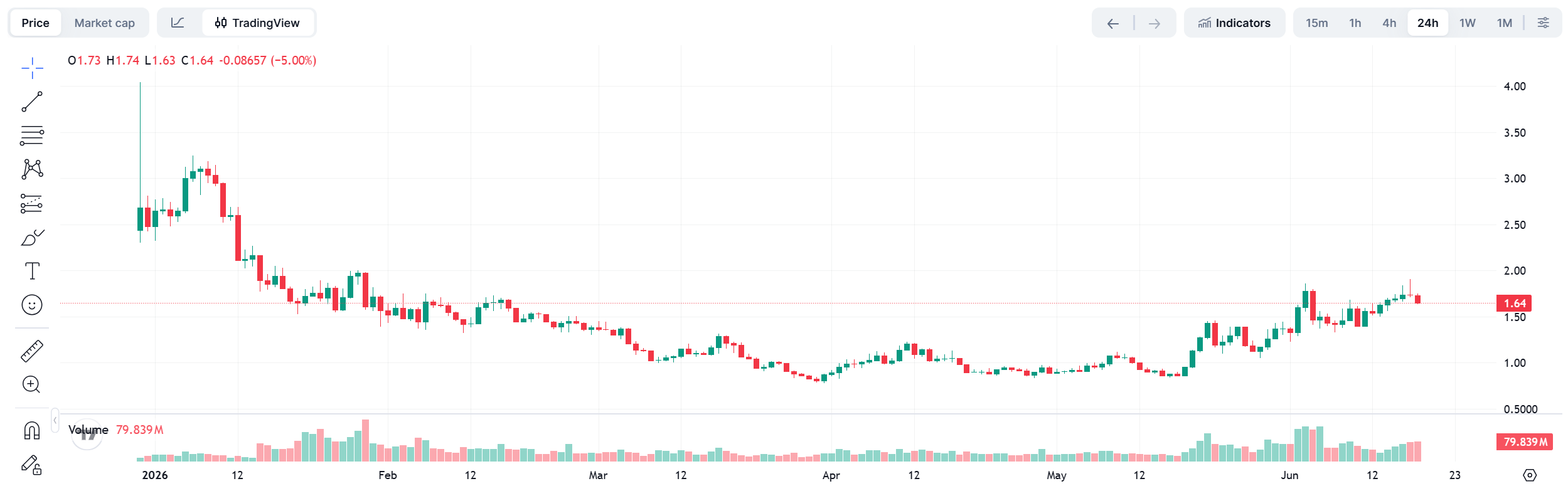


In 2026, Hyperliquid gained significant market attention through its buyback flywheel and expansion into multiple sectors, with its token price surging from $20 to a peak of $76, setting a new all-time high. After adjusting at the beginning of the year, the price of Lighter's token has rebounded significantly recently. So, what factors are currently driving this?


Lighter is a decentralized perpetual contracts exchange. In December 2025, its native token LIT officially underwent Token Generation Event (TGE), accompanied by a large-scale airdrop. The total fixed supply is 1 billion tokens. Specifically, within the ecosystem portion, 25% was automatically airdropped to early users via points seasons at TGE, with the remaining 25% reserved for future incentives, partners, and growth. The team holds 26%, and investors hold 24%. The airdrop portion was released 100% at TGE.


The team and investor portions have a 1-year cliff (starting unlocking on December 30, 2026), followed by a 3-year linear unlock.
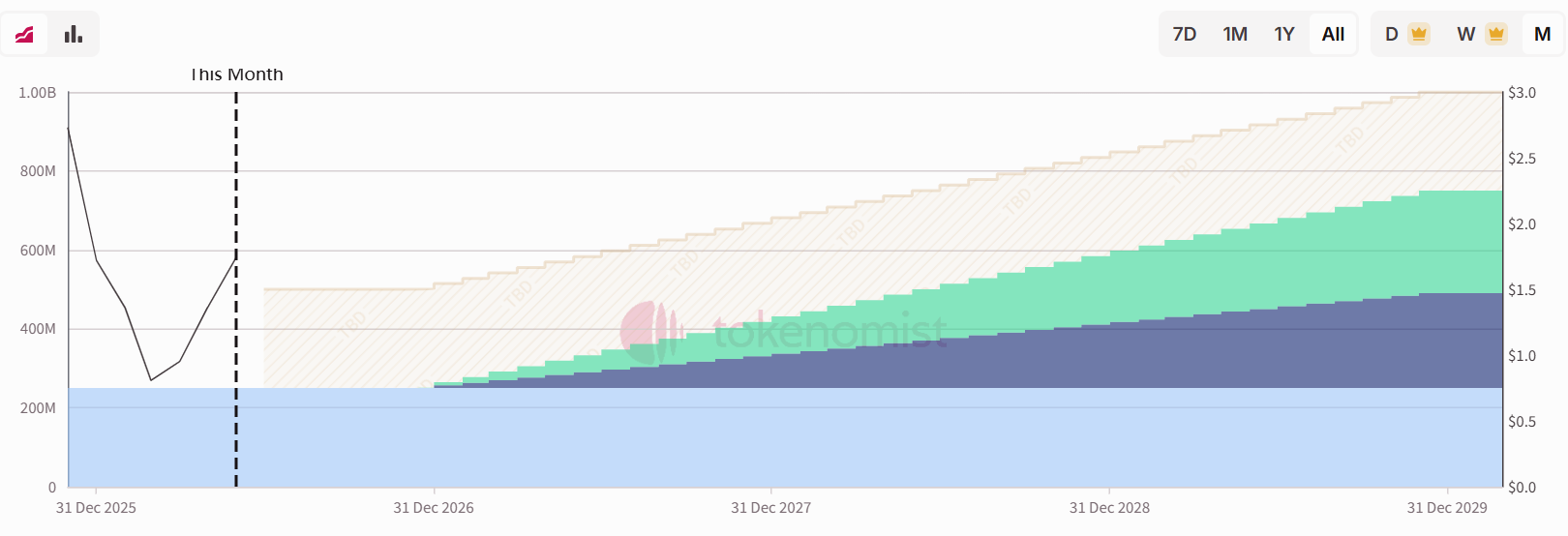


To date, the circulating supply remains at approximately 250 million tokens (25% of total supply), with the remaining 75% still locked. This means there is temporarily no VC and team unlock selling pressure in the second half of this year.


Buyback, LLP & Staking Pool


The buyback mechanism is the core of Lighter's value capture. The protocol uses all fee income generated from products like perpetual trading to buy back LIT tokens on the open market. Official disclosures show this buyback is fully programmatic: the protocol automatically aggregates all fee income hourly and places 100 limit buy orders from the current market price down to a -10% range.
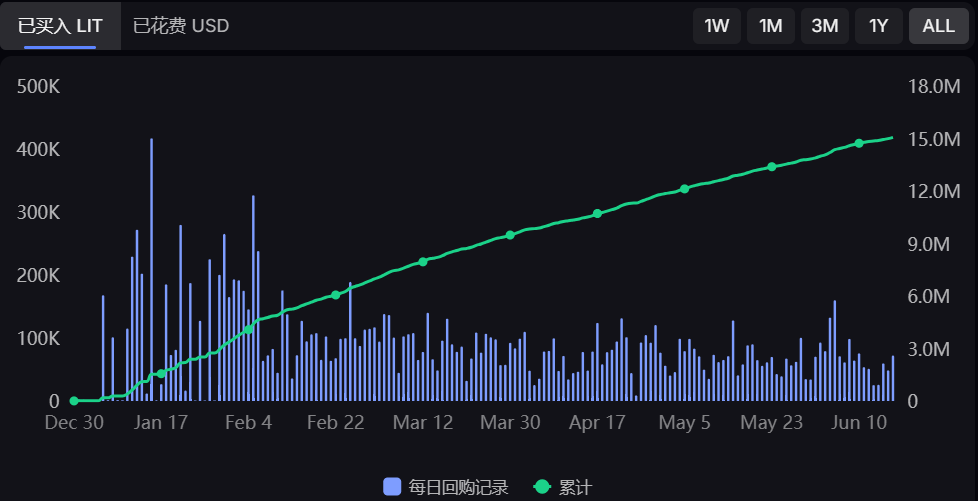


According to the latest data from Lighter, since TGE, the protocol has programmatically bought back approximately 15 million LIT, accounting for about 6% of the circulating supply, with a buyback amount of around $21 million, representing 1.51% of the total supply. These buybacks directly convert protocol revenue into continuous on-chain buy-side pressure.


So, how is Lighter currently performing in the market?


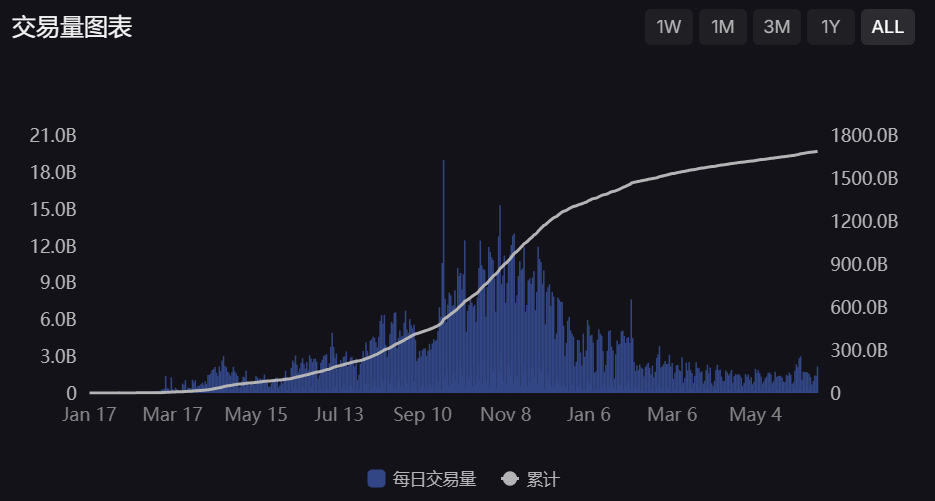
Data from the official website shows its total trading volume has exceeded $1.68 trillion. However, its trading volume has been declining this year due to factors like sluggish market conditions.


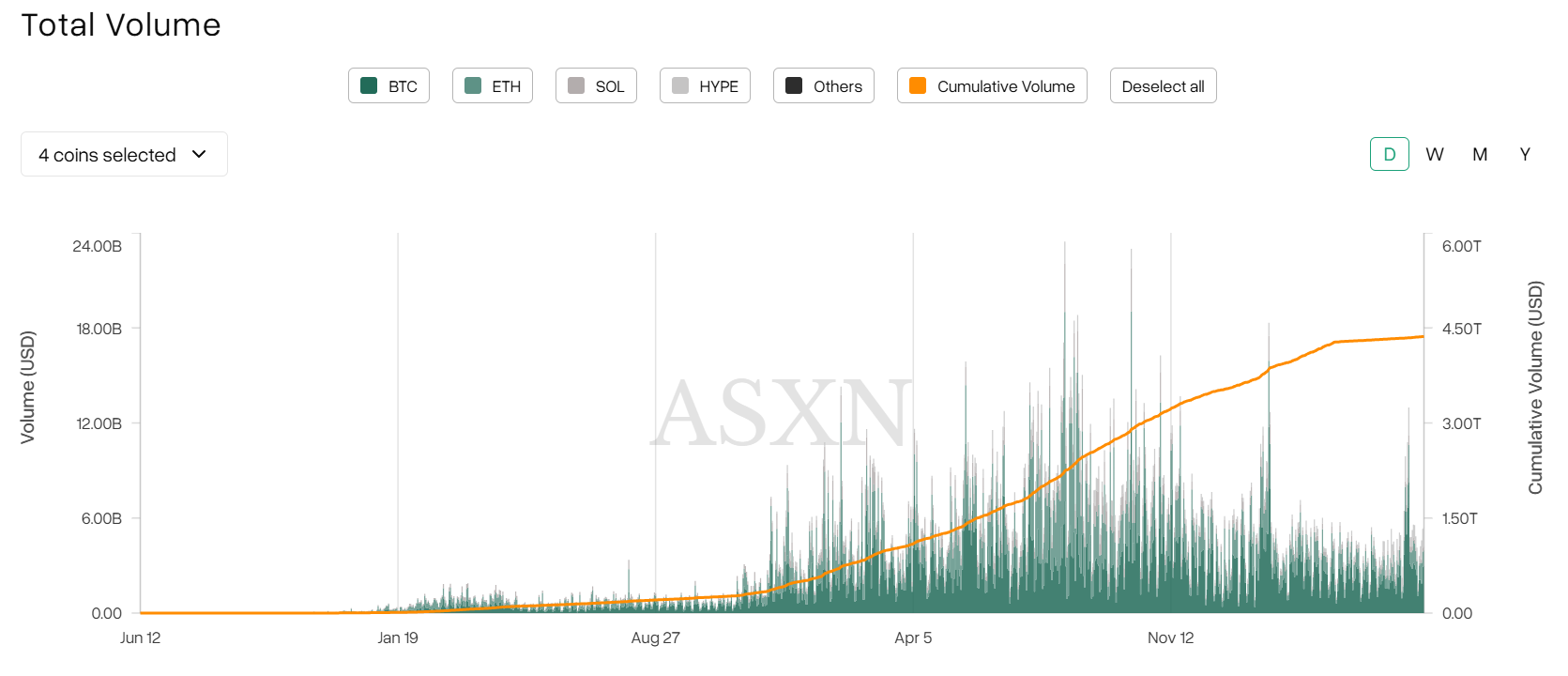
In comparison, Hyperliquid's total trading volume has surpassed $4.37 trillion, nearly three times that of Lighter, and its volume has remained stable since September-October 2025.


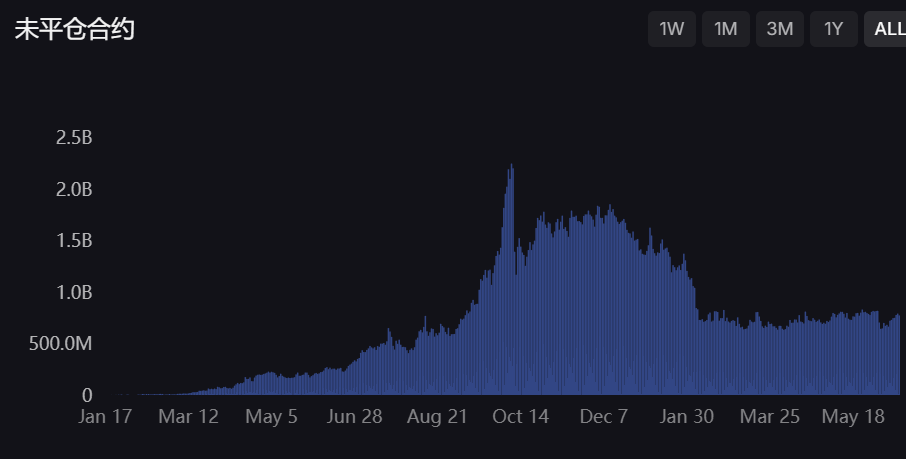
However, turning our attention to open interest, Lighter's open interest data from November 2025 was $1.6 billion, while the current data is $750 million, which isn't drastically low. Hyperliquid's open interest peaked at $9.64 billion and currently remains at $5.06 billion.


Meanwhile, Lighter continues to iterate on the product side. In May, it partnered with Insilico Terminal to introduce a professional-grade execution management system, attracting systematic traders and deepening order book liquidity. The platform has launched a Pre-IPO perpetual contracts market and introduced features like LIT fee points, expanding trading scenarios and user engagement. These actions complement the buyback flywheel, amplifying protocol revenue and buy-side effects under macro event drivers.


Simply put, the Lighter Liquidity Pool (LLP) is the market maker capital pool for the Lighter exchange. In a centralized exchange, when a user goes long, the counterparty is typically a market maker (institution) or another user going short. However, in a decentralized exchange, the underlying logic changes: the "common counterparty" for all traders' positions across the entire exchange is the LLP. In other words, if users profit from going long, the LLP pays them; if users incur losses, those losses are directly absorbed into the LLP.


According to historical big data statistics, retail traders are highly likely to lose money over long periods. Therefore, large players depositing their USDC into the LLP to act as the casino's bankroll are essentially "acting as the house," passively profiting from retail traders' losses and the exchange's fees.



According to the latest official website data, its TVL has risen to $98.42 million, with an annualized rate reaching 11.47%. According to Lighter's official rules, entering the LLP requires staking LIT tokens equivalent to 1/10th of the deposited capital amount. This design makes many large players one of the biggest spot buyers of LIT in the secondary market. The more USDC they deposit, the more LIT tokens are locked in the market.


It's important to note that the LLP liquidity pool is not shared with the staking pool; they are separate pools.


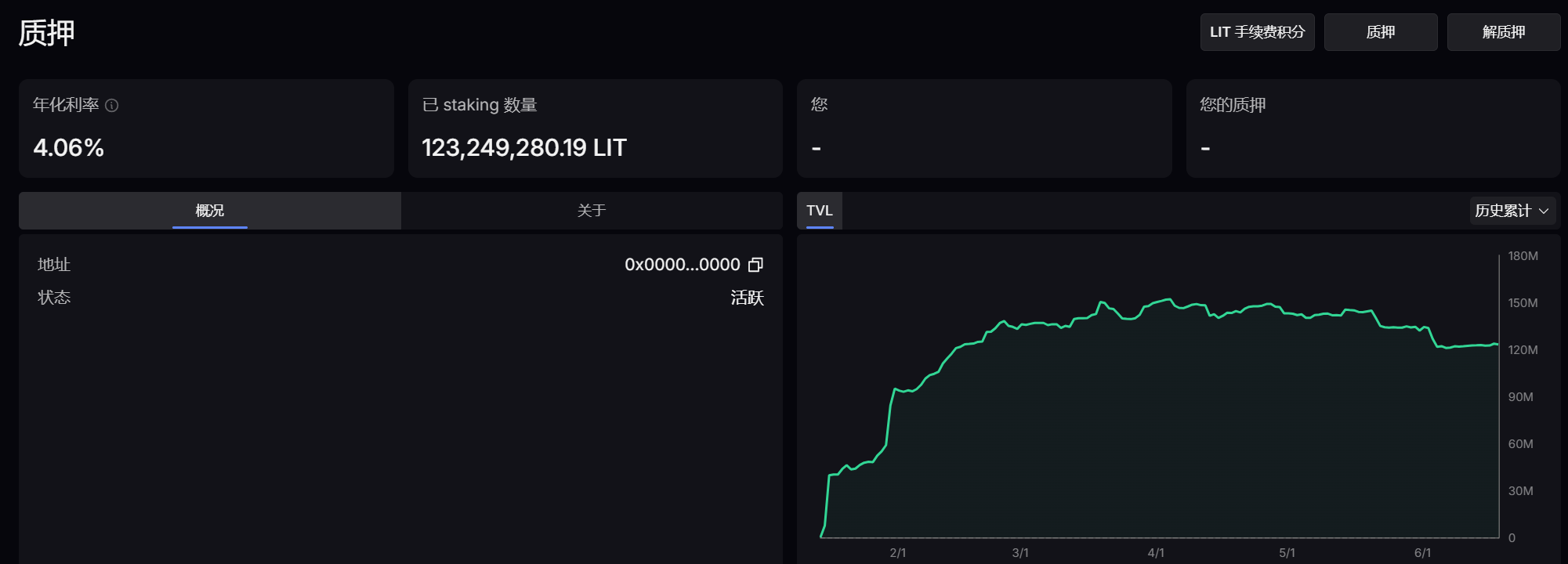
According to the latest official website data, its annualized yield is 4.06%, with 123.23 million LIT tokens staked, totaling over $204.6 million in value.


Compared to Hyperliquid, Concerns Remain


In the perpetual contracts DEX sector, Hyperliquid, with its first-mover advantage and scale effect, is the current recognized leader, while Lighter has established a unique position through technical differentiation and product focus.


Hyperliquid also implements an aggressive revenue buyback strategy with considerable scale. However, combined with staking gas fees and ecosystem incentives, it forms a more comprehensive token utility system. Lighter's buyback execution has certain advantages in transparency and predictability, while Hyperliquid's buyback is matched with a higher base of protocol revenue.


Furthermore, Hyperliquid has broader coverage: beyond perpetual contracts, it continues to expand into RWA and a more complete DeFi ecosystem, even prediction markets (e.g., Bitcoin, Ethereum price predictions). As of June 16th, the World Cup-related section within the HIP-4 prediction markets on Hyperliquid saw its 7-day trading volume surge 202% week-over-week. Continuous business expansion broadens its audience and trading volume, which in turn further boosts the buy-side pressure for the HYPE token. In contrast, Lighter is still focusing on RWA and Pre-IPO layouts and hasn't ventured into areas like prediction markets.


Institutions are also increasingly buying HYPE. According to on-chain analyst Ai Yi's monitoring, since June 1st, wallets related to a16z have withdrawn 1,229,524 HYPE ($85.54 million) and deposited them for staking. Even the prominent endorser Arthur Hayes tweeted, "Looking at the current crypto market cap rankings, most are shitcoins. I believe HYPE should at least surpass SOL before this bull cycle ends."


US institutions have also launched a HYPE spot ETF, providing stable support for its price. According to SoSoValue data, the cumulative net inflow for US HYPE spot ETFs is currently $182.56 million. In contrast, LIT still relies solely on secondary market activity and buybacks for price support.
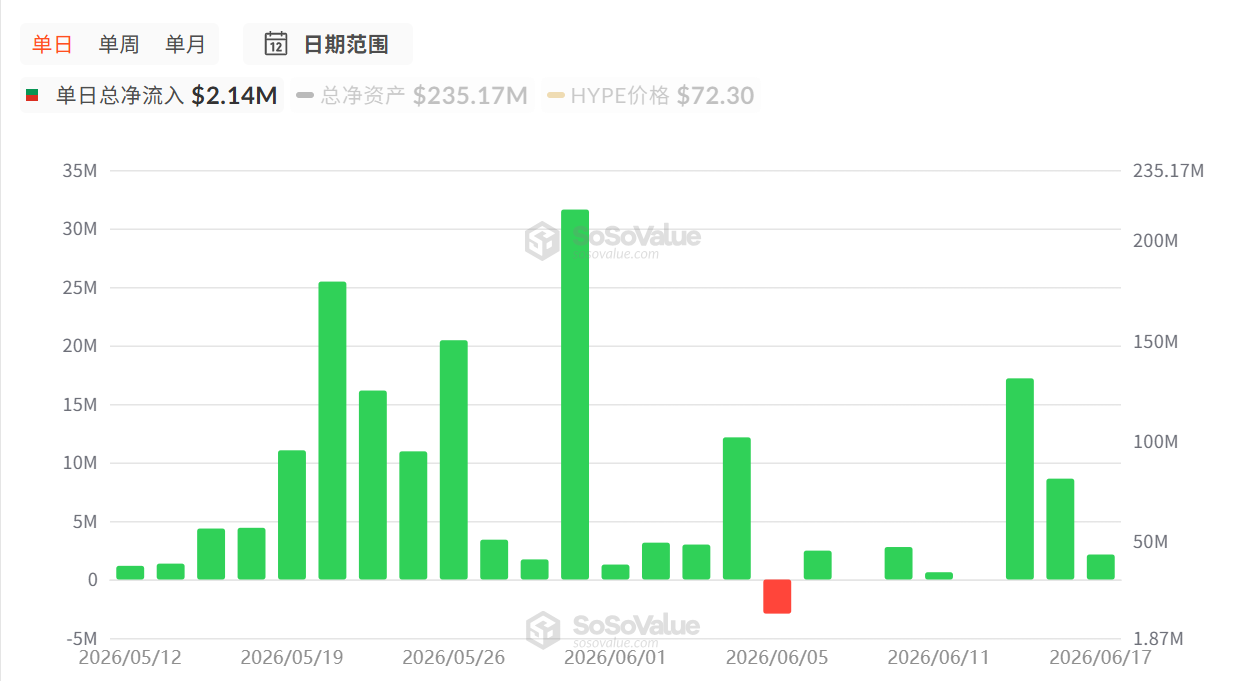


Currently, LIT lacks both influential figure endorsements and public, continuous buying by large institutions, leaving a hint of concern for its token price.


Overall, Hyperliquid currently dominates in scale, liquidity, and ecosystem breadth, while Lighter is building its competitive advantages through its ZK tech stack, transparent buyback mechanism, zero fees for retail users, and differentiated tools for institutional players.


The future relative performance of both will depend on their execution in trading volume growth, product iteration, and market adoption.


Kripto yang Sedang Tren

Pertanyaan Terkait

QWhat is the core mechanism driving LIT's value appreciation, and how does it work?

AThe core mechanism is a repurchase (buyback) flywheel. Lighter uses all protocol fee revenue generated from its perpetual contracts and other products to programmatically repurchase LIT tokens on the open market. This happens hourly, placing 100 limit buy orders at prices from the current market price down to -10%, directly converting protocol income into continuous on-chain buy pressure for LIT.

QWhat is the Lighter Liquidity Pool (LLP), and what is its role in the ecosystem?

AThe Lighter Liquidity Pool (LLP) is essentially the counterparty for all traders on the Lighter exchange. It acts as the "house" or market maker in a decentralized setting. When traders profit, the LLP pays them; when traders lose, the losses flow into the LLP. This allows large liquidity providers to deposit USDC into the LLP to earn profits from overall trader losses and fees. A key rule is that providers must stake LIT tokens equal to 10% of their USDC deposit, which creates significant buy-and-lock demand for LIT in the secondary market.

QHow does Lighter's current market performance and data compare to its main competitor, Hyperliquid?

ALighter trails Hyperliquid in key metrics. As of the article's data, Lighter's total trading volume is over $1.68 trillion, while Hyperliquid's is over $4.37 trillion, nearly three times larger. Lighter's Open Interest stands at $750 million, significantly lower than Hyperliquid's $5.06 billion. Furthermore, Hyperliquid benefits from broader ecosystem expansion (like RWA and prediction markets), public endorsements from figures like Arthur Hayes, institutional buying, and a US spot ETF, which Lighter currently lacks.

QWhat is the current status of LIT's token supply and upcoming unlocks?

ALIT has a fixed total supply of 1 billion tokens. Currently, the circulating supply is approximately 250 million tokens (25% of the total). The remaining 75% are locked. The allocations for the team (26%) and investors (24%) have a 1-year cliff starting on December 30, 2026, followed by a 3-year linear vesting schedule. This means there is no unlock selling pressure from these major holders until the end of 2026.

QAccording to the article, what are the potential concerns or hidden worries for LIT's price sustainability?

AThe main concerns are its relative lack of broader market catalysts compared to Hyperliquid. Specifically, LIT lacks influential public endorsements (like Arthur Hayes' support for HYPE), visible large-scale institutional buying, and products like a US spot ETF that provide stable demand. Its price is currently supported primarily by the secondary market and the internal repurchase mechanism, making it potentially more vulnerable if trading volumes and protocol fees decline.

Bacaan Terkait

Mundur Terhitung: GPT-5.6 – Tinggalkan Khayalan API Tunggal, Iterasi Daya Komputasi Secepat Apa Pun Takkan Lawan Satu Aturan Kepatuhan

Pada pertengahan Juni, tiga peristiwa industri — pembatasan akses Fable 5 karena kepatuhan regulasi, pengumuman open-source GLM-5.2, dan kebocoran tanggal rilis GPT-5.6 — menandai titik balik dalam industri AI global. Logika dasarnya telah berubah: Pertama, **"ketersediaan" kini lebih penting daripada "kemajuan teknis"**, dengan rantai pasok model besar memasuki fase "sistem ganda": model tertutup yang dikontrol dan model open-source lokal. Kedua, **penghalang kompetisi raksasa model tertutup bergeser**. Fokus teknis beralih dari "kecerdasan bahasa" ke "kecerdasan spasial (model dunia)" yang sangat bergantung pada komputasi. Ketiga, menghadapi risiko kepatuhan regulasi lintas batas yang常态, **desain arsitektur "model-agnostic" telah menjadi kebutuhan dasar bagi pengembang aplikasi untuk menjaga keberlanjutan bisnis**. Fable 5 (Anthropic) dibatasi aksesnya bagi non-warga AS hanya 72 jam setelah diluncurkan, menunjukkan bahwa kemajuan teknologi kini berbanding lurus dengan risiko regulasi. Di sisi lain, model open-source seperti GLM-5.2 menawarkan peningkatan kinerja yang stabil dan keunggulan biaya signifikan (hingga 90% lebih murah), sekaligus menjadi cadangan penting untuk manajemen risiko kepatuhan perusahaan global. Sementara itu, GPT-5.6 dikabarkan akan fokus pada "kecerdasan spasial" atau "model dunia", berusaha membangun keunggulan baru di bidang seperti simulasi industri dan robotika yang membutuhkan daya komputasi masif. Kesimpulannya, logika evaluasi infrastruktur AI telah berubah dari sekadar kinerja teknis menjadi pertimbangan gabungan antara kinerja, kepatuhan regulasi, dan stabilitas akses. Bagi pengembang, ketergantungan pada API tertutup tunggal mengandung risiko tinggi. Menerapkan arsitektur "model-agnostic" untuk memungkinkan peralihan cepat ke alternatif open-source lokal telah menjadi prinsip dasar untuk menjaga kelangsungan bisnis.

marsbit4j yang lalu

Mundur Terhitung: GPT-5.6 – Tinggalkan Khayalan API Tunggal, Iterasi Daya Komputasi Secepat Apa Pun Takkan Lawan Satu Aturan Kepatuhan

marsbit4j yang lalu

Perang Subsidi Token "Raksasa AI", Sudah Hampir Selesai?

Perang subsidi token antara raksasa AI seperti Google, OpenAI, dan Anthropic mungkin tidak akan segera berakhir, tetapi sifatnya berbeda dari perang subsidi era internet. Analisis dari SemiAnalysis menunjukkan bahwa harga token saat ini sebenarnya sudah sangat disubsidi, dengan paket berlangganan AI premium bahkan mungkin disubsidi hingga 70 kali lipat dari biaya berlangganannya. Namun, tidak seperti layanan seperti taksi online atau pengiriman makanan, token AI hampir tidak memiliki efek "penguncian" (*lock-in effect*). Pengguna dan pengembang dapat dengan mudah beralih antara model AI karena API yang semakin standar. Ini berarti begitu subsidi dihentikan dan harga dinaikkan, pengguna bisa langsung beralih. Bill Maris dari Google Ventures memprediksi dengan keyakinan 100% bahwa Google, dengan pendapatan iklannya yang besar, bisa memotong harga token hingga 80% sebagai senjata. Bagi OpenAI dan Anthropic yang bergantung pada pendanaan investor, hal ini akan menjadi tekanan bisnis yang berat, terutama setelah mereka masuk bursa dan harus menunjukkan profitabilitas. Dua skenario akhir yang mungkin adalah: 1) skenario monopolistik ala internet di mana satu pemenang muncul dan kemudian menaikkan harga, atau 2) skenario "listrik-air-bahan bakar" di mana token menjadi infrastruktur dasar yang terstandarisasi dengan margin keuntungan yang sangat tipis. Artikel berargumen bahwa skenario kedua lebih mungkin karena kurangnya efek penguncian pada token AI. Kompetisi ini mungkin bukan perang untuk dimenangkan, melainkan permainan tanpa akhir untuk tetap berada di meja permainan. Bagi pengguna, selama perang subsidi ini berlanjut, mereka akan terus menikmati akses ke kemampuan AI canggih dengan biaya yang sangat terjangkau dibandingkan dengan biaya komputasi sebenarnya.

marsbit4j yang lalu

Perang Subsidi Token "Raksasa AI", Sudah Hampir Selesai?

marsbit4j yang lalu

Trading

Spot
Futures

Artikel Populer

Cara Membeli LIT

Selamat datang di HTX.com! Kami telah membuat pembelian Lighter (LIT) menjadi mudah dan nyaman. Ikuti panduan langkah demi langkah kami untuk memulai perjalanan kripto Anda.Langkah 1: Buat Akun HTX AndaGunakan alamat email atau nomor ponsel Anda untuk mendaftar akun gratis di HTX. Rasakan perjalanan pendaftaran yang mudah dan buka semua fitur.Dapatkan Akun SayaLangkah 2: Buka Beli Kripto, lalu Pilih Metode Pembayaran AndaKartu Kredit/Debit: Gunakan Visa atau Mastercard Anda untuk membeli Lighter (LIT) secara instan.Saldo: Gunakan dana dari saldo akun HTX Anda untuk melakukan trading dengan lancar.Pihak Ketiga: Kami telah menambahkan metode pembayaran populer seperti Google Pay dan Apple Pay untuk meningkatkan kenyamanan.P2P: Lakukan trading langsung dengan pengguna lain di HTX.Over-the-Counter (OTC): Kami menawarkan layanan yang dibuat khusus dan kurs yang kompetitif bagi para trader.Langkah 3: Simpan Lighter (LIT) AndaSetelah melakukan pembelian, simpan Lighter (LIT) di akun HTX Anda. Selain itu, Anda dapat mengirimkannya ke tempat lain melalui transfer blockchain atau menggunakannya untuk memperdagangkan mata uang kripto lainnya.Langkah 4: Lakukan trading Lighter (LIT)Lakukan trading Lighter (LIT) dengan mudah di pasar spot HTX. Cukup akses akun Anda, pilih pasangan perdagangan, jalankan trading, lalu pantau secara real-time. Kami menawarkan pengalaman yang ramah pengguna baik untuk pemula maupun trader berpengalaman.

517 Total TayanganDipublikasikan pada 2026.01.15Diperbarui pada 2026.06.02

Cara Membeli LIT

Diskusi

Selamat datang di Komunitas HTX. Di sini, Anda bisa terus mendapatkan informasi terbaru tentang perkembangan platform terkini dan mendapatkan akses ke wawasan pasar profesional. Pendapat pengguna mengenai harga LIT (LIT) disajikan di bawah ini.

活动图片