From Madison Square Garden to Kalshi: Prediction Markets Break into the NBA Finals

marsbitDipublikasikan tanggal 2026-06-06Terakhir diperbarui pada 2026-06-06

Abstrak

From Madison Square Garden to Kalshi: Prediction Markets Break into the NBA Finals Prediction markets are playing a significant role in the 2026 NBA Finals, particularly around the New York Knicks' unexpected 2-0 series lead. Platforms like Kalshi and Polymarket have seen massive trading volumes, exceeding hundreds of millions of dollars on championship and related markets. Their influence extends beyond online trading. Kalshi's official partnership with Madison Square Garden has given it prominent physical branding at the arena. Furthermore, local businesses like The Jeffrey bar are using prediction market contracts to hedge the risk of game-result-based promotions, turning potential losses into manageable costs—a concept similar to the famous "Mattress Mack" strategy from traditional sports betting. These markets differentiate themselves by offering a wider, more entertainment-focused range of "event contracts" beyond typical game outcomes, such as predicting celebrity attendance. They also have broader accessibility across the U.S. compared to age- and location-restricted traditional sportsbooks. However, their rapid integration into sports raises regulatory and ethical questions. The NBA is cautiously engaging, discussing integrity frameworks with regulators like the CFTC. While the league permits minor investments like Giannis Antetokounmpo's stake in Kalshi, it advocates for strict rules to prevent insider trading. Many fans express concern on platforms like Reddit,...

Author: Zen, PANews

On June 6th, the visiting New York Knicks narrowly defeated the San Antonio Spurs 105-104 in Game 2 of the NBA Finals. The Knicks, who were not favored before the series began, had already upset the Spurs 105-95 on the road in Game 1. Winning both road games to start the series was an unexpected outcome for virtually everyone.

For a franchise returning to the Finals for the first time since 1999 and last winning a championship in 1973, this dream 2-0 start, bringing the series back to their home court at Madison Square Garden, has undoubtedly pushed generations of New York fans' fervor to its peak.

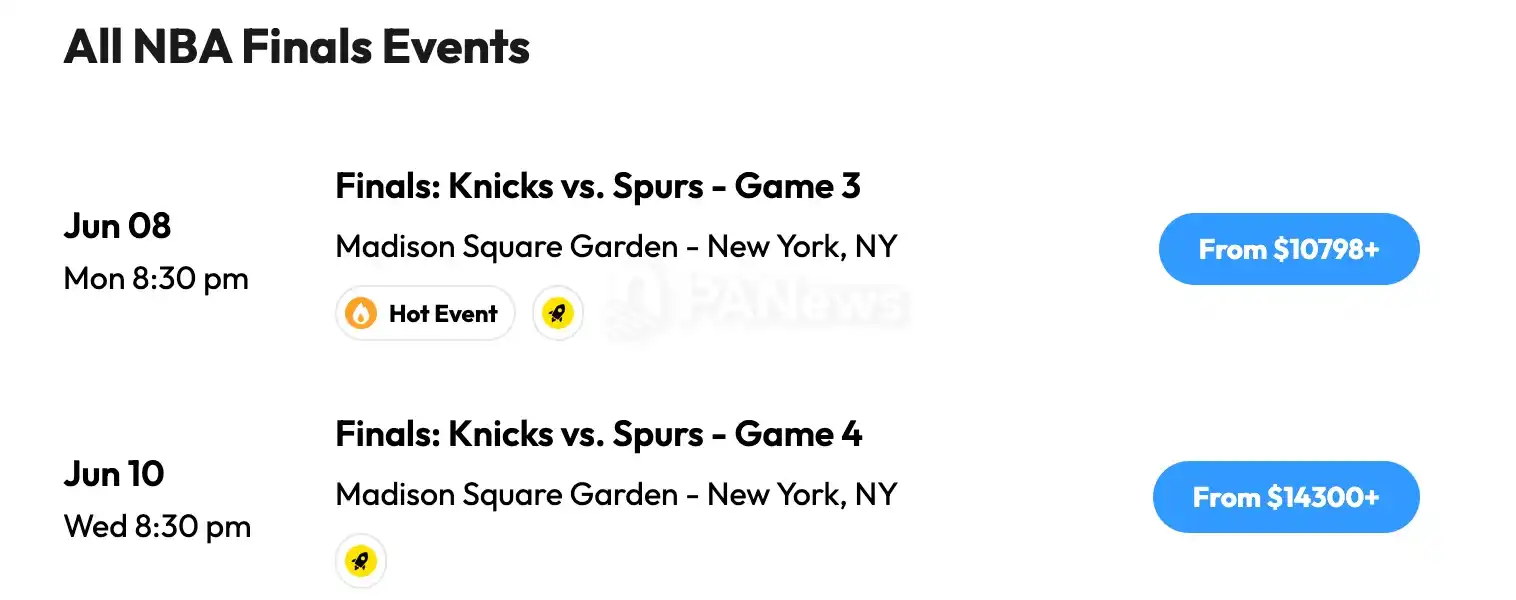
According to the latest data from ticket site TickPick, after Game 2, the lowest price for a ticket to Game 3 at Madison Square Garden has exceeded $10,000, with Game 4 prices soaring above $14,000. With the first NBA championship in 52 years seemingly within reach, the frenzy in the 'World's Capital,' New York, has been completely ignited, making this Finals series one of the most expensive live sporting events in NBA history.
What's different this time is the increasingly visible presence of prediction markets in this New York celebration. From prediction market platform Kalshi partnering with Madison Square Garden as an official partner, gaining massive exposure, to widespread fan and merchant participation in betting around probabilities, attention, and entertainment consumption. This NBA Finals is not just a major sporting event; it's also a celebration for prediction market platforms.

Prediction Markets Enter Arenas, Bars, and Fans' Daily Lives

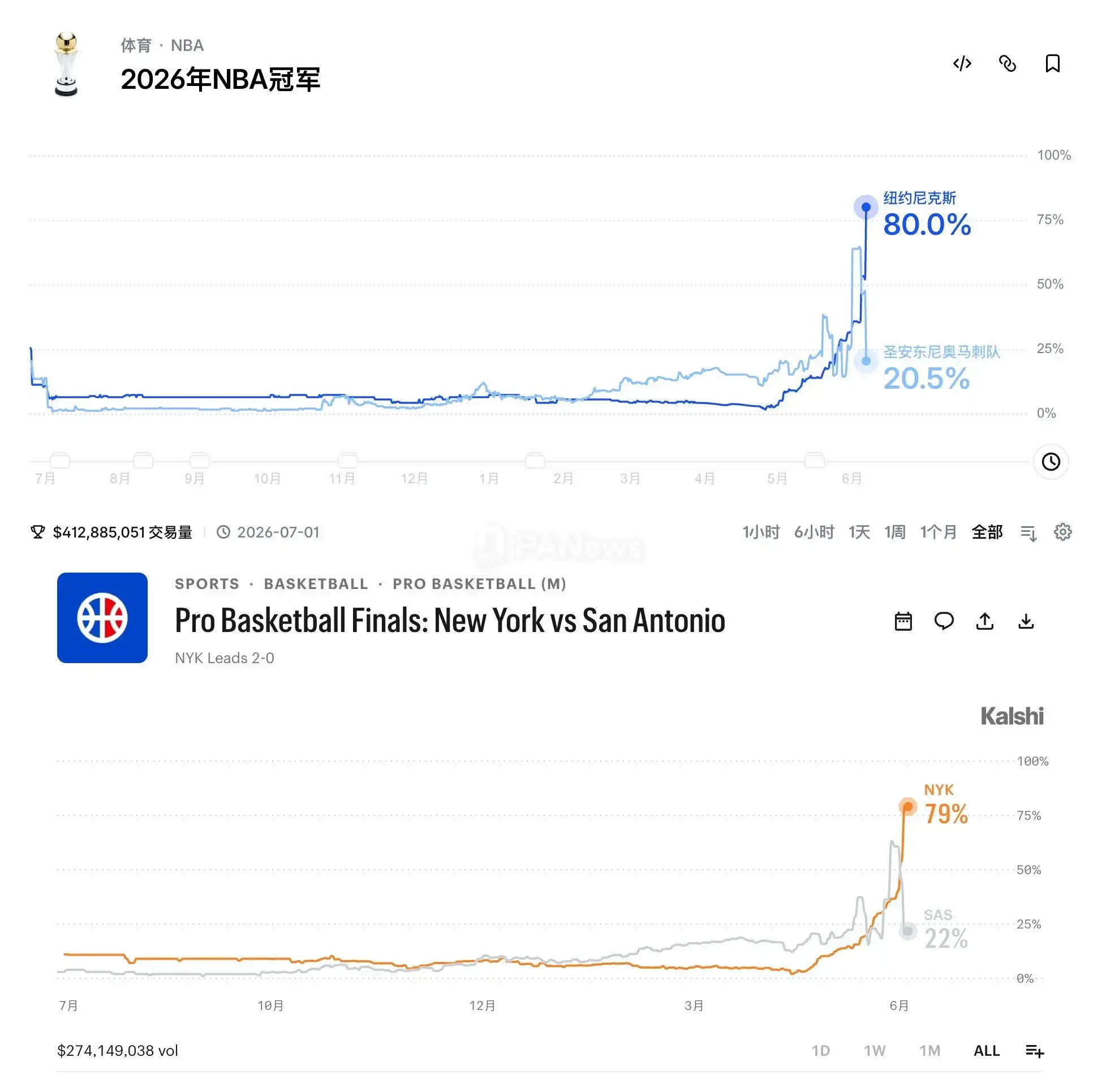
After the Finals began, prediction markets themselves became part of the game's hype. As of June 6th, Polymarket's '2026 NBA Champion' market page shows a cumulative trading volume exceeding $413 million, with a daily volume of around $2 million. Kalshi's trading volume for NBA Finals-related markets reached approximately $274 million. Additionally, derivative markets around Finals MVP, series score, player statistics, celebrity attendance, etc., continue to attract traders.
The influence of prediction markets isn't limited to online. As the Knicks' playoff run heated up, prediction markets also entered bars, arenas, and offline viewing scenarios, becoming new tools for businesses to design promotions and manage cost risks. Before Game 1 of the Finals, the Upper East Side Manhattan bar The Jeffrey launched a promotion: if the Knicks won, drinks for customers that night would be on the house.

For a small business, fulfilling such a major promotion could create significant cost pressure. The Jeffrey's approach was to buy $5,000 worth of Knicks-related contracts on Kalshi. If the Knicks won, the contract payout would cover the cost of the free drinks. Conversely, if the Knicks lost, the bar wouldn't have to provide free drinks, and the customer traffic attracted by the promotion, along with increased consumption, could offset or even cover the cost of the wager.

From an industry perspective, this case demonstrates that prediction markets aren't just tools for fans to trade on game outcomes; they can also serve as a means for businesses to manage event risk. The Jeffrey tied post-win fan enthusiasm and increased traffic to the cost of free drinks, while the Kalshi contract transformed the uncertainty of the promotion into a quantifiable, hedgeable risk. It doesn't change or rely on the game's outcome but alters how businesses design promotions around the game. It also shows the "insurance"-like utility of prediction markets.
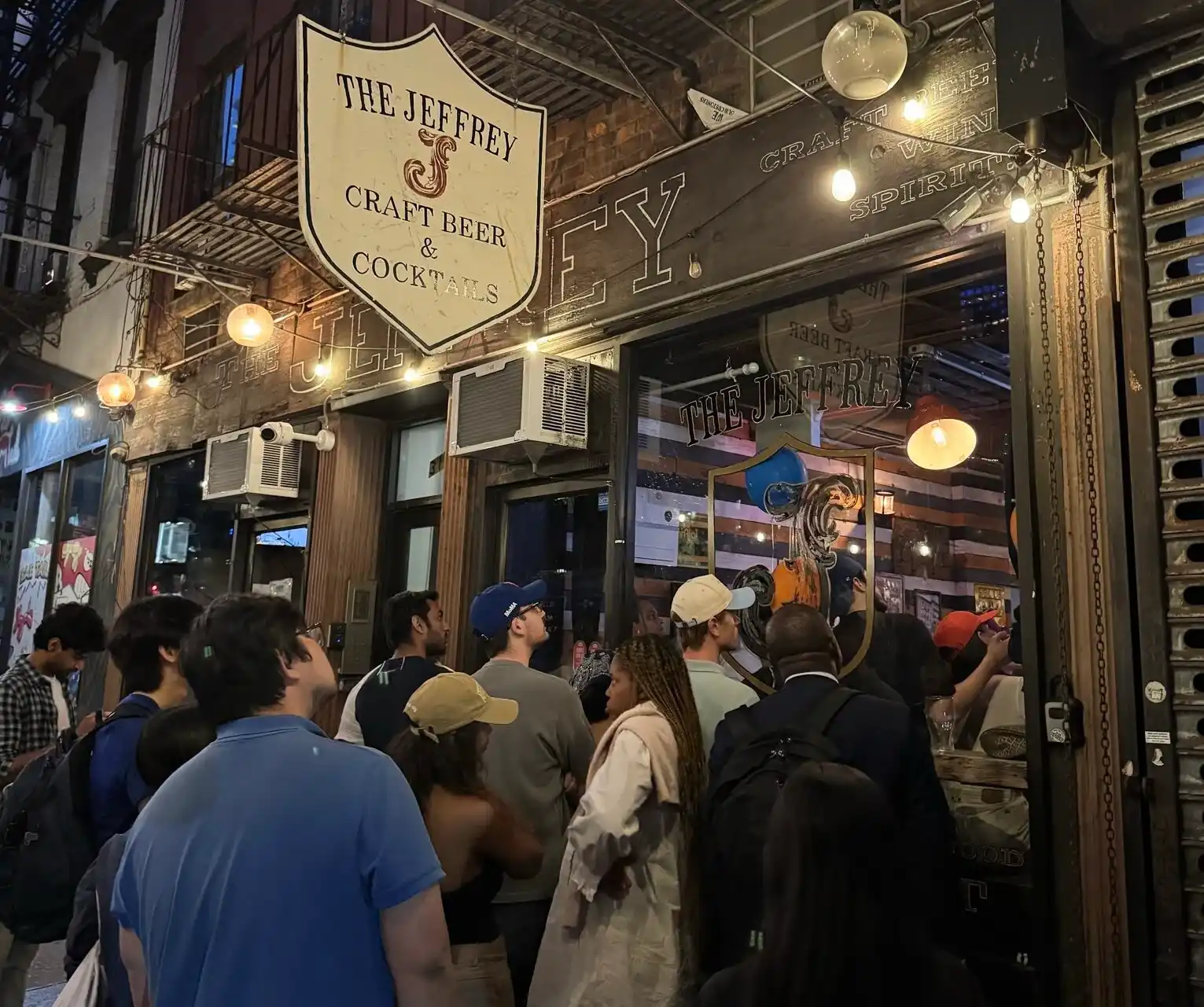
The Jeffrey's marketing strategy attracted a large number of customers

Beyond indirect marketing by small businesses, Kalshi's official partnership with Madison Square Garden has placed prediction market platforms in an even more prominent position.

In early May, Kalshi and Madison Square Garden (MSG) announced a multi-year partnership, making Kalshi the official prediction markets partner. Additionally, the MSG Concourse on the 6th floor was named the "Kalshi Concourse," and Kalshi gained exposure on in-arena and out-of-home digital screens, in-arena LEDs, MSG Networks advertising, and branded content.
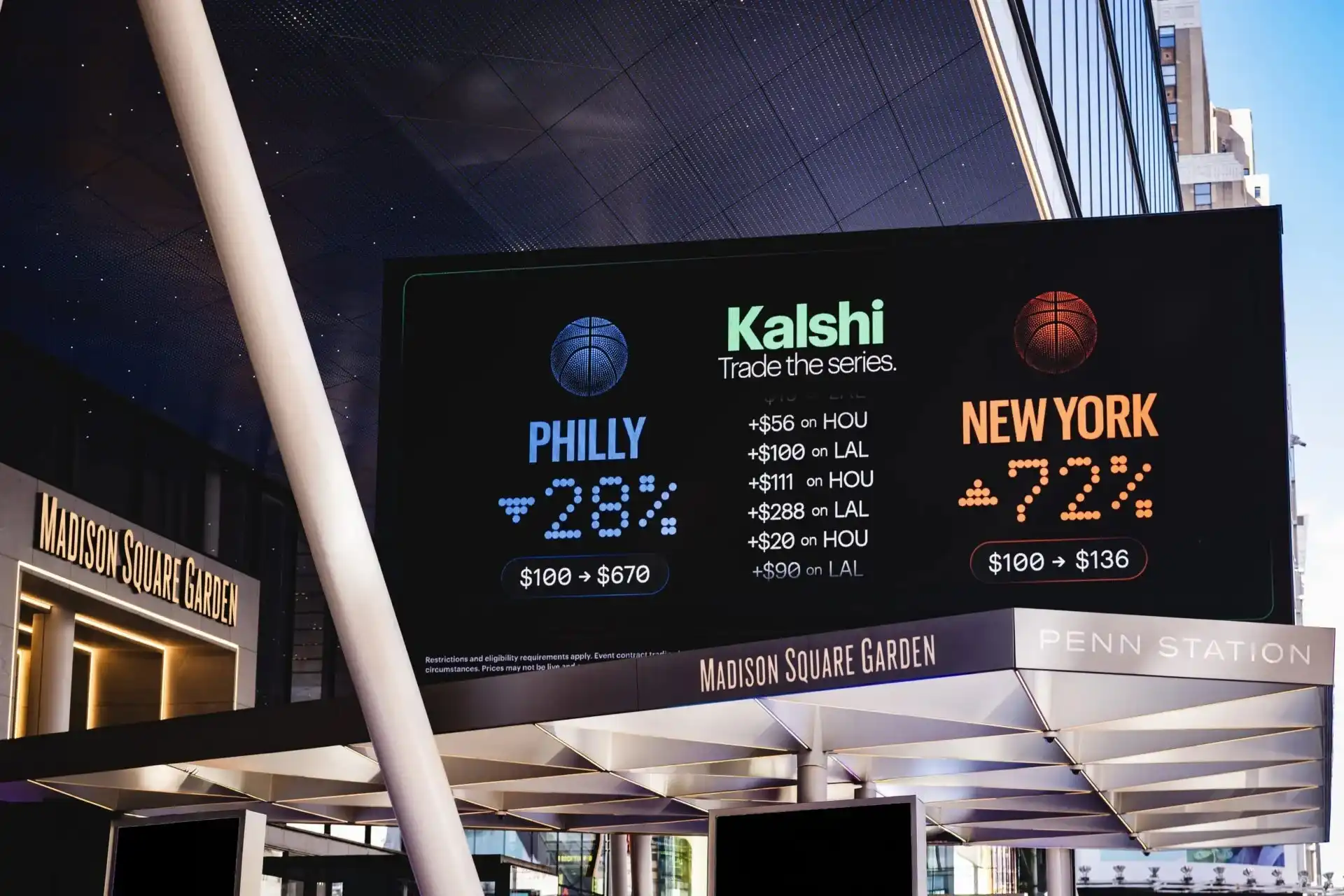
Kalshi, whose core business is predicting future events, seems to have also 'called' its own offline expansion this time. Securing the MSG partnership rights just weeks ago has now, with the Knicks reaching the Finals, rapidly become a highly representative offline branding investment. Kalshi almost perfectly timed its move. When Madison Square Garden became the focal point of national sports media and the epicenter of New York City's emotions, Kalshi had already secured a position in one of America's most iconic sports venues, moving from online trading pages to a higher-density offline exposure environment.

The Boundaries of Sports Betting Are Being Pushed Further by Prediction Markets

In reality, turning sports hype into a commercial hedging tool is not an original idea from prediction markets.

The most classic precedent is Houston furniture merchant Jim McIngvale, known as "Mattress Mack." His promotional tactic is to offer customers a refund on furniture purchases above a certain amount if a local Houston team wins a championship. Before the games, he places large bets on traditional sportsbooks supporting his hometown team.
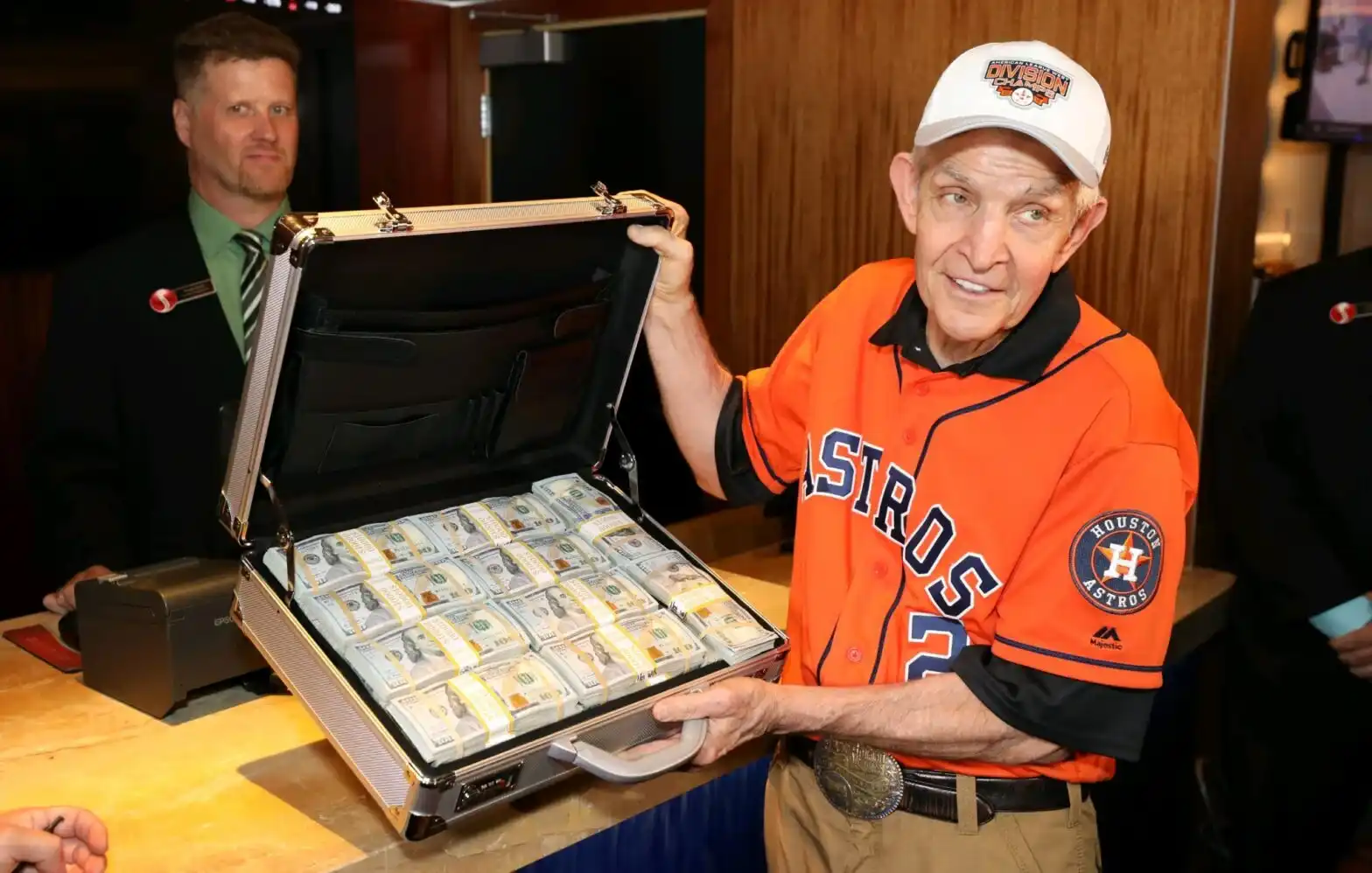
"Mattress Mack" carrying a suitcase with $3.5 million to bet on the Houston Astros

The logic behind bar The Jeffrey and Mattress Mack is essentially the same. If the team wins, Mattress Mack refunds customers, but the sportsbook payout covers that cost. If the team loses, he loses his bet, but no refunds are issued for furniture sales, and the promotion itself has already generated sales and media exposure. When the Astros won the World Series in 2022, Mattress Mack received a payout of approximately $75 million, making this model a classic case in American sports marketing.

Compared to traditional sportsbooks, prediction markets also expand the ways fans can engage with games.

Sports markets on Polymarket and Kalshi allow fans to trade around the broader narratives spilling out from a game, covering more entertaining, fragmented topics. Of course, traditional sports betting doesn't only offer win/loss markets. For example, platforms like FanDuel and DraftKings release numerous novelty bets around the Super Bowl each year, including "entertainment props" like the length of the national anthem or songs performed during the halftime show. However, restrictions on such markets vary by state, with some legal sports betting jurisdictions prohibiting them.

The difference with prediction markets is that they further expand this fun, entertainment-focused play. Traditional sportsbooks typically still revolve around the game itself and official statistics; even with novelty props, they're concentrated around a few mega-events like the Super Bowl.

Prediction markets are better at breaking down "verifiable real-world events" into contracts, making "any event priceable." For example, whether Trump will attend NBA Finals Game 3, or whether actor 'Timothee Chalamet' will attend all Knicks home games, clearly pushes the boundaries of novelty markets.
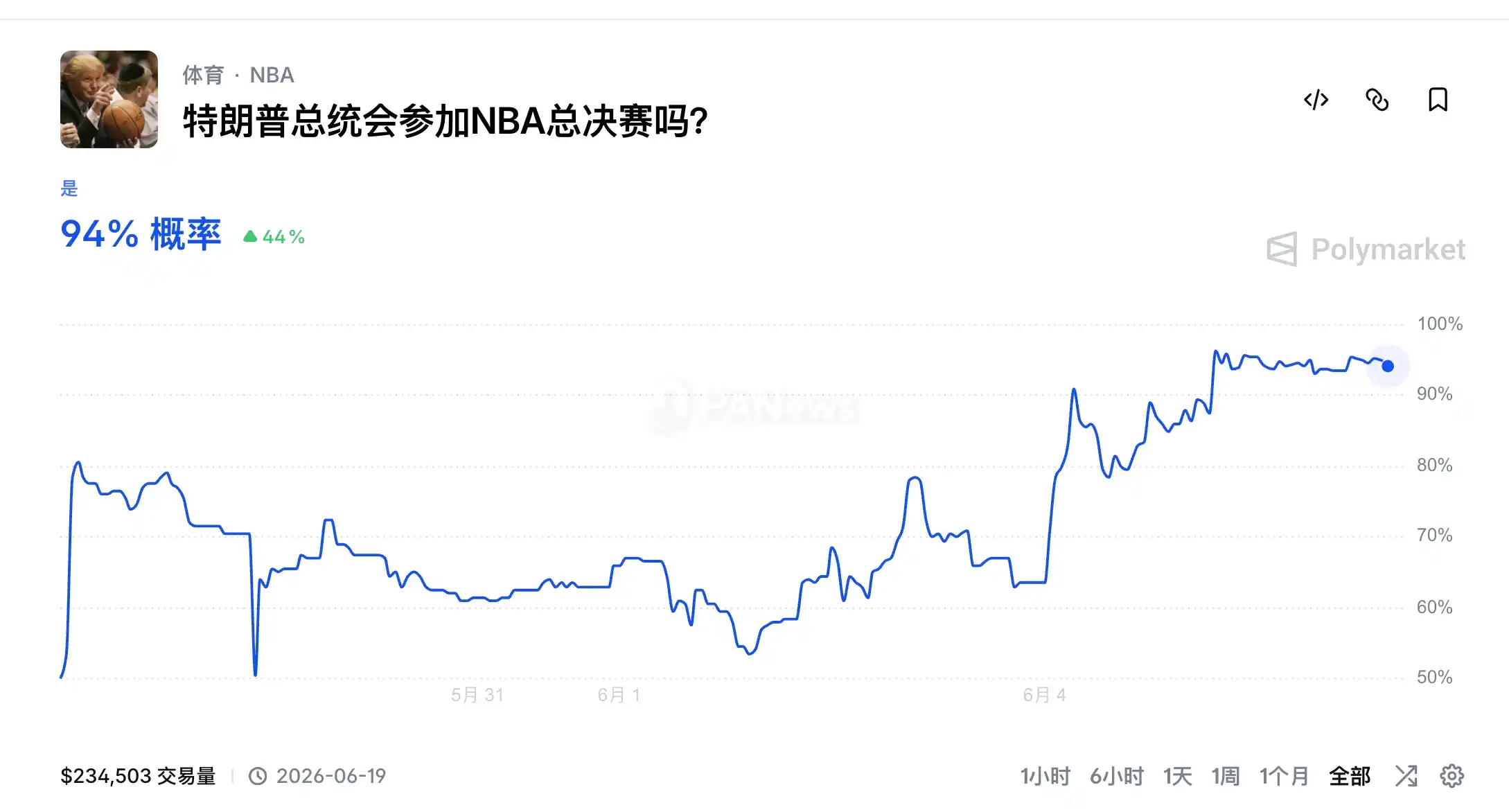
Beyond the variety of events, there are also differences in geographic and user demographic reach between the two types of platforms. Prediction markets in the U.S. can reach users 18 and older, while traditional sports betting typically requires users to be 21+. Simultaneously, prediction markets are available in all 50 states, while sports betting is currently legal in only 39 states. To some extent, the expansion of prediction markets in sports isn't just due to richer market offerings but also their ability to reach demographics and geographies that traditional sportsbooks cannot.

This is also a source of regulatory controversy. Prediction market platforms emphasize they are trading event contracts, with users buying and selling among themselves, a form closer to derivatives trading. Critics argue that when these contracts revolve around the NBA, NFL, elections, or celebrity events, the user experience is already highly similar to gambling. Especially when platforms attract younger users through social media, memes, and sports marketing, the boundaries between financial trading, entertainment, and gambling become increasingly blurred.

Players Get Involved First, NBA League Approaches Cautiously

With the rise of prediction markets, the NBA league has recognized that these platforms are becoming a new variable beyond traditional sports betting. Therefore, for the commercially-driven NBA, its attitude towards prediction markets has historically been ambiguous, characterized by cautious engagement.

At the player level, Giannis Antetokounmpo, who has become a Kalshi shareholder and will participate in the platform's marketing and offline activities, is the most representative case. This has sparked controversy. Fans worry that when an NBA superstar becomes a shareholder in a prediction market platform that can create markets around player trades, team performance, and game outcomes, even if the player themselves cannot trade NBA-related contracts, ethical boundaries are continually being nudged.

Related reading: "After $23.3 Million Bet on His Future, Why Did NBA Star Giannis Investing in Kalshi Spark Outrage?"

At the official league level, the NBA has engaged in in-depth discussions with the CFTC regarding an integrity framework for prediction markets. In its filing to the CFTC, the NBA emphasized that sports event contracts require comprehensive regulation to protect game integrity and public trust. The NBA also argued that athletes, referees, league and team personnel should be prohibited from trading contracts related to their league's games and events, that platforms should provide specific trader identities to the league during suspicious transaction investigations, and that official league data should be used for settlement.

NBA Commissioner Adam Silver's public statements reflect this stance. Discussing Giannis's investment in Kalshi during All-Star Weekend, he said the league is viewing prediction markets similarly to how it views sportsbooks. He noted that under the collective bargaining agreement, players can make minimal investment percentages in sports betting companies, and the league applies this rule to prediction markets. Silver further stated that Giannis's investment in Kalshi, being below 1%, did not violate relevant rules. However, he acknowledged that prediction markets are developing rapidly, and their ultimate permissible form may depend on courts and Congress.
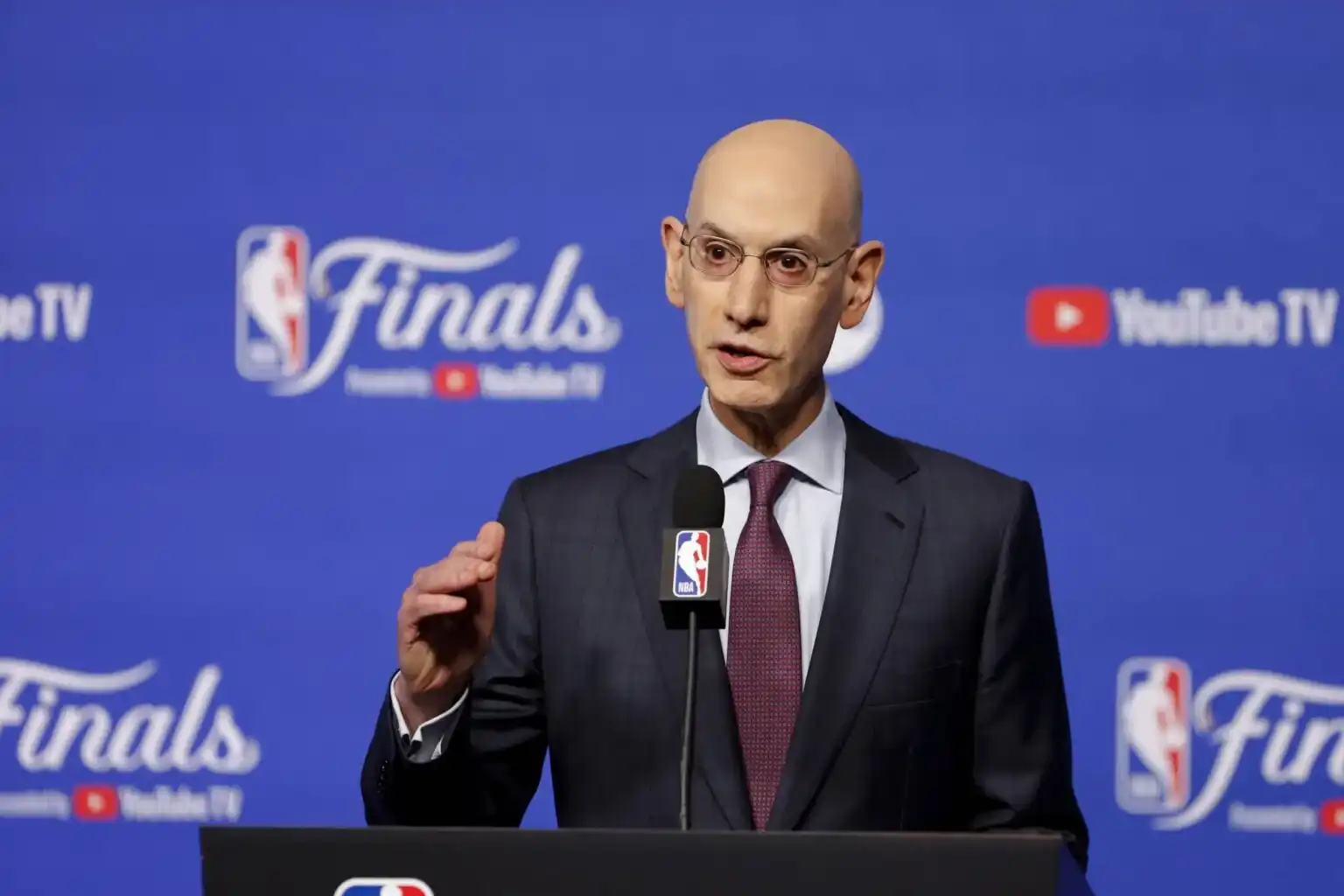
NBA Commissioner Adam Silver tried to quell controversy over Giannis becoming a Kalshi shareholder, calling the investment "minuscule"

But among fan communities, the NBA's increasingly close ties with prediction markets have drawn strong opposition. On the r/nba subreddit, numerous posts about the potential for insider trading risks involving Kalshi, Polymarket, and the NBA have sparked extensive discussion and criticism.

Many fans believe that if player investment or endorsement of prediction markets becomes normalized, future games could become "untrustworthy" due to insider trading and conflicts of interest. Many users also express concerns about league commercialization, younger user addiction, and game integrity. Comments on news about Giannis now almost invariably include fan jabs suggesting he'll participate in betting on prediction markets.
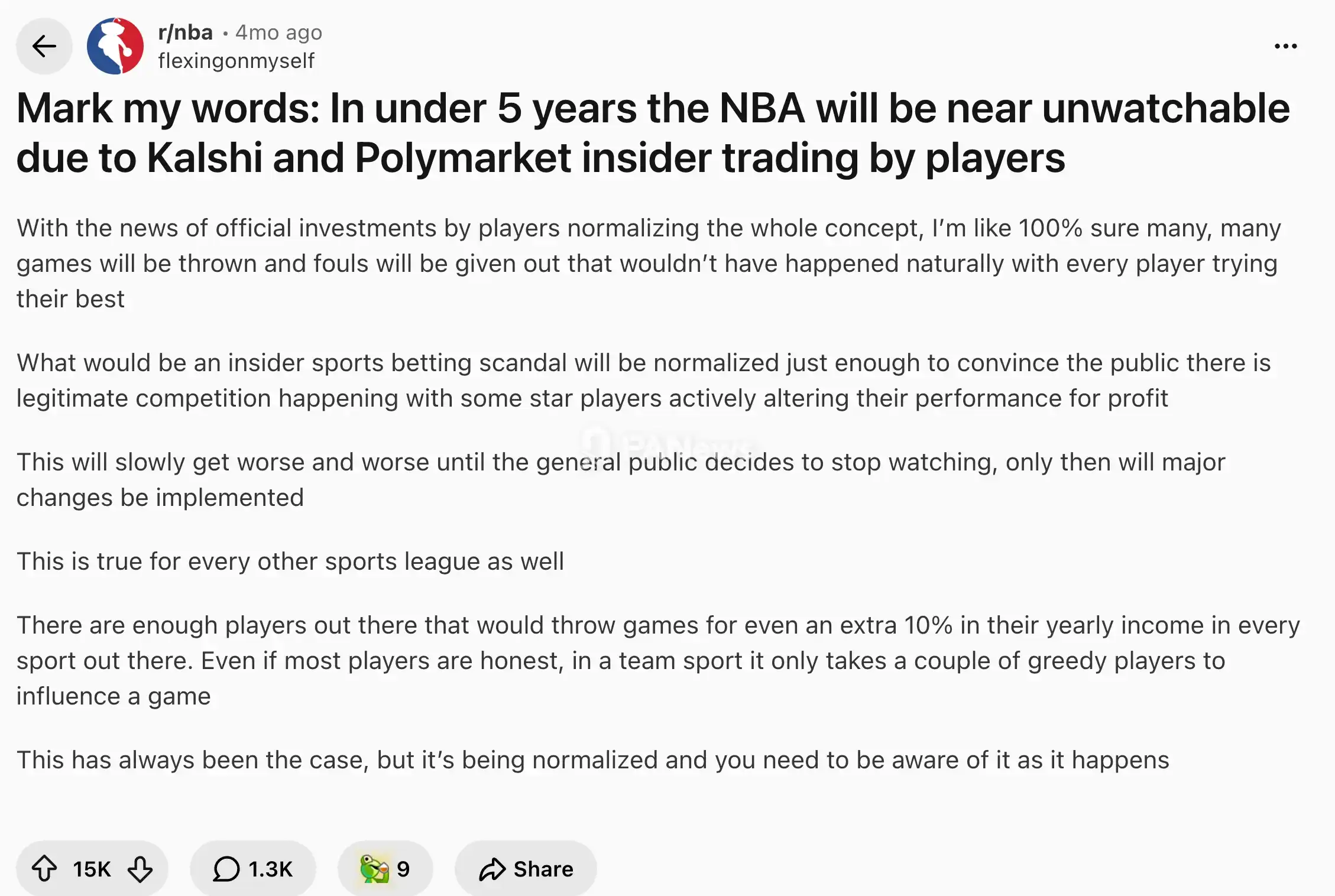
These Reddit discussions don't represent all NBA fans, but they reflect a very real sentiment. Many fans aren't just objecting to 'betting'; they worry that the NBA's official, extensive cooperation with betting companies and prediction markets might increasingly influence games and players through odds and trading contracts.

This concern isn't entirely unfounded. Recently, former U.S. Representative George Santos was investigated for allegedly engaging in suspicious trading on Kalshi related to whether he would attend the State of the Union address. While not a sports case, it highlights the most sensitive risk of prediction markets: when event outcomes can be influenced by a few insiders, market trading is no longer just 'prediction' but can become an incentive for the behavior itself.

And the NBA Finals are becoming a stress test for prediction markets entering mainstream sports. For both the platforms and the NBA, this represents both a new commercial opportunity and a new test of trust.


Pertanyaan Terkait

QWhat are the main examples of how prediction markets are being used during the 2026 NBA Finals, according to the article?

APrediction markets like Kalshi and Polymarket are being used in several ways: first, Kalshi is the official partner of Madison Square Garden, gaining major offline exposure. Second, venues like the bar The Jeffrey use prediction market contracts to hedge the financial risk of promotional offers tied to the Knicks' performance. Third, the platforms themselves have attracted billions in trading volume on outcomes like the champion and Finals MVP. Finally, prediction markets offer more diverse and accessible entertainment-focused contracts than traditional sportsbooks, such as betting on celebrity appearances at games.

QHow did the bar 'The Jeffrey' use a prediction market to manage the risk of its promotion?

ABefore Game 1, The Jeffrey offered a promotion: if the Knicks won, drinks for the night would be free. To hedge the potential cost of this promotion, the bar purchased $5,000 worth of Knicks-related contracts on Kalshi. If the Knicks won, the payout from the contracts would cover the free-drinks cost. If the Knicks lost, the bar wouldn't have to offer free drinks, and the increased traffic and sales from the promotion would likely offset the cost of the initial contract purchase.

QWhat is a key regulatory and public perception concern regarding prediction markets in sports, as mentioned in the article?

AA key concern is the blurring line between financial trading, entertainment, and gambling, especially regarding the integrity of the game. Critics argue that when contracts are based on NBA games or player-related events, it closely resembles sports betting. There is particular worry about conflicts of interest if players, like Giannis Antetokounmpo (a Kalshi investor), have a stake in these markets, even if they don't bet on NBA events directly. The article cites the case of former Congressman George Santos, whose alleged trading on his own attendance at an event shows the risk of 'insider' actions influencing market outcomes.

QWhat is the traditional marketing model that 'Mattress Mack' represents, and how does it compare to The Jeffrey's use of prediction markets?

AJim 'Mattress Mack' McIngvale represents the traditional model of using sports betting to hedge business promotions. He would offer customers refunds on furniture purchases if a local Houston team won a championship. Simultaneously, he would place large bets on that team winning with traditional sportsbooks. The payout from a win would cover the refund costs; a loss meant he lost his bet but kept the sales revenue. The Jeffrey's model is similar in concept but uses prediction market contracts instead of traditional sportsbooks to hedge its promotional risk, demonstrating a new tool for achieving the same risk management goal.

QWhat advantages do prediction markets like Kalshi and Polymarket have over traditional sports betting platforms in the US, according to the article?

APrediction markets have two main advantages over traditional sports betting platforms in the US. First, they offer greater accessibility: they are available to users 18 and older (vs. 21+ for most sports betting) and are accessible in all 50 states (vs. only 39 states where sports betting is legal). Second, they offer a wider and more granular range of event contracts. While traditional sportsbooks may offer novelty bets for mega-events like the Super Bowl, prediction markets can create contracts on virtually any verifiable real-world event, such as whether a specific celebrity will attend a game, expanding the boundary of entertainment-focused 'bets'.

Bacaan Terkait

Xpeng dan Nio Gencar di Komputasi, Ideal Ganti Arsitektur

Pada 15 Juni, Li Auto memperkenalkan chip self-driving buatan sendiri, Ma He M100, yang dikembangkan khusus untuk L9 Livis generasi baru. CTO Li Auto, Xie Yan, menekankan bahwa fokusnya bukan hanya meningkatkan kecepatan, tetapi mengubah arsitektur chip secara fundamental. Di tengah tren produsen mobil yang berlomba-lomba mengembangkan chip sendiri pada tahun 2026, pesaing seperti Nio (chip Shenji NX9031), Xpeng (chip Turing), dan Huawei (MDC 810 Pro) umumnya mengandalkan angka TOPS (komputasi) sebagai senjata pemasaran utama. Namun, Li Auto memilih jalur berbeda dengan mengubah logika arsitektur dasar dari chip tersebut. Ma He M100 mengadopsi arsitektur Dynamic Data Flow, bukan arsitektur von Neumann tradisional. Pendekatan ini dirancang untuk komputasi paralel matriks berskala besar yang diperlukan untuk inferensi model AI (seperti VLA), dengan mengurangi bolak-balik data antara memori dan unit pemrosesan. Hasil klaim Li Auto adalah efisiensi komputasi efektif 3 kali lipat dibandingkan Nvidia Thor U dan penurunan latency 40%. Keberhasilan arsitektur ini mendapat pengakuan eksternal melalui penerimaan makalahnya di konferensi akademis bergengsi ISCA 2026. Namun, keunggulan 3x ini sangat tergantung pada algoritma Li Auto (VLA2.1) dan mungkin tidak berlaku untuk tugas komputasi umum. Dengan chip ini, Li Auto menyelesaikan rantai teknologi "full-stack" yang meliputi chip, compiler, sistem operasi (Star Ring OS), model AI, dan pengontrol domain, menciptakan ekosistem tertutup yang independen dari pemasok seperti Nvidia. Dalam peluncuran ini, CEO Li Xiang juga memperkenalkan visi "Mobil Cerdas Embadied" ("Four-in-One Embodied AI Car"), yang mendefinisikan mobil listrik sebagai asisten hidup yang dapat merasakan, berpikir, dan berkembang, menggeser persaingan dari sekadar fitur konfigurasi (seperti kulkas atau layar) ke kemampuan sistem. Li Auto menetapkan target ambisius untuk model self-driving Ma He VLA agar menyamai performa Tesla FSD V14 pada kuartal keempat tahun ini, dengan rincian peningkatan OTA bertahap mulai Juli hingga Desember. Di balik inovasi teknologi, tantangan finansial tetap ada. Pendapatan Li Auto turun pada Q4 2025, dengan margin yang menyempit. Namun, anggaran R&D tetap tinggi (sekitar 12 miliar yuan, 50% untuk AI). Target penjualan 2026 adalah 550.000 unit, sementara realisasi 2025 adalah 406.000 unit. Pengujian nyata akan dimulai pada kuartal ketiga dengan OTA pertama pada Juli dan peluncuran model baru. Sertifikasi akademis untuk arsitektur chip adalah langkah awal, tetapi penerimaan pasar dan kinerja dalam kondisi mengemudi sehari-hari akan menjadi penentu kesuksesan akhir.

marsbit24m yang lalu

Xpeng dan Nio Gencar di Komputasi, Ideal Ganti Arsitektur

marsbit24m yang lalu

Tahun Pertama Penerapan AI, Hanya Bilang Iya, Abai Risiko? Log Pelayaran Pengembangan Perangkat Lunak Sepenuhnya Sumber Terbuka

Tahun 2026 disebut sebagai era aplikasi AI. Kode dibuat semakin cepat, namun dengan pengawasan yang semakin sedikit saat diterapkan. Risiko dari kode yang ditulis AI sering kali tersembunyi dalam kode yang tampak benar secara sintaksis dan melewati semua pemeriksaan, tetapi dapat menyebabkan kebocoran data atau kerugian aset. Contoh nyata adalah insiden konfigurasi oracle cbETH Moonwell, di mana kesalahan semantik dalam harga melewati proses pengembangan dan pemeriksaan, mengakibatkan kerugian finansial yang signifikan. Risiko pengkodean AI telah berevolusi dari pelengkap lokal ke agen yang dapat membaca file, mengubah konfigurasi, menginstal dependensi, dan menghasilkan skrip infrastruktur, sehingga menciptakan jalur risiko yang lebih panjang dan sulit dilacak dalam rekayasa perangkat lunak. Untuk mengatasi masalah ini, Narwhal-Lab Universitas Peking meluncurkan proyek sumber terbuka **Narwhal AI Code Risks**. Proyek ini mengumpulkan dan mengkategorikan fragmen informasi risiko yang tersebar ke dalam tiga lapisan: `cases/` (peristiwa nyata), `inferred/` (sinyal awal), dan `scenarios/` (skenario risiko tipikal). Risiko diklasifikasikan menjadi 7 kategori: Rantai Pasok, Kerentanan Tingkat Kode, Konfigurasi Cloud & Infrastruktur, Risiko Agen, Risiko Domain Vertikal, Risiko Kekayaan Intelektual & Kepatuhan, serta Faktor Manusia. Tujuan proyek ini adalah untuk mengubah kasus risiko menjadi pengetahuan yang dapat digunakan kembali, membantu pengembang mengidentifikasi masalah serupa, menjadi basis sampel bagi peneliti keamanan, serta menyediakan aturan deteksi dan tolok ukur bagi vendor alat. Dengan menyediakan "log pelayaran" sumber terbuka untuk dunia perangkat lunak, proyek ini bertujuan untuk mencatat dan meneruskan pengalaman, sehingga pihak lain tidak perlu terjebak dalam perangkap yang sama.

marsbit25m yang lalu

Tahun Pertama Penerapan AI, Hanya Bilang Iya, Abai Risiko? Log Pelayaran Pengembangan Perangkat Lunak Sepenuhnya Sumber Terbuka

marsbit25m yang lalu

Landasan Valuasi Triliunan Dollar SpaceX: Siapa yang Mengambil Alih Pengeluaran Modal Tahunan Ratusan Miliar Milik Musk?

Penulis berpendapat bahwa peluang investasi terbesar dalam eksplosifnya SpaceX saat ini bukan pada saham SpaceX itu sendiri (yang mahal dan masih rugi), melainkan pada para pemasoknya. Ini mengikuti pola sejarah seperti rantai pasokan Apple, Tesla, dan NVIDIA, di mana perusahaan "super terminal" mendorong pertumbuhan luar biasa bagi pemasoknya. SpaceX mengalokasikan ratusan miliar dolar untuk pengeluaran modal tahunan, didanai terutama oleh bisnis Starlink yang menguntungkan. Uang ini dialirkan ke pengembangan roket (untuk menurunkan biaya peluncuran) dan AI/pusat data orbital. Pesanan pembelian besar-besaran ini mengalir ke tiga jenis pemasok: 1. **Pengganti yang Sulit:** NVIDIA (GPU & CUDA), Eutelsat (spektrum satelit), Filtronic (penguat sinyal), Materion (berilium), STMicroelectronics (chip antena). 2. **Pengganti yang Mahal:** Honeywell (kontrol penerbangan), Carpenter Technology (baja khusus), Hexcel (serat karbon), Broadcom (pertukaran data). 3. **Pemasok Produksi Massal:** Wistron NeWeb (perakitan terminal Starlink), dan beberapa perusahaan Tiongkok seperti Shenzhen Sunway (konektor), Paixin New Materials (tempaan), Western Superconductor (paduan niobium), Yingliu Co. (cetakan), serta perusahaan seperti Trimble (sinkronisasi waktu) dan Astronics (distribusi daya). Mengapa sekarang adalah saat yang tepat? (1) Volume pembelian SpaceX baru akan meningkat pesat (target 100 peluncuran/tahun, 3000 juta terminal Starlink). (2) Transparansi data melalui IPO memungkinkan pelacakan pesanan. (3) Siklus rantai pasokan mirip dengan tahap awal Tesla (sekitar 2018), menawarkan peluang pertumbuhan jangka panjang. Kesimpulannya, alih-alih membeli saham SpaceX yang fantastis, investor dapat mempertimbangkan perusahaan-perusahaan di balik layar yang menerima pesanan besar dan stabil, terlepas dari volatilitas harga saham SpaceX. Namun, setiap perusahaan perlu dianalisis secara individual dengan mempertimbangkan risiko seperti siklus komoditas, geopolitik, dan perubahan teknologi.

marsbit1j yang lalu

Landasan Valuasi Triliunan Dollar SpaceX: Siapa yang Mengambil Alih Pengeluaran Modal Tahunan Ratusan Miliar Milik Musk?

marsbit1j yang lalu

Landasan Valuasi Triliunan Dolar SpaceX: Siapa yang Mengambil Porsi Belanja Modal Ratusan Miliar Elon Musk Tiap Tahun?

Pondasi valuasi triliunan dolar SpaceX: Siapa yang membagi ratusan miliar belanja modal tahunan Elon Musk? Alih-alih berinvestasi langsung di SpaceX yang IPO dengan valuasi tinggi dan masih rugi, peluang mungkin lebih baik pada rantai pasokannya. Sejarah menunjukkan bahwa raksasa teknologi seperti Apple, Tesla, dan Nvidia telah menciptakan kekayaan besar bagi pemasok mereka. SpaceX beroperasi dengan model: Layanan internet satelit Starlink menghasilkan uang → mendanai pengembangan roket untuk menekan biaya peluncuran → meluncurkan perangkat keras AI ke luar angkasa dengan biaya rendah → menyewakan daya komputasi AI untuk pendapatan baru. Siklus ini menghasilkan pesanan pembelian ratusan miliar dolar AS setiap tahun. Pemasok dapat dikategorikan dalam tiga kelompok: 1. **Pengganti sulit atau tidak mungkin**: NVIDIA (GPU untuk superkomputer), Eutelsat (spektrum radio satelit), Filtronic (amplifier sinyal satelit), Materion (logam berilium), STMicroelectronics (chip antena). 2. **Secara teknis dapat diganti, tetapi biaya peralihannya tinggi**: Honeywell (sistem kendali penerbangan), Carpenter Technology (baja paduan khusus), Hexcel (serat karbon), Broadcom (pertukaran data), Linde (gas industri). 3. **Memerlukan produksi massal yang stabil dengan biaya rendah**: Perusahaan-perusahaan ini memasok komponen untuk perangkat terminal Starlink dan roket. Contohnya termasuk Wistron NeWeb (kontrak perakitan), serta beberapa perusahaan China seperti Sunway Communication (konektor), Paike New Materials (komponen tempa), Western Superconducting (paduan niobium), Yingliu Co (komponen cor). Perusahaan seperti Trimble, Astronics, dan CTS juga menyediakan komponen penting. Mengapa sekarang adalah saat yang tepat? Karena volume pembelian SpaceX baru akan meningkat (target 100 peluncuran/tahun, 30 juta terminal Starlink), transparansi melalui IPO memungkinkan pelacakan pesanan, dan siklus rantai pasokan serupa dengan Tesla pada 2018 - masih di tahap awal pertumbuhan yang curam. Intinya: Pesanan pembelian tahunan SpaceX yang besar, terlepas dari harga sahamnya, akan mengalir ke pemasoknya dan menjadi pendapatan tetap mereka. Inilah peluang yang mungkin lebih dapat diakses daripada berinvestasi langsung di saham SpaceX.

链捕手1j yang lalu

Landasan Valuasi Triliunan Dolar SpaceX: Siapa yang Mengambil Porsi Belanja Modal Ratusan Miliar Elon Musk Tiap Tahun?

链捕手1j yang lalu

Trading

Spot
Futures

Artikel Populer

Cara Membeli ZEN

Selamat datang di HTX.com! Kami telah membuat pembelian Horizen (ZEN) menjadi mudah dan nyaman. Ikuti panduan langkah demi langkah kami untuk memulai perjalanan kripto Anda.Langkah 1: Buat Akun HTX AndaGunakan alamat email atau nomor ponsel Anda untuk mendaftar akun gratis di HTX. Rasakan perjalanan pendaftaran yang mudah dan buka semua fitur.Dapatkan Akun SayaLangkah 2: Buka Beli Kripto, lalu Pilih Metode Pembayaran AndaKartu Kredit/Debit: Gunakan Visa atau Mastercard Anda untuk membeli Horizen (ZEN) secara instan.Saldo: Gunakan dana dari saldo akun HTX Anda untuk melakukan trading dengan lancar.Pihak Ketiga: Kami telah menambahkan metode pembayaran populer seperti Google Pay dan Apple Pay untuk meningkatkan kenyamanan.P2P: Lakukan trading langsung dengan pengguna lain di HTX.Over-the-Counter (OTC): Kami menawarkan layanan yang dibuat khusus dan kurs yang kompetitif bagi para trader.Langkah 3: Simpan Horizen (ZEN) AndaSetelah melakukan pembelian, simpan Horizen (ZEN) di akun HTX Anda. Selain itu, Anda dapat mengirimkannya ke tempat lain melalui transfer blockchain atau menggunakannya untuk memperdagangkan mata uang kripto lainnya.Langkah 4: Lakukan trading Horizen (ZEN)Lakukan trading Horizen (ZEN) dengan mudah di pasar spot HTX. Cukup akses akun Anda, pilih pasangan perdagangan, jalankan trading, lalu pantau secara real-time. Kami menawarkan pengalaman yang ramah pengguna baik untuk pemula maupun trader berpengalaman.

206 Total TayanganDipublikasikan pada 2024.12.12Diperbarui pada 2026.06.02

Cara Membeli ZEN

Diskusi

Selamat datang di Komunitas HTX. Di sini, Anda bisa terus mendapatkan informasi terbaru tentang perkembangan platform terkini dan mendapatkan akses ke wawasan pasar profesional. Pendapat pengguna mengenai harga ZEN (ZEN) disajikan di bawah ini.

活动图片