AI Competition's New Battlefield: Long-term Memory Becomes the Pain Point, How Users Can Secure Their Own Context Ownership

marsbitDipublikasikan tanggal 2026-06-02Terakhir diperbarui pada 2026-06-02

Abstrak

A new front is emerging in the AI competition: user ownership of long-term memory and context. As AI models like ChatGPT evolve from chat tools into persistent digital assistants that learn user preferences and workflows, a critical question arises: who owns this accumulated "memory"? Currently, this personalized data is siloed within each platform (e.g., OpenAI, Anthropic, Google), creating a fragmented experience when users switch models. The article highlights ZetaChain's strategic pivot from blockchain interoperability to addressing this AI "memory" challenge. Its new focus is on building a "Private Memory Layer" and an "AI Consumer Layer." Through its consumer product Anuma, ZetaChain aims to give users encrypted, portable memory that can be used across different AI models. This system also envisions programmable, auditable permissions for AI agents and a framework where user knowledge can be monetized as shareable assets. Ultimately, ZetaChain's transformation reflects a broader infrastructure shift. The future bottleneck is less about raw model capability and more about continuous context, user-controlled identity, and permission management across multiple collaborating AI agents. The company's ZETA token is being repositioned as an "AI infrastructure token" to facilitate access, payments, and permissions within this proposed ecosystem. The core narrative advocates for returning control of personal context and AI relationships to users, rather than leaving them locke...

Author: Zen, PANews

You spent half a year training ChatGPT to understand your work habits, writing style, and long-term projects. It learned how you like to revise articles, which companies you often follow, and gradually came to understand your preferences for content structure, tone, and information density.

But one day, a newer, more powerful model appears. You open Claude, Gemini, or DeepSeek, and find yourself having to start all over again. The new model doesn't know you, isn't aware of the work context you've accumulated over the past months, and doesn't understand how you think, write, or make decisions.

Over the past two years, the most important competition in the AI industry revolved around "model capabilities." Whose reasoning was stronger, whose context window was longer, whose coding ability was better—these factors almost decided everything. But now, a new issue is emerging: AI is getting to know you better, but who exactly does this "understanding" belong to?

Role Shift: AI Transforms from Chat Tool to Personal Digital Assistant

In November 2022, the AI chatbot ChatGPT debuted, sparking a global chat craze. It reached 100 million monthly active users in just two months, becoming the fastest-growing consumer application in history. At that time, large language models were more like an "advanced search." Users asked AI questions, it generated instant answers, and when the conversation ended, the relationship also ended.

But in recent years, the role of AI has been undergoing a significant shift. As reasoning capabilities, coding abilities, and tool-calling functionalities have continuously improved, AI has begun to deeply integrate into real workflows. More and more people are using it to write code, organize information, analyze data, plan trips, manage schedules, and even for long-term participation in content creation and business decisions.

In many cases, users are no longer just "asking AI questions" but are engaging in long-term collaboration with AI. It starts to understand your working style, expression habits, and long-term goals, begins to consistently participate in the same project, the same workflow, and even gradually takes on some execution tasks. To some extent, AI is evolving from a one-time Q&A tool into a persistently available personal digital assistant.

And as model capabilities have significantly increased, the capabilities of top products have increasingly converged, and with AI being used long-term and extensively, new issues have begun to surface.
Once AI begins long-term collaboration, "memory"—the system storing and recalling past experiences to improve decision-making and overall performance—ceases to be just an inconsequential database. In many application scenarios, the bottleneck is no longer the model's reasoning level, but the capabilities related to long-term memory and context management. Cloudflare has also directly labeled agentic memory as one of the biggest challenges and fastest-developing areas in current AI infrastructure.

Leading AI companies have also realized that long-term memory is becoming part of the product experience. OpenAI has split ChatGPT's memory into saved memories and reference chat history. The former saves information users wish to retain long-term, while the latter allows ChatGPT to extract useful content from past conversations for subsequent personalized responses. Gemini has also begun learning user preferences based on prior conversations. Claude has introduced Memory and supports memory import and export.

Platform Silos Turn AI 'Memory' into a New Industry Battlefield

But the problem is that these memory capabilities are largely still confined to their respective platforms, belonging only to the platform's independent account systems and product environments—they remain isolated islands. Although Anthropic supports memory import/export, it currently functions more like a migration tool for Claude rather than a universal memory standard jointly adopted by various companies.

And this is precisely the gap ZetaChain aims to fill. After fully pivoting to AI, ZetaChain began extending the concept of "ownership," originally from the crypto world, further into AI memory and user context. What it hopes to build is not just a chat product, but a privacy memory layer (Private Memory Layer) independent of model platforms, allowing users to truly own their long-term memories, behavioral preferences, and AI context.
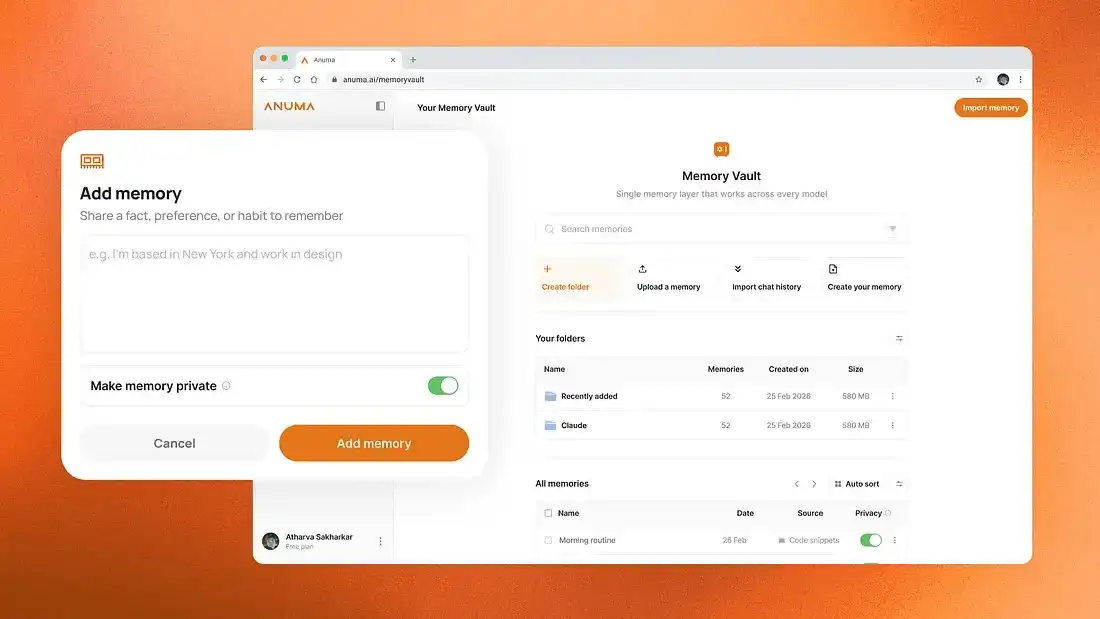
ZetaChain's consumer AI product, Anuma, advocates for users to own a set of encrypted private memory, supporting seamless use across mainstream AI models like ChatGPT, Claude, Gemini, etc. Users don't have to rebuild context, preferences, and work habits every time they switch models. Instead, users control access permissions and bring their historical memory to different models and agents.

As AI gradually accumulates users' usage preferences, writing habits, workflows, and historical conversations, the so-called "memory" will increasingly resemble a layer of "personality mirror." It not only determines whether a model's responses align with user preferences but may also determine whether the model, when making decisions on your behalf in the future, acts according to your habits and values.

Beyond giving users ownership of memory and allowing them to choose models with different strengths for different tasks, Anuma is also building a programmable, auditable, and revocable permission system. It allows AI agents to read records once, with permissions revocable at any time, and all permission changes can be recorded and tracked on-chain.

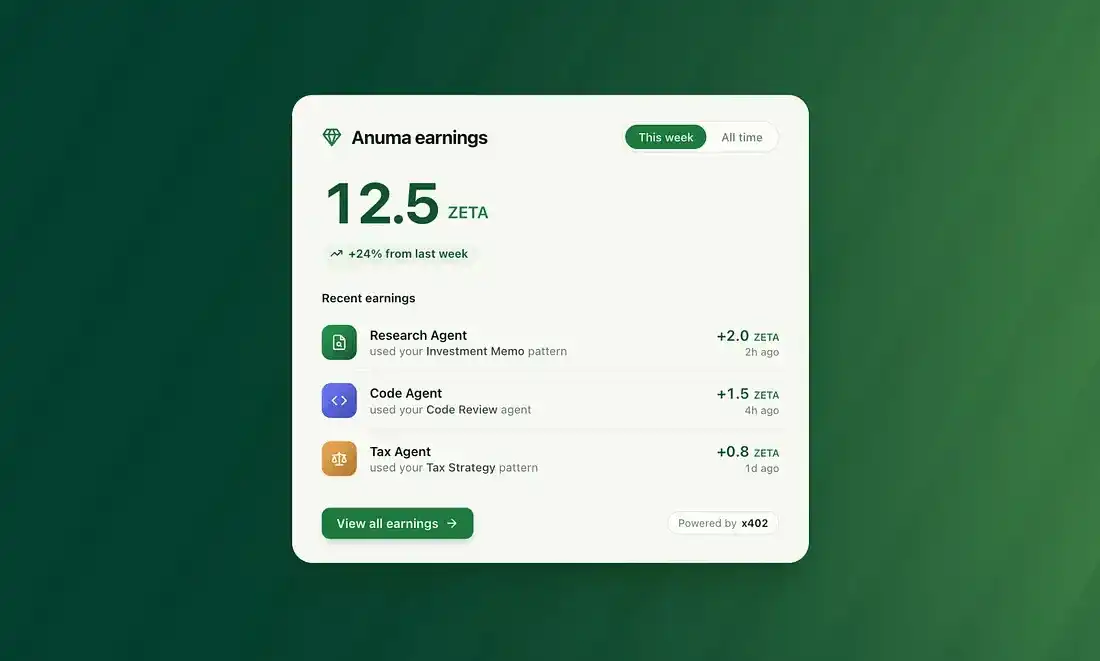
Moreover, users' memory and knowledge graphs can become assets that can be shared, authorized, and monetized without exposing raw data. This enables professional users such as investors, doctors, lawyers, and developers to encapsulate their expertise into agents, publish them to an Agent Marketplace, and earn revenue when others call upon them.

From Cross-Chain to Cross-AI Platform: Why Did ZetaChain Pivot?

What enables Anuma to achieve these functions is the underlying infrastructure, Private Memory Layer, developed by ZetaChain. As an infrastructure for AI-focused private memory, identity, permissions, payments, and agents, it aims to allow applications and agents to collaborate across models while users retain control.

ZetaChain had long focused on cross-chain interoperability infrastructure, with the core goal of solving asset and message transfer issues between different blockchains. Regarding the "unified multi-chain entry point," it built a considerable network and narrative. According to official data, there are 11.9 million unique addresses and 241 million transactions on its blockchain.

But after Anuma publicly launched on April 27th this year and surpassed 50,000 users in its first month, ZetaChain began deciding to fully pivot to AI, gradually phasing out its cross-chain interoperability business. Behind this pivot lies a relatively clear internal logic.
In the past, ZetaChain mainly dealt with the issue of incompatibility between different chains. In today's AI world, similar fragmentation exists. To some extent, digital assets are to blockchain what memory and context are to AI. Different models have their own closed memory systems; once users switch platforms, the long-accumulated context and behavioral preferences are often interrupted.

With developments in recent years, ZetaChain believes the biggest challenge it faces now is no longer cross-chain transfers between blockchains, but continuity between different models and agents, and the issue of user ownership over their own context.

a16z crypto previously mentioned in an analysis article that agents have begun to become economic participants, but they still lack portable identities, programmable payments, verifiable authorization, and the public coordination layer needed for cross-environment collaboration. Therefore, compared to many AI + Crypto projects awkwardly searching for application scenarios, ZetaChain's pivot logic is much smoother.

In business history, successful pivots by infrastructure companies are not uncommon. Such companies often don't simply switch tracks but chase new bottlenecks based on product logic. NVIDIA's most important initial narrative was graphics computing and gaming GPUs. But with the rise of AI, its GPU architecture ultimately became the core infrastructure for the entire AI industry. Infrastructure never revolves around the same constraint point forever, and true winners are often those who earliest identify that the "next constraint point" is emerging.

From Privacy Memory Layer to AI Consumer Layer

With the explosive development of AI, the future form of AI will clearly not be confined to chat windows but will gradually evolve into numerous long-term, collaborative AI assistants. Based on this judgment, after proposing the "Privacy Memory Layer" and attempting to solve how AI can understand users long-term, ZetaChain further proposed the concept of the "AI Consumer Layer," hoping to redefine the relationship between users and AI after AI works on behalf of users long-term.

In ZetaChain's vision, future AI won't just answer questions but will deeply participate in users' workflows and daily decisions. Different AI assistants will be responsible for different tasks—some handling code, others organizing finances, some planning schedules, and others participating long-term in content creation and research analysis. For these AIs to truly collaborate, they need to share the same set of long-term context, identity, and permission systems.

Therefore, the so-called "AI Consumer Layer" essentially attempts to integrate originally scattered capabilities into a unified framework. Among them, Memory handles long-term context, Permissions handles access control, Identity handles the identity system, Payments handles invocation and payments between AIs, and Agents are the AI networks that ultimately execute tasks on behalf of users.

This is why "ownership" has become the core concept ZetaChain repeatedly emphasizes.

Because in this system, whether users still own their context, permissions, and identities becomes paramount. For example, in the future, an AI responsible for code review could be temporarily authorized to read a GitHub repository; an AI handling tax organization could read tax filing materials once; an AI arranging travel could only access travel history and calendar permissions. Permissions would no longer be uniformly controlled by the platform but dynamically allocated by users and revocable at any time.

And this is precisely why blockchain is starting to reconnect with AI.

As more and more AIs simultaneously work on behalf of users, "who can access what," "whether permissions are revocable," and "whether invocations are traceable" will gradually become new infrastructure issues. And on-chain permission systems are naturally suited to handle this kind of multi-party collaboration.

'AI Infrastructure Token' ZETA Brings Utility Growth Alongside Pivot

Alongside ZetaChain's strategy adjustment, the functionality and utility of the ZETA token have also been adjusted. In the past, ZETA was more like a traditional public chain token, primarily serving Gas, validation, and cross-chain network security functions, with not much innovation in its mechanism design. But under the new narrative, ZETA will become an "AI Infrastructure Token," with its utility significantly enhanced.

According to ZetaChain's current description, ZETA will serve several purposes in the future:

Firstly, access permissions for AI models and Agents. Access to certain advanced models, specialized AI tools, or Agent services may require unlocking or payment of invocation fees using ZETA.

Secondly, payment settlement between Agents. ZetaChain mentions that future interactions between different AIs and applications will be completed via on-chain payments through the x402 protocol. Its goal is clear: if AIs in the future will automatically invoke other AIs, then machines also need a native payment system.
Thirdly, on-chain operations for permissions and memory updates. User modifications to permissions, access controls, and memory states may all become on-chain records in the future.

Fourthly, the creator economy. ZetaChain hopes that in the future, professionals like developers, researchers, lawyers, and doctors can encapsulate their knowledge into AI tools or Agents, earn revenue through invocations, with ZETA facilitating the flow of value.

However, it's important to note that this part currently remains largely at the narrative stage. Because the AI Agent economy itself is still far from mature, and truly large-scale "AI invoking AI" and "Agent autonomous payments" have not yet emerged. Concepts like x402, on-chain permissions, and AI identity currently belong more to pre-built infrastructure than to validated, large-scale demand.

But the reason ZetaChain and its product logic are noteworthy is not just because it's building an infrastructure paired with an AI product. More importantly, it attempts to redefine whether users' future memory, identity, context, and AI permissions belong to the platform or to users themselves. What ZetaChain wants to do, in essence, is to ensure these things are no longer controlled by platforms but returned to the hands of users.

Pertanyaan Terkait

QWhat is the core issue regarding AI 'memory' that the article identifies as a new competitive battleground?

AThe article identifies that AI 'memory' or long-term context is becoming a new competitive battleground. Currently, AI models like ChatGPT, Claude, and Gemini store user preferences, work habits, and project contexts, but this 'memory' is siloed within each platform. This creates a problem where users lose their accumulated context and personalized AI understanding when switching between different AI models or services.

QWhat problem does the company ZetaChain aim to solve with its 'Private Memory Layer'?

AZetaChain aims to solve the problem of fragmented and platform-owned AI memory. Its Private Memory Layer is designed to be a user-owned, encrypted layer for storing long-term memory, behavior preferences, and AI context. This allows users to take their personalized 'memory' and seamlessly use it across different AI models (like ChatGPT, Claude, Gemini) and agents, maintaining continuity without starting over on each platform.

QWhat major strategic shift did ZetaChain make, and what was the logical connection behind this shift?

AZetaChain made a major strategic shift from being a cross-chain interoperability infrastructure for blockchains to focusing entirely on AI. The logical connection is that the core problem of interoperability and fragmentation exists in both domains. Just as it previously solved the issue of assets and data being siloed on different blockchains, it now addresses the similar issue of user context and memory being siloed within different, closed AI platforms.

QAccording to the article, how does the role of AI assistants evolve in the future vision presented by ZetaChain?

AIn ZetaChain's future vision, AI assistants evolve from simple chat tools into a network of long-term, specialized digital assistants that deeply collaborate. Different AI agents will handle specific tasks (e.g., coding, finance, travel planning, content creation). For them to work together effectively, they will need to share a unified framework for long-term context (memory), user identity, permissions, and a native payment system for inter-agent transactions.

QWhat new utility is the ZETA token expected to gain following ZetaChain's转型 (transformation) to AI?

AFollowing its transformation, the ZETA token is expected to evolve into an 'AI infrastructure token' with significantly expanded utility. Its expected new uses include: 1) Access and payment for premium AI models and agent services. 2) Settlement for payments between different AI agents (via protocols like x402). 3) Facilitating on-chain operations for updating user permissions and memory access controls. 4) Powering a creator economy where professionals monetize their expertise by packaging it into AI agents or tools.

Bacaan Terkait

AMD Luncurkan Host AI Kecil, Langsung Menunjuk NVIDIA DGX Spark

AMD meluncurkan Ryzen AI Halo, perangkat pengembangan AI lokal berukuran kecil yang menyaingi NVIDIA DGX Spark. Keduanya menawarkan memori terpadu 128GB untuk menjalankan model besar hingga 200B parameter. Harga AMD lebih rendah ($2,949-$3,999 vs $3,999 NVIDIA), tetapi perbedaan mendasar terletak pada pendekatan. AMD menggunakan prosesor Ryzen AI Max+ 395 (CPU Zen 5, GPU RDNA 3.5, NPU XDNA 2) dengan sistem operasi Windows/Ubuntu, menekankan fleksibilitas PC standar. NVIDIA menggunakan Grace Blackwell Superchip dengan DGX OS khusus dan kartu jaringan ConnectX-7 berkecepatan tinggi untuk skenario klaster. Dalam inferensi, kinerja mirip, tetapi NVIDIA unggul dalam pemrosesan *prompt* dan ekosistem perangkat lunak CUDA yang matang. AMD berinvestasi kuat di ekosistem melalui akuisisi ZT Systems (desain sistem) dan kemitraan besar dengan OpenAI & Meta (masing-masing 6GW). ROCm, platform perangkat lunak AMD, telah meningkat pesat dalam kemudahan penggunaan dan dukungan framework, meski masih tertinggal dari ekosistem CUDA yang sudah mapan. Strategi AMD adalah menjadi alternatif terbuka dan hemat biaya bagi pengembang yang menghindari *vendor lock-in*, sementara NVIDIA menawarkan tumpukan perangkat lunak-hardware yang terintegrasi penuh dari desktop ke data center. Ryzen AI Halo mewakili upaya AMD untuk memperluas strategi ini ke pengembang desktop, melengkapi inisiatif skala cloud mereka.

marsbit7m yang lalu

AMD Luncurkan Host AI Kecil, Langsung Menunjuk NVIDIA DGX Spark

marsbit7m yang lalu

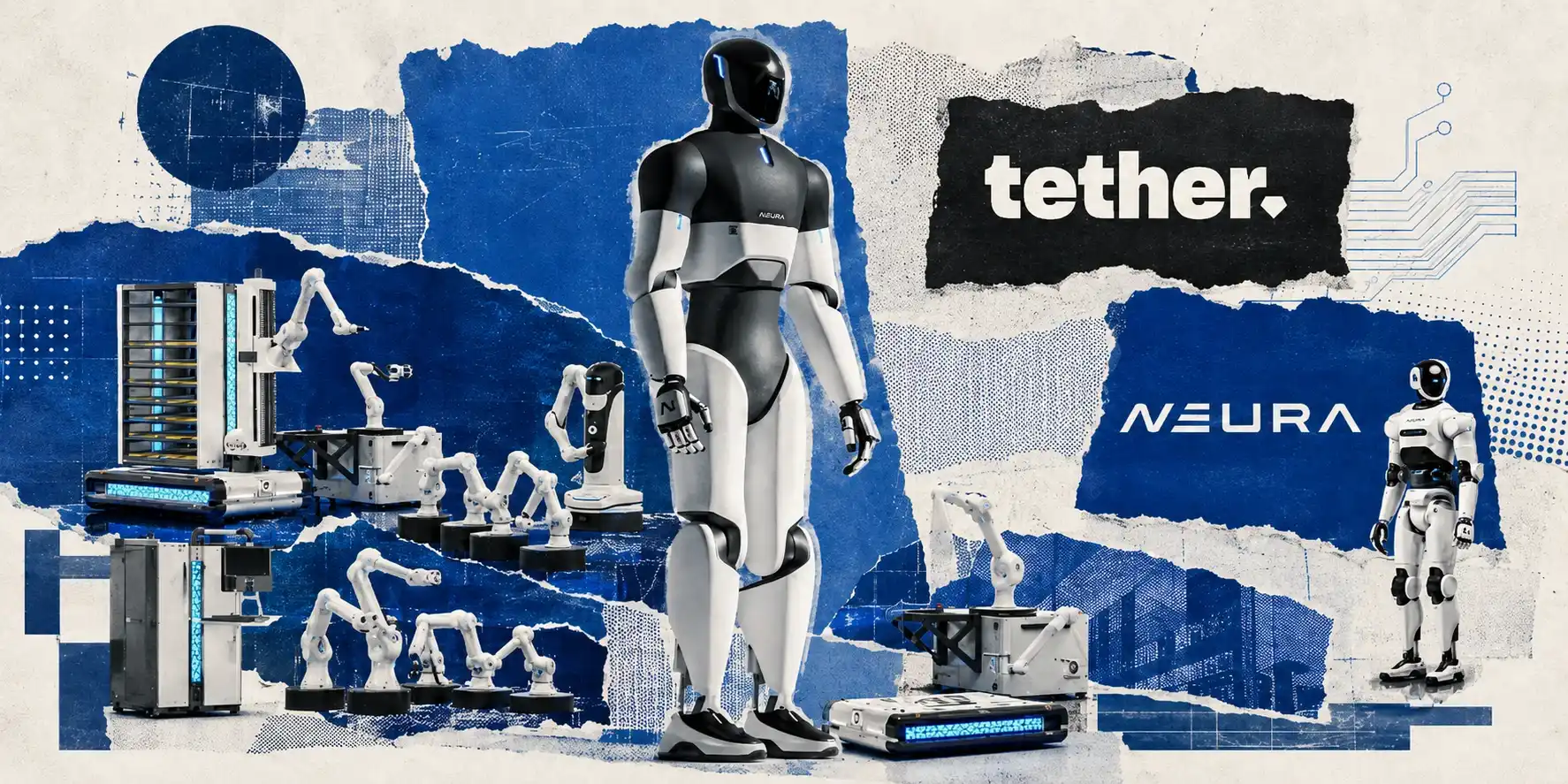
Robot Juga Perlu Dompet Kripto? Raksasa Stablecoin Tether Bertaruh pada Perusahaan Jerman NEURA Robotics

Penulis: Zen, PANews Perusahaan robotika Jerman NEURA Robotics baru saja mengumumkan penyelesaian putaran pendanaan Seri C senilai hingga $1,4 miliar, dengan Tether sebagai investor utama. Pendanaan ini menjadikan valuasi NEURA sekitar $7 miliar, setara dengan valuasi IPO perusahaan robotika China Unitree. NEURA, yang didirikan pada 2019, awalnya fokus pada pengembangan robot kolaboratif (Cobot) cerdas yang dilengkapi dengan kemampuan persepsi visual dan AI. Mereka kemudian memperluas lini produk ke robot mobilitas otonom dan robot humanoid bernama 4NE-1. Strategi inti perusahaan adalah membangun platform ekosistem bernama "Neuraverse," yang memungkinkan berbagai robot dan sistem berbagi data pembelajaran untuk menciptakan efek jaringan. Yang menarik dari investasi Tether ini adalah rencana untuk mengintegrasikan teknologi dompet kripto mereka ke dalam sistem robot NEURA. Tether berencana memasang kit pengembangan dompet (WDK) sumber terbuka mereka ke dalam platform robot, memungkinkan robot untuk melakukan pembayaran dan penyelesaian transaksi secara mandiri berdasarkan aturan yang telah ditetapkan. Ini membuka kemungkinan skenario seperti robot gudang yang otomatis menyelesaikan pembayaran setelah menyelesaikan tugas atau model "Robot-as-a-Service" (RaaS) dengan penagihan berbasis penggunaan. Selain itu, kolaborasi ini juga mencakup pengujian dan penyebaran kerangka kerja komputasi AI tepi Tether, QVAC, di ekosistem Neuraverse. Tujuannya adalah untuk meningkatkan keandalan dan mengurangi latensi dengan memproses data secara lokal di perangkat robot. Investasi ini menandai ambisi Tether untuk memperluas peran stablecoin dan dompet mandiri dari alat keuangan manusia menjadi infrastruktur pembayaran untuk mesin, sekaligus masuk ke lapisan kecerdasan komputasi tepi di era robotika.

marsbit7m yang lalu

Robot Juga Perlu Dompet Kripto? Raksasa Stablecoin Tether Bertaruh pada Perusahaan Jerman NEURA Robotics

marsbit7m yang lalu

CEO Sharplink: Sejuta Pengembang Ethereum, Siapa yang Bisa Menandingi?

CEO Sharplink, Joseph Chalom, menyoroti tonggak sejarah Ethereum dengan jumlah pengembang seumur hidup melebihi 1 juta, tepatnya 1.012.824 kontributor unik, berdasarkan data Electric Capital. Sekitar 232.000 di antaranya aktif dalam 12 bulan terakhir. Chalom, yang baru kembali dari pertemuan dengan pengembang dan pemimpin ekosistem di Asia, menekankan bahwa keunggulan inti Ethereum bukanlah kecepatan, melainkan kumpulan bakat teknis terbesar dan terdalam yang terus berkembang. Artikel ini berpendapat bahwa pertanyaan kritis dalam kripto adalah di mana pembangun terbaik memilih untuk berkarya jangka panjang. Ethereum unggul karena efek jaringan institusional, budaya, ekonomi, dan komposabilitasnya yang terakumulasi selama satu dekade. Satu juta pengembang ini kini mengerjakan tantangan paling kompleks: skalabilitas inti protokol, privasi, ketahanan kuantum, dan sistem agen. Upaya seperti peningkatan Glamsterdam (2026) yang akan meningkatkan kapasitas Layer 1, pengembangan komposabilitas sinkron untuk membuat berbagai Rollup beroperasi seperti satu rantai, dan persiapan matang Ethereum untuk era pasca-kuantum (dengan target migrasi sekitar 2029) semakin memperdalam parit pertahanan Ethereum. Keunggulan pengembang diperkuat oleh komposabilitas yang dalam, standar bersama seperti EVM, dan keterampilan Solidity yang dapat dialihkan ke ratusan jaringan. Tiga kekuatan tambahan adalah netralitas terpercaya (dijaga oleh ~900.000 validator), modularitas (diperluas oleh Rollup seperti Base dan Arbitrum), dan budaya yang menarik peneliti dan kriptografer terbaik. Ethereum dipandang sebagai sistem operasi default untuk keuangan terprogram dan telah mendapatkan kepercayaan dari pemilik aset institusional besar, mengonsolidasikan posisinya sebagai lapisan koordinasi keuangan internet jangka panjang.

Odaily星球日报1j yang lalu

CEO Sharplink: Sejuta Pengembang Ethereum, Siapa yang Bisa Menandingi?

Odaily星球日报1j yang lalu

Ethereum Capai Tonggak 1 Juta Pengembang, CEO Sharplink Gali Kemungkinan Masa Depan Ethereum

Ethereum telah mencapai tonggak sejarah dengan lebih dari 1 juta pengembang yang pernah berkontribusi pada ekosistemnya, dengan sekitar 232.000 di antaranya aktif dalam 12 bulan terakhir. Menurut Joseph Chalom, CEO Sharplink, kekuatan utama Ethereum bukan terletak pada kecepatan transaksi, tetapi pada kemampuannya menarik dan mempertahankan talenta pengembang terbaik. Keunggulan ini dibangun selama satu dekade melalui kombinasi teknologi, standar industri, alat pengembangan, likuiditas, dan budaya kolaborasi. Pembangun saat ini sedang mengerjakan tantangan mendasar seperti penskalaan protokol lapisan dasar, teknologi privasi, keamanan pasca-kuantum, dan sistem otonom cerdas. Upgrade Glamsterdam yang direncanakan pada 2026, misalnya, bertujuan meningkatkan kapasitas jaringan sambil mempertahankan nilai inti seperti netralitas dan keamanan. Selain itu, inisiatif seperti komposabilitas sinkron berupaya menyatukan puluhan jaringan Rollup Layer-2 agar berfungsi sebagai satu rantai yang kohesif. Ethereum juga memimpin dalam kesiapan keamanan pasca-kuantum, dengan rencana migrasi menyeluruh yang menargetkan penyelesaian sekitar tahun 2029. Keunggulan kompetitifnya diperkuat oleh tiga pilar: **netralitas tepercaya** (didukung oleh >900.000 validator), **arsitektur modular** yang menghubungkan berbagai Rollup, dan **budaya ekosistem** yang dikembangkan oleh peneliti dan standar terkemuka. EVM dan Solidity telah menjadi standar universal, memungkinkan interoperabilitas di ratusan jaringan. Efek jaringan ini menciptakan siklus virtuoso: lebih banyak pengembang -> alat yang lebih baik -> likuiditas lebih besar -> kepercayaan institusi yang lebih kuat. Ethereum bukan sekadar mengejar aktivitas rantai jangka pendek, tetapi sedang membangun fondasi yang dapat dipercaya untuk sistem keuangan global masa depan, yang diakui oleh lembaga keuangan utama. Masa depan Ethereum sedang dibentuk sekarang oleh para pembangun di seluruh dunia.

Foresight News1j yang lalu

Ethereum Capai Tonggak 1 Juta Pengembang, CEO Sharplink Gali Kemungkinan Masa Depan Ethereum

Foresight News1j yang lalu

Artikel Terbaru Saylor: Bitcoin Bukan Uang, Ini Adalah Modal Digital, Uang Harus Dibangun di Atasnya

Michael Saylor, pendiri MicroStrategy, mempresentasikan teori "Tumpukan Aset Digital" yang memposisikan Bitcoin (BTC) sebagai modal digital fondasional. Dalam kerangka lima lapis ini, BTC (Lapisan 1: Modal Digital) berfungsi sebagai aset dasar yang langka dan berenergi tinggi. Di atasnya, dibangun Lapisan 2: Kredit Digital (seperti instrumen STRC) yang didukung Bitcoin untuk menghasilkan yield dengan volatilitas lebih rendah. Lapisan 3: Mata Uang Digital adalah alat bernilai stabil yang menghasilkan bunga, menggabungkan kredit digital dengan setara kas fiat untuk pembayaran dan tabungan. Lapisan 4: Hasil Digital menawarkan imbalan yang ditingkatkan untuk investor berpengalaman, sementara Lapisan 5: Ekuitas Digital (seperti saham MSTR) menyerap volatilitas sisa dan menangkap potensi apresiasi. Inti argumen Saylor adalah bahwa Bitcoin sendiri tidak perlu diubah (tanpa staking, inflasi, atau modifikasi protokol) untuk menghasilkan utilitas keuangan. Sebaliknya, struktur modal yang dibangun di atasnyalah yang menciptakan produk seperti kredit dan mata uang yang stabil. "Mata uang digital" yang didukung Bitcoin ini dirancang sebagai jembatan, menawarkan stabilitas (denominasi dalam dolar AS), likuiditas, dan yield, sehingga menarik modal baru ke ekosistem Bitcoin. Tumpukan ini memungkinkan Bitcoin melayani berbagai investor—dari penyimpan nilai jangka panjang hingga pencari yield dan pengguna pembayaran—mengubahnya dari aset tunggal menjadi dasar sistem keuangan global yang lebih baik.

marsbit1j yang lalu

Artikel Terbaru Saylor: Bitcoin Bukan Uang, Ini Adalah Modal Digital, Uang Harus Dibangun di Atasnya

marsbit1j yang lalu

Trading

Spot
Futures

Artikel Populer

Cara Membeli ZEN

Selamat datang di HTX.com! Kami telah membuat pembelian Horizen (ZEN) menjadi mudah dan nyaman. Ikuti panduan langkah demi langkah kami untuk memulai perjalanan kripto Anda.Langkah 1: Buat Akun HTX AndaGunakan alamat email atau nomor ponsel Anda untuk mendaftar akun gratis di HTX. Rasakan perjalanan pendaftaran yang mudah dan buka semua fitur.Dapatkan Akun SayaLangkah 2: Buka Beli Kripto, lalu Pilih Metode Pembayaran AndaKartu Kredit/Debit: Gunakan Visa atau Mastercard Anda untuk membeli Horizen (ZEN) secara instan.Saldo: Gunakan dana dari saldo akun HTX Anda untuk melakukan trading dengan lancar.Pihak Ketiga: Kami telah menambahkan metode pembayaran populer seperti Google Pay dan Apple Pay untuk meningkatkan kenyamanan.P2P: Lakukan trading langsung dengan pengguna lain di HTX.Over-the-Counter (OTC): Kami menawarkan layanan yang dibuat khusus dan kurs yang kompetitif bagi para trader.Langkah 3: Simpan Horizen (ZEN) AndaSetelah melakukan pembelian, simpan Horizen (ZEN) di akun HTX Anda. Selain itu, Anda dapat mengirimkannya ke tempat lain melalui transfer blockchain atau menggunakannya untuk memperdagangkan mata uang kripto lainnya.Langkah 4: Lakukan trading Horizen (ZEN)Lakukan trading Horizen (ZEN) dengan mudah di pasar spot HTX. Cukup akses akun Anda, pilih pasangan perdagangan, jalankan trading, lalu pantau secara real-time. Kami menawarkan pengalaman yang ramah pengguna baik untuk pemula maupun trader berpengalaman.

206 Total TayanganDipublikasikan pada 2024.12.12Diperbarui pada 2026.06.02

Cara Membeli ZEN

Diskusi

Selamat datang di Komunitas HTX. Di sini, Anda bisa terus mendapatkan informasi terbaru tentang perkembangan platform terkini dan mendapatkan akses ke wawasan pasar profesional. Pendapat pengguna mengenai harga ZEN (ZEN) disajikan di bawah ini.

活动图片