Trump Signs Executive Order, Kraken, Coinbase and Others May Gain Access to Fed Payment Channels

marsbitDipublikasikan tanggal 2026-05-21Terakhir diperbarui pada 2026-05-21

Abstrak

President Trump has signed an executive order, "Incorporating Financial Technology Innovation into the Regulatory Framework," pressuring the Federal Reserve to reassess its rules on granting non-bank financial companies—including crypto and fintech firms—access to its payment systems, specifically master accounts that connect to the Fedwire settlement system. Currently, such accounts are primarily reserved for depository institutions. The order mandates a review to determine if broader access is permissible and to establish an application process. This move, supported by figures like Senator Cynthia Lummis, aims to reduce barriers to innovation and lower public payment costs by fostering fairer competition. It does not grant immediate access but could pave the way for companies like Kraken, Coinbase, Ripple, and Circle to reduce reliance on intermediary banks, lowering costs and speeding up settlements. A key precedent is the Kansas City Fed granting Kraken's parent company a restricted master account in March, offering limited payment services without interest or credit privileges. This model is seen as a potential template for allowing controlled access while mitigating systemic risk. Other firms like Anchorage, Paxos, and BitGo, which hold specialized banking charters, are also well-positioned to apply. The banking industry, represented by the American Bankers Association, opposes easing access, arguing any institution handling bank-like payments must meet the same stri...

Written by: Oluwapelumi Adejumo

Compiled by: Luffy, Foresight News

U.S. President Trump has formally pressured the Federal Reserve to re-evaluate the highly controversial access rules within the U.S. financial sector, escalating the industry battle over whether crypto firms and fintech companies can directly connect to the central bank's payment systems.

On May 19, Trump signed an executive order directing the Federal Reserve to assess its policies regarding granting payment account access to nonbank financial companies, including those engaged in digital assets, blockchain services, and other fintech businesses.

Titled "Modernizing the Regulatory Framework to Facilitate Financial Innovation," the order requires major federal regulatory agencies to review existing rules and eliminate redundant regulatory provisions that hinder financial innovation.

This order does not immediately grant crypto firms direct access to Federal Reserve payment channels. However, it explicitly authorizes the Federal Reserve to examine whether existing laws permit broader access and, if so, to clarify the application process.

The outcome of this review is crucial, as it will directly determine whether companies like Kraken, Ripple, Coinbase, Circle, Anchorage, Wise, Paxos, and BitGo can reduce their reliance on intermediary banks and move closer to core U.S. dollar wholesale clearing financial infrastructure.
Policy Shift for Fed Master Account Access

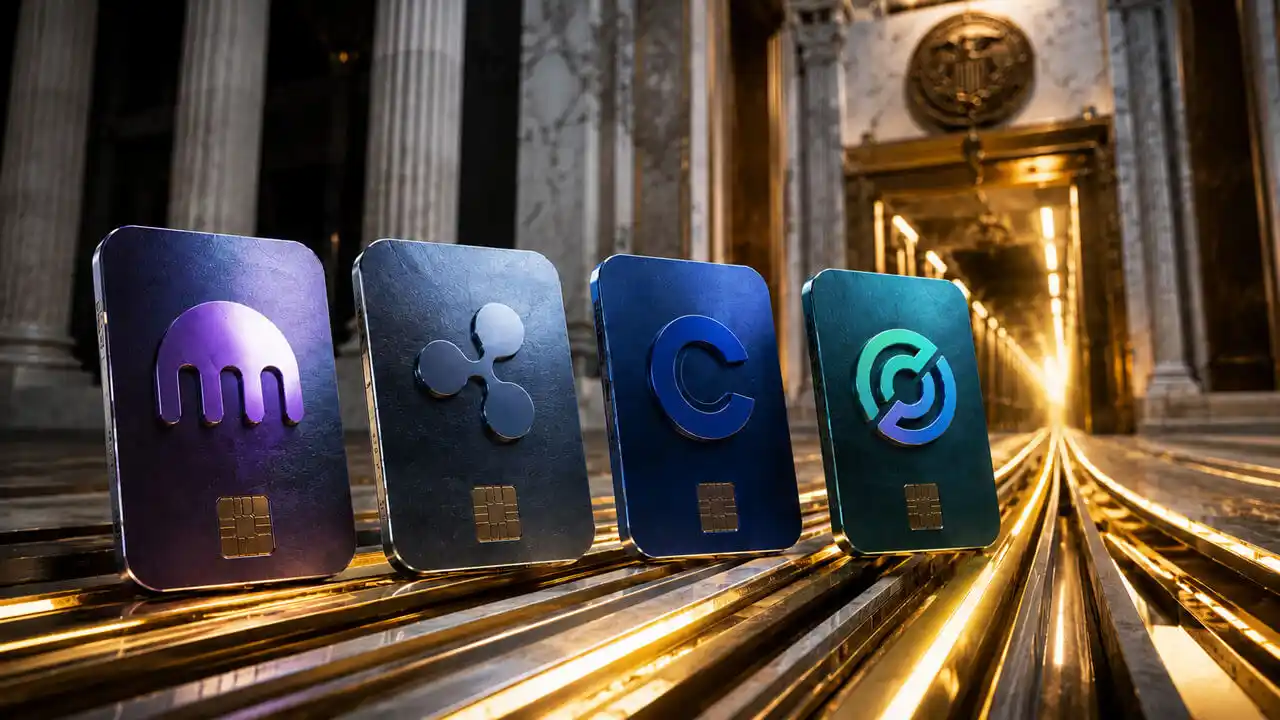
The core focus of this executive order is the Federal Reserve master account. Institutions holding such an account gain direct access to the full suite of Federal Reserve payment services, including the interbank large-dollar U.S. funds transfer system, Fedwire.

Under current Fed rules, such accounts are, in principle, only open to depository banking institutions. Consequently, many crypto firms have had to pursue special-purpose banking charters or national trust bank charters in their quest for direct connection eligibility.

Trump's order now requires the Federal Reserve to comprehensively review the access rules for central bank payment accounts, while also clarifying whether the 12 regional Federal Reserve Banks have the statutory authority to independently approve or reject institution account applications.

In March of this year, the Federal Reserve Bank of Kansas City took the lead by approving a restricted master account for Kraken's parent company, Payward, setting the industry's first precedent and making this issue of access increasingly urgent.

In addition, the order instructs regulators to conduct a comprehensive review of barriers to the development of the fintech industry, covering charter licensing rules, third-party risk management guidance, and policies restricting cross-border collaboration between banks and tech companies.

U.S. Senator Cynthia Lummis stated that this new policy corrects the long-standing restricted access situation for the fintech industry. Traditional legacy financial institutions have monopolized core payment channel resources, while emerging tech companies have long been excluded. This order aims to create a level playing field, stimulate industry vitality, and reduce payment costs for the public.

Coinbase Chief Legal Officer Paul Grewal also expressed support for the move. He argued that current payment access rules and third-party risk control guidelines are outdated, favoring traditional financial giants and suppressing innovation, and that regulatory rules urgently need renewal.

This echoes a common demand within the crypto industry: access to the central bank's core payment network has become a competitive barrier. Firms unable to connect directly must rely on bank intermediaries, which not only increases operational costs and slows settlement efficiency but also imposes the additional operational risks of their partner banks.
Kraken Provides a Feasible Model for Crypto Companies

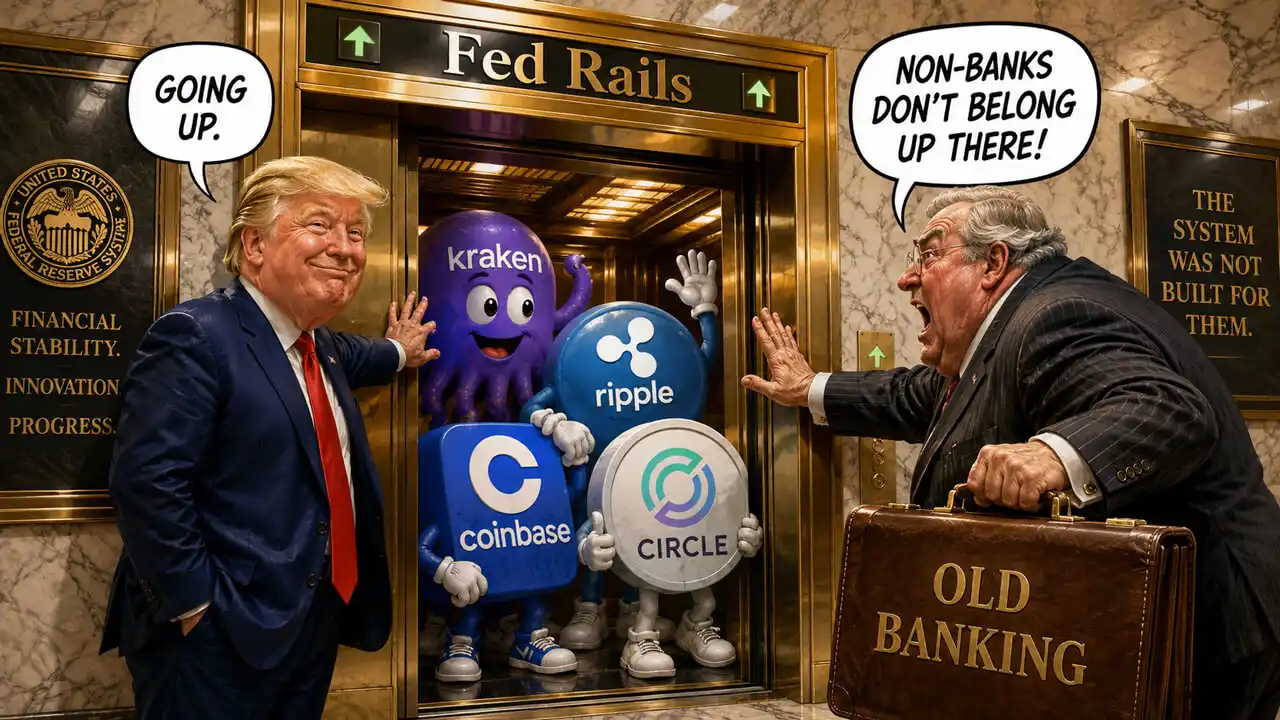
Kraken has provided a practical example for the industry to expand access. In March, the Kansas City Fed granted a master account to its financial entity, Kraken Financial, allowing access to the core U.S. dollar large-value clearing payment channels. This enables the platform to handle institutional user deposits and withdrawals more efficiently, particularly facilitating rapid transfers of large funds between the trading platform, custodians, and partner banks.

However, this account comes with clear limitations: it does not offer the full range of financial services available to regular insured banks, does not earn interest on reserve balances, and cannot access Federal Reserve credit facilities.

This restricted design can reduce central bank systemic risk while allowing crypto firms moderate access to mainstream payment infrastructure. It is likely to become a universal template promoted by regulators in the future—granting firms U.S. dollar transfer and clearing permissions while strictly prohibiting access to high-sensitivity financial privileges like overdraft lending, reserve interest, and emergency liquidity assistance.

Custodia Bank CEO Caitlin Long welcomed the new policy. Her institution has sought access to the Federal Reserve system for years but was rejected in 2023, with the Fed ruling that its crypto-focused business model did not meet statutory access requirements, highlighting the extreme difficulty licensed crypto institutions previously faced in gaining full access.

The implementation of Kraken's restricted account has fundamentally shifted the regulatory stance. Regulators no longer have only the options of "full access" or "complete rejection." Through a tiered permission model, they can gradually guide crypto firms into the mainstream payment system while firmly maintaining risk control bottom lines.

Ripple, Coinbase, and Circle are Prepared for the Next Phase

Ripple, Coinbase, and Circle are among the most direct beneficiaries of this policy relaxation. Ripple has already applied for a Federal Reserve master account and actively supports implementing a lightweight restricted account mechanism that allows non-bank institutions to conveniently use basic payment services without touching the Fed's core financial privileges.

Once successfully implemented, this would significantly boost its RLUSD stablecoin business, enabling efficient reserve fund transfers and user redemption operations. For stablecoin issuers, the efficiency of reserve clearing and fund redemption stability directly determine market confidence. Direct or restricted access to a Federal Reserve account would greatly reduce reliance on bank intermediaries, allowing more flexible U.S. dollar liquidity management during periods of concentrated redemptions or market volatility.

Coinbase and Circle, through their USDC stablecoin businesses and own payment ecosystems, also have strong needs for access. Both institutions have established federal trust bank structures, which not only further integrate them into the federal unified regulatory system but also pave the way for applying for Federal Reserve payment accounts.

Meanwhile, other companies are also waiting in line. Anchorage Digital is already a federally chartered crypto bank; Paxos, BitGo, and Fidelity Digital Assets have successively obtained national trust bank-related approvals from the Office of the Comptroller of the Currency. While such qualifications do not directly translate into Federal Reserve payment account access, they significantly narrow the gap between these firms and compliance standards.

Industry demands are clear: crypto exchanges seek fast fiat currency settlement, stablecoin issuers want autonomous control over reserve funds, asset custodians aim to optimize institutional client fund flow efficiency, and payment companies are eager to reduce heavy reliance on cross-border clearing banks.

Galaxy Digital Head of Research Alex Thorn stated bluntly that it is not only deposit-taking and lending banking institutions that are qualified to conduct wire transfer business; this is a threshold set by modern regulation, not an immutable rule of the financial industry. With multiple forces now competing, traditional banks are actually fighting to maintain their monopoly in the payments industry. The prevailing industry view is that payment channel access eligibility should be determined based on a firm's business attributes, compliance and regulatory rigor, and risk management capabilities, rather than rigidly adhering to traditional banking business models.

Traditional Banks Warn: Access Must Meet Bank-Level Standards

Facing calls for industry openness, the American Bankers Association has clearly expressed opposition. The association believes that any institution conducting bank-like business must be subject to the same stringent regulatory standards and consumer protection rules as traditional banks.

ABA President and CEO Rob Nichols stated publicly: "Without full industry-wide high-standard regulation, the entire financial system and ordinary consumers will face direct risks. Regarding this White House financial innovation executive order, we urge regulatory agencies to uphold the bottom line of safety and soundness of the financial system while promoting innovation, and not to lower access thresholds."

This is the core concern of the banking industry. Direct access to the Federal Reserve payment system is not merely a business privilege; it comes with a suite of high-intensity regulations, including deposit insurance systems, capital adequacy assessments, liquidity controls, and regular business reviews. From the banks' perspective, allowing crypto firms with lightweight licenses and limited business scopes, which lack equivalent compliance obligations and risk management capabilities, to connect to the core payment network could easily sow the seeds of systemic risk.

The Fedwire system is the core hub for global U.S. dollar clearing. Any cyber-attacks, operational failures, compliance breaches, or liquidity crises at an接入 institution could cause settlement disruptions with impacts far beyond the firm's own business scope. Simultaneously, banks invest heavily in compliance areas such as anti-money laundering, customer fund monitoring, and suspicious transaction reporting. Regulators also need to confirm that crypto firms possess equivalent compliance capabilities before allowing them to engage in diverse businesses like trading, asset custody, stablecoin issuance, and payments.

Liquidity diversion is another key concern for banks. If stablecoin issuers and fintech firms can efficiently hold and transfer funds through the Federal Reserve system, they will likely divert existing funds from the traditional banking system.

The restricted account rules proposed by the Fed, by removing benefits like interest and credit, somewhat alleviate this concern, but the banking industry will not readily acquiesce to this shift in the industry landscape.

Although specialized restricted accounts can avoid most risks through permission demarcation, they also raise new regulatory questions: At what point does the level of payment business access granted to a non-bank institution make its operations equivalent to those of a formal bank? This will become a core point of contention for regulators in defining future access boundaries.

Pertanyaan Terkait

QWhat was the main objective of the executive order signed by former President Trump regarding financial innovation and cryptocurrency companies?

AThe executive order aimed to pressure the Federal Reserve to reassess its policies on granting payment account access to non-bank financial companies, including those in digital assets, blockchain, and fintech. It required federal regulators to review existing rules to eliminate redundant regulations hindering financial innovation and to clarify whether broader access to the Federal Reserve's payment systems is legally permissible for such companies.

QHow does the Federal Reserve's Master Account benefit financial institutions, and what was the previous limitation for crypto companies?

AA Federal Reserve Master Account allows institutions direct access to the Fed's full suite of payment services, including the Fedwire system for large-scale dollar transfers between banks. Previously, such accounts were typically restricted to depository banking institutions, forcing crypto companies to seek special-purpose banking charters or national trust bank licenses to qualify for direct access.

QWhat precedent did the Federal Reserve Bank of Kansas City set for crypto companies in March, and what were the limitations of this account?

AIn March, the Federal Reserve Bank of Kansas City approved a restricted master account for Payward, Inc., the parent company of Kraken. This account, granted to its special-purpose depository institution Kraken Financial, allowed direct access to core dollar payment channels but with key limitations: it did not grant full banking services, did not pay interest on reserves, and did not provide access to Federal Reserve credit facilities.

QWhy are companies like Ripple, Coinbase, and Circle particularly interested in gaining access to Federal Reserve payment channels?

ACompanies like Ripple, Coinbase, and Circle are keen to access Federal Reserve payment channels to reduce reliance on intermediary banks. This would lower operational costs, speed up settlement times, and mitigate risks associated with partner banks. For stablecoin issuers like Circle (USDC) and Ripple (RLUSD), direct access would enhance the efficiency of managing reserve funds and processing redemptions, which is crucial for maintaining market confidence, especially during periods of high volatility or concentrated withdrawals.

QWhat are the primary concerns raised by traditional banks, as represented by the American Bankers Association, regarding expanding access to the Federal Reserve's payment systems?

ATraditional banks, through the American Bankers Association, argue that any institution performing bank-like activities must be subject to the same stringent regulatory standards as traditional banks, including robust consumer protection rules, capital requirements, liquidity management, and anti-money laundering compliance. They warn that allowing crypto firms with lighter regulatory burdens to connect to core payment networks like Fedwire could introduce systemic risks, such as operational failures or compliance gaps, and potentially drain liquidity from the traditional banking system.

Bacaan Terkait

Xpeng dan Nio Gencar di Komputasi, Ideal Ganti Arsitektur

Pada 15 Juni, Li Auto memperkenalkan chip self-driving buatan sendiri, Ma He M100, yang dikembangkan khusus untuk L9 Livis generasi baru. CTO Li Auto, Xie Yan, menekankan bahwa fokusnya bukan hanya meningkatkan kecepatan, tetapi mengubah arsitektur chip secara fundamental. Di tengah tren produsen mobil yang berlomba-lomba mengembangkan chip sendiri pada tahun 2026, pesaing seperti Nio (chip Shenji NX9031), Xpeng (chip Turing), dan Huawei (MDC 810 Pro) umumnya mengandalkan angka TOPS (komputasi) sebagai senjata pemasaran utama. Namun, Li Auto memilih jalur berbeda dengan mengubah logika arsitektur dasar dari chip tersebut. Ma He M100 mengadopsi arsitektur Dynamic Data Flow, bukan arsitektur von Neumann tradisional. Pendekatan ini dirancang untuk komputasi paralel matriks berskala besar yang diperlukan untuk inferensi model AI (seperti VLA), dengan mengurangi bolak-balik data antara memori dan unit pemrosesan. Hasil klaim Li Auto adalah efisiensi komputasi efektif 3 kali lipat dibandingkan Nvidia Thor U dan penurunan latency 40%. Keberhasilan arsitektur ini mendapat pengakuan eksternal melalui penerimaan makalahnya di konferensi akademis bergengsi ISCA 2026. Namun, keunggulan 3x ini sangat tergantung pada algoritma Li Auto (VLA2.1) dan mungkin tidak berlaku untuk tugas komputasi umum. Dengan chip ini, Li Auto menyelesaikan rantai teknologi "full-stack" yang meliputi chip, compiler, sistem operasi (Star Ring OS), model AI, dan pengontrol domain, menciptakan ekosistem tertutup yang independen dari pemasok seperti Nvidia. Dalam peluncuran ini, CEO Li Xiang juga memperkenalkan visi "Mobil Cerdas Embadied" ("Four-in-One Embodied AI Car"), yang mendefinisikan mobil listrik sebagai asisten hidup yang dapat merasakan, berpikir, dan berkembang, menggeser persaingan dari sekadar fitur konfigurasi (seperti kulkas atau layar) ke kemampuan sistem. Li Auto menetapkan target ambisius untuk model self-driving Ma He VLA agar menyamai performa Tesla FSD V14 pada kuartal keempat tahun ini, dengan rincian peningkatan OTA bertahap mulai Juli hingga Desember. Di balik inovasi teknologi, tantangan finansial tetap ada. Pendapatan Li Auto turun pada Q4 2025, dengan margin yang menyempit. Namun, anggaran R&D tetap tinggi (sekitar 12 miliar yuan, 50% untuk AI). Target penjualan 2026 adalah 550.000 unit, sementara realisasi 2025 adalah 406.000 unit. Pengujian nyata akan dimulai pada kuartal ketiga dengan OTA pertama pada Juli dan peluncuran model baru. Sertifikasi akademis untuk arsitektur chip adalah langkah awal, tetapi penerimaan pasar dan kinerja dalam kondisi mengemudi sehari-hari akan menjadi penentu kesuksesan akhir.

marsbit49m yang lalu

Xpeng dan Nio Gencar di Komputasi, Ideal Ganti Arsitektur

marsbit49m yang lalu

Tahun Pertama Penerapan AI, Hanya Bilang Iya, Abai Risiko? Log Pelayaran Pengembangan Perangkat Lunak Sepenuhnya Sumber Terbuka

Tahun 2026 disebut sebagai era aplikasi AI. Kode dibuat semakin cepat, namun dengan pengawasan yang semakin sedikit saat diterapkan. Risiko dari kode yang ditulis AI sering kali tersembunyi dalam kode yang tampak benar secara sintaksis dan melewati semua pemeriksaan, tetapi dapat menyebabkan kebocoran data atau kerugian aset. Contoh nyata adalah insiden konfigurasi oracle cbETH Moonwell, di mana kesalahan semantik dalam harga melewati proses pengembangan dan pemeriksaan, mengakibatkan kerugian finansial yang signifikan. Risiko pengkodean AI telah berevolusi dari pelengkap lokal ke agen yang dapat membaca file, mengubah konfigurasi, menginstal dependensi, dan menghasilkan skrip infrastruktur, sehingga menciptakan jalur risiko yang lebih panjang dan sulit dilacak dalam rekayasa perangkat lunak. Untuk mengatasi masalah ini, Narwhal-Lab Universitas Peking meluncurkan proyek sumber terbuka **Narwhal AI Code Risks**. Proyek ini mengumpulkan dan mengkategorikan fragmen informasi risiko yang tersebar ke dalam tiga lapisan: `cases/` (peristiwa nyata), `inferred/` (sinyal awal), dan `scenarios/` (skenario risiko tipikal). Risiko diklasifikasikan menjadi 7 kategori: Rantai Pasok, Kerentanan Tingkat Kode, Konfigurasi Cloud & Infrastruktur, Risiko Agen, Risiko Domain Vertikal, Risiko Kekayaan Intelektual & Kepatuhan, serta Faktor Manusia. Tujuan proyek ini adalah untuk mengubah kasus risiko menjadi pengetahuan yang dapat digunakan kembali, membantu pengembang mengidentifikasi masalah serupa, menjadi basis sampel bagi peneliti keamanan, serta menyediakan aturan deteksi dan tolok ukur bagi vendor alat. Dengan menyediakan "log pelayaran" sumber terbuka untuk dunia perangkat lunak, proyek ini bertujuan untuk mencatat dan meneruskan pengalaman, sehingga pihak lain tidak perlu terjebak dalam perangkap yang sama.

marsbit49m yang lalu

Tahun Pertama Penerapan AI, Hanya Bilang Iya, Abai Risiko? Log Pelayaran Pengembangan Perangkat Lunak Sepenuhnya Sumber Terbuka

marsbit49m yang lalu

Landasan Valuasi Triliunan Dollar SpaceX: Siapa yang Mengambil Alih Pengeluaran Modal Tahunan Ratusan Miliar Milik Musk?

Penulis berpendapat bahwa peluang investasi terbesar dalam eksplosifnya SpaceX saat ini bukan pada saham SpaceX itu sendiri (yang mahal dan masih rugi), melainkan pada para pemasoknya. Ini mengikuti pola sejarah seperti rantai pasokan Apple, Tesla, dan NVIDIA, di mana perusahaan "super terminal" mendorong pertumbuhan luar biasa bagi pemasoknya. SpaceX mengalokasikan ratusan miliar dolar untuk pengeluaran modal tahunan, didanai terutama oleh bisnis Starlink yang menguntungkan. Uang ini dialirkan ke pengembangan roket (untuk menurunkan biaya peluncuran) dan AI/pusat data orbital. Pesanan pembelian besar-besaran ini mengalir ke tiga jenis pemasok: 1. **Pengganti yang Sulit:** NVIDIA (GPU & CUDA), Eutelsat (spektrum satelit), Filtronic (penguat sinyal), Materion (berilium), STMicroelectronics (chip antena). 2. **Pengganti yang Mahal:** Honeywell (kontrol penerbangan), Carpenter Technology (baja khusus), Hexcel (serat karbon), Broadcom (pertukaran data). 3. **Pemasok Produksi Massal:** Wistron NeWeb (perakitan terminal Starlink), dan beberapa perusahaan Tiongkok seperti Shenzhen Sunway (konektor), Paixin New Materials (tempaan), Western Superconductor (paduan niobium), Yingliu Co. (cetakan), serta perusahaan seperti Trimble (sinkronisasi waktu) dan Astronics (distribusi daya). Mengapa sekarang adalah saat yang tepat? (1) Volume pembelian SpaceX baru akan meningkat pesat (target 100 peluncuran/tahun, 3000 juta terminal Starlink). (2) Transparansi data melalui IPO memungkinkan pelacakan pesanan. (3) Siklus rantai pasokan mirip dengan tahap awal Tesla (sekitar 2018), menawarkan peluang pertumbuhan jangka panjang. Kesimpulannya, alih-alih membeli saham SpaceX yang fantastis, investor dapat mempertimbangkan perusahaan-perusahaan di balik layar yang menerima pesanan besar dan stabil, terlepas dari volatilitas harga saham SpaceX. Namun, setiap perusahaan perlu dianalisis secara individual dengan mempertimbangkan risiko seperti siklus komoditas, geopolitik, dan perubahan teknologi.

marsbit1j yang lalu

Landasan Valuasi Triliunan Dollar SpaceX: Siapa yang Mengambil Alih Pengeluaran Modal Tahunan Ratusan Miliar Milik Musk?

marsbit1j yang lalu

Landasan Valuasi Triliunan Dolar SpaceX: Siapa yang Mengambil Porsi Belanja Modal Ratusan Miliar Elon Musk Tiap Tahun?

Pondasi valuasi triliunan dolar SpaceX: Siapa yang membagi ratusan miliar belanja modal tahunan Elon Musk? Alih-alih berinvestasi langsung di SpaceX yang IPO dengan valuasi tinggi dan masih rugi, peluang mungkin lebih baik pada rantai pasokannya. Sejarah menunjukkan bahwa raksasa teknologi seperti Apple, Tesla, dan Nvidia telah menciptakan kekayaan besar bagi pemasok mereka. SpaceX beroperasi dengan model: Layanan internet satelit Starlink menghasilkan uang → mendanai pengembangan roket untuk menekan biaya peluncuran → meluncurkan perangkat keras AI ke luar angkasa dengan biaya rendah → menyewakan daya komputasi AI untuk pendapatan baru. Siklus ini menghasilkan pesanan pembelian ratusan miliar dolar AS setiap tahun. Pemasok dapat dikategorikan dalam tiga kelompok: 1. **Pengganti sulit atau tidak mungkin**: NVIDIA (GPU untuk superkomputer), Eutelsat (spektrum radio satelit), Filtronic (amplifier sinyal satelit), Materion (logam berilium), STMicroelectronics (chip antena). 2. **Secara teknis dapat diganti, tetapi biaya peralihannya tinggi**: Honeywell (sistem kendali penerbangan), Carpenter Technology (baja paduan khusus), Hexcel (serat karbon), Broadcom (pertukaran data), Linde (gas industri). 3. **Memerlukan produksi massal yang stabil dengan biaya rendah**: Perusahaan-perusahaan ini memasok komponen untuk perangkat terminal Starlink dan roket. Contohnya termasuk Wistron NeWeb (kontrak perakitan), serta beberapa perusahaan China seperti Sunway Communication (konektor), Paike New Materials (komponen tempa), Western Superconducting (paduan niobium), Yingliu Co (komponen cor). Perusahaan seperti Trimble, Astronics, dan CTS juga menyediakan komponen penting. Mengapa sekarang adalah saat yang tepat? Karena volume pembelian SpaceX baru akan meningkat (target 100 peluncuran/tahun, 30 juta terminal Starlink), transparansi melalui IPO memungkinkan pelacakan pesanan, dan siklus rantai pasokan serupa dengan Tesla pada 2018 - masih di tahap awal pertumbuhan yang curam. Intinya: Pesanan pembelian tahunan SpaceX yang besar, terlepas dari harga sahamnya, akan mengalir ke pemasoknya dan menjadi pendapatan tetap mereka. Inilah peluang yang mungkin lebih dapat diakses daripada berinvestasi langsung di saham SpaceX.

链捕手1j yang lalu

Landasan Valuasi Triliunan Dolar SpaceX: Siapa yang Mengambil Porsi Belanja Modal Ratusan Miliar Elon Musk Tiap Tahun?

链捕手1j yang lalu

Trading

Spot
Futures

Artikel Populer

Cara Membeli ORDER

Selamat datang di HTX.com! Kami telah membuat pembelian Orderly (ORDER) menjadi mudah dan nyaman. Ikuti panduan langkah demi langkah kami untuk memulai perjalanan kripto Anda.Langkah 1: Buat Akun HTX AndaGunakan alamat email atau nomor ponsel Anda untuk mendaftar akun gratis di HTX. Rasakan perjalanan pendaftaran yang mudah dan buka semua fitur.Dapatkan Akun SayaLangkah 2: Buka Beli Kripto, lalu Pilih Metode Pembayaran AndaKartu Kredit/Debit: Gunakan Visa atau Mastercard Anda untuk membeli Orderly (ORDER) secara instan.Saldo: Gunakan dana dari saldo akun HTX Anda untuk melakukan trading dengan lancar.Pihak Ketiga: Kami telah menambahkan metode pembayaran populer seperti Google Pay dan Apple Pay untuk meningkatkan kenyamanan.P2P: Lakukan trading langsung dengan pengguna lain di HTX.Over-the-Counter (OTC): Kami menawarkan layanan yang dibuat khusus dan kurs yang kompetitif bagi para trader.Langkah 3: Simpan Orderly (ORDER) AndaSetelah melakukan pembelian, simpan Orderly (ORDER) di akun HTX Anda. Selain itu, Anda dapat mengirimkannya ke tempat lain melalui transfer blockchain atau menggunakannya untuk memperdagangkan mata uang kripto lainnya.Langkah 4: Lakukan trading Orderly (ORDER)Lakukan trading Orderly (ORDER) dengan mudah di pasar spot HTX. Cukup akses akun Anda, pilih pasangan perdagangan, jalankan trading, lalu pantau secara real-time. Kami menawarkan pengalaman yang ramah pengguna baik untuk pemula maupun trader berpengalaman.

342 Total TayanganDipublikasikan pada 2024.12.10Diperbarui pada 2026.06.02

Cara Membeli ORDER

Diskusi

Selamat datang di Komunitas HTX. Di sini, Anda bisa terus mendapatkan informasi terbaru tentang perkembangan platform terkini dan mendapatkan akses ke wawasan pasar profesional. Pendapat pengguna mengenai harga ORDER (ORDER) disajikan di bawah ini.

活动图片