World Cup Approaches, Prediction Markets Face a Major Test

marsbitDipublikasikan tanggal 2026-05-15Terakhir diperbarui pada 2026-05-15

Abstrak

The 2026 FIFA World Cup represents a major public test for sports prediction markets like Polymarket and Kalshi, which have grown significantly by offering tradable markets on event outcomes. This global event, hosted by the US, Canada, and Mexico, concentrates risks related to sports integrity, cross-border operations, and gambling ecosystems. A key concern is the potential for insider trading on non-public information (e.g., injuries, lineups), which could be exploited in granular prediction markets. FIFA's choice of its official prediction market partner, ADI Predictstreet, has raised significant doubts. The platform, relatively unknown, has faced scrutiny over the integrity of its executives—including past insider trading allegations and associations with a major EU corruption scandal—its rapid licensing in Gibraltar, and the fact its product was not yet live at the time of the announcement. This partnership begins with a "trust deficit." FIFA itself carries historical corruption baggage, and its deepening ties with betting and data industries fuel concerns about maintaining sporting integrity. While FIFA has established monitoring systems, their effectiveness against potential insider trading across decentralized global prediction markets remains unproven. Major US-based prediction platforms have updated rules to prohibit trading based on confidential information. However, the World Cup's complex ecosystem of federations, teams, and officials makes enforcement far mor...

Author: Zen, PANews

In recent years, prediction market platforms led by Polymarket and Kalshi have turned political, macroeconomic, crypto, entertainment, and sports events into tradable markets. Users express probabilistic judgments and earn profits by buying and selling event outcomes. Especially after entering the sports arena, these platforms have seen substantial and sustained growth in trading volume, making sports a pillar of their revenue structure.

In this major sports year, particularly the 2026 FIFA World Cup—co-hosted by the USA, Canada, and Mexico, and expanded for the first time to 48 teams—will represent the most significant public stress test for sports prediction markets to date. It compresses sports competition, cross-border event organization, the betting ecosystem, and global user traffic into a single market scenario, significantly amplifying both risk dimensions and external scrutiny.

In such a high-density, globalized, cross-jurisdictional sporting event, the combination of insiders and tradable prediction markets means that any information asymmetry regarding injuries, starting lineups, referees, or even internal governance could be rapidly converted into pricing advantages.

In this sense, the 2026 World Cup is not only an opportunity for prediction markets to compete for sports traffic but also a public examination of their ability to safeguard sports integrity.

From Obscurity to the World Cup Spotlight: FIFA's Prediction Market Partner Faces Multiple Queries

In April of this year, FIFA (Fédération Internationale de Football Association) announced its official prediction market partner for the 2026 World Cup. Surprisingly, the brand announced was neither Polymarket nor Kalshi, but a little-known platform—ADI Predictstreet.

Just as people were wondering who ADI Predictstreet was, this company placed at the center of the world's largest sporting event began to face public skepticism due to the negative history of its executives, the speed of its licensing, and the immaturity of its product.

The first layer of controversy surrounding Predictstreet involves executive integrity. When ADI Predict Street was announced as FIFA's betting partner, the company's Chief Council Member, Ajay Bhatia, represented the company on stage. He was photographed with FIFA President Gianni Infantino, both holding up a jersey bearing the ADI Predict Street logo.
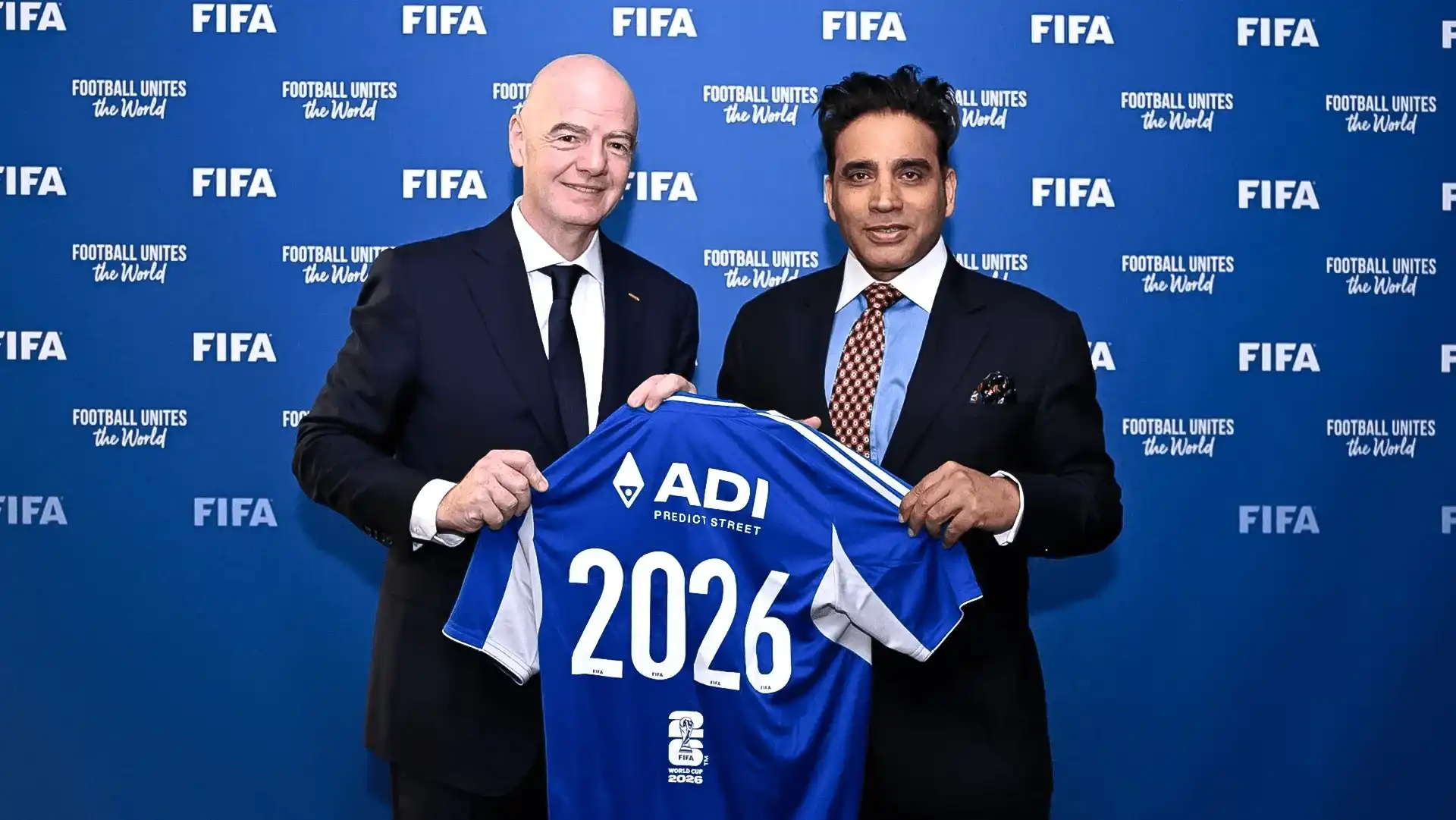
FIFA President Gianni Infantino (left) and Ajay Bhatia (right)

Bhatia is the CEO and Managing Director of QuantLase Lab, a subsidiary of IHC (International Holding Company), which is chaired by a member of the Abu Dhabi royal family and Vice President of the UAE. On the other hand, ADI Predictstreet falls under Finstreet, which is a subsidiary of Sirius International Holding, which is also part of IHC.

According to Norwegian football news outlet Josimar, Bhatia was embroiled in an insider trading scandal in 2025. He was accused of purchasing shares in the Indian energy giant Adani Group before IHC publicly announced it would invest in it. The case was settled for approximately $150,000 in September 2025, with Bhatia not admitting guilt.

Shortly after Josimar disclosed Bhatia's past, ADI Predictstreet announced that Dimitrios Psarrakis would assume the role of CEO. However, Psarrakis's resume also appears questionable. He previously served as an assistant to former European Parliament Vice President Eva Kaili, who was a central figure in the European Parliament's Qatar corruption scandal (also known as Qatargate).

Former European Parliament Vice President Eva Kaili (left) and ADI Predictstreet CEO Dimitrios Psarrakis (right)

Kaili allegedly accepted benefits from Qatar and Morocco in exchange for promoting their interests within the EU. While the legal and ethical risks associated with Kaili cannot be directly equated to Psarrakis, his professional connection to a figure at the heart of a scandal is sufficient to raise questions about reputation and due diligence.

Beyond executive credibility issues, the speed at which ADI Predictstreet obtained its license is also noteworthy. Just days before being announced as the official prediction market partner for the 2026 World Cup, ADI Predictstreet announced it had secured a license in Gibraltar. Officials claimed the approval speed "set a record" and that the entire process was very rigorous.

However, although the ADI Predictstreet website domain was registered in January and it obtained its license by the end of March, its actual product is still not live. The real-money trading experience remains unknown. As the official prediction market platform FIFA has thrust into the World Cup spotlight, the outside world still cannot assess whether its actual trade matching, settlement, risk control, anti-manipulation, and user protection mechanisms have undergone stress testing.

Therefore, with these multiple layers of uncertainty, the World Cup's partnership with ADI Predictstreet began with a deficit of trust.

FIFA's Historical Baggage and Gamblification Controversy

Beyond the questionable credibility of the ADI Predictstreet platform, FIFA itself, often criticized for corruption, struggles to gain inherent trust in this matter.

In 2015, the U.S. Department of Justice brought widespread corruption charges against numerous FIFA officials and sports marketing executives. Then-U.S. Attorney General Loretta Lynch described the corruption as "rampant, systemic, and deep-rooted." This historical backdrop makes it difficult for FIFA to convince the public through official statements alone in any cooperation involving betting, data, or prediction markets.

In recent years, FIFA's ties to the betting and data industries have also deepened, fueling concerns about match integrity at a similar pace.

Shortly before the 2022 Qatar World Cup, FIFA struck a deal with betting operator Betano; the following year, FIFA signed an agreement with New Zealand lottery company TAB for the Women's World Cup; in early 2026, FIFA commercialized its streaming platform FIFA+ through a deal with data company Stats Perform, bringing more lower-tier matches into the betting market.
From a commercial perspective, this can be interpreted as FIFA developing its data assets and fan engagement. But from a sports integrity viewpoint, it also means the World Cup is being embedded deeper into the betting and trading ecosystem. As the event becomes increasingly enamored with the commercial value brought by this ecosystem, a major question arises: can it remain sufficiently independent to control risks?

In response, FIFA has taken some measures to address betting-related threats. In 2024, FIFA relocated its legal department and integrity unit to Miami (resulting in the loss of many experienced staff) and also formed an integrity task force, with members including institutions like Interpol, the U.S. Federal Bureau of Investigation, and representatives from the betting industry.

In February 2026, FIFA announced that U.S.-based integrity and compliance monitoring company IC360 would join this task force and use its ProhiBet software to monitor betting-related threats, including whether players and match officials bet on their own games.

However, this mechanism seems more like a screening tool for regulated markets rather than a complete defense line covering the global betting and prediction market risks of the World Cup. For an event involving parties worldwide and extremely long information chains, truly dangerous insider trading often doesn't occur in the places most visible to regulators.

Insider Trading Concerns Rise, Prediction Market Leaders Tighten Rules

Traditional betting monitoring typically relies on information sharing between betting companies, data providers, leagues, and regulators. Prediction markets, however, may involve crypto wallets, offshore platforms, cross-border accounts, proxy trading, and decentralized settlement. Even if official partner platforms are regulated, other platforms may still open World Cup markets outside FIFA's official system.

If anomalous trading occurs on non-partner platforms, among non-U.S. users, via crypto wallets, or through proxy accounts, it remains an unproven question whether FIFA's traditional integrity tools can penetrate these layers.

In sports prediction markets, risks of insider manipulation for outcomes like World Cup winner, group stage advancement, or a team's progression are typically low, as they are difficult for a single participant to manipulate.

But more micro and granular markets are entirely different. Whether a specific player starts, a player is injured, a red card occurs in a match, a team gets a penalty, a specific referee officiates, or a VAR controversy happens—these events are more susceptible to influence by a few insiders and easier to price based on non-public information.

The U.S. Commodity Futures Trading Commission (CFTC), as the sole regulator of prediction markets, recognized this early. One of its key guidelines for sports prediction markets is to remind regulated exchanges to focus on contracts related to individual player performance, prop bets, and micro-markets vulnerable to manipulation. The CFTC also encourages platforms to share data with sports leagues and strengthen contract settlement and market surveillance.

In response, prediction market platforms in the U.S. have adapted their management. Following Congressional pushes to limit prediction market legislation, Kalshi and Polymarket quickly updated their rules. Kalshi stated it would prohibit sports personnel from trading contracts related to areas they participate in or are employed in. Polymarket also updated its rules, banning users from trading contracts if they possess confidential information or can influence the event outcome.

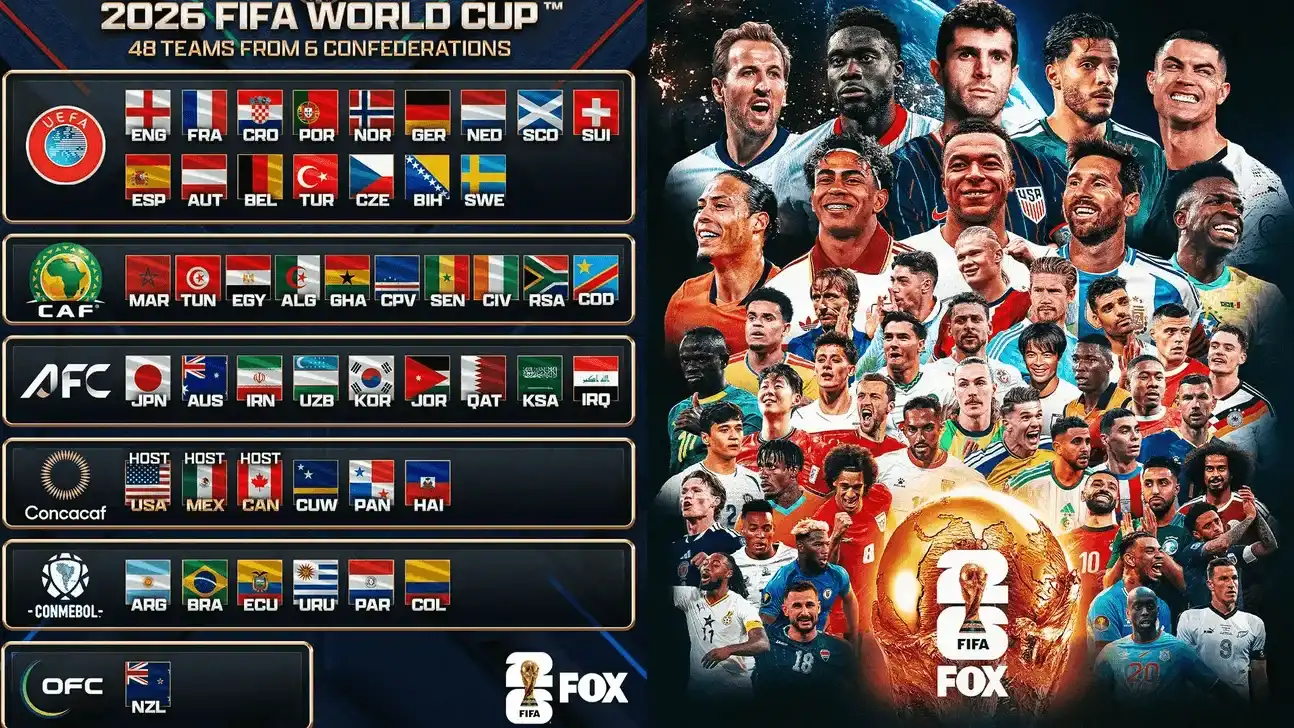
However, the complexity of the World Cup far exceeds that of a single U.S. professional league. Leagues like the NBA and MLB have clear league, team, player union, referee, and official data structures. The World Cup involves a vast array of entities: FIFA, six continental confederations, 48 national teams, clubs, agents, medical teams, referee committees, broadcasters, and data suppliers. Who qualifies as an "insider," how to identify them, and whether they can trade via family, friends, proxy wallets, or third-party accounts? These questions are much harder to answer in the World Cup context.
Furthermore, prediction markets face not just sports integrity issues but also global regulatory legitimacy. In April this year, the Brazilian government blocked 27 prediction market platforms and tightened derivatives rules, prohibiting derivatives based on sports, online games, politics, elections, culture, and social outcomes. Dozens of other countries also reject the argument that "event contracts are not gambling."

In such a climate, FIFA's choice of a platform riddled with question marks and with a product not fully validated as its official World Cup prediction market partner has itself pushed the sports integrity issue to the forefront ahead of time.

Of course, the 2026 World Cup will not determine the survival of prediction markets, but it will likely define the boundaries of their mainstream integration into the global sports industry: will they become a regulated event-trading infrastructure, or just another gambling risk entry point amplified by global sports traffic?


Pertanyaan Terkait

QAccording to the article, what are the main controversies surrounding ADI Predictstreet, the official FIFA 2026 World Cup prediction market partner?

AThe main controversies are: 1) Questionable integrity of its high-level executives, including allegations of insider trading and associations with the 'Qatargate' European Parliament corruption scandal. 2) The extremely fast speed at which it obtained its Gibraltar license. 3) The fact that its actual product was not yet live at the time of the announcement, raising doubts about its transaction, settlement, risk control, and user protection mechanisms.

QWhy is the 2026 FIFA World Cup considered a major stress test for prediction markets?

AThe 2026 World Cup, as a high-density, global, cross-jurisdictional mega-sports event, compresses sports competition, cross-border organization, the gambling ecosystem, and global user traffic into a single market scenario. This significantly amplifies the risk dimensions and external scrutiny. Any information advantage held by insiders regarding injuries, lineups, referees, or internal governance could be rapidly converted into pricing advantages in a tradeable prediction market, posing a severe test to the market's ability to maintain sports integrity.

QWhat specific types of World Cup prediction markets are considered most vulnerable to insider manipulation, according to the article?

AMicroscopic and granular markets are most vulnerable. These include events such as whether a specific player will start, whether a player will be injured, whether a red card will be issued in a match, whether a team will get a penalty kick, which referee will officiate, or whether a VAR controversy will occur. These events are more easily influenced by a small number of insiders and can be priced ahead of time using non-public information.

QWhat actions have established prediction market platforms like Kalshi and Polymarket taken to address integrity concerns related to sports events?

AFollowing legislative pressure in the U.S., these platforms have updated their rules. Kalshi stated it will prohibit sports-related personnel from trading contracts in the fields they participate in or are employed by. Polymarket also updated its rules to prohibit users from trading contracts related to an event if they possess confidential information or are capable of influencing the event's outcome.

QWhat historical and recent factors contribute to skepticism about FIFA's ability to ensure integrity in its dealings with betting and prediction markets?

AHistorical factors include the widespread, systemic, and deep-rooted corruption scandal within FIFA exposed by the U.S. Department of Justice in 2015. Recent factors include FIFA's deepening ties with the betting and data industry (e.g., partnerships with Betano, TAB, Stats Perform), which increasingly embeds events like the World Cup into the gambling and trading ecosystem. This commercial focus raises questions about FIFA's independence and ability to control integrity risks effectively.

Bacaan Terkait

Ray Dalio: Bull Market AI Terus Meroket, Haruskah Investor All In atau Ambil Untung dan Keluar?

**Ray Dalio: AI Bull Market Terus Melaju, Haruskah Investor All In atau Ambil Untung dan Keluar?** Dalam catatannya, Ray Dalio membahas bagaimana investor harus mengalokasikan aset di tengah pasar yang sangat terdorong oleh teknologi AI dan terkonsentrasi pada segelintir perusahaan besar. Ia mengingatkan bahwa kemajuan teknologi tidak secara otomatis membuat saham terkait menarik. Siklus teknologi besar sejarah selalu melalui fase euforia, kepadatan, volatilitas, dan pembersihan, di mana bahkan perusahaan sukses seperti Microsoft dan Apple pernah mengalami penurunan signifikan. Dalio menekankan bahwa pertanyaan utamanya bukan apakah AI akan mengubah dunia, tetapi bagaimana menghadapi struktur pasar yang "sangat terkonsentrasi". Ketika beberapa perusahaan tech mendominasi indeks, investor perlu waspada agar tidak tanpa sadar memegang eksposur yang terkonsentrasi dan berisiko tinggi. Daripada mengejar sedikit saham unggulan, cara yang lebih tangguh adalah membangun portofolio yang terdiversifikasi dengan aset-aset berkualitas dan berkorelasi rendah, lalu menyesuaikan tingkat volatilitasnya dengan toleransi risiko sendiri. Menurutnya, mengetahui apa yang tidak diketahui sama pentingnya dengan mengetahui apa yang diketahui. Di lingkungan pasar saat ini yang didorong AI, valuasi tinggi, dan risiko terkonsentrasi, investor tidak boleh mengubah kegembiraan atas teknologi baru menjadi alokasi terpusat pada sedikit saham AI. Diversifikasi adalah "cawan suci investasi" Dalio untuk melewati siklus teknologi ini. Prinsip intinya adalah memegang sekitar 15 taruhan berkualitas yang tidak berkorelasi dan diseimbangkan risikonya, yang secara matematis menawarkan rasio risk-reward yang lebih baik daripada taruhan terkonsentrasi, meski pada tingkat risiko yang sama.

marsbit8m yang lalu

Ray Dalio: Bull Market AI Terus Meroket, Haruskah Investor All In atau Ambil Untung dan Keluar?

marsbit8m yang lalu

Baru Beberapa Hari Piala Dunia Digelar, Prediksi AI Sudah Ada Model yang Dipuja dan Model yang Gagal

Piala Dunia baru berjalan beberapa hari, prediksi AI telah menunjukkan performa yang beragam: ada model yang "dianggap sakti", ada pula yang "terguling". Di tengah maraknya pasar prediksi terkait Piala Dunia, model-model AI seperti Qwen, Copilot, ChatGPT, Gemini, Grok, dan Claude mulai sering digunakan sebagai referensi tambahan untuk analisis sebelum pertandingan. Qwen mencuri perhatian di hari pertama. Model ini berhasil memprediksi skor tepat 2-0 untuk kemenangan Meksiko atas Afrika Selatan pada pertandingan pembuka, serta skor 2-1 untuk kemenangan Korea Selatan atas Republik Ceko. Prediksinya juga menyentuh detail seperti risiko kartu merah dan alur pertandingan. Copilot menunjukkan momen gemilang dengan menebak skor tepat untuk tiga pertandingan (Meksiko 2-0 Afrika Selatan, Korea 2-1 Ceko, Brasil 1-1 Maroko). Namun, model ini juga beberapa kali meleset, terutama dalam memperkirakan hasil imbang atau kemenangan tim underdog, seperti saat Australia mengalahkan Turki atau Qatar mengimbangi Swiss. ChatGPT memberikan analisis yang mendalam dan berhasil menebak skor tepat pertandingan pembuka. Namun, mirip dengan Copilot, model ini cenderung lebih konservatif dan kurang akurat dalam mendeteksi potensi kejutan atau hasil yang menyimpang dari favorit pada kertas, seperti imbangnya Jepang melawan Belanda. Pengujian lain membandingkan beberapa model untuk satu pertandingan yang sama. Pada laga Meksiko vs Afrika Selatan, ChatGPT dan Gemini menebak skor 2-0 (tepat), sementara Grok memprediksi 2-1 dan Claude 3-1. Secara keseluruhan, dengan sampel prediksi yang masih terbatas, belum dapat disimpulkan model mana yang paling "paham sepak bola". Qwen punya momen tinggi, Copilot dan ChatGPT punya ketepatan tetapi juga kelemahan dalam membaca laga yang di luar ekspektasi. AI telah menjadi lapisan referensi yang berguna dalam pasar prediksi Piala Dunia, namun jelas bukanlah jawaban pasti.

marsbit10m yang lalu

Baru Beberapa Hari Piala Dunia Digelar, Prediksi AI Sudah Ada Model yang Dipuja dan Model yang Gagal

marsbit10m yang lalu

SpaceX Gagal Dapat Alokasi Saham? Lihat Rantai Pasokan Lengkap SpaceX

Jika Anda melewatkan rantai pasokan Apple, Tesla, dan Nvidia, kini giliran rantai pasokan SpaceX yang baru dimulai. Meski saham SpaceX IPO melonjak, valuasinya tinggi dan perusahaan masih rugi, peluang mungkin lebih besar pada perusahaan-perusahaan pemasoknya. Sejarah membuktikan bahwa terminal super seperti Apple, Tesla, dan Nvidia mendorong pertumbuhan besar bagi pemasok di belakangnya. SpaceX mengeluarkan ratusan miliar dolar per tahun untuk membeli chip, material, komponen, dan gas industri. Uang ini mengalir ke tiga jenis pemasok: **Pertama, pemasok yang tidak tergantikan dalam jangka pendek:** - **NVIDIA**: Menyediakan 220.000 GPU untuk superkomputer Colossus SpaceX. - **Eutelsat (SATS)**: Mengendalikan spektrum radio penting untuk komunikasi satelit. - **Filtronic (FTC)**: Pemasok penguat sinyal gelombang milimeter untuk satelit Starlink. - **Materion (MTRN)**: Produsen utama berilium, logam langka untuk struktur pesawat ruang angkasa. - **STMicroelectronics (STM)**: Memproduksi chip antena phased array untuk Starlink. **Kedua, pemasok yang bisa diganti tetapi dengan biaya tinggi:** - **Honeywell (HON)**: Sistem kontrol penerbangan dan navigasi roket. - **Carpenter Technology (CRS)**: Baja paduan khusus untuk mesin Raptor. - **Hexcel (HXL)**: Serat karbon untuk struktur ringan roket. - **Broadcom (AVGO) & Linde**: Untuk pertukaran data dan pasokan gas industri. **Ketiga, pemasok untuk produksi massal dengan biaya rendah:** Termasuk perusahaan seperti **Wistron NeWeb (6285)** untuk terminal Starlink, serta beberapa perusahaan China seperti **Shenzhen Sunway**, **Parker Advanced Materials**, **Western Material**, dan **Yingliu Co** untuk komponen kritis. Perusahaan AS seperti **Trimble (TRMB)** dan **Astronics (ATRO)** juga berperan dalam subsistem penting. Mengapa sekarang menjadi momen yang tepat? Karena volume pembelian SpaceX baru akan meningkat, dengan target 100 peluncuran pada 2026, 30 juta terminal Starlink, dan pusat data AI di orbit. Selain itu, laporan keuangan publik SpaceX kini memberikan transparansi data rantai pasokan. Dengan membeli saham pemasok, Anda bertaruh pada kepastian pesanan ratusan miliar dolar SpaceX yang terus berlanjut, terlepas dari fluktuasi harga sahamnya. Namun, perlu diingat bahwa investasi ini memiliki risikonya sendiri, seperti siklus harga berilium, isu geopolitik, likuiditas rendah untuk perusahaan kecil, dan kemungkinan perubahan sertifikasi. Lakukan analisis mendalam sebelum memutuskan.

marsbit27m yang lalu

SpaceX Gagal Dapat Alokasi Saham? Lihat Rantai Pasokan Lengkap SpaceX

marsbit27m yang lalu

Trading

Spot
Futures

Artikel Populer

Cara Membeli ZEN

Selamat datang di HTX.com! Kami telah membuat pembelian Horizen (ZEN) menjadi mudah dan nyaman. Ikuti panduan langkah demi langkah kami untuk memulai perjalanan kripto Anda.Langkah 1: Buat Akun HTX AndaGunakan alamat email atau nomor ponsel Anda untuk mendaftar akun gratis di HTX. Rasakan perjalanan pendaftaran yang mudah dan buka semua fitur.Dapatkan Akun SayaLangkah 2: Buka Beli Kripto, lalu Pilih Metode Pembayaran AndaKartu Kredit/Debit: Gunakan Visa atau Mastercard Anda untuk membeli Horizen (ZEN) secara instan.Saldo: Gunakan dana dari saldo akun HTX Anda untuk melakukan trading dengan lancar.Pihak Ketiga: Kami telah menambahkan metode pembayaran populer seperti Google Pay dan Apple Pay untuk meningkatkan kenyamanan.P2P: Lakukan trading langsung dengan pengguna lain di HTX.Over-the-Counter (OTC): Kami menawarkan layanan yang dibuat khusus dan kurs yang kompetitif bagi para trader.Langkah 3: Simpan Horizen (ZEN) AndaSetelah melakukan pembelian, simpan Horizen (ZEN) di akun HTX Anda. Selain itu, Anda dapat mengirimkannya ke tempat lain melalui transfer blockchain atau menggunakannya untuk memperdagangkan mata uang kripto lainnya.Langkah 4: Lakukan trading Horizen (ZEN)Lakukan trading Horizen (ZEN) dengan mudah di pasar spot HTX. Cukup akses akun Anda, pilih pasangan perdagangan, jalankan trading, lalu pantau secara real-time. Kami menawarkan pengalaman yang ramah pengguna baik untuk pemula maupun trader berpengalaman.

206 Total TayanganDipublikasikan pada 2024.12.12Diperbarui pada 2026.06.02

Cara Membeli ZEN

Diskusi

Selamat datang di Komunitas HTX. Di sini, Anda bisa terus mendapatkan informasi terbaru tentang perkembangan platform terkini dan mendapatkan akses ke wawasan pasar profesional. Pendapat pengguna mengenai harga ZEN (ZEN) disajikan di bawah ini.

活动图片