Silicon Valley Frontier:
1. Tesla FSD Launches in the EU for the First Time: Dutch Regulators Approve Commercial Use, Phased Deployment Begins
1. Market Access Breakthrough: Tesla's FSD system received commercial approval from the Dutch transport authority on April 11, 2026, marking its first deployment in a major EU member state, opening a key market channel for Tesla's global autonomous driving expansion.
2. Technical Compliance Verification: The FSD system passed a rigorous assessment by Dutch authorities. Cumulative data from over 1 billion miles of road testing shows an accident rate approximately 30% lower than human drivers, fully complying with the EU UN R157 autonomous driving certification standard and completing adaptation to the local Dutch road network.
3. Industry Competition Landscape: The EU plans to implement Level 4 autonomous driving commercial permits by 2027. The Volkswagen ID. Buzz Level 3 version is already been approved in Germany, and BMW plans to launch a Level 3 system in Germany and Switzerland in the second half of 2026. Tesla's progress will push the EU to accelerate the standardization of autonomous driving technology.
2. Before Anthropic Mythos Release, US Regulators Question Tech Giants on AI Safety Risks
1. AI Model Safety Risks Trigger High Alert Among Regulators: US Treasury Secretary Besant and Fed Chair Powell urgently convened a meeting with major Wall Street bank CEOs (April 2026) to discuss potential cybersecurity threats from Anthropic's latest AI model, Mythos, identifying new types of cyberattacks as one of the biggest current threats to the financial industry.
2. Anthropic's Mythos Model Shows Strong Technical Capabilities and Security Challenges: The model is rumored to have 10 trillion parameters, capable of discovering a 27-year-old vulnerability in OpenBSD and a 16-year-undiscovered vulnerability in FFmpeg. However, its powerful functionality also means it could be exploited by hackers to launch cyberattacks. Currently, access is limited to just over 40 organizations.
3. Global AI Safety Regulation Moves Towards Refinement and Proactivity: The EU AI Act, effective August 2024, establishes a four-tier risk-based regulatory system. US regulators are shifting from reactive responses to preventive measures, requiring third-party security audits for high-risk AI systems. Collaboration between industry and regulators is key to the healthy development of the AI sector.
3. Neuroscience-Driven AI Memory Revolution: Memorious Seeks $100M Funding to Challenge Existing Architectures
1. Technological Breakthrough: Microsoft's MSA technology achieves a revolutionary improvement in AI memory capacity. Through a sparse attention mechanism, AI can process a memory bank of 100 million words, a 100x increase compared to GPT-4's 1 million word capacity, approaching the 200-300 million word memory level of the human brain.
2. Funding Trend: AI memory technology became a hot investment area in 2026. Memorious, a company by Harvard Medical School professor Gabriel Kreiman, is seeking $100 million in funding, more than 3 times the industry average of $30 million, reflecting high investor expectations for bio-inspired AI technology.
3. Industry Competition: AI memory technology becomes a new battleground for giants. Microsoft's MSA technology is already commercially applied. OpenAI is investing $5 billion in similar R&D. Google DeepMind is collaborating with MIT to explore hippocampal mechanisms. Amazon AWS is incorporating MSA technology to enhance cloud AI performance.
4. Attack on Silicon Valley AI Leader: Escalating Security Risks Force Industry Security and Governance Changes
1. Escalating Security Incident Trend: The gasoline bomb attack on OpenAI CEO Sam Altman in early April 2026 reflects a rise in physical attacks against AI company executives from 15% to 30%. Threat incidents grew 42% in the past 12 months, showing public anxiety over AI's societal impact is shifting from verbal protests to physical attacks.
2. Security Spending Growth Expectation: Industry consultancies predict a 18% increase in security spending for AI company executives and offices in 2026, with physical protection and digital monitoring investments rising by 5 and 3 percentage points respectively. Post-incident, Anthropic announced a 25% increase in its security budget, and Google DeepMind increased security check frequency to three times daily.
3. Market Impact Materializes: The event caused global security services provider G4S's stock price to rise 3.2% over three trading days, reflecting market expectations of increased security demand. OpenAI's private market valuation fell 2.1%, as investors worried about the event impacting operational stability, showing security incidents directly affect AI company valuations.
5. Meta Loses Section 230 Immunity: Massachusetts High Court Rules Instagram's Addictive Design Liable
1. Legal Boundary Breakthrough: The Massachusetts Supreme Judicial Court ruled that Meta must face a lawsuit regarding teen addiction, rejecting its immunity claim based on Section 230 of the Communications Decency Act. The court found that the platform's actively designed manipulative features (like infinite scroll, like feedback systems) constitute product design, not content management, and thus are not qualify for platform immunity, breaking the precedent tech companies relied on to avoid design responsibility.
2. Market Risk Emerges: Meta's ad revenue accounts for 97.5% of total revenue (2023财报), with Instagram contributing about 31%. Algorithm adjustments could lead to a decrease in user daily time spent, posing a potential 5%-10% risk to this revenue stream. Currently, 34 other US states are pursuing similar lawsuits involving TikTok, Snapchat, etc., ending the era of absolute immunity for tech companies regarding product design.
3. Diverging Industry Response: TikTok has tested stricter teen content filtering mechanisms, limiting entertainment content ratio and increasing educational recommendations. Snapchat introduced "Digital Wellbeing Tools" allowing parental monitoring of usage time. Meta only stated it would strengthen teen privacy protections, without announcing core algorithm adjustments. Its response will directly impact market confidence and stock performance.
6. ChatGPT May Fall Under EU DSA Very Large Online Search Engine Framework: Deep Dive into Compliance Costs and Market Impact
1. Regulatory Designation: OpenAI's ChatGPT, with 120.4 million EU monthly active users (far exceeding the 45 million threshold), may be designated as a Very Large Online Search Engine (VLOSE), requiring compliance with the strictest Digital Services Act (DSA) obligations, including publishing transparency reports every six months and strengthening content moderation.
2. Financial Impact: OpenAI faces fines of up to 6% of global turnover (based on 2025 revenue of $13.1 billion, a single violation could cost up to $786 million). Compliance costs will also increase significantly. Part of its total $600 billion investment in the data domain by 2030 will be used for DSA compliance infrastructure upgrades.
3. Market Reaction: Following the news, Nvidia's stock price fluctuated 0.8%, as markets worried compliance costs would erode OpenAI's profitability. Competitors Google and Anthropic have taken countermeasures—Google is strengthening its search engine compliance advantage, while Anthropic is keeping Claude's EU user count below 45 million to avoid VLOSE designation.
7. US Treasury Convened Bank Executives to Address Anthropic AI Model Cyber Risks
1. Regulatory Action & Requirements: The US Treasury convened an emergency meeting in April 2026 with executives from major banks like JPMorgan Chase and Goldman Sachs, issuing a systemic warning about financial risks potentially triggered by Anthropic's latest AI model. It required risk assessment reports and defense plans within 30 days, and plans to push for mandatory third-party security certification for AI models.
2. Cost & Market Impact: The industry expects large US banks to need an additional $300-$500 million annually for AI risk prevention and control (12%-18% of cybersecurity budgets). Non-compliant technology applications could face fines of up to 2% of annual revenue. Following the news, JPMorgan and Goldman Sachs shares fell 1.2% and 0.8% respectively, reflecting investor concern over rising regulatory costs.
3. Industry Response & Regulatory Expansion: OpenAI is collaborating with the International Financial Stability Board to develop an AI safety assessment framework. Google DeepMind launched a financial AI anomaly detection tool with a false positive rate below 0.5%. Simultaneously, the US SEC has initiated a special investigation into AI high-frequency trading, expecting to issue regulatory guidance within 60 days requiring disclosure of model decision logic.
8. Meta's New AI Muse Spark Requests Health Data, Privacy Risks Worry Experts
1. Meta launched its first generative AI model "Muse Spark," positioned as a health assistant. Trained with data from collaboration with over 1000 doctors, it can proactively request users to upload health data from fitness trackers, glucose monitors, etc., for trend analysis and visualization.
2. The model poses serious privacy risks and does not comply with HIPAA privacy protection requirements. Meta's privacy policy explicitly states that user chat content may be stored for model training and used to tailor personalized ads based on AI interactions.
3. Meta plans to integrate Muse Spark into platforms like Facebook, Instagram, and WhatsApp, which have over 3.5 billion user touchpoints. This marks Meta's shift from open-source to a closed-source commercial路线, attempting to position itself in the AI healthcare space.
9. Amazon Leo Satellite Internet Commercial Launch Mid-2026: Speeds Increase 6-8x, AWS Integration Becomes Core Competitiveness
1. Market Growth & Competition: The global satellite internet market is projected to exceed $85 billion in 2025, with over 75 million users. Low Earth Orbit (LEO) services, accounting for over 60%, are the main driver. As a new entrant, Amazon Leo has deployed over 200 satellites with plans to expand to thousands, competing directly with SpaceX (over 5M users) and OneWeb.
2. Technical Advantages & Integration: Amazon Leo offers upload speeds 6-8 times faster than current mainstream services and download speeds 2 times faster, with significantly lower operating costs. Its deep integration with AWS cloud services enables seamless connection between the satellite network and cloud infrastructure, providing low-latency solutions for real-time data interaction scenarios like in-flight internet and remote medicine.
3. Customer Acceptance & Market Impact: Amazon Leo, not yet officially operational, has received firm revenue commitments from government and enterprise clients like Delta Air Lines, NASA, and Vodafone for cabin internet upgrades, space data downlinking, and remote area coverage. Tech giants' entry will accelerate industry innovation and service experience iteration, promoting satellite internet普及 and application scenario expansion.
10. OpenAI "Stargate" Project Lead Departs, Data Center Strategy Faces More Changes
1. OpenAI "Stargate" project executive Peter Hoeschele has departed. He was one of the project's initial members, responsible for building ultra-large-scale data centers to support next-generation model training like GPT-5. The reason for departure was not disclosed, coinciding with a period of adjustment for the company's data center strategy.
2. OpenAI's data center strategy faces multiple challenges: The UK version of the "Stargate" project was paused due to high energy costs (UK industrial electricity prices are among the highest globally) and copyright regulatory uncertainty. Simultaneously, the company's strategy is shifting from building its own data centers to primarily leasing computing resources.
3. The "Stargate" project is a key part of OpenAI's plan to expand AI computing power, involving a $500 billion investment to build 5-10 supercomputing campuses by 2029. However, the executive departure and project pause could impact its global computing power expansion plans, having a chain effect on the AI chip supply chain (Nvidia, etc.) and cloud service providers (Oracle, Microsoft).
11. Nvidia Invests $2 Billion in Lumentum, Securing AI Data Center Optical Interconnect Core Supply Until 2028
1. Market Size & Growth: AI model demand is driving rapid growth in the data center optical interconnect market. The global data center network market is expected to reach $45.8 billion by 2028, with the high-speed optical interconnect segment exceeding $25 billion, growing at a CAGR of ~25%, primarily by innovations like co-packaged optics.
2. Technical Competition & Supply Chain Integration: Nvidia's $2 billion investment in Lumentum and multi-year manufacturing agreement secures supply of 200G electro-absorption modulated lasers, highlighting the trend of vertical integration in AI infrastructure supply chains. Concurrently, Coherent reached a $1.2 billion agreement with Google for 400G CPO modules, and Intel introduced silicon photonics solutions, showing high-speed optical interconnects have become a core competitive arena for AI data centers.
3. Industry Deployment & Demand: Global cloud providers are accelerating optical interconnect deployment. AWS plans to increase the usage rate of 400G optical modules within its data centers to 80% by 2025. Optical module technology is rapidly iterating from 400G to 800G and 1.6T, meeting the urgent demand of AI data centers for high density, low energy consumption, and high bandwidth.
12. India Joins Pax Silica Alliance: Geopolitical Gambit Reshaping Semiconductor & AI Supply Chains
1. Geostrategic Shift: India formally joined the US-led Pax Silica Alliance in April 2026, marking a major shift in its technology and geopolitical strategy. It aims to acquire advanced AI research capabilities and ensure stable supply of critical minerals through cooperation, while needing to adjust domestic data governance regulations to meet alliance standards.
2. Market Impact & Cost: India's joining the alliance is预计 to require an initial $1.2 billion technical investment for data governance system adjustments. Its decision to prioritize supplying the alliance with its 8% global lithium reserves could cause a short-term 3.5% increase in international lithium prices. Following the news, Indian tech and mining sector stock prices rose, pushing the Rupee up 0.4% against the USD that day.
3. Intensified Industry Chain Competition: The alliance subsequently launched a $15 billion semiconductor capacity expansion plan, establishing two advanced chip manufacturing plants in India. Simultaneously, the EU is accelerating its €40 billion Chips Act, and South Korea and Canada reached a $2 billion lithium resource development合作, further fragmenting the global semiconductor and critical mineral supply chain competition landscape.
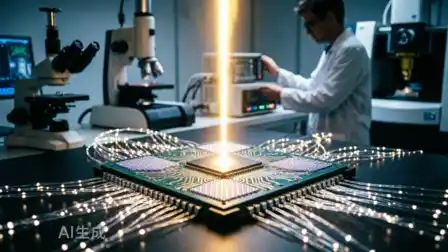
13. Siemens-Nvidia Collaboration Breaks AI Chip Verification Bottleneck: Cycle Time Slashed from Months to Days
1. Siemens and Nvidia collaboration dramatically reduced AI chip verification cycles from the traditional 3-6 months to just 3-5 days, improving efficiency dozens of times. This is achieved through GPU parallel computing and AI algorithm optimization enabling rapid completion of trillions of cycle verifications.
2. Verification accounts for over 60% of the chip design cycle. The EDA market size was around $12.5 billion in 2025, showing a trend of fusion with AI and GPU acceleration. The three giants (Synopsys, Cadence, Siemens EDA) hold 78% market share.
3. The technological breakthrough shortens time-to-market and reduces R&D costs, promotes deep integration of EDA and GPU acceleration technology, provides underlying support for rapid iteration of AI large models, and accelerates the digital transformation of the chip design industry chain.
14. Anthropic's New Tool Claude Managed Agents Accelerates Enterprise AI Agent Development
1. Product Innovation: Anthropic launched the Claude Managed Agents托管 service, cutting enterprise AI agent deployment time by 10x. Through automated sandbox execution, credential management, and other infrastructure, enterprises can quickly go live just by defining tasks (e.g., Rakuten deployed across multiple teams in one week).
2. Market Trend: 2026 became the first year of commercialization for enterprise-grade AI agents. Anthropic's annualized revenue exceeded $30 billion (a significant increase from $9 billion at end-2025). The number of enterprise customers spending over $1 million annually grew from 500 to 1000 in two months, showing accelerated B2B market penetration.
3. Business Model: Uses on-demand consumption pricing (model token cost + $0.08 per active runtime hour session fee). Secured a 3.5 GW TPU compute power合作 with Google and Broadcom (to go live in 2027), supporting scaled application needs for enterprise AI agents.
15. 2026 NVIDIA Comprehensive Research Report
1. Financial Performance: FY2026 revenue reached $215.9 billion (up 65% YoY), net profit $120 billion, gross margin 75.2%. Market capitalization stabilized above $4.3 trillion, making it the first chip company globally with annual revenue exceeding $200 billion.
2. Competitive Advantage: Holds 80% to 86% share of the AI accelerator market. Built a strong moat through the CUDA software ecosystem and full-stack technology. Has replaced Apple as TSMC's largest customer (contributing ~13% of TSMC's revenue), but faces reduced China market revenue contribution to 5%-8% due to export controls.
3. Future Opportunities: Focuses on Sovereign AI (national AI infrastructure), Physical AI (robotics field), and Autonomous Driving (expected to reach $10 billion scale by 2027). Among 53 analysts, 51 gave Buy ratings. Consensus target price indicates ~55% further upside potential.
(Comprehensive compilation by Wide-Angle Observation, Edge AI Daily, etc.)