Stablecoins Get A Break? US Lawmakers Propose Tax Relief

bitcoinistPublished on 2025-12-22Last updated on 2025-12-22

Abstract

US lawmakers have proposed a tax relief draft for stablecoins and crypto rewards. The plan, introduced by Representatives Max Miller and Steven Horsford, includes a safe harbor for regulated dollar-pegged stablecoins, exempting transactions under $200 from capital gains tax to simplify small payments like coffee or tips. Additionally, taxpayers could defer taxes on staking and mining rewards for up to five years, recognizing them as ordinary income afterward. The draft also extends wash sale rules to digital assets and allows mark-to-market accounting for certain traders. It remains a discussion draft and has not yet been formally introduced as legislation.

Lawmakers in the US have put forward a discussion draft that would ease tax reporting for small stablecoin payments and let some crypto earners delay taxes on staking and mining rewards.

According to reports, the plan was circulated by Representatives Max Miller (R-Ohio) and Steven Horsford (D-Nev.). The proposal aims to clear up rules that many say are confusing for everyday users and small businesses.

Stablecoin Safe Harbor For Small Payments

Based on reports, the draft would create a safe harbor for regulated dollar-pegged stablecoins when they are used like cash. Under the plan, capital gains on stablecoin transactions under $200 would be exempt from tax.

That $200 threshold is meant to stop everyday buys — coffee, tips, small fees — from triggering tax paperwork and capital gains calculations. The exemption would only apply to stablecoins issued by a permitted issuer and that keep a stable peg to the USD.

Bitcoin is now trading at $87,873. Chart: TradingView

A Deferral Option For Staking And Mining Rewards

Reports have disclosed another major change: taxpayers could elect to defer taxes on staking and mining rewards. Instead of being taxed the moment rewards are received, a taxpayer could choose to defer recognition for up to five years.

After that period ends the rewards would be taxed as ordinary income at fair market value. The choice would be voluntary, and some taxpayers might still face tax when they sell or convert assets later.
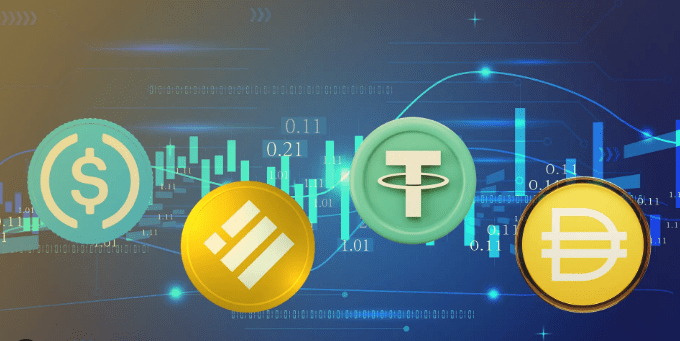
Image: TransFi

Mark-To-Market And Wash Sale Provisions Also Included

The draft does more than just touch stablecoins and staking. It would apply wash sale rules to digital assets, which limits the ability to claim artificial losses by quickly repurchasing the same token.

It also creates a path to elect mark-to-market accounting for certain traders, which would treat their holdings as sold at year-end for tax calculations. These moves are meant to align crypto tax practice closer to other parts of the tax code and to reduce gaps the IRS says exist.

A Draft, Not Yet A Bill

Lawmakers described the text as a discussion draft and have been talking with stakeholders and committees. The measure has not been formally introduced as a bill, and changes could come as it moves through the House Ways and Means Committee. If enacted, the framework is written to take effect for taxable years beginning after December 31, 2025.

Featured image from Chainalysis, chart from TradingView

Related Questions

QWhat is the main purpose of the discussion draft proposed by US lawmakers regarding stablecoins?

AThe discussion draft aims to ease tax reporting for small stablecoin payments and allow some crypto earners to delay taxes on staking and mining rewards.

QWhich lawmakers are behind the proposal to provide tax relief for stablecoin transactions and crypto rewards?

ARepresentatives Max Miller (R-Ohio) and Steven Horsford (D-Nev.) circulated the proposal.

QUnder the proposed draft, what is the threshold for stablecoin transactions to be exempt from capital gains tax?

AStablecoin transactions under $200 would be exempt from capital gains tax.

QHow long can taxpayers defer taxes on staking and mining rewards according to the proposal?

ATaxpayers can elect to defer recognition of taxes on staking and mining rewards for up to five years.

QIs the proposal currently a formal bill, and when would it take effect if enacted?

ANo, it is currently a discussion draft, not a formal bill. If enacted, it would take effect for taxable years beginning after December 31, 2025.

Related Reads

Google's 2026 Roadmap is Hidden in This Keynote Speech

Google I/O 2026 was not merely a product launch, but a strategic unveiling of the company's decade-long roadmap. The core signal is that Google is evolving its AI, Gemini, from a feature within products into a foundational operating layer that integrates and reshapes its entire ecosystem—Search, Android, Chrome, YouTube, Workspace, XR, and developer tools. The traditional paradigms of digital interaction are being redefined. Search is shifting from finding links to understanding intent and completing tasks. Android is transforming from an app-centric OS into an AI-native platform that orchestrates workflows across services. Chrome is becoming an AI reasoning layer over the web, while YouTube is evolving into a conversational knowledge engine. Google is heavily investing in Agentic AI, aiming for AI to act as a digital operator that executes tasks autonomously. Underlying this vision is the integration of Gemini across all products, making it the central nervous system. Key developments include Gemini Omni for multimodal generation, deeper product integrations, and a push into XR glasses for contextual, ambient computing. Google is positioning AI not as an optional feature but as essential infrastructure, akin to electricity. The broader implication is a competition for the next computing interface. Google's goal is not just to win in chatbots or models, but to become the operating system for the AI era by controlling the primary entry points—search, assistant, OS, and browser—and weaving them into a unified, intelligent layer. This represents a fundamental shift in computing paradigms that will impact creators, developers, businesses, and how all users interact with technology.

marsbit16m ago

Google's 2026 Roadmap is Hidden in This Keynote Speech

marsbit16m ago

‘Withdraw Insurance to Buy Stocks’: South Koreans Over 60 Are Borrowing to Bet on Samsung

South Korea's stock market has seen a frenzy, with the KOSPI nearly doubling in six months. This boom is fueled by a surge in retail investors borrowing to buy stocks, with outstanding margin loans hitting a record high. A significant portion of this debt is held by people over 50, with the 60+ age group seeing the fastest growth. Many are reportedly cashing out savings-type life insurance policies—even at a loss—to fund their stock investments. They are heavily concentrated in major semiconductor stocks like Samsung Electronics and SK Hynix, which have driven most of the market's gains. This trend is particularly risky for older investors, who are leveraging their limited retirement savings. While a market correction in March caused significant losses for leveraged accounts, the swift recovery and continued rally have reinforced risky behavior. Stories of quick profits on platforms like Blind further fuel the speculative rush. The phenomenon is partly driven by economic anxiety. With South Korea having a high elderly poverty rate and a low public pension replacement rate, some seniors see the booming market as a last chance to improve their finances. This "FOMO" (fear of missing out) sentiment is palpable, even in public parks where retirees gather and now discuss stock tips alongside their usual activities. Despite regulatory warnings and the inherent risks of leverage—especially for those with little time to recover from losses—the borrowing binge continues. The market's heavy reliance on a few tech stocks and its cyclical nature pose a substantial threat to these elderly investors, for whom a downturn could be catastrophic.

marsbit21m ago

‘Withdraw Insurance to Buy Stocks’: South Koreans Over 60 Are Borrowing to Bet on Samsung

marsbit21m ago

Deconstructing Anthropic: The Best AI Company Might Also Be an 'Organizational Invention'

Anthropic has emerged as one of the most compelling and fastest-growing AI companies. Its core strengths lie in strategic focus and unique organizational culture. Strategically, Anthropic concentrated early on coding as the critical path to AGI and commercial success, a focus driven by resource constraints and validated by market results. This contrasts with OpenAI's more expansive, multi-pronged approach. Co-founder Dario Amodei's technical conviction and low FOMO personality fostered this decisive focus. Organizationally, Anthropic has cultivated a distinctive culture characterized by: 1. **Deep Mission-Orientation:** A genuine, almost religious commitment to AI safety as the primary goal, even above corporate success. 2. **High Trust, Low Ego:** An environment where brilliant researchers collaborate effectively without internal politics or status battles. 3. **Strong Humanistic Values:** A bookish, idealistic ethos reflected in its hiring and model naming. This culture is maintained through rigorous cultural screening in hiring, extreme transparency and context-sharing from leadership (like Dario's frequent all-hands), a unique seven-cofounder equal-equity structure that disperses cultural influence, and a "one team" philosophy that minimizes silos. The culture stems partly from business necessity—excelling at the "dirty work" of data engineering for coding/agentic AI—and partly from Dario's negative experiences with political infighting at previous companies, motivating him to build Anthropic as an antithesis. While OpenAI remains a formidable competitor with greater resources and exploratory zeal, Anthropic demonstrates that success in the AI era can also come from focused bets, cohesive culture, and a steadfast mission, offering a distinct model of organizational invention.

marsbit34m ago

Deconstructing Anthropic: The Best AI Company Might Also Be an 'Organizational Invention'

marsbit34m ago

Moutai Moment: When Liquidity Dries Up, Everyone Huddles Around HYPE and ZEC

In May 2026, a notable sentiment shift is occurring in the crypto market, symbolized by prominent Ethereum advocate David Hoffman selling his remaining ETH. While major assets like ETH and SOL struggle—ETH is down over 50% from its 2025 high—two assets, HYPE and ZEC, are rallying strongly. This divergence mirrors the "core asset crowding" phenomenon seen in traditional markets during liquidity crunches, where capital concentrates in few perceived safe havens. The market faces liquidity pressure, partly due to Bitcoin ETF outflows and stalled narratives for major Layer 1s. In contrast, Hyperliquid (HYPE) attracts capital due to its strong fundamentals as a leading decentralized perp exchange with substantial protocol revenue and a share of USDC reserve yields. Its tokenomics, heavily favoring users, add to its appeal. Meanwhile, Zcash (ZEC) surges as a "privacy beta" play, driven by growing fears over AI-driven deanonymization and quantum computing threats. Endorsements from figures like Arthur Hayes and Multicoin Capital's Tushar Jain, alongside regulatory clarity and ETF expectations, fuel its rise. This crowding poses risks. Similar to the A股白酒 rally that ended when liquidity returned, the current crypto crowding could unravel if macro conditions improve or if positions become too concentrated, leading to a sharp correction. The article concludes by questioning whether investors hold assets out of conviction or inertia and prompts consideration of what the next crowded trade might be.

marsbit1h ago

Moutai Moment: When Liquidity Dries Up, Everyone Huddles Around HYPE and ZEC

marsbit1h ago

Trading

Spot
Futures

Hot Articles

How to Buy MEGA

Welcome to HTX.com! We've made purchasing MegaETH (MEGA) simple and convenient. Follow our step-by-step guide to embark on your crypto journey.Step 1: Create Your HTX AccountUse your email or phone number to sign up for a free account on HTX. Experience a hassle-free registration journey and unlock all features.Get My AccountStep 2: Go to Buy Crypto and Choose Your Payment MethodCredit/Debit Card: Use your Visa or Mastercard to buy MegaETH (MEGA) instantly.Balance: Use funds from your HTX account balance to trade seamlessly.Third Parties: We've added popular payment methods such as Google Pay and Apple Pay to enhance convenience.P2P: Trade directly with other users on HTX.Over-the-Counter (OTC): We offer tailor-made services and competitive exchange rates for traders.Step 3: Store Your MegaETH (MEGA)After purchasing your MegaETH (MEGA), store it in your HTX account. Alternatively, you can send it elsewhere via blockchain transfer or use it to trade other cryptocurrencies.Step 4: Trade MegaETH (MEGA)Easily trade MegaETH (MEGA) on HTX's spot market. Simply access your account, select your trading pair, execute your trades, and monitor in real-time. We offer a user-friendly experience for both beginners and seasoned traders.

1.1k Total ViewsPublished 2026.04.30Updated 2026.04.30

How to Buy MEGA

How to Buy TWT

Welcome to HTX.com! We've made purchasing Trust Wallet (TWT) simple and convenient. Follow our step-by-step guide to embark on your crypto journey.Step 1: Create Your HTX AccountUse your email or phone number to sign up for a free account on HTX. Experience a hassle-free registration journey and unlock all features.Get My AccountStep 2: Go to Buy Crypto and Choose Your Payment MethodCredit/Debit Card: Use your Visa or Mastercard to buy Trust Wallet (TWT) instantly.Balance: Use funds from your HTX account balance to trade seamlessly.Third Parties: We've added popular payment methods such as Google Pay and Apple Pay to enhance convenience.P2P: Trade directly with other users on HTX.Over-the-Counter (OTC): We offer tailor-made services and competitive exchange rates for traders.Step 3: Store Your Trust Wallet (TWT)After purchasing your Trust Wallet (TWT), store it in your HTX account. Alternatively, you can send it elsewhere via blockchain transfer or use it to trade other cryptocurrencies.Step 4: Trade Trust Wallet (TWT)Easily trade Trust Wallet (TWT) on HTX's spot market. Simply access your account, select your trading pair, execute your trades, and monitor in real-time. We offer a user-friendly experience for both beginners and seasoned traders.

660 Total ViewsPublished 2026.05.07Updated 2026.05.07

How to Buy TWT

Discussions

Welcome to the HTX Community. Here, you can stay informed about the latest platform developments and gain access to professional market insights. Users' opinions on the price of A (A) are presented below.

活动图片