# Control Articles associés

Le Centre d'actualités HTX fournit les derniers articles et analyses approfondies sur "Control", couvrant les tendances du marché, les mises à jour des projets, les développements technologiques et les politiques réglementaires dans l'industrie crypto.

Amidst Capital's Encirclement, Decentralization is the Sole Defense for Public Blockchains

In a landscape dominated by power and profit motives, the author argues that decentralization is not merely one desirable feature among many in blockchain design—it is the singular, non-negotiable defense against corporate and capital capture. The article adopts a Machiavellian, realist perspective on human institutions, positing that businesses will inevitably attempt to co-opt any valuable network to protect their profits and dominance. While external attacks like 51% forks are often discussed, the greater existential risk is internal capture—the gradual erosion of a protocol’s neutrality by vested interests, as seen historically with platforms like Visa and Google. The piece critiques permissioned chains, highly centralized “permissionless” layer-1s, and layer-2s without sufficient decentralization (e.g., single sequencers) as inherently vulnerable. These compromised systems, promoted by established financial players, are framed as delaying tactics to stifle truly open networks that threaten existing high-fee, inefficient business models. Real-world examples, such as closed enterprise consortiums that exclude competitors, illustrate how such systems cement oligopolies rather than foster innovation. The author concludes that while decentralized protocols like Ethereum are imperfect and costly to operate, they represent the only viable long-term equilibrium. In a market where value naturally flows to the most secure and neutral settlement layer, only maximally decentralized public blockchains can resist being subsumed by capital and powerful incumbents.

Foresight News07/21 06:58

Amidst Capital's Encirclement, Decentralization is the Sole Defense for Public Blockchains

Foresight News07/21 06:58

The Shutdown of Claude Mythos Revealed the True Cost of Renting AI to Me

The sudden shutdown of Claude Mythos this week starkly highlights a critical, often overlooked risk for founders: when your core capability relies entirely on someone else's platform, your fate is not in your own hands. The key question becomes: who truly owns the intelligence your product depends on? For years, the debate around open-source models focused on cost. Now, the evidence is clear: fine-tuned open-source models can achieve frontier-level quality for specific, mission-critical tasks at a fraction of the cost. However, the deeper issue is control. Relying on a third-party API is like renting; it works until the landlord changes the rules, raises the rent, or asks you to leave—as Mythos experienced. The lesson is not to stop using frontier models—they are incredible infrastructure. The goal is ownership. Ownership means starting with a powerful open-source model and shaping it around what makes your company unique: your data, workflows, domain expertise, and definition of "good." Over time, the model becomes less generic and more reflective of your business, creating durable value. The optimistic conclusion is that AI's future doesn't hinge on one superior model. There is no single frontier. The frontier includes proprietary models, models fine-tuned on company-specific knowledge, specialized models for narrow problems, and intelligent routers orchestrating model ensembles. The most interesting development is not models getting smarter, but intelligence becoming increasingly customizable. The winning companies will be those that transform intelligence into a unique, owned asset. Looking ahead, the vision is not one model dominating all, but many teams owning the part of the frontier that matters most to them.

marsbit06/16 02:10

The Shutdown of Claude Mythos Revealed the True Cost of Renting AI to Me

marsbit06/16 02:10

From Code to Cognition: A Ten-Thousand-Word Guide to the Evolution of the Robot Brain

"From Code to Cognition: The Evolution of Robot Brains" The journey of robotic intelligence has shifted dramatically from manually coded systems to AI-driven brains. For decades, robots relied on layered software stacks—perception, state estimation, planning, control—each handcrafted. While predictable, they lacked adaptability. The 2010s saw deep learning revolutionize perception (e.g., object detection) and control (via reinforcement learning), but learned skills remained narrow. The arrival of Large Language Models (LLMs) marked a turning point. LLMs acted as high-level planners, interpreting natural language instructions and generating sequences of actions for traditional robotic systems to execute. However, true integration came with Visual-Language-Action (VLA) models, which fused vision, language, and motion prediction into a single network. Pioneered by models like RT-2 and open-source projects like OpenVLA, VLAs enable robots to reason and act directly from visual input and commands. The most advanced humanoid robots now employ a "dual-brain" architecture: a slow-thinking, large VLA (System 2) for reasoning and planning, and a fast-reacting, small network (System 1) for high-frequency motion control, sometimes with an even lower-level System 0 for balance. This split balances cognition with the physics of real-time movement. Computation is split between onboard hardware (e.g., NVIDIA Jetson) for safety-critical control loops and cloud/edge servers for non-critical tasks like learning and interfaces. A crucial driver is the open-source ecosystem—models like GR00T and OpenVLA allow startups to build upon pre-trained brains and fine-tune them with their own data, accelerating development. Despite progress, current systems struggle with recovery from errors, sample inefficiency, and long-horizon tasks. This has spurred the rise of **World Models**—neural networks that predict the consequences of actions. By simulating possible futures before acting (like NVIDIA Cosmos or Meta V-JEPA), robots can plan, recover, and generalize better. This represents the next frontier: shifting intelligence from learned reactions to an internal model of physics and cause-and-effect. The field is rapidly evolving. While not yet at its "ChatGPT moment," the convergence of cheaper hardware, scalable simulation, and world models points toward robots that are increasingly capable, adaptive, and useful. The question is shifting from "what can robots do?" to "what *should* they do?"

marsbit06/07 12:55

From Code to Cognition: A Ten-Thousand-Word Guide to the Evolution of the Robot Brain

marsbit06/07 12:55

imToken's 10th Anniversary Unveils Strategic Direction for the Next Decade: Evolving from a Trusted Main Wallet to a Personal Digital Hub

On its tenth anniversary, decentralized wallet imToken announced its strategic vision for the next decade: evolving from a "trusted main wallet" into a "personal control interface." This new direction aims to help users manage not only digital assets but also identity, permissions, and AI agent actions in an increasingly open and intelligent internet. imToken outlined that while the past decade focused on Store, Send, and Stake—securing assets, enabling transfers, and facilitating network participation—the future introduces a fourth core proposition: Sign. This expanded concept goes beyond transaction signing to encompass expressing intent, granting permissions, setting rules, delegating actions, and revoking authorizations. As AI agents gain autonomy, imToken emphasizes the need for clear, verifiable, and revocable user control over their actions. CEO Ben He stated that imToken's mission is shifting from enabling ownership of digital assets to ensuring user sovereignty over their entire digital world in the AI era. The company's core principle has been upgraded from "Digital Assets, Under Your Control" to "Your Digital World, Under Your Control." Future development will focus on three areas: upholding self-custody principles, extending security from transactions to authorizations and automated actions, and building product capabilities for managing permissions, delegations, policies, and revocations. imToken views the wallet's role as expanding into a trusted control interface for human-AI collaboration, where managing keys, signatures, and permissions forms the infrastructure for personal digital sovereignty. Founded in 2016, imToken serves millions of users across 150+ countries, providing non-custodial wallet services supporting over 50 blockchain networks.

marsbit06/05 06:50

imToken's 10th Anniversary Unveils Strategic Direction for the Next Decade: Evolving from a Trusted Main Wallet to a Personal Digital Hub

marsbit06/05 06:50

Musk's 'One-Man Dynasty' Set to Ring the Bell on June 12th

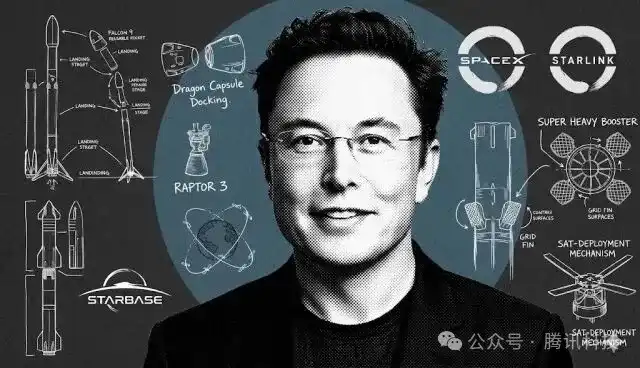
SpaceX Files for IPO, Targets Up to $2 Trillion Valuation SpaceX has officially filed for an initial public offering (IPO) with the U.S. SEC, planning to list on Nasdaq under the ticker "SPCX" on June 12. The company aims to raise $70-$80 billion, targeting a historic valuation between $1.75 and $2 trillion. Despite going public, founder Elon Musk will retain approximately 85% of the voting power through a dual-class share structure, maintaining absolute control. The S-1 filing reveals a company with sharply contrasting financial segments. In 2025, SpaceX reported $18.67 billion in revenue but a net loss of $4.94 billion. The loss was primarily driven by its AI unit, xAI, which burned $6.4 billion. In contrast, the Starlink satellite internet business was highly profitable, generating $11.4 billion in revenue and $4.4 billion in operating profit with an impressive 63% EBITDA margin. Starlink's user base grew to 10.3 million by Q1 2026, though average revenue per user has been declining. A key driver of the sky-high valuation is the recent $1.25 trillion merger with xAI, which added an AI narrative to the core aerospace business. SpaceX plans futuristic ventures like orbital AI data centers and space mining, though these are not yet revenue-generating. The company's capital expenditures are massive, exceeding $20.7 billion in 2025, with AI spending surpassing that of space operations. The IPO, led by Goldman Sachs, has drawn both enthusiasm and skepticism from Wall Street. While some hail it as a generational investment opportunity, others question the steep valuation multiples and the sustainability of funding xAI's significant losses with Starlink's profits. The listing represents a major test of market faith in Musk's long-term vision and his unique model of centralized control.

marsbit05/22 01:56

Musk's 'One-Man Dynasty' Set to Ring the Bell on June 12th

marsbit05/22 01:56

Google's AI Chief is Actually the Secret Backer of Anthropic, Hassabis Quietly Controls the Global AI Ecosystem

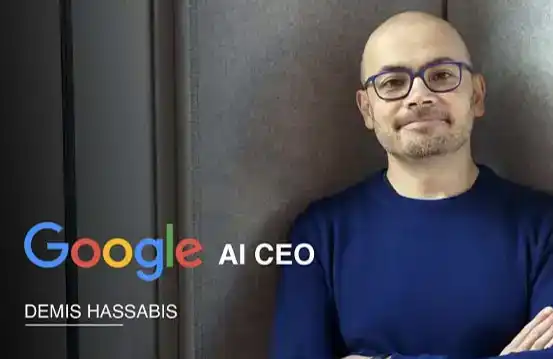
A bombshell report reveals that Demis Hassabis, the head of Google AI and DeepMind founder, was an early, secret investor in Anthropic, Google's arch-rival in the AI race. This discovery unveils a vast, interconnected empire—dubbed the "DeepMind Mafia"—where Hassabis's capital and influence extend through numerous top AI startups like Inflection AI and Ineffable Intelligence, which have collectively raised over $14 billion. Despite the public rivalry between Google's Gemini and Anthropic's Claude, Hassabis personally funded Anthropic at its inception, a stake now astronomically valuable given the company's reported $900 billion valuation. Furthermore, a close, mentor-like relationship exists between Hassabis and Anthropic CEO Dario Amodei. Concurrently, Hassabis has consolidated power within Google. Following the 2023 merger of Google Brain and DeepMind into Google DeepMind, his loyalists have assumed key leadership roles across Google's AI and cloud divisions. However, Hassabis continues to operate his power base from London, not Silicon Valley. The report paints a picture of Hassabis as a master strategist, quietly orchestrating the global AI ecosystem through a web of personal investments, former protégés, and internal corporate control, ensuring his influence prevails regardless of which public-facing company wins in the market.

marsbit05/21 09:35

Google's AI Chief is Actually the Secret Backer of Anthropic, Hassabis Quietly Controls the Global AI Ecosystem

marsbit05/21 09:35

活动图片