Rapper Afroman: Doesn't Understand Bitcoin, but Becomes a New Crypto Freedom Fighter

Foresight NewsPublié le 2026-06-09Dernière mise à jour le 2026-06-09

Résumé

Joseph "Afroman" Foreman, the rapper famed for "Because I Got High," has become an unlikely symbol for the crypto community's libertarian ideals. Following a 2022 police raid on his Ohio home, which yielded no charges, Foreman used the footage to create viral songs mocking the officers, leading to a lawsuit he ultimately won. His defense of free speech against government overreach resonated deeply with attendees at the Bitcoin 2024 conference in Las Vegas, where he performed. Despite admitting he knows little about cryptocurrency and owns none, event organizers saw his personal fight as embodying Bitcoin's core ethos of individual sovereignty and resistance to centralized control. Foreman, a self-described "icon of weed culture," has long performed for paying crowds but found a new political voice after his legal battle. His platform, which includes federal marijuana legalization and police accountability, aligns with the diverse, anti-establishment crowd at the Bitcoin conference, though he remains unaffiliated with any major party. The event featured an auction of his memorabilia, celebrating him as a modern "freedom fighter." In a final surprise, Foreman used his stage time to announce his candidacy for the 2028 U.S. presidential election, thrilling the remaining audience before launching into his signature hit.


Author: Jessica Klein, Wired

Translation: Saoirse, Foresight News


Joseph Edgar Foreman, better known by his stage name Afroman, is taking a long drag from a blunt. In a makeshift backstage lounge at The Venetian in Las Vegas, partitioned by curtains, the 51-year-old rapper is unhurried, even as thousands wait outside. The joint was rolled by his videographer, a woman in a tight evening minidress and clear sky-high heels. This grand venue is a world away from the dive bars he toured for over two decades.


Foreman is wearing his courtroom suit, an American flag-print outfit he now wears everywhere. In 2022, police, suspecting him of drug-related crimes and kidnapping, raided his Winchester, Ohio home. They found nothing incriminating except a jar of 'green herbal substance,' THC concentrate wax, paraphernalia, and over $5,000 in cash. After the raid, Foreman released songs mocking the officers involved, joking about receding hairlines and their wives, and humiliating them in various ways. Seven officers sued him for defamation and invasion of privacy, seeking $4 million. Foreman won the case, and clips from the trial went viral, earning him widespread public support.


After all, going viral is Foreman's specialty. He claims his 2000 college party anthem "Because I Got High" originally promoted free expression — a debatable point, but he is undeniably skilled at capturing attention. His calm demeanor during the trial and his emphasis on free speech drew millions to his music. Footage from his home security cameras, showing officers entering his house, was used in music videos, further boosting his popularity. The most viral, "Lemon Pound Cake," mocked an officer who seemed overly interested in a cake on the kitchen counter during the search. The video garnered nearly 10 million views on YouTube, and the so-called "Cake Cop" later reported receiving hundreds of lemon pound cakes as harassment.


The rapper's victory cast him as a "freedom fighter" in the public eye, which is why he traveled to Las Vegas to perform for a crowd of libertarian-leaning crypto enthusiasts. Craig Deutsch, the programming director for the Bitcoin conference, said Foreman's "fight for his right to create songs about police who illegally entered his home perfectly aligns with Bitcoin's core ethos." The annual Bitcoin conference attracts a diverse crowd: industry professionals, early Bitcoin adopters, and QAnon followers distrustful of government systems. It has also become a key campaign stop. Donald Trump delivered a keynote in 2024 during his presidential run; JD Vance spoke the following year. Now in its second year in Las Vegas, attendance is up despite Bitcoin's price being about $33,000 lower than last year.


Host Gregg Davis enters the smoky greenroom, finding Foreman surrounded by a small entourage: former pimp Bishop Don "Magic" Juan, an assistant in an emerald suit, men taking turns passing a blunt, and two young women in tight, shiny dresses.


"How should I introduce you?" Davis asks.


"Speak from the heart," Foreman replies. "Talk about the struggle, the hustle, the American Dream — if you remember that word — then just bring out Afroman."


The host jokingly thanks Foreman for "making the room smell so nice." Shortly after, his manager enters, politely informing him that hotel staff have smelled marijuana and are threatening to call the police.
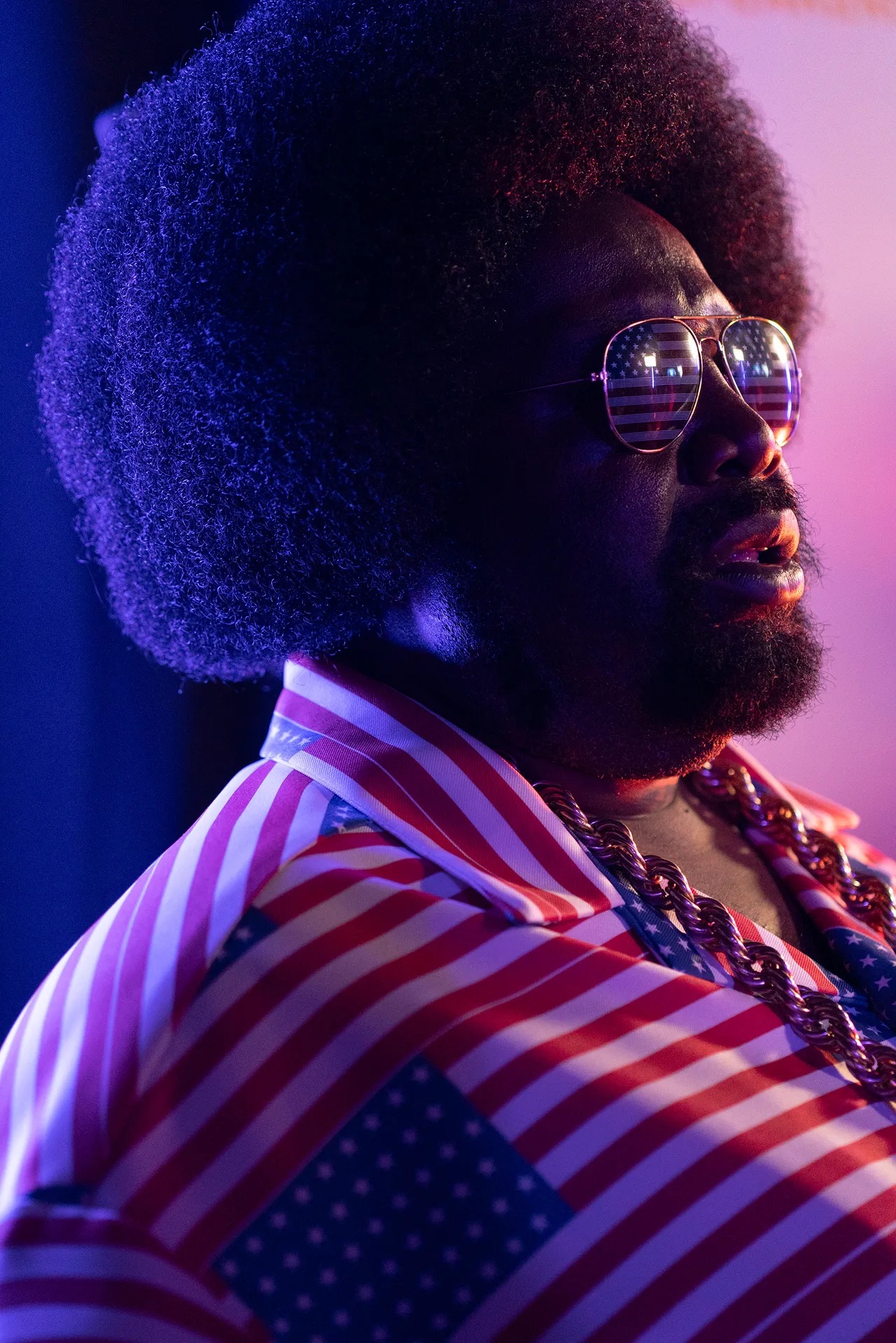

Joseph Edgar Foreman, widely known as rapper Afroman, rose to fame with "Because I Got High," a comedy song about the consequences of smoking marijuana. The song was nominated for a Grammy in 2002. Photo: Gabriella Angotti-Jones


"Okay, okay, I got it," Foreman says, turning to his crew. "They want us to put it out. Everybody, take a few last hits."


He has 20 minutes until he takes the Bitcoin conference's "Satoshi Main Stage," named after Bitcoin's pseudonymous creator. The rapper admits he knows nothing about cryptocurrency, doesn't own a single Bitcoin, and doesn't understand its logic. He pauses briefly, trying to think of something that will resonate with the crypto faithful, then lets it go. "I'm 51," he says. "I'll just wing it. It'll work out."


Foreman learned to sing in church and started writing raps at 12. His first song, he recalls, mocked a bully girl at his new school who had a mustache, with lyrics like, "Hairy Carrie ruins herself, so the hair on her lip gets no breeze." As an adult, back in Mississippi, he recorded "Because I Got High" shortly after quitting his job at a chicken processing plant, distributing 500 copies at a Mardi Gras party in New Orleans. Kids took it home and uploaded it to Napster; within days, Foreman says, it spread globally. In 2001, Universal Records flew to New York to sign him; the song earned a Grammy nomination the next year.


But Foreman's peak was fleeting. He never matched the success of his ode to marijuana-induced slacking. He parted ways with Universal and began self-releasing music online in 2004. For two decades, he's sustained a career performing his hit at college parties worldwide. He never intended to be an activist, but libertarian themes slowly seeped into his work. In an early interview with Time, he said, "I don't want to agitate anybody. I just thought, 'We're all potheads, let's just have some fun.'" In 2014, he partnered with the NORML legalization advocacy group for a positive spin on the song, highlighting medicinal benefits like glaucoma relief.


But these were often business opportunities, not deep convictions. Foreman tours relentlessly, taking gigs for the paycheck. He opened for Snoop Dogg on the 2018 Puff Puff Pass tour; he was paid $2,500 to perform three songs at a Pennsylvania frat party before police shut it down. He's had his own legal troubles: in 2015, he slapped a woman who rushed the stage, resulting in a $65,000 settlement and court-ordered anger management classes. After the Ohio raid but before his trial went viral, he even filed to run for U.S. President in 2024.


Earlier this year, millennials were surprised to see the party-rap icon from their youth re-emerge as a defender of the First Amendment. When a judge asked during the trial if the police entering his home gave him the right to mock them in song, Foreman responded, "They kicked my door down with guns, they searched my premises. Yes, I have freedom of speech. I could be in my backyard having fun, taking a bad situation and making it fun with my expression." He argued that since the officers chose to enter his home and appear on his security footage, using them in his video was fair game. The jury sided with him in just six hours. Foreman says he plans to write 50 to 100 songs about the officers who raided his home.


Overall, as he puts it, he's a "marijuana icon" first, with politics layered on top. This deeply appeals to the Bitcoin community. Rap is protest music, and Bitcoin is often called "the money of rebellion." Foreman fits into a lineage of conference speakers like former NSA whistleblower Edward Snowden and Silk Road founder Ross Ulbricht — the latter pardoned by Trump in 2025 after 11 years in prison for operating the dark web marketplace.


Conference organizer Deutsch says, "Whether Afroman is deep into crypto or not, in my mind, he is a Bitcoiner."


The morning before his performance, Foreman heads to Top Golf on the Las Vegas Strip. His companions include actor Christopher McDonald (who played Shooter McGavin in "Happy Gilmore"), a 19-year-old Amish boy on his Rumspringa (who had performed a cover of Weird Al Yankovic's "Amish Paradise" with Foreman the night before), two men from California, and Don Juan. It's all part of his paid appearance package for the Bitcoin conference. As a professional entertainer, he plays along: coaching the Amish boy on rapping, engaging with crypto fans, even as he's just beginning to grasp their zeal for digital currency.
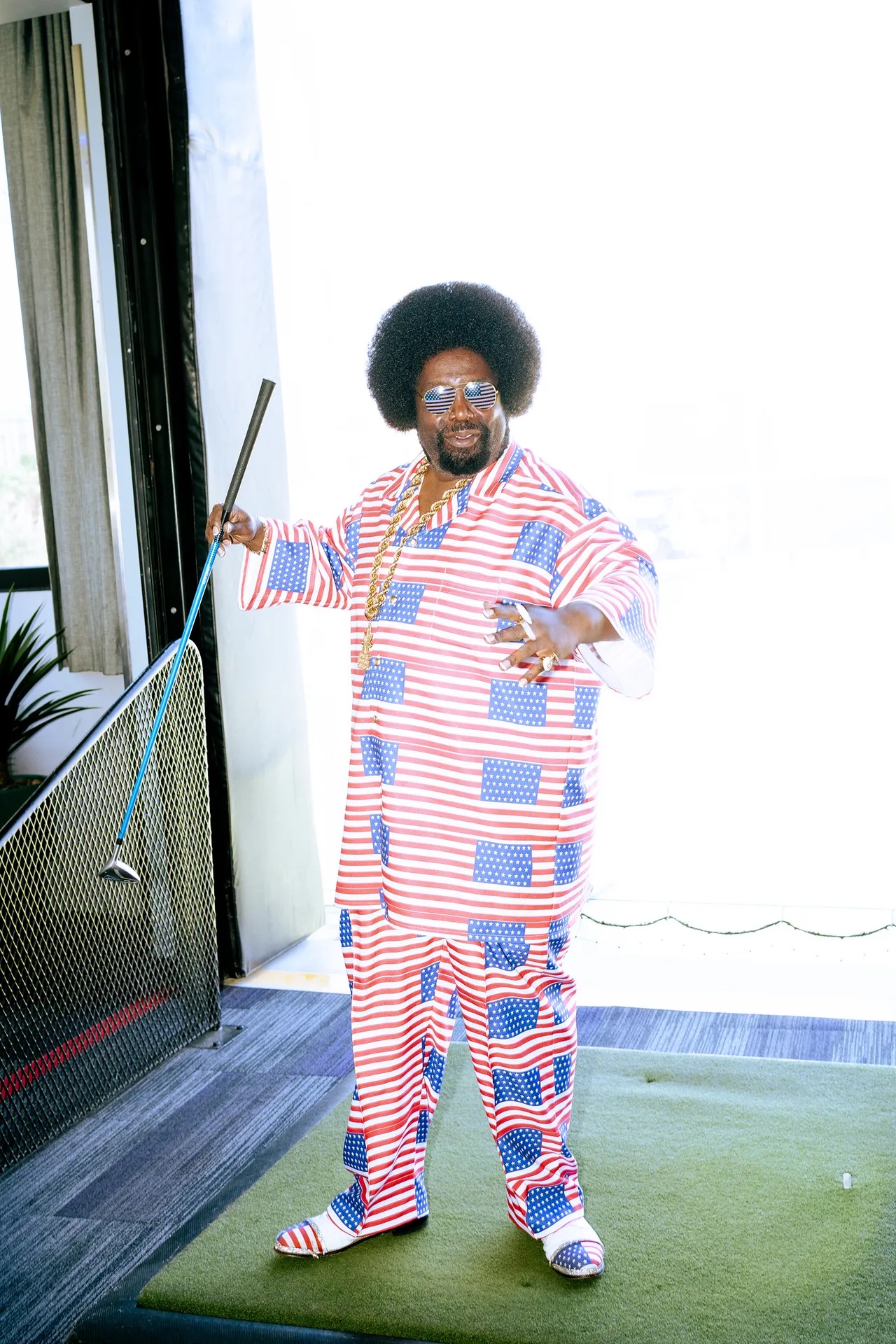

As part of his appearance at the Bitcoin conference, Foreman spent a morning at Top Golf on the Las Vegas Strip. Photo: Gabriella Angotti-Jones


Laken Schafer, 29, is Foreman's videographer. They met at a cannabis-themed wedding where she was filming and he was officiating. Foreman hired her because he "didn't want a sweaty male cameraman." Photo: Gabriella Angotti-Jones


Don Juan tends to Foreman throughout. They met through a mutual friend about 15 years ago and reconnect annually at the "Players' Ball," the pimp convention Don Juan started in 1974 for his birthday. He calls Foreman a "gentle giant," sitting beside him as his videographer tees off in heels. On the table is Don Juan's signature custom cup, featuring a diamond-encrusted silhouette of a woman.


Don Juan explains to Foreman, "Bitcoin keeps going up in value, and most regular people don't understand it." He once bought crypto but lost his private keys. He believes a figure like Afroman can introduce it to people outside the bubble.


Learning that one Bitcoin is worth about $77,000 and that someone once traded 10,000 Bitcoin for two pizzas in 2010 (worth about $41 at the time), Foreman remarks, "It's tough for the average person to get a whole Bitcoin."


He has a realization: "So it's like stocks? You buy it, hold it, and hope it goes up?"


The Bitcoin community, once a small group of cypherpunks wanting financial transactions free from government control, is now filled with political opportunists — many urging the U.S. government to hoard crypto to boost its price. In recent years, the conference has featured crypto-friendly Republican politicians, with MAGA merch everywhere, though political views aren't monolithic. This suits Afroman: he's not aligned with any party, focusing on issues that directly affect him. He supports jury trials in family court (he's divorced), federal marijuana legalization, civilian oversight boards for police (as a Black man, he feels this deeply); he's anti-war, against foreign aid, supports sex work legalization, and wants reparations for descendants of slaves.


Despite Trump's appearance at the conference, Foreman doesn't align with him. "The policy of qualified immunity for police is a deal-breaker for me," he says, also rejecting the glorification of Nazis and Confederate statues. "As a Black man, those are red lines."


Foreman has beliefs, but he advocates most fiercely when they intersect with his self-interest. During his 2024 presidential run, his two main platforms were: recreational marijuana legalization and mandatory body cameras for all police officers.
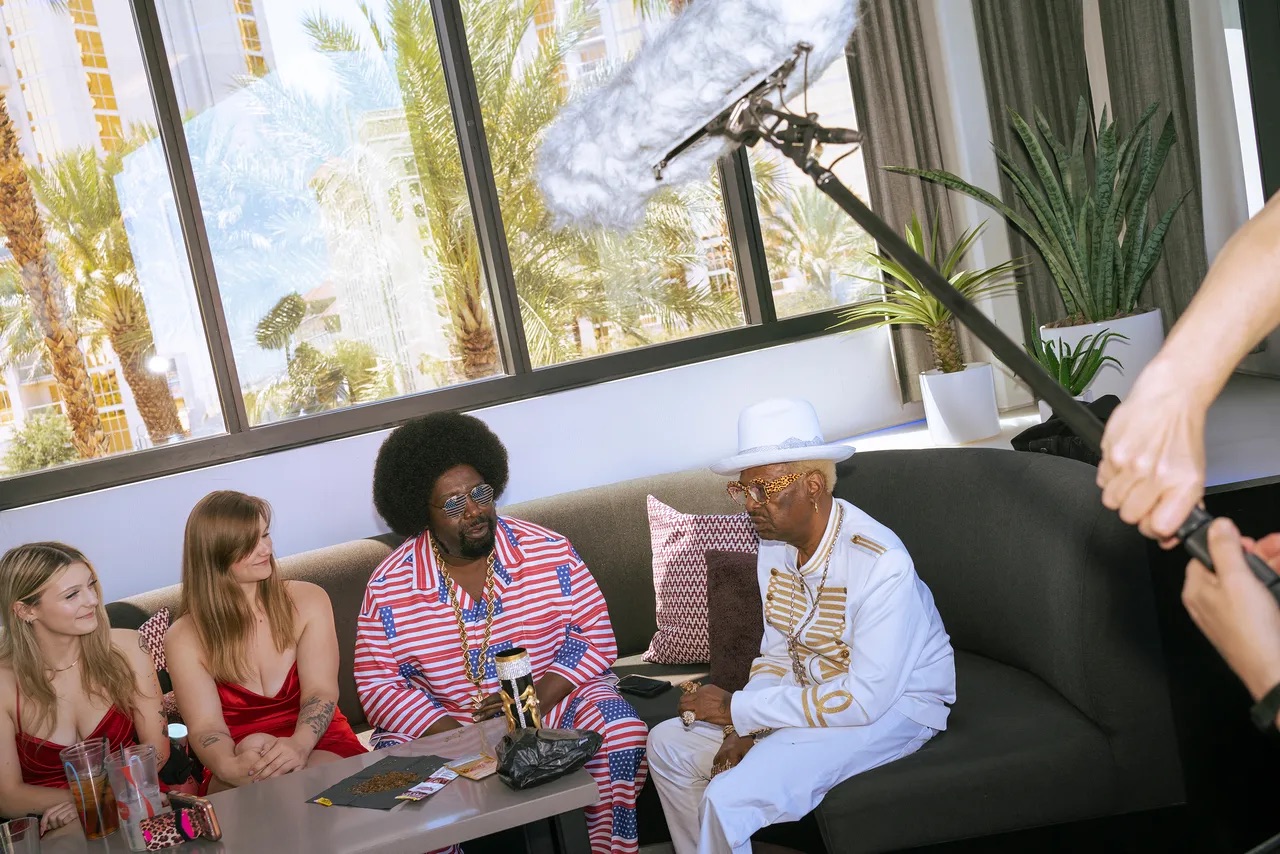

Afroman (from left) with his assistant Lilly Music, Laken Schafer, and Don Juan. Photo: Gabriella Angotti-Jones


Don Juan praises Foreman: "He's powerful now. People want something new. He's not just a rapper; he has a strong personality. Running Afroman for president isn't far-fetched."


Foreman declares, "I guarantee you, if I'm president, all these problems will be solved."


The three-day conference expo hall is filled with Bitcoin mining company booths. Suited professionals mingle with enthusiasts in sailor hats and Bitcoin logo face paint. In one corner, a mannequin sports Afroman's signature afro. A nearby glass case displays auction items: Afroman-signed rolling papers, a used ashtray, and commemorative bills with his portrait.


The items are listed by Scarce City, an auction house specializing in crypto memorabilia like old Bitcoin magazines and a harmonica set owned by crypto promoter and antivirus pioneer John McAfee. Last year, when Ross Ulbricht spoke, Scarce City auctioned three of his prison IDs and sneakers; one ID sold for 5.5 Bitcoin after bidding wars, worth about $371,000.


Scarce City's general manager, Sam Kimbrow, followed Foreman's trial and reached out in January to auction his items, hoping to help with legal fees, including the iconic American flag suit from court. The 40-year-old says assembling this collection fulfills "a millennial fantasy," hoping it shows a younger generation that artists can stand up for their rights.


"The core ethos of what we auction is freedom and personal sovereignty," she says. "Afroman is a living, modern-day freedom fighter."


After the auction, the flag suit sold for about $4,000 worth of Bitcoin, the ashtray for about $230 worth, but the signed rolling papers received no bids.


The auction didn't significantly benefit Foreman. He reveals he was paid a flat fee (undisclosed) to participate in Las Vegas events for three days. But he states his reason plainly: "They said one thing: 'Afroman, there's money involved!'"


On the conference's final day, an hour before his main stage performance, Foreman does an on-stage interview for elite attendees who bought the "Whale Pass" for $12,999 — an event closed to most media. The interviewer is Tracy Hoyos-Lopez, Kraken's head of strategic initiatives, known for influencing Trump's embrace of Bitcoin. All sixty seats fill quickly.


Asked about his mindset during the police raid, Foreman replies, "I'm used to police automatically thinking I'm a criminal. I'm patient. I wait for them to realize they're wrong."


"Through freedom of speech, we can call out corruption in the system," Foreman continues. "Once you see the problem, you can address it. Once it's addressed, you can fix it. I even hope this raid will make me enough money that I'll be glad the police came to my house."


According to Billboard, after winning the case, Foreman's music streams surged over 500%, helping cover the $20,000 in property damage from the raid.


The audience is fully on his side. Under a ceiling of colorful planet decorations, they sing along to "Because I Got High," even if they don't know all the words. They cheer when Foreman explains using footage of the actual officers who wronged him in his videos. Hoyos-Lopez concludes, "The greatest asset in America, in the Constitution, is freedom of speech. And Afroman, you have exercised that right to perfection."
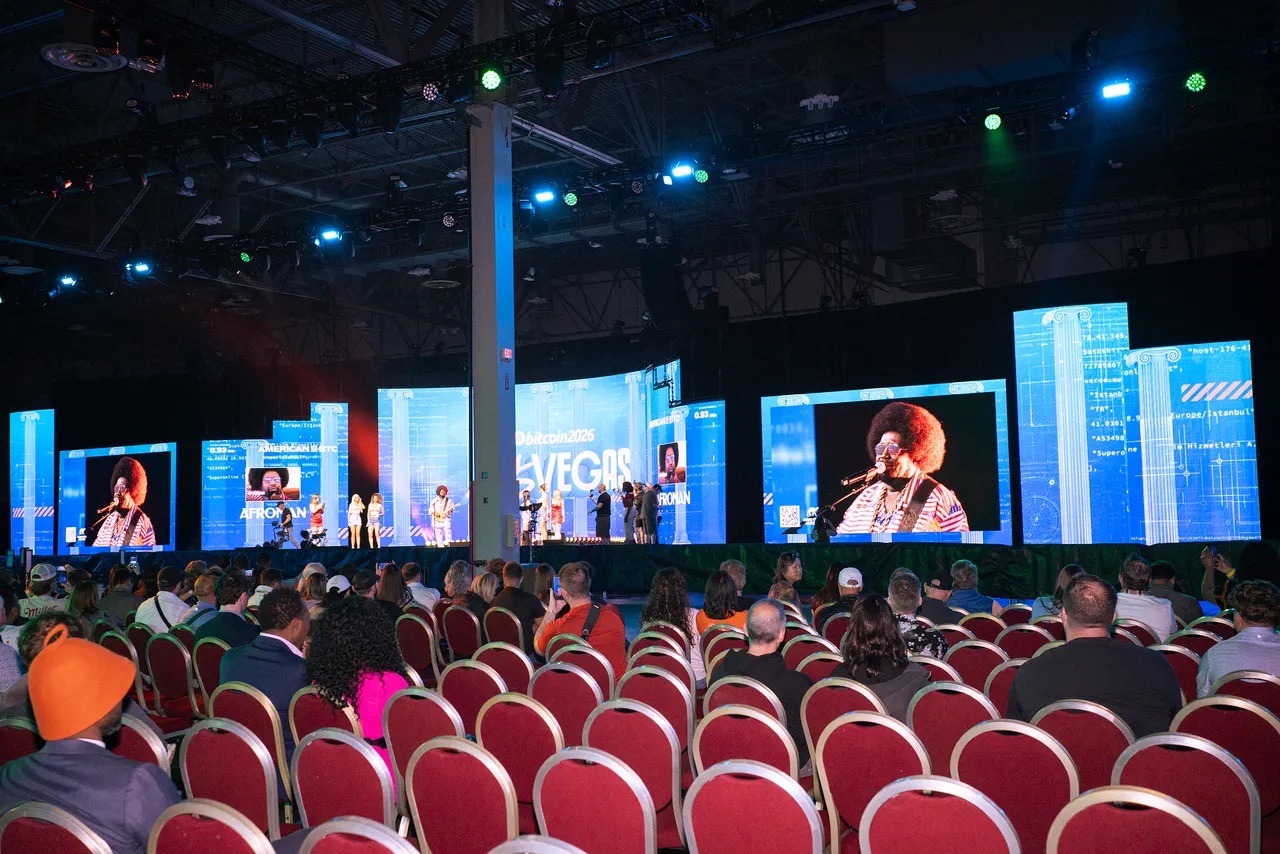

On the final night of the Bitcoin conference, Foreman took the Satoshi stage to perform his most famous song and make a special announcement. Photo: Gabriella Angotti-Jones


On the Bitcoin conference's closing night, Foreman takes the Satoshi stage, performs his hit, and makes a major announcement.


By the third day, the crowd has thinned, and The Venetian ballroom isn't packed. But the remaining audience nearly fills the 8,000 seats, there specifically for Afroman. As the only performer who's lived a protest story, the vibe isn't electric, but a middle-aged white woman in the front row gets up to dance.


Before starting, Foreman almost forgets his announcement. "Damn, I'm high," he says. "I almost forgot to tell y'all: I'm running for president in 2028."


The crowd erupts. Someone yells, "Afroman for president!"


Then, strumming a borrowed guitar shaped like the letter B, he launches into the song that made him famous.

Questions liées

QWho is Afroman and what is he best known for in his music career?

AAfroman, whose real name is Joseph Edgar Foreman, is a rapper best known for his 2000 hit single 'Because I Got High,' a comedic song about the consequences of smoking marijuana, which earned him a Grammy nomination in 2002.

QWhat legal event in 2022 transformed Afroman into a symbol of free speech and a 'freedom fighter'?

AIn 2022, police raided Afroman's Ohio home on suspicion of drug-related and kidnapping offenses. He was not convicted. He later released songs and a music video using footage from the raid to mock the officers. When seven of them sued him for defamation and privacy invasion, he won the case, championing freedom of speech. The legal victory and his response made him a symbol of free speech.

QWhy was Afroman invited to perform at the Bitcoin conference despite not knowing about cryptocurrency?

ABitcoin conference organizers, like program director Craig Deutsch, believed Afroman's fight for his right to create songs about the police raid and his victory in court aligned perfectly with Bitcoin's core pursuit of individual liberty and resistance against the traditional system.

QWhat significant announcement did Afroman make during his performance at the Bitcoin conference's closing night?

ADuring his performance on the Nakamoto Stage, Afroman announced his candidacy for the 2028 U.S. Presidential election.

QAccording to the article, what were some of the items auctioned by Scarce City on Afroman's behalf, and what was the result?

AScarce City auctioned Afroman's personal items, including his signed rolling papers, a used ashtray, and his iconic American flag suit worn during his court appearances. The flag suit sold for the equivalent of about $4,000 in Bitcoin, the ashtray for about $230 in Bitcoin, but the signed rolling papers received no bids.

Lectures associées

Le marché de la préfixation des prix d'OpenAI sur Hyperliquid, pourquoi n'a-t-il tenu que six mois ?

L'article examine l'échec rapide de Ventuals, une plateforme de pré-cotation d'actions non cotées comme OpenAI et Anthropic sur Hyperliquid, malgré son soutien par Paradigm. En contraste, Trade.xyz, une équipe anonyme, a réussi en se concentrant sur des actifs comme SpaceX dont le prix de référence à l'introduction en bourse (IPO) était imminent et vérifiable. La clé de l'échec de Ventuals réside dans son mécanisme de prix défectueux. Pour des sociétés comme OpenAI sans date d'IPO, son oracle utilisait à 50% des transactions privées opaques et à 50% la moyenne mobile de son propre prix sur le marché. Cela créait une boucle d'auto-référence, poussant artificiellement les prix vers le haut sans lien avec la demande réelle, rendant les ventes et les liquidations difficiles. À sa fermeture après neuf mois, Ventuals a figé les prix à 1341,80 $ pour OpenAI et 1618,90 $ pour Anthropic, des chiffres considérés comme artificiellement gonflés. Ironiquement, des employés et investisseurs de ces sociétés utilisaient ces prix pour évaluer leurs propres actions, soulignant la demande pour une valorisation en temps réel d'actifs privés. Le secteur de la pré-cotation attire désormais des acteurs majeurs comme Coinbase, mais le défi fondamental persiste : sans marché public pour corriger les prix, la recherche d'une valorisation juste pour les entreprises non cotées reste problématique, comme l'a montré l'expérience de Ventuals.

marsbitIl y a 25 mins

Le marché de la préfixation des prix d'OpenAI sur Hyperliquid, pourquoi n'a-t-il tenu que six mois ?

marsbitIl y a 25 mins

Avertissement récent de Dalio : Ne vous laissez pas griser par l'IA, les rendements réels du marché boursier américain pourraient être de -5% à -10% au cours des 5 à 10 prochaines années

Ray Dalio, fondateur de Bridgewater, met en garde contre l'enthousiasme excessif pour l'IA sur les marchés. Il souligne que le marché américain est actuellement dominé par une poignée de sociétés technologiques, concentrant les risques. Historiquement, à ce stade du cycle, les paris concentrés sur les leaders de nouvelles technologies révolutionnaires échouent souvent en raison d'une incertitude inhérente. Dalio identifie cinq forces majeures influençant les marchés : la dette/monnaie, les tensions politiques et sociales, la géopolitique, les événements naturels et les nouvelles technologies comme l'IA. Il insiste sur le fait qu'un risque élevé est un fait, tandis qu'une faible rentabilité future (estimant des rendements réels potentiels de -5% à -10% sur 5-10 ans pour les actions américaines) est son opinion. Son principe clé est la diversification. Son "Saint Graal de l'investissement" consiste à détenir environ 15 positions non corrélées et équilibrées en risque. Une telle approche, démontrée mathématiquement, offre un meilleur ratio rendement/risque qu'un pari concentré, surtout dans un marché aussi focalisé. Il conseille de ne pas confondre le potentiel d'une technologie avec l'attractivité de ses actions, et de privilégier la prudence et la diversification face à une incertitude aussi grande.

marsbitIl y a 1 h

Avertissement récent de Dalio : Ne vous laissez pas griser par l'IA, les rendements réels du marché boursier américain pourraient être de -5% à -10% au cours des 5 à 10 prochaines années

marsbitIl y a 1 h

Trading

Spot
Futures

Articles tendance

Qu'est ce que BITCOIN

Comprendre HarryPotterObamaSonic10Inu (ERC-20) et sa position dans l'espace crypto Ces dernières années, le marché des cryptomonnaies a connu une augmentation de la popularité des monnaies mèmes, suscitant l'intérêt non seulement des traders, mais aussi de ceux qui recherchent un engagement communautaire et une valeur divertissante. Parmi ces jetons uniques, HarryPotterObamaSonic10Inu (ERC-20) est un projet intrigant qui mêle des références culturelles à l'univers des cryptomonnaies. Cet article explore les aspects clés de HarryPotterObamaSonic10Inu, en examinant ses mécanismes, son ethos axé sur la communauté, et son engagement avec le paysage crypto plus large. Qu'est-ce que HarryPotterObamaSonic10Inu (ERC-20) ? Comme son nom l'indique, HarryPotterObamaSonic10Inu est une monnaie mème construite sur la blockchain Ethereum, classée selon la norme ERC-20. Contrairement aux cryptomonnaies traditionnelles qui peuvent mettre l'accent sur l'utilité pratique ou le potentiel d'investissement, ce jeton prospère grâce à sa valeur divertissante et à la force de sa communauté. Le projet vise à favoriser un environnement où des utilisateurs engagés peuvent se rassembler, partager des idées et participer à des activités inspirées par divers phénomènes culturels. Une caractéristique notable de HarryPotterObamaSonic10Inu est son absence de taxe sur les transactions. Cet élément attrayant vise à encourager le trading et l'implication de la communauté, sans frais supplémentaires pouvant décourager les petits traders. L'offre totale de la monnaie est fixée à un milliard de jetons, un chiffre qui marque son intention de maintenir une circulation substantielle au sein de la communauté. Créateur de HarryPotterObamaSonic10Inu (ERC-20) Les origines de HarryPotterObamaSonic10Inu sont quelque peu obscures ; les détails concernant le créateur restent inconnus. Le développement de ce jeton ne comporte pas d'équipe identifiable ou de plan explicite, ce qui n'est pas rare dans le secteur des monnaies mèmes. Au lieu de cela, le projet a émergé de manière organique, son progrès s'appuyant fortement sur l'enthousiasme et la participation de sa communauté. Investisseurs de HarryPotterObamaSonic10Inu (ERC-20) En ce qui concerne les investissements externes et le soutien, HarryPotterObamaSonic10Inu reste également ambigu. Le jeton ne mentionne aucune fondation d'investissement connue ou un soutien organisationnel significatif. Au lieu de cela, le cœur battant du projet est sa communauté de base, qui informe sa croissance et sa durabilité par des actions collectives et un engagement dans l'espace crypto. Comment fonctionne HarryPotterObamaSonic10Inu (ERC-20) ? En tant que monnaie mème, HarryPotterObamaSonic10Inu opère principalement en dehors des cadres traditionnels qui régissent souvent la valeur des actifs. Plusieurs aspects distinctifs définissent comment le projet fonctionne : Transactions sans taxe : Sans frais de taxe sur les transactions, les utilisateurs peuvent acheter et vendre librement le jeton sans se préoccuper de frais cachés. Engagement communautaire : Le projet prospère grâce à l'interaction communautaire, exploitant les plateformes de médias sociaux pour créer du bruit et faciliter l'implication. Les discussions, le partage de contenu et l'engagement sont des éléments cruciaux qui aident à étendre sa portée et à favoriser la loyauté parmi les supporters. Pas d'utilité pratique : Il est important de noter que HarryPotterObamaSonic10Inu n'offre pas d'utilité concrète au sein de l'écosystème financier. Au contraire, il est classé comme un jeton principalement pour des activités de divertissement et communautaires. Référence culturelle : Le jeton intègre habilement des éléments de la culture populaire pour susciter l'intérêt, s'adressant à la fois aux amateurs de mèmes et aux suiveurs de crypto. HarryPotterObamaSonic10Inu illustre comment les monnaies mèmes fonctionnent différemment des projets de cryptomonnaies plus traditionnels, entrant sur le marché en tant que constructions sociales innovantes plutôt qu'actifs utilitaires. Chronologie de HarryPotterObamaSonic10Inu (ERC-20) L'histoire de HarryPotterObamaSonic10Inu est jalonnée de plusieurs étapes notables : Création : Le jeton est né d'un mème viral, captivant l'imagination de nombreux passionnés de crypto. Les dates de création spécifiques ne sont pas disponibles, soulignant son ascension organique. Listing sur les échanges : HarryPotterObamaSonic10Inu a fait son apparition sur divers échanges, permettant un accès et un trading plus faciles par la communauté. Initiatives d'engagement communautaire : Activités en cours visant à améliorer l'interaction communautaire, y compris des concours, des campagnes sur les réseaux sociaux, et la génération de contenu par des fans et des défenseurs. Plans d'expansion futurs : La feuille de route du projet comprend le lancement d'une collection NFT, de marchandises, et d'un site eCommerce lié à ses thèmes culturels, engageant davantage la communauté et tentant d'ajouter plus de dimensions à son écosystème. Points clés concernant HarryPotterObamaSonic10Inu (ERC-20) Nature axée sur la communauté : Le projet privilégie l'apport collectif et la créativité, garantissant que l'implication des utilisateurs est au cœur de son développement. Classification de monnaie mème : Il représente l'apogée de la cryptomonnaie basée sur le divertissement, se distinguant des véhicules d'investissement traditionnels. Pas d'affiliation directe avec Bitcoin : Malgré la similitude dans le nom du ticker, HarryPotterObamaSonic10Inu est distinct et n'a aucun lien avec Bitcoin ou d'autres cryptomonnaies établies. Focus sur la collaboration : HarryPotterObamaSonic10Inu est conçu pour créer un espace de collaboration et de partage d'histoires parmi ses détenteurs, offrant une voie pour la créativité et le lien communautaire. Perspectives d'avenir : L'ambition de s'étendre au-delà de son concept initial vers des NFT et des marchandises dessine un chemin pour le projet afin de potentiellement entrer dans des avenues plus grand public au sein de la culture numérique. Alors que les monnaies mèmes continuent de captiver l'imagination de la communauté des cryptomonnaies, HarryPotterObamaSonic10Inu (ERC-20) se distingue par ses liens culturels et son approche centrée sur la communauté. Bien qu'il ne corresponde pas au modèle typique d'un jeton axé sur l'utilité, son essence réside dans la joie et la camaraderie cultivées parmi ses supporters, soulignant la nature en évolution des cryptomonnaies dans un âge de plus en plus numérique. À mesure que le projet continue de se développer, il sera important de surveiller comment les dynamiques communautaires influencent sa trajectoire dans le paysage toujours changeant de la technologie blockchain.

1.7k vues totalesPublié le 2024.04.01Mis à jour le 2024.12.03

Qu'est ce que BITCOIN

Comment acheter BTC

Bienvenue sur HTX.com ! Nous vous permettons d'acheter Bitcoin (BTC) de manière simple et pratique. Suivez notre guide étape par étape pour commencer votre parcours crypto.Étape 1 : Création de votre compte HTXUtilisez votre adresse e-mail ou votre numéro de téléphone pour ouvrir un compte sur HTX gratuitement. L'inscription se fait en toute simplicité et débloque toutes les fonctionnalités.Créer mon compteÉtape 2 : Choix du mode de paiement (rubrique Acheter des cryptosCarte de crédit/débit : utilisez votre carte Visa ou Mastercard pour acheter instantanément Bitcoin (BTC).Solde :utilisez les fonds du solde de votre compte HTX pour trader en toute simplicité.Prestataire tiers :pour accroître la commodité d'utilisation, nous avons ajouté des modes de paiement populaires tels que Google Pay et Apple Pay.P2P :tradez directement avec d'autres utilisateurs sur HTX.OTC (de gré à gré) : nous offrons des services personnalisés et des taux de change compétitifs aux traders.Étape 3 : stockage de vos Bitcoin (BTC)Après avoir acheté vos Bitcoin (BTC), stockez-les sur votre compte HTX. Vous pouvez également les envoyer ailleurs via un transfert sur la blockchain ou les utiliser pour trader d'autres cryptos.Étape 4 : tradez des Bitcoin (BTC)Tradez facilement Bitcoin (BTC) sur le marché Spot de HTX. Il vous suffit d'accéder à votre compte, de sélectionner la paire de trading, d'exécuter vos trades et de les suivre en temps réel. Nous offrons une expérience conviviale aux débutants comme aux traders chevronnés.

5.4k vues totalesPublié le 2024.12.12Mis à jour le 2026.06.02

Comment acheter BTC

Qu'est ce que $BITCOIN

OR DÉMATÉRIEL ($BITCOIN) : Une Analyse Complète Introduction à OR DÉMATÉRIEL ($BITCOIN) OR DÉMATÉRIEL ($BITCOIN) est un projet basé sur la blockchain opérant sur le réseau Solana, qui vise à combiner les caractéristiques des métaux précieux traditionnels avec l'innovation des technologies décentralisées. Bien qu'il partage un nom avec Bitcoin, souvent appelé “or numérique” en raison de sa perception en tant que réserve de valeur, OR DÉMATÉRIEL est un jeton distinct conçu pour créer un écosystème unique au sein du paysage Web3. Son objectif est de se positionner comme un actif numérique alternatif viable, bien que les spécificités concernant ses applications et fonctionnalités soient encore en développement. Qu'est-ce qu'OR DÉMATÉRIEL ($BITCOIN) ? OR DÉMATÉRIEL ($BITCOIN) est un jeton de cryptomonnaie explicitement conçu pour une utilisation sur la blockchain Solana. Contrairement à Bitcoin, qui joue un rôle de stockage de valeur largement reconnu, ce jeton semble se concentrer sur des applications et caractéristiques plus larges. Les aspects notables incluent : Infrastructure Blockchain : Le jeton est construit sur la blockchain Solana, connue pour sa capacité à gérer des transactions rapides et peu coûteuses. Dynamique de l'Offre : OR DÉMATÉRIEL a une offre maximale plafonnée à 100 quadrillions de jetons (100P $BITCOIN), bien que les détails concernant son offre en circulation soient actuellement non divulgués. Utilité : Bien que les fonctionnalités précises ne soient pas explicitement décrites, il y a des indications que le jeton pourrait être utilisé pour diverses applications, impliquant potentiellement des applications décentralisées (dApps) ou des stratégies de tokenisation d'actifs. Qui est le Créateur d'OR DÉMATÉRIEL ($BITCOIN) ? À l'heure actuelle, l'identité des créateurs et de l'équipe de développement derrière OR DÉMATÉRIEL ($BITCOIN) reste inconnue. Cette situation est typique parmi de nombreux projets innovants dans l'espace blockchain, en particulier ceux alignés avec la finance décentralisée et les phénomènes de meme coin. Bien qu'une telle anonymité puisse favoriser une culture axée sur la communauté, elle intensifie les préoccupations concernant la gouvernance et la responsabilité. Qui sont les Investisseurs d'OR DÉMATÉRIEL ($BITCOIN) ? Les informations disponibles indiquent qu'OR DÉMATÉRIEL ($BITCOIN) n'a pas de bailleurs de fonds institutionnels connus ou d'investissements en capital-risque notables. Le projet semble fonctionner sur un modèle peer-to-peer axé sur le soutien et l'adoption de la communauté plutôt que sur des voies de financement traditionnelles. Son activité et sa liquidité se situent principalement sur des échanges décentralisés (DEX), tels que PumpSwap, plutôt que sur des plateformes de trading centralisées établies, soulignant davantage son approche de base. Comment fonctionne OR DÉMATÉRIEL ($BITCOIN) Les mécanismes opérationnels d'OR DÉMATÉRIEL ($BITCOIN) peuvent être élaborés en fonction de sa conception blockchain et des attributs du réseau : Mécanisme de Consensus : En s'appuyant sur le mécanisme de preuve d'historique (PoH) unique de Solana combiné à un modèle de preuve d'enjeu (PoS), le projet assure une validation efficace des transactions contribuant à la haute performance du réseau. Tokenomics : Bien que des mécanismes déflationnistes spécifiques n'aient pas été largement détaillés, l'immense offre maximale de jetons implique qu'elle pourrait répondre à des microtransactions ou à des cas d'utilisation de niche qui restent à définir. Interopérabilité : Il existe un potentiel d'intégration avec l'écosystème plus large de Solana, y compris diverses plateformes de finance décentralisée (DeFi). Cependant, les détails concernant des intégrations spécifiques restent non spécifiés. Chronologie des Événements Clés Voici une chronologie qui met en évidence des jalons significatifs concernant OR DÉMATÉRIEL ($BITCOIN) : 2023 : Le déploiement initial du jeton a lieu sur la blockchain Solana, marqué par son adresse de contrat. 2024 : OR DÉMATÉRIEL gagne en visibilité en devenant disponible à la négociation sur des échanges décentralisés comme PumpSwap, permettant aux utilisateurs de l'échanger contre SOL. 2025 : Le projet connaît une activité de trading sporadique et un intérêt potentiel pour des engagements dirigés par la communauté, bien qu'aucun partenariat notable ou avancée technique n'ait été documenté jusqu'à présent. Analyse Critique Forces Scalabilité : L'infrastructure sous-jacente de Solana prend en charge des volumes de transactions élevés, ce qui pourrait améliorer l'utilité de $BITCOIN dans divers scénarios de transaction. Accessibilité : Le potentiel faible prix de négociation par jeton pourrait attirer les investisseurs de détail, facilitant une participation plus large grâce aux opportunités de propriété fractionnée. Risques Manque de Transparence : L'absence de bailleurs de fonds, de développeurs ou de processus d'audit connus publiquement peut susciter du scepticisme quant à la durabilité et à la fiabilité du projet. Volatilité du Marché : L'activité de trading dépend fortement du comportement spéculatif, ce qui peut entraîner une volatilité des prix significative et une incertitude pour les investisseurs. Conclusion OR DÉMATÉRIEL ($BITCOIN) émerge comme un projet intrigant mais ambigu au sein de l'écosystème Solana en rapide évolution. Bien qu'il tente de tirer parti du récit de “l'or numérique”, son éloignement du rôle établi de Bitcoin en tant que réserve de valeur souligne la nécessité d'une différenciation plus claire de son utilité prévue et de sa structure de gouvernance. L'acceptation et l'adoption futures dépendront probablement de la résolution de l'opacité actuelle et de la définition plus explicite de ses stratégies opérationnelles et économiques. Remarque : Ce rapport englobe des informations synthétisées disponibles jusqu'en octobre 2023, et des développements peuvent avoir eu lieu au-delà de la période de recherche.

88 vues totalesPublié le 2025.05.13Mis à jour le 2025.05.13

Qu'est ce que $BITCOIN

Discussions

Bienvenue dans la Communauté HTX. Ici, vous pouvez vous tenir informé(e) des derniers développements de la plateforme et accéder à des analyses de marché professionnelles. Les opinions des utilisateurs sur le prix de BTC (BTC) sont présentées ci-dessous.

活动图片