Has the Era of Global Central Banks 'Hoarding Gold' Come to an End?

marsbitPublié le 2026-04-03Dernière mise à jour le 2026-04-03

Résumé

The article questions whether the global central bank gold-buying spree, ongoing for 15 years, is ending. Citing a UBS report, it concludes that a structural shift to large-scale selling is highly unlikely. While the pace of purchases may slow to 800-850 tons in 2026 from 860 tons in 2025, central banks are expected to remain net buyers. The report challenges the narrative that recent sales, like Turkey's alleged sale of 50 tons, signal a trend. It argues Turkey's data is distorted by commercial bank positions and swaps, and its central bank uses gold for domestic liquidity management, not necessarily market speculation. Short-term price volatility is attributed to dollar strength and real interest rates, not central bank selling. The underlying logic for holding gold remains strong: over 60% of central banks follow a buy-and-hold strategy, with diversification being the primary motive. While short-term noise and price consolidation are expected, the medium-term outlook is bullish, with UBS forecasting an average 2026 price of $5000/oz and a year-end target of $5600/oz.

Original Author: Zhao Ying

Original Source: Wall Street News

The hottest question in the market recently is: Are global central banks selling gold? Has this 15-year-long official "gold hoarding wave" come to an end?

According to Wind Trading Desk, UBS strategist Joni Teves gave a clear judgment in the latest precious metals research report released on April 2: The possibility of a structural shift and large-scale selling by central banks is extremely low. Official institutions will maintain a net buying stance, but the pace of purchases will slow moderately—it is estimated that gold purchases in 2026 will be about 800 to 850 tons, slightly lower than the approximately 860 tons in 2025.

The report targeted the most glaring recent example—the news that Turkey "sold about 50 tons of gold in a few weeks." Teves believes: Turkey's official gold data includes commercial bank positions, swaps, and other operations. Relying solely on headlines to infer that "central banks are starting to sell" is highly risky, and it is better to wait for more detailed breakdown data before making a judgment.

In terms of price, UBS defines the short term as "full of noise": news cycles about geopolitical situations will keep gold prices fluctuating and consolidating; but the medium-term logic still points to new highs. The bank lowered its 2026 average gold price forecast to $5,000 (previously $5,200, mainly an adjustment for the first quarter) and maintained its year-end target price of $5,600 (set at the end of January).

Evidence That "Central Bank Gold Selling" Is the Main Cause of This Pullback Is Not Solid; 800-850 Tons Is More Like "Slowing Down"

The market's concern is specific: If the Middle East conflict prolongs, oil prices push up inflation, growth weakens, and local currencies depreciate, some central banks may be forced to sell gold to cope with the pressure. The report does not deny that "individual central banks may sell," but it emphasizes that this does not equate to a trend reversal in the official sector.

A key reminder from the report is: During the past 15 years of continuous gold accumulation by the official sector, "selling" in a single month is not uncommon. The reasons can be practical—central banks that bought cheaply earlier may take some profit tactically outside their core positions; sharp gold price increases trigger rebalancing; "natural inflows" from gold-producing countries turn into external shipments at certain points. In other words, selling can be an action, not necessarily a stance.

The baseline judgment is that net buying continues, but at a slower pace. The detail here lies in the trading habits of the official sector: They are more like "physical buyers," often providing support during pullbacks, helping the market stabilize more quickly at higher levels; conversely, the official sector typically does not chase rallies, preferring to intervene when prices are more suitable and volatility is lower.

This also explains why, when volatility increases, the market suddenly feels that "central banks have disappeared." The observation mentioned in the research is: Recently, the official sector and other long-term holders have tended to wait and see rather than immediately replenish positions in every decline.

The Narrative of Turkey Selling "50 Tons" Is Overstated; Short-Term Gold Prices Are More Influenced by the Dollar and Real Interest Rates

The case of Turkey is sensitive because it seems to fit the narrative of "central banks starting to sell gold." But Turkey has certain particularities: Some changes may be due to swaps rather than direct selling; more importantly, the Turkish Central Bank has long used gold as a policy tool to support liquidity management in the domestic banking system.

Part of the total gold disclosed by the Turkish Central Bank corresponds to commercial bank positions. Combined with policies since 2017 that allow banks and other entities to use gold within the financial system, "changes in total data" do not equal "central bank selling in the market." The report's advice is clear: Wait for more detailed data that can break down the口径 before discussing trends.

The trading environment in March had "dual uncertainty": On one hand, gold prices were seeking a new stable range after sharp rises and falls in January-February when Iran-related news fermented; on the other hand, the impact of the Middle East conflict on macro and asset pricing is nonlinear, and long-term funds are reluctant to bet easily.

When strategic funds that "buy on dips" are absent, gold prices in the short term are more likely to return to the traditional framework: A stronger U.S. dollar and rising U.S. real interest rates suppress gold prices; long positions are further squeezed out, and even some short-selling forces emerge. In addition, Chinese demand supported the decline during this phase, with gold prices stabilizing near $4,500 before fluctuating around the $4,700 level.
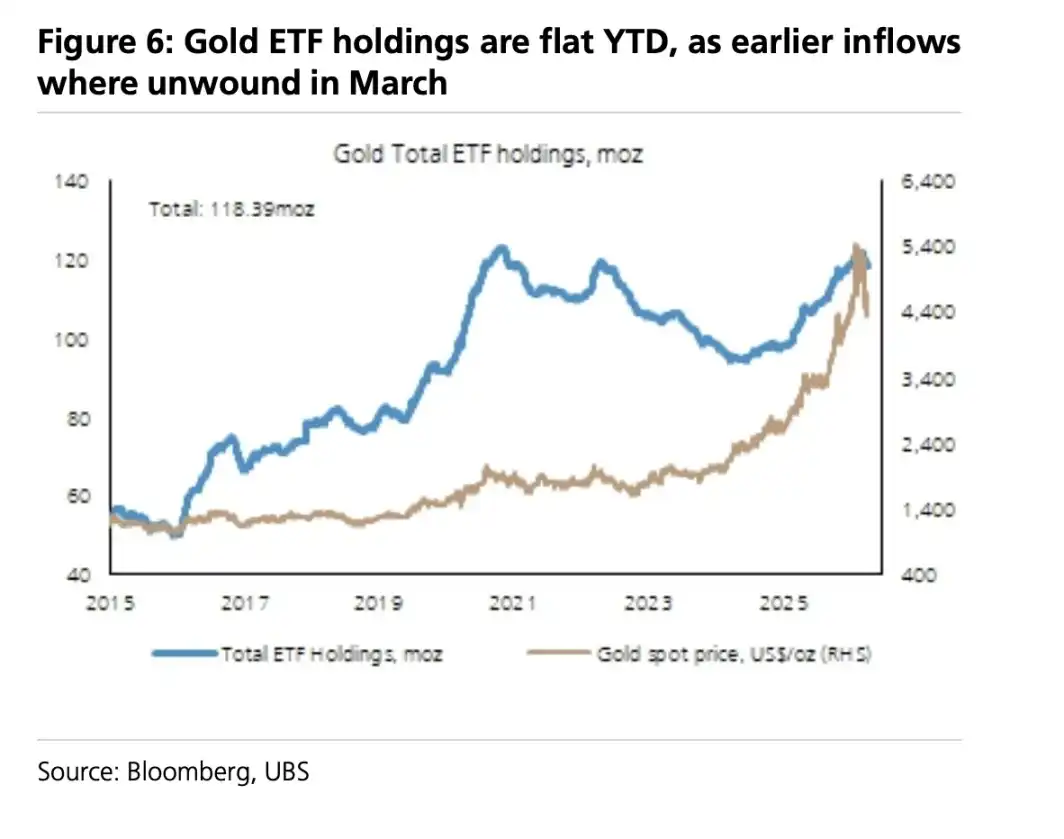
The Underlying Logic of Central Bank Gold Holdings: Buy and Hold

The World Bank's "Fifth Biennial Reserve Management Survey Report (2025)" explains a more fundamental question: How do central banks really think about gold? The survey covers holdings as of December 2024, with 136 institutions participating—the highest ever—and for the first time includes a separate chapter on gold.

Several numbers can clarify the behavioral boundaries of central banks: About 47% of central banks determine gold holdings based on "historical legacy," about 26% based on qualitative judgment; only about a quarter incorporate gold into a formal strategic asset allocation framework.

More critically, only about 4.5% make short-term tactical adjustments to gold reserves, while the investment style for gold is mainly buy-and-hold (about 62%). This profile means: Even if the buying pace slows, the official sector is not like a group of traders driven by news to frequently trade positions.

In terms of reasons for increasing holdings, more than half cited "diversification" as the primary reason; local gold purchase plans accounted for about 35%, geopolitical risks about 32%; only about 6% cited "liquidity needs" as a reason. The official sector's rationale for gold has not been invalidated by recent volatility.

Short-Term Volatility Is Inevitable, but "New Highs Not Finished" Remains the Main Theme

Returning to the trading level, gold's rise is not a straight line: It may continue to consolidate and experience bumpy movements in the coming weeks as the market repeatedly reassesses geopolitical risks. But it believes that the two long-term drivers pushing funds to allocate to gold—the combination of growth and inflation risks, and the persistence of geopolitical tensions—are making "diversification into gold" a more common portfolio action.

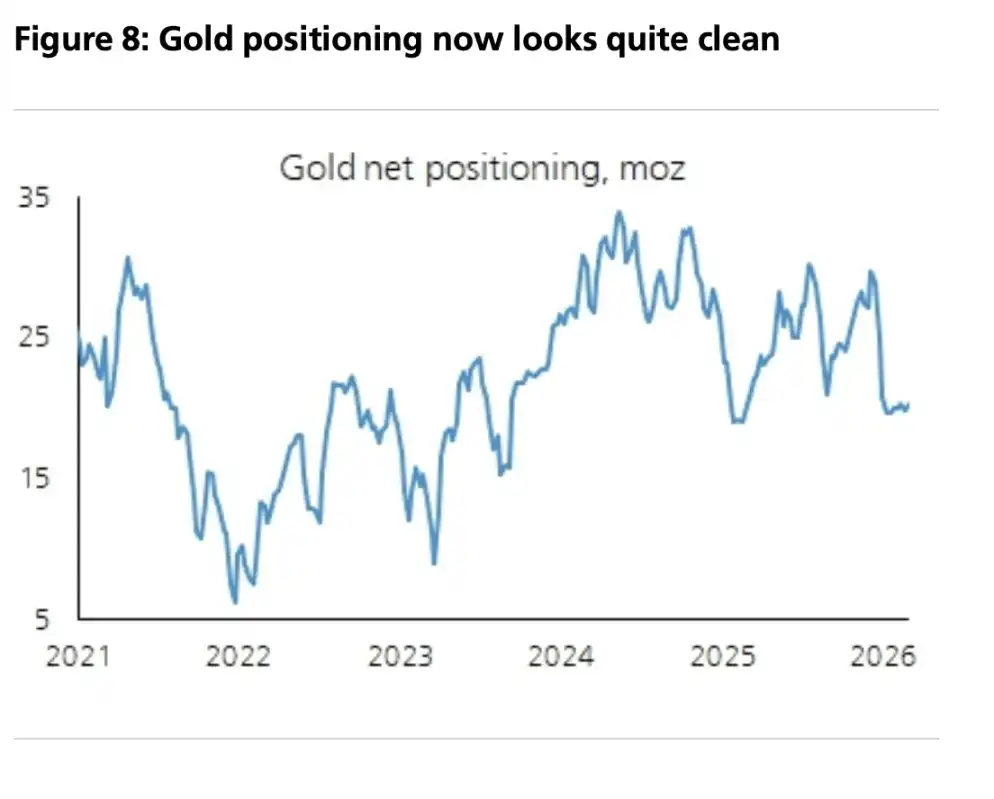
Under this framework, the report's pricing anchor is: An average gold price of $5,000 in 2026, with a year-end target of $5,600. It also mentions that speculative positions are already "cleaner," and long-term participants are still underweight; if another pullback occurs, it is closer to a "strategic window for building positions" rather than a signal of the end of the trend.
Questions liées

QIs the UBS report suggesting that global central banks are structurally shifting away from gold and starting large-scale selling?

ANo, the UBS report states that the possibility of a structural shift and large-scale selling by central banks is extremely low. They are expected to maintain a net buying stance, albeit at a slightly slower pace.

QWhat is the specific reason cited in the report for the recent news about Turkey selling gold, and why should it be interpreted cautiously?

AThe report cautions that Turkey's official gold data includes commercial bank positions and swap operations. It suggests waiting for more detailed, disaggregated data before concluding that the central bank is selling, as the headline figure does not equate to direct central bank market selling.

QAccording to the World Bank's survey, what is the primary investment style and main reason central banks hold gold?

AThe primary investment style for central banks is 'buy and hold' (approximately 62%). The main reason for increasing gold holdings is 'diversification', cited by over half of the central banks surveyed.

QWhat is UBS's medium-term price target for gold by the end of 2026, and what is their revised average price forecast for the year?

AUBS maintains a year-end 2026 price target of $5600 per ounce. They have revised their average annual price forecast for 2026 down to $5000 from a previous $5200, mainly as an adjustment for Q1 performance.

QWhat two long-term factors does the report identify as driving continued gold allocation, despite short-term noise and volatility?

AThe two long-term factors driving gold allocation are the combination of growth and inflation risks, and the persistence of geopolitical tensions, which are making diversification into gold a more common portfolio action.

Lectures associées

En trois mois, 35 milliards de yuans, les investisseurs se disputent l'"OpenAI du monde physique"

Une course effrénée des investisseurs s'engage vers l'AGI physique. La start-up chinoise Jijia Shijie (Excellent Vision) vient de boucler un financement de 3,5 milliards de yuans en seulement trois mois, portant sa valorisation à plus de 10 milliards. Dirigée par Huang Guan, un docteur de 30 ans de l'Université Tsinghua, l'entreprise attire un large éventail de fonds d'investissement nationaux et internationaux. La stratégie de Jijia Shijie repose sur un système en « double pyramide » combinant algorithmes et données, et centré sur un « modèle du monde » pour comprendre et interagir avec l'environnement physique. Ses modèles phares, GigaBrain et GigaWorld, ont obtenu des premières places dans des benchmarks mondiaux. La société vise le « moment GPT-3 » de l'AGI physique, où des capacités émergentes se manifesteront. Concrètement, Jijia Shijie déploie sa technologie sur deux fronts : grand public (robot domestique polyvalent « Shiguang S1 ») et industriel (robots « Maker » pour l'automatisation des usines et modèle de conduite autonome « DriveDreamer »). Ces déploiements génèrent des données et des revenus essentiels pour alimenter la boucle d'amélioration de ses modèles. L'objectif ultime est de dépasser l'AGI purement numérique pour créer une intelligence capable d'agir dans le monde physique, remodelant potentiellement les modes de production et la vie quotidienne. Les investisseurs parient que ce futur est proche.

marsbitIl y a 7 mins

En trois mois, 35 milliards de yuans, les investisseurs se disputent l'"OpenAI du monde physique"

marsbitIl y a 7 mins

Quel lien existe entre Huang Zheng, le fondateur de Pinduoduo, et la blockchain ?

L'auteur de l'article explore le lien entre Huang Zheng, fondateur de Pinduoduo, et la technologie blockchain, à travers une réflexion inspirée par l'essai de Huang « Inverser le capitalisme ». L'article explique que le modèle économique fondamental de Pinduoduo est une « affaire d'assurance » basée sur la gestion de l'« incertitude ». Huang Zheng observe que les capitaux tendent à s'accumuler chez les riches car ils peuvent absorber les incertitudes (comme les risques de maladie ou de perte d'emploi) que les plus pauvres paient pour éviter via des assurances ou des achats sécurisés. Le concept de Pinduoduo, le « group buying » (achat groupé), fonctionne comme une « assurance inversée ». Il agrège la demande préalable d'un grand nombre de consommateurs pour créer une commande certaine et massive, permettant aux usines de réduire le risque de surproduction. Cette certitude permet aux fabricants de baisser leurs prix, faisant ainsi refluer une partie de la valeur vers les consommateurs. Le lien avec la blockchain apparaît comme la pièce manquante pour perfectionner ce modèle. Le principal défi de « l'assurance inversée » est que l'engagement individuel d'un consommateur n'est pas crédible ou coûteux à faire respecter. La blockchain, via ses contrats intelligents (smart contracts), pourrait résoudre ce problème en rendant les engagements (comme une intention d'achat) contraignants, vérifiables et exécutables automatiquement, sans intermédiaire. Huang Zheng lui-même s'interroge : la blockchain n'est-elle pas idéalement conçue pour ce type d'« assurance inversée » ? En conclusion, l'article compare deux voies pour créer de la certitude : la voie « Pinduoduo », qui utilise la masse pour aplanir l'incertitude, et la voie « Bitcoin », qui verrouille les règles par un code inviolable, remplaçant la confiance en une institution par la confiance en un protocole.

链捕手Il y a 1 h

Quel lien existe entre Huang Zheng, le fondateur de Pinduoduo, et la blockchain ?

链捕手Il y a 1 h

Le magnat du stockage qui a conquis des milliers de milliards de territoire ne deviendra jamais l'homme le plus riche

Fondateur de GigaDevice et ChangXin Technology, Zhu Yiming est une figure majeure de l'industrie chinoise des puces mémoire. Malgré la valeur boursière potentielle de ses entreprises (ChangXin visant les 1 000 milliards de yuans, GigaDevice valant 340 milliards), sa fortune personnelle reste limitée en raison de sa faible participation directe (moins de 3% dans ChangXin). GigaDevice (兆易创新), créée en 2005, a débuté avec des NOR Flash, profitant du désengagement des géants comme Samsung pour capturer des parts de marché (20% mondial en 2025). L'entreprise a diversifié ses activités vers les microcontrôleurs (MCU), les capteurs et les puces analogiques, mais les mémoires et MCU représentent 92% de son chiffre d'affaires. Son modèle économique Fabless (sans usine) et sa focalisation sur les segments de moyenne et basse gamme lui ont permis de maintenir une rentabilité solide, avec des marges brutes autour de 40%. Cependant, l'industrie des semi-conducteurs mémoire est très cyclique, comme en témoignent les fluctuations de ses bénéfices nets. L'article souligne que le modèle Fabless présente une vulnérabilité face aux cycles sévères du secteur. C'est pourquoi Zhu Yiming a cofondé ChangXin Technology en 2016 avec le gouvernement de Hefei, adoptant un modèle IDM (intégré) nécessitant des investissements massifs (équipements évalués à 169,3 milliards de yuans fin 2025). Son engagement personnel – renoncement au salaire, partage des incitations actions, verrouillage prolongé de ses parts – a été crucial pour sécuriser le financement public. En définitive, bien que Zhu Yiming ait "bâti un empire" dans le stockage, sa stratégie de dilution du capital pour assurer le développement de ses entreprises le place loin des tout premiers rangs des fortunes individuelles chinoises.

marsbitIl y a 1 h

Le magnat du stockage qui a conquis des milliers de milliards de territoire ne deviendra jamais l'homme le plus riche

marsbitIl y a 1 h

Une faille de gouvernance sur Token Of Power a drainé 1,58 million de dollars en WETH, selon TRM

La société d'intelligence blockchain TRM Labs a détaillé une attaque par prise de contrôle de gouvernance contre le protocole Token of Power, drainant environ 1,58 million de dollars en WETH. Selon l'analyse, l'attaquant a exploité une faille dans la configuration DAO Aragon du protocole : l'absence de délai d'exécution (timelock). Cela lui a permis de proposer, voter et exécuter une action de gouvernance malveillante en un seul bloc. L'opération aurait été financée avec 662 ETH retirés de Tornado Cash. L'attaquant a acheté suffisamment de jetons TOP pour obtenir le pouvoir de vote majoritaire, a frappé 10 milliards de nouveaux TOP et les a échangés contre du WETH via un pool Balancer avant de blanchir les fonds via Tornado Cash. Cette attaque illustre comment la conception de la gouvernance peut devenir un risque de sécurité direct. Sans timelock pour donner aux utilisateurs et aux équipes de sécurité un temps de réaction, un vote hostile peut être exécuté instantanément. Pour les utilisateurs de la DeFi, cet incident rappelle que les risques ne se limitent pas aux bugs de code smart-contract. Les paramètres de gouvernance, les contrôles des trésoreries et les seuils de vote sont tout aussi critiques. L'affaire montre également comment les mixers et les pools de liquidités peuvent être utilisés dans le sillage d'une exploitation. La suite à surveiller concerne les mouvements potentiels des fonds volés et d'éventuels détails de correction de la part du protocole, d'Aragon ou des fournisseurs de liquidités affectés.

bitcoinistIl y a 4 h

Une faille de gouvernance sur Token Of Power a drainé 1,58 million de dollars en WETH, selon TRM

bitcoinistIl y a 4 h

XRP Ledger : les frais journaliers tombent sous la barre des 400 $, la question de l'activité du réseau revient sur le tapis

Le réseau XRP Ledger (XRPL) suscite à nouveau des interrogations après que des données ont montré que ses frais quotidiens totaux sont tombés en dessous de 400 dollars. Si des frais bas correspondent à la conception du réseau et sont souvent présentés comme un atout pour l'accessibilité, ils peuvent aussi être un indicateur de l'activité et de la demande réelle. Ce chiffre hebdomadaire d'environ 3 100 dollars brûlés contraste fortement avec des blockchains comme Ethereum ou Bitcoin. Pour les partisans, cela confirme l'efficacité du XRPL. Pour les critiques, cela peut soulever des questions sur le niveau d'adoption transactionnelle à haute valeur, un point central pour le récit des paiements autour du XRP. Les données sur les frais permettent ainsi d'évaluer si l'activité on-chain correspond aux ambitions du réseau. Il est important de ne pas tirer de conclusions excessives : une journée à faibles frais ne signifie pas un dysfonctionnement. Cela alimente simplement le débat sur l'utilisation du XRPL, d'autant plus dans le contexte des initiatives de Ripple comme le RLUSD ou les paiements par agents IA. Il convient désormais d'observer si les frais rebondissent et si les comptes de transactions confirment cette tendance. Dans le paysage crypto actuel, où l'infrastructure et l'utilité gagnent en importance, cette information mérite d'être rapportée comme un point de données factuel pour une conversation de marché équilibrée, en évitant tout sensationnalisme.

bitcoinistIl y a 6 h

XRP Ledger : les frais journaliers tombent sous la barre des 400 $, la question de l'activité du réseau revient sur le tapis

bitcoinistIl y a 6 h

Trading

Spot
Futures

Articles tendance

Comment acheter ERA

Bienvenue sur HTX.com ! Nous vous permettons d'acheter Caldera (ERA) de manière simple et pratique. Suivez notre guide étape par étape pour commencer votre parcours crypto.Étape 1 : Création de votre compte HTXUtilisez votre adresse e-mail ou votre numéro de téléphone pour ouvrir un compte sur HTX gratuitement. L'inscription se fait en toute simplicité et débloque toutes les fonctionnalités.Créer mon compteÉtape 2 : Choix du mode de paiement (rubrique Acheter des cryptosCarte de crédit/débit : utilisez votre carte Visa ou Mastercard pour acheter instantanément Caldera (ERA).Solde :utilisez les fonds du solde de votre compte HTX pour trader en toute simplicité.Prestataire tiers :pour accroître la commodité d'utilisation, nous avons ajouté des modes de paiement populaires tels que Google Pay et Apple Pay.P2P :tradez directement avec d'autres utilisateurs sur HTX.OTC (de gré à gré) : nous offrons des services personnalisés et des taux de change compétitifs aux traders.Étape 3 : stockage de vos Caldera (ERA)Après avoir acheté vos Caldera (ERA), stockez-les sur votre compte HTX. Vous pouvez également les envoyer ailleurs via un transfert sur la blockchain ou les utiliser pour trader d'autres cryptos.Étape 4 : tradez des Caldera (ERA)Tradez facilement Caldera (ERA) sur le marché Spot de HTX. Il vous suffit d'accéder à votre compte, de sélectionner la paire de trading, d'exécuter vos trades et de les suivre en temps réel. Nous offrons une expérience conviviale aux débutants comme aux traders chevronnés.

565 vues totalesPublié le 2025.07.17Mis à jour le 2026.06.02

Comment acheter ERA

Discussions

Bienvenue dans la Communauté HTX. Ici, vous pouvez vous tenir informé(e) des derniers développements de la plateforme et accéder à des analyses de marché professionnelles. Les opinions des utilisateurs sur le prix de ERA (ERA) sont présentées ci-dessous.

活动图片













