Ethereum Hong Kong Meetup Successfully Concludes First Monthly Offline Gathering

marsbitPublié le 2026-01-25Dernière mise à jour le 2026-01-25

Résumé

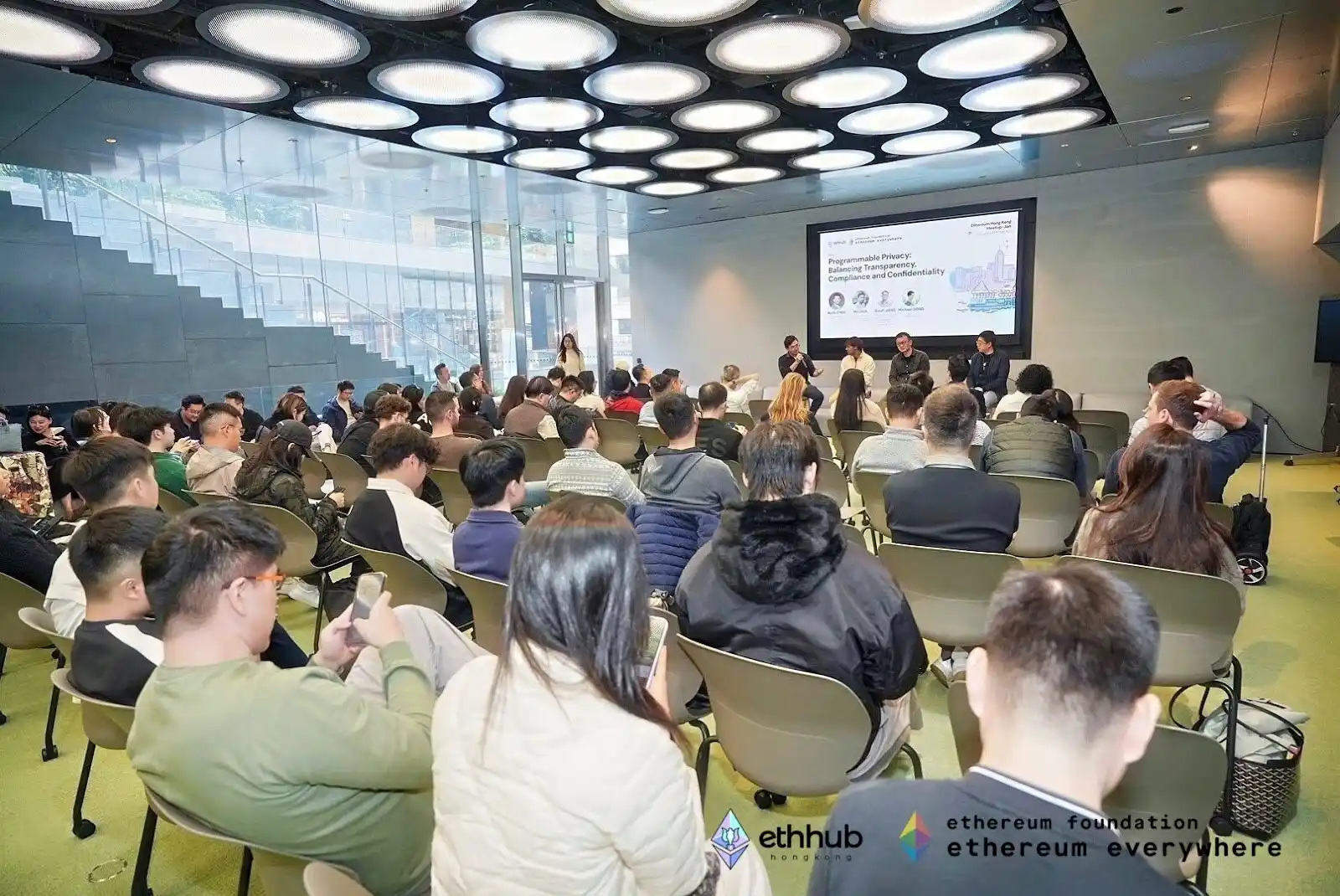
Ethereum Hong Kong Meetup Successfully Concludes Its First Monthly Offline Gathering Supported by the Ethereum Foundation's "Ethereum Everywhere" initiative and co-organized by SNZ and ETHTAO, the Hong Kong Ethereum Community Hub successfully held its first offline event on January 24. This marked the public debut of Asia’s first physical Ethereum hub and established a new tradition of monthly meetups for the local Ethereum community. The event attracted over 150 participants, fostering a vibrant atmosphere for in-depth exchanges among the Ethereum Foundation team, local developers, researchers, entrepreneurs, institutional partners, and enthusiasts. This reflects the Foundation’s increased engagement in supporting ecosystem growth in Hong Kong and Asia through closer communication. Highlights of the event included a trilingual (English, Mandarin, Cantonese) keynote by Adrian Li, the Ethereum Foundation’s Ecosystem Development Lead for Asia, outlining strategic development and future opportunities in the Asia-Pacific region. Three core panel discussions followed: 1. Programmable Privacy and Compliance: Experts from SNZ Holding, the Ethereum Foundation, Yunfeng Financial, and Brevis explored the application and regulatory boundaries of privacy technology. 2. Real-World Assets (RWA) from Protocol to Practice: Representatives from China Asset Management (Hong Kong), Chainlink, HashKey Group, and Asseto discussed institutional asset tokenization and regulatory outlook. 3. DeF...

Supported by the Ethereum Foundation's "Ethereum Everywhere" initiative and jointly operated by SNZ and ETHTAO, the Hong Kong Ethereum Community Hub successfully held its first offline gathering before the official opening on January 24. This marked the first public appearance of Asia's inaugural physical Ethereum hub and established a new tradition of "monthly gatherings" for the Hong Kong Ethereum community.

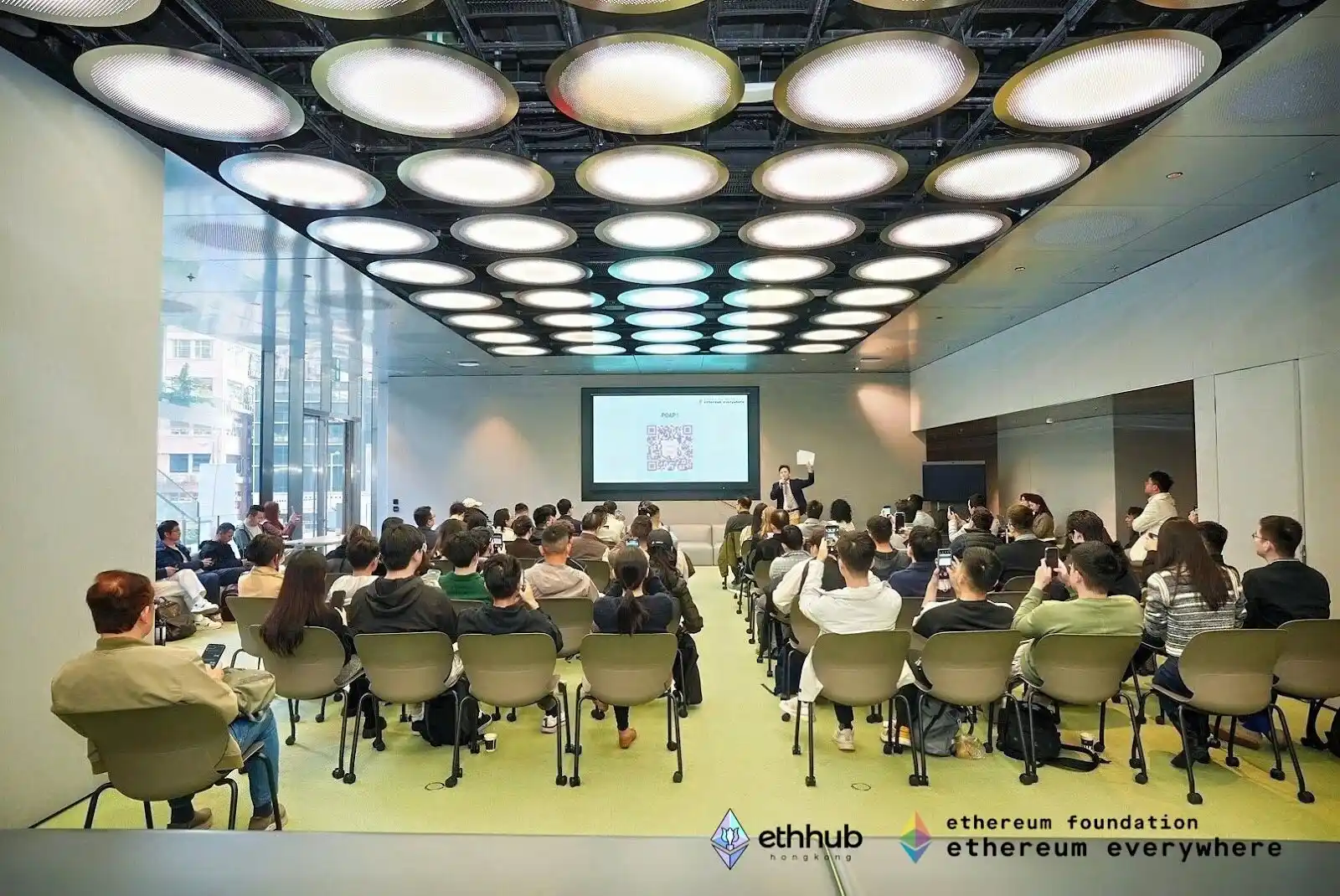
On the day of the event, over 150 participants attended, creating a lively atmosphere. The Ethereum Foundation team engaged in deep discussions with local developers, researchers, entrepreneurs, institutional partners, and seasoned enthusiasts. This signifies the Ethereum Foundation's commitment to more frequent and direct communication, actively participating in the ecosystem development of the Hong Kong and Asian communities.

Focusing on the Frontier, Discussing the Future: A Knowledge Feast with Both Depth and Breadth

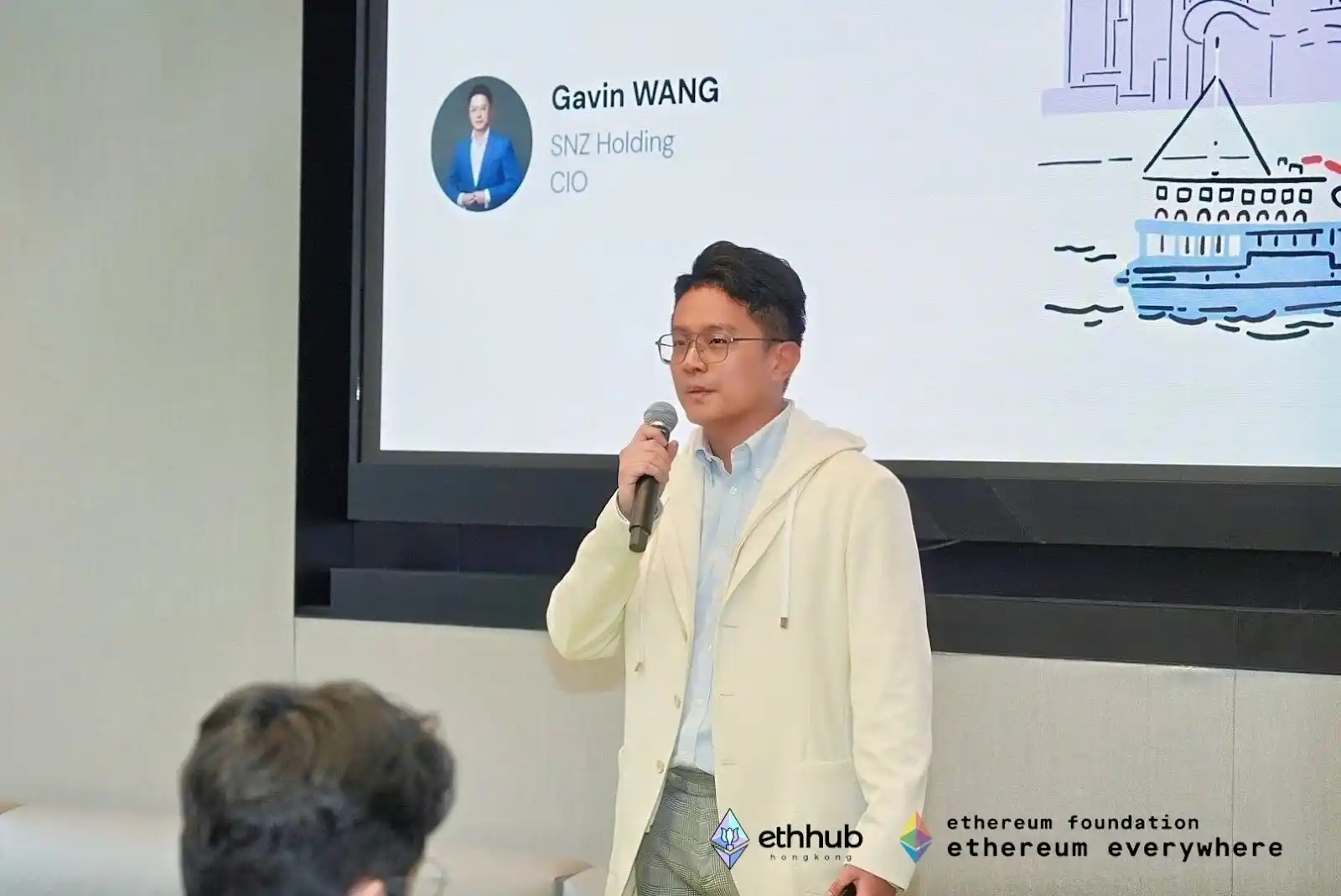
The event kicked off with a welcome speech by Gavin Wang, Chief Investment Officer of SNZ Holding. Subsequently, Adrian Li, the Ethereum Foundation's Ecosystem Development Asia Liaison, delivered a trilingual keynote (in Chinese, Cantonese, and English), clearly outlining the strategic development landscape and future opportunities for the Ethereum community in the Asia-Pacific region. He emphasized Ethereum's dedication to deepening its ecosystem in Asia and its high regard for Asian developers.

The three core agendas that followed focused precisely on the most discussed technological and commercial frontiers in the current ecosystem:

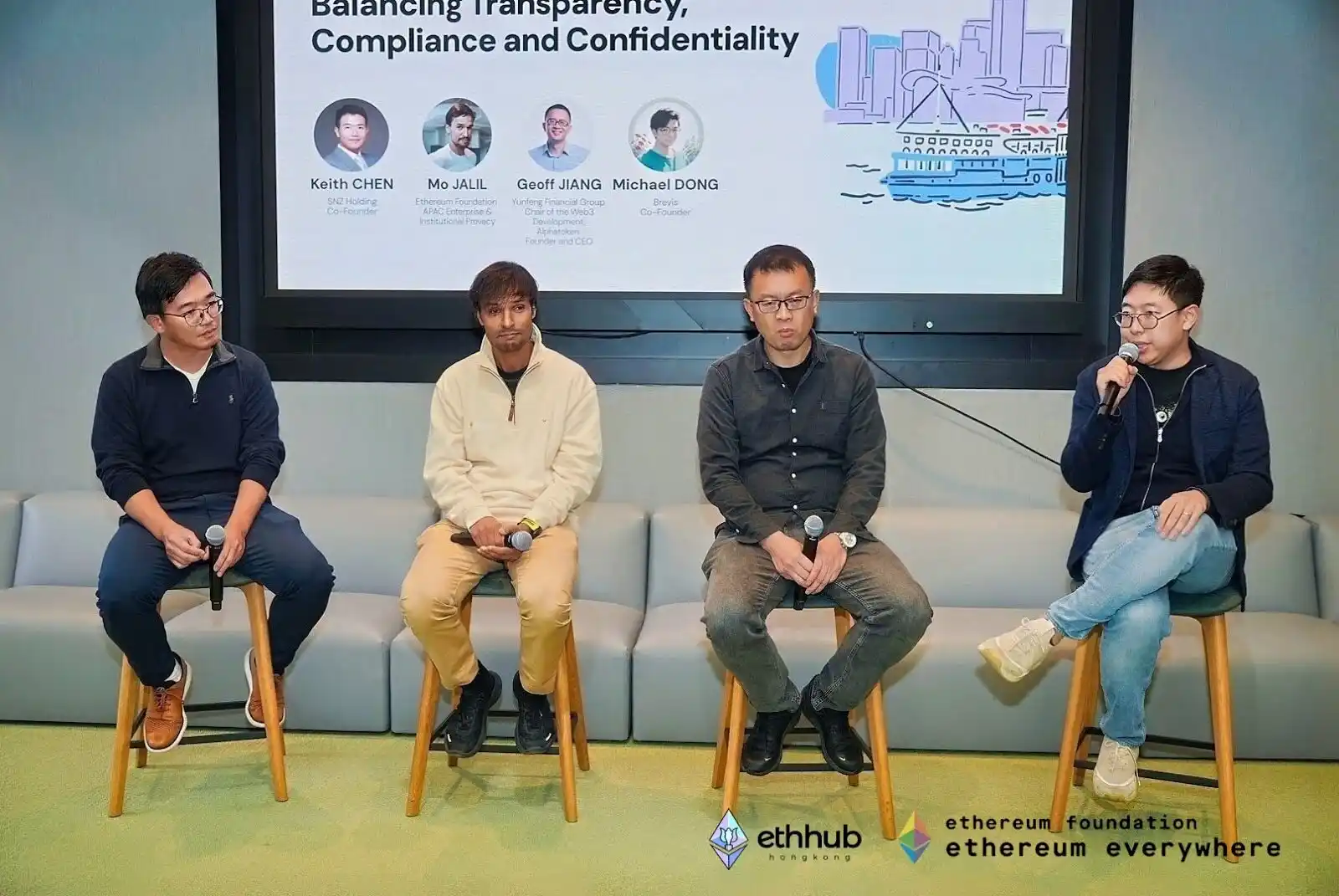
1. The Compliant Path of Programmable Privacy: A co-founder of SNZ Holding moderated a thematic discussion on privacy technology, with deep participation from the Ethereum Foundation's Head of Institutional Privacy for Asia Pacific, the Chairman of the Web3 Development Committee of Yunfeng Financial, and a co-founder of Brevis. The discussion focused on the application of programmable privacy technology within compliance frameworks, dissecting the boundaries and implementation paths of the technology.

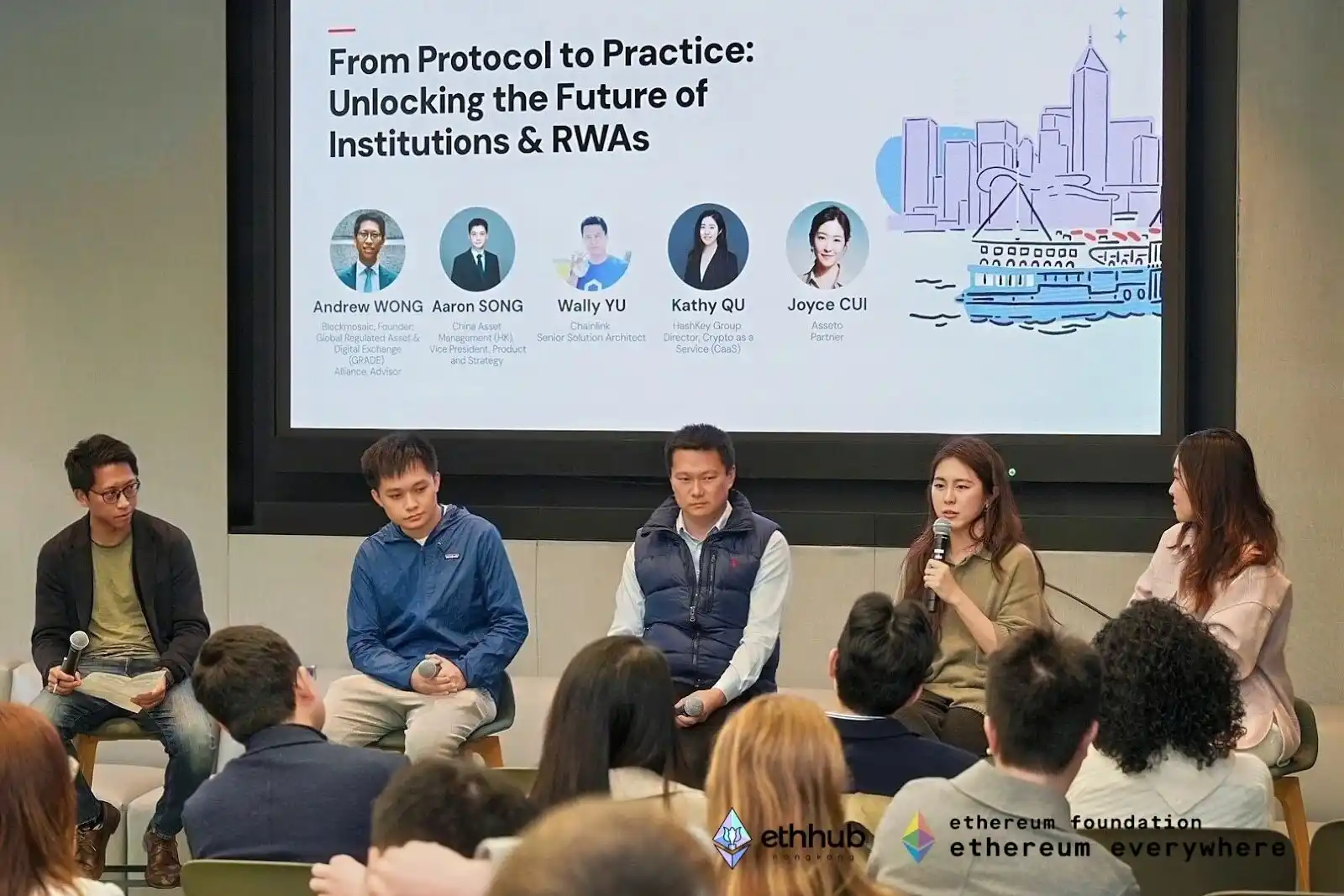
2. From Protocol to Practice, Unlocking the Future of RWA: Bringing together representatives from top-tier institutional projects including Huaxia Fund (Hong Kong), Chainlink, HashKey Group, and Asseto, a deep dialogue was held on the frontier opportunities and regulatory prospects of institutional-grade asset tokenization. The discussion explored the differentiated performance of the RWA framework in Hong Kong and globally.

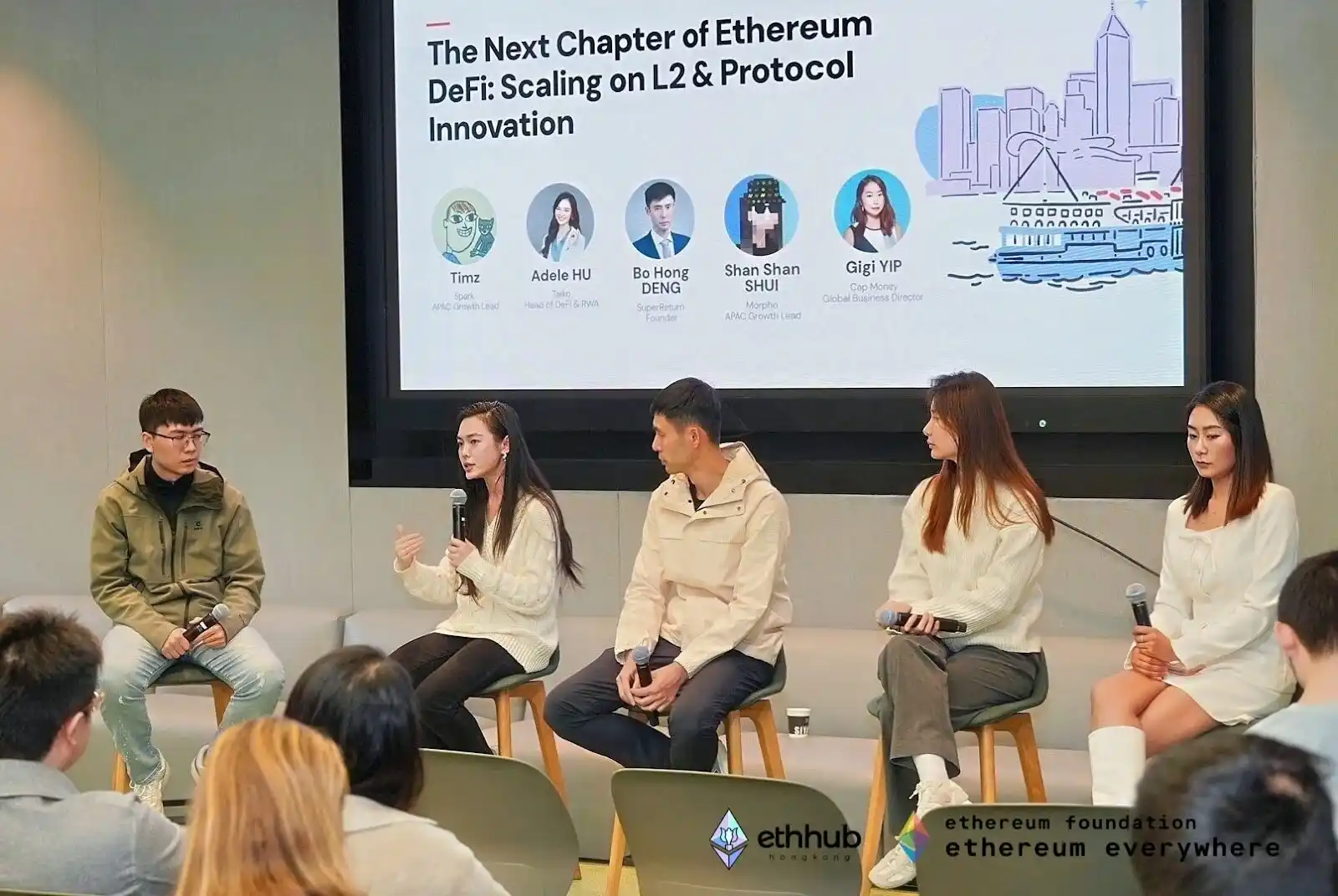
3. A New Chapter of DeFi on Layer2: Leaders from five leading projects—Spark, Taiko, Morpho, SuperReturn, and Cap Money—shared cutting-edge practices and core insights into Layer2 ecosystem development. They provided in-depth analysis of the key paths for protocol iteration and innovation, focusing on the efficient upgrade of the Ethereum DeFi ecosystem.

More Than an Event: Building the Cornerstone of Hong Kong's Ethereum Community

In addition to the keynote speeches and panel discussions, the event included dedicated networking sessions, providing an efficient communication platform for attendees to easily exchange views and deepen understanding. The Ethereum Foundation team used this opportunity to listen to the genuine needs of community builders, facilitating a two-way exchange of cutting-edge perspectives and grassroots voices. At the conclusion of the event, participants toured the Hub's facilities. During an hour of on-site exploration and free-flowing conversation, connections were strengthened, laying the groundwork for future collaboration and solidifying the Hub's role as a true industry connector.

In the future, the Hong Kong Ethereum Community Hub will regularly host in-depth gatherings on different themes each month. It will also offer membership services, mobile workstations, and private office rentals, equipped with multiple event spaces for members to use free of charge. The Hub aims to continuously nourish the Asian community, creating a stable, open, and productive collaboration platform to help Hong Kong consolidate its leadership position as Asia's Ethereum innovation hub.

Questions liées

QWhat was the main purpose of the first monthly offline gathering organized by the Hong Kong Ethereum Community Hub?

AThe gathering aimed to mark the public debut of Asia's first Ethereum physical hub and initiate a new tradition of monthly meetups for the Hong Kong Ethereum community, fostering deeper communication and ecosystem development in Hong Kong and Asia.

QWhich organizations supported and co-operated the Hong Kong Ethereum Community Hub event?

AThe event was supported by the Ethereum Foundation's 'Ethereum Everywhere' initiative and co-operated by SNZ and ETHTAO.

QWhat were the three core agenda topics discussed during the meetup?

AThe three core agenda topics were: 1. The compliance path of programmable privacy technology, 2. Unlocking the future of RWA (Real World Assets) from protocol to practice, and 3. The new chapter of DeFi on Layer2.

QWho delivered the trilingual keynote speech and what was its focus?

AAdrian Li, the Ethereum Foundation's Ecosystem Development Asia Liaison, delivered a trilingual (Chinese, Cantonese, English) keynote speech outlining Ethereum's strategic development prospects and future opportunities in the Asia-Pacific region, emphasizing Ethereum's commitment to deepening its ecosystem and valuing Asian developers.

QWhat future services and activities does the Hong Kong Ethereum Community Hub plan to offer?

AThe Hub plans to host monthly themed in-depth gatherings, offer membership services, provide mobile workstations and private office rentals, and equip multiple event spaces for free use by members, aiming to create a stable, open, and productive collaborative platform to support Hong Kong's leadership as an Ethereum innovation hub in Asia.

Lectures associées

SemiAnalysis Dissects Huawei's Kirin 9030: Process Technology Halted, So They Folded the Chip

SemiAnalysis has published a detailed teardown report on the HiSilicon Kirin 9030 Pro chipset found in Huawei's Mate 80 Pro. Fabricated using SMIC's most advanced N+3 node without EUV lithography, the analysis reveals significant technical achievements and strategic shifts. The report indicates SMIC's N+3 has achieved transistor density comparable to TSMC's N6 (113.4 vs 107.7 MTr/mm²), primarily through aggressive use of Self-Aligned Quadruple Patterning (SAQP) for its metal layers. This results in a notably small 32.5nm M0 metal pitch. However, SemiAnalysis notes this achievement comes with significantly higher process complexity, cost, and potential yield challenges compared to competitors using more advanced tools. The Kirin 9030 design maximizes this constrained density. While its GPU performance has improved ~70% and matches Qualcomm's 2022 flagship level, the CPU core's IPC lags behind current top-tier designs from Apple and Qualcomm, a gap attributed to the underlying manufacturing technology rather than design capability. Facing long-term restrictions on advanced tools, Huawei is charting a new path. The report highlights the company's "LogicFolding" roadmap, a 3D stacking technique aimed at shortening signal paths to boost performance and efficiency. The goal is to reach 5GHz frequency and a projected density of 295 MTr/mm² by 2031. SemiAnalysis concludes that export controls have not halted China's chip progress but have fundamentally altered its trajectory, making it more expensive and complex. This has spurred innovation in alternative areas like 3D stacking and domestic EDA tool development, with Huawei's supply chain also beginning to integrate Chinese memory from CXMT.

marsbitIl y a 35 mins

SemiAnalysis Dissects Huawei's Kirin 9030: Process Technology Halted, So They Folded the Chip

marsbitIl y a 35 mins

How Will the Price Move Before SpaceX's Next Share Unlock?

TL;DR Investors buying SPCX after SpaceX's IPO are not simply investing in a typical tech stock. It’s a high-valuation asset driven by Musk's narrative, Starlink, and space transport potential, but with a key twist: a very small initial float of ~4% has led to significant post-listing price appreciation. The current price action reflects a timing gap. Before the first lock-up expiration (estimated around August, subject to official confirmation), scarcity and high demand could continue to push prices up. Short-term bulls focus on low float, FOMO, and potential index inclusion. However, bears point to the supply dynamics that will change post-lockup. Existing shareholders still hold over 95% of shares, which will be released in stages starting from the first unlock window. This introduces future selling pressure from low-cost holders. The upcoming Q2 earnings report is a critical catalyst before the unlock. It will test whether the company's fundamentals can justify the current ~$2.1T valuation. Strong results could support the pre-unlock momentum, while weak figures could amplify concerns about future supply. The trading thesis is shifting from immediate scarcity ("can't buy enough") to evaluating future absorption capacity ("who will buy when more supply hits"). The path ahead hinges on the specifics of the unlock schedule, Q2 earnings performance, and whether anticipated passive index buying materializes.

marsbitIl y a 55 mins

How Will the Price Move Before SpaceX's Next Share Unlock?

marsbitIl y a 55 mins

Bitcoin Short-Term Bullish Structure Validated, HYPE Low-Entry Window Opens | Guest Analysis

**Market Analysis Summary (Week of June 2026)** **Overall Market Context:** The market environment is exceptionally complex, with the unexpected US-Iran agreement and the reopening of the Strait of Hormuz triggering a global asset repricing and significant volatility. This heightened noise underscores the importance of a structured analytical framework. **Bitcoin (BTC) Analysis & Strategy:** * **Current Status:** The price has climbed above $65,000, currently in a rebound phase (segment 38-39) following a complex 12-segment correction from the May high of $82,850. * **Key Levels:** * **Primary Resistance:** $69,500–$70,500. A successful breakout above $65,000 targets this zone. * **Primary Support:** $65,000 (immediate), followed by $59,000–$60,000 and $55,000. * **Weekly Outlook & Strategy:** The focus is on the confirmation of the $65,000 level. * **Bullish Scenario (Hold $65K):** A move toward the $69.5K–$70.5K resistance zone is anticipated, which is a potential area for initiating medium-term short positions. * **Bearish Scenario (Break below $65K):** A retest of the $60,000–$62,000 support range is likely. * **Medium-Term Strategy:** Currently neutral. Plan to establish short positions (up to 60% allocation) either in the $69.5K–$70.5K resistance zone upon signs of rejection, or on a confirmed breakdown below $65,000 and further below $59K–$60K. * **Short-Term Strategy:** Utilize 30% capital for scalping opportunities based on support/resistance levels, using 30/60-minute charts. **HYPE Analysis & Strategy:** * **Current Status:** The price has stabilized around $52 after a four-segment decline from the June high of $75.87 and is now in a rebound (segment 50-51). * **Key Levels:** * **Primary Resistance:** $62.50–$64.57. Watch for potential rejection here to form a lower high. * **Primary Support:** $52–$55.50, followed by $47–$49. * **Weekly Outlook & Strategy:** Adopt a "buy on dips, avoid chasing rallies" approach. * **Core View:** Monitor the price action and potential formation of a lower high ("endpoint 51") in the $62.50–$64.57 resistance zone. * **Short-Term Strategy:** Consider light long positions (max 30% allocation) if the price finds support and shows reversal signals in the $52–$54.50 or deeper $47–$49 support zones, confirmed by proprietary quantitative bottom signals. **Trade Review:** Last week's HYPE short-term long trade, executed based on proprietary "Price Difference" and "Momentum" model signals, yielded a profit of approximately 11.88%. The entry was near $54.39 and exit near $60.85. **Risk Management Reminder:** Always set an initial stop-loss upon entry. Move stop-loss to breakeven at +1% profit, then trail it upwards to lock in gains as the trade progresses. *Disclaimer: All analysis, models, and strategies are based on personal technical analysis for educational purposes only, not investment advice. The market carries inherent risk.*

Odaily星球日报Il y a 1 h

Bitcoin Short-Term Bullish Structure Validated, HYPE Low-Entry Window Opens | Guest Analysis

Odaily星球日报Il y a 1 h

Bitcoin Short-Term Bullish Structure Validated, HYPE Accumulation Window Opens | Guest Analysis

**Bitcoin and HYPE Market Analysis: Short-Term Outlook and Trading Strategies** This market analysis examines Bitcoin (BTC) and HYPE amid volatile conditions, providing short-term outlooks and specific trading strategies. **Key Outlooks:** * **Bitcoin (BTC):** Focus is on whether BTC's recent move above $65,000 holds. A successful breakout could lead to a test of the $69,500-$70,500 resistance zone, where medium-term short positions are considered. A failure, breaking below $65,000, may trigger a decline towards the $59,000-$60,000 support area. * **HYPE:** The token completed a four-wave correction and is now rebounding. The key resistance zone is $62.5-$64.57. The trading strategy is "buy on dips," looking for entry opportunities near the $52-$54.5 or deeper $47-$49 support zones, pending confirmation from proprietary models. **BTC Trading Strategy:** * **Medium-term:** Primarily looking to establish short positions (up to 60% allocated capital) if price rallies to the $69,500-$70,500 resistance area and shows signs of reversal. Alternative plans involve initiating shorts on a breakdown below $65,000. * **Short-term:** Allocate up to 30% capital for intraday "spread" trades based on support/resistance levels on 30/60-minute charts. **HYPE Trading Strategy:** * **Short-term:** Adopt a dip-buying approach. Consider light long positions (under 30% capital) when price tests key support levels ($52-$54.5 or $47-$49) and shows stabilization, confirmed by proprietary "Price Spread" and "Momentum Quant" models. **Trade Recap:** The analysis reviews a successful HYPE long trade from the previous week, executed at ~$54.39 and closed at ~$60.85 for an ~11.88% gain, based on signals from the aforementioned models. **Risk Management Emphasis:** The article stresses strict capital allocation (under 30-60%), immediate initial stop-loss placement, and a trailing stop-loss protocol to lock in profits as trades move favorably. ***Disclaimer:** All analysis, models, and strategies are for educational purposes based on technical analysis, not investment advice. Markets are volatile; trade with caution.*

marsbitIl y a 1 h

Bitcoin Short-Term Bullish Structure Validated, HYPE Accumulation Window Opens | Guest Analysis

marsbitIl y a 1 h

Trading

Spot
Futures

Articles tendance

Qu'est ce que ETH 2.0

ETH 2.0 : Une nouvelle ère pour Ethereum Introduction ETH 2.0, largement connu sous le nom d'Ethereum 2.0, marque une mise à niveau monumentale de la blockchain Ethereum. Cette transition n'est pas simplement un relooking ; elle vise à améliorer fondamentalement la scalabilité, la sécurité et la durabilité du réseau. Avec un passage du mécanisme de consensus énergivore Proof of Work (PoW) à un Proof of Stake (PoS) plus efficace, ETH 2.0 promet une approche transformative pour l'écosystème blockchain. Qu'est-ce qu'ETH 2.0 ? ETH 2.0 est un ensemble de mises à jour distinctes et interconnectées axées sur l'optimisation des capacités et des performances d'Ethereum. La refonte est conçue pour résoudre des défis critiques auxquels le mécanisme actuel d'Ethereum fait face, en particulier en ce qui concerne la vitesse des transactions et la congestion du réseau. Objectifs d'ETH 2.0 Les principaux objectifs d'ETH 2.0 tournent autour de l'amélioration de trois aspects fondamentaux : Scalabilité : Avec pour objectif d'améliorer considérablement le nombre de transactions que le réseau peut traiter par seconde, ETH 2.0 cherche à dépasser la limitation actuelle d'environ 15 transactions par seconde, atteignant potentiellement des milliers. Sécurité : Des mesures de sécurité renforcées sont essentielles à ETH 2.0, en particulier grâce à une meilleure résistance aux cyberattaques et à la préservation de l'éthique décentralisée d'Ethereum. Durabilité : Le nouveau mécanisme PoS est conçu non seulement pour améliorer l'efficacité, mais aussi pour réduire considérablement la consommation d'énergie, alignant le cadre opérationnel d'Ethereum avec des considérations environnementales. Qui est le créateur d'ETH 2.0 ? La création d'ETH 2.0 peut être attribuée à la Fondation Ethereum. Cette organisation à but non lucratif, qui joue un rôle crucial dans le soutien au développement d'Ethereum, est dirigée par le cofondateur notable Vitalik Buterin. Sa vision d'un Ethereum plus scalable et durable a été la force motrice derrière cette mise à niveau, impliquant des contributions d'une communauté mondiale de développeurs et d'enthousiastes dédiés à l'amélioration du protocole. Qui sont les investisseurs d'ETH 2.0 ? Bien que les détails concernant les investisseurs d'ETH 2.0 n'aient pas été rendus publics, la Fondation Ethereum est connue pour recevoir le soutien de diverses organisations et individus dans le domaine de la blockchain et de la technologie. Ces partenaires incluent des sociétés de capital-risque, des entreprises technologiques et des organisations philanthropiques qui partagent un intérêt mutuel pour le soutien au développement des technologies décentralisées et des infrastructures blockchain. Comment fonctionne ETH 2.0 ? ETH 2.0 est notable pour l'introduction d'une série de caractéristiques clés qui le différencient de son prédécesseur. Proof of Stake (PoS) La transition vers un mécanisme de consensus PoS est l'un des changements marquants d'ETH 2.0. Contrairement au PoW, qui repose sur un minage énergivore pour la vérification des transactions, le PoS permet aux utilisateurs de valider des transactions et de créer de nouveaux blocs en fonction du nombre d'ETH qu'ils détiennent dans le réseau. Cela conduit à une meilleure efficacité énergétique, réduisant la consommation d'environ 99,95 %, faisant d'Ethereum 2.0 une alternative considérablement plus verte. Shard Chains Les shard chains sont une autre innovation essentielle d'ETH 2.0. Ces chaînes plus petites fonctionnent en parallèle avec la chaîne principale d'Ethereum, permettant à plusieurs transactions d'être traitées simultanément. Cette approche améliore la capacité globale du réseau, répondant aux préoccupations de scalabilité qui ont affecté Ethereum. Beacon Chain Au cœur d'ETH 2.0 se trouve la Beacon Chain, qui coordonne le réseau et gère le protocole PoS. Elle sert d'organisateur : elle supervise les validateurs, garantit que les shards restent connectés au réseau et surveille la santé globale de l'écosystème blockchain. Chronologie d'ETH 2.0 Le parcours d'ETH 2.0 a été marqué par plusieurs étapes clés qui tracent l'évolution de cette mise à niveau significative : Décembre 2020 : Le lancement de la Beacon Chain a marqué l'introduction du PoS, préparant le terrain pour la migration vers ETH 2.0. Septembre 2022 : L'achèvement de « The Merge » représente un moment pivot où le réseau Ethereum a réussi à passer d'un cadre PoW à un cadre PoS, annonçant une nouvelle ère pour Ethereum. 2023 : Le déploiement prévu des shard chains vise à améliorer davantage la scalabilité du réseau Ethereum, consolidant ETH 2.0 comme une plateforme robuste pour les applications et services décentralisés. Caractéristiques et avantages clés Scalabilité améliorée Un des avantages les plus significatifs d'ETH 2.0 est sa scalabilité améliorée. La combinaison de PoS et des shard chains permet au réseau d'étendre sa capacité, lui permettant de traiter un volume de transactions bien supérieur par rapport au système hérité. Efficacité énergétique L'implémentation du PoS représente un pas immense vers l'efficacité énergétique dans la technologie blockchain. En réduisant considérablement la consommation d'énergie, ETH 2.0 non seulement réduit les coûts d'exploitation mais s'aligne également plus étroitement avec les objectifs mondiaux de durabilité. Sécurité renforcée Les mécanismes mis à jour d'ETH 2.0 contribuent à améliorer la sécurité sur l'ensemble du réseau. Le déploiement du PoS, ainsi que des mesures de contrôle innovantes établies par les shard chains et la Beacon Chain, garantissent un degré de protection plus élevé contre les menaces potentielles. Coûts réduits pour les utilisateurs À mesure que la scalabilité s'améliore, les effets sur les coûts des transactions seront également visibles. Une capacité accrue et une congestion réduite devraient se traduire par des frais plus bas pour les utilisateurs, rendant Ethereum plus accessible pour les transactions quotidiennes. Conclusion ETH 2.0 marque une évolution significative dans l'écosystème blockchain d'Ethereum. Alors qu'il aborde des problèmes essentiels tels que la scalabilité, la consommation d'énergie, l'efficacité des transactions et la sécurité globale, l'importance de cette mise à niveau ne peut être sous-estimée. Le passage au Proof of Stake, l'introduction des shard chains et le travail fondamental de la Beacon Chain sont indicatifs d'un avenir où Ethereum peut répondre aux demandes croissantes du marché décentralisé. Dans une industrie guidée par l'innovation et le progrès, ETH 2.0 se dresse comme un témoignage des capacités de la technologie blockchain pour ouvrir la voie à une économie numérique plus durable et efficace.

164 vues totalesPublié le 2024.04.04Mis à jour le 2024.12.03

Qu'est ce que ETH 2.0

Qu'est ce que ETH 3.0

ETH3.0 et $eth 3.0 : Un examen approfondi de l'avenir d'Ethereum Introduction Dans le paysage en évolution rapide des cryptomonnaies et de la technologie blockchain, ETH3.0, souvent désigné sous le nom de $eth 3.0, est devenu un sujet d'intérêt et de spéculation considérable. Le terme englobe deux concepts principaux qui méritent clarification : Ethereum 3.0 : Cela représente une mise à niveau future potentielle visant à augmenter les capacités de la blockchain Ethereum existante, en se concentrant particulièrement sur l'amélioration de l'évolutivité et des performances. ETH3.0 Meme Token : Ce projet de cryptomonnaie distinct cherche à tirer parti de la blockchain Ethereum pour créer un écosystème centré sur les mèmes, promouvant l'engagement au sein de la communauté des cryptomonnaies. Comprendre ces facettes d'ETH3.0 est essentiel non seulement pour les passionnés de crypto, mais aussi pour ceux qui observent des tendances technologiques plus larges dans l'espace numérique. Qu'est-ce qu'ETH3.0 ? Ethereum 3.0 Ethereum 3.0 est présenté comme une mise à niveau proposée du réseau Ethereum déjà établi, qui a été la colonne vertébrale de nombreuses applications décentralisées (dApps) et de contrats intelligents depuis sa création. Les améliorations envisagées se concentrent principalement sur l'évolutivité, intégrant des technologies avancées telles que le sharding et les preuves à connaissance nulle (zk-proofs). Ces innovations technologiques visent à faciliter un nombre sans précédent de transactions par seconde (TPS), atteignant potentiellement des millions, répondant ainsi à l'une des limitations les plus significatives auxquelles fait face la technologie blockchain actuelle. L'amélioration n'est pas seulement technique, mais également stratégique ; elle vise à préparer le réseau Ethereum à une adoption et une utilité généralisées dans un avenir marqué par une demande accrue de solutions décentralisées. ETH3.0 Meme Token Contrairement à Ethereum 3.0, l'ETH3.0 Meme Token s'aventure dans un domaine plus léger et ludique en combinant la culture des mèmes Internet avec la dynamique de la cryptomonnaie. Ce projet permet aux utilisateurs d'acheter, de vendre et d'échanger des mèmes sur la blockchain Ethereum, fournissant une plateforme qui favorise l'engagement communautaire à travers la créativité et les intérêts partagés. L'ETH3.0 Meme Token vise à démontrer comment la technologie blockchain peut s'entrecroiser avec la culture numérique, créant des cas d'utilisation qui sont à la fois divertissants et financièrement viables. Qui est le créateur d'ETH3.0 ? Ethereum 3.0 L'initiative visant Ethereum 3.0 est principalement propulsée par un consortium de développeurs et de chercheurs au sein de la communauté Ethereum, incluant notamment Justin Drake. Connu pour ses idées et ses contributions à l'évolution d'Ethereum, Drake a été une figure de proue dans les discussions concernant la transition d'Ethereum vers un nouveau niveau de consensus, appelé la “Beam Chain.” Cette approche collaborative du développement signifie qu'Ethereum 3.0 n'est pas le produit d'un créateur unique mais plutôt une manifestation de l'ingéniosité collective axée sur l'avancement de la technologie blockchain. ETH3.0 Meme Token Les détails concernant le créateur de l'ETH3.0 Meme Token sont actuellement introuvables. La nature des tokens mèmes conduit souvent à une structure plus décentralisée et axée sur la communauté, ce qui pourrait expliquer l'absence d'attribution spécifique. Cela s'aligne avec l'esprit de la communauté crypto au sens large, où l'innovation naît souvent d'efforts collectifs plutôt qu'individuels. Qui sont les investisseurs d'ETH3.0 ? Ethereum 3.0 Le soutien à Ethereum 3.0 provient principalement de la Fondation Ethereum, ainsi que d'une communauté enthousiaste de développeurs et d'investisseurs. Cette association fondationnelle procure un degré de légitimité significatif et améliore la perspective d'une mise en œuvre réussie, car elle s'appuie sur la confiance et la crédibilité construites au fil des années d'opérations de réseau. Dans le climat en rapide évolution des cryptomonnaies, le soutien de la communauté joue un rôle crucial dans l'accélération du développement et de l'adoption, positionnant Ethereum 3.0 comme un prétendant sérieux pour de futures avancées blockchain. ETH3.0 Meme Token Bien que les sources actuellement disponibles ne fournissent pas d'informations explicites concernant les fondations ou organisations d'investissement soutenant l'ETH3.0 Meme Token, cela est indicatif du modèle de financement typique pour les tokens mèmes, qui repose souvent sur le soutien de base et l'engagement de la communauté. Les investisseurs dans de tels projets se composent généralement d'individus motivés par le potentiel d'innovation guidée par la communauté et l'esprit de coopération trouvé au sein de la communauté crypto. Comment fonctionne ETH3.0 ? Ethereum 3.0 Les caractéristiques distinctives d'Ethereum 3.0 résident dans son implémentation proposée du sharding et de la technologie zk-proof. Le sharding est une méthode de partitionnement de la blockchain en morceaux plus petits et gérables ou “shards,” qui peuvent traiter les transactions en parallèle plutôt qu'en séquence. Cette décentralisation du traitement aide à prévenir la congestion et garantit que le réseau reste réactif même sous une charge importante. La technologie de preuve à connaissance nulle (zk-proof) apporte une autre couche de sophistication en permettant la validation des transactions sans révéler les données sous-jacentes impliquées. Cet aspect améliore non seulement la confidentialité, mais augmente également l'efficacité globale du réseau. Il est également question d'incorporer une machine virtuelle Ethereum à connaissance nulle (zkEVM) dans cette mise à niveau, amplifiant encore les capacités et l'utilité du réseau. ETH3.0 Meme Token L'ETH3.0 Meme Token se distingue en capitalisant sur la popularité de la culture des mèmes. Il établit un marché pour que les utilisateurs participent à l'échange de mèmes, non seulement pour le divertissement mais aussi pour un potentiel gain économique. En intégrant des fonctionnalités telles que le staking, la fourniture de liquidités et des mécanismes de gouvernance, le projet favorise un environnement qui incite à l'interaction et à la participation communautaire. En offrant un mélange unique de divertissement et d'opportunité économique, l'ETH3.0 Meme Token vise à attirer un public diversifié, allant des passionnés de crypto aux amateurs occasionnels de mèmes. Chronologie d'ETH3.0 Ethereum 3.0 11 novembre 2024 : Justin Drake évoque la prochaine mise à niveau ETH 3.0, centrée sur les améliorations de l'évolutivité. Cette annonce signifie le début de discussions formelles concernant l'architecture future d'Ethereum. 12 novembre 2024 : La proposition tant attendue pour Ethereum 3.0 devrait être dévoilée à Devcon à Bangkok, posant les bases pour un retour d'information plus large de la communauté et des étapes potentielles à venir dans le développement. ETH3.0 Meme Token 21 mars 2024 : L'ETH3.0 Meme Token est officiellement listé sur CoinMarketCap, marquant son entrée dans le domaine public des cryptomonnaies et améliorant la visibilité de son écosystème basé sur les mèmes. Points clés En conclusion, Ethereum 3.0 représente une évolution significative au sein du réseau Ethereum, se concentrant sur le dépassement des limitations concernant l'évolutivité et les performances grâce à des technologies avancées. Ses mises à niveau proposées reflètent une approche proactive face aux exigences futures et à l'utilisabilité. D'autre part, l'ETH3.0 Meme Token encapsule l'essence d'une culture guidée par la communauté dans l'espace des cryptomonnaies, tirant parti de la culture des mèmes pour créer des plateformes engageantes qui encouragent la créativité et la participation des utilisateurs. Comprendre les objectifs distincts et les fonctionnalités d'ETH3.0 et de $eth 3.0 est primordial pour quiconque s'intéresse aux développements en cours dans l'espace crypto. Avec ces deux initiatives traçant des chemins uniques, elles soulignent collectivement la nature dynamique et multifacette de l'innovation blockchain.

168 vues totalesPublié le 2024.04.04Mis à jour le 2024.12.03

Qu'est ce que ETH 3.0

Comment acheter ETH

Bienvenue sur HTX.com ! Nous vous permettons d'acheter Ethereum (ETH) de manière simple et pratique. Suivez notre guide étape par étape pour commencer votre parcours crypto.Étape 1 : Création de votre compte HTXUtilisez votre adresse e-mail ou votre numéro de téléphone pour ouvrir un compte sur HTX gratuitement. L'inscription se fait en toute simplicité et débloque toutes les fonctionnalités.Créer mon compteÉtape 2 : Choix du mode de paiement (rubrique Acheter des cryptosCarte de crédit/débit : utilisez votre carte Visa ou Mastercard pour acheter instantanément Ethereum (ETH).Solde :utilisez les fonds du solde de votre compte HTX pour trader en toute simplicité.Prestataire tiers :pour accroître la commodité d'utilisation, nous avons ajouté des modes de paiement populaires tels que Google Pay et Apple Pay.P2P :tradez directement avec d'autres utilisateurs sur HTX.OTC (de gré à gré) : nous offrons des services personnalisés et des taux de change compétitifs aux traders.Étape 3 : stockage de vos Ethereum (ETH)Après avoir acheté vos Ethereum (ETH), stockez-les sur votre compte HTX. Vous pouvez également les envoyer ailleurs via un transfert sur la blockchain ou les utiliser pour trader d'autres cryptos.Étape 4 : tradez des Ethereum (ETH)Tradez facilement Ethereum (ETH) sur le marché Spot de HTX. Il vous suffit d'accéder à votre compte, de sélectionner la paire de trading, d'exécuter vos trades et de les suivre en temps réel. Nous offrons une expérience conviviale aux débutants comme aux traders chevronnés.

4.4k vues totalesPublié le 2024.12.10Mis à jour le 2026.06.02

Comment acheter ETH

Discussions

Bienvenue dans la Communauté HTX. Ici, vous pouvez vous tenir informé(e) des derniers développements de la plateforme et accéder à des analyses de marché professionnelles. Les opinions des utilisateurs sur le prix de ETH (ETH) sont présentées ci-dessous.

活动图片